Market Musings 040726: AI - technological revolution or investment bubble?

Market Musings 040726:
AI - technological revolution or investment bubble?
Podcast: The importance of having a smart Strategic Asset Allocation
- Strategic Asset Allocation (SAA) is not merely a technical exercise but a fundamental framework for deciding where to allocate capital: equities, bonds, cash, private assets, real estate, or alternatives. It aligns with an investor’s objectives, constraints, preferences, and family circumstances, ensuring resilience over a 5-to-10-year horizon rather than relying on short-term speculation.
- Wealth is dynamic, shaped by market cycles, liquidity needs, and life events, and SAA provides a structured anchor for long-term decision-making, emphasizing discipline over prediction.
- True diversification requires selecting assets that respond differently to economic forces, not just holding multiple investments. Hidden correlations and structural risks demand expertise to uncover, ensuring portfolios achieve genuine equilibrium rather than superficial complexity. SAA relies on long-term capital market assumptions as frameworks for informed choices, not rigid forecasts.
- The key to success lies in consistency and discipline, enabling stable performance across diverse market environments.
The genesis of investment bubbles: an exciting investment growth theme
In general, at the heart of any investment bubble in history, there has been a genuinely exciting transformational trend or technology that has gone on to have a huge impact on our working and personal lives in the long term.
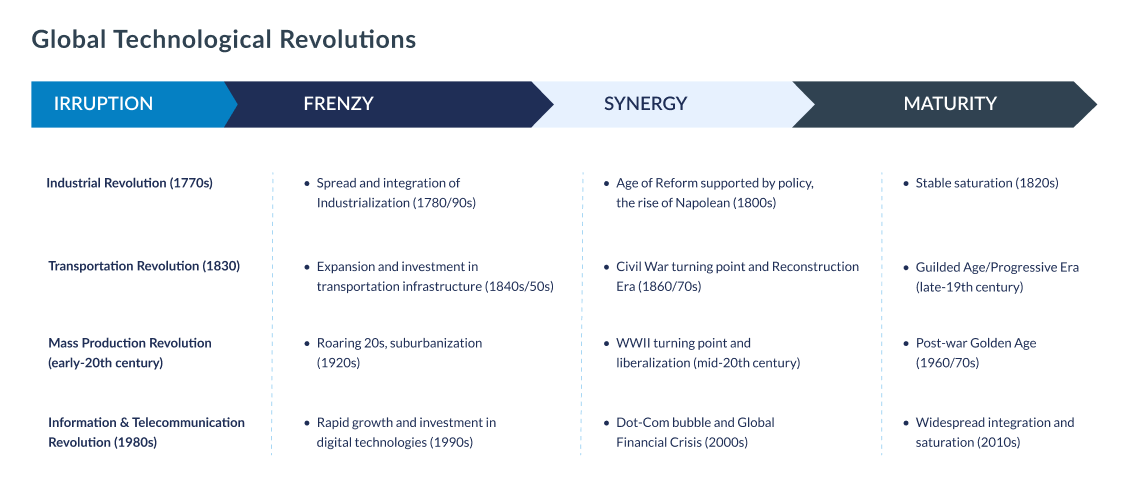
Source: Vation
However, as we have previously experienced during the dot-com bubble of the late 90s to 2000, a technology mega-trend can lead to over-optimism over the potential and timescale of deployment. In the end, the internet has revolutionised business and our daily lives. But there was nevertheless a period of investor over-exuberance resulting in a huge investment bubble and subsequent crash in over-hyped technology stocks.
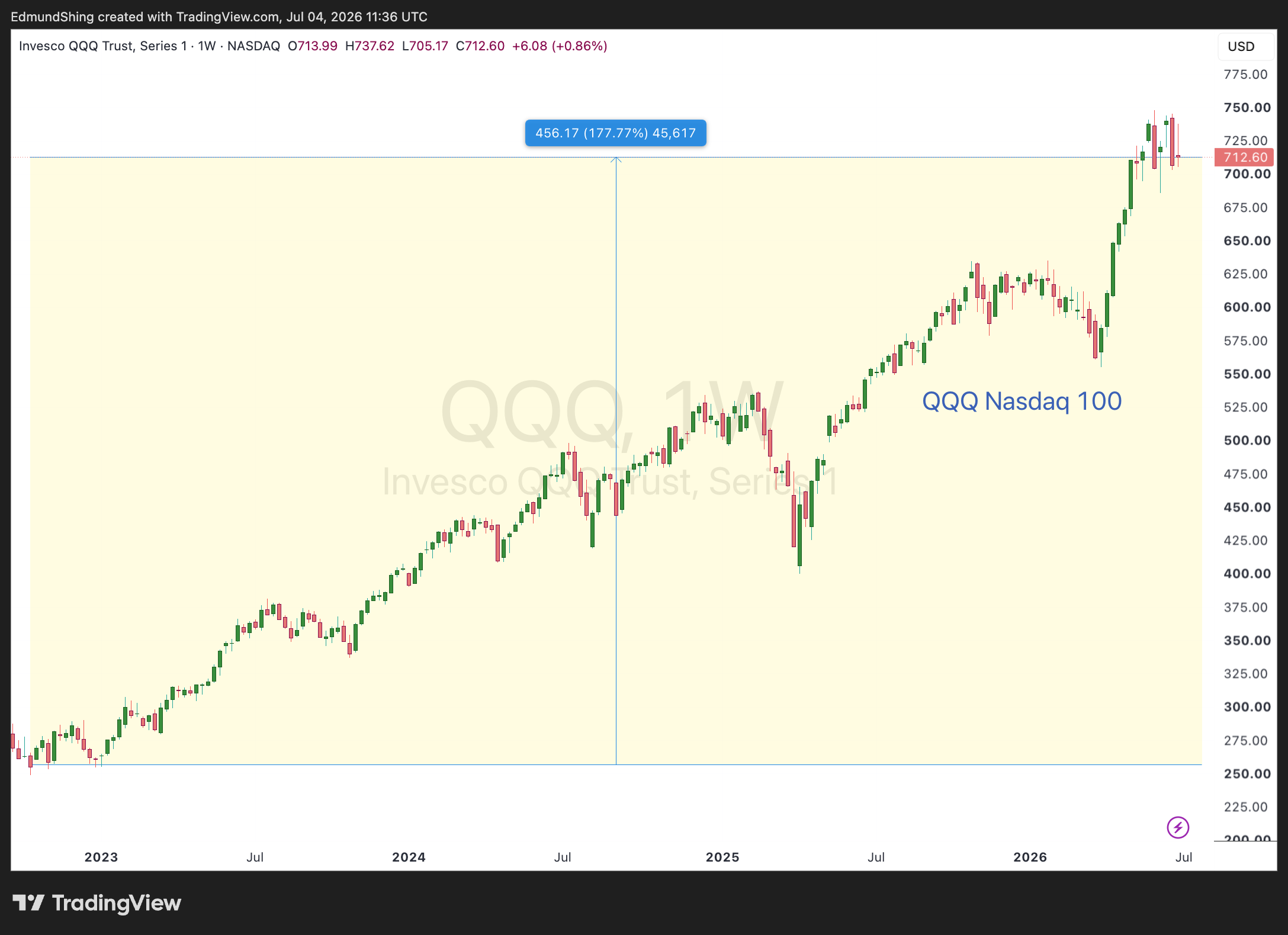
Given the performance of the Magnificent 7 mega-cap tech stocks since 2022 and the huge rally in semiconductor stocks this year, it is only natural to suspect that a new technology-driven investment bubble is in the making.
Nasdaq 100 index +177% since late 2022
However, there are differences in this wave of AI euphoria compared with the dot-com bubble. While valuations are clearly on the high side today versus history, they are much better supported by strong earnings growth than was the case back 26 years ago. This earnings growth is supported by an ever-growing amount of investment in AI compute in data centres, largely committed by the hyperscalers such as Amazon, Google, Meta, Microsoft and Oracle, plus SpaceX (xAI), Anthropic and OpenAI.
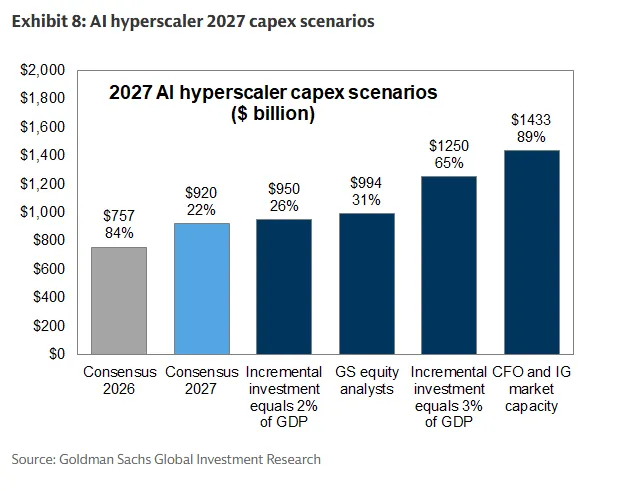
The core question is: for how long can these extraordinary growth rates be maintained? Is the Total Addressable Market (TAM) for AI models so large that it can support a healthy return on investment for these hyperscalers over time?
This is where I am more sceptical. In their efforts to move to a profitable business model, Anthropic (Claude) and OpenAI (ChatGPT) have shifted their business customers away from a flat-fee subscription model to a volume-based pricing model, where the more you consume, the more you pay.
This sounds sensible, of course given that there are significant costs to providing this compute in terms of hardware and electricity, so a volume-based approach is necessary. But given the huge bills that corporate users of these Large Language Models (LLMs) have been hit with, we are seeing a quick shift in corporate AI spending policies.
Companies such as Amazon, Microsoft, and Uber have reacted to these soaring AI costs by capping usage of the latest frontier models and even applying AI token budgets. In the case of Uber, their Chief Technology Officer recently admitted that they had consumed their entire yearly AI budget in just 4 months.
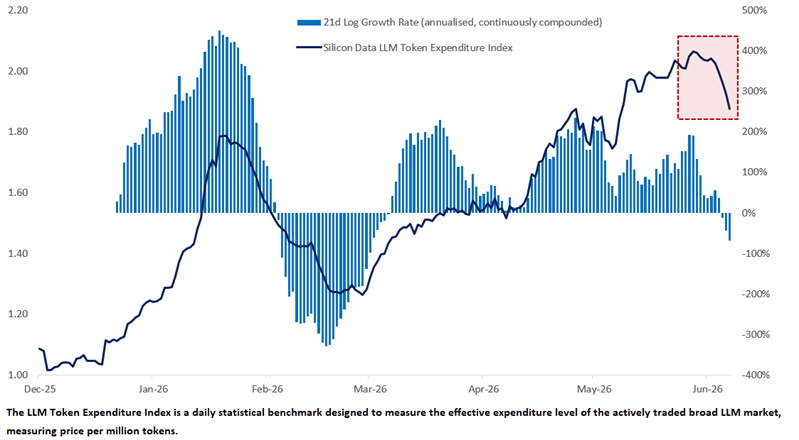
So while token consumption is set to continue to soar as companies increasingly implement use cases for AI in their own businesses, there is likely to be a cap on the cost per token. Companies will increasingly decide whether a task requires the use of a latest-generation frontier AI model, or whether a cheaper, earlier-generation AI model will suffice for office tasks such as summarising documents or translation.
Token prices start to fall
Bullish on AI adoption: but AI compute will become increasingly commoditised
I am bullish on AI adoption as I think that companies are early in developing use cases for the ever-evolving technology. However, I think that we will see intensifying price competition between the LLM providers, not only from US-based LLMs but also from cheaper, open-source Chinese LLMs such as DeepSeek.
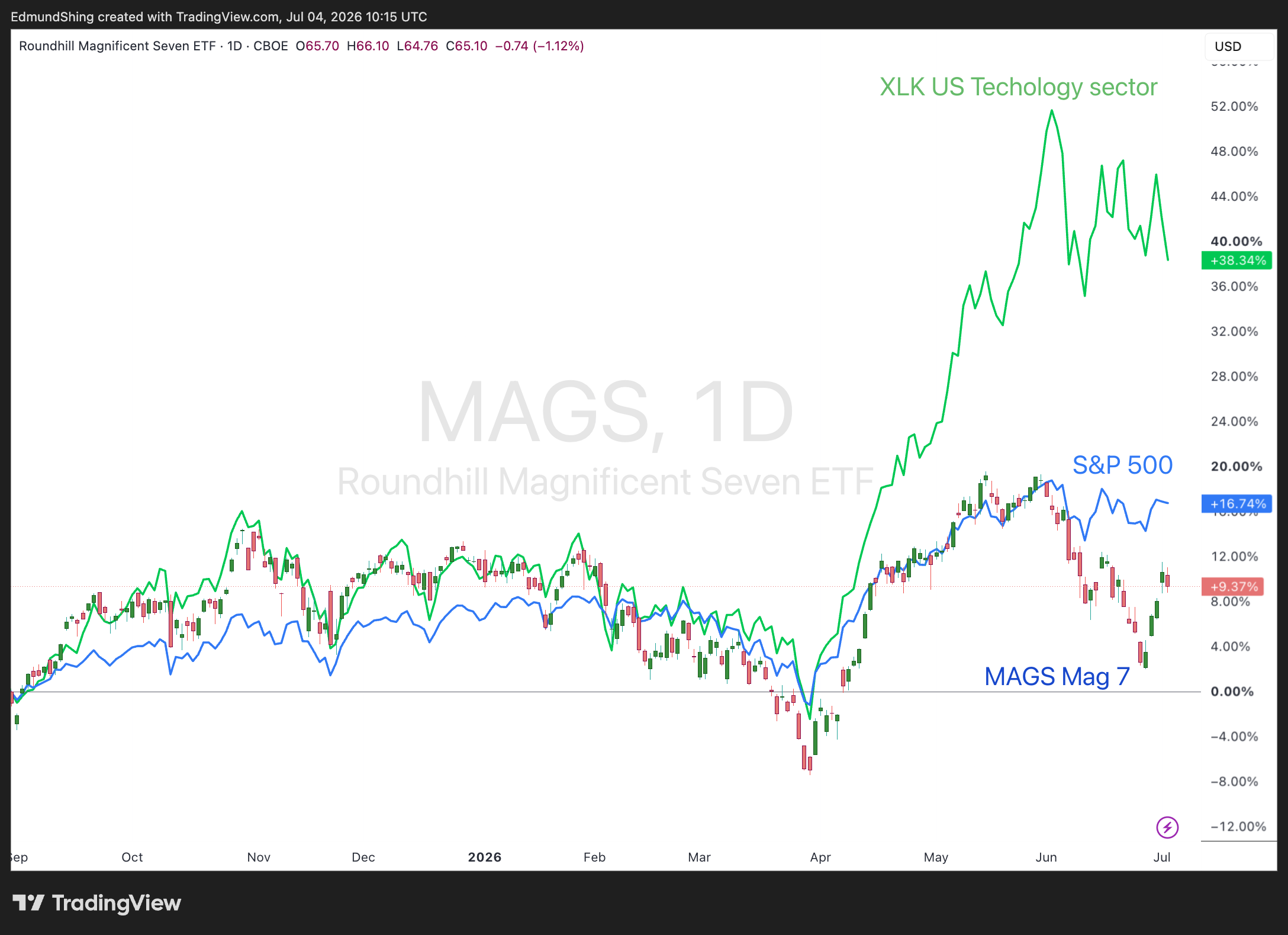
It is not surprising to see that big-spending hyperscalers have under-performed the S&P 500 and the broader US Technology sector since September 2025, as doubts emerge over the ultimate return on their massive investment in AI. This year, the emphasis has shifted to the “picks and shovels” suppliers benefiting from this investment wave, most notably to the semiconductor sector in the US and in South Korea and Taiwan.
US Magnificent 7 underperform the S&P 500
Adopting a diversified barbelI portfolio
Given that nearly 50% of the US S&P 500 index can be said to be directly or indirectly linked to the AI theme, it is no longer a truly diversified index. Should AI optimism falter, the S&P 500 will surely suffer. I believe that even if we are witnessing the inflation of a new technology investment bubble, it is difficult to completely avoid exposure while momentum is so strong. But given the increasing dominance of the AI theme in the S&P 500 and even MSCI Emerging Market indices, I would advocate a barbell portfolio that balances exposure to the AI theme with non-technology exposure in other sectors.
For exposure to the AI theme, I prefer two approaches:
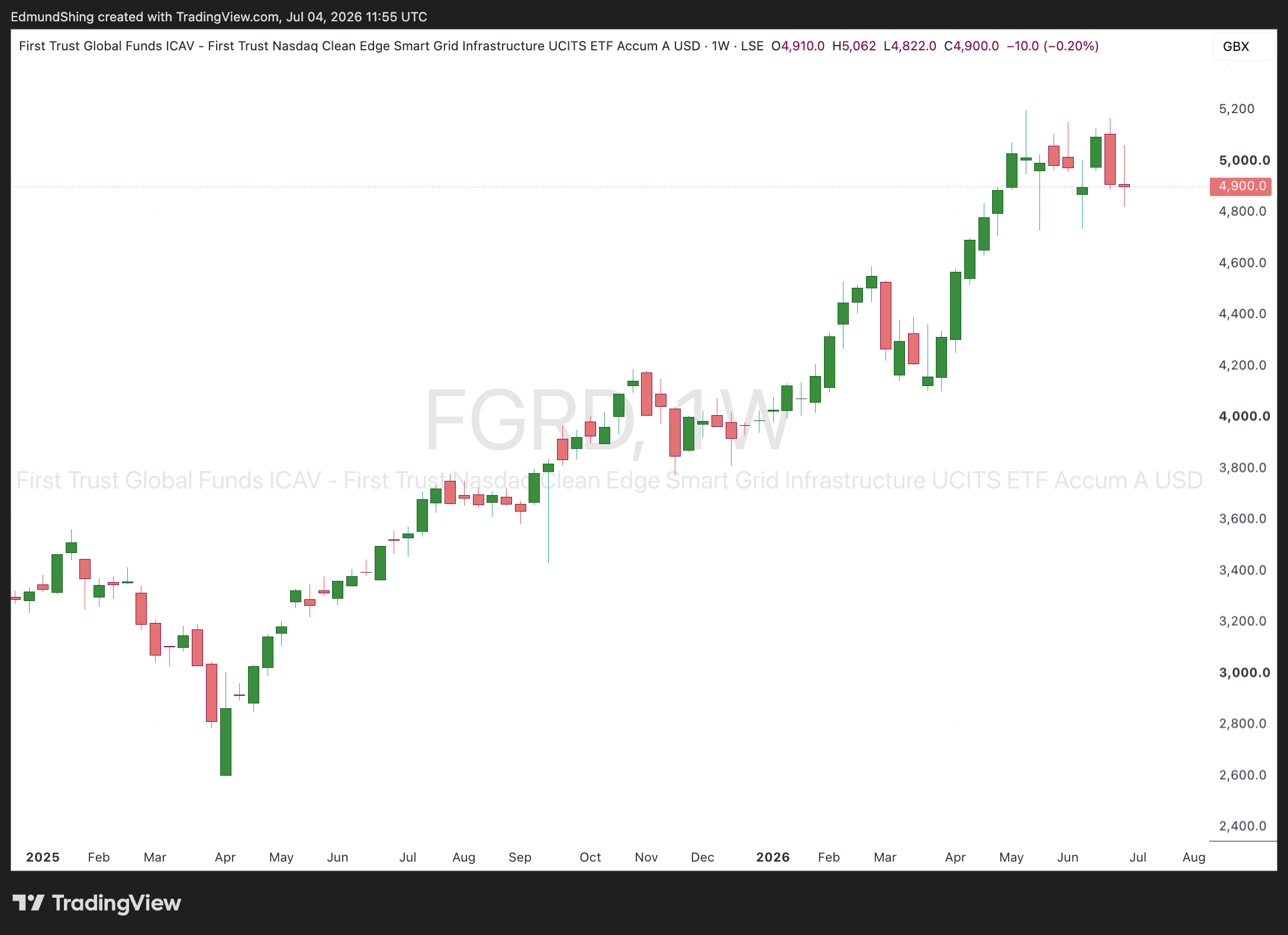
The power bottleneck, given the energy-hungry nature of AI data centres and the growth in overall electricity demand - electricity generation and transmission: for instance, via the First Trust Nasdaq Clean Edge Smart Grid Infrastructure UCITS ETF (FGRD). This ETF is biased towards global industrial companies predominantly in the electric equipment sector such as ABB and Schneider Electric as well as electricity transmission utilities such as National Grid.
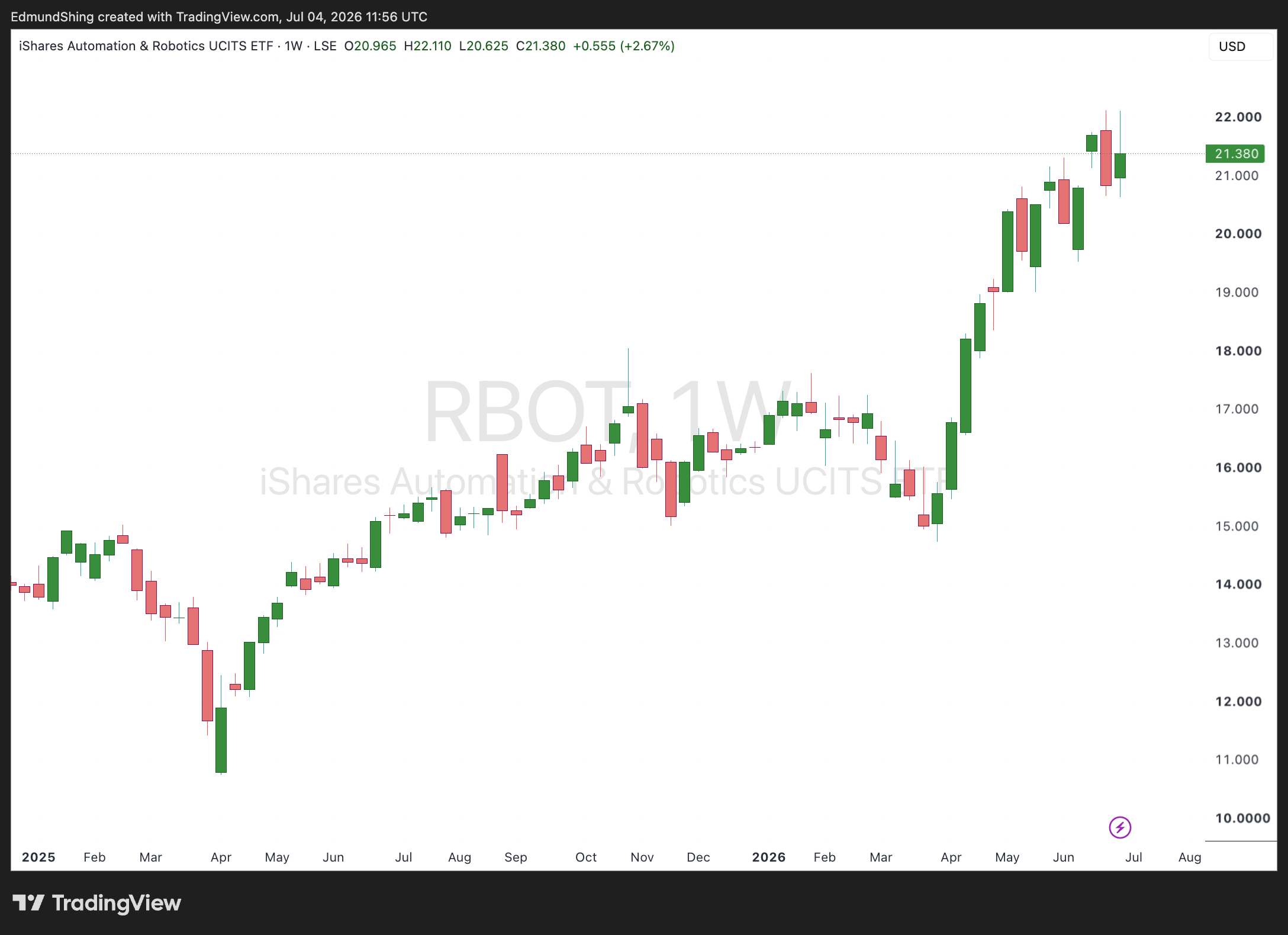
Physical AI in the form of Robotics, as I see this as the next huge opportunity for AI via e.g. the iSharea Automation & Robotics ETF (RBOT). This ETF has significant exposure to semiconductor chip makers as well as industrial automation & robotics companies e.g. in Japan.
But then I would dedicate a second portion of a stock portfolio to non-technology exposure, more in small-cap and value exposures globally.
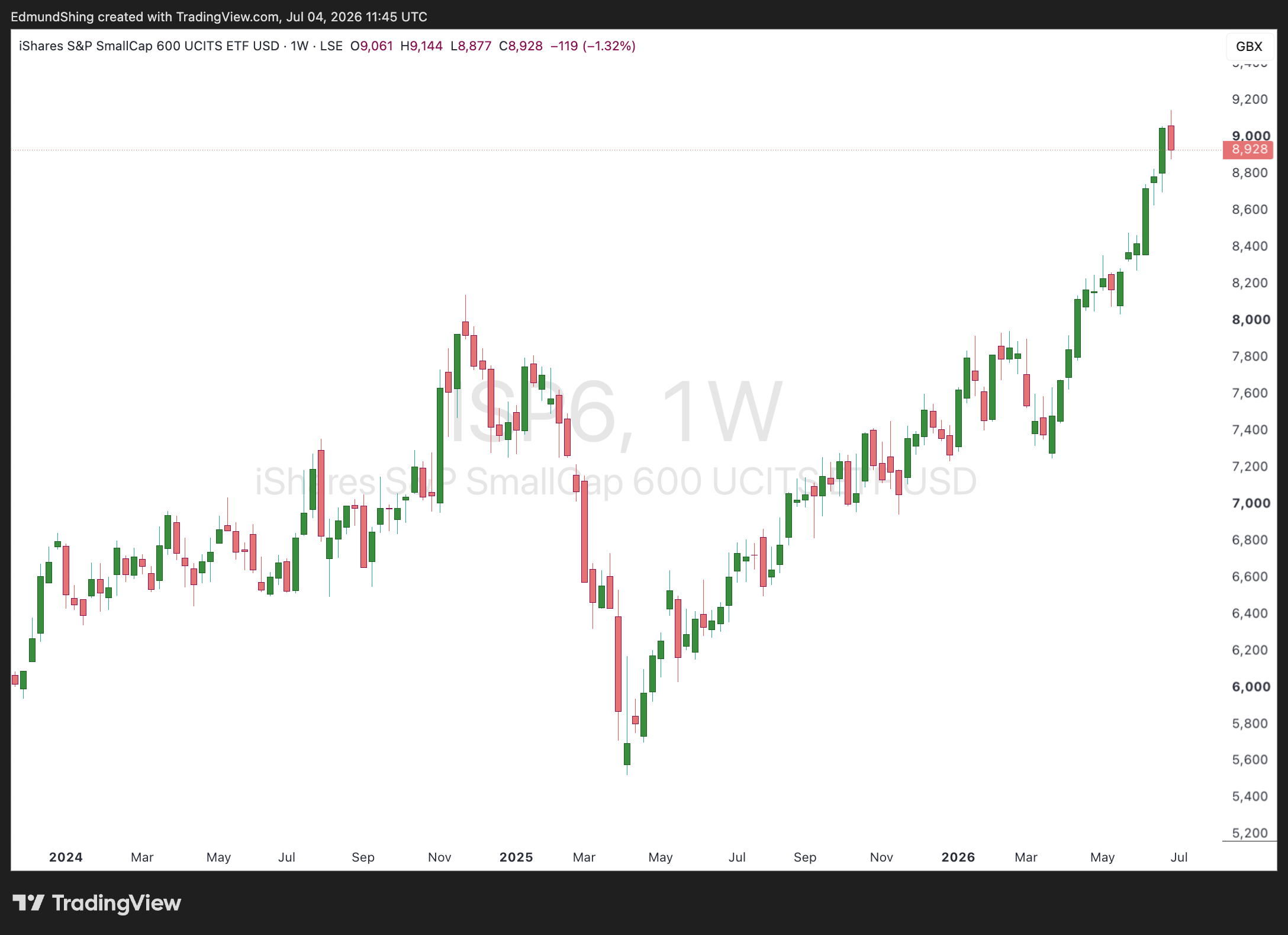
Small-caps in the US, given the very long-term outperformance of US small-caps over time over large-caps of the order of 1.3% per year on average over the last 100 years. iShares S&P SmallCap 600 UCITS ETF (ISP6)
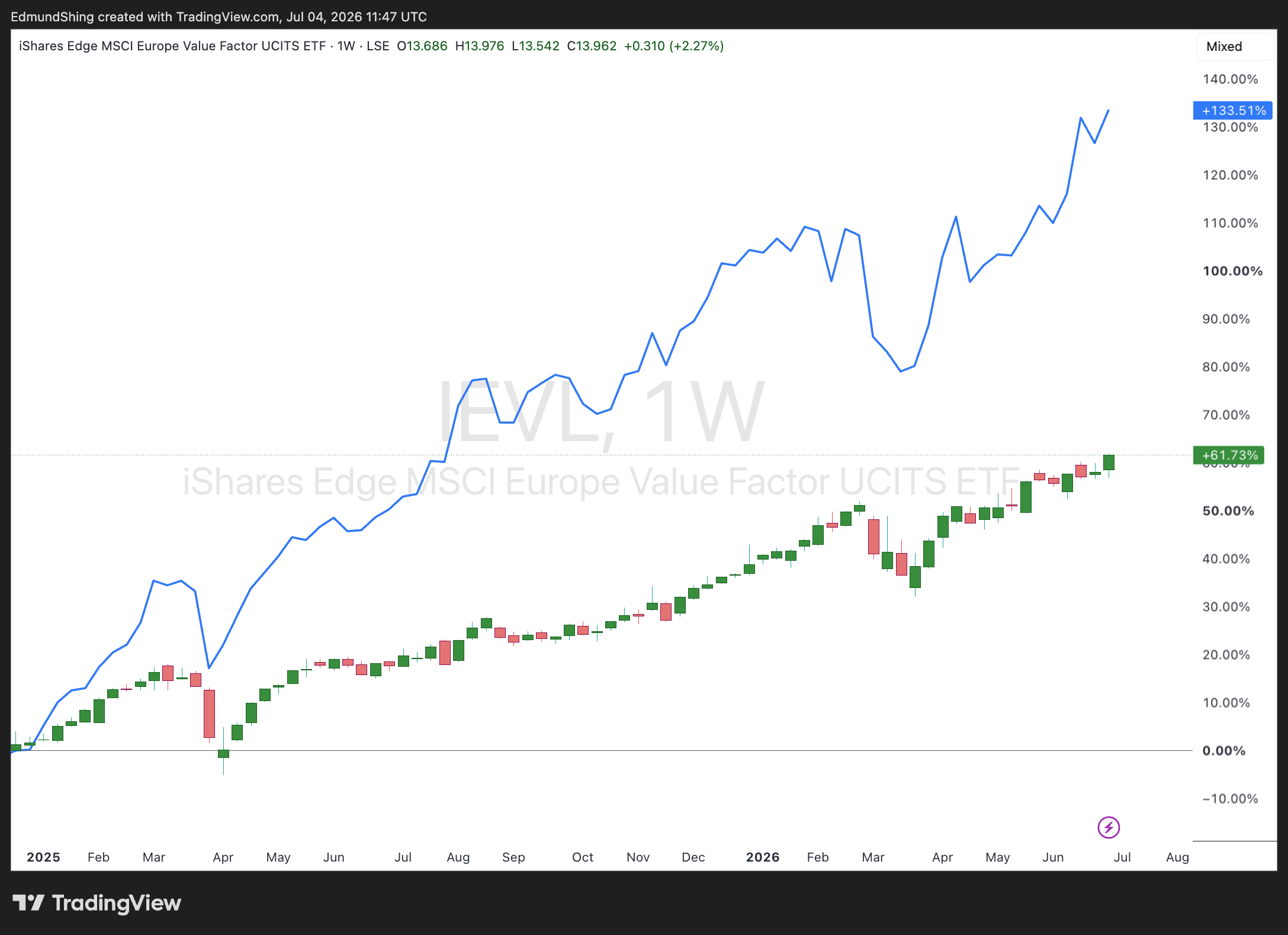
Europe Value, either via exposure to Europe Value broadly (iShares Edge MSCI Europe Value Factor UCITS ETF IEVL) or via exposure to European Banks (iShares Edge MSCI Europe Value Factor UCITS ETF BNKE)
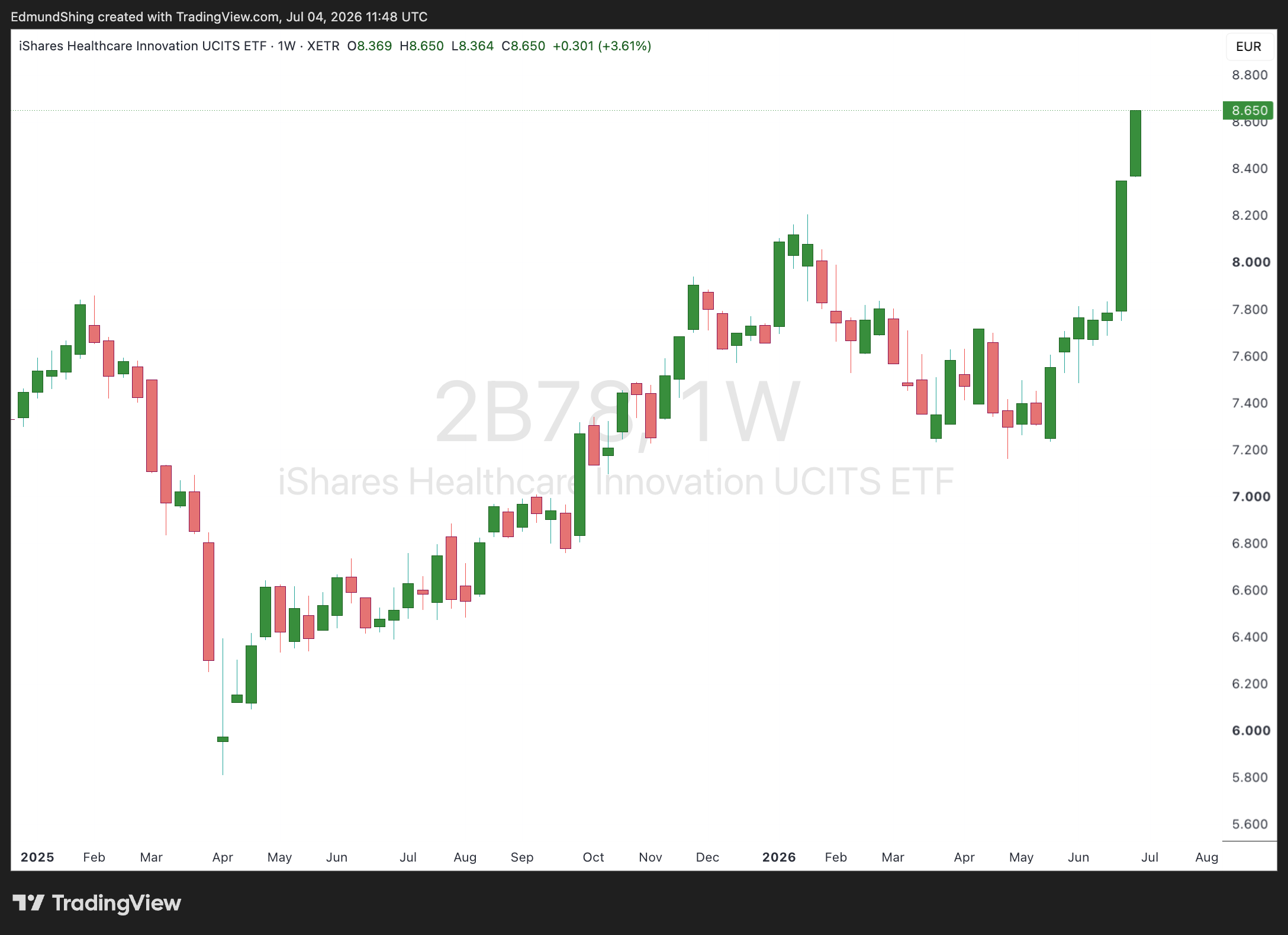
Healthcare sector via the iShares Healthcare Innovation UCITS ETF (DRDR)
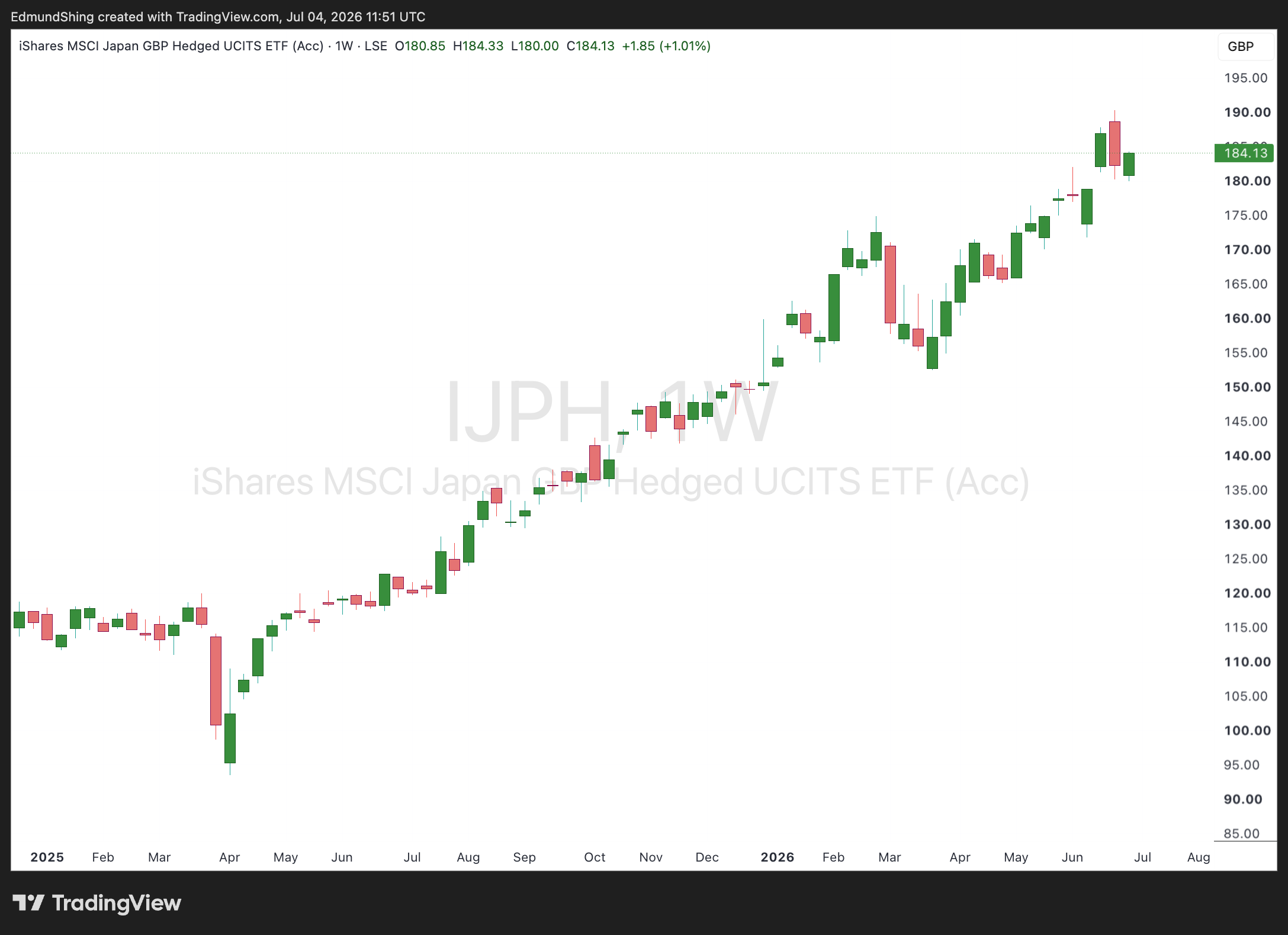
Japanese stocks: Xtrackers MSCI Japan UCITS ETF (XMJP)
This way, a stock portfolio is not too exposed to technology and AI, in case this theme suffers a shift in sentiment towards greater caution.
US Small-Caps
Europe Value and Banks
Healthcare Innovation
MSCI Japan (GBP hedged)
Disclaimer
This is not financial advice. Our content is intended to be used and must be used for information and education purposes only. Please read our disclaimer and terms and conditions to understand our obligations.
7 comments
Thanks for the article Edmund. Re: physical AI and robotics, Michael Dell and Jensen Huang make that exact point in this podcast back in May. Well worth listening to.
https://tinyurl.com/4kfm8a78
RBTX has gone up a lot recently so I don't think it's for me but interesting to note the top 10 holdings are quite different to other typical tech/AI ETFs.
Thanks Edmund. Always v useful. Do you still favour an active presence of some commodities and precious metals/miners allocations in your barbell strategic allocation - for example COPG, SGLN, ISLN, SPLT, URNP ETFs that you were quite positive about in Q1 26? Futures markets appear to show positive signals for these allocations, but the global macro and public policy drivers are hard to read currently.
Yes I am still a fan of commodity producer exposure even if they have corrected of late. I believe that they are well-positioned for the long term, even if they have been hit in the short term by the iran conflict and a stronger US dollar...
Many thanks
Always the discussion over an ETF or individual holdings.
Defence a 'no brainer' and could pick five US and five EU longs with stock metrics.
But just seen Japan hedged thingy. Doubt could invest in it and with Japan Bonds of which I have no clue then god knows.
I'll stick with Saab AB (STO:SAAB B) Rtx (NYQ:RTX) L3harris Technologies, (NYQ:LHX) & Palantir Technologies (NSQ:PLTR)
Drones and underwater stuff.
Avoiding broken Britain - full of stupid peoples.
Some superb ETF's there Edmund. Great ideas - thank you.
Forgot to add one more non-tech sector that I like: Aerospace & Defence via the iShares Global Aerospace & Defence ETF (DFND)