Market Musings 080723: Real Estate - Snog, Marry, Avoid?

Market Musings 080723:
Real Estate - Snog, Marry, Avoid?
Is the real estate market investable today?
Summary:
Do Not Underestimate the Emotional Attachment to Property
Financing shock: Exiting the “zero rate era”
Employment is also a key factor for property…
And remains at historic highsCommercial real estate: Office stress captures the headlines
Demand and rental growth outlook is solid for many Commercial RE segments
European real estate fund NAV erosion slowed in Q1 2023, should stabilise over Q2-Q3
Conclusions: Exaggerating the Real Estate Risks?
Do Not Underestimate the Emotional Attachment to Property
It is said that “An Englishman’s home is his castle”. This idiom underlines the deep attachment that most people have to their homes. It is a key factor in why so many people choose to take on the biggest purchase by far of their lives, usually indebting themselves for decades in order to do so.
Shelter is a key need on Maslow’s hierarchy of Needs
From a psychological viewpoint (using Maslow’s hierarchy of needs), shelter is one of our key basic needs along with the need for sufficient food, water and warmth (listed below under “physiological needs”). It should not then be at all surprising that we yearn to own our own homes whenever possible, as we form a deep emotional attachment to where we live and want to customise it to our own needs and tastes.
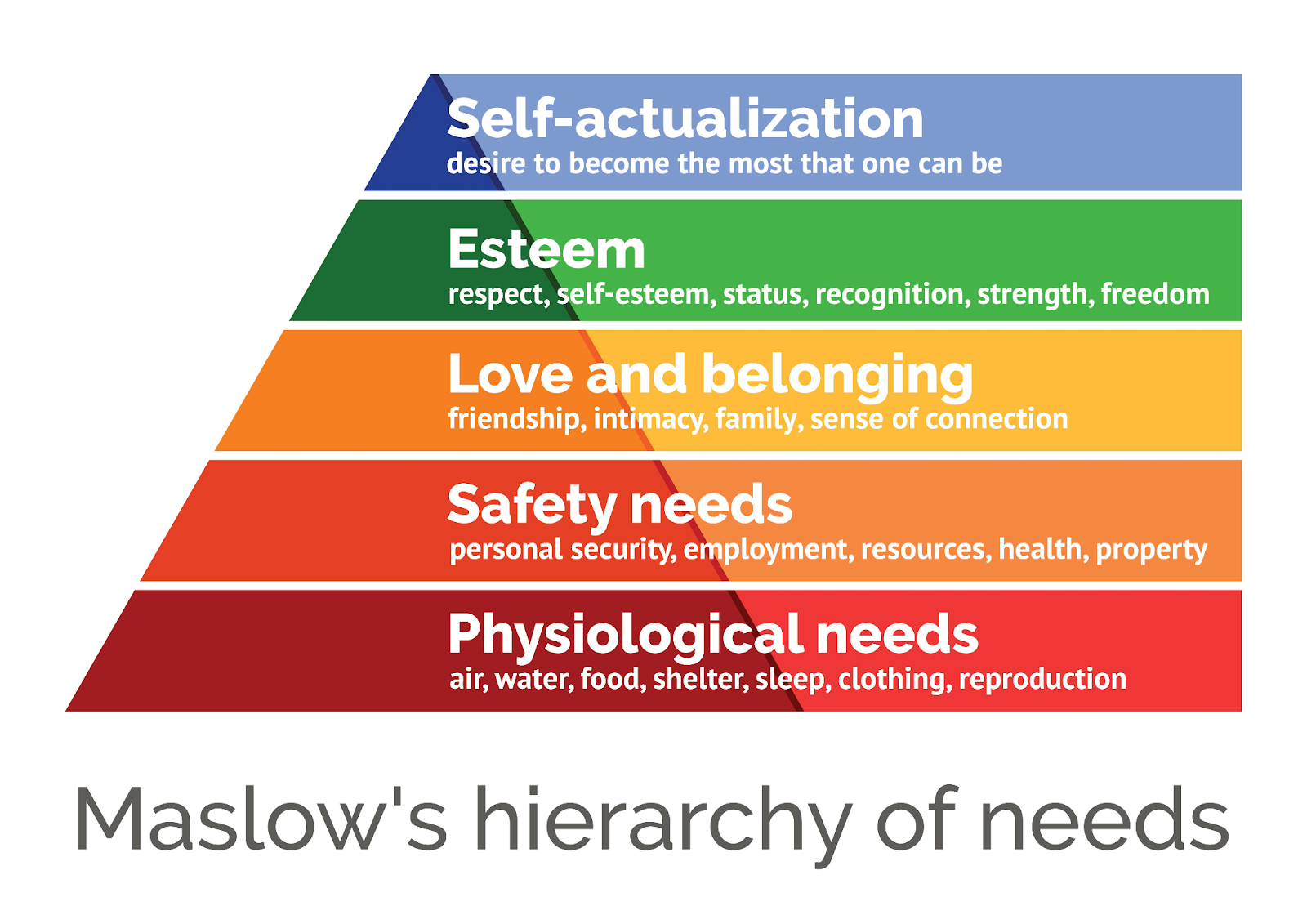
We may try to justify the decision to own our own homes on financial grounds - that property proves a good investment over time - but I believe that our primary motivation to buy our primary residence is far more emotional than financial.
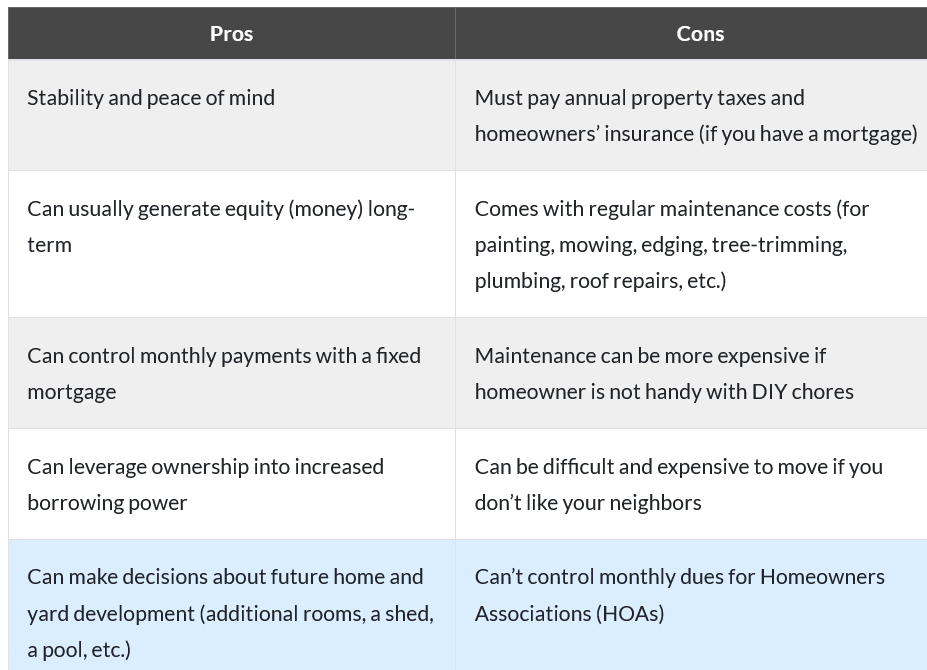
Several studies have shown that over the long term, home ownership is in fact not as profitable as one might at first think, once:
Buying and selling transaction costs,
Property taxes associated with owning a home,
Maintenance and upgrade investment costs and
Interest costs incurred in paying back a mortgage
are all properly accounted for.
Pros and Cons of Home Ownership (US version)
Did you know? Central/Eastern Europe has the highest home ownership rates
According to the World Population Review, Romania has the highest national home ownership rate in the world at a massive 96% - i.e. less than 4% of Romanian stock is rented rather than owned.
In Western Europe, Norway leads the home ownership rankings at 81%, with Portugal and Spain close behind at 78% and 76% respectively.
Across the European Union, this rate is 69% - so more than two-thirds of households own the properties they live in. The US and UK sit below this average at 66% and 65%, while Germany remains the single major economy with the lowest home ownership at just 47%.
Clearly then, the emotional attachment to owning one’s own home differs greatly among European countries…
Financing shock: Exiting the “zero rate era”
Recall that residential property markets in most countries have benefited from an artificial performance enhancer - ultra-low short-term and long-term financing rates, resulting from the zero interest rate policies practiced by most developed world central banks in the aftermath of the 2008 Global Financial Crisis.
Inevitably, the transition away from these abnormally low financing rates to more “normal” interest rates (closer to the average interest rates observed prior to 2008) was always going to be difficult for financial markets which rely heavily on leverage (borrowing money). The residential property market is the primary example of such a financial market - the largest single asset class in the world by value by far, with the broadest number of “investors”.
Sharp Rise in Mortgage Rates for Prospective Home Buyers
Across developed economies, average mortgage rates for new residential mortgage borrowers have moved sharply higher from their low points in 2021-22.
In the US, a new 30-year fixed rate mortgage now carries an average interest rate of 7.2%, up from a 2021-22 low of just 3.5%.
In the UK, a 2-year fixed mortgage rate (on a 75% loan-to-value mortgage) is now offered at 5.5%, versus just 1.2% in August 2021.
In France, a 20-year fixed rate mortgage now costs over 4%, up from a little over 1% in late 2021, and just 1.3% only 12 months ago.

Source: pretto.fr
More expensive homes + more expensive financing = worse affordability
The combination of a) the inexorable rise in house prices over the last 10+ years, and b) the sharp reset in mortgage interest rates over the last 12 months has driven UK housing affordability to its worst level in over 100 years (apart from one very brief period prior to the Global Financial Crisis).

While the UK may be an extreme example of the poor affordability of housing, similar is true in other developed markets such as the US, Sweden and Australia.
Employment is also a key factor for property…
And remains at historic highs
While affordability can improve if house prices decline, there is another way that affordability can improve - with stable to modestly lower house prices, combined with growth in average earnings.
The total employment rate and the rate of wage growth are two labour market factors that are currently positive for residential property.
In Europe and the US, prime-age labour participation in the workforce (the percentage of 25-54 year old individuals in employment) has reached a peak not touched in at least 20 years.

Source: calculatedriskblog.com. Data for US economy
Equally well, we have seen an acceleration in wage growth as a result of rising inflation pressures and low unemployment rates, after a long period when wage growth had been largely suppressed on the back of corporate power and low inflation.
Over time, the combination of high levels of employment and more robust wage growth should help improve housing affordability, so long as house prices do not rebound.
Commercial real estate: Office stress captures the headlines
Commercial real estate is the second real estate segment to look at after residential, comprising a number of subsectors in property investment including offices, retail (shopping centres), industrial (logistics/warehouses), and specialist segments including healthcare-related, datacentres and student accommodation.
Structural pressure on demand for offices has captured the headlines of late due to the impact on office demand from the post-COVID Work From Home (WFH) effect. Since 2020, much uncertainty around future demand for office space has been generated by the widespread adoption of remote work and mixed working practices, with many companies opting to reduce the amount of office space they rent.
While office demand has clearly been impacted by a structural shift in demand post COVID, the Prime Office segment of well-located and modern offices in city centres is still experiencing high demand and achieving positive rental growth.
Clearly, offices which are in secondary locations and which require significant investment to meet today’s more exacting environmental standards and facilities including video conference rooms, quiet work spaces and bicycle parking are suffering from lower demand and thus rents.
But this is far from being the only important segment in today’s commercial real estate market.
Post interest rate shock, commercial real estate prices have already adjusted a lot
The interest rate reset has put a lot of pressure on commercial real estate prices in both Europe and the US since mid-2022.
According to real estate consultants Green Street, commercial property prices have fallen 21% from the mid-2022 peak in Europe, and by 16% from peak in the US.

Source: Green Street
Note two points here: a) the adjustment in commercial property prices has already been substantial over the last year, and b) prices have on average stabilised since April.
Demand and rental growth outlook is solid for many Commercial RE segments
According to BNP Paribas Real Estate, both demand and long-term growth prospects look appealing from 2024 onwards for the Logistics, Healthcare Datacentre and Student Accomodation real estate market segments.
Circa 4% yields on European commercial property: Rental yields for European commercial real estate have risen as property prices have adjusted lower, with average yields today ranging from 3.8% for European High Street Retail to 4.1% for Offices and 4.3% for Logistics segments.
Office rental growth has been robust in Q1 2023: the Prime Office segment has enjoyed healthy rental growth in all major European cities on a year-on-year basis, with London leading with +21% year-on-year rental growth in Q1.
In addition, vacancy rates are not anything like as bad as one might fear, with the average European office vacancy rate moving up to 7.4% in Q1 2023, only 0.2% higher than a year earlier.
The Logistics segment has also displayed robust rental growth, with European logistics rents up over 10% year-on-year in Q1.
European real estate fund NAV erosion slowed in Q1 2023, should stabilise over Q2-Q3
The INREV quarterly index of non-listed European real estate funds is also suggesting an emerging stability in European commercial real estate values over Q1 2023, with an average total return for the European property funds covered of just -1% versus Q4 last year, following a -6% drop in Q4 2022 versus Q3.

Source: INREV
Taking this data series together with the Green Street price series mentioned earlier suggests that European commercial real estate prices could well stabilise as of mid-2023.
BNP Paribas Real Estate’s predictions of a gradual recovery in property values from 2024 onwards seem reasonable, so long as:
Headline inflation rates continue to decline to closer to the 2% target of central banks,
Long-term interest rates stabilise or even ease lower from current levels, without
Prolonged economic recession hurting economic activity and thus demand for property.
Conclusions: Exaggerating the Real Estate Risks?
Yes 2022-23 continues to be a difficult transition period for real estate on the back of a spike in inflation rates and the consequent reset higher in interest rates. Real estate prices have already adjusted significantly since mid-2022, and show some emerging signs of stabilisation since April, rather than a continued free-fall in property prices.
Don’t write off the real estate asset class, which continues to demonstrate robust long-term inflation protection via solid rental growth in many underlying segments such as Residential, Prime office and Logistics.
New investment in these property segments has slowed sharply, as long-term financing of new projects has become much more expensive.
This should lead to progressive tightening of the supply-demand balance in these property segments over the coming year.
In the absence of a prolonged hit to economic activity and employment, a tighter supply-demand picture for real estate should support occupancy rates and rental growth from 2024 onwards.
Watch the evolution of long-term interest rates (10+ year bond yields), as stability or even gradual decline in long-term interest rates, combined with a stable level of economic activity could underpin stabilisation in commercial real estate values in both Europe and the US.
Uncertainty over the near-term direction of interest rates plus the risk of economic recession will continue to cloud the near-term outlook for real estate markets. However, this uncertainty could also provide investment opportunities for the long-term investor, given solid rental growth and rising rental yields.
Bottom line: commercial property markets are not at an obvious buying point just yet, but long-term income-oriented investors looking for assets with some measure of inflation protection should potentially look to build up property exposure in their portfolios in the coming months.
Disclaimer
This is not financial advice. Our content is intended to be used and must be used for information and education purposes only. Please read our disclaimer and terms and conditions to understand our obligations.
1 comment
As ever, Edmund, an interesting Musing. Especially as I am long in British Land. Historically, at least in the UK, house-building always occurred wherever intensive work opportunity happened to be. Coal mines and other minerals with water-power resources that were handily near by are an example. World War efforts, especially before and during WW II turned many a Market Town into a manufacturing hub which remains with us today. The military built houses, town councils built houses, and companies built houses for their employees. The government handed out contracts. Today it's all change with the formation of a large sector that Works From Home. I guess this will excuse all the house-building that has been going on in places where there is little demand for labour which meant lengthy commutes and that's my muse done for today!