Market Musings 160423: Adapting to a Sea Change in Markets

Market Musings 160423:
Adapting to a Sea Change in Markets
Decision time for stocks as US earnings season approaches
Summary:
- 40 years of declining inflation and interest rates are over
- The new environment higher interest rates will endure
- This provides opportunities to active investors hunting for value
- Chartstorm of interesting charts I fund this week
- Where I am personally focused at the moment
Podcast this week: Our investment strategy for April 2023
1) Is the banking crisis over?
2) Do you forecast a recession both in the US and Europe this year?
3) Which asset class could benefit from the banking stress?
A Sea Change
Howard Marks, the founder of Oaktree Capital, is famous not only for being an excellent investor over a 50+ year career, but also for writing periodic memos.
I recommend this last memo – “A Sea Change”. If you prefer to listen to an audio version, he has also recorded a podcast version.
The essence of the memo is that we are undergoing presently a sea change in economics and markets – an event that happens rarely.
What is this sea change that Mr. Marks is referring to? Best to refer to the table below, from his memo, to get a better idea of what has changed structurally today versus the pre-COVID period…
A Sea Change in economic and market conditions
2009 to 2021 |
Today |
|
Fed behavior |
Highly stimulative |
Tightening |
Inflation |
Dormant |
40-year high |
Economic outlook |
Positive |
Recession likely |
Likelihood of distress |
Minimal |
Rising |
Mood |
Optimistic |
Guarded |
Buyers |
Eager |
Hesitant |
Holders |
Complacent |
Uncertain |
Key worry |
FOMO |
Investment losses |
Risk aversion |
Absent |
Rising |
Credit window |
Wide open |
Constricted |
Financing |
Plentiful |
Scarce |
Interest rates |
Lowest ever |
More normal |
Yield spreads |
Modest |
Normal |
Prospective returns |
Lowest ever |
More than ample |
Source: Oaktree Capital
The basic conclusion is that we have lived through a period in financial markets that has been amazing for long-term investment returns across the board, thanks to a secular decline in global inflation which resulted in a secular decline in interest rates (short- and long-term) over the last 40 years since the 1980s.
This trend is now over – interest rates and inflation will be higher in future than they have been over the last 10+ years, which will make investing a trickier endeavour, but which will also offer more opportunities for active investors going forwards.
I whole-heartedly agree with this final point – which is why I am sceptical that what has worked over the last 10+ years in investing (e.g. buying US large-cap growth stocks) will continue to work in the same way in future.
How to Get a 7% Return Without Buying Risky Equities
Another podcast in a similar vein that I found very interesting this week was the latest episode of:
With Duncan McInnes of Ruffer.
Ruffer take a conservative investment approach, and also consider that times have changed radically over the past couple of years.
They favour investments in commodities such as Energy and Gold, and look at undervalued ignored assets such as UK and Japanese equities.
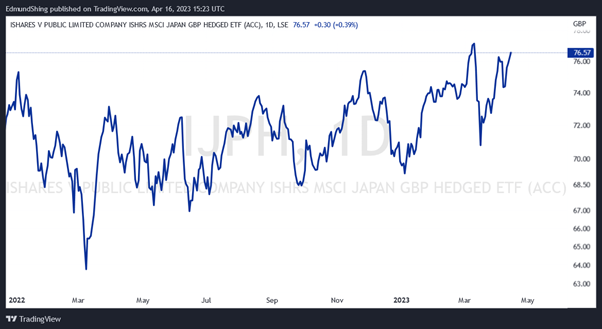
Japanese stocks (currency-hedged back into sterling) continue to gain
Source: tradingview.com
Chartstorm for this week
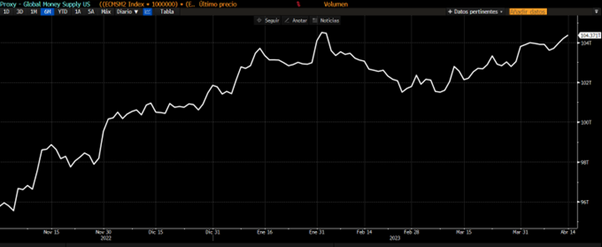
1. Global money supply continues to expand – good for stocks
Source: Daniel Lacalle
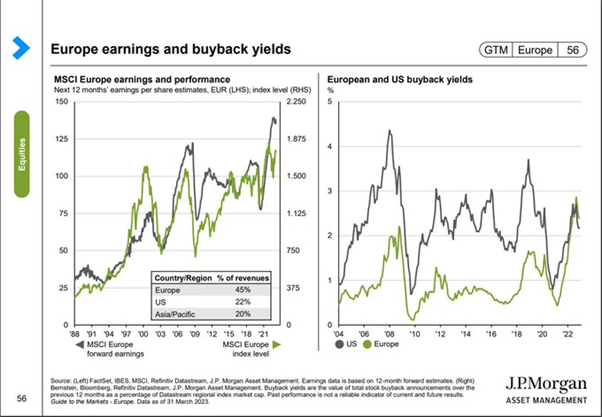
2. European stocks are buying back shares as much as in the US!
Source: JP Morgan
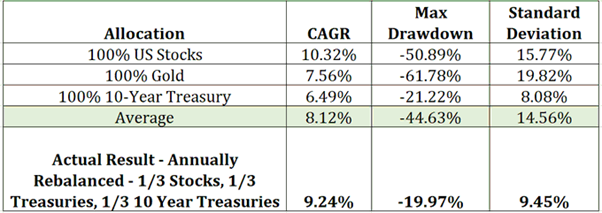
3. Adding gold to a portfolio of stocks and bonds has boosted returns since 1972
Source: Valuestockgeek
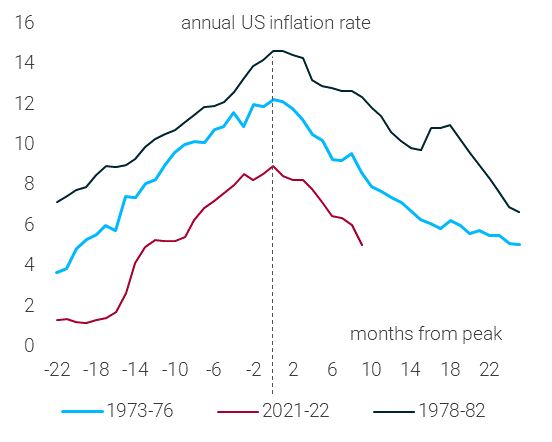
4. US inflation is likely to fall as fast as it has risen, looking to the 1970-1980s
Source: Dario Perkins
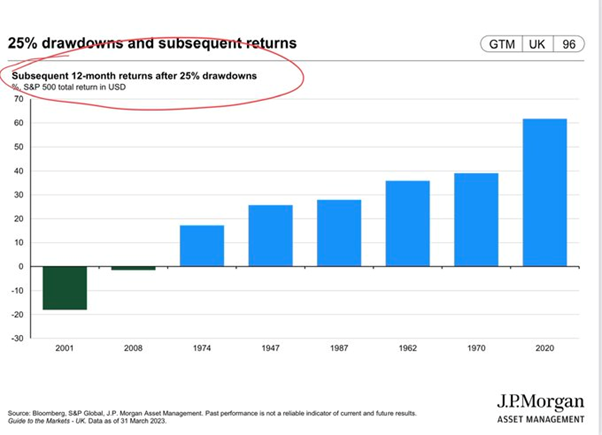
5. After 25%+ stock market falls, subsequent market returns have been strong (except in 2001)
Source: JP Morgan
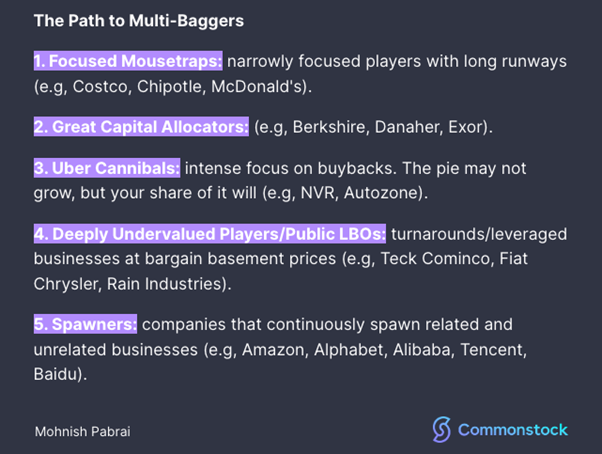
6. Famed value investor Mohnish Pabrai gives 5 ways to find a multi-bagger stock:
Source: Mohnish Pabrai
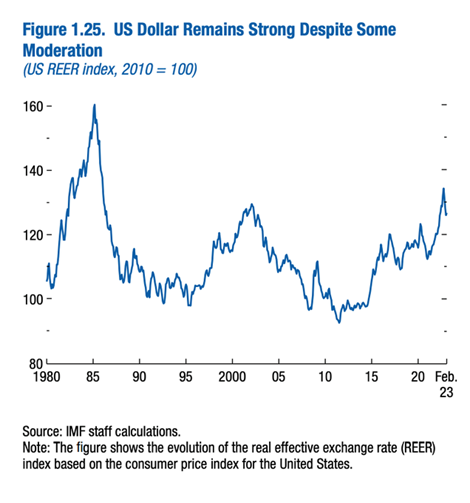
7. US dollar remains strong in a long-term context
Source: IMF
8. Euro v US dollar interest rate forwards suggest a stronger euro v USD
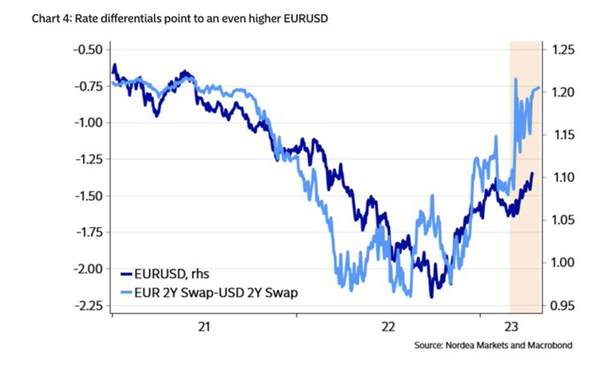
Source: Nordea Markets
9. The US will likely see huge banking sector consolidation of their 4000+ banks
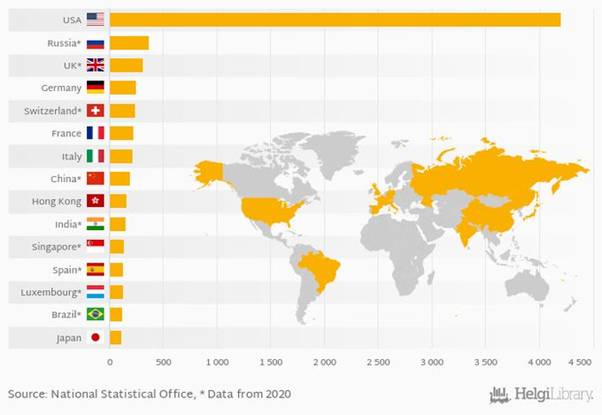
Source: HelgiLibrary
10. The majority of UK homeowners have NO mortgage!
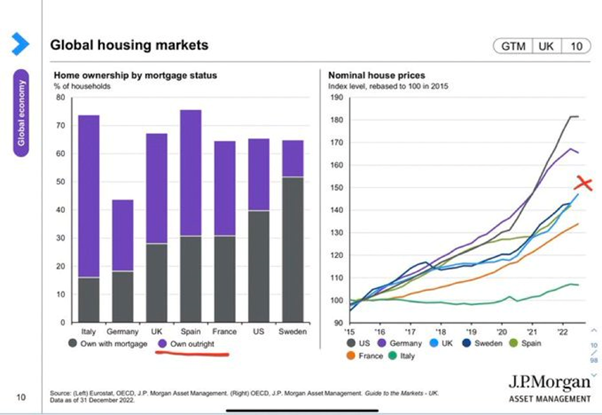
Source: JP Morgan
Conclusion: Where I am focused today
I have not really changed my investing focus at all – I remain long-term focused on areas that I think will benefit in this New inflation and interest rate Regime:
- Commodities – Gold and precious metals, Energy, Industrial metals needed for energy transition, uranium for nuclear energy.
- Smaller-cap Value stocks in ignored regions such as UK, Japan with strong balance sheets, robust profitability and strong positive cash flow.
- High-yielding financial stocks that have been perhaps seen exaggerated selling in the wake of the US regional banking stress, particularly in the UK/Europe in the financial services and insurance sectors.
Have a great week ahead,
Edmund
Disclaimer
This is not financial advice. Our content is intended to be used and must be used for information and education purposes only. Please read our disclaimer and terms and conditions to understand our obligations.

5 comments
Edmund, I greatly admire your ability to present relevant data and summarise it.
With regards to the Oaktree Capital table: 1) I see 13 negative factors followed by Prospective Returns now being stated as "More than ample". I crudely take this to be along the lines of "Buy when there is blood on the streets" . Would you agree?
Also please can you tell us over what time frame the returns from today are expected to be more than ample? Some of us are traders with short term horizons, and some of us are long term investors. Please be specific eg "6 months" and don't say something vague like "medium term".
Yes I think that is fair. When valuations are more "normal" i.e. lower, then long-term returns can be higher. As for time horizon, the Oaktree memo is definitely taking a long-term view, i.e. over the next few years, not months.
Best
Edmund
Thank you Edmund. What I also really took from the Sea Change Memo is that in our careers there are a few (say 2-3) really important transition points, meaning the world thereafter will be quite different. I think that this can be applied beyond finance, and then potentially back again in terms of how we make sense of our world and invest as a result. I work in the bioeconomy, and my three`career events are climate change, DNA sequencing and the EU referendum (the latter because it affects land use including through farming subsidy and international trade for agricultural commodities). "Interestingly" I suspect that many of us are noticing a new Sea Change in our different areas of expertise at the same time around now.
I would agree with this, technology is progressing quickly in a number of different areas such as medical technology/diagnosis, Artificial Intelligence applications in real-world settings, the energy transition, as well as a new era in the global economy.
Incidentally, this is why I am not so sure that inflation will stay high in future, just that it will be higher on average than it has been over the last 10+ years. AI could have a profoundly deflationary impact on white collar jobs, for instance.
Edmund
Thanks Edmund, I appreciate your weekly insights. Have a good week too.