Market Musings 170126: Remaining a nervous bull

Market Musings 170126: Remaining a nervous bull
Monthly report and video: Investment Strategy Focus January 2026 (click on link to read/watch)
Can stocks maintain their run streak in 2026?
1. US Q1 positive growth surprise? The One Big Beautiful Bill Act passed last year put in place several lower tax rates, resulting in lower 2025 tax bills for many US households and larger Q1 2026 tax refunds (USD 1000+ average per household). This should boost US domestic consumption and GDP growth over Q1 2026
2. Long-term bond yields to rise further? Over 2025, the Japanese 10-year JGB bond yield almost doubled from 1.1% to 2%, while German 10-year bund yields rose from 2.4% to 2.9%. Lower inflation but high debt refinancing requirements pull yields in different directions. Expect little movement in 10-year bond yields.
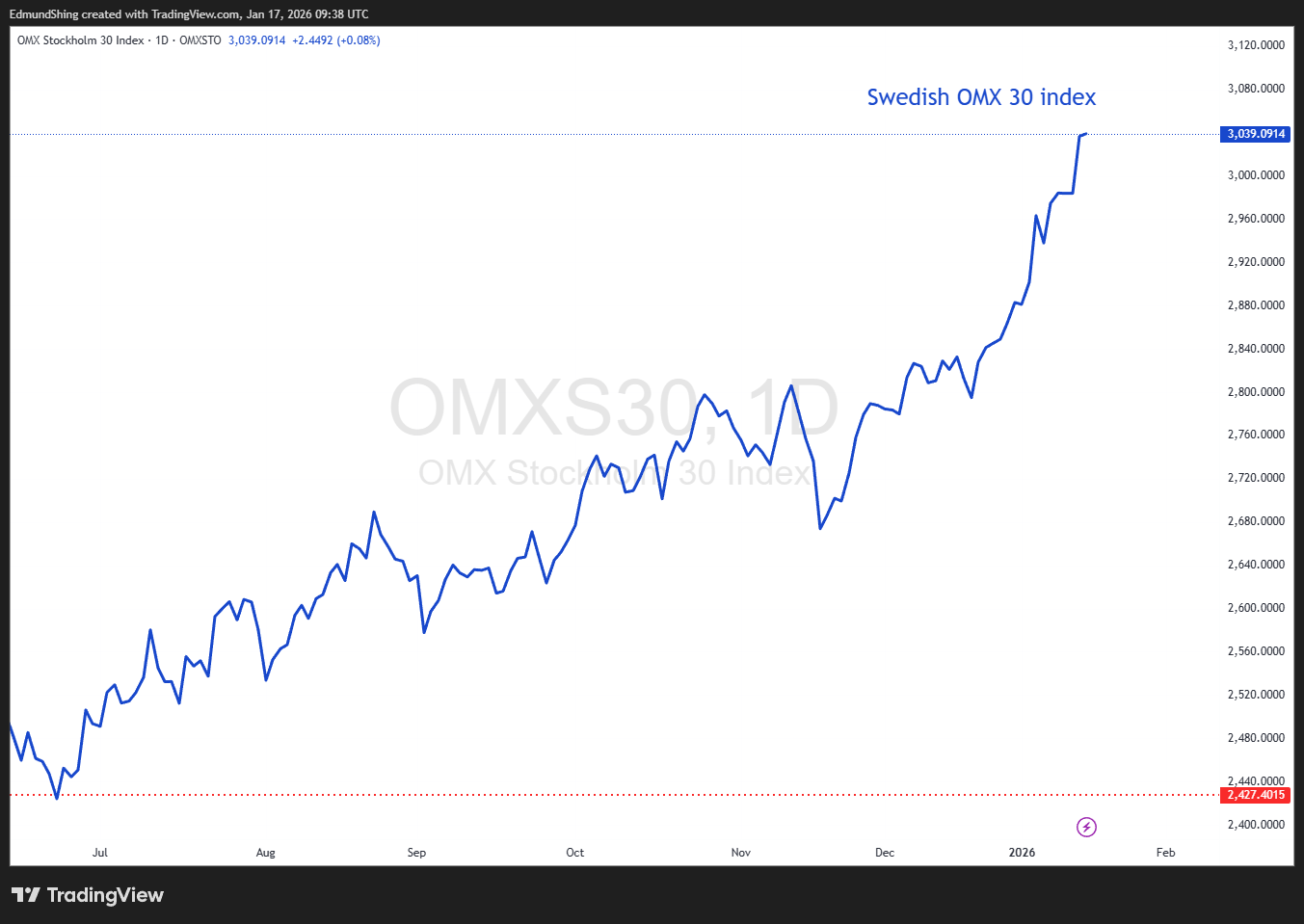
3. Stock leadership rotates to Value from Tech: in 2025, global value outperformed growth by a record 18% in USD after 8 consecutive years of growth dominating. Favour value-oriented sectors such as Financials, Industrials and Building & Construction. Strong momentum in UK, Spanish, Swiss and Swedish stocks.
4. Strategic industrial metals in a bull market phase: copper, tin and aluminium continue to gain ground, propelled by strong technology and electricity generation-related demand and limited supply. Continue to favour these physical base metals and copper miners.
5. Silver, platinum and palladium have rallied dramatically in December as shortage of supply and strong industrial demand have squeezed physical markets. We return to a positive view on gold and upgrade our 12-month gold price target to USD 5000/ounce. Our silver price target is also increased to USD 80/ounce.
Questions to answer
How long can this bull market for stocks continue?
What could bring it to an end?
If the US stock market and Tech isn’t leading any more, what today are the leading themes, sectors and regions?
What is driving US foreign policy as regards Venezuela and Iran? Is it just about oil?
What new areas of emerging leadership am I looking at now?
Can the bull market continue?
Yes. I consider that this current bull market in stocks began in October 2022, and is thus over 3 years old now. While there has been considerable variation historically in the duration of stock bull markets, they have on average lasted around 5 years and delivered even greater performance (167% in USD) than this current episode (c. 100% so far).
Last 12 US bull markets
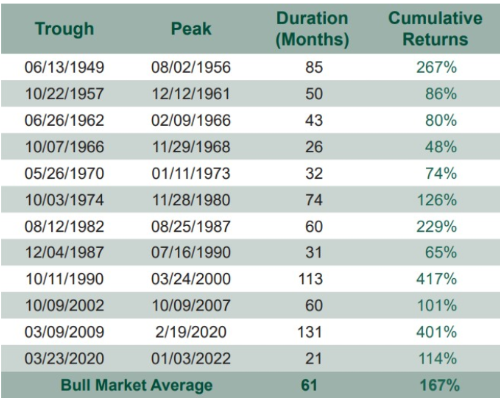
This is one for the stock market optimists - according to the US fund manager Fidelity:
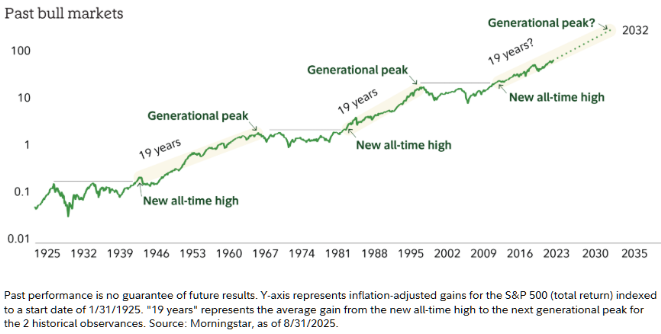
Historically, long-term uptrends have lasted decades. If this cycle follows that pattern, the S&P 500 could keep rising well into the 2030s.
Even after a more than 30% rally since April 2025, the market is not at an extreme compared to past peaks.
If the current artificial-intelligence-fueled Nasdaq Composite rally were to mirror the length of the 1990s tech cycle, it could continue for several more years without a major correction.
This following chart is also one for the long-term stock market optimists. Fidelity suggest, according to past US stock market bull cycles, that the long-term peak may not arrive until 2032! I am not quite that optimistic, but who knows?
What could bring this bull market phase to an end?
This following chart is a great schematic of the lifecycle of market sentiment. Ultimately, financial markets remain (largely) driven by human investors with their psychological biases and mood swings from pessimism to euphoria and back.
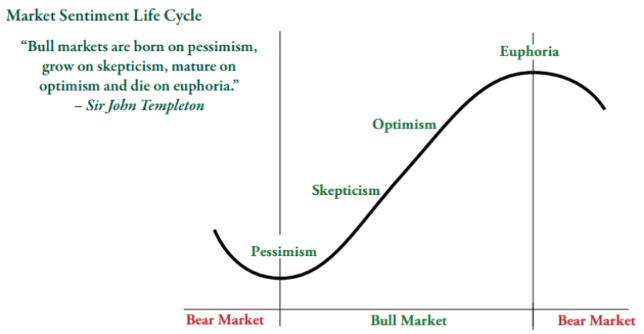
The danger point for investors is typically when we hit peak euphoria, i.e. when everyone is super-optimistic about the state of the economy and about the stock market. This was seen in the years 2000 and 2007, preceding that last two stock market crashes.
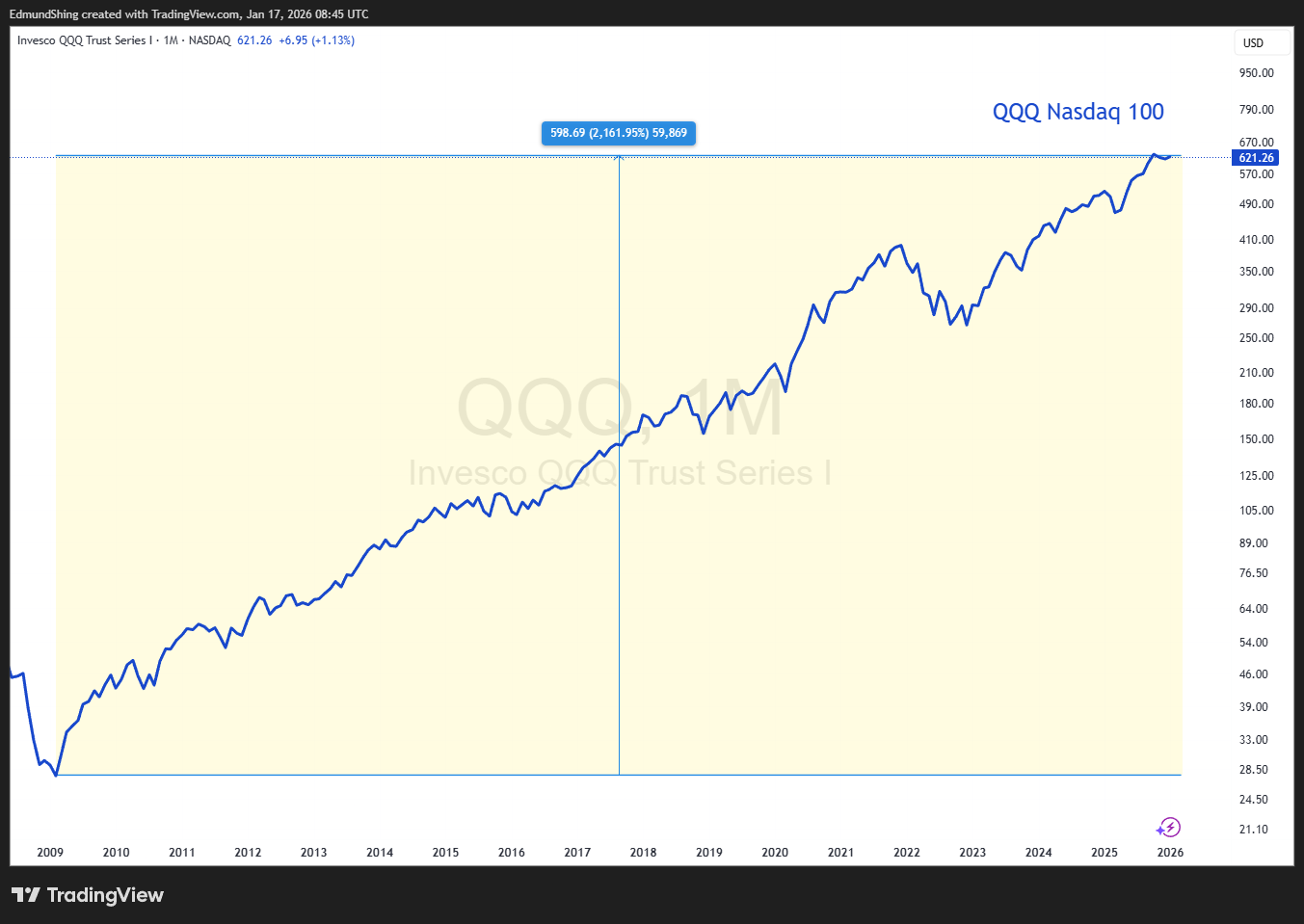
Are we at peak euphoria today? In my view, there are clearly signs of over-optimism that have crept into the minds of investors, in the US in particular. To a large extent, this is natural given the performance of US technology stocks since 2009 - the technology-heavy Nasdaq 100 index has multiplied by over 21x since the 2009 low. The S&P 500 benchmark index has delivered an annualised average return of over 10% over these 16 years, allowing investors in US large-cap stocks to double their money roughly every 7 years or so.
Stock valuations are an element
One element of euphoria is captured in expensive stock market valuations. When people are over-optimistic, they do not pay any attention to how expensive stocks are, on the basis that “they will always go up”. Of course, this is clearly not the case if we look at history.
It is true that the US stock market (by far the largest in the world) is at the expensive end of the scale, with a 24x estimated P/E. However, stock markets outside the US remain relatively fairly valued versus history, so neither cheap nor very expensive in spite of 2025’s strong performance across the board.
Current valuations of stocks have a big impact on expectations of long-term future returns that can be expected from stocks and other asset classes.
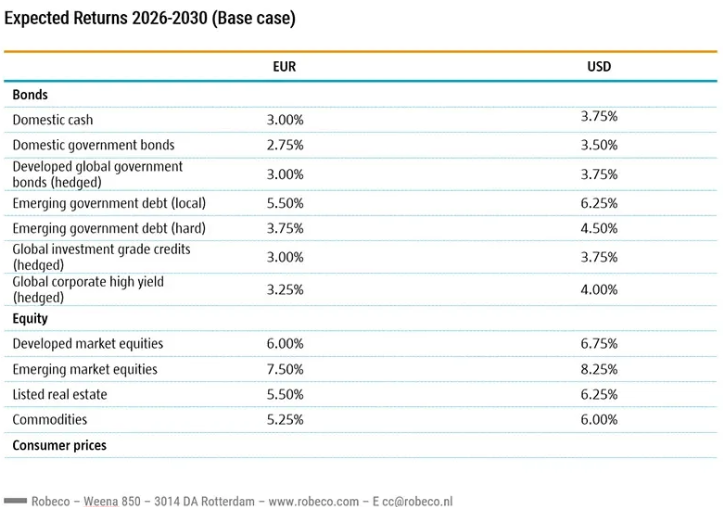
Dutch fund manager Robeco produces estimates of likely 5-year future returns by asset class (stocks bonds etc.) heavily based on where valuations are today versus history. Their table suggests that there is still reasonably good potential for stocks (6% per year on average in euros) over the next 5 years to 2030, with a focus on emerging markets (7.5% expected annual average return).
But expensive valuations can only provide the setup for the end of a bull market. Ultimately, a bear market is triggered by a catalyst, which is typically an economic downturn, i.e. crisis or recession.
The Oil Price is Key
The year 2000 saw a recession largely based around over-investment in technology and telecom (e.g. fire-optic cable) where a boom in tech investment then turned to a bust. In 2007, the global financial crisis and a deep recession was triggered by the boom and subsequent bust in the US housing market, specifically around subprime mortgages which had been granted to high-risk borrowers.
The most common geopolitical crisis trigger for a global economic recession is and has been the oil price. We can consider the economy as simply as transformation of energy. When the cost of energy goes up sharply, economic activity slows sharply.
In the lead up to the 2000 and 2007 stock market peaks, the crude oil price rose sharply, subsequently helping to tip the global economy from growth into recession and ushering in a new bear market each time.
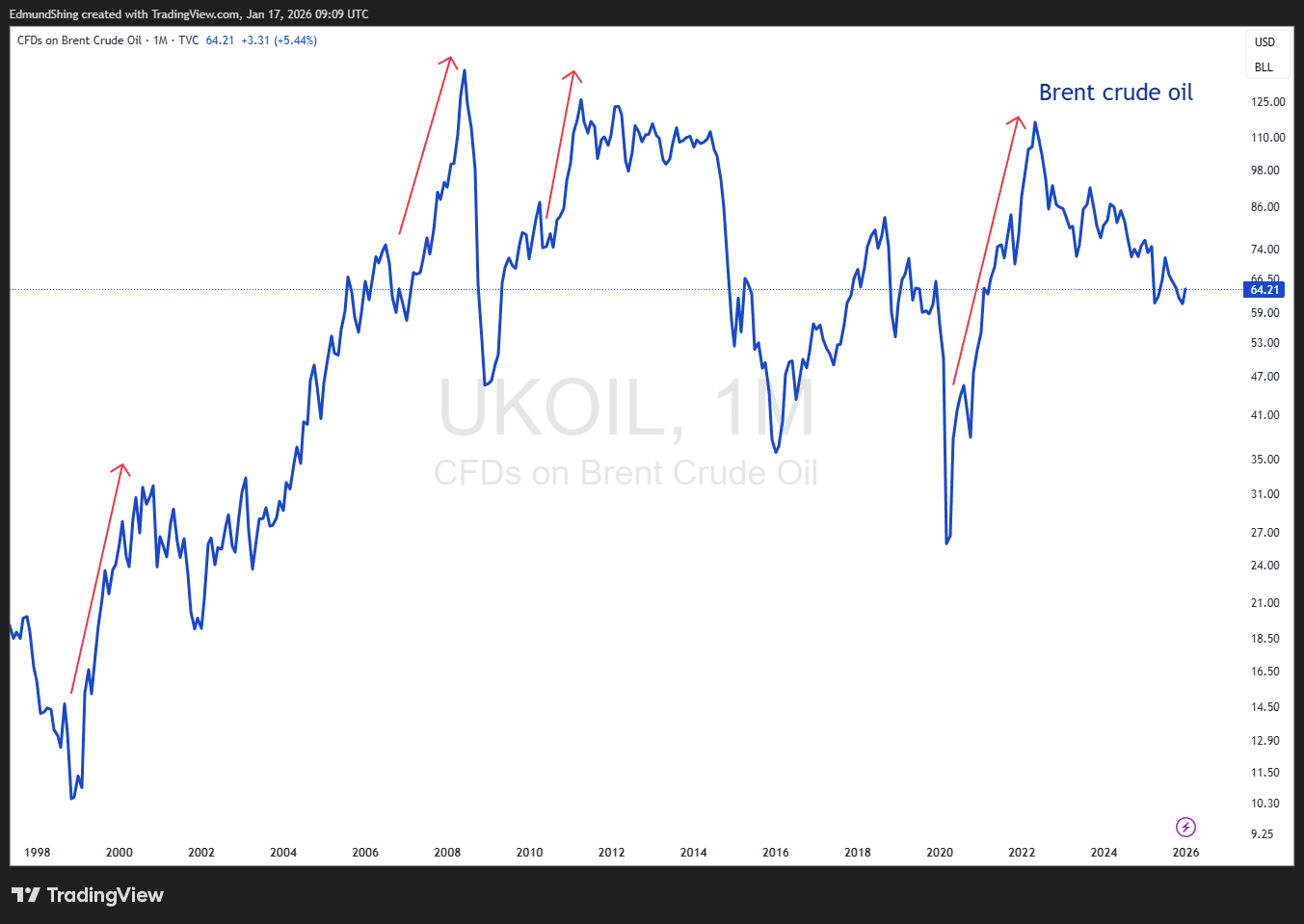
The good news today is that the oil price has actually declined steadily since peaking around the outbreak of the Ukraine conflict in 2022, and today sits at nearly half of those peak oil prices seen in 2008, 2011 and 2022.
If anything, recent events in Venezuela, Iran and potentially around any Ukraine ceasefire could also suppress oil prices further by increasing world supply over time. This is clearly one of Trump’s many objectives with the November US mid-term elections in mind - he wants to keep US domestic gasoline prices as low as possible in his quest to win Middle America’s votes - a real challenge given Trump’s low approval rating among American voters in the latest opinion polls.
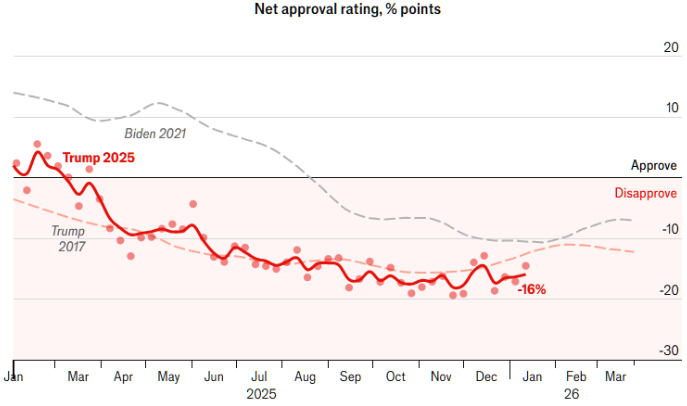
Source: economist.com.
Conclusion: OK for now, but keep your eyes on the oil price. Any sharp and sustained rise could mean trouble for the global economy and for the stock market. Perhaps the real danger will come after the November mid-term elections...
Rising inflation and interest rates are the real killer of bull markets
Linked to the oil price, the second trigger for the end of economic expansion and the bull market in stocks is typically rising inflation and thus rising interest rates. This is linked to oil prices, as in the past, sharp rises in oil price have resulted in a surge in general price inflation. This has then prompted central banks around the world, led by the US Federal Reserve, to then raise interest rates to cool growth and inflationary pressures.
As is often said:
“Bull markets don’t die of old age, they are killed by the Fed.”
Economic growth both in the US and globally remains in pretty good health for now, helped by low and falling interest rates.
US and European inflation rates continue to decline slowly, while there is no inflation of note in China.
This in turn allows central banks in Europe to maintain very low interest rates at 2%, and for the US, UK and emerging market central banks to continue to cut their benchmark interest rates gradually.
So until we see mounting inflation pressures once again which then oblige central banks to begin a new rate hiking cycle, I remain positive that we can avoid a sharp economic downturn.
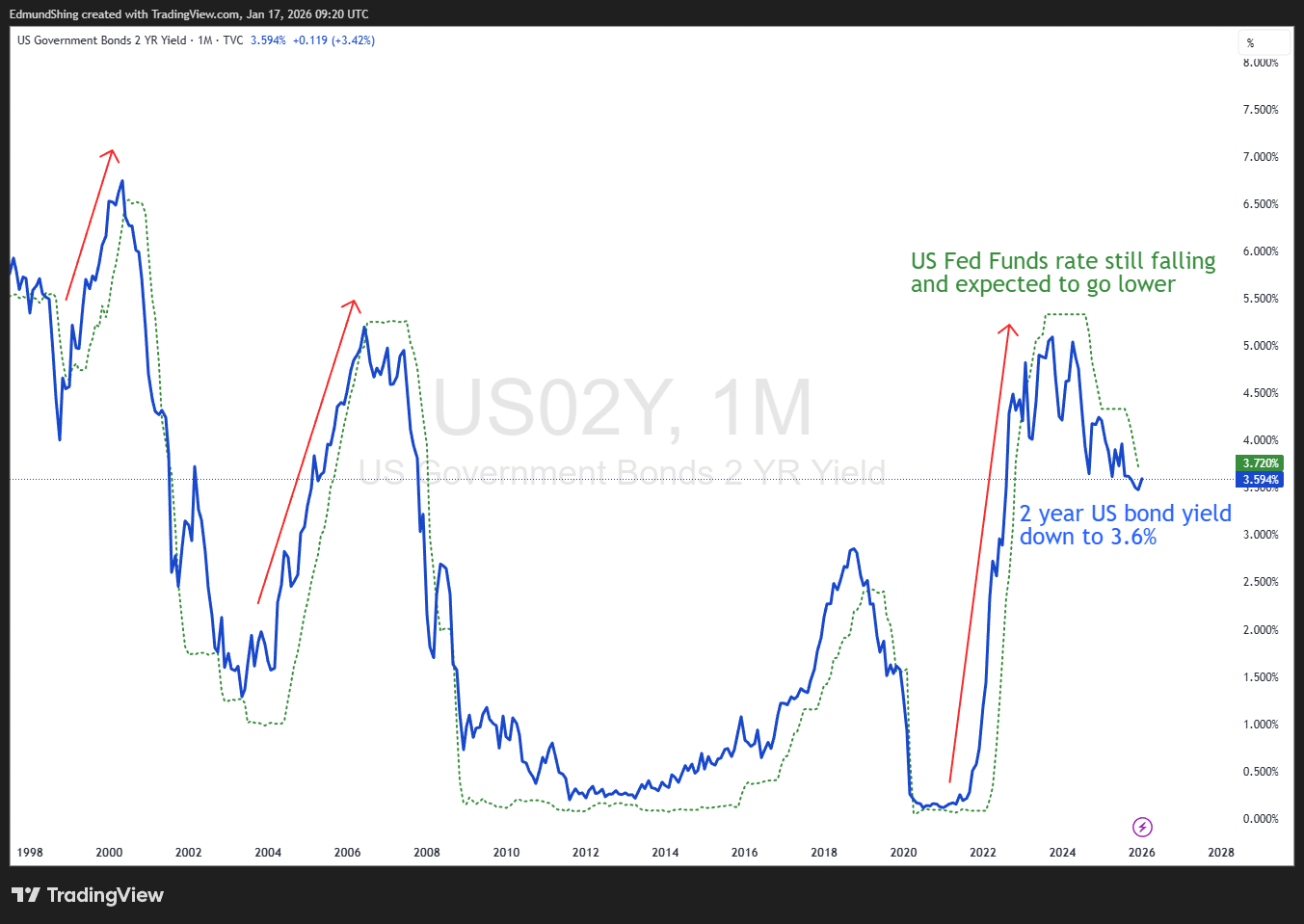
For evidence that the Federal Reserve may be forced to increase US interest rates, watch the 2-year US government bond yield. For now, it is falling rather than rising, good news for the economy and for stock markets.
So what am I focused on today?
There are several themes I like in global stocks:
European industrial exposure, including Sweden. Increasing infrastructure and defence spending should be a good growth driver for this segment, while lower interest rates are also helping the domestic economy.
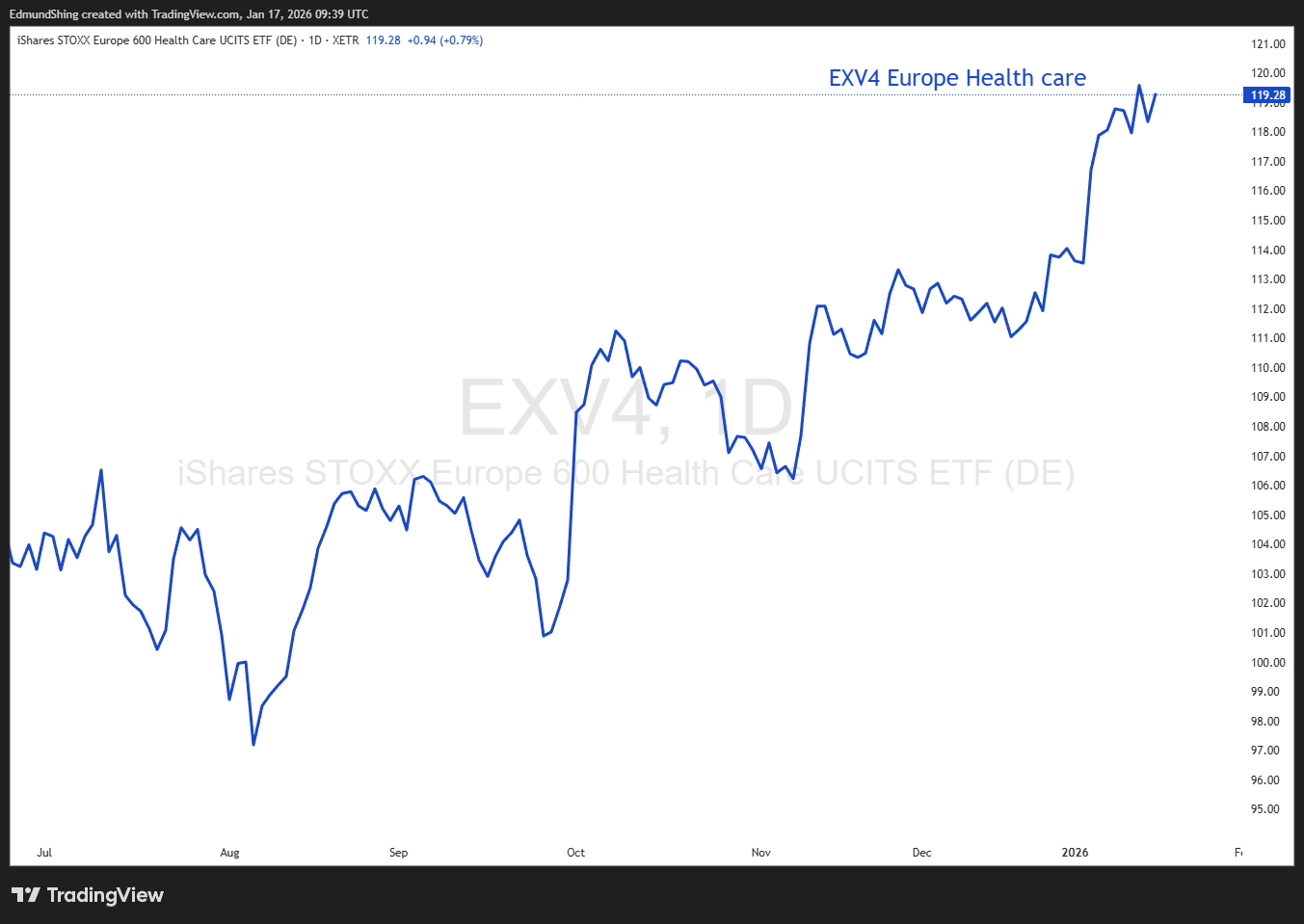
Global health care stocks. Health care remains a sector that should be amongst the first the reap the rewards of implementing AI technology to improve drug development and diagnostics. New treatments for cancers and age-related diseases like dementia should provide growth, as will the continued expansion of use of anti-obesity drugs.
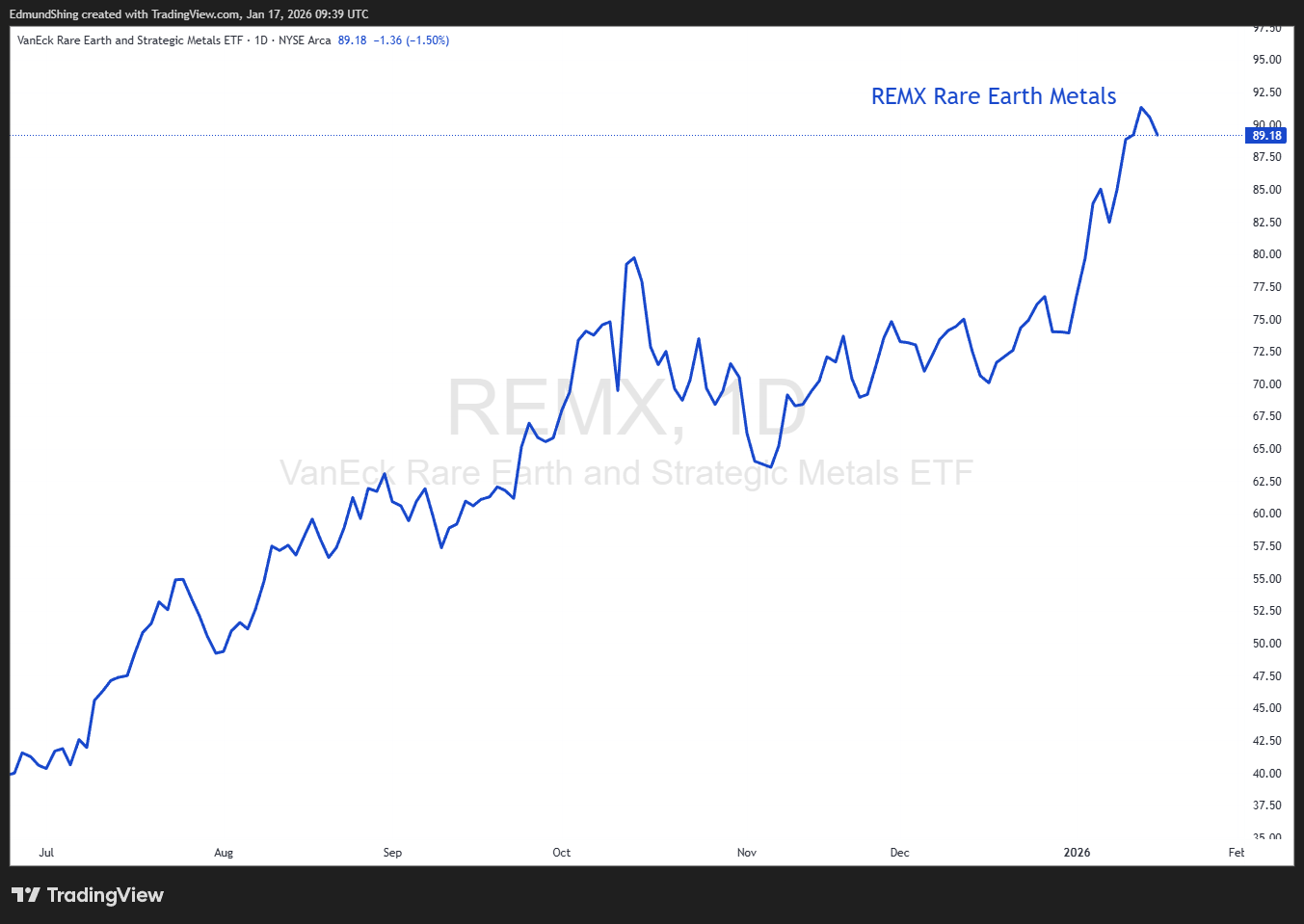
Rare earth metals and lithium: this is a clear geopolitical challenge globally, given the huge Chinese dominance in the production and refining of these metals, necessary for batteries, defence and technology applications.
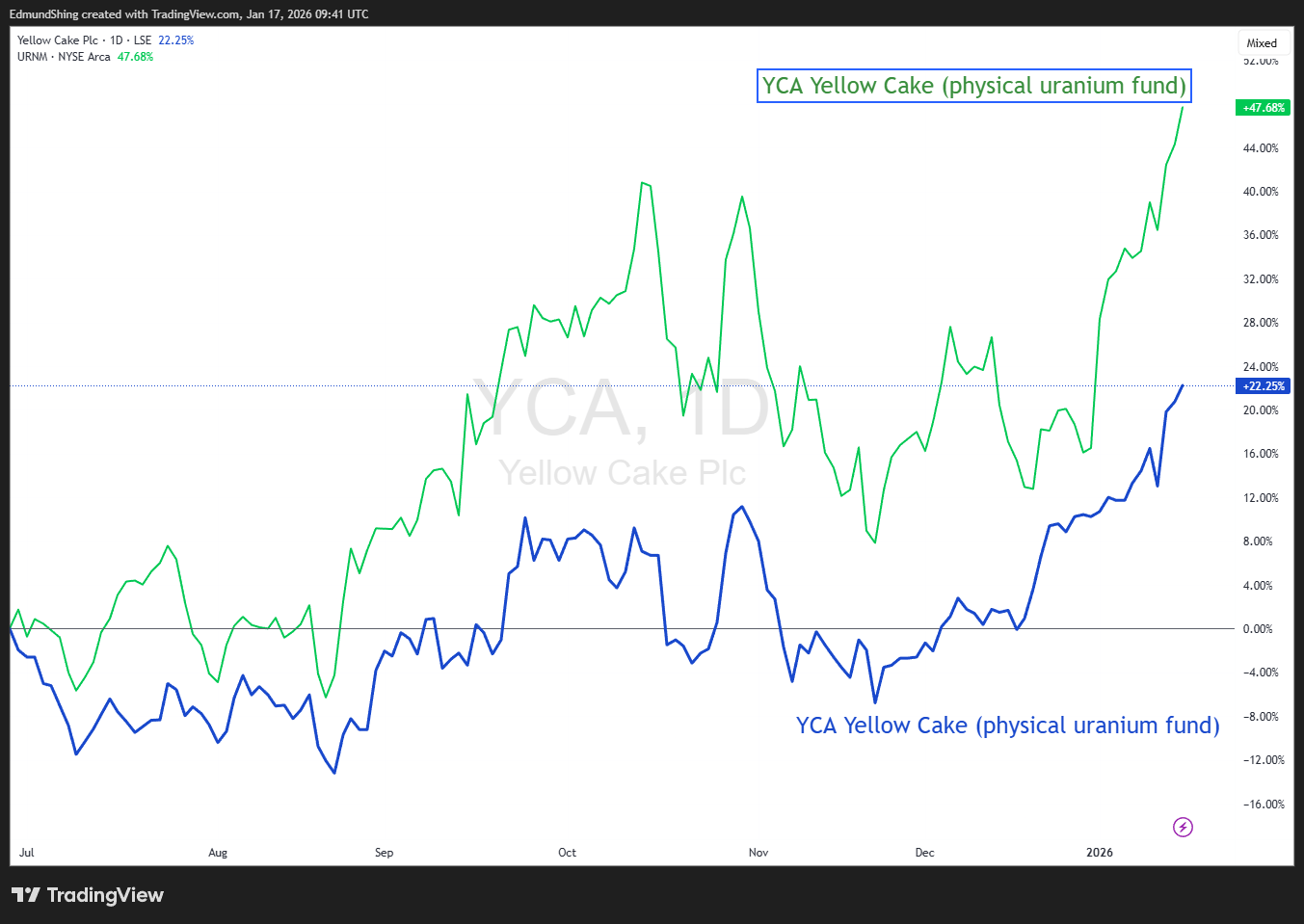
Uranium and nuclear:there is renewed momentum in uranium prices which is also transmitting through to uranium miners, given the growing need for reliable baseload electricity supply for data centres, not to mention the ongoing growth in energy demand in the likes of China and India. Meanwhile, developed countries such as the US and Japan continue to restart all available nuclear power stations, thus increasing the medium-term demand for uranium.
Swedish stocks doing well
European Health care recovers, helped by Roche and Novartis
Rare earth metals
Uranium and Uranium miners
Have a great week
Edmund
Disclaimer
This is not financial advice. Our content is intended to be used and must be used for information and education purposes only. Please read our disclaimer and terms and conditions to understand our obligations.

15 comments
Great stuff as always Edmund , as an aside could you do an update on the model ETF portfolio articles you did a couple of years back, returns, rebalancing etc.
Regards
Andy
Excellent as usual Edmund, your content is much appreciated.
Spot on with the near universal pessimism that abounds today, everybody seems to be banging on about the AI bubble when the companies splurging on the capex (out of own cashflows) are the richest companies in history - bears very little resemblence to the internet bubble when most of those stocks were just mere ideas with a .com tacked on. Having said that, there does seem to be an immense and sustained transfer of capital from the software to the hardware side of things.
Personally I think much of the defence sector is looking rather toppy, these stocks are trading on very high multiples. Even with increased sales they have to do massive capex to expand manufacturing capacity. Given that their customers are highly indebted nations with ageing populations and stretched tax bases, it seems unlikely to me that they will be allowed to make outsized profits, Trump gave us a taste of this with his recent statements on defence companies. Weapons technology is evolving very rapidly and many of the bread and butter systems made by the large defence primes like Rheinmetall are being rendered obsolete - we don't see many tanks and helicopters wandering about in Ukraine anymore. I believe some of the rhetoric on European defence spending is intended to appease Trump, objectively, the threat to Europe from Russia with its hollowed out military machine is less than prior to 2022. It seems unlikely to me that much of NATO would be willing to get involved with a China-US conflict over Taiwan and their actual defence expenditure will reflect this.
On inflation, we may see a decoupling between the USA and Europe/Global South as the latter is benefitting from exported deflation from China, whilst the former is imposing protectionist measures to rebuild its industrial base (at the cost of higher prices). The market may be anticipating a wider divergence in interest rates between the USD and other currencies - hence recent moves in the currency and equity markets.
Very interesting read. Thanks Edmund.
I think rational analysis is not useful at this juncture.
There is a malignant narcissist who has early unset dementia in the White House. Things have been pretty wild so far, but they will only get much worse in the future. A defensive posture with a strong gold and silver based foundation is the way to go.
Very useful pointers . Thank you .
Very interesting read, thank you. Though an increase in US tariffs ....!
....Shouldm't affect gold's increasing value, I have some thanks to Edmund's Musings on Stocko.
Great article thanks. It will be interesting to see where oil goes in the next year. We seem to be converging between the current downtrend (since 2022) and the long term low. Expensive oil producers shut down below these prices so supply tightens. Also US shale is now in decline and there aren't any simple replacements (aside from Venezuela where US companies are reluctant to tread).
WRT US Fed rate v's 2 year yield. Looking back at the 2008 GFC the declining 2 yr yield indicated an increase in demand for bonds (and turned out to be a warning) as the fed rate lagged. A similar decline and lag has happened recently, causing some analysts to predict a recession, and yet it hasn't materialised. Is this time different or is the recession coming?
The US is currently supported by cheap oil and cheap energy. If this changes it could trigger a slow down. As you say. Trump is doing all he can to prevent this (possibly why he hasn't attacked Iran to date).
The link between energy and economic activity is spot on. In physics "energy is the ability to do work". There are no wealthy, low energy economies! (Please tell our current energy minister).
I think we are all nervous bulls at the moment. Those with the strongest nerves usually get the best results!
Not sure I follow upgrading your silver target to $80/oz, when it is currently trading at c.$90/oz.
Unfortunately it was well below 80 when we did it, it is just that the silver price has moved so much recently...
That makes sense. It's certainly been on a tear late. Who knows where it will end.
A great piece with lots of very sensible comment.
Thank you Edmund.
Awesome Edmund, I really look forward to your views and it helping my investment decisions with some of the etfs I have been looking at.
I really enjoyed reading this Edmund, and have learnt a lot about what I should watch out for. Thank you