Market Musings 170525: Soft v Hard US data, an energy tailwind, Infrastructure shines

Market Musings 170525:
Soft v Hard US data, an energy tailwind, Infrastructure shines
Podcast:
Switzerland: navigating the consequences of risk aversion
(click link in title to listen)
Is the US stock market pricing in too rosy an economic outlook?
I want to talk today about the potential disconnect between the stock market rebound on the one hand and the risk to US economic growth slowing down on the other, and finish with a little commentary on what I find very interesting and possibly underappreciated asset class which is performing well at the moment, namely infrastructure.
To start, over the last month or so, we've seen clearly a very big relief rebound unfolding in the stock market, not only in Europe but particularly in the US. Remember that the S&P 500 index from peak had fallen by 20% in the aftermath of the April 2nd reciprocal tariff announcement by Donald Trump to the recent lows. It has now rebounded by 20% from that low point over the last few weeks.
S&P 500 index now +2% year to date in US dollars (but still down substantially in euros or pounds)
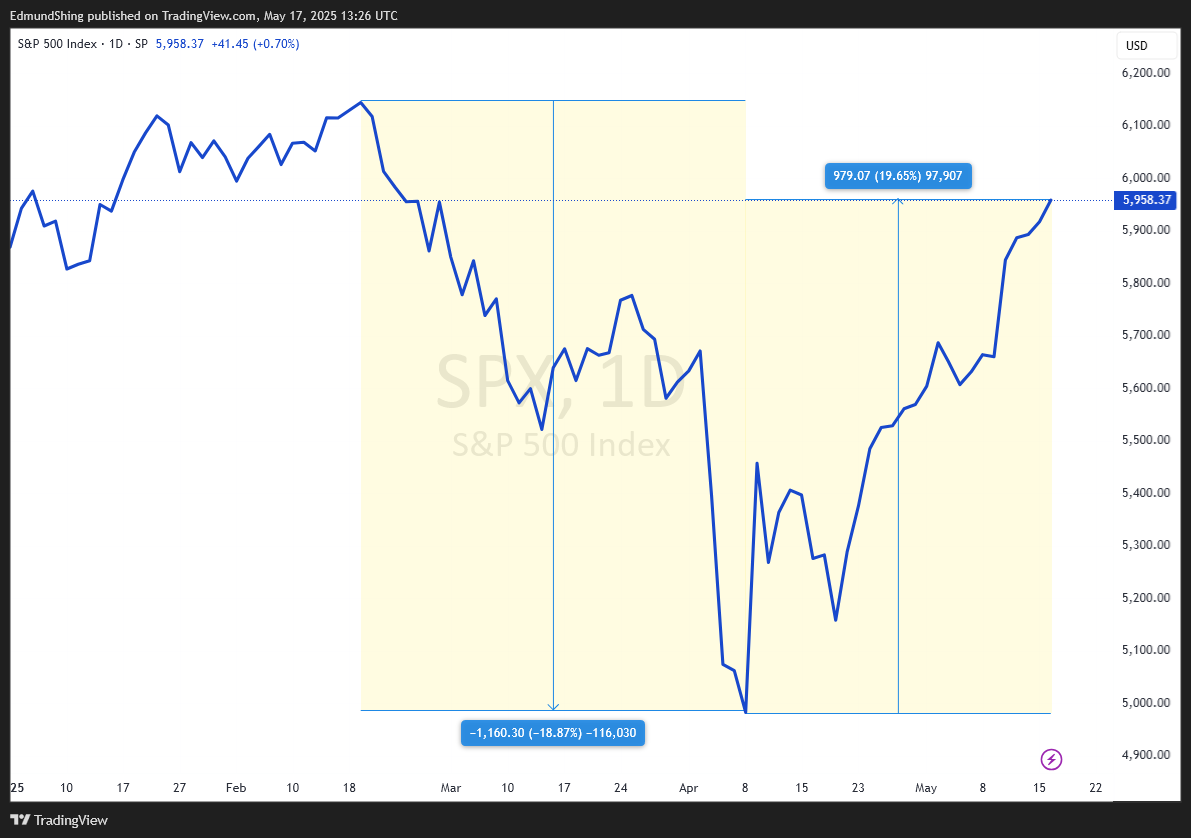
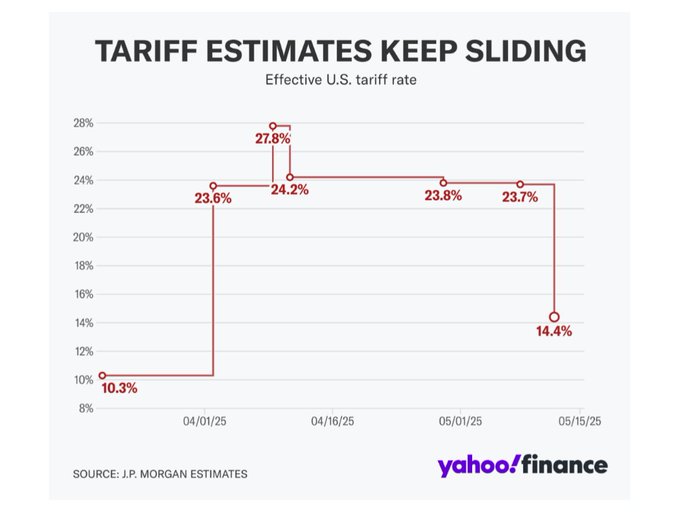
This implies in my view no long-lasting damage to the US economy from these higher tariffs and from the uncertainty unveiled by Donald Trump. Donald Trump has since stepped back from the brink, particularly with trade deals starting to be unveiled notably so far with the UK, but with others likely following very shortly. But most importantly, trump also stepped back in terms of the tariffs being levied on Chinese exports, with a 90-day agreement to lower the US tariff from 145% on Chinese exports to the US now to 30%,. The Chinese have in return lowered their tariff level on US exports to China to 10%.
Nevertheless, even with this 30% level on Chinese exports to the US, the US tariff level overall on goods imports is going to average something over 14%, up from below 3% before Trump's second mandate began in January. This constitutes a big extra tax on US consumption whichever way you look at it, certainly looking at the goods sector.
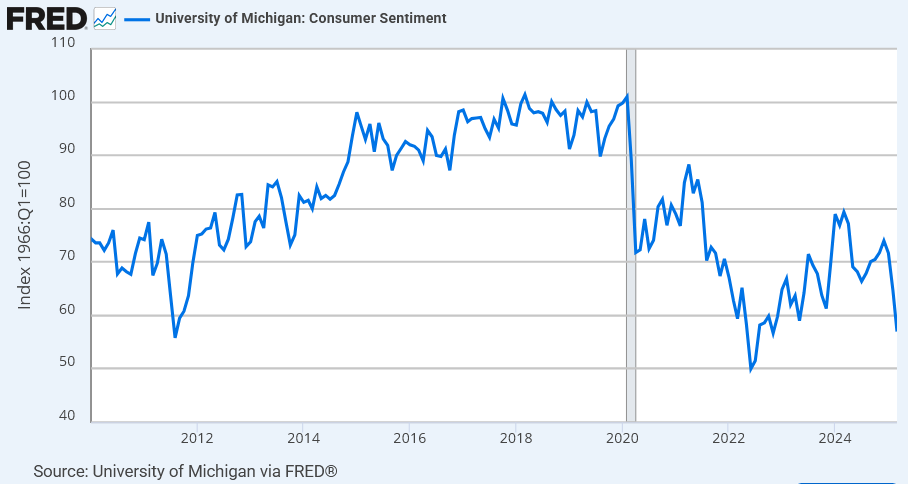
If we look at the economic side of the picture, surveys do not reflect this very sanguine outlook on the US economy. In fact survey data - whether you look at the monthly surveys done on consumer confidence on the one hand, or on business confidence (PMI surveys or small business sentiment) on the other - these all look terrible and suggest that economic growth should slow down over the next few months quite dramatically.
However if then you look at indicators of how activity is tracking at the moment e.g. retail sales or the Atlanta Fed GDPnow indicator, you see a different picture. Activity up to now continues to hold up relatively well. The Atlanta GDP now indicator for instance suggests growth close to 2.5% for the second quarter of this year. So it doesn't seem to bear out the pessimism being outlined in these surveys.
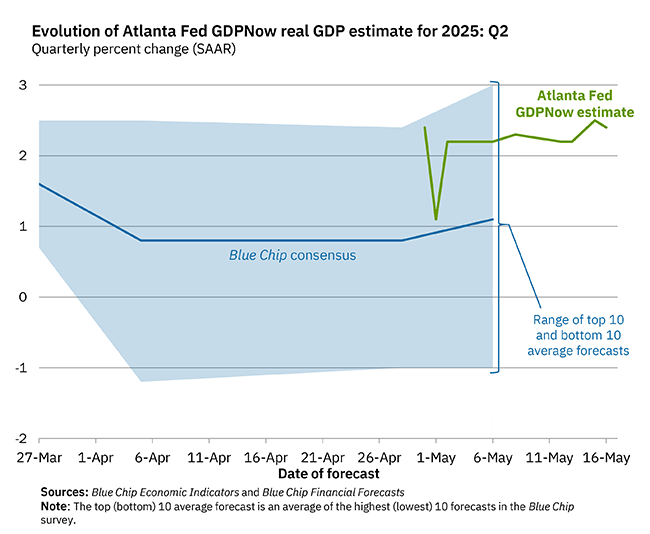
Nevertheless there is a risk that beyond the second quarter we could see
a slow down as the real full impact of these higher tariffs hits
consumption. It hasn't hit yet, but it probably will hit likely from
June onwards.
Inflation and growth both helped by lower energy costs
Now one of the offsets that we have here particularly in the US against the potential inflationary impact in the short term from these tariffs being passed through into higher goods prices for the final consumer one of the offsets is energy cost. We are now seeing lower energy costs across the board whether you look at the US or Europe, and that is helping to offset this potential hike in US inflation in the short term and also lower the hit to GDP growth due to tariffs.
Why do I say this? Because if you look for instance at US gasoline prices, US gasoline futures are now sitting at $2.10/US gallon versus $2.50 back in May 2024. So on a year-on-year basis, gasoline prices are down 16% in the US. This is reflected in overall energy inflation - if we look at overall energy inflation in the US, you have -3.7% year-on-year for energy costs. In Europe we see pretty much the same effect at -3.5% year-on-year. So in both regions, energy costs being lower - particularly the oil price being lower - is helping spread disinflation and keep inflation under wraps.
US gasoline futures -16% y/y
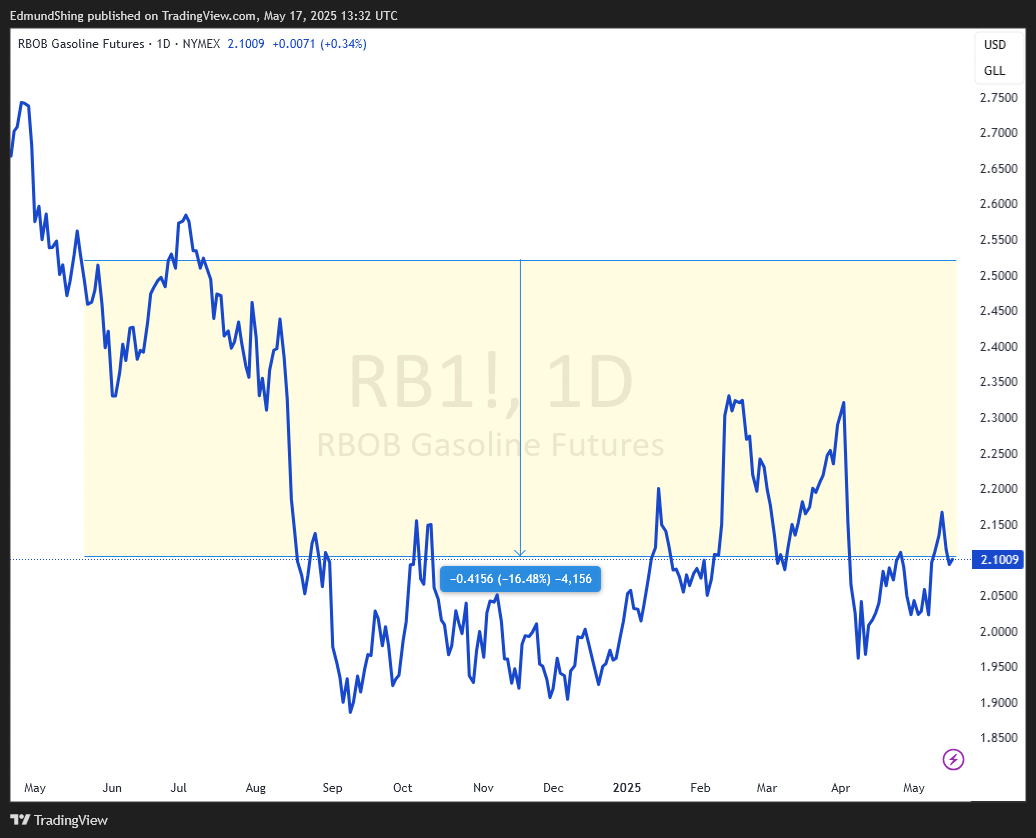
We should remember that overall inflation does tend to follow energy costs over time, so where energy prices go, overall inflation tends to follow with a lag.
So yes, I still have some caution therefore on the US economy. Let's see how that plays out; let's see to what extent the hard data follows the soft survey data.
Infrastructure: an under-appreciated asset class that performs well long-term
One asset class aside from stocks that is performing pretty well in the year to date as I mentioned at the beginning is infrastructure. These are the real assets that underpin essential services such as provision of water. provision of power, transport and so on.
Now if you look at a general overall listed infrastructure ETFs, you will find that they are up roughly 10% in US dollars in the year to date, so better performance than let's say US stocks which are only up about 2% year to date.
Global listed infrastructure ETF +10% ytd (in USD)
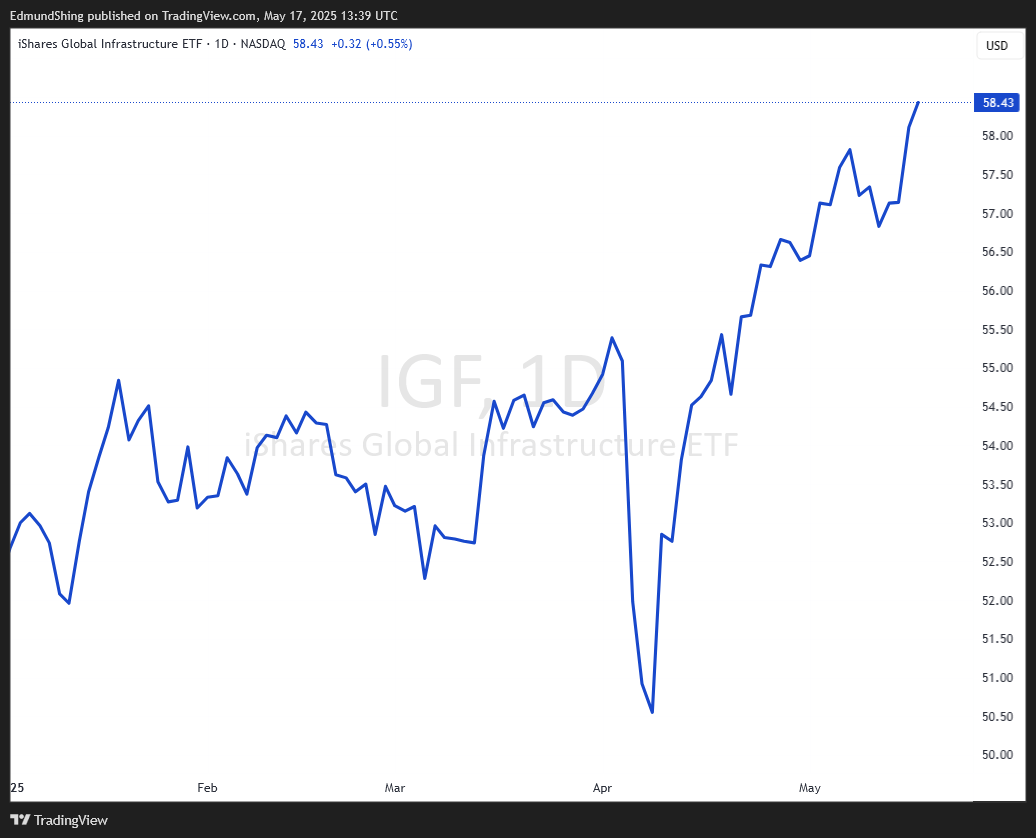
However if you look at some of the sub-sectors within infrastructure they are even doing better than that.
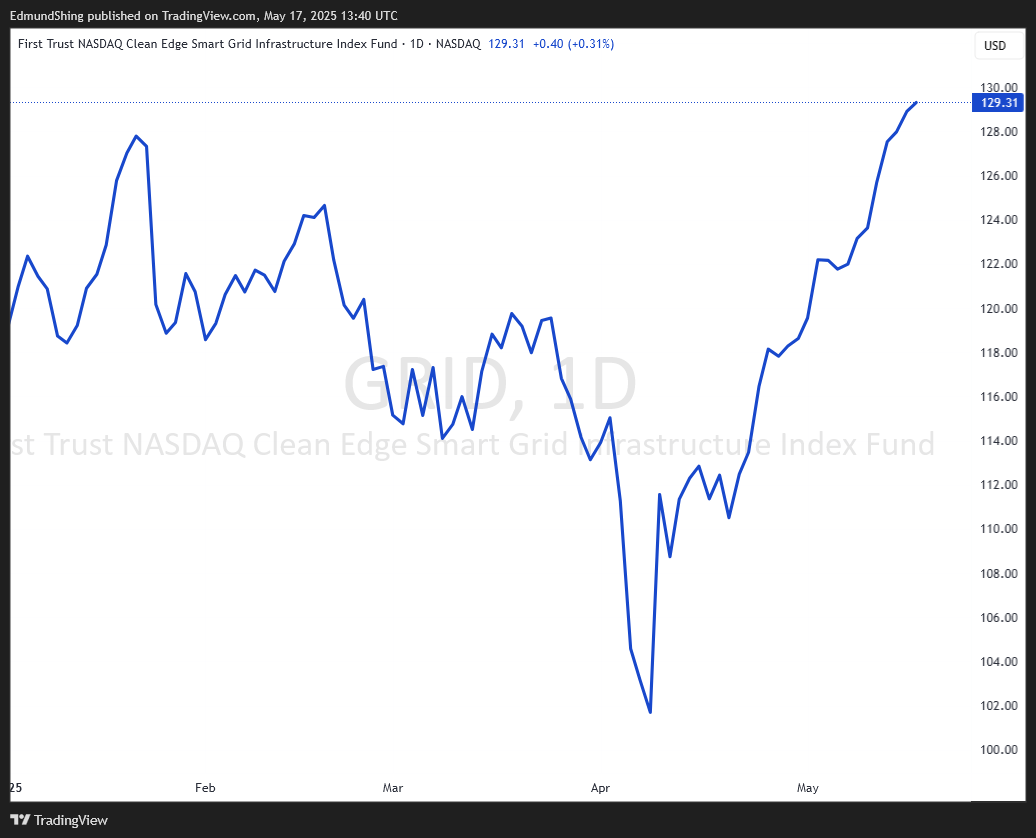
For instance if you look at infrastructure development on the electricity side such as companies involved in building out electricity power generation and networks, you're seeing much stronger performance from these types of funds and ETFs.
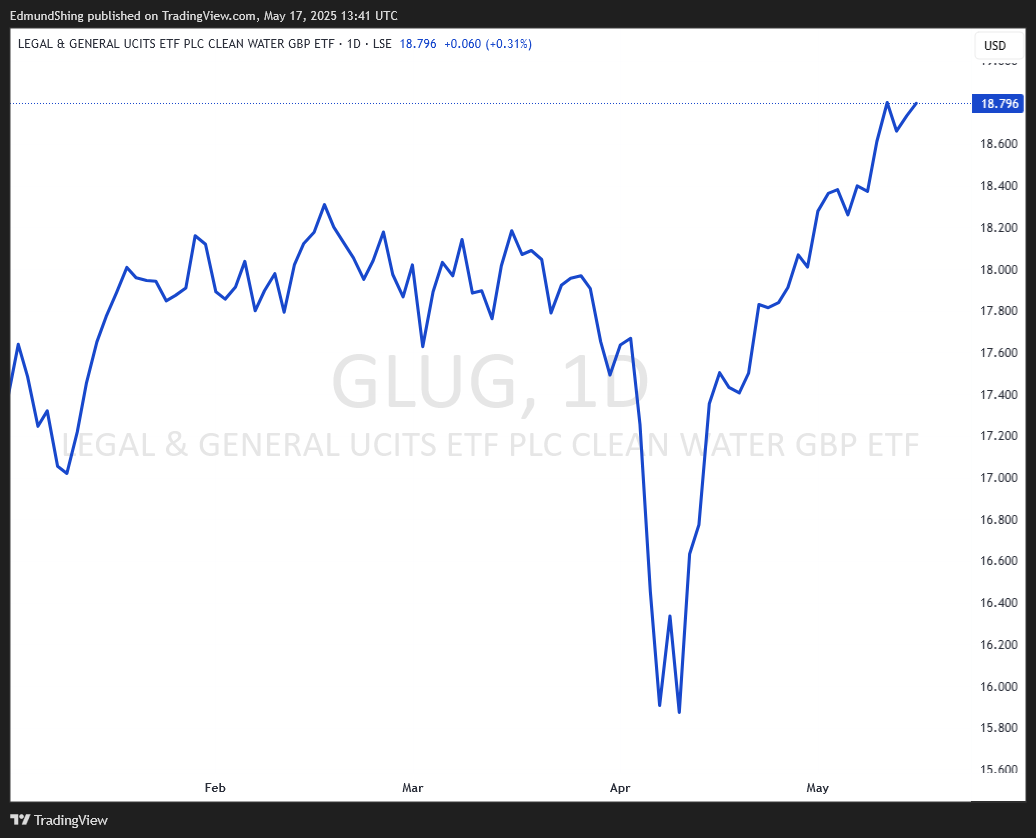
Clean water is also performing well, so funds and ETFs focus on clean water are also up something like 10% in dollars year to date.
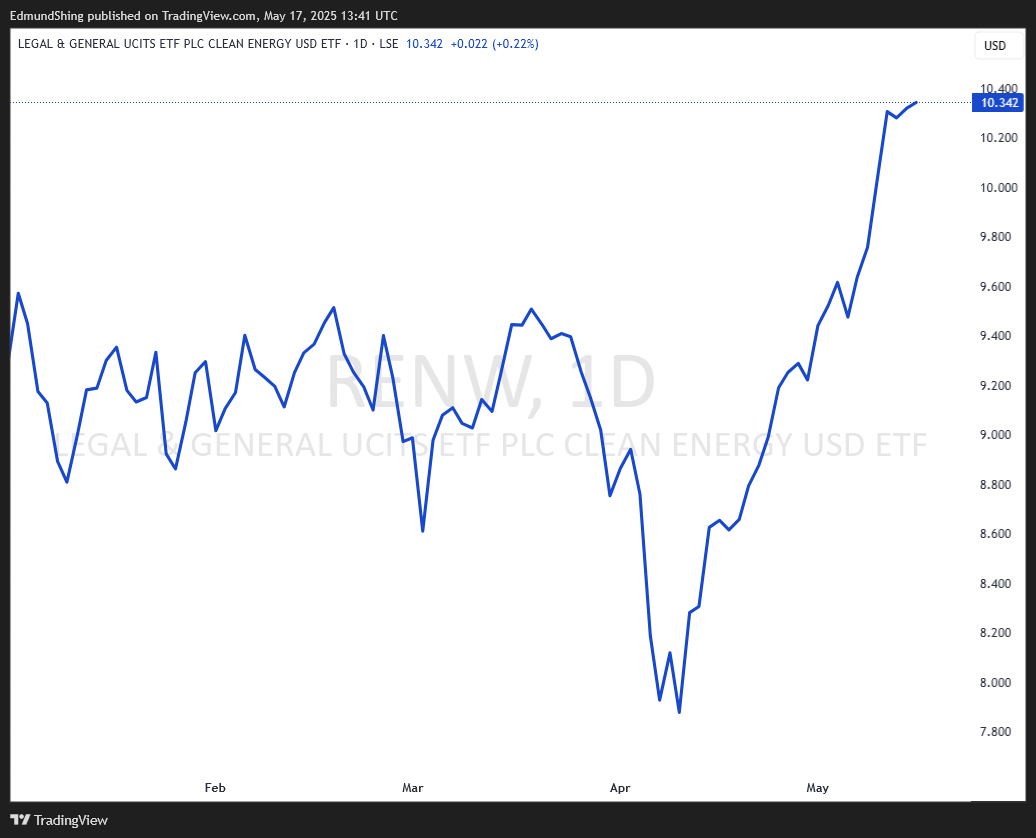
Clean energy is performing better - this is a surprise because this if you think about solar and wind energy, this is a segment which has been under extreme pressure really since 2021.
But now this subsector has been boosted by the surprise announcement of lower than expected revisions to the Inflation Reduction Act in the US . Basically, there were a lot of tax credits included in the IRA that the Biden administration launched that were targeted at boosting clean energy investment. Trump was expected to pull these back but in the end, what the Trump administration is doing in reforming the IRA is nothing like as bad as expected, and so these tax credits will be higher than expected and stay in place for longer than expected over the next few years. This is helping the clean energy sector, so if you look at clean energy funds and ETFs they are starting finally to perform a lot better after a long bear market, up around 10% year to date
But the real star is actually European focused infrastructure. There are now ETFs and funds focused on this segment. One ETF which is focused on European infrastructures is up over 21% in the year to date in euro terms. So clearly if you're thinking about infrastructure the place to be at the moment is Europe.
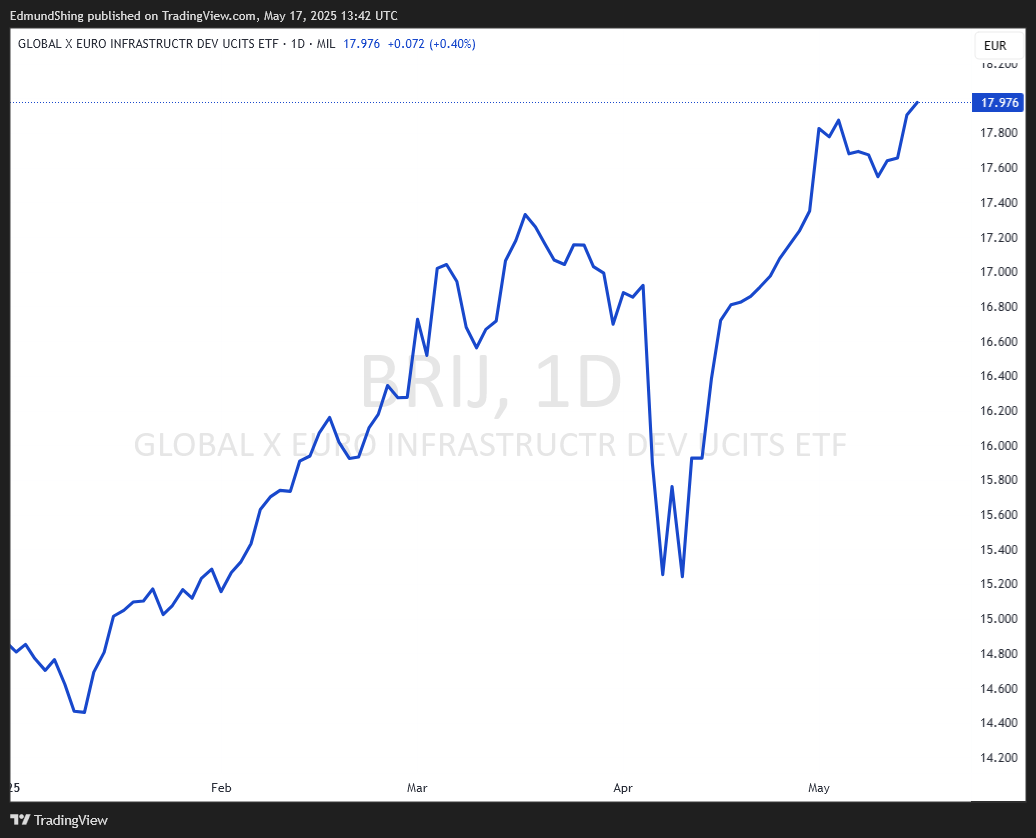
This is not surprising considering the German coalition government have recently announced a jumbo defence and infrastructure spending plan as part of their new budget, in response to what goes on in Ukraine, but more than that, really in response to the poor infrastructure that exists in Germany today. So the impulse in terms of infrastructure spending is coming from Germany, but this is likely I believe to spread to the rest of Europe.
The joker in the in the pack would be any potential ceasefire in Ukraine. Thus far, talks are ongoing buit there has been no resolution yet. Were there to be some sort of ceasefire eventually agreed, then we might think about reconstruction efforts in Ukraine. It is likely that European infrastructure related stocks could do pretty well off those reconstruction efforts, because clearly the infrastructure in Ukraine would need to be rebuilt.
Fingers crossed for the next week
Edmund
Disclaimer
This is not financial advice. Our content is intended to be used and must be used for information and education purposes only. Please read our disclaimer and terms and conditions to understand our obligations.
4 comments
Pantheon Infrastructure (LON:PINT) worth a look on the infrastructure play.
Great stuff as usual Edmund as an aside any concerns about 10 year UK and US bond yields both seem to be trying to nudge upwards but don't seem to be able to get through 4.8% at the moment thankfully.
Also thinking any thoughts on how the Trump administrations efforts to get the dollar lower will play out against trying to get someone to buy the $9 trillion that needs rolling over whilst the currency is weakening ?
Regards
Andy
Hi Andy
I think Trump’s recent Middle East trip is informative - taking a commercial approach, convincing Saudi Arabia to invest in the US. So they will likely buy up US Treasury bonds as part of a trade deal. Trump could take the same approach with Asian countries also looking for trade deals.
Domestically, the Supplementary Leverage Ratio forcing US banks to hold a lot of capital could be eased as part of financial sector deregulation, and could reclassify US Treasury bonds as risk-free assets for banks, allowing them to buy more bonds to make money and boost their profitability.
Finally, they could even go as far as Italy and Belgium and issue retail bonds that are tax-advantaged, as US retail investors currently have very low exposure to US Treasuries.
Edmund
Next year is the US 250th anniversary, Trump turns 80 and they host the World Cup.
After that then I might put everything into gold and go live in Switzerland. I wish.