Market Musings 180125: Europe, UK stocks surprisingly hit new highs

Market Musings 180125: Europe, UK stocks surprisingly hit new highs
Surprise surprise! European and UK stock markets hit a new all-time high this week...
Podcast:
Our Investment Strategy for January 2025
(click on title to access podcast via link)
Reversing Trump Trades: Higher long-term US interest rates, stronger US dollar
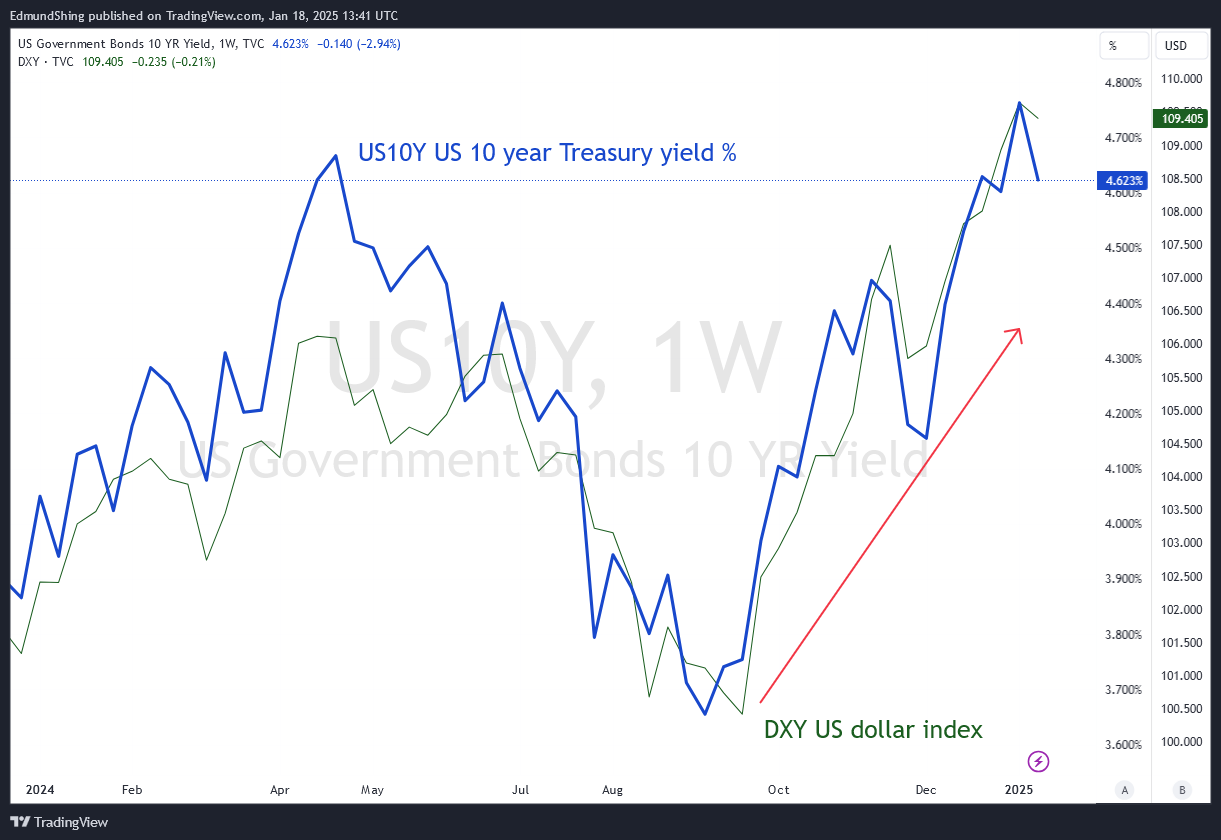
From late September last year, until a week ago, one of the clear Trump trade winners has been the strength of the US dollar, reinforced by the rise in long term interest rates, ie US Treasury bond yields. The 10 year benchmark.Treasury bond yield had risen from 3.6% at the low in September to touch 4.8% at the beginning of this year, more than 1% higher. We saw a similar reaction in Europe, particularly in the UK, with a similarly sharp rise in the 10 year gilt yield, ie, the UK government bond yield.
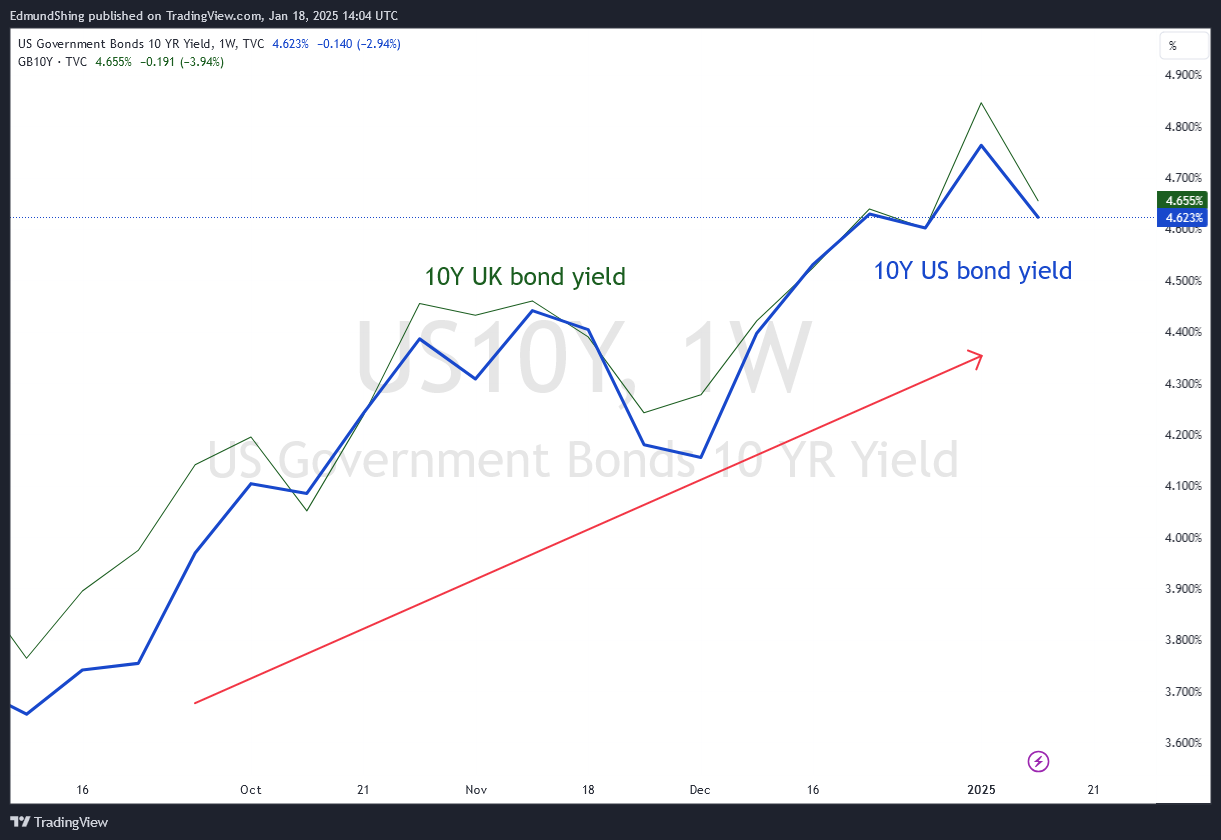
So we had a twin movement here, which was driven principally by
- the strength of the US economy,
- the expectations that the arrival of Donald Trump in the White House will reinforce this growth, and
- the potential inflationary impact of Donald Trump's policies, which in turn, have driven interest rates higher.
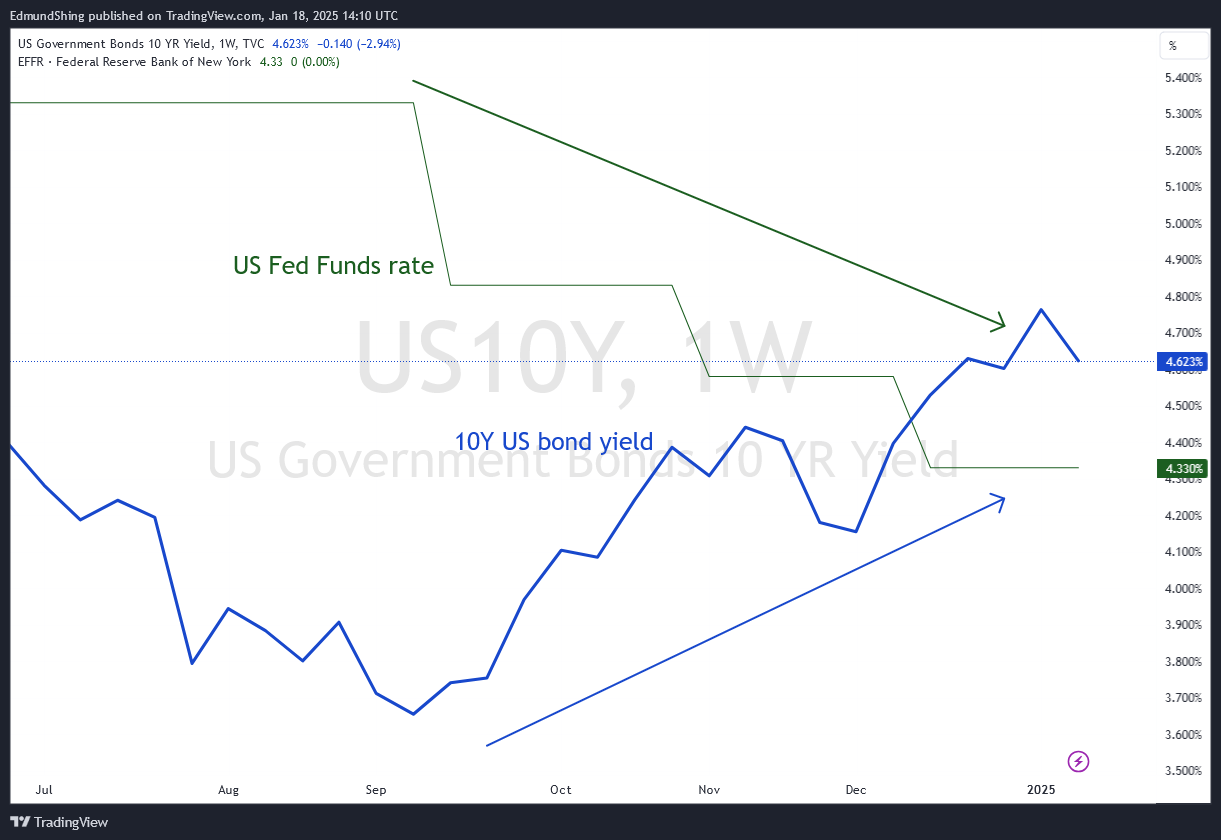
We should recognize that this is an unusual series of events at a time when the US central bank, the Federal Reserve, has been cutting its benchmark Fed funds rate to 4.5% from a peak at well over 5%.
Usually when the US central bank cuts interest rates, long term interest rates, ie, bond yields, typically fall. However, in this case, the reverse has happened. While the Fed funds rate has been cut, certainly over the last few months, long term interest rates have actually risen.
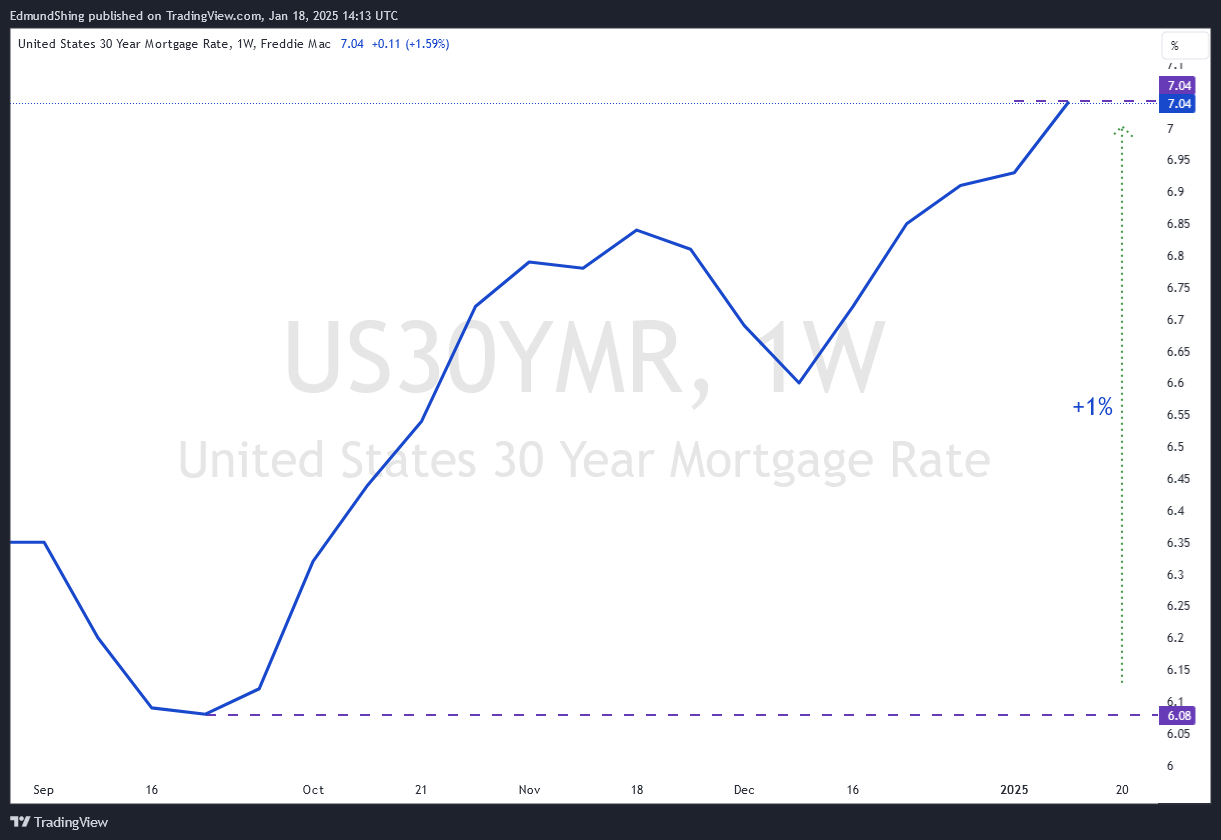
This is important in the US because it has a number of impacts on certain sectors, most typical, most particularly on the housing sector, where the key source of financing is set according to the 30-year fixed mortgage rate. Typically housing activity is stimulated when this fixed mortgage rate falls below 6.5% but at the moment, given the rise in long term bond yields, the fixed mortgage rate is actually at 7%, which is clearly keeping a cap on US housing activity for now.
The question is, how inflationary will Donald Trump's policies really be?
We know that he is focusing on four pillars in terms of policy, namely:
- lower taxes.
- higher tariffs on imported goods.
- deregulation of certain industries such as finance and energy, and
- trying to cap immigration, and in particular illegal immigration.
Clearly, the market consensus is that higher tariffs and a potential cap on immigration will both stoke inflation, firstly, via higher the higher cost of imported goods for US consumers, and secondly, via potential tightening of the labor market, which could result in higher wage growth and thus higher inflation, particularly in service sectors.
But we won't know the extent of the incoming Trump administration's policies for a few days, at which point we will be able to better assess any potential impact on both growth and inflation.
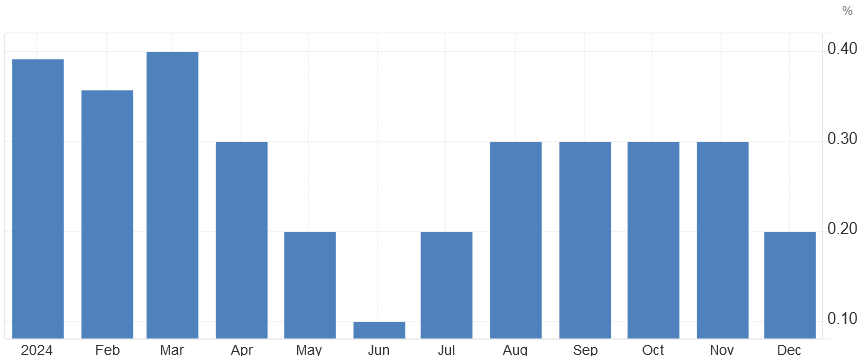
Interestingly, the US inflation data released last week was actually somewhat benign as far as financial markets go. Both producer prices and the consumer price index, ie CPI, came in below or at the very worst, in line with economists' expectations, and show that the the continued drift lower in US inflation rates is not yet over.
US core inflation % year-on-year still falling
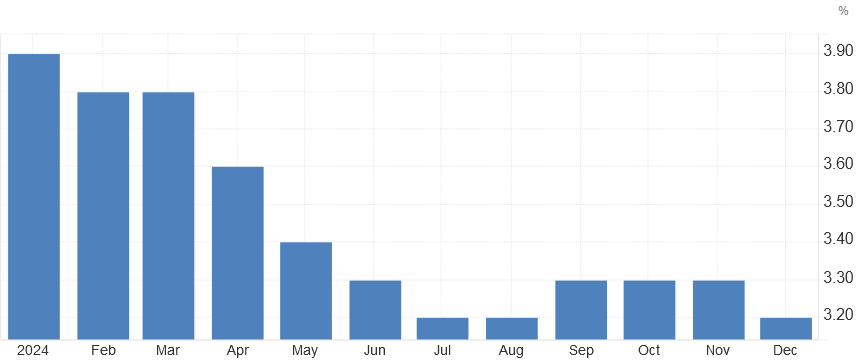
US core inflation eased on a monthly basis in December to 0.2%
Source: tradingeconomics.com
This has, in turn, provoked a little bit of a turnaround in the trend higher in both the US bond yield and the US dollar. The US 10-year benchmark yield has now pulled back to 4.6% from a higher 4.8% and
the US dollar has also pulled back from its recent strength with the euro/US dollar exchange rate stabilising at around $1.03.
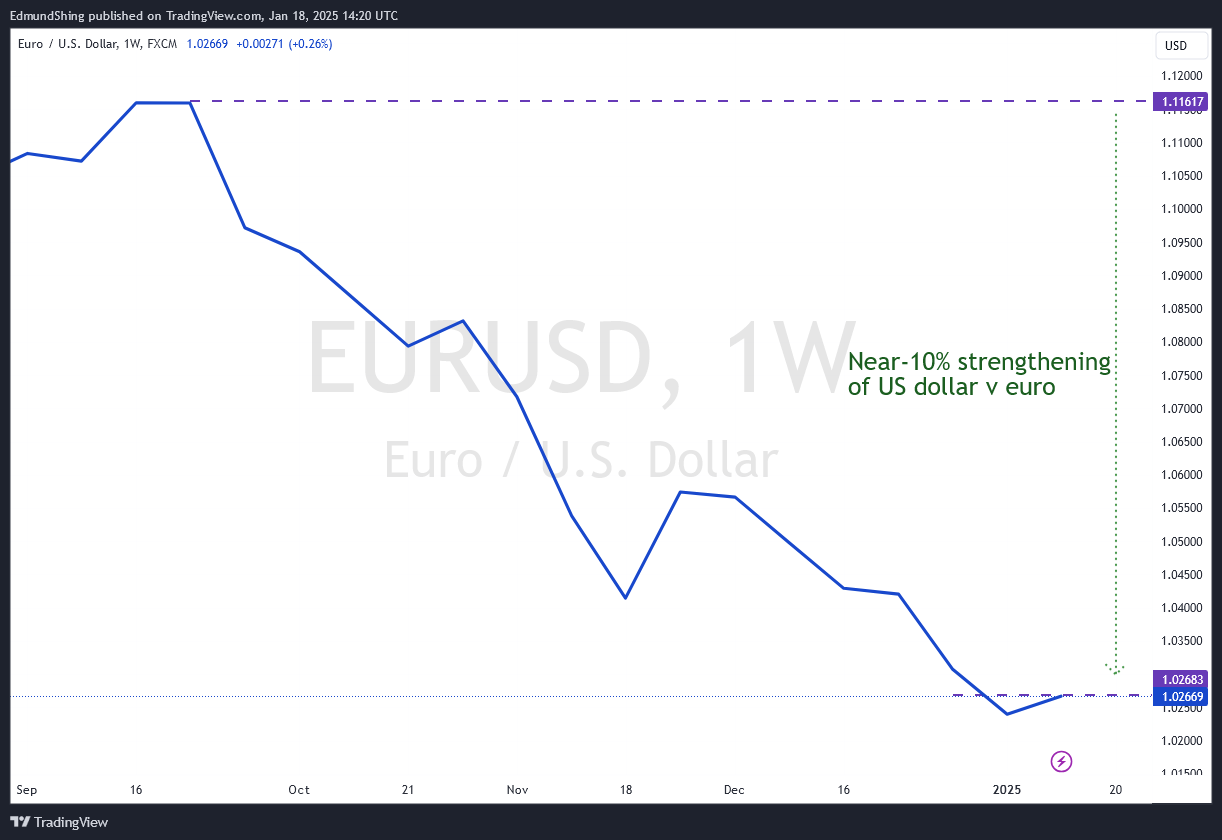
The rise in the dollar is important for a couple of reasons, firstly, because the higher the dollar goes, particularly when interest rates go higher, the tighter financial conditions become. This in turn slows the economy and also tends to impact upon financial markets such as the stock market. Secondly, the slowing of economic growth is lagged, but should happen because US goods and services become less competitive versus overseas.
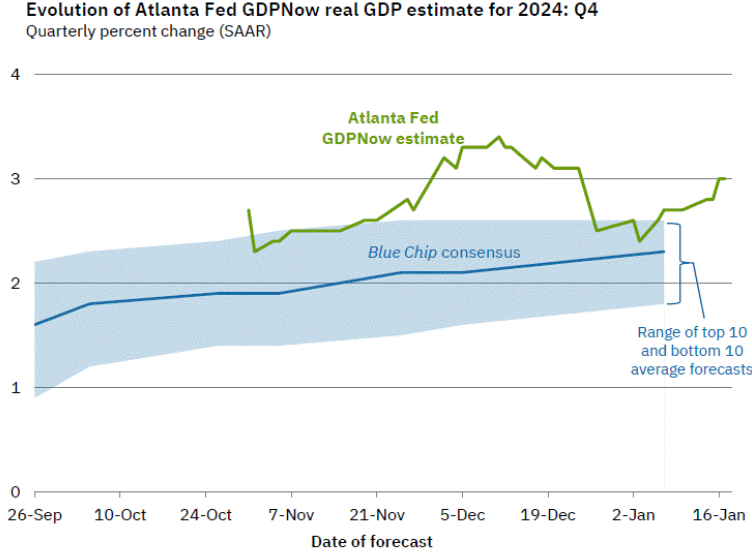
However, thus far there is little evidence of the strong US dollar hitting US growth, with the timely Atlanta Fed GDPnow indicator of growth for Q4 2024 still running at a strong annualised 3% rate.
Source: Atlanta Federal Reserve
Interestingly, there is also an earnings translation impact for the largest US companies, because their overseas earnings, let's say in euros, yen or other currencies, are suddenly worth less in dollars because of the strength of the dollar versus those currencies. This at least optically should result in a slowing of earnings growth rates, particularly in sectors most exposed to overseas earnings, which of course, does include the very highly rated technology sector.
But again, for now there is little evidence that the stronger US dollar is hurting the share prices of US large-cap technology stocks, judging by the relative reslience of the Nasdaq 100 index.
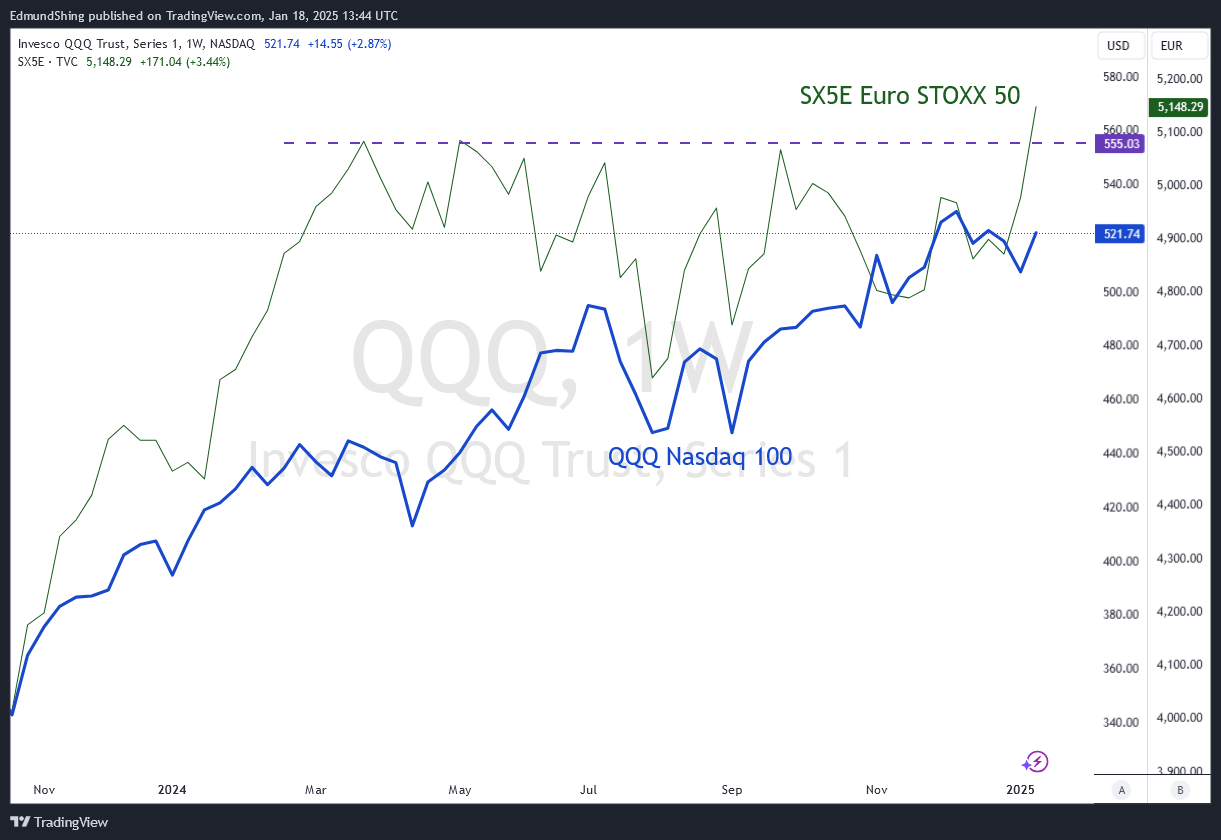
That said, despite the pessmism surrounding the Eurozone economy and most notably Germany and France, the weaker euro does seem to have been a factor in the strong rally to new highs in the benchmark Euro STOXX 50 index. This has been boosted in the last week by surprisingly strong earnings results from Swiss luxury goods company Richemont, which has boosted sentiment around French branded and luxury goods companies (e.g. LVMH, L'Oreal, EssilorLuxottica, Hermes) which are a siezeable share of the Euro STOXX 50.
Remember that, just as the stronger US dollar should slow US growth over time, so the weaker euro should conversely help European growth over time too, given the relatively open nature of the European economy.
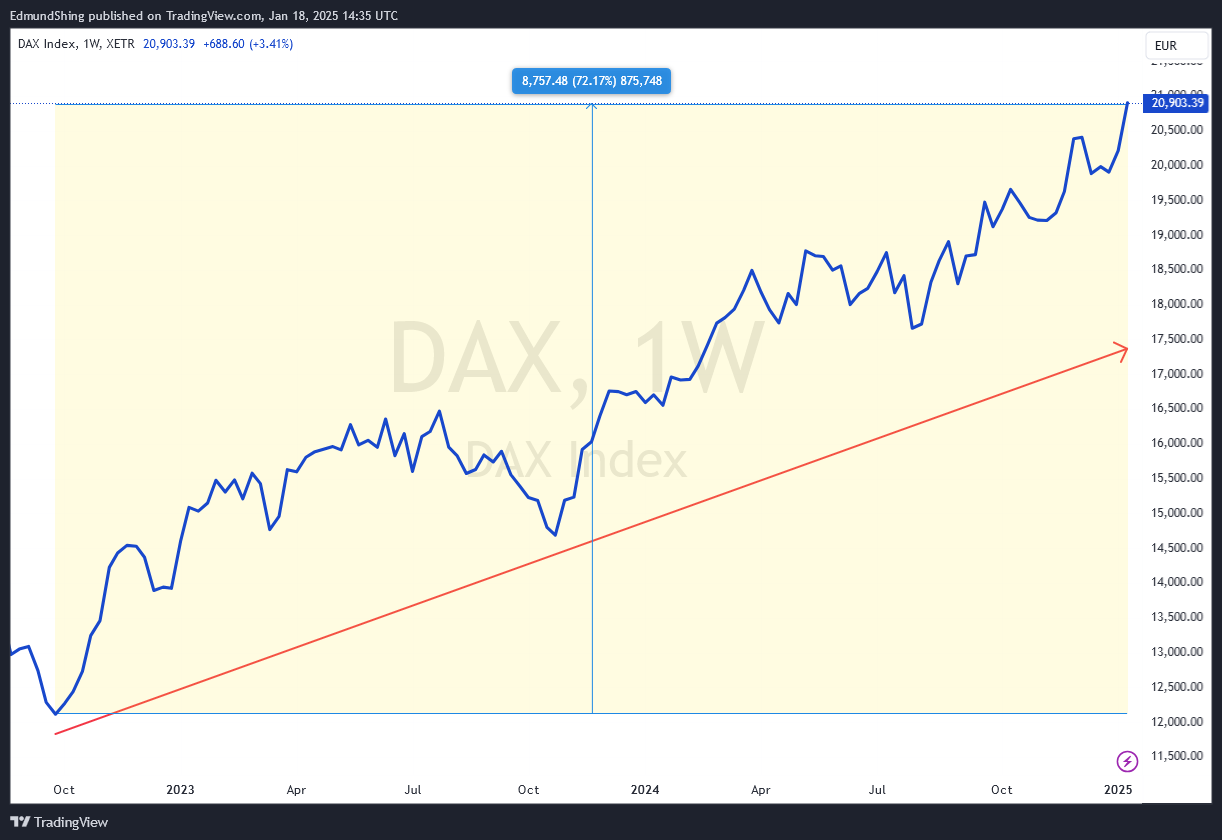
Note too the strength of the German benchmark DAX index, which also rallied to new all-time highs this last week on top of a 19% return delivered over 2024, and a cumulative 72% return including dividends since the start of this current bull market in October 2022. This has occurred in spite of the ongoing gloom surrounding German carmakers who are suffering from the twin threats of high energy prices and intense Asian competition.
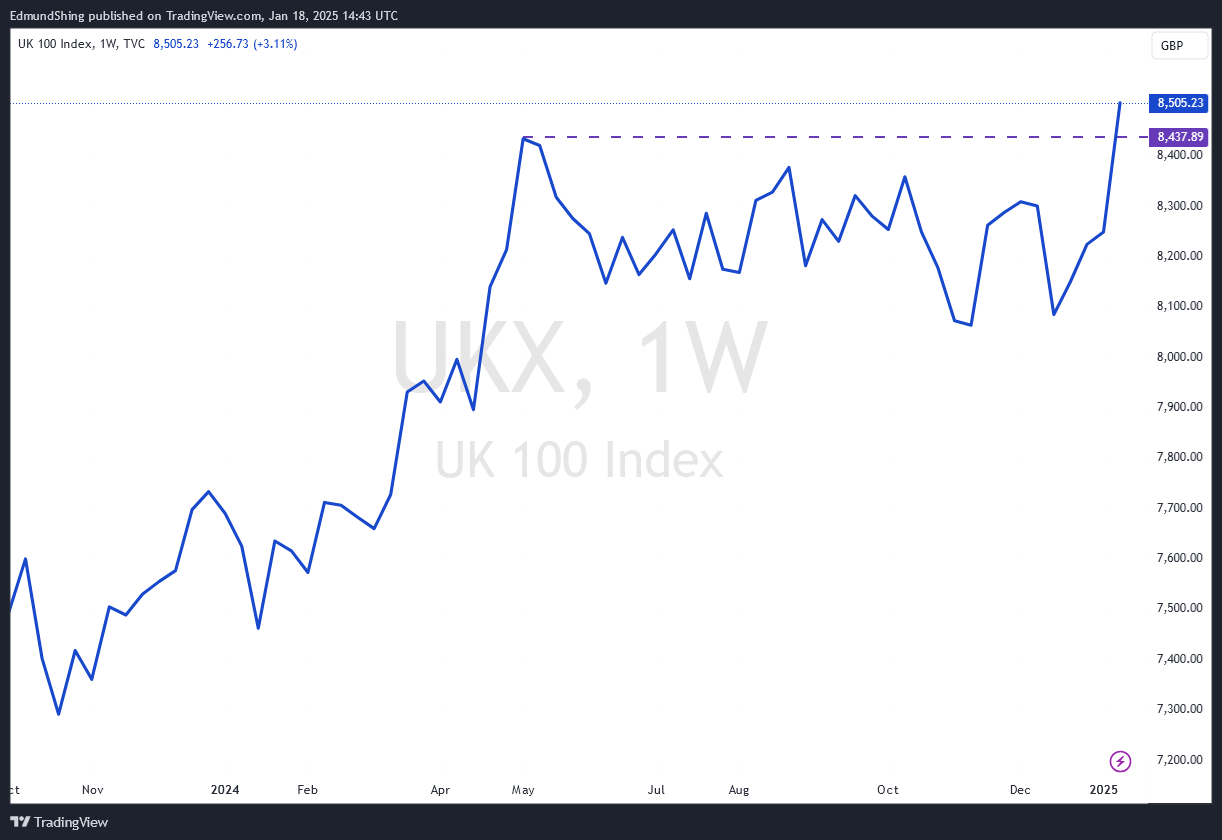
Looking to the UK, note that the weakness of the pound sterling (from $1.34 in September to under $1.22 today) has also sent the UK FTSE 100 index to a new high. Recall that the FTSE 100 is largely composed of globally-exposed companies in the Oil & Gas, Mining, Healthcare and Banking sectors. So a weaker sterling should boost the contribution of their overseas earnings when translated back into pounds.
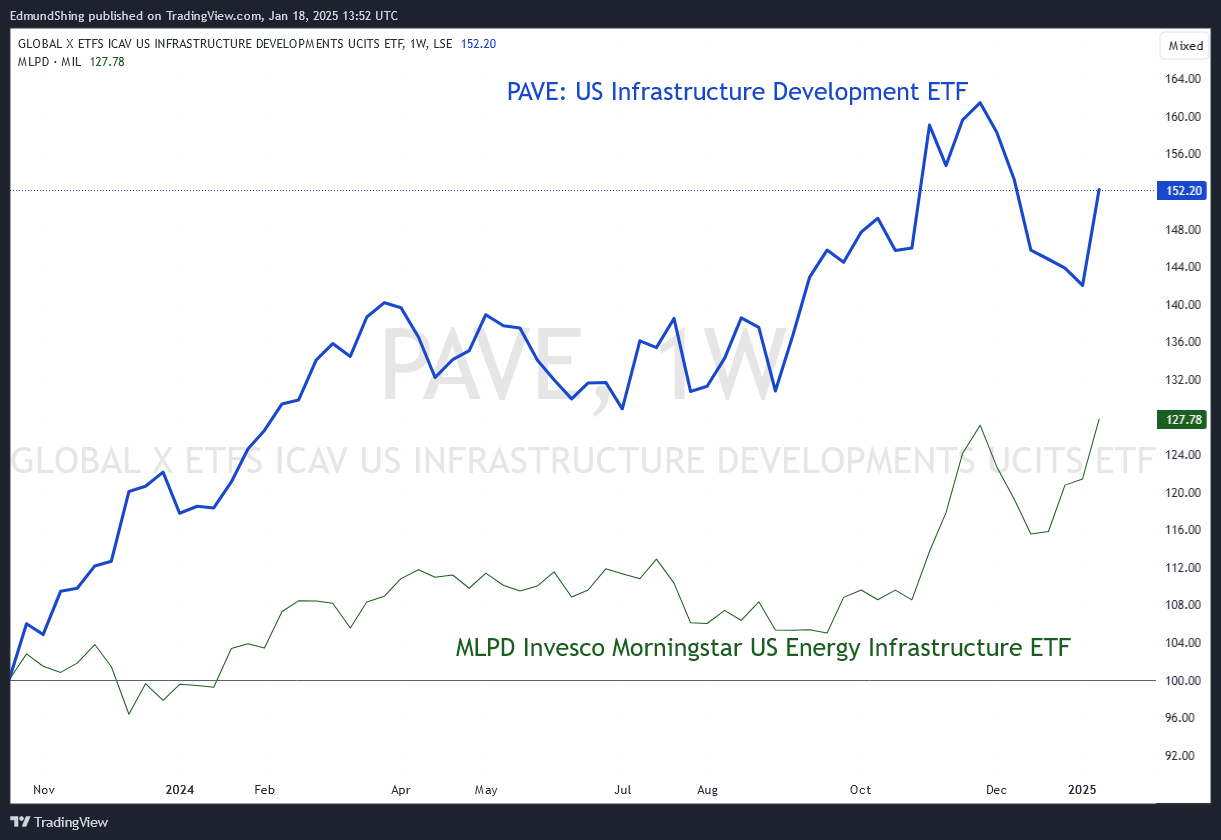
One clear beneficiary of lower long term interest rates, particularly in the US, is the infrastructure sector, because infrastructure tends to rely on long term debt financing to put big projects such as road, rail, air and even bridge construction into place.
This tends to be a good sector for long term, steady returns, particularly for investors looking for income combined with income growth, so that they can protect themselves against inflation over the long term.
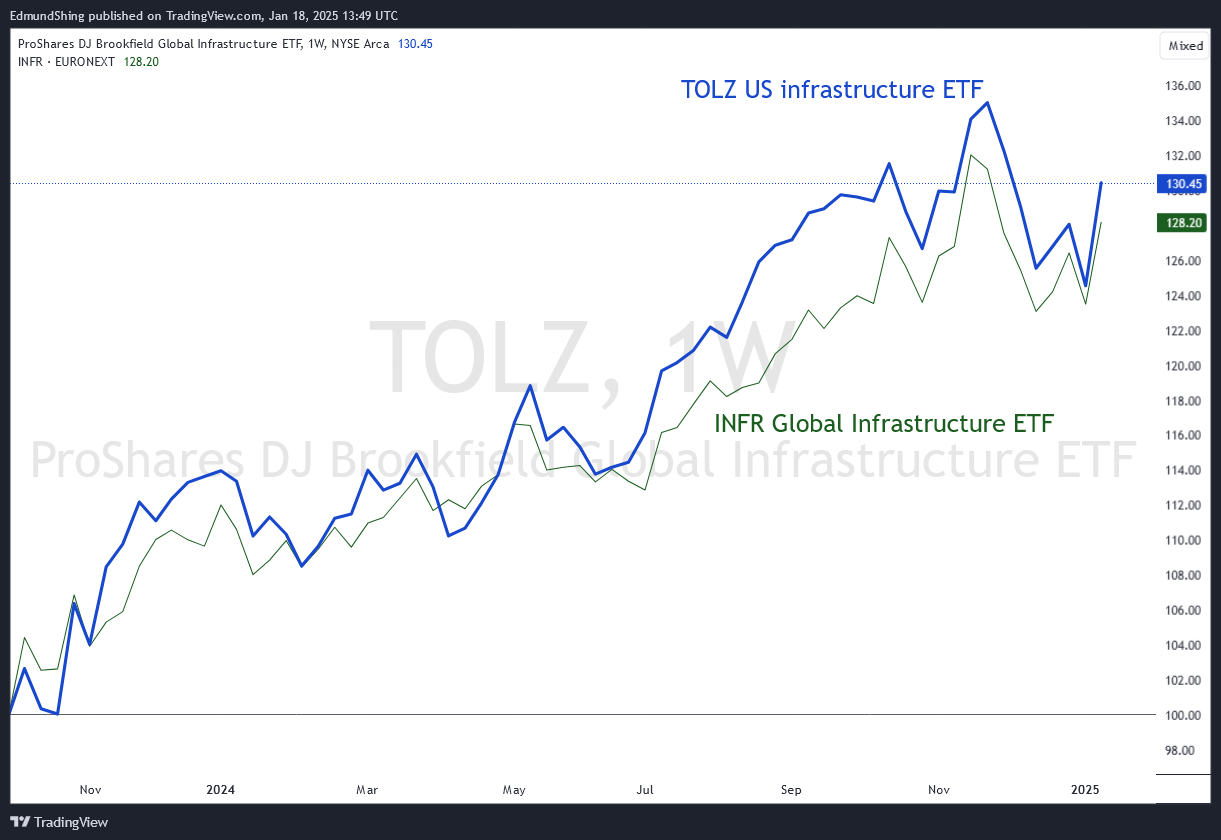
In particular, I like US infrastructure development which particularly focused on two areas: electricity demand through building of new generation and upgrading of transmission networks, and also oil and gas networks via Master Limited Partnerships (MLPs) that control the oil and gas pipelines and other oil and gas infrastructure related, for instance, to the transport and delivery of Liquefied Natural Gas (LNG) abroad (e.g. to Europe).
One final sector to focus on which has been one of the key drivers of this European stock market breakout to new all-time highs is the Banks sector. I continue to like this sector as lending volumes are improving and should continue to improve as central banks cut their interest rates further, while valuations are cheap and returns fo shareholders via dividends and share buybacks remain elevated.
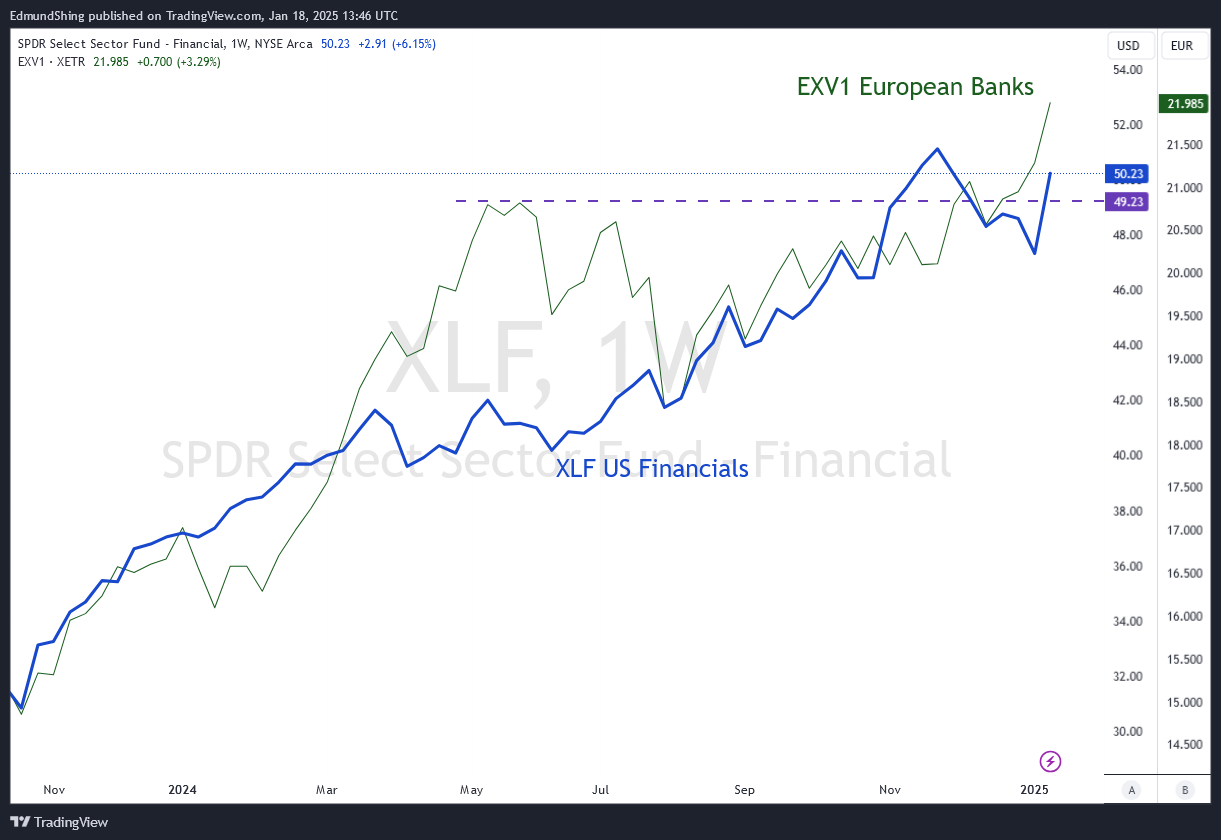
Including reinvested dividends, the STOXX Europe Banks sector has delivered a cumulative return of 113% since October 2022, including 33% over calendar 2024. It also offers a dividend yield of 5.5% which remains generous.
Have a great week ahead
Edmund
Note: source for charts tradingview.com unless otherwise stated.
Disclaimer
This is not financial advice. Our content is intended to be used and must be used for information and education purposes only. Please read our disclaimer and terms and conditions to understand our obligations.
11 comments
Trump will try hard to avoid inflation, the US infrastructure is crumbling I think Trump approach will be huge deregulation sifting spend from federal to small businesses encouraging competition.
Excellent in depth article.
I have a simpler view. Trump is an agent of chaos and no one really knows what will happen, including Trump. People he appoints last only a short time, 12 months is unusual. I doubt Scott Bessent will be in post this time next year. A major increase in unpredictability and risk.
Markets including equity, bond and property need to price in this extra risk, which means a fall in these markets.
Disrupting will be an agent for change and Musk challenging the complacency of government should bring big upsides. THe UK needs this approach in my opinion.
Hi Edmund,
I recognise you were referring to the USA particularly but the positivity expressed in this section certainly does not apply to infrastructure in the UK Investment Trust sector even though the probability is that UK interest rates will fall faster than the USA:
One clear beneficiary of lower long term interest rates, particularly in the US, is the infrastructure sector, because infrastructure tends to rely on long term debt financing to put big projects such as road, rail, air and even bridge construction into place.
This tends to be a good sector for long term, steady returns, particularly for investors looking for income combined with income growth, so that they can protect themselves against inflation over the long term.
Picking out a few investment trusts to liiustrate my point - sadly I hold all of them!
HICL Infrastructure (LON:HICL): 1 year share price -13.2%, Discount to NAV -28.64%
BBGI Global Infrastructure SA (LON:BBGI): 1 year share price -10.5%, Discount to NAV -19.32%
3i Infrastructure (LON:3IN): 1 year share price -2.3%, Discount to NAV -14.97%
and then the very worst of the bunch because it is involved in renewables which nobody wants to know (I could include Gore Street Energy Storage Fund (LON:GSF) and Bluefield Solar Income Fund (LON:BSIF) but the pain is too much!) is:
Renewables Infrastructure (LON:TRIG): 1 year share price - 27.3%, Discount to NAV -33.61%
Maybe there is hope in 2025 and provided these Investment Trusts continue to pay out decent income I guess we have to be patient for some form of recovery.
Trusts with a US weighting will grow, infrastructure spending will grow in US, can expect a Marshall plan approach to L A
Re long term yields theres line of thought that in the US 7 trillion of existing debt needs rolling over this year and another 2 trillion raised for current year spending.
By all counts the US government has financed the last couple of years by using money held in the reverse repo account to buy short term treasuries, the repo account is now nearly empty.
Is the above accurate Edmund in your opinion and if it is how will they manage to shift nigh on 9 trillion of debt whilst keeping/forcing interest rates further down ?
Regards
Andy
Hello Andy
A very good question. I am not sure whether the. $7 trillion of debt you refer to is all government debt, or total debt including eg corporate bonds.
In any case, the US treasury does indeed have to refinance at of maturing debt this year,as well as an additional amount of debt from the ongoing budget deficit.
There are several solutions, at least in the short term. Firstly, a lot of this debt can be refinanced by issuing short-term bonds, which in turn tend to be bought by money market funds. Remember that there is nearly $7 trillion these money market funds, used as high interest savings accounts in the US.
Secondly, pension funds should increasingly be big buyers of long-term US bonds as they can Now lock in much higher returns to match their long-term liabilities, ie future pension payments.
But thirdly, I suspect that at some point, the Federal Reserve might eventually also have to help by restarting some form of bond-buying program.
But this is a good argument for saying that Trump will not be able to cut taxes as easily as he did in his first term, as the debt situation is very different today.
Best
Edmund
Thanks Edmund if they did restart QE would this add to the inflation issue as per 2020 covid or would it more mirror 2008/9 when huge amounts of QE were done but we only got inflation in asset markets as money didn't filter out to the general public as it did in covid ?
Well Andy
that would depend on whether the US government actually tries to reduce the budget deficit at the same time, or allows the budget deficit to become even greater. My guess is that Scott Bessent as Treasury secretary would not allow wider budget deficits to occur so government spending would not grow even more, while also I think there would have to be a tacit understanding that any such Fed actions would also require an effort on the part of the government to not be reckless in spending more money they do not have…
The bond market would also exercise its judgment too - if government policies were seen to increase the risk of eventual default, bond yields would rise further to reflect the extra risk, potentially overwhelming any help the Fed can give.
Edmund
Thanks Edmund even though Trump has made some odd appointments I had heard Bessent is competent.
a helpful read thanks