Market Musings 310526: Keep your FOMO in check

Market Musings 310526: Keep your FOMO in check
Are stocks living in an alternate reality?
In the real world, the Strait of Hormuz remains to all intents and purposes closed, depriving oil-importing nations around the globe of 10 million barrels of crude oil per day, i.e. nearly 10% ovf daily demand. Since the beginning of March, this export shortfall has been satisfied with existing oil stocks such as the strategic stockpiles held in the US, China and Japan.

However, oil industry experts predict that these global oil inventories will fall to critical levels by the end of June in the absence of a reopening of Hormuz. Under such a scenario, we should expect oil and gas prices to rise substantially from current levels, perhaps approaching the $148 peak experienced for 2-3 months in 2008. This extreme price level would force a huge cut in global oil demand to match lower supply, likely triggering a global recession in the process as in 2008. This sounds a rather pessimistic economic outlook.
And yet, global stock markets seem to be completely ignoring this rising recession risk. The US stock market has achieved a series of new all-time highs over the past few weeks, completely erasing the 9% initial drop from the end of February upon the first US-Israeli missile attack on Iran. The twin narratives of AI investment spending and strong Q1 results have enabled the Tech sector to propel the US and Emerging Markets to new highs, seemingly oblivious to events in the Middle East. The tech-heavy Nasdaq 100 index has returned 20% so far this year, with the star semiconductor sector registering a 66% advance since the end of 2025.
Semiconductors the star of 2026

The South Korean KOSPI index has even outperformed the US semiconductor sector this year thanks to memory makers SK Hynix and Samsung, more than doubling in 2026.

Are we in an AI Mania phase? How do we invest?
The exuberant performance of semiconductor stocks and the Korean KOSPI index over April and May suggests that retail investors have entered a manic “buy all stocks AI investment-related” phase, echoing some of the Fear Of Missing Out (FOMO) investor behaviour of the 2000 internet bubble or of precious metals late last year.
Anecdotes of Generation Z South Koreans borrowing as much money as they can to buy into Korean and US technology stocks, often employing leveraged instruments to amplify returns, sound very much like “top of the market” exuberant investor behaviour which one would do well not to follow.
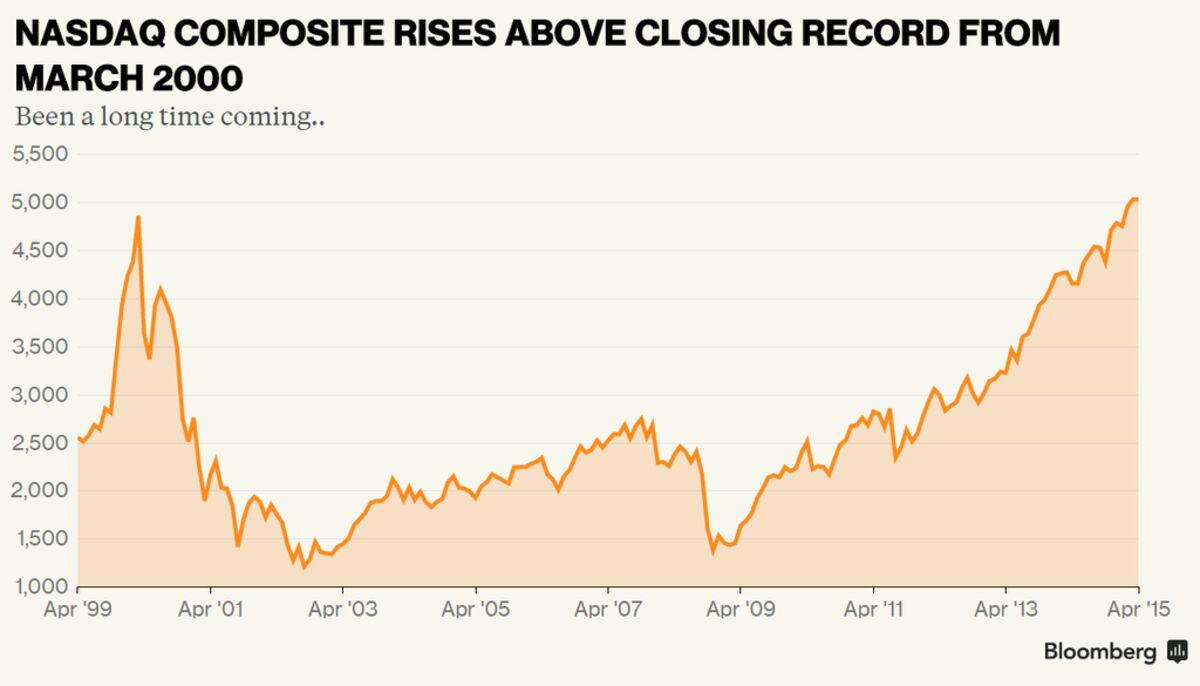
I am reminded of legendary investor Stanley Druckenmiller’s story of being lured into buying high-flying tech stocks in early 2000, much against his bearish fundamental conviction, only to then lose billions of dollars in the following months as the Nasdaq index went on the ultimately lose 78% by late 2002 as the dot-com bubble burst in spectacular fashion.
It then took 15 years for the Nasdaq to return to its March 2000 high...
Reading social media at times like these can be fatal; tales of investors making returns in the hundreds or even thousands of percent from the latest AI subtheme such as photonics (data transmission via fibre optic/lasers rather than copper cables) or quantum computing abound, only reinforcing FOMO in even experienced investors.
Maintaining investing discipline at times like these is both crucial and challenging. But we should remember that the risk of a market correction following such a parabolic stock advance is very high. Even if the bull market in stocks ultimately continues, a painful correction such as the 19% S&P 500 drop in April 2025 in the wake of Trump’s ‘Liberation Day’ tariff announcement could be in the offing.
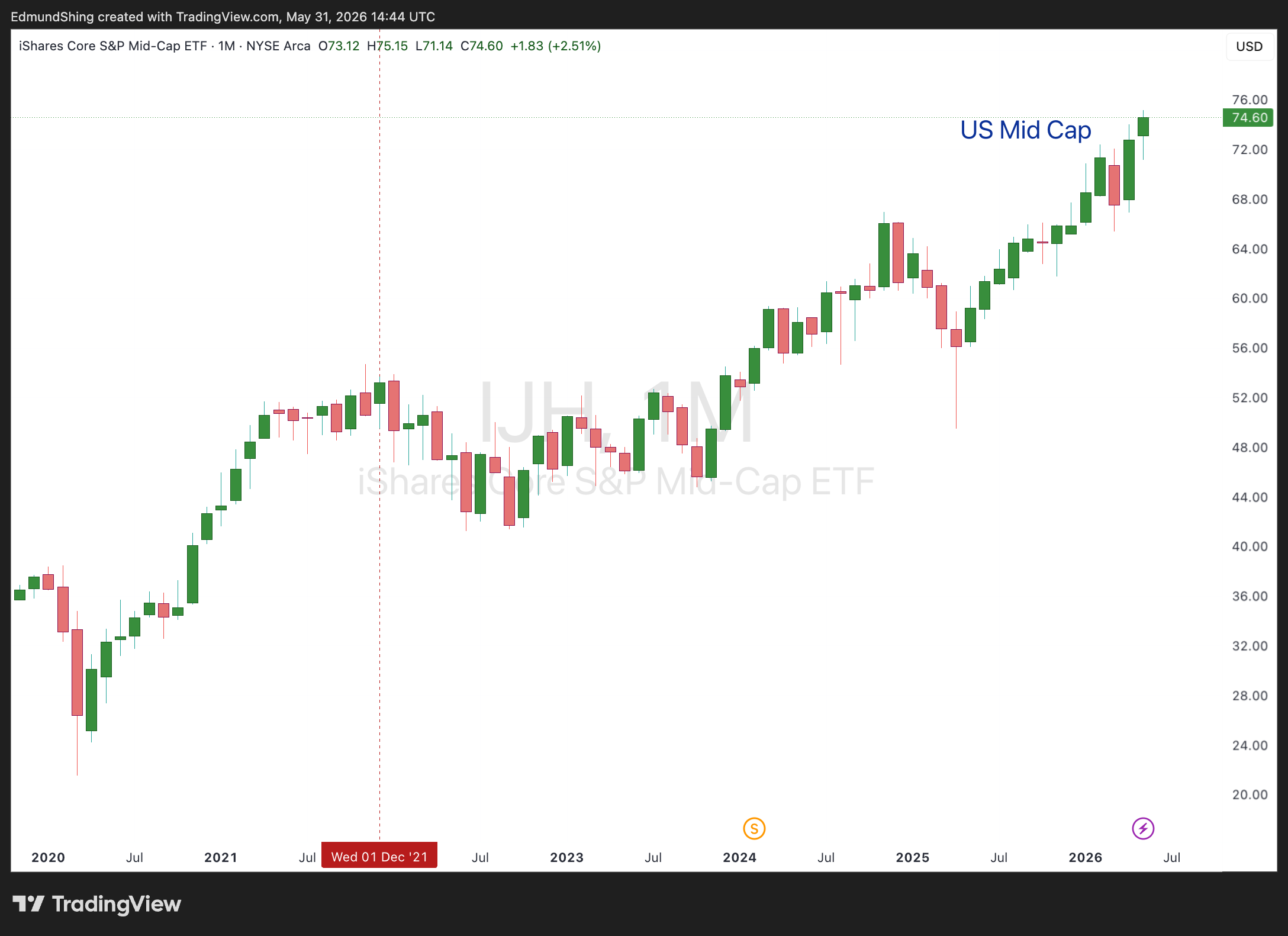
Other bullish trends that look attractive but which are not linked to AI/data centre spending include US mid and small-caps, up 10% for the year. Ultimately, the AI capex spending boom should benefit a wide range of manufacturing and construction sectors as well as tech.
US MId-Caps at a new high
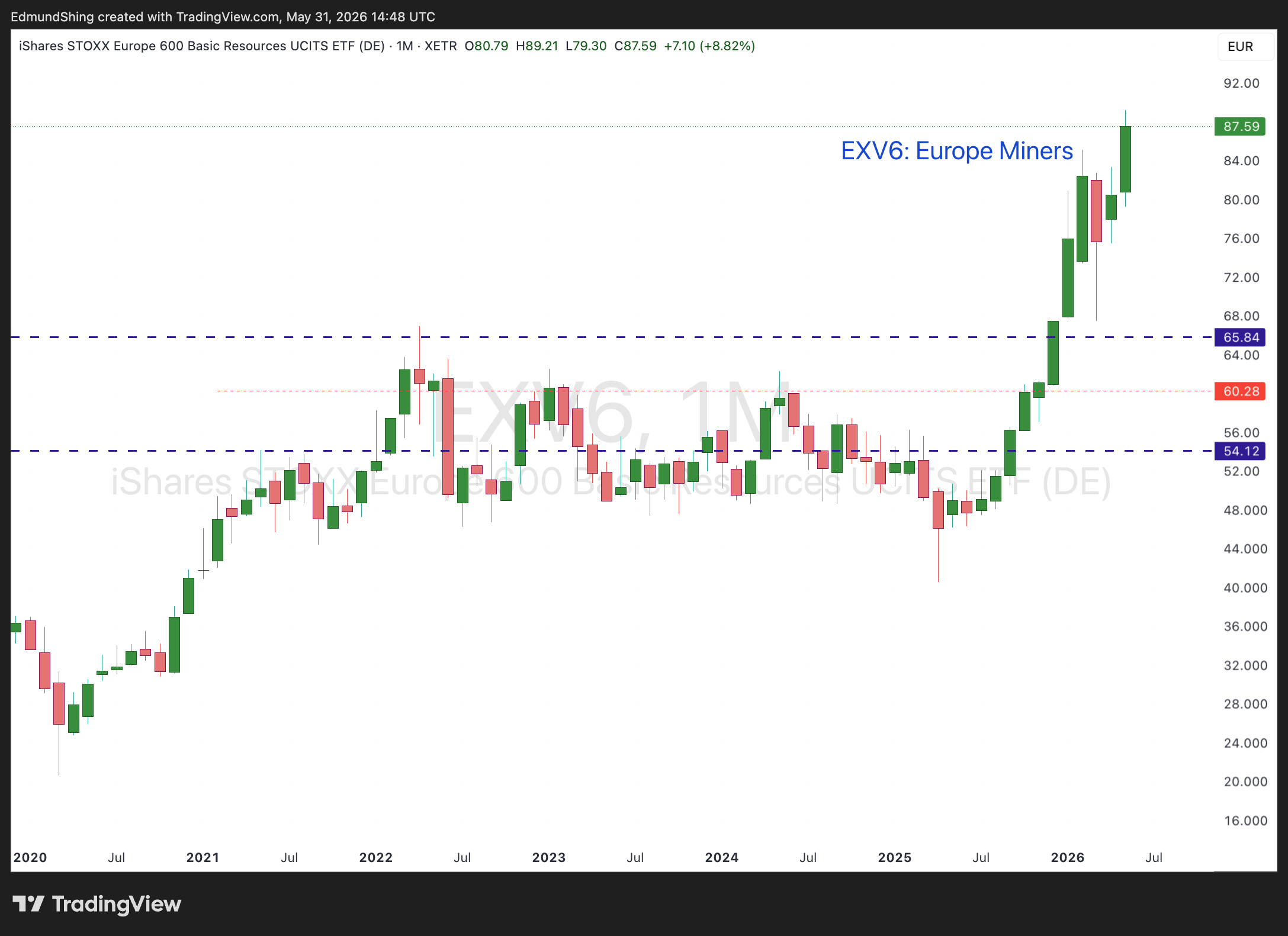
Europe-listed miners such as BHP are also making new highs, in part due to the shortage of aluminium from Gulf producers, but also due to strong demand for copper from the technology and defence industries.
Europe Mining leading the commodity charge higher
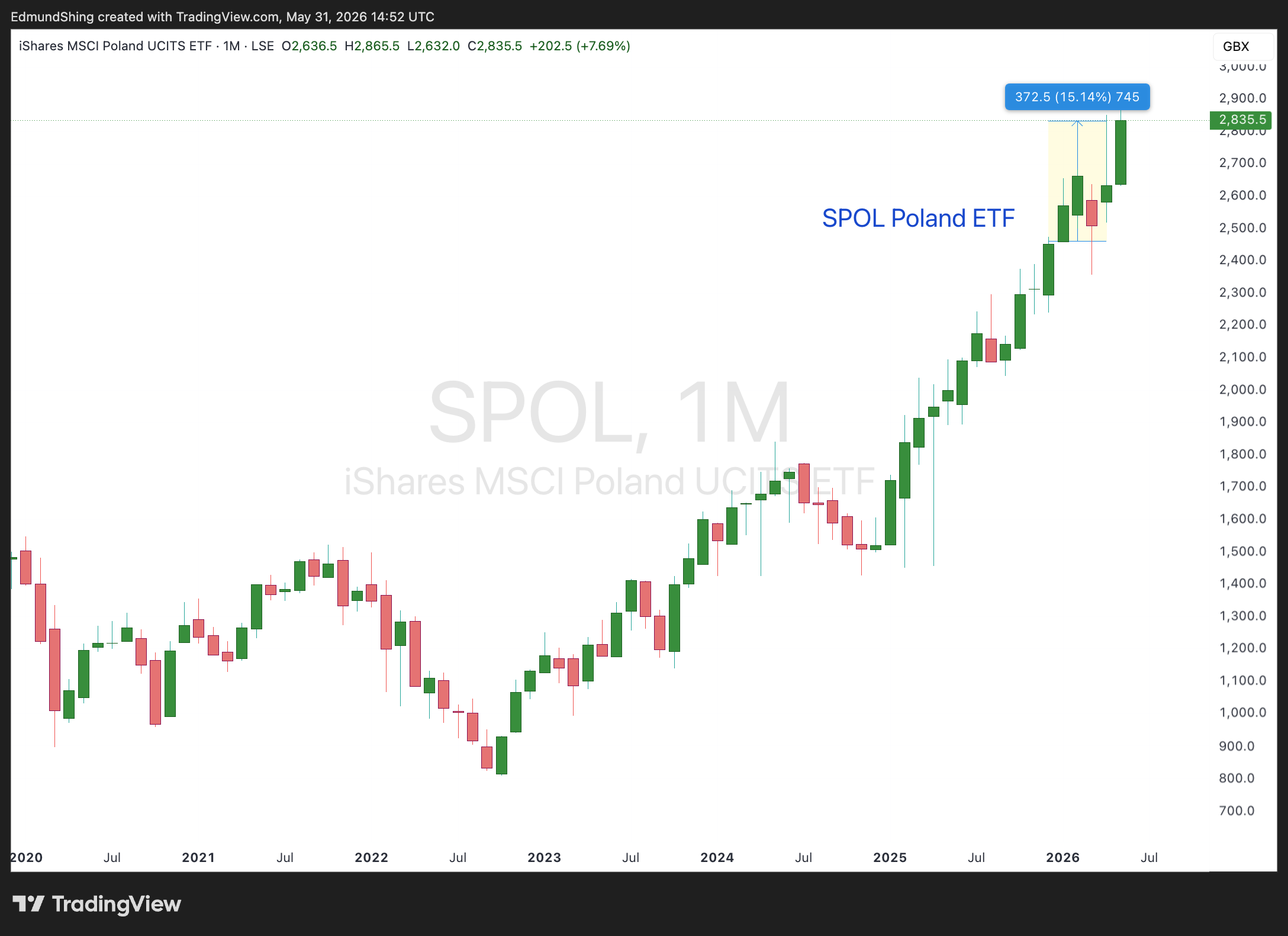
One of my enduring value investments is in Poland - a cheap stock market with attractive dividend yield in the fastest-growing major economy in Europe. GDP per capita in Poland is set to overtake the UK this year, benefiting the banking, construction and retail sectors.
Polish stocks gain 15% so far this year
Time to hunt for value among AI apocalypse wrecks?
For those who absolutely want to buy into tech-related stocks, I might suggest hunting among the stocks and sectors that have been heavily derated due to fears of disruption by AI. The software sector has been the most obvious casualty, falling 36% from November 2025 to mid April before beginning to recover since.
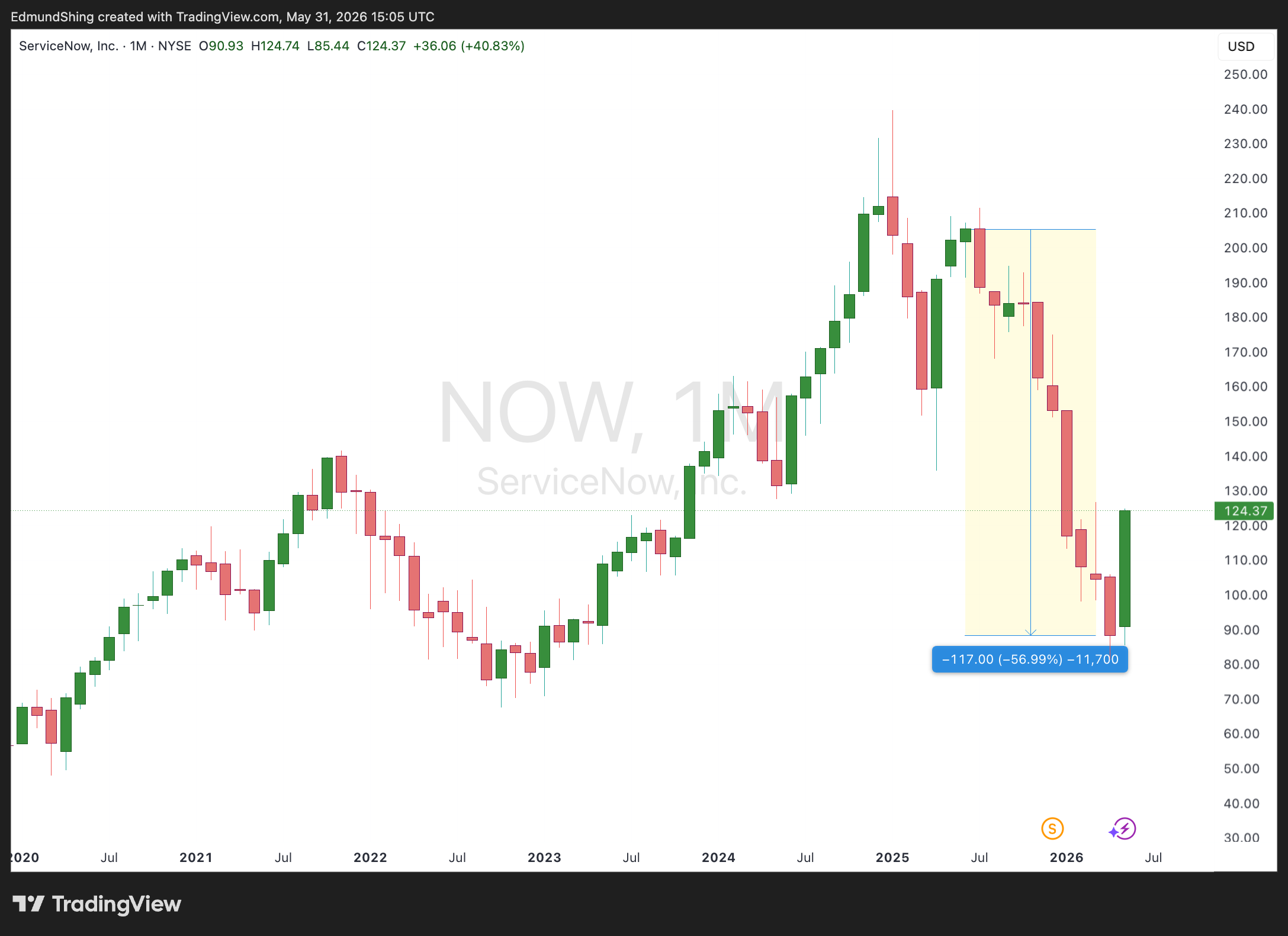
One such software company rebounding sharply in May following AI fears is Servicenow (NOW).
Servicenow recovers lost ground in May
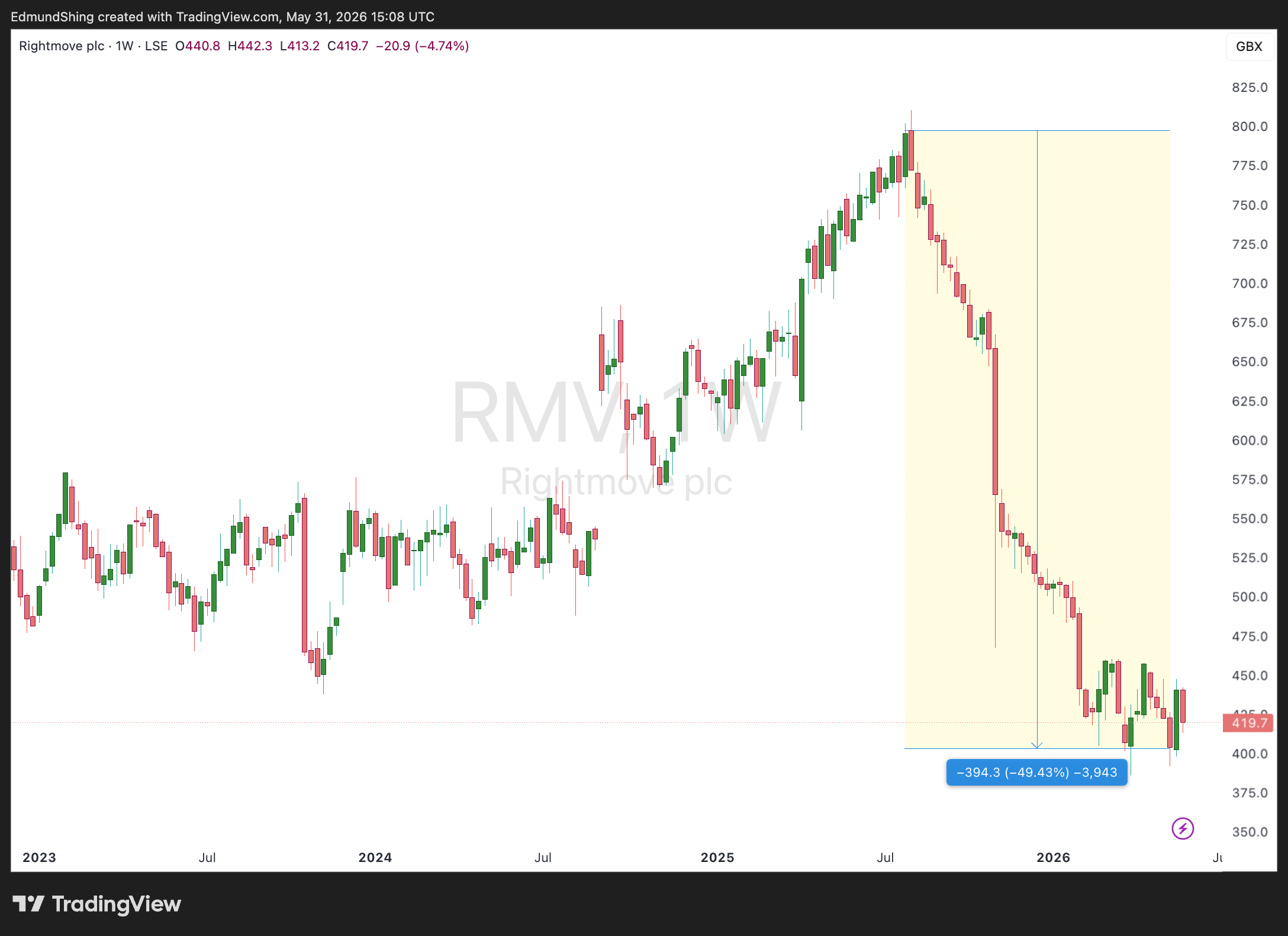
In the UK, two companies that have caught my eye in a similar fashion are Rightmove and Auto Trader. In each case, as online platforms they have suffered from fears that AI applications will undercut their dominant market positioning. Both are perhaps now showing tentative signs of bottoming.
Both have been steady growers historically at high returns on capital; consensus forecasts predict continued top-line and earnings growth into 2027. Both have lost approximately 50% from mid-2025 highs, and now sport 7%-8% free cash flow yields. They have both been good users of their excess cash flow to buy back shares, shrinking share counts consistently over the last few years.
Rightmove
Auto Trader
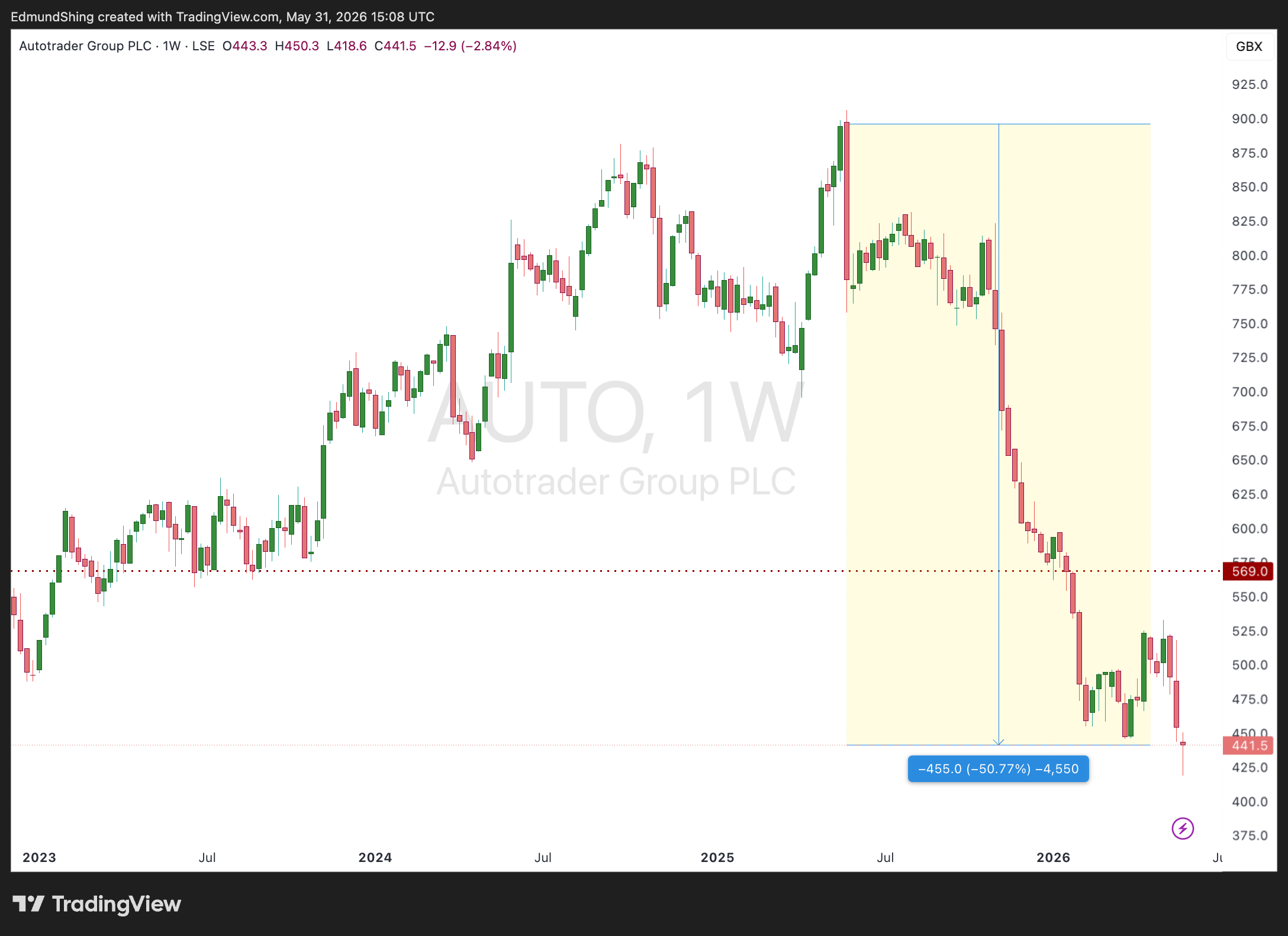
Normally I would view these charts as scary, but just as in the US, they are high-quality stocks with dominant market positioning where the near-term AI risks have perhaps been overstated.
Have a great week,
Edmund
Disclaimer
This is not financial advice. Our content is intended to be used and must be used for information and education purposes only. Please read our disclaimer and terms and conditions to understand our obligations.
24 comments
Agree with the comments on software compliance below. AI won't replace that overnight.
HgCapital Trust (LON:HGT) showing signs of life again.
What I find a little puzzling is in 1999, talking heads and the media were bigging up tech. Now I'm hearing lots of caution about AI, maybe less from the "pros", but certainly from a wide range of knowledgeable investors. I cannot believe that very inexperienced investors have not heard this as well. So how can all this be happening?
We seem to have a two-tiered market. Like you say, RMV and AUTO have been hammered this year, along with many other names such as RELX, EXPN, and so on. Admittedly they were on lofty valuations before, but now many of them are quite reasonable, and likely to perform adequately.
Just today, for example. ME International (LON:MEGP) have crashed a massive 26% on warnings related to the Middle East. It now has a forward PE of 8.9 (although analysts will likely adjust the projected earnings downwards), which is quite low. Would we not expect the problems to be resolved at some point?
Housing is another area that is getting absolutely smashed. Taylor Wimpey (LON:TW.) is at its lowest price in 5 years. Its trading on a PBV of 0.66, deep value territory.Naturally, nobody know where the bottom is. It's a very curious market. Consumer-sensitive shares are definitely signalling, rightly or wrongly, that economies are heading for some tough tough times. And yet the market darlings are shooting for the moon.
I think we're going to find some strong reversals in 5 years time where the bombed-out companies rebound strongly, and the darlings are severely burned. We shall see in the fullness of time.
Mark who wants to wait 5 years? Buy and hold investing is a dangerous game. Investors follow the money and that at the moment is towards particular sectors: semi conductors, quantum computing, defence/drone technology, space exploration, materials and energy.
Yup, buy and hold doesn't work anymore, ask Nick Train and Terry Smith.
It does if you buy the right stocks. The US large caps have done well in the last 10 years. I think Terry Smith has lost the plot, other distractions?
Nice one Rusty!
All the best
Surely it depends on when & what you bought? and also the stage you are in life. I still see the stock market as a long term investment. Many people that invest heavily in the 'next best thing' would do well to exercise a little caution.
It’s not about the next best thing but rather the opportunity cost of holding for the long term a share that trades sideways.
Why 5 years? Interested to hear your reasons..
I've been following AutoTrader. Car dealers are complaining about both AT membership price increases and the evolving business model, which is less simple listing site and more end-to-end sales pipeline management (but done badly people are saying). Newer platforms are emerging and picking up business (worth watching IMO). Lots of interesting stuff on YouTube from dealers who are feeling the pinch. And they are under investigation by the CMA for allegedly suppressing publishing of 1 star reviews, details available on gov.uk published 27 March 2026. The trouble isn't yet that obvious from the data, or I'm not good enough to spot it if it is. It's a very interesting case.
Continue to learn from your updates. Thank you. My current dilemma is whether to buy more oil stocks or buy more IT stocks. Will probably go 50/50!
Best to pretend you are 12 months ahead in Summer 2027 and look back at the last 12 months.
Investor A was in cash / bonds and made 4.5%.
Investor B was in equities and made 4.5% in the Summer 2026 bounce and then lost 40% in the ensuing market crash.
'The exuberant performance of semiconductor stocks and the Korean KOSPI index over April and May suggests that retail investors have entered a manic “buy all stocks AI investment-related” phase, echoing some of the Fear Of Missing Out (FOMO) investor behaviour of the 2000 internet bubble or of precious metals late last year'
I have to disagree with you here, Edmund. The 2000 internet bubble involved buying stocks with no earnings, based on hype alone. To take one example from the current peleton, Micron Technology (NSQ:MU) is trading on a P/E ratio of 10.7, and its entire producion for 2027 is already sold out. Of course it will crash one day, but not until a competitor has produced products which perform as well or better for less money.
Hold my FOMO in check, when we look sure to be building affordable housing on the Moon and Mars shortly, thanks to our calm and steady US entrepeneurs across the water. I'll try hard to follow your advice Edmund (:-))
Would not catch the falling knife in software. Sentiment is so bad and the question around what kind of terminal value these stocks will have, given potential AI disruption, will not be answered conclusively for a long time. There is therefore no clear near or medium term catalyst that will propel these stocks higher despite what I believe will be strong software earnings in the near term.
To my mind, it is time to be selective. Those like Rightmove (LON:RMV are probably at risk. Every Estate Agent is in the business of selling homes for their clients- and therefore likely to permit AI models to strip the date from their websites, making RMVs services much less valuable. But others with defensive moats like Sage (LON:SGE) (I hold) will be much less impacted directly- it will be a long while before Regulatory Authorities will accept inputs from unproven providers, or indeed before businesses permit outsiders access to their financial data. AI will permit the improvement and extension of their (Sage's) financial services much more quickly. So it is a competitive race with mostly the existing competitors which Intuit (NSQ:INTU) or Sage, or others may win; but the business environment has not changed radically.
Agree that RMV could be in trouble but accounting/tax software is just a glorified spreadsheet and you could vibe code your own today with Claude code.
Agree that RMV could be in trouble but accounting/tax software is just a glorified spreadsheet and you could vibe code your own today with Claude code.
software needs to be hmrc appoved - much of sages buisness comes via "accountants" - and there are complicated ongoing regulatory changes needed.
much software works best at scale - its nonsense to suggest it can "easily" be replaced by vibe coders who dont understand the complicated "technical issues" of providing software that works for both customers and hmrc - not at scale. Niche solutions yes.
HMRC are bloody hard work - they havent approved the final calc ref yet ref teh mtyd for it stuff - and we are already pretty much 3 months itno the new tax year - so your vibe coder will ned to meeet some rendom hmrc spec - perhaps with 60 days notice and prove to hmrc it works - i think there has been mention that there are 10,000 plus unresolved mtd for it issues that currentlyu need working on
sage and xero will connect up with payments providers like stripe and the late - so in addition to the basics - there is alot of bells and whistles that "matter" - eg if we take bank integrations - well there is probably 100 plus bank integrations where sage needs to work with whoever provides that api data - and provide guyidance as to how their customers sign up.
if it was so easy to compete why is there so few competitors gaining traction - because its tough to build scale.
I would agree sage could be prone to competition from google or any other well funded company - the fact multi nationals and jumping in to compete says alot.
As a professional software engineer, I can tell you now that there's absolutely no chance of anyone just vibe-coding a replacement for Sage's accounting software.
What's to stop HMRC using AI to code their own software and telling everyone to use that? These companies now have a very thin moat.
Agree with that, but that doesn’t mean that these stocks will see multiple expansion any time soon or regain the lofty valuations they once demanded as long as the uncertainty regarding their terminal value persists, resulting in buyers of software stocks remaining on the sidelines, and AI threat overhang endures.
It does I think turn on whether the software business is in a highly regulated sector or not. Autotrader (LON:AUTO) and Rightmove (LON:RMV) are not, and can be upended by AI challengers. They do have a strong consumer 'go to' market presence/brand that makes them 'sticky' which may mean they survive. I agree with other comments here that tax/accounting and regulated sectors will be much harder for AI to penetrate. Apart from HMRC requirements, etc., when doing your self-assessment tax return will you trust your accountant and say Sage, or the AI agent you could choose, bearing in mind the risks of getting it wrong? The test will be whether Intuit (NSQ:INTU), Relx (LON:REL) and their like can retain users/subscribers as well as incorporate AI into their models, which they are doing at pace. My bet, for what it is worth, is that the incumbent software players will survive and thrive but the market needs to see evidence of customer retention and thus the efficacy of the subscription model first.
how do you upend an encumbant with market dominance though - everyone knows Autotrader and rightmove is the place to go - perhaps you could work behind the scenes with main partners be ready to go live and take 50% of the fee that rightmove take - but you might try that spend a fortune and fall flat on your face - surely dominiant players have the added advantage that everyone knows they are the place to go - how often do dominant players get usurpeed when times are pretty stable ref the basics. It does happen - look at Nokia - but mobile phones back then needed to evolve every 18 months and smartphone wasnt a thing so that was really uber tricky not to go down the wrong route. I would say at present Autotrader does seem to be royally pissing off their partners - imho that risky - perhaps if righmove had sense they would start selling cars immediately - not conmvinced it would take too much to bury autotrader unless they have gotten trade back on board and happy.
Unbelievable tech rally going on but aren't some semiconductor chips still cheap? Dell landed an epic earnings beat on Friday but their margins compressed, they have to pay up for their chips and all three DRAM/HBM makers are trading on single digits PEs. No sign whatsoever that datacentre capex is plateauing.