Midcap Madness: Stocks that look just too cheap

In my last article, I looked at what investors can learn from the study of 64,000 global stocks. The key finding was that as the investment time horizon lengthens, stock market returns come from fewer and fewer stocks. It is incredibly hard to pick the big winners over the next five years, let alone the next 30 years. This is why I prefer to take advantage of shorter-term market inefficiencies available over a one-to-three-year time horizon. These are the kind of opportunities that the Stockopedia StockRanks seek to exploit.
For this screen, I am looking to take advantage of those inefficiencies by searching for mid-cap stocks that are too cheap. Investors have to be careful buying into something looking superficially undervalued. Markets are often quite efficient at pricing more liquid stocks. Hence many investors prefer to focus on the less-researched small cap markets. However, I believe opportunities may also lie in mid-cap companies in the current markets.
Why midcaps?
I believe there is a reason that some mid-caps may be currently undervalued, and it is to do with retail fund flows. The following is a graph of retail fund flows into Equity funds over the last eight quarters from The Investment Association:
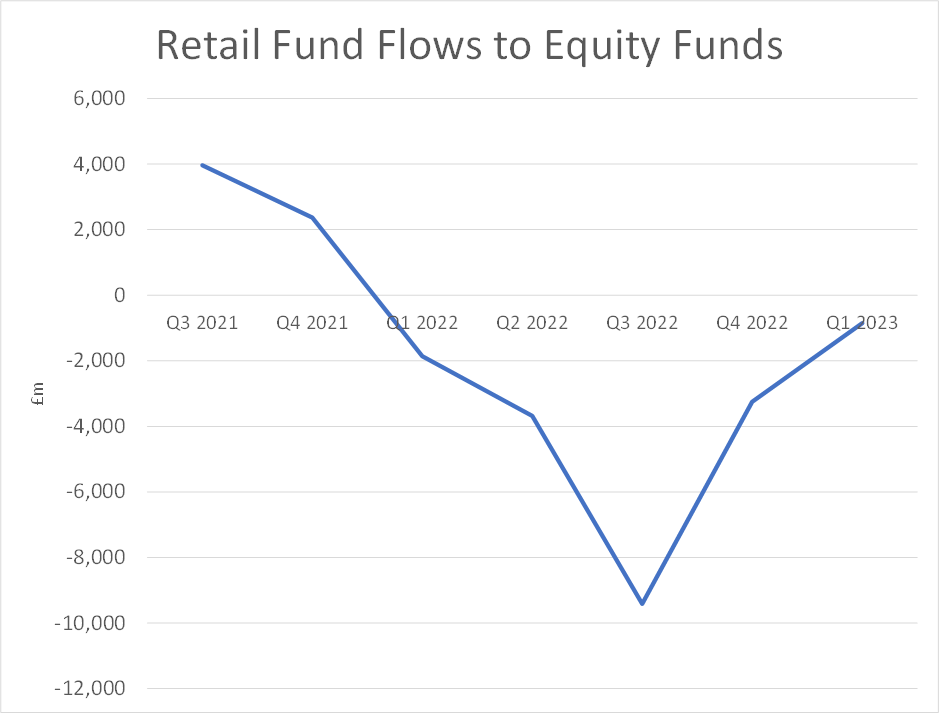
Equity funds have been facing significant outflows since the start of 2022. This means that equity funds need to meet these redemptions by selling stocks. As a result, funds will typically sell their most liquid stocks first. Conversely, the effect of a particular fund selling will likely have a more significant impact on the smallest companies. So the idiosyncratic effect of a specific company becoming oversold is greater in the midcaps.
Why now?
Going back to the Investment Association Data, they also publish monthly statistics. Here is the graph of monthly retail fund flows to equity funds over the last year:
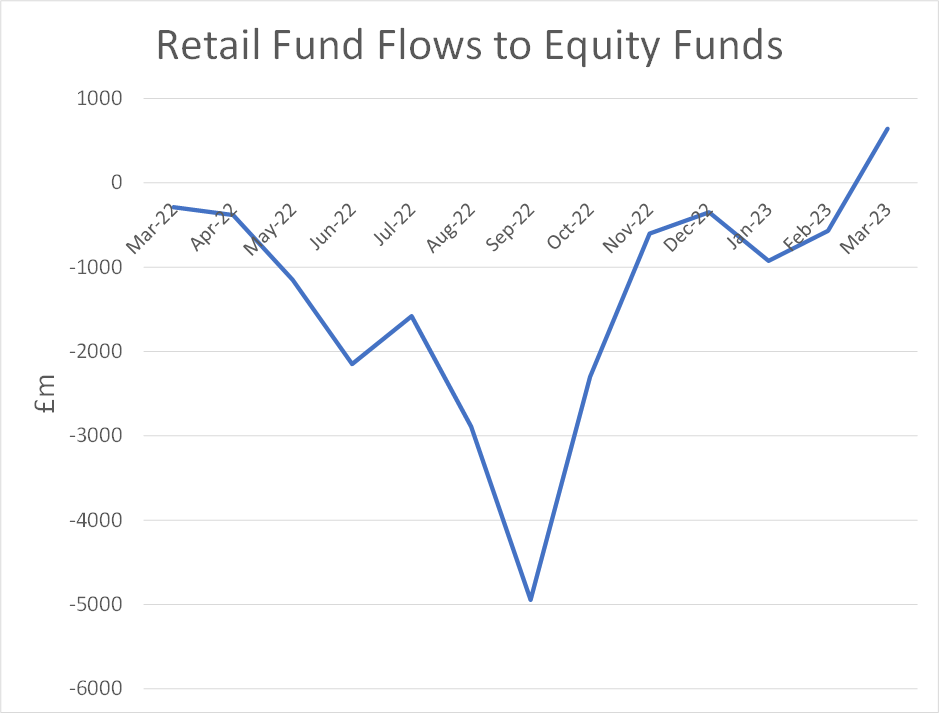
The trend has been improving since the nadir in September last year, and In March of this year, fund flows became positive again. Although the amount was small and there is no guarantee that they remain positive in the future, the selling pressure on midcap companies will have at least diminished in the short term. If the trend continues, funds will start to deploy capital back into the most undervalued shares. On top of this, many takeovers of UK-listed stocks have been announced in 2023. As the cash from these starts to hit fund manager bank accounts, it will look for a home back into UK equities.
The Screen Criteria
Given that I am looking for companies that are obviously cheap, the screening criteria I will use are very simple:
Market Cap: > £300m; < £3b
I define mid-cap fairly loosely here. I am looking to capture the size of company that may have been unduly affected by fund outflows yet remain liquid enough and with small enough spreads for all individual investors to consider investing.
Price-Earnings Ratio Forecast 1y < 10
I want companies that are forecast to remain cheap rather than one-off inflation beneficiaries.
Dividend Yield Rolling 1yr > 5%
While this isn’t designed to be an income screen, a large dividend yield is a sign of companies where the price has declined, but the company retains its dividend payout. This may indicate that company management believes that the company’s future is not as bad as the market has priced.
Stockopedia QV Rank > 70
This is a sense check that I am getting stocks with reasonable Quality and Value.
Industry Group excludes "Collective Investments"
I want to look for trading businesses, so I exclude funds and fund-like stocks.
The Results
The screen currently generates 30 results:
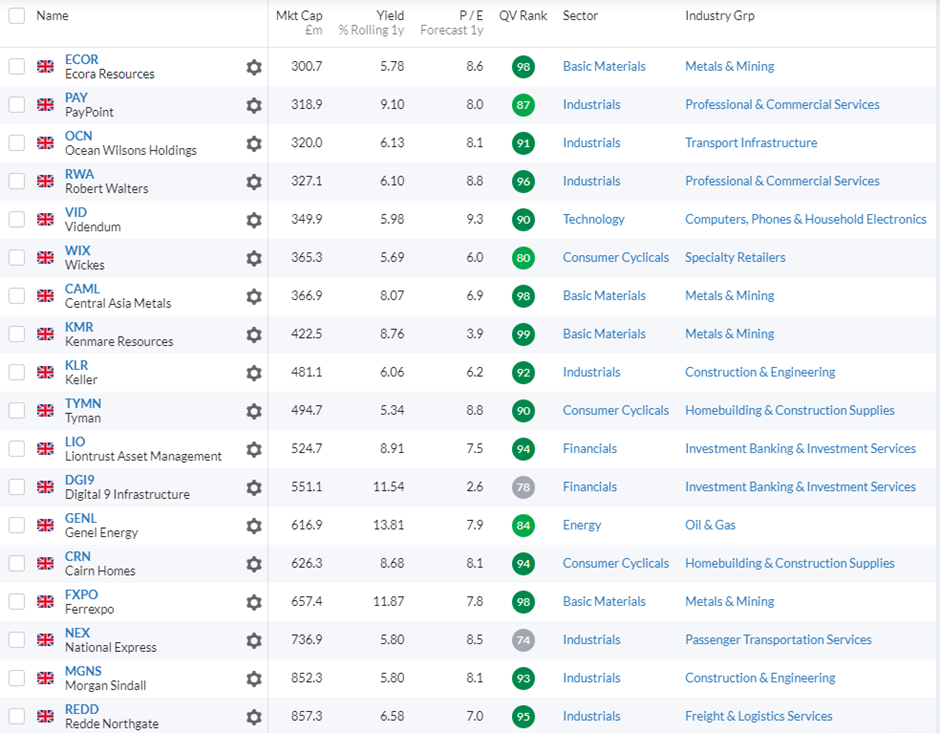
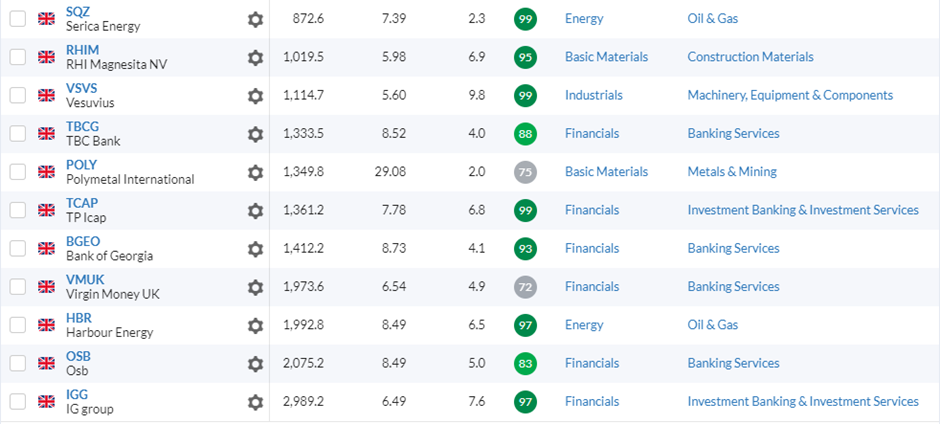
The Companies
As usual, the screen contains a few anomalies - stocks I wouldn't consider investing in. In addition, this screen is quite bank-heavy. This is a sector the value investor may want some, but not excessive, exposure to. I will narrow down the field to some of the most interesting companies from the widest possible sectors for further research:
PayPoint (LON:PAY)
Many will think of Paypoint as the supplier of payment terminals in post offices and newsagents. They may also believe these types of payments are in terminal decline (pun intended!). However, Paypoint is expanding its business into complementary areas, including via its recent acquisition of employee rewards company Appreciate. Part of this payment for this business was in shares, and the overhang of small positions from Appreciate holders may be one of the reasons the share price has been weak this year:
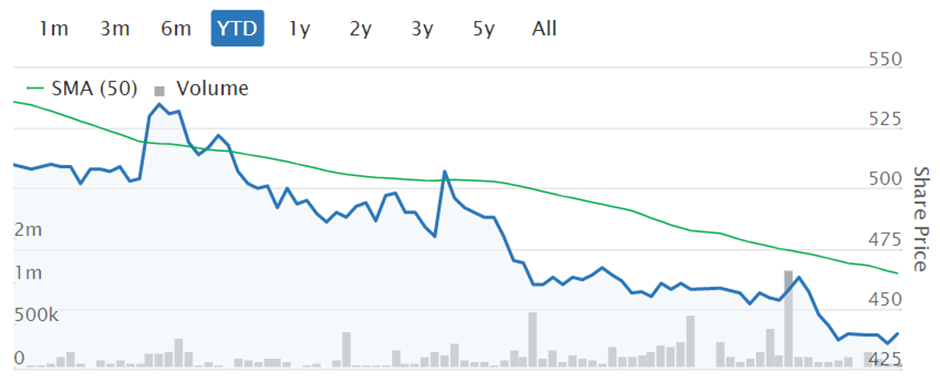
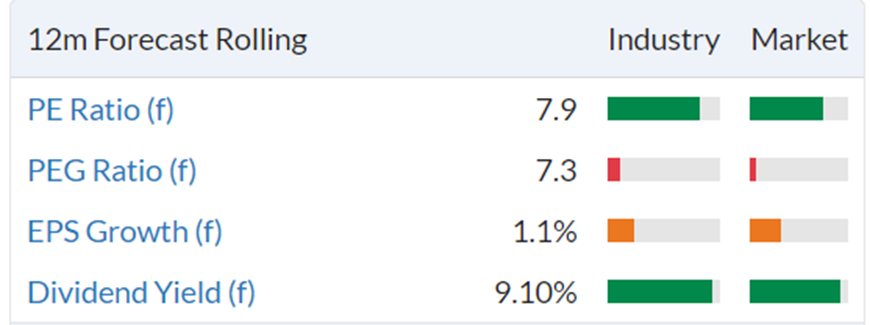
This means that holders now receive a forecast dividend yield of 9%:
One of the other advantages of Paypoint is that it earns interest on the significant customer cash balances it holds. This means that it benefits from a rising interest rate environment, unlike many listed companies.
Ocean Wilsons Holdings (LON:OCN)
Investors are exposed to country risk with this Brazilian shipping and investment company. However, for taking this risk, investors are rewarded with a P/E of 8 and a dividend yield of 6%:
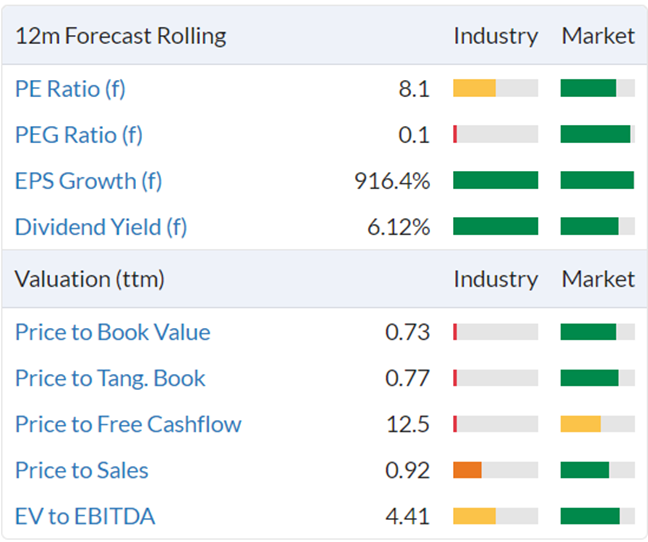
On top of this, the company trades at a significant discount to tangible book value.
Robert Walters (LON:RWA)
In 2023, the recruitment sector faces more challenging times as fewer job openings are available. This is reflected in the forecast reduction in EPS for FY23. However, the decrease is slight, and earnings are expected to grow again in FY24:
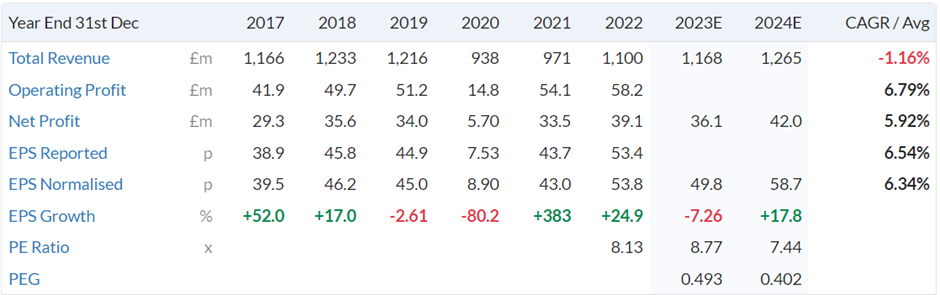
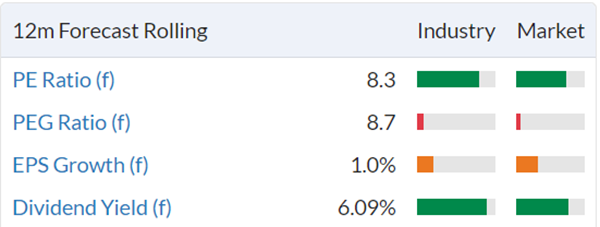
This makes the c.8x forward earnings good value, as does the c.6% dividend yield:
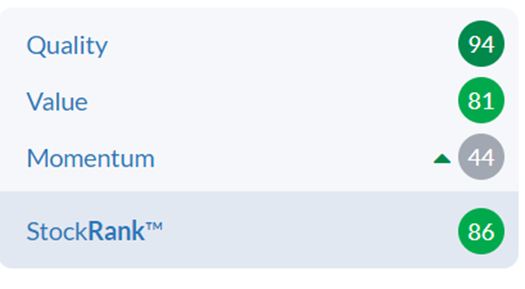
Particularly since Robert Walters is a high-quality business with a high Quality Rank:
Wickes (LON:WIX)
I wrote about Wickes in this article, so I won’t go into further detail here. However, since that Stock Pitch, the company have brought out a Q1 trading statement indicating that they are trading in line with expectations. These expectations are undemanding for a very well-run business.
Central Asia Metals (LON:CAML)
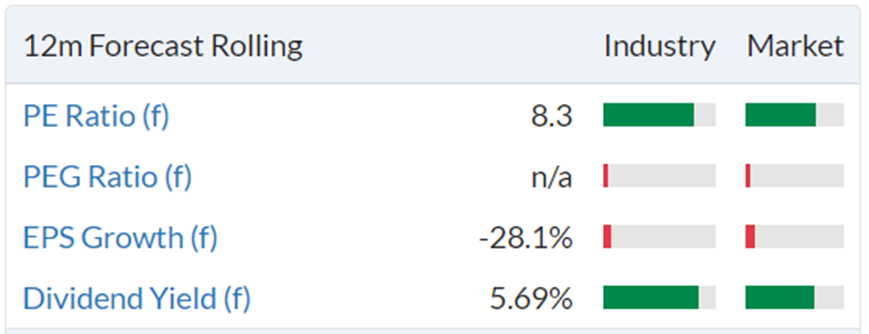
When I looked at Central Asia Metals after my high earnings yield screen, I was concerned that a fall in copper prices had not yet been reflected in broker forecasts. This appears to have been prescient, as 2023 earnings estimates have dropped by about 20%:
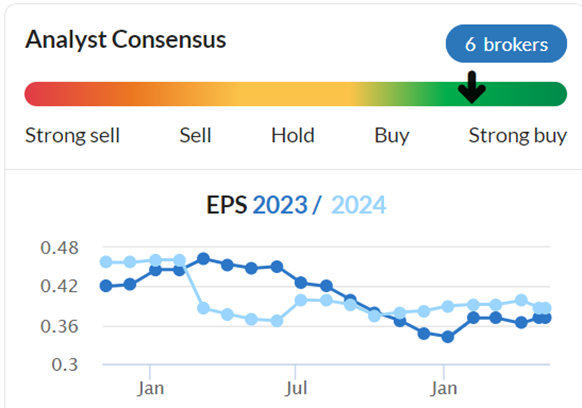
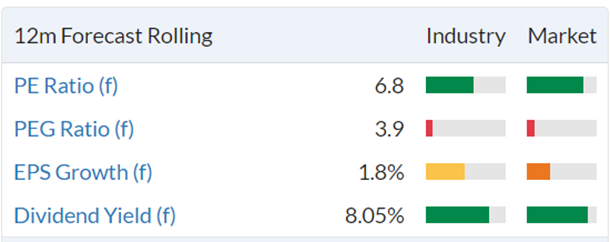
However, 2024 estimates are largely flat and with the share price weaker, the metrics here now look very good:
Kenmare Resources (LON:KMR)
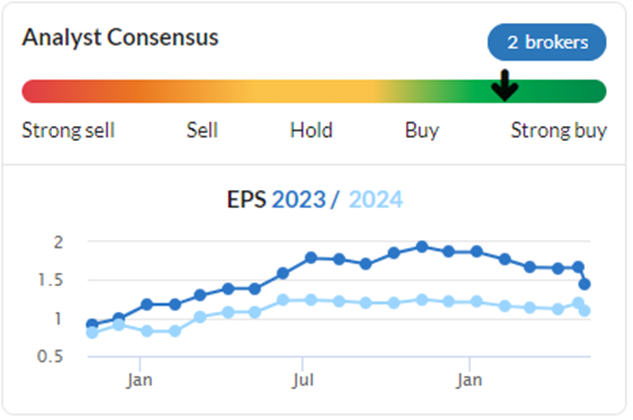
Kenmare is another company that I reviewed as part of my high earnings yield screen. Since then, a small production miss has been offset by stronger commodity pricing:
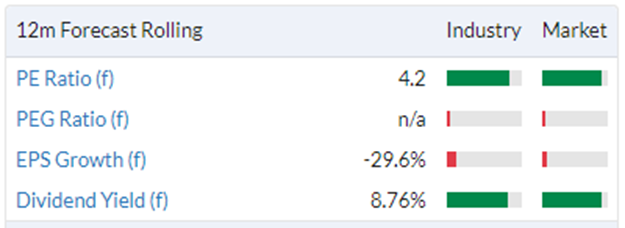
This means the company remains on a very modest rating:
The Heavy Mineral Sands (HMS) that Kenmare produces remain one of my favoured capital market cycle plays. Demand for HMS is forecast to grow while supply remains constrained, meaning that further price strength will likely remain.
Keller (LON:KLR)
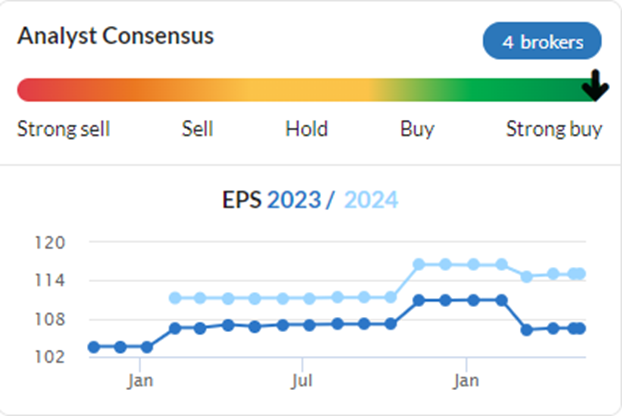
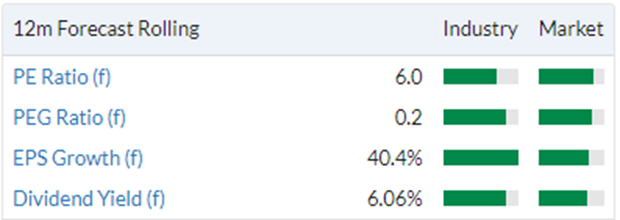
Specialist building contractor Keller will be exposed to any weakness in construction. However, brokers’ forecasts are for EPS to rise in 2024, not fall:
If this ends up being the case, a forward P/E of 6 looks too low for a growing business:
Tyman (LON:TYMN)
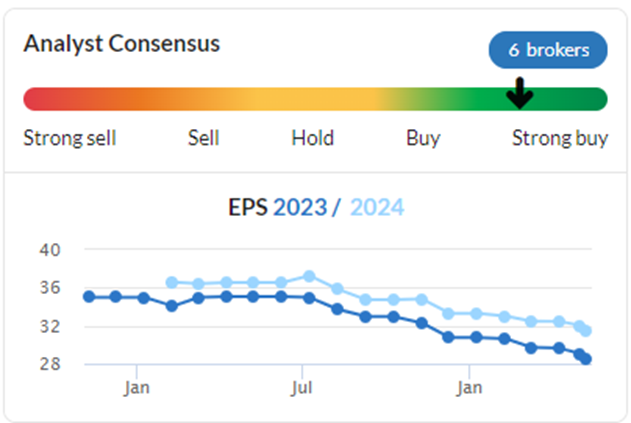
Tyman is another company exposed to the property industry, as they supply components for UPVC windows. Unsurprisingly, broker trends here are declining:
However, 2024 is still expected to be better than 2023, and the price-earnings ratio is in single digits:
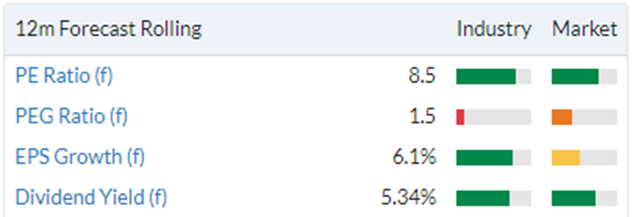
Perhaps one bear point is that smaller building product suppliers look even cheaper at the moment, but that shouldn't detract from the possible value on offer in Tyman.
Liontrust Asset Management (LON:LIO)
Liontrust has long been considered a “quality compounder”, and is a stalwart of Keith Ashworth-Lord’s UK Buffettology Fund. However, a weak market for fund flows means that all investment managers have faced a significant de-rating. As a result, while earnings performance is unlikely to grow again until better market conditions prevail, the company trades on the lowest P/E range in the last five years:
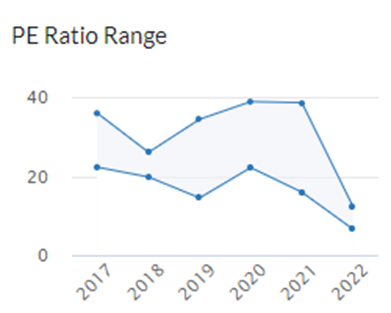
This is Quality At a very Reasonable Price.
Cairn Homes (LON:CRN)
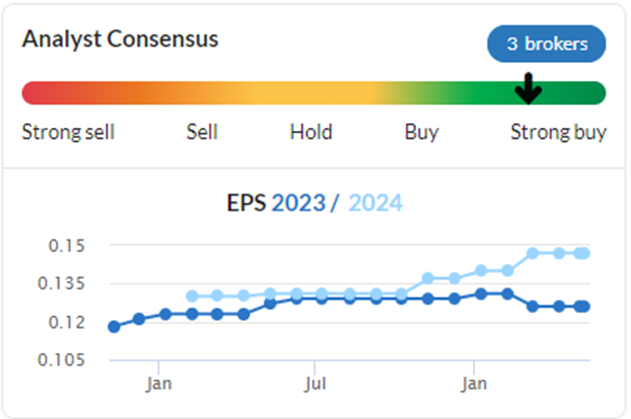
Many companies in the housebuilding sector look cheap on historical figures in the current markets as markets fear a deep housing recession. However, Irish housebuilder Cairn Homes mark itself out as one of the few that are still growing earnings in this environment:
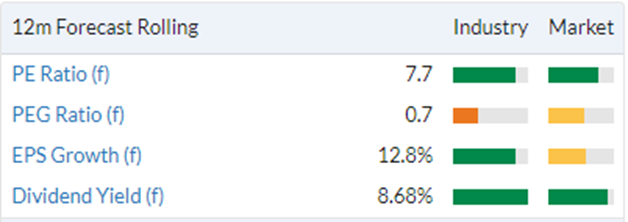
This makes their P/E look low for a resilient, growing business:
Ferrexpo (LON:FXPO)
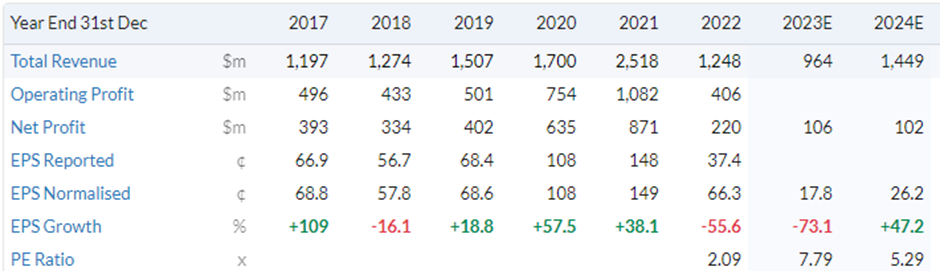
Investors in this iron ore producer and taking significant political risk as the company operates in Ukraine. Despite logistics issues, the company continued operating and exporting during the war. And if stability returns to the country and earnings bounce back, the company will look exceptionally cheap:
National Express (LON:NEX)
Recent trends have not been kind to bus operator National Express, with wage and fuel inflation having a significant impact:
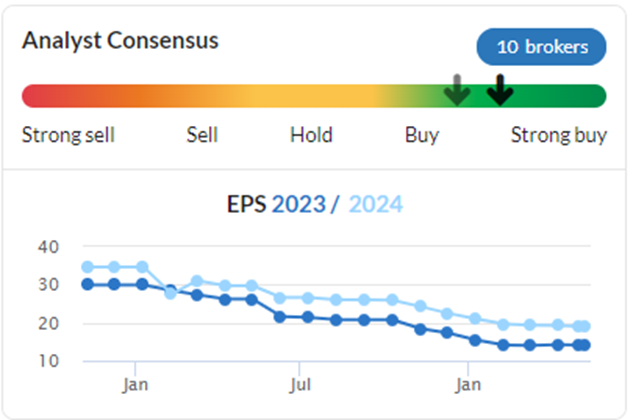
However, with fuel prices dropping recently and issues with industrial action on trains, the tide could be about to turn for the sector. However, the company is modestly valued even if investors assume no recovery in trading:
Serica Energy (LON:SQZ)
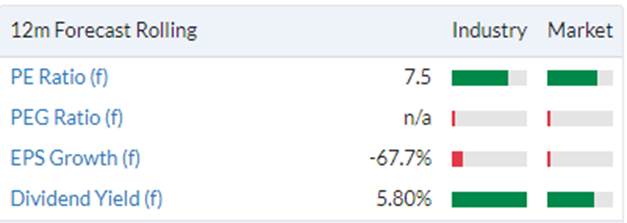
Serica was a UK gas producer that recently merged with Tailwind Energy. This gave the company more exposure to oil as well as gas. Although the oil price has been weak lately, it has fallen nowhere near as much as day-ahead gas prices. The merger means the company has more balanced production and is on a meagre rating:
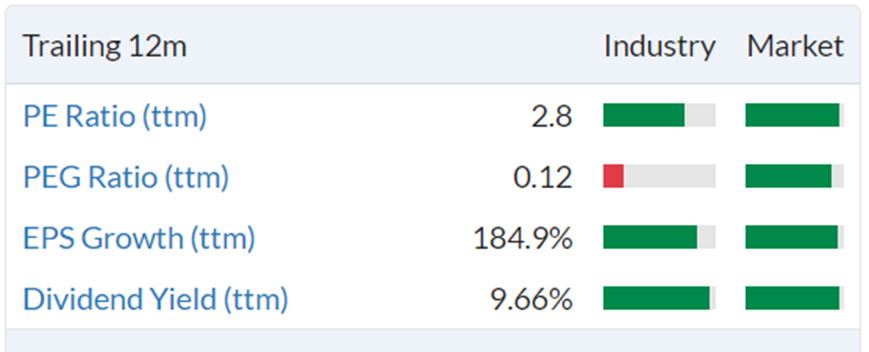
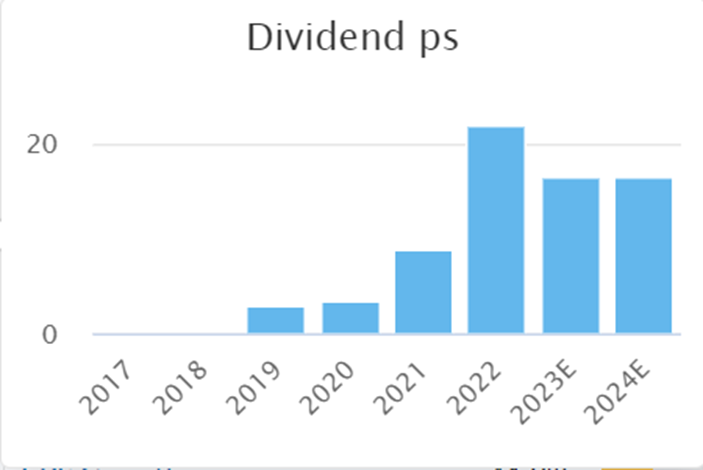
While not at the exceptional level of 2022, the company is forecast to pay a significant dividend yield in the future:
Redde Northgate (LON:REDD)
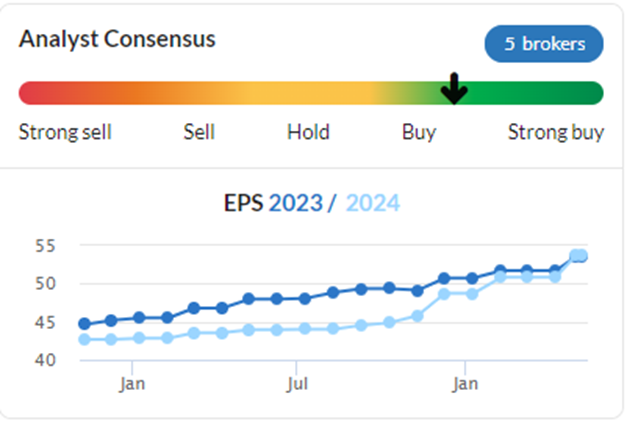
Vehicle hire company Redde Northgate has seen several broker upgrades over the last 18 months:
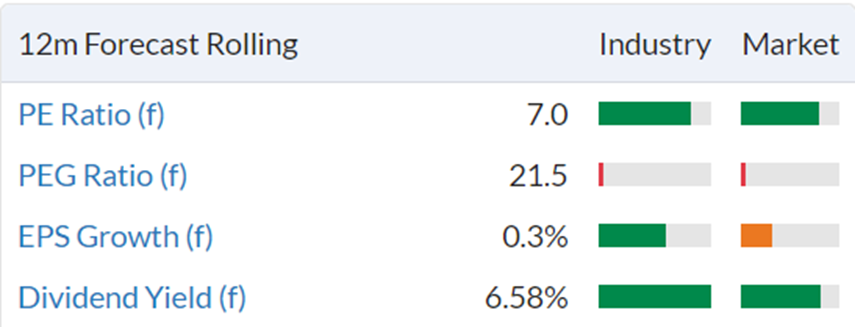
However, the share price has been range-bound, leading to a very low forward rating:
On top of this, the company has faced pressure in the past to sell off its highest-performing European subsidiaries, meaning that this could be worth more than the market cap it was broken up.
TP Icap (LON:TCAP)
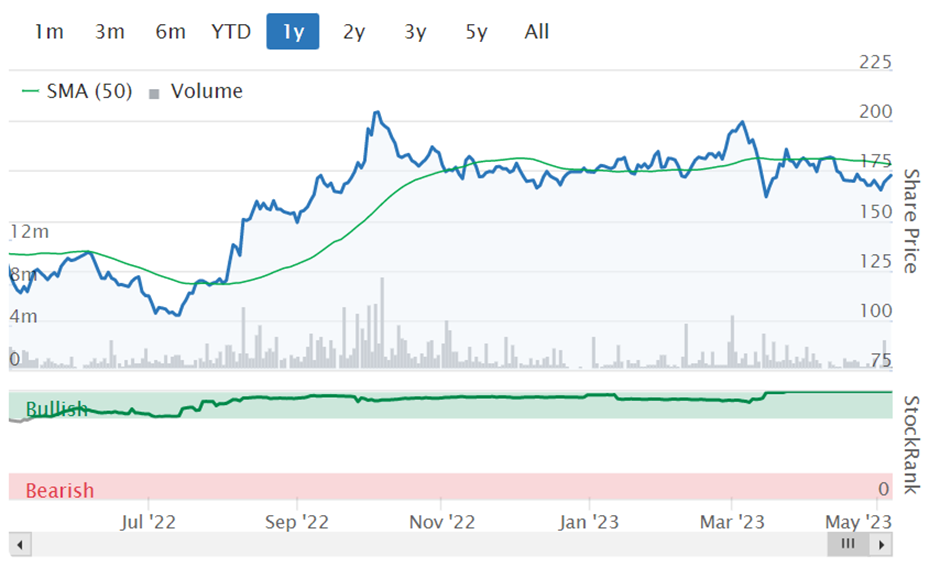
This Inter-dealer broker, formed from the merger of Tullett Prebon and ICAP, has almost doubled off recent lows:
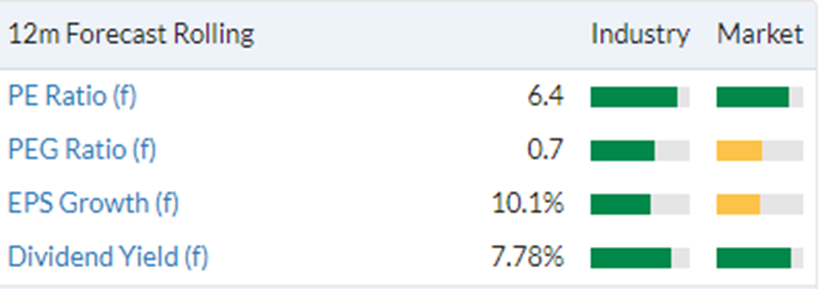
However, it still looks very cheap:
The company also has net cash that exceeds its market cap, giving a negative EV:
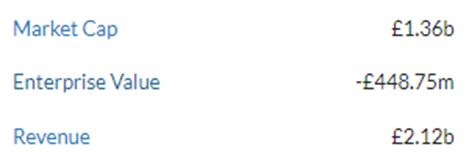
This cash isn’t really free to distribute since it is an integral part of the business. However, the dividend yield is still very high. The cheap rating may be because the market fears that the need for in-person brokerage is going away. However, the company also has a fast-growing digital platform, and firms still prefer to deal in person for more esoteric instruments.
Virgin Money UK (LON:VMUK)
In banking, size matters. So out of the banking stocks that appear in the screen results, I am choosing to highlight the largest one. Which is very cheaply rated:
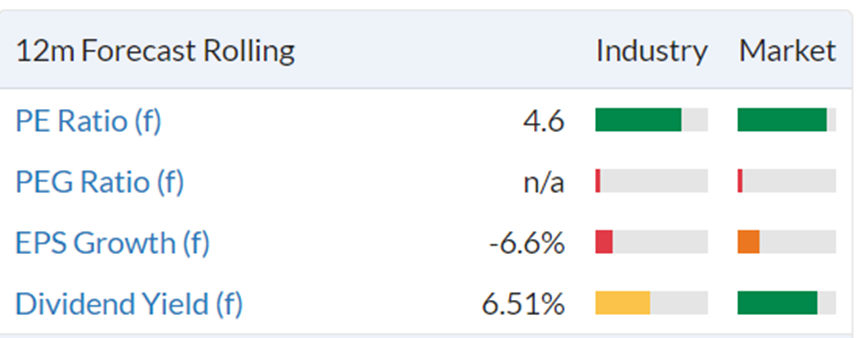
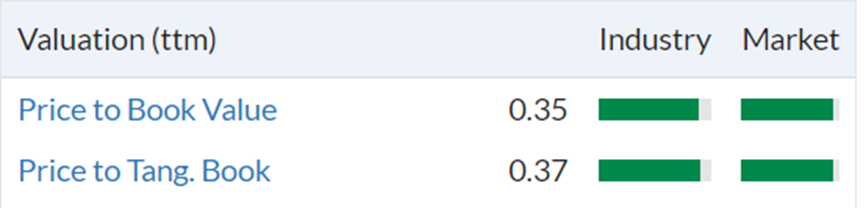
Earnings can be very variable for a bank, so a price-earnings ratio isn’t always the best way to value a bank. However, the price to book here is very low, even within an industry that tends to have low P/B at the moment:
IG group (LON:IGG)
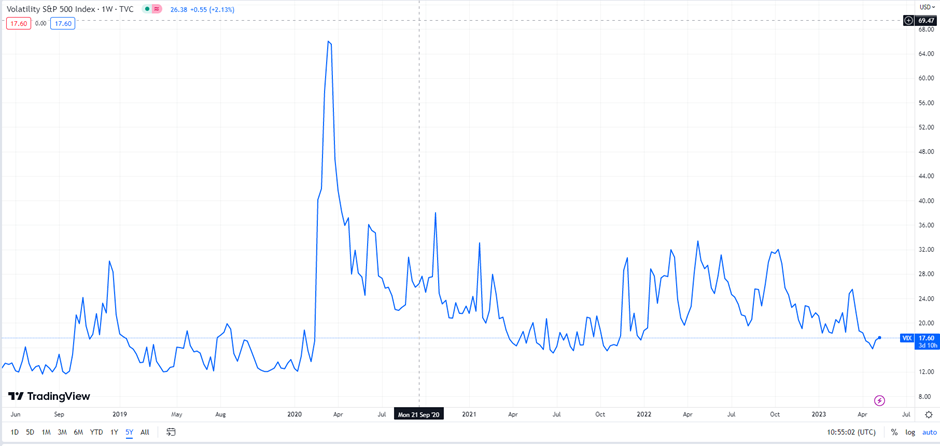
Many investors will have direct experience with this spread bet provider. These sorts of companies make money on trade volume primarily driven by market volatility. Volatility has been relatively subdued this year. As this long-term chart of the VIX measure shows:
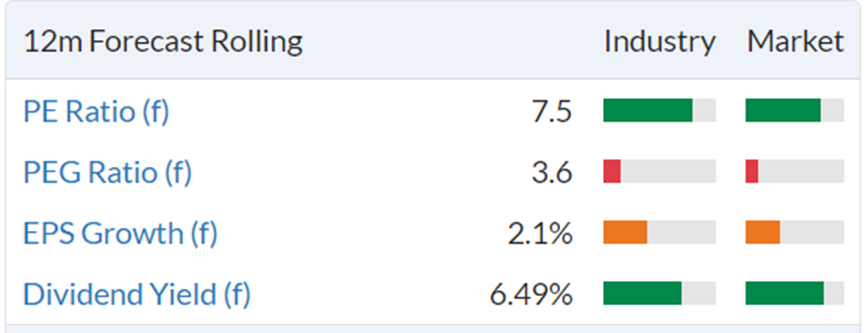
However, the current rating means that there is a significant margin of safety for investors taking a long-term view:
Each of these companies has risks associated with their business, not least macroeconomic conditions. And hence, some of these will prove to be cheap for a reason. However, many of these companies will have been sold off simply due to fund outflows. When this effect reverses, these cheap stocks will likely be among the best recovery stocks. Investors who buy into these types of stocks today can participate in this recovery plus receive a reasonable income while waiting for any re-rating.
[Disclosure: Mark owns shares in PayPoint (LON:PAY) Wickes (LON:WIX) ]
Disclaimer
This is not financial advice. Our content is intended to be used and must be used for information and education purposes only. Please read our disclaimer and terms and conditions to understand our obligations.

13 comments
Very helpful and useful article thanks Mark. Sadly National Express has ruled itself out as uninvestable due to the silly name change investment criterion. Now to be known as Mobico!
Great article. A rich seam of quality companies at very reasonable prices. I guess some are vulnerable in a recession but that is looking further down the line. Already have several on the radar so this is positive reinforcement!
Thanks Mark, very interesting read.
Great screen Mark many thanks lots of possible take over takes there for PE i expect.
Thanks Mark. Great article, but I am probably biased as I already own 7 of them.
It does give me confidence though to know I am on the right track, and TBH the majority of them seem to have hit a point where their SP has stabilised and are trading in a range. I am hoping waiting for some better news on the macro picture before starting their rerating.
In fact I am considering topping up some of them to full-holdings, but am unsure if I would be better off awaiting the start of the recovery first, but risk missing out on the first stage........choices.....choices.
A really useful screen I will add to my other ones.
The downard volatility (i.e. more pronounced price falls) in smaller caps has been really clear since the market started to account for inflation and rate changes from (very roughly I think) September 2021. So Aim stocks (overall and as simplistically measured by their index) have been the worst followed by mid-caps; the best group has clearly been larger caps. This is largely a pheonomenon of the higher risk profiles and less predictable earnings and sometimes weaker balance sheets of smaller companies at a time of acute macro uncertainty. When the market does finally turn this should reverse as risk appetite returns.
These stocks all, I think, look cheap but I would never assume that analyst consensus beyond twelve months is more than a stab in the dark. So when looking at smaller stocks do look at probable cash flows and financial resources. It is also often worth checking that Stocko have the figures right. They usually do, but not always. EV is market cap plus net debt or less net cash. TCap is shown in it's Stockreport as having cash of £2.9bn and net cash of £1.8bn. I reckon, from their published figures, they had (at Dec 2022) net cash of £277mn and so an EV of around £1.1bn not the big minus figure shown. If I could buy a decent business and be given £500mn as a gift for doing so I would jolly well do it if I could.
I suppose I am saying screens are great, and this is an excellent one, but I like to get to know the business a bit.
Fabulous article Mark. As my investment focus is largely oversold big dividend paying shares and Investment Trusts it’s right up my street, so many thanks. I hold a few of them and several others on the watch list. Cairn Homes (LON:CRN) looks especially interesting. I’ll be referencing your article regularly.
That's a very helpful piece Mark, thank you.
I am currently looking at PayPoint (LON:PAY) and Wickes (LON:WIX) so you couldn't have times it better. I see you hold those 2 . There are others there that might be of interest too. I have held Central Asia Metals (LON:CAML) for some time and recently bought back in to Redde Northgate (LON:REDD) around the current price after getting out at 410 and 435 earlier in the year and then having FOMO.
Thanks, Mark. Yet another insightful article giving people something to ponder.
Thanks for this Mark. It's good to see some analysis of companies which are larger than the SCVR deals with. Also very interesting to follow the link to the Investment association. I will consider how I can best use this market information to guide my decisions on when to buy/hold/sell .
Miners mentioned look interesting with their big yeilds and as long as World economy dosn't slow down too much. Uk focused companies seem stuck in a proper rut at moment with profits been taken on any rises for many shares, computer trading possibly. Screen does throw up what seems like bargains and thank you for the smaller list of suggestions.
Thanks, Mark. This ticks the box for some further research and possible investments.
Thanks, Mark. That's a useful screen to use as the basis for further research.