More Midcap Madness - stocks that are too cheap today

In May 2023, I wrote an article called Midcap Madness. The theory was that outflows from the UK markets had made some midcap stocks simply too cheap. I used a screen with some very simple value criteria:
Market Cap: > £300m; < £3b
I defined mid-cap fairly loosely here.
Price-Earnings Ratio Forecast 1y < 10
I wanted companies that are forecast to remain cheap.
Dividend Yield Rolling 1yr > 5%
While this wasn't designed to be an income screen, a large dividend yield is a sign of companies where the price has declined, but the company retains its dividend payout. This may indicate that management believes the company's future is not as bad as the market has priced.
Stockopedia QV Rank > 70
This was a sense check that I was getting stocks with reasonable Quality and Value.
Industry Group excludes "Collective Investments"
I wanted to look for trading businesses, so I excluded funds and fund-like stocks.
The original screen had 30 results, but it was quite heavy on banks and had a few other anomalous stocks. So, I narrowed it down to 18 stocks that I thought had interesting value characteristics. As the midcap madness name suggested, they looked just too cheap.
Were they just too cheap?
Not every stock performed great, of course. However, the average return from the article publication to the end of last week was a very respectable 23%:
Price at: |
10/5/23 |
17/1/25 |
Price Return |
IGG |
728 |
1054 |
44.8% |
TCAP |
170 |
271.5 |
59.7% |
MGNS |
1778 |
3735 |
110.1% |
CRN |
91.9 |
175 |
90.4% |
KLR |
646 |
1372 |
112.4% |
ZIG |
382.5 |
313 |
-18.2% |
FXPO |
108.5 |
108.4 |
-0.1% |
SQZ |
230 |
154.7 |
-32.7% |
PAY |
430 |
698 |
62.3% |
MCG |
117 |
76.7 |
-34.4% |
OCN |
902 |
1315 |
45.8% |
WIX |
136.8 |
150.8 |
10.2% |
CAML |
206 |
158.8 |
-22.9% |
KMR |
450.5 |
310 |
-31.2% |
LIO |
799.5 |
407.5 |
-49.0% |
RWA |
420 |
315 |
-25.0% |
VMUK |
150.5 |
220 |
46.2% |
TYMN |
268 |
400 |
49.3% |
Total |
23.2% |
Two of the stocks, Virgin Money and Tyman, were taken over during this time for reasonable premiums. However, these were the strongest performers, with Morgan Sindall (LON:MGNS) and Keller (LON:KLR) both more than doubling. This shows that the gains can be significant when the market decides to re-rate a midcap stock.
This return was generated during a period when the FTSE250 generated a price return of just 10%. Not only that, but the average expected yield on the midcap madness stocks was around 7% at formation versus less than 4% for the FTSE250, adding to the outperformance. The midcap madness stocks would have generated at least double the total return of investing in the FTSE250. Perhaps Value Investing is not dead?
Is there midcap madness today?
Although the FTSE250 is above the level when I wrote the first midcap madness article, it has been largely rangebound recently:
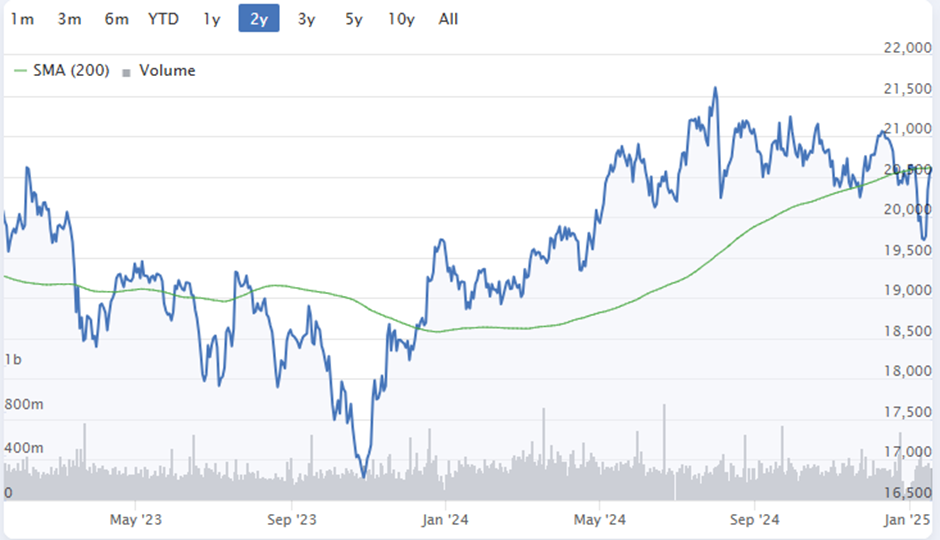
There was also a dip earlier this month, and while that has rebounded somewhat, this still looks like a good time to revisit the strategy.
The retail fund flows into equities have been quite variable:
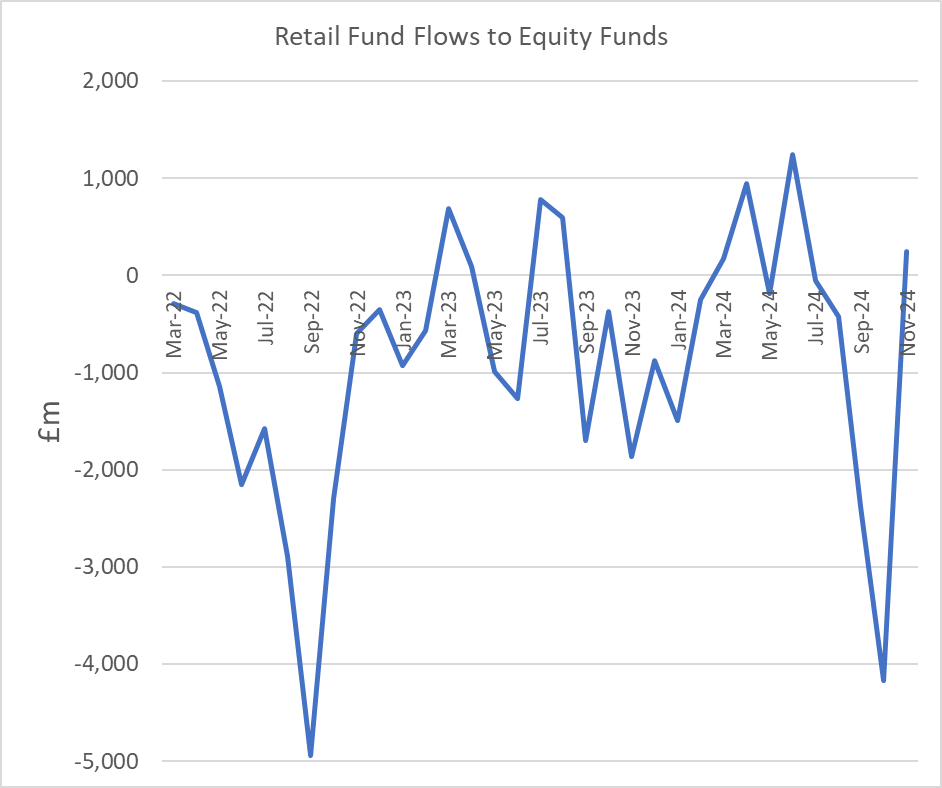
However, while they show the extremely negative impact of the UK budget in September and October, November actually saw slightly positive flows. So again, this could be a good time to look for cheap stocks due for a re-rating as some of those fund flows make their way back into the market.
The Screen Results
Running the screen this week gave 24 results:
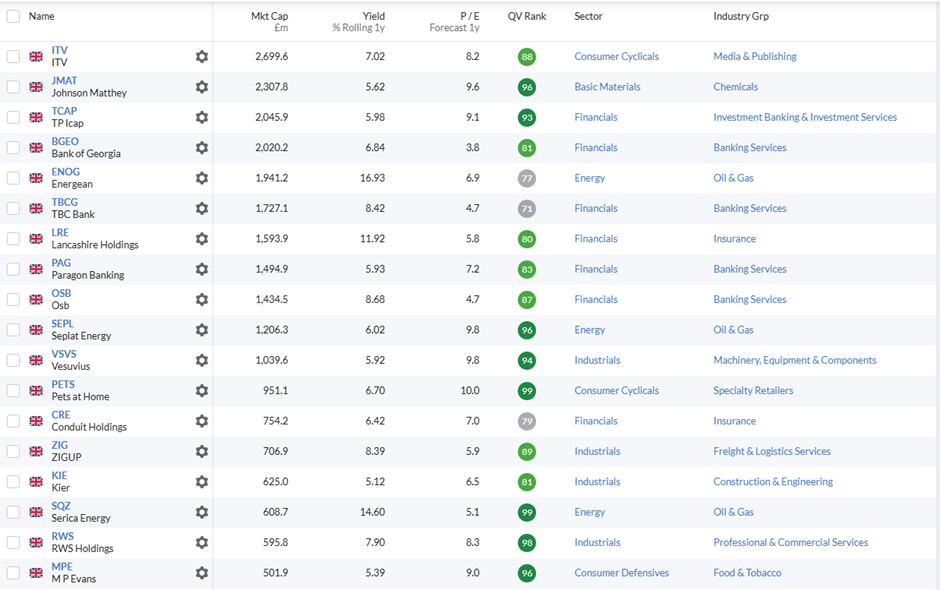
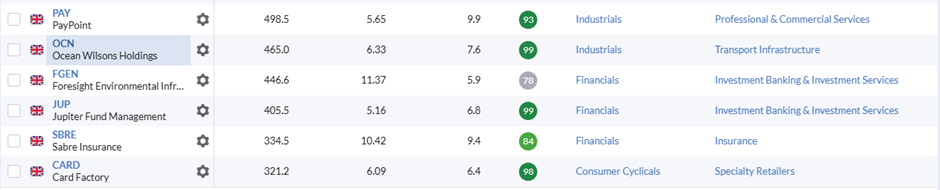
Nine of these stocks were on the original midcap madness screen in May 2023: Ocean Wilsons Holdings (LON:OCN) PayPoint (LON:PAY) Serica Energy (LON:SQZ) ZIGUP (LON:ZIG) (under its former name Redde Northgate) Vesuvius (LON:VSVS) Osb (LON:OSB) TBC Bank (LON:TBCG) Bank of Georgia (LON:BGEO) TP Icap (LON:TCAP)
Of these, Ocean Wilsons Holdings (LON:OCN) PayPoint (LON:PAY) Serica Energy (LON:SQZ) TP Icap (LON:TCAP) ZIGUP (LON:ZIG) made it onto my most interesting list.
Interestingly, a few stocks still meet all the criteria apart from market cap. Kenmare Resources (LON:KMR) Liontrust Asset Management (LON:LIO) and Central Asia Metals (LON:CAML) would have made it if they hadn't dropped below the £300m market cap limit.
This means that there are 15 stocks that were not on the previous screen. I'll take an initial look at a some of the most interesting ones:
The New Stocks
ITV (LON:ITV)
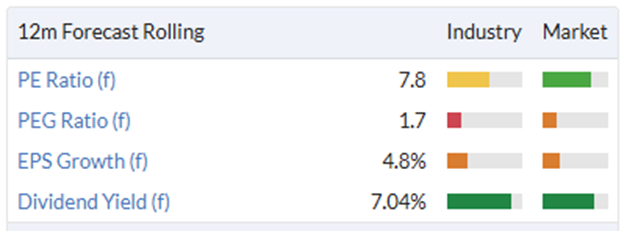
Everyone in the UK knows ITV as the national broadcaster, but roughly half of the revenue is from ITV Studios, its production business, which sells content globally. The P/E here is pretty low:
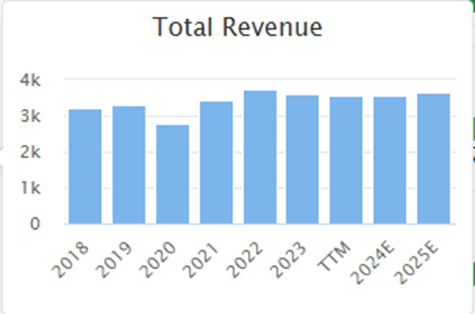
However, this reflects a somewhat pedestrian performance at the revenue level:
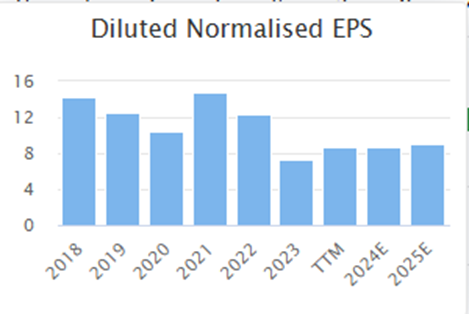
And variable profitability:
The EPS consensus isn't showing any clear recovery:
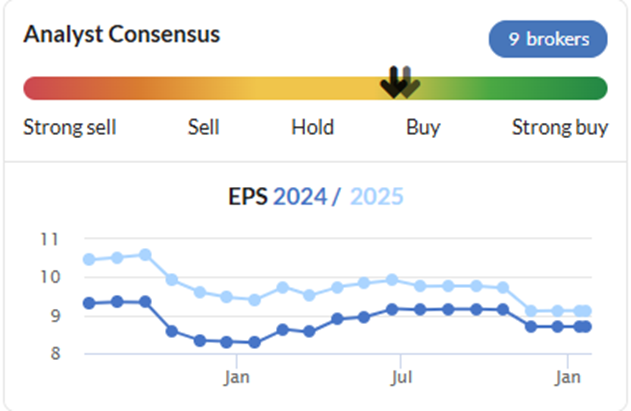
This means that a single-digit P/E may be a fair reflection of where the business sits. However, there are also reasons why a recovery may be on the way. In their H1 results, they said:
● Impacted by phasing of productions and US writers' and actors' strikes in 2023, ITV Studios H1 revenue was down 13%2, as expected, and adjusted EBITA3 grew 5% driven by a strong contribution from higher margin catalogue sales and cost savings
● M&E adjusted EBITA grew 230% with total advertising revenue growth ahead of expectations, up 10%
● ITVX continued to perform strongly with streaming hours up 15%, monthly active users up 17% and digital advertising revenues up 17%
So we have three medium-term drivers: the ending of the writers/actors strike should improve ITV Studios; strengthening UK advertising markets; and continued streaming growth. It may well pay to be patient with this one. In the meantime, investors get a 7% dividend. There is always the chance that the regularly rumoured takeover actually turns into something firmer.
Johnson Matthey (LON:JMAT)
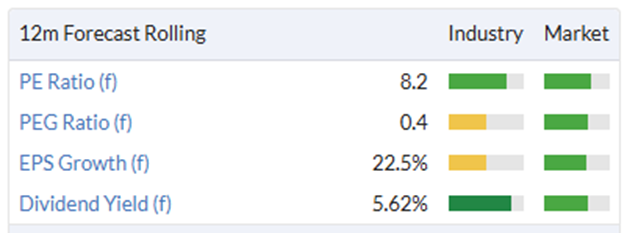
Johnson Matthey has a diverse business producing automotive and industrial catalysts, refining Platinum Group Metal and chemicals. It has recently sold off its non-core business in Battery Materials, Battery Systems, Diagnostic Services and Medical Device Components. It is very cheaply rated for a business forecast to grow EPS over 20% next year:
However, the broker trend reveals why the price may be weak:
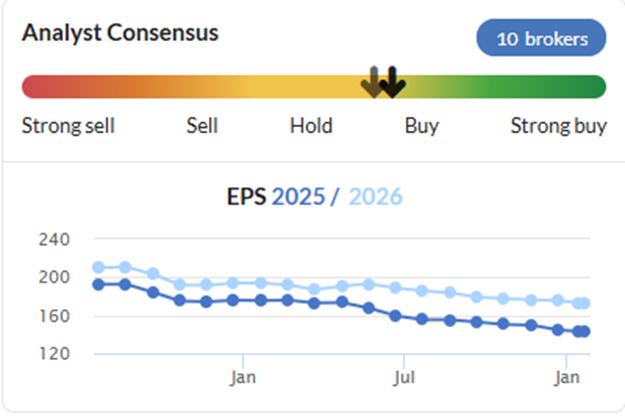
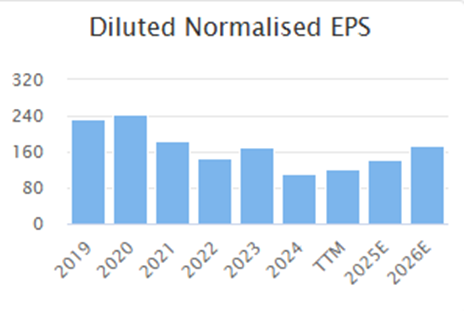
A weakening automotive and industrial backdrop, plus low PGM pricing, is taking its toll on the company. Still, this is another company that is forecast to grow EPS, just not as fast as previously forecast:
One shareholder, Standard Investments, seems intent on driving change via a letter-writing campaign. In response, the company said:
The Board and management team reiterate they are resolute in their focus on improving JM's share price performance and delivering value for shareholders. JM is fully committed to driving enhanced performance, higher cash flow and stronger capital discipline.
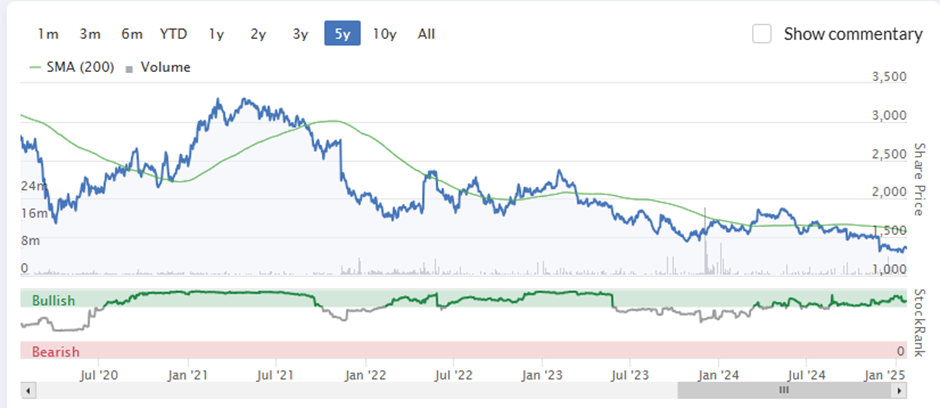
If they can achieve this and EPS returns to previous highs, the share price will likely follow suit:
Energean (LON:ENOG)
Energean is an oil and gas producer in the North Sea and Mediterranean. The company has done well to grow its production:
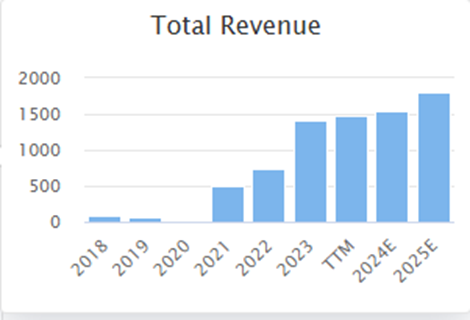
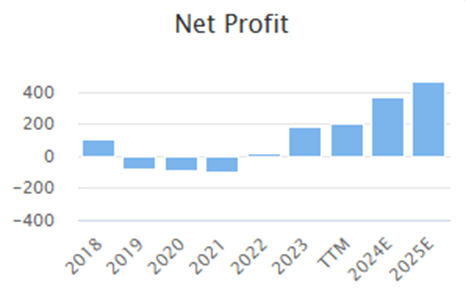
And this has been reflected in improved profits:
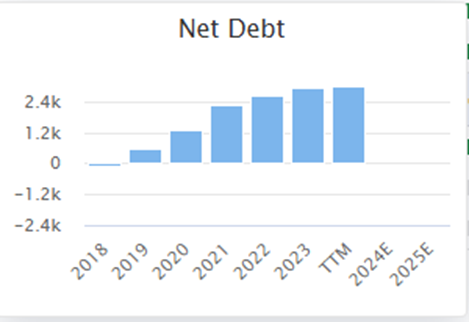
However, they have also taken on a huge amount of debt to achieve this:
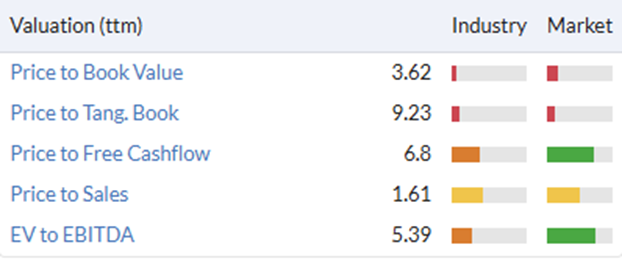
Some of the metrics here look very cheap:
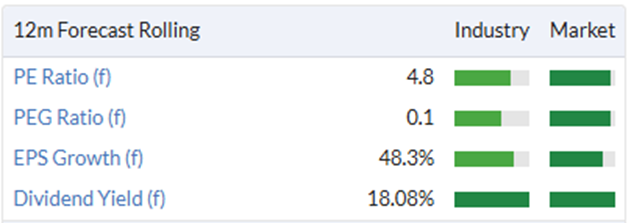
But these are reliant on the company meeting its future forecasts and look less impressive when EV is used instead of market cap:
They are selling their portfolio of assets in Egypt, Italy and Croatia to Carlyle International Energy Partners for an enterprise value of up to $945 million, of which $820 million is firm, which will improve liquidity.
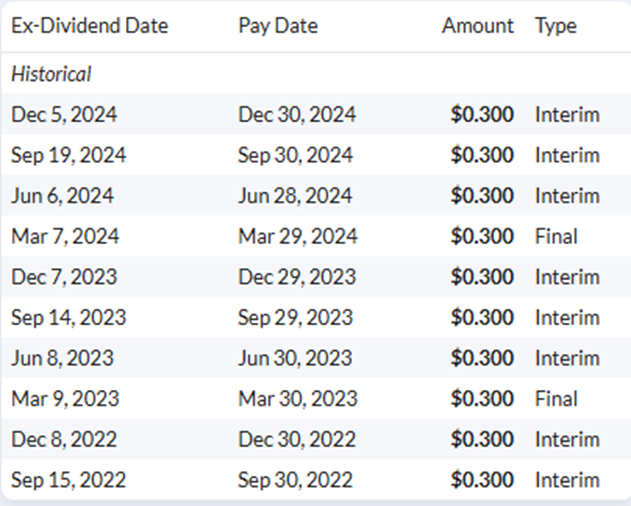
The dividend is forecast to increase materially, which would give the company an 18% yield. However, again, this is dependent on whether those forecasts are correct. So far, the company has paid a generous but flat quarterly dividend:
The management here has clearly done very well in building up production and earnings so rapidly. But I can't help thinking something like Serica Energy (LON:SQZ) remains cheaper and much lower risk.
Pets at Home (LON:PETS)
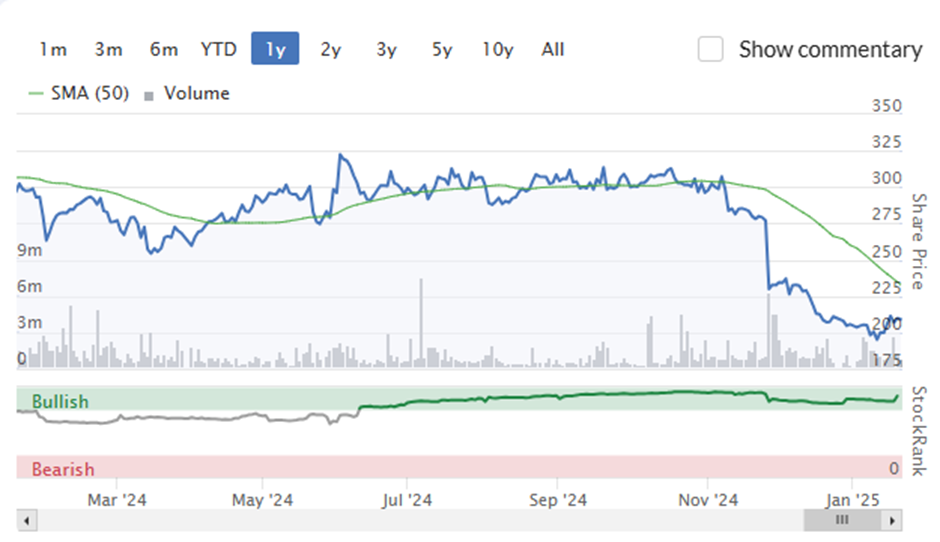
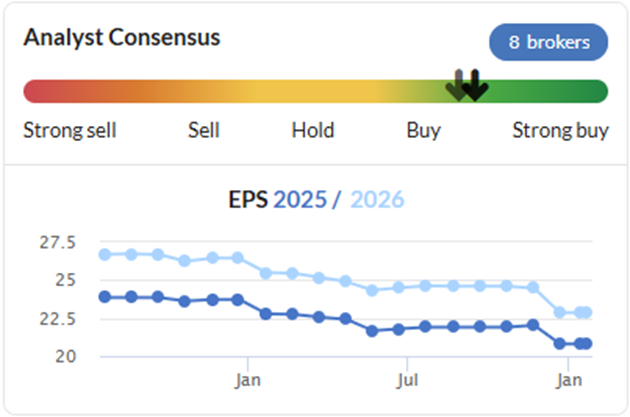
UK retail has been a tough market in 2024, and pet retail has been no different. Both the share price chart and analysts' consensus reflect this:
The damage appears to have been done by the trading update with their H1 results that said:
Our H1 performance shows the resilience in our model and our proven ability to outperform our markets, winning share in both Retail and, particularly strongly, in Vets. However, pet retail market growth has been subdued for longer than we anticipated as consumers have remained cautious in recent months.
We now plan for current rates of market growth to persist through the remainder of this year, lower than initially planned. As such, we now expect underlying PBT# for FY25 to grow modestly from last year.
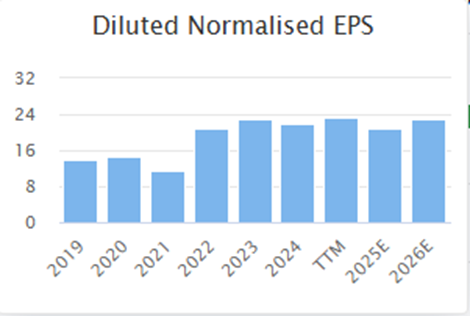
Despite this caution, EPS is still forecast to be flat over the next couple of years but still come 50% above pre-covid levels:
Excluding lease liabilities, the company has net cash:
Balance sheet remains robust with adjusted net debt# of £8.3m (before lease liabilities of £364.7m). Cash and cash equivalents was £40.0m at the end of H1.
And the company says that cash flow continues to be strong:
The lower profit outlook for FY25 is mitigated at free cash flow# level as we continue to look for ways to make our investment plans more efficient and we now expect capex of c£55m for FY25.
This means that the 6.6% dividend looks well covered:
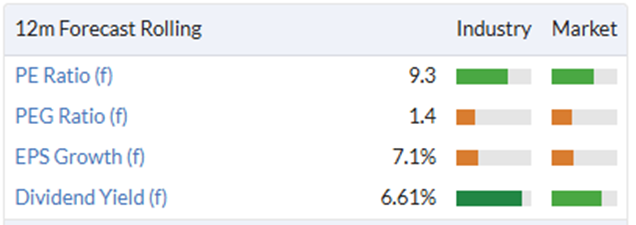
The P/E of 9 looks good value for a market leader in a steadfast retail sector.
RWS Holdings (LON:RWS)
I wrote up a StockPitch article on RWS Holdings (LON:RWS) last year. Since then, not much has changed. The share price remains volatile:
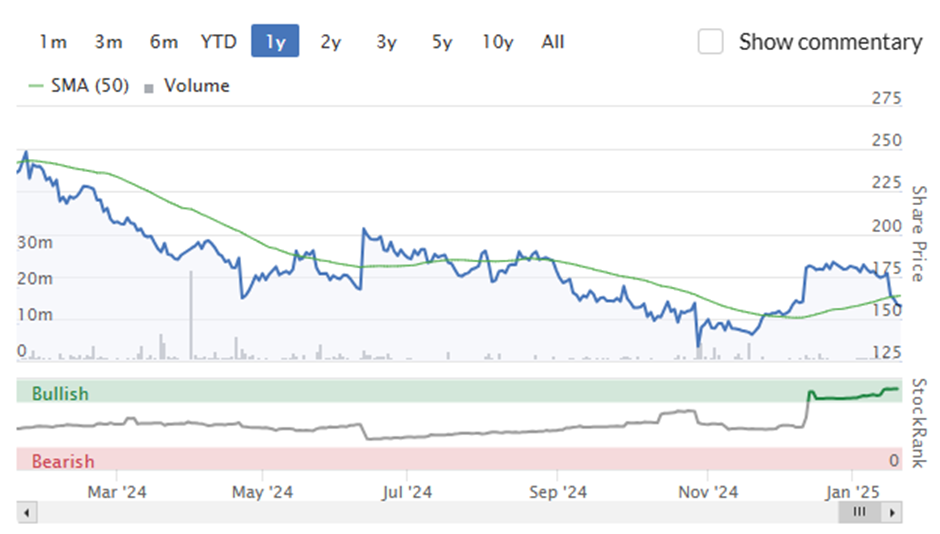
The big unknown here is how AI will impact their business. My personal view is that it may increase competition, but customers will want a trusted partner to implement AI translation, and RWS will be part of that ecosystem. AI translation will also reduce costs for RWS, hence being broadly neutral in its overall impact.
The EPS forecast trends have not been favourable. Although they show some signs of bottoming in recent months:
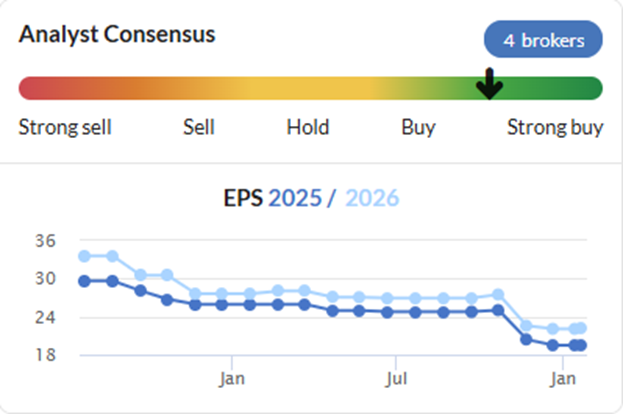
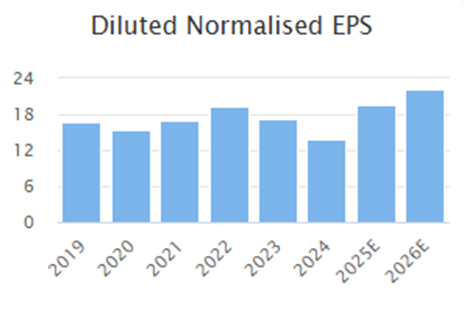
Despite this trend, the EPS is actually forecast to reach all-time highs:
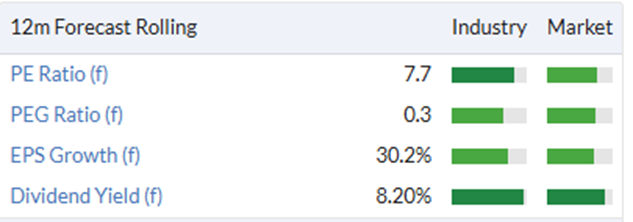
The value metrics here make this look too cheap, in all but the most dire outcomes for the company:
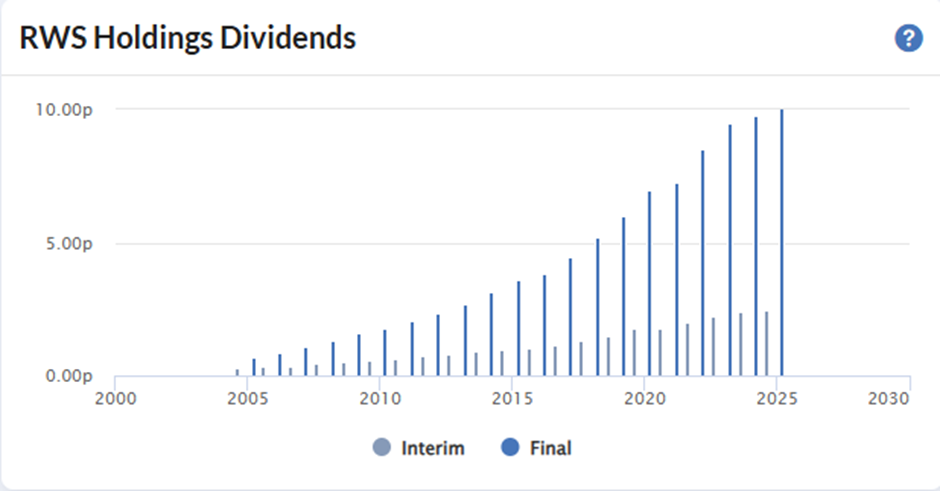
The yield, in particular, stands out due to the 20-year record of increases. Something the company will be keen to keep going:
M P Evans (LON:MPE)
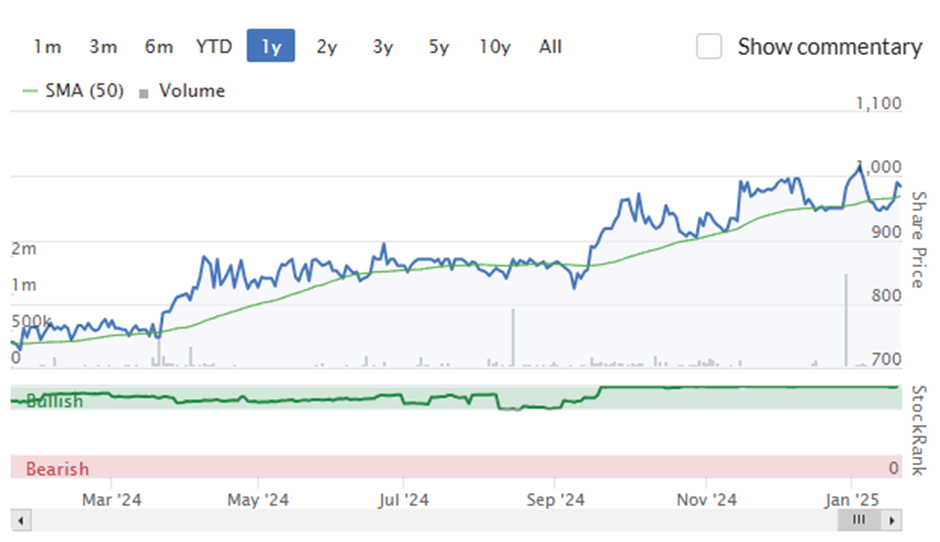
Palm oil producer MP Evans has done well over the past year:
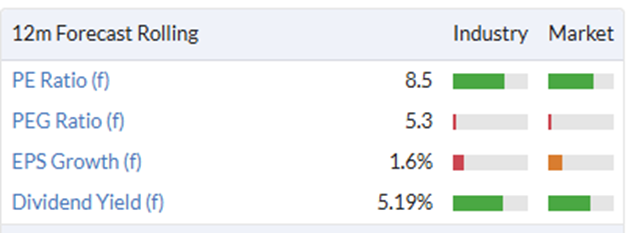
Despite this, the valuation metrics still look reasonable:
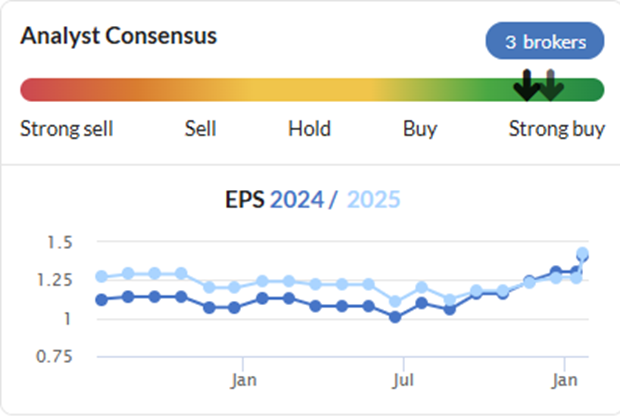
This is because EPS has been upgraded along the way:
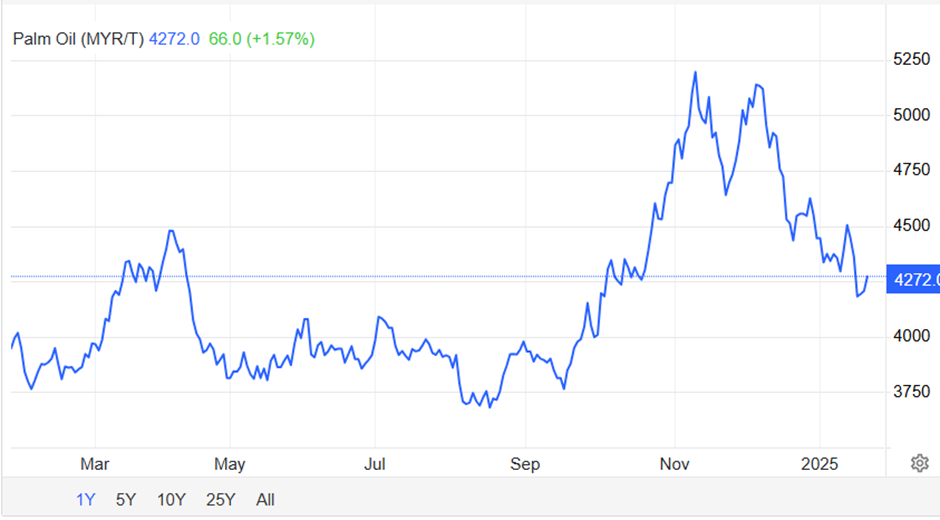
Part of this is the recent strength of the palm oil price, shown here from Trading Economics:
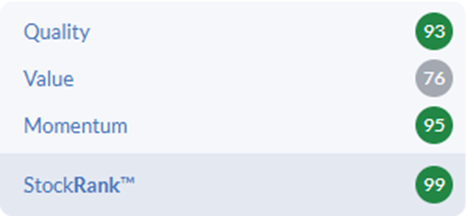
Which has given the company strong momentum characteristics and a phenomenal overall StockRank:
One factor to consider here is that there has been a significant divergence in the share price between MP Evans and the other UK-listed palm oil producer Anglo-Eastern Plantations (LON:AEP):
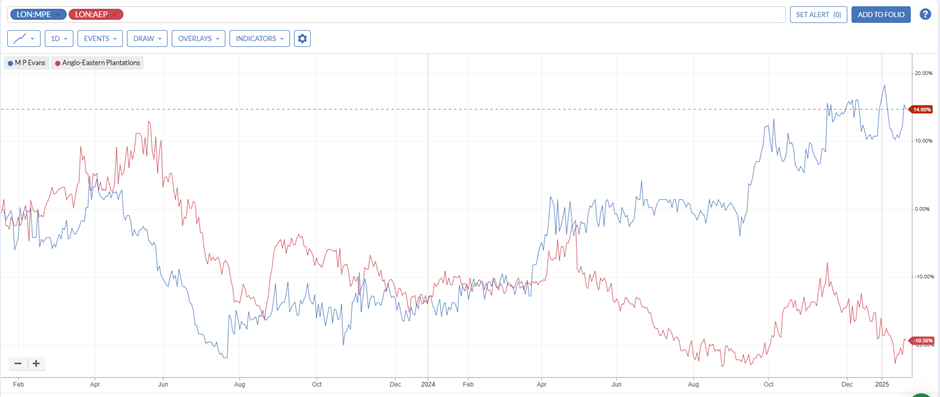
This may be a valid market reaction to the different operation performances of the companies. MP Evans' crude palm oil production was only down 2% in 2024. Meanwhile, Anglo-Eastern production was down 12% for the first 9 months of the year. However, over the last five years, the charts have largely tracked each other:
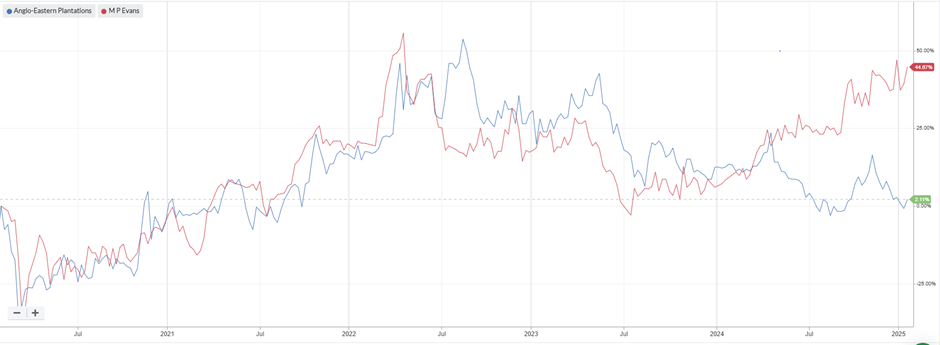
The recent divergence stands out and may mean more value-orientated investors prefer Anglo-Eastern.
Jupiter Fund Management (LON:JUP)
Jupiter looks cheap compared to the general market. However, in an asset management industry facing repeated outflows, this doesn't look particularly great value:
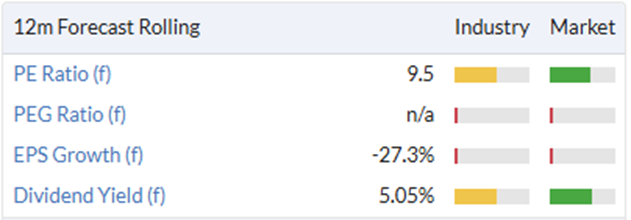
That is, until you consider that Jupiter has significant levels of cash and investments (mainly seed capital into their own funds):
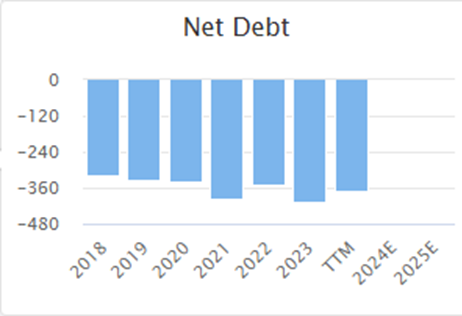
This makes other metrics look more reasonable:
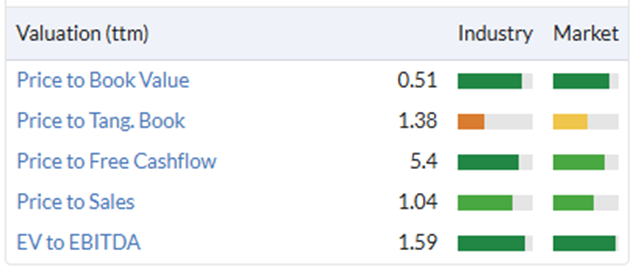
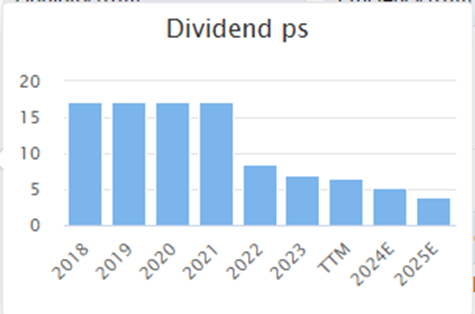
However, these investments are not realisable in the short term, and unlike other asset managers, Jupiter is forced to cut its dividend going forward:
Jupiter still wins on the head-to-head, which means it may still be an attractive stock:

However, I can't help but feel there is better value elsewhere in the sector at the moment, just not in the market cap range of this screen.
Sabre Insurance (LON:SBRE)
This motor insurer has excellent value metrics:
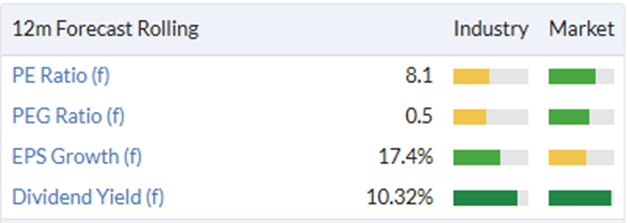
However, it is worth noting that the 10% yield is reliant on the company meeting brokers' expectations for dividend payout:
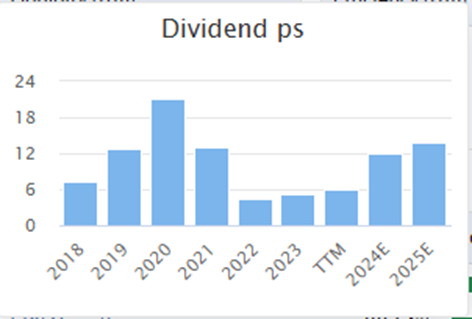
This level of payout should be covered by free cash flow, though:
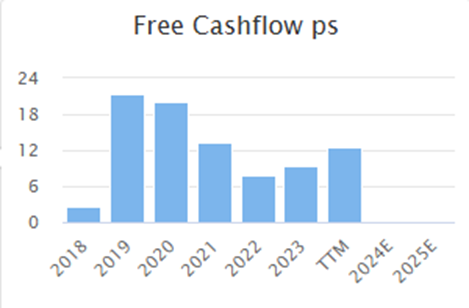
In a recent trading update, the company said:
We continue to anticipate strong year-on-year premium growth, and profit in line with current market expectations
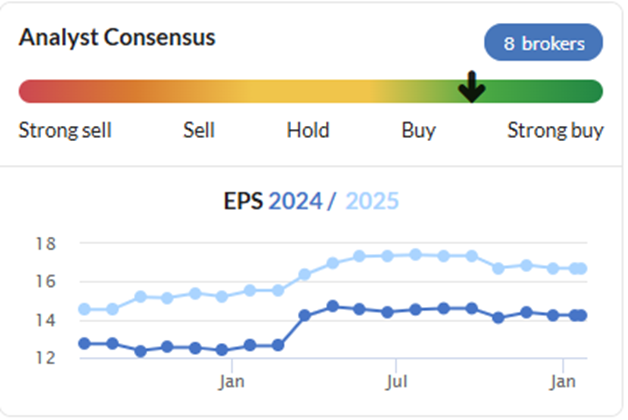
We expect our year-on-year premium growth to be moderated slightly and to be in-line with our view of high single digit claims inflation
This suggests that analysts' EPS forecasts, which were upgraded in 2024, should be achievable:
The company trades at a material discount to larger motor insurer Admiral (LON:ADM) :
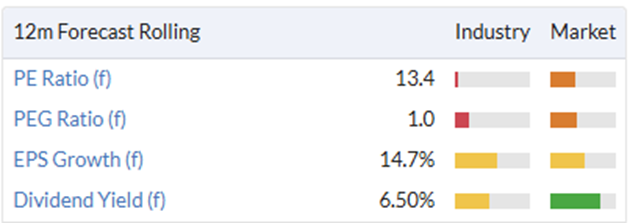
So, there would be a material upside if this gap were closed. It is also worth noting that another competitor, Direct Line Insurance (LON:DLG) , received a takeover last year, so there is potential for sector consolidation.
Card Factory (LON:CARD)
This card retailer is well-known to many Stockopedia subscribers. Being a household name appears to have made the shares quite volatile over the last year:
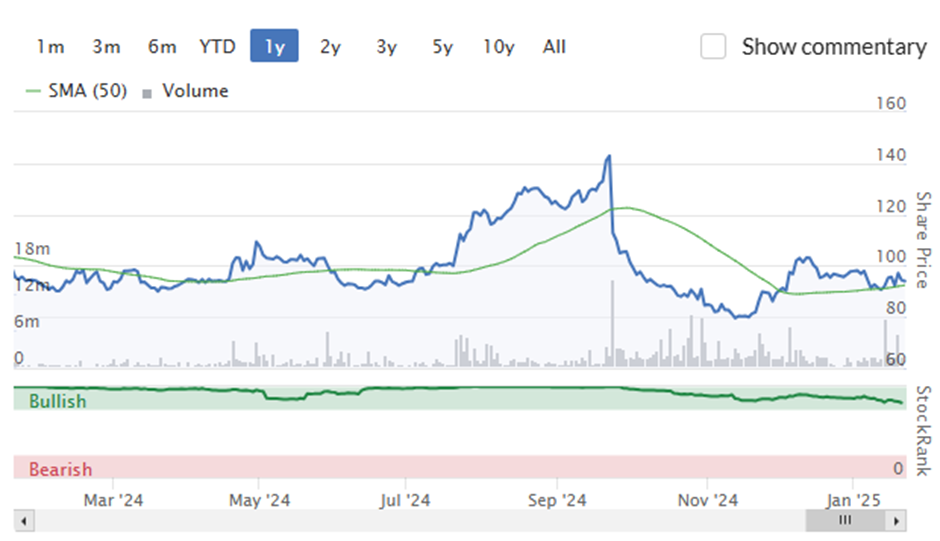
Investors got particularly excited in the run-up to the half-year results. However, poor numbers here led to a rather brutal sell-off. H1 PBT was down 43%. While the company said they were trading in line with expectations, the market didn't believe them. However, the recent Christmas trading update reiterated that:
The Board expects to deliver FY25 adjusted profit before tax (excluding one-off items) in line with current market expectations, reflecting robust revenue growth and the benefits of our previously announced productivity and efficiency programme.
Which they helpfully give as:
According to Company compiled consensus estimates as of 13 January 2025, the current range of market expectations for FY25 Adjusted profit before tax is £65.7 million to £67.0 million with an average of £66 million.
It isn't all good news, though, with FY26 estimates being downgraded at the same time:
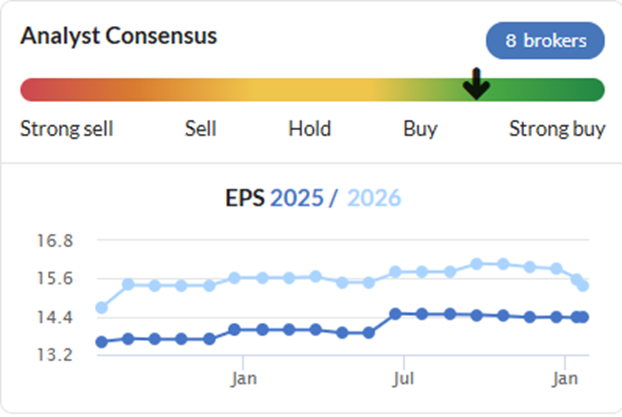
This is the reason why:
The changes to National Living Wage and Employer National Insurance Contributions will result in annual cost inflation of c.£14 million in FY26. We expect to offset this through our proven approach which includes our ongoing productivity and efficiency programme, as well as range development and pricing, while continuing to invest in our future growth. Despite these inflationary pressures, we currently expect to deliver a mid-to-high single digit percentage increase in adjusted profit before tax in FY26.
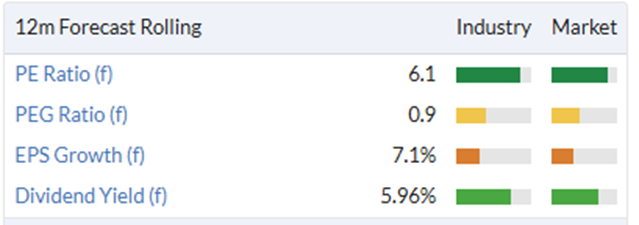
They still expect to grow PBT despite these headwinds. This will never be a particularly highly rated stock, but a P/E of around six still looks too low for a business still able to grow, all be it modestly:
[Disclosure: Mark owns shares in Liontrust Asset Management (LON:LIO) RWS Holdings (LON:RWS) Serica Energy (LON:SQZ) ]
Disclaimer
This is not financial advice. Our content is intended to be used and must be used for information and education purposes only. Please read our disclaimer and terms and conditions to understand our obligations.

17 comments
Excellent article Mark, thank you.
Interesting my quality garp screen throws up many of the companies you highlight, what is also worth noting is you mentioned the first time you did this it was weighted towards banks and certainly large cap banks have been one of the best performing sectors over the last year.
Yes, it was probably a mistake to only have minimal bank exposure by narrowing the field. However, the mid-cap banks have not performed as well as the large caps, probably due to some significant exposures to car financing. Interestingly, the "Large Cap Loonies" which is the same criteria applied to large caps has done equally well over the same period, but now has very few hits, so it seems that large caps may have re-rated in a way smaller companies haven't yet.
PayPoint (LON:PAY) l agree looks too cheap, l have been buying.
l lost patience with RWS Holdings (LON:RWS).
CMC Markets (LON:CMCX) will probably qualify tomorrow, if the share price remains at 220p or less, before the close.
Hi Mark,
An interesting article as ever, but halfway through the MP Evans discussion, it appears to change to Jupiter...?
Regards,
Jon
Thanks, somehow the title for Jupiter Fund Management (LON:JUP) disappeared. No text is missing tho. I’ll add it in.
Excellent read thanks Mark
Serica Energy (LON:SQZ) (I hold) Tremendous dividends allied to potential move to Main Market this year, plus potential M&A activity, and capable management points towards a positive outlook.
Yes, I was impressed with the recent IMC presentation. Looks like they are getting the basics right with regard to reliability and potentially a lot going on behind the scenes.
Excellent as usual Mark. Gives me some ideas on how to rescue my rather lacklustre portfolio performance.
thanks for update as always, very interesting and food for thought
Another stellar article Food for thought. Perhaps a larger portfolio based on diversity and value will outperform stock picking and reduce risk this year.
RE: Pets at Home (LON:PETS)
The issue is a combination of things - the recent update didn't help, impacted by the budget, but there's an underlying worry about the CMA investigation into vets which is due to report later this year. PETS gets a very respectable return for a retailer in part because of their in-store vets so if that was impacted it would change the investment case.
On the other hand Rachel Reeves fired the head of the CMA on Tuesday for not being sufficiently pro-growth and nearly a third of the CMA decision committee will be replaced at the end of their terms later this year, so it'll be interesting to see how this plays out. PETS thinks it will have limited impact on them because, unlike other integrated companies who buy practices, no one can be in any doubt that they're dealing with PETS rather than an anonymous PE firm behind a friendly local brand.
I hold, but probably wouldn't be buying if I didn't ahead of the CMA outcome.
timarr
Some good background, thanks timarr.
There's also an underlying dog maturity issue...hear me out! The dog cycle to them is yrs 1-3 spend is high, have to buy all the kit, leads, beds, jabs, worm medicine, etc. However years 3- 5ish there is minimal spend, until spend rises again when vet services shoot up. Given the large rise in pet ownership over covid, that hasn't continued to grow, we are in the middle fallow years from a cohort perspective.
Add this to a highly competitive market accessories market and it is a much harder market than they let on
I wonder if the firing of the CMA chair is a bit smoke and mirrors. The Tories installed a lot of allies to chair arms-length bodies and regulators (technically the CMA is a 'non-departmental public body') so naturally Labour have been keen to replace those. It's happened across the public sector so the CMA may have just been the latest political "victim" and Bokkerink was a businessman so not exactly the enemy of growth.
Ultimately it has a remit set out in legislation and consumer protection and better competition is core to its mission. I also think the leadership there has an independent streak. So I think we need to be cautious about reading too much into a non-exec, appointed by the Tories, getting fired by Labour at this stage.
Hi TI
It's clearly a political decision, but it does go to the heart of the government's industrial policy.
The CMA has long been viewed by business as overly interventionist, intervening in an unusally high number of mergers and particularly around technology decisions, and their preference for structural (i.e. divesting) over behavioural remedies has put them at odds with other competition authorities around the world. This played to the bipolar approach of the Conservative Party, wanting to be both pro-business and populist at the same time.
What's particularly interesting about this decision is that the mood music coming out of the CMA was that it was fully onboard with the government's growth approach while at the same time insisting that its current approach was already aligned with it. Reeves and Reynolds clearly disagreed, and the timing of this, just before Davos, is unlikely to have been accidental.
However, in the end, if the government really wants to change the approach of the CMA it will need to legislate. There are limits to what it can change based on its current legal remit.
So: yes, political theatre, but with some genuine desire for change behind it.
timarr