My Mello conference highlights

Many subscribers will have attended Mello last week. I always find it a particularly enjoyable couple of days. The combination of engaging company presentations, quality educational talks and socialising is tricky to find elsewhere. It is fair to say that in difficult market conditions, companies are not always keen to come out and present to individual investors. There appears to have been no respite in the outflows from UK equity funds recently:
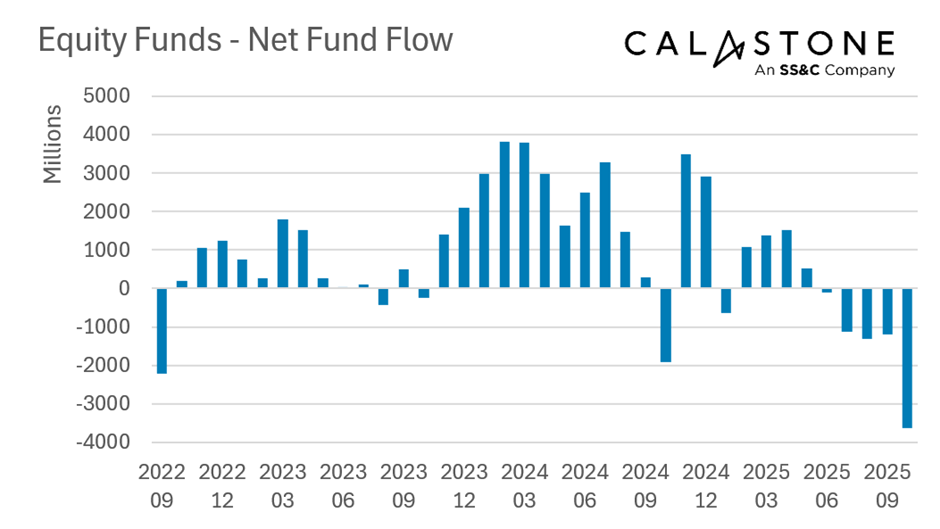
[Source: Calastone]
However, as I've written about recently (and presented at Mello), the discount in valuation for smaller UK companies looks compelling:
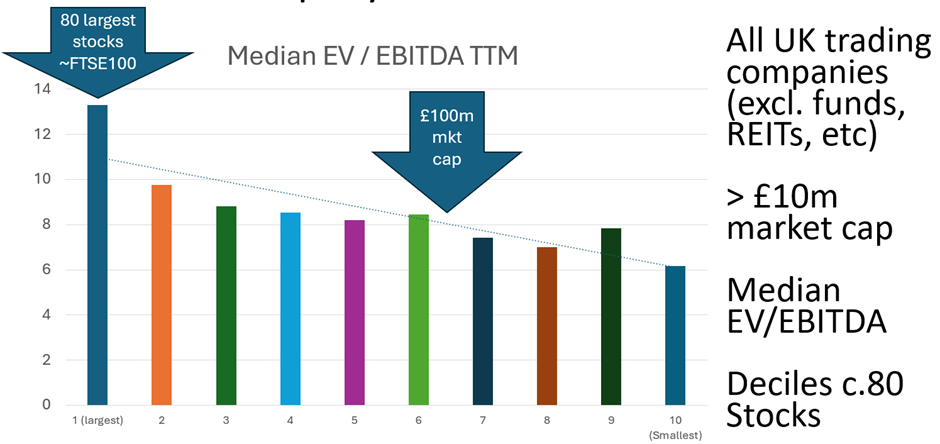
I suspect many management teams feel the same way, as the roster of companies presenting last week looked quite interesting, with the majority having a StockRank above 50:
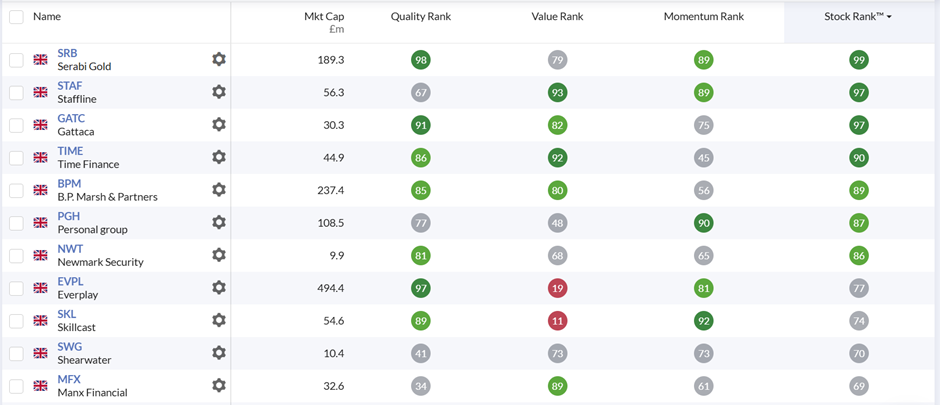
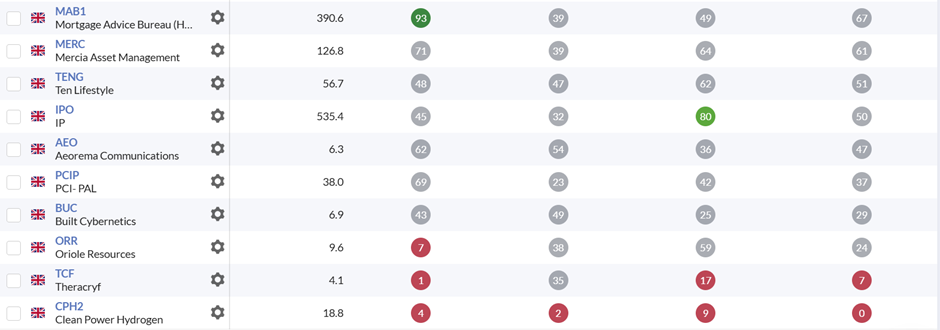
[Note: I have excluded companies that attended to present their funds instead of themselves as an investment from this list.]
Attending conferences such as Mello is one of the times when I find the StockRank particularly useful. I often find that I am a sucker for the story a management team tells. So if a stock has a particularly low StockRank, I won't even attend the presentation to avoid my weakness in this area. I may miss the odd great opportunity that isn't reflected in the numbers, but on average, I do much better by focusing on companies that fit my normal investment criteria. So it will come as no surprise that I have nothing to report from Clean Power Hydrogen or Thercryf! These are a few of the more interesting companies I saw present:
Manx Financial (LON:MFX)
Kudos to Manx Financial for understanding the psyche of the average investor so well. They brought Manx Tea, Manx Fudge and some nice notebooks to hand out to investors, and brought enough such that everyone who wanted one could take some. I am not crediting this as the only reason that Manx was the best performing stock last week of those that presented at Mello:
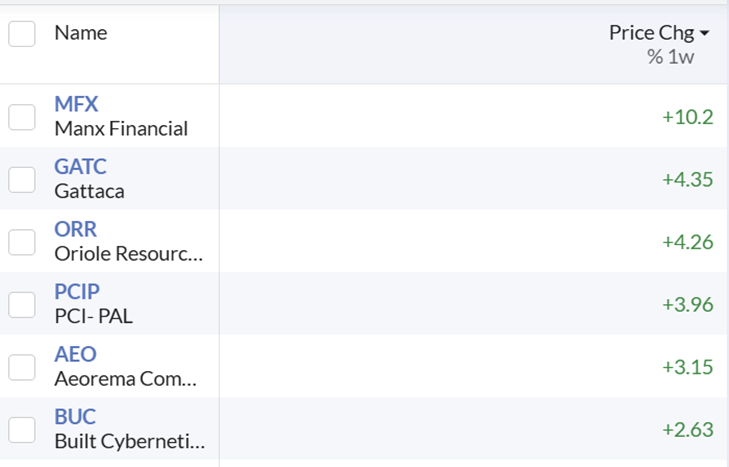
However, it surely helps that as I sit at my desk writing this, I am looking at a notebook with Manx Financial written on it, reminding me to look at this in more detail. What I found out from the presentation was that this is more than just a bank that operates in the Isle of Man and beyond, but a surprisingly disparate set of businesses:

I had noticed Manx Financial previously, when they announced in September that Conister Bank had lent Fiinu £2m as a convertible note, and concluded that it looked like Manx had got the better end of that particular deal. However, I didn’t know much about them going into their presentation.
With all of these activities, I think they are at risk of stretching themselves a bit thin, but the entrepreneurial nature no doubt comes from being led by Jim Mellon:
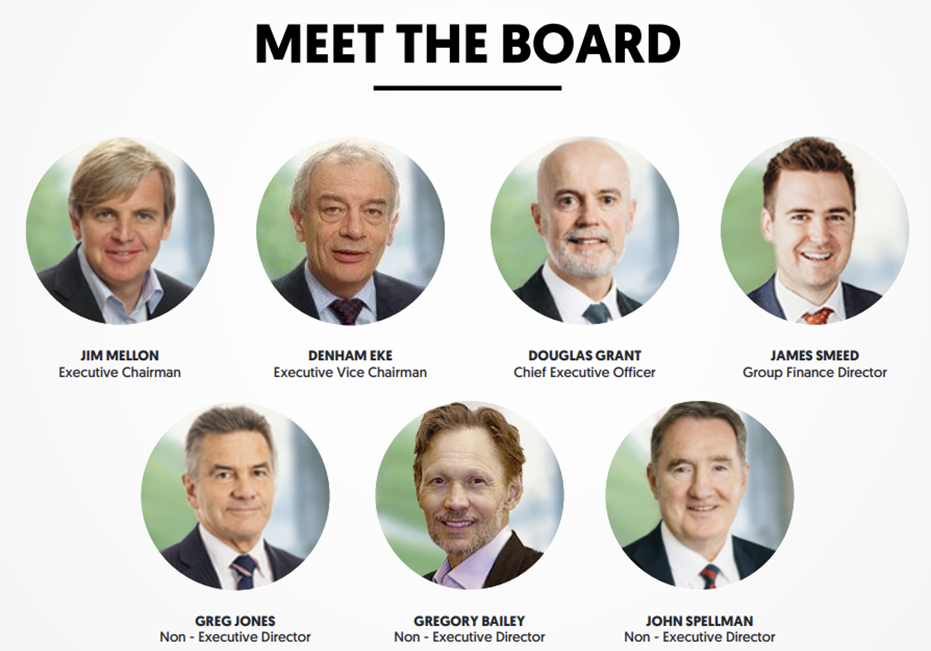
Only CFO James Smeed presented the company at Mello. However, I was assured that all the Exec board members were highly involved with the business, which may be a two-edged sword. Some investors may be wary of Jim Mellon's role as Executive Chair. He's had to defend himself in the past from allegations that a company he co-founded invested in Russian companies, saying he was not directly involved in these investment decisions. Others have questioned corporate governance at various companies he's founded or in which he's a significant holder. Here, my understanding is that Mellon has loaned the company money that forms part of Conister Bank's regulatory capital. There is nothing wrong with this, but it does show that he has significant influence that may go beyond just a board position. Some investors will like this possible alignment of interest with an entrepreneurial figure. For others, it will create too many corporate governance issues.
With so much going on in addition to their core banking business, the company needs to focus on profitable niches, and they have a good one in payment assist. This subsidiary is described as the UK's leading automotive repair point-of-sale finance provider. They have actually been pulling back from retail point-of-sale finance, where companies such as Klarna are struggling with losses and arrears. Manx find that focusing on automotive repair, where Halfords is a key customer, is profitable, with very few arrears.
The company also have a venture arm, with the following holdings:

Pay it monthly is another point-of-sale lender. At the presentation, Smeed pointed out that they paid £90k for a 30% stake in this business and the founders are currently looking for an exit in the region of £10-15m (£3-5m net to Manx). This is a phenomenal return if it comes off, and shows what is possible in this area (although it would be naïve to assume similar returns across all holdings).
These niches mean that the company has a sector-leading RoTE, and Smeed was keen to point out that this would typically be reflected in a higher P/BV valuation:
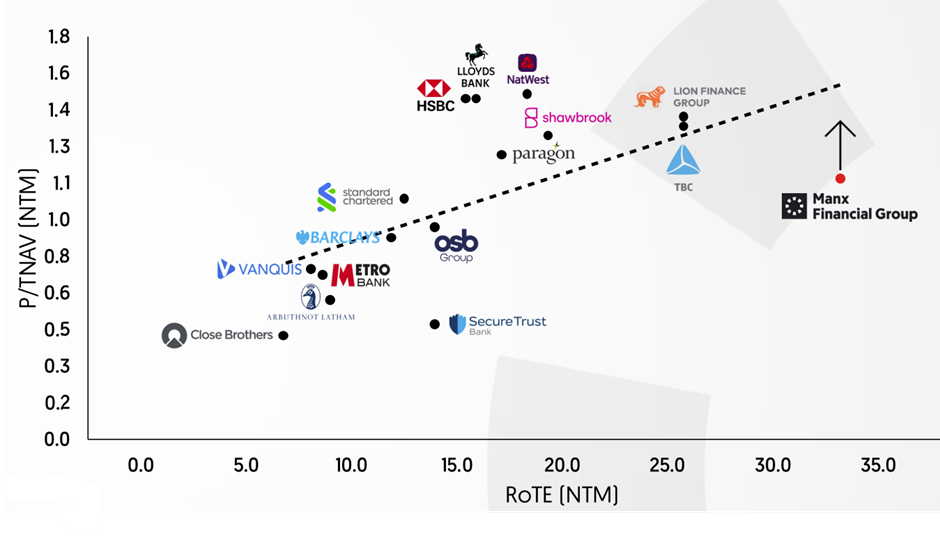
I sensed a desire from the board to close that gap. This looks very cheap on a historical earnings multiple, too:

However, short-term earnings can be misleading for a bank, and there are currently no market forecasts, so it is difficult to be confident that this level of profitability will be maintained. This will be addressed shortly, according to Smeed, with the impending appointment of an additional broker, which could act as a catalyst for a near-term re-rating.
Shearwater (LON:SWG)
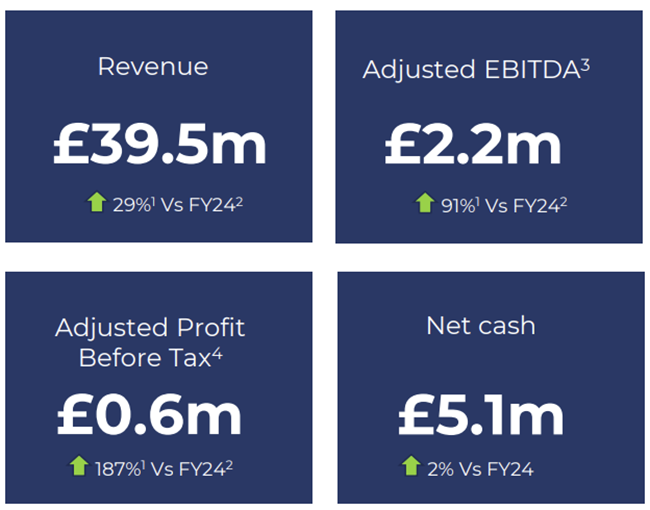
At the other end of the post-Mello performance table is Shearwater. In this case, I don't think the company's presentation was the issue; instead, it was a continuation of share price weakness after the recent results. The headlines look reasonable on an annualised basis:
However, there are a few things that take the shine off. Firstly, the market never likes it when a company moves their year-end. Here, the reasons seem to make sense. Key telco customers have tended to renew contracts at the end of March, meaning that the company often couldn't provide market guidance until their reporting period had ended.
The headline revenue figure came in slightly below the broker's forecast. However, this is due to a change in revenue recognition for software sold on a SaaS basis. They say that, excluding this effect, they were slightly ahead, but again, the optics around this are not what investors want. The cash balance is high, but it was forecast to be £5.6m and came in at £5.1m, so this is a miss again, though partly due to timing.
They also wrote down a chunk of their Goodwill, and this is the first time they've effectively admitted that they overpaid for past acquisitions under an old management team. All of this means I can see why investors have not been enamoured with these results. However, with 4.5p of EPS forecast for next year, this is now very modestly rated for a company growing revenue quickly and operating in an in-demand sector:
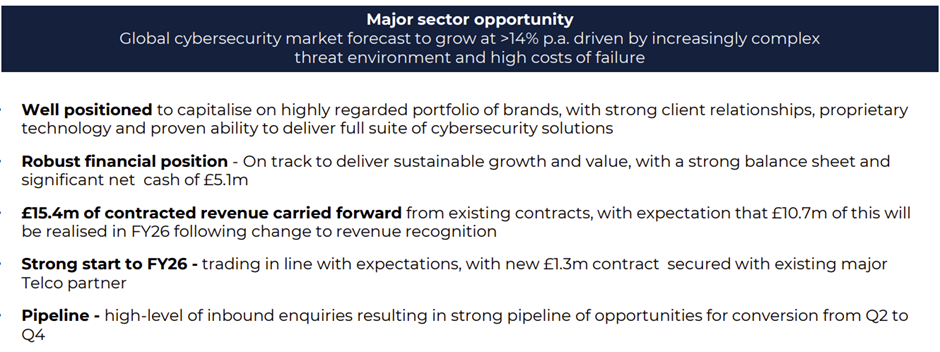
It is worth noting that the company's biggest growth area has been its services division. In contrast, the much higher-margin software division saw declining revenue last year, accounting for only 6% of FY25 revenues. It seems the issue is that Microsoft offer their Authenticator product for free with Office 365. While their divisions that provide penetration testing for clients, and consult on and resell third-party software are well-regarded, these have much lower gross margins. Overall, the group only delivered a 22% GM, down from 25% the year before. This means that the high revenue growth doesn't generate the same operational gearing that it would if they were a pure software licensing business. However, this isn't necessarily an issue. Computacenter has built a £3bn market cap business as a software reseller, with a gross margin typically in the mid- to low-teens. Computacenter trades on a mid-teens P/E on a high single-digit 5-yr EPS CAGR, driven by its high ROCE. Execution often matters more in this sector than margins.
Similar to Manx Financial, a lack of forecasts may be holding this back. While their broker, Cavendish, provides forecasts, they only cover FY26, a period with only 7 months left. I raised this with CEO Phil Higgins, and he said that it would be addressed in the new year. If these show further growth, this may focus investors' minds on the opportunity here. Current forecasts are for them to have £7m of cash at the end of the current year. CFO Jonathan Hall was clear that not all of this is distributable; some is needed to manage working capital variations, and they can often generate higher returns by offering customers favourable terms. A strong balance sheet also helps them win business from large customers, given that much of what they do is mission-critical. My feeling is that they still have scope to make a smaller acquisition if something interesting becomes available. Still, given the company's history of overpaying, I believe they will be cautious.
The CEO is well aligned with shareholders, holding 11% of the equity, but the relatively new CFO still has some way to go before his stake could be considered material. There have been some modest director buys this year:

However, some investors may wish to wait for more sizeable buys to indicate that the outlook really is as positive as they claim.
Gattaca (LON:GATC)
I was also keen to catch up with the management of this company, in which I currently hold shares. I was interested in how they came across and wanted the ability to question them in person. Of course, I may be biased, but I thought that CEO Matthew Wragg came across very well. He was surprisingly straight-talking, especially for a recruiter! He described the journey the company has been on, shrinking back from a rather scattergun approach to growth in the past, which left them in a difficult position. Wragg has been with the company for 20 years before becoming CEO, and many investors would consider this a negative, as long-term management can be resistant to change. However, this doesn't seem to be the case here. He was very clear that he didn't work hard to become CEO to mess it up and knew he had to make tough decisions when he took the reins to put the business back on the front foot.
Their focus now is the UK and particular niches where they believe they can be the first-choice recruiter for companies and candidates. Although a fellow investor pointed out that they can't be that concentrated if one of their six operating sectors, "Mobility", includes automotive, rail and aerospace!
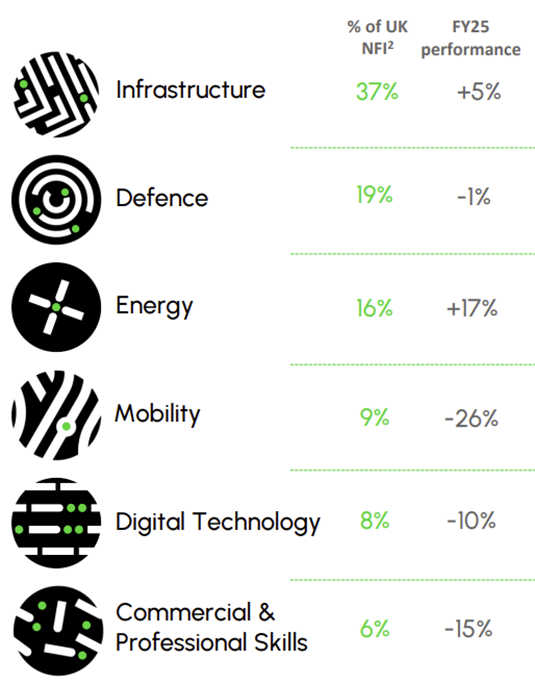
Their contract recruitment focus has undoubtedly helped them significantly outperform international generalists such as Michael Page in recent times. Still, they don't see this tailwind becoming a headwind in the future – after all, the market for all recruitment is incredibly tough right now. Wragg recognises that permanent recruitment generalists may see their business bounce back more quickly in boom times, but the scale of the downside currently visible in these companies' results is not a cost he is willing to pay.
One of the key changes that Wragg has wrought is a real focus on maintaining a positive work culture:
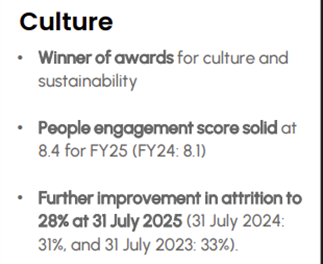
While the attrition is still a little high, they don't consider this suboptimal. They want candidates who are well-suited to their roles, and they would rather find out early if something isn't a good fit and let them move on.
While this has been a period of stripping the business back to its core competencies, it doesn't mean there isn't growth potential. As well as permanent and contract recruitment, which is branded under the well-regarded Matchtech name, they offer to undertake packages of work for clients on a SOW basis. This is the only customer-facing part of the business that is branded as Gattaca. The company can leverage its existing knowledge of high-performing candidates to complete this work, which is typically high-margin. Wragg was clear that, while they do take these projects on a risk basis, the actual risk is pretty low; they won't be responsible for overall design sign-off on major products, for example.
They are also happy to start to make acquisitions again, as a recent purchase of Infotech shows. They say that the biggest difference between this and the previous expansion spree is the focus on ensuring good cultural alignment between the existing and acquired businesses. Wragg says they spent far longer assessing Infotech as an acquisition than they did on much larger purchases in the past. They are excited by the opportunity here. They don't rule out further bolt-on acquisitions, but again, they won't compromise their culture for a short-term gain.
When asked where he thought the business could get to in the medium term, Wragg suggested that doing £50m NFI at 20% operating margins was possible. He was clear that this wasn't a forecast and wasn't backed up by a specific plan, so it should be taken with a big pinch of salt. However, with 2025 NFI at £38.8m, this doesn't sound unachievable at the top-line. Raising operating margins from 5.6% in 2025 to 20% will be far more challenging. However, they will benefit from operational gearing, and the good work they have done putting the business on the right footing should pay off. It is worth considering that this type of performance, if delivered, would generate around 25p of EPS, double the current 2027 broker forecasts. It is the possibility of this type of delivery that keeps me invested here.
Fund Managers
Individual company presentations are not the only source of ideas, and many of us also like to hear from fund managers. These were a couple of presentations I caught:
Rockwood Strategic (LON:RKW)
Richard Staveley is always worth listening to. His detailed knowledge of UK small caps, excellent track record, and willingness to engage with individual investors mark him out as one of the best fund managers in this part of the market, in my opinion. He is also one of the last remaining fund managers with a Value focus, which aligns with my own preference.
What stood out to me from his presentation was his description of some of his core holdings in the "realisation" phase, when it is not immediately apparent to me why these should be marked differently from the others:
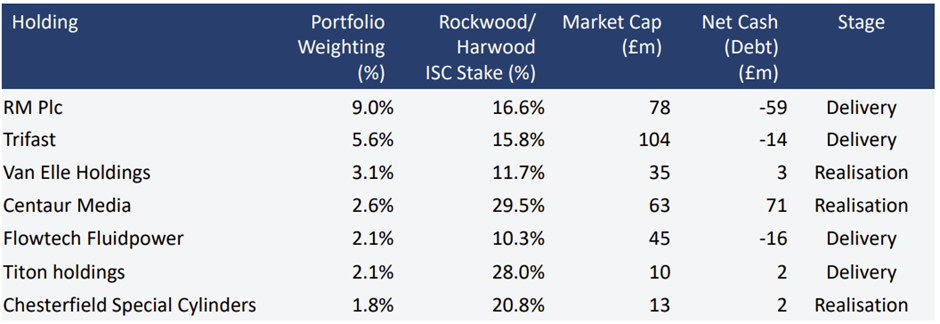
Perhaps Richard knows more here than he is willing/able to let on?
Kernow Asset Management
Founder and CIO Alyx Wood is another fund manager who is always worth making the time to hear speak. He runs a long-short fund, which means his returns are typically much smoother than long-only investors. At the last Mello, he focused on the short side, describing the characteristics of companies investors need to avoid. This time, he chose to focus on one of the UK stocks where he sees the greatest upside: Saga (LON:SAGA). His thesis combines one of the strongest demographic trends over the next decade, the "grey pound", with stock-specific catalysts. The key is that the company has sold its low-return-on-capital insurance underwriting but has maintained the ability to market policies through its partnership. Debt taken on shortly before COVID to buy two cruise ships has finally been paid down, making the risk level now acceptable in Alyx's opinion. Finally, the company's management team passes Kernow's extremely detailed due diligence process. It's an idea worthy of further research, in my opinion.
Of course, I wasn't able to attend every presentation, so if subscribers had another highlight from the event, feel free to give us the reasons why in the comments.
[Disclosure: Mark owns shares in Gattaca (LON:GATC)]
Disclaimer
This is not financial advice. Our content is intended to be used and must be used for information and education purposes only. Please read our disclaimer and terms and conditions to understand our obligations.
6 comments
It was good to see so many of you at MelloLondon and if you missed it and wish you hadn't then please note Mello2026 will almost certainly be on the 2nd and 3rd June next year so book that date in your new diaries
David
I was also impressed by Manx but I got the impression that the second half would not be as good as the first half due to higher necessary car finance mis -selling provisions unless they managed to sell Pay it Monthly.
I await a broker forecast with baited breath
I find it almost impossible to judge what the short-term earnings will be at Manx, so like you, I will be particularly interested in where the new broker goes with this. Initiation notes are often quite conservative as neither the broker nor the company wants an early miss. However, leaving too much on the table may also have a detrimental effect in the short term.
Perhaps a dumb question but what's the difference between delivery and realisation stage.
Isn't it the same thing?
I suspect that Delivery means that the company is delivering the recovery as expected. And realisation is that Rockwood themselves are ready to realise their gains.
Ah right. thank you.