Next 15 Group: marketing a recovery

Next 15 (LON:NFG) is a company that has not really appeared on my radar before. The size of the company, its rating, and the type of industry meant that it passed me by. However, recent falls in the share price have been brutal. A profit warning combined with the general malaise in AIM means the shares are now trading on a forward P/E of just 5. It seems to me that the company is worth looking at in more detail.
Summary
- Next 15 (LON:NFG) is a mid-cap, AIM-listed company that aims to help companies tackle their thorniest, most complex and most important challenges by combining growth consulting with marketing services, data and technology platforms and business transformation projects.
- The company has been highly acquisitive over the years. Initially, to build scale within its marketing and communications business by adding additional agency brands. Latterly, to shift the business towards growth consultancy, it has acquired companies such as Mach49.
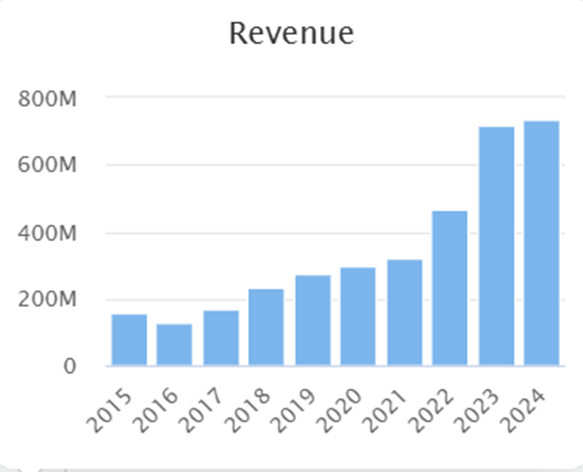
- Historically, the company has been a strong performer. Between 2015 and 2022, the share price came close to 10-bagging. Since 2022, their revenue has risen 56%, and historical EPS more than trebled, with a ROCE that has averaged 20%. Yet the shares lost over 60% of their value in that time.
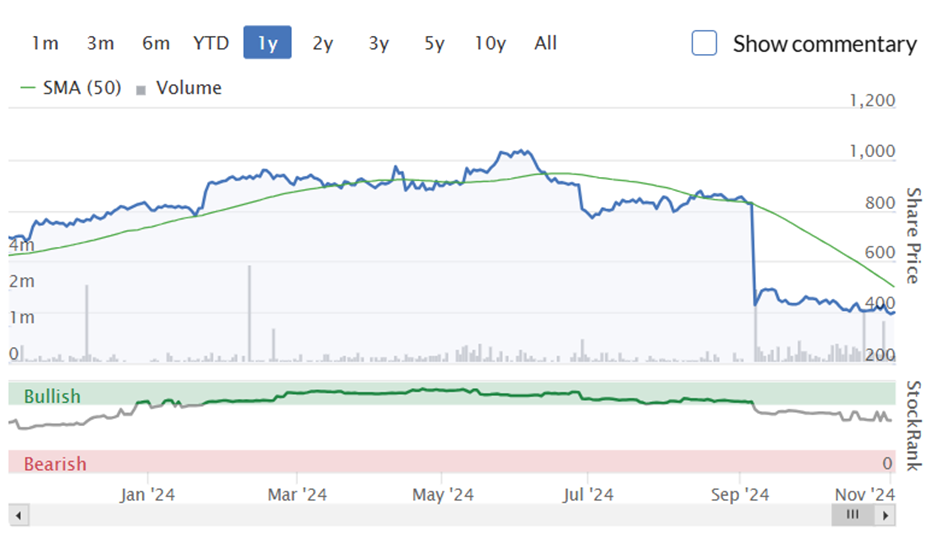
- The majority of the share price fall has occurred since the start of September, when the company announced that its largest customer had not renewed the contract after its initial three-year term and will now end on 31 December 2024. This contract had been expected to contribute just over £80m of revenue in FY26, meaning that the Momentum rank comes in at just 9.
- With a StockRank of just 57, this won't appeal to pure quant investors. As well as the weak Momentum Rank, a declining Quality Rank may give some investors pause for concern. However, a quick check at the historical StockReports shows that the company had the same fundamental ratios at the start of October and a 91 Quality Rank. It seems this company's StockRank has fallen not due to declines in the company's quality ratios but the increase in these metrics for other companies.
- However, if current broker forecasts are to be believed, the forward P/E is now around 5, and the Value Rank is 84, which will appeal to Value Investors. A rough sum-of-parts valuation suggests there may be a 40% upside to the current share price.
- Without acquisitions, the company has pedestrian medium-term growth prospects. However, this is a cyclical industry, and if the cycle turns, it could enhance earnings. Additional bolt-ons will also be possible, but the current low share price limits acquisitions to those funded from cash flow. Existing debt and earnout obligations, while not currently putting the company in financial distress, will limit action in this area despite good free cash flow.
Profile
Historical revenue growth has been strong here:
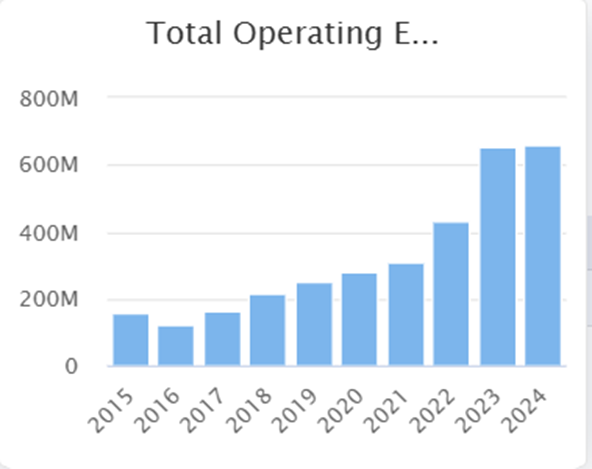
Operating Profit is more volatile but shows a similar trajectory:
But so do the shares in issue:
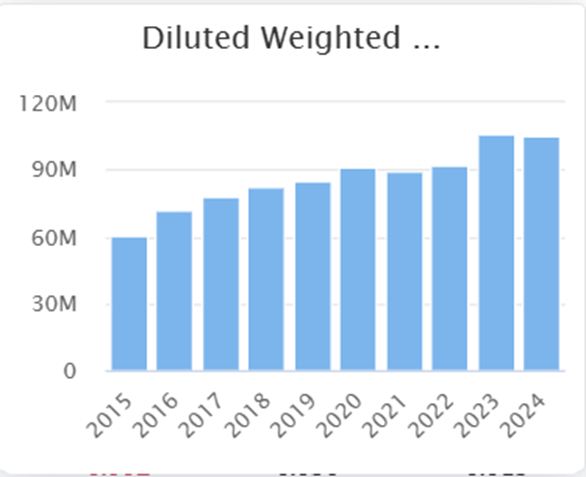
This is a company that has been on an acquisition spree and has not been shy about using its equity to enable that growth. The company has made 16 acquisitions over the last decade. Here are some of the details of those:
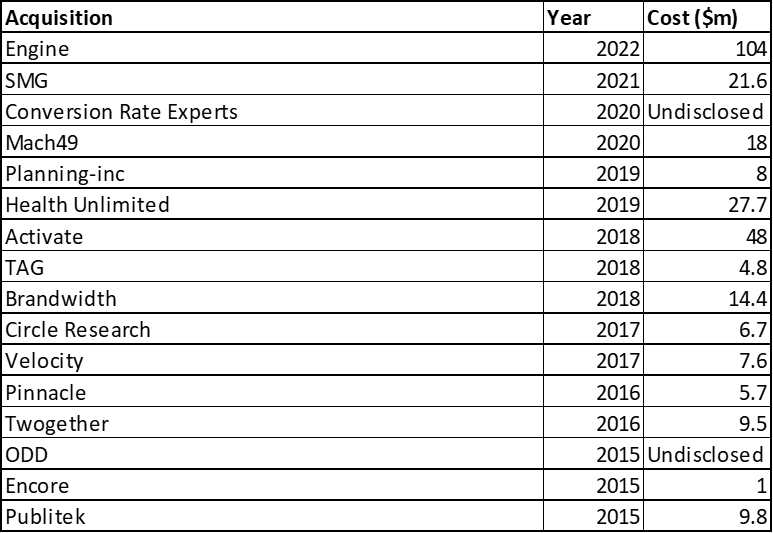
Many of these had share components and earnouts on top of the initial consideration. Not everything has gone their way on the acquisition trail, though. They tried to buy M&C Saatchi (LON:SAA) in 2022, but their cash and shares offer was ultimately rebuffed.
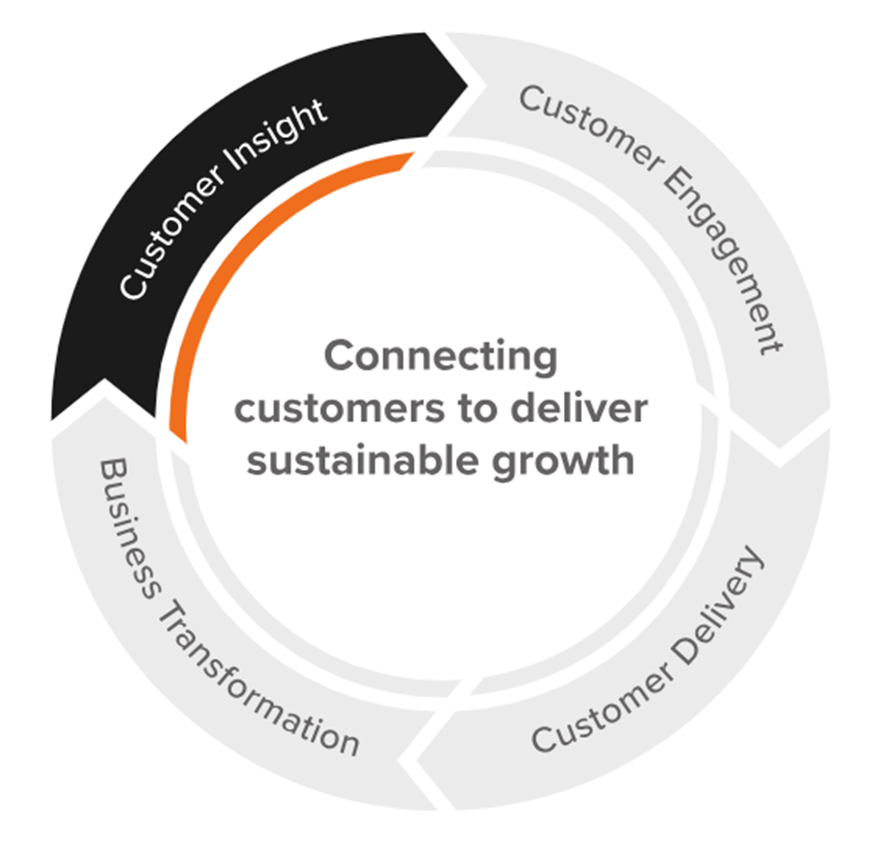
Today, the company splits itself into four operating segments:
Customer Insight uses data, analytics and predictive modelling to help brands that best understand their customers.
Customer Engagement is the largest and most profitable part of the business and is the marketing arm. However, the company is keen to point out that this includes all forms of media and that the days of one-way, broadcast-style marketing are long gone.
Customer Delivery turns their insight into commercial outcomes for both B2B and consumer markets. This can be done through customer journey mapping, conversion optimisation or personalised content experiences.
Business Transformation is the newest part of the business and was the fastest growing. What they do for their customers is wide-ranging and can include creating an entirely new business venture or digital product, driving a new funding round, solving a social problem for a government agency, or turning around a flagging business unit.
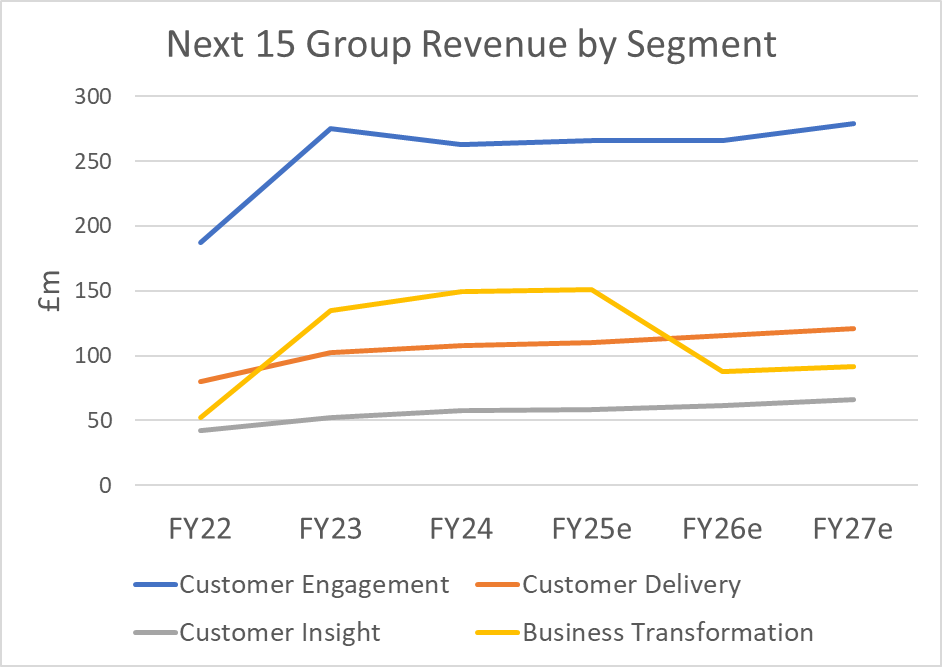
Helpfully, Next 15 includes the latest broker note from H2 Radnor on their website, so it is easy to see how the revenue and EBITDA trends break down into segments, including forecasts. Firstly, here is the revenue:
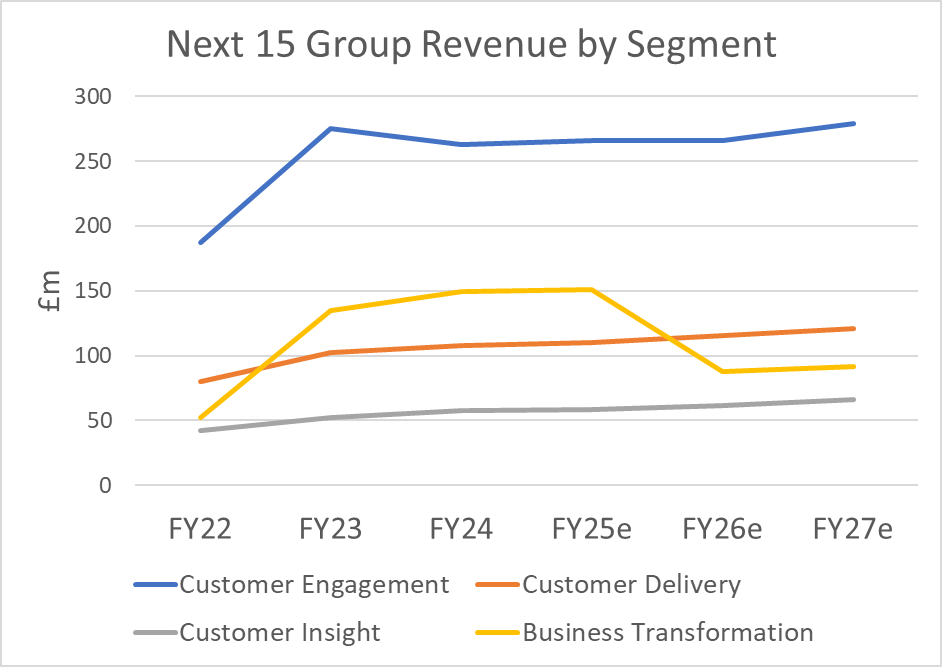
Here, we can see the huge impact the loss of the largest contract within its business transformation division is expected to have. This is what they said in a trading statement at the beginning of September:
Next 15 has been notified that the contract with Mach49's largest customer has not been renewed after its initial three-year term and will now end on 31 December 2024. This contract had been expected to contribute just over £80m of revenue in FY26.
The Times reported that:
The name of the client was not revealed, but industry sources suggested it was the Public Investment Fund, Saudi Arabia's sovereign wealth fund. It is thought to have been paying for advice on what it should be doing with the companies it already owns, as well as seeking ideas for new investments. No reason for the contract ending was given.
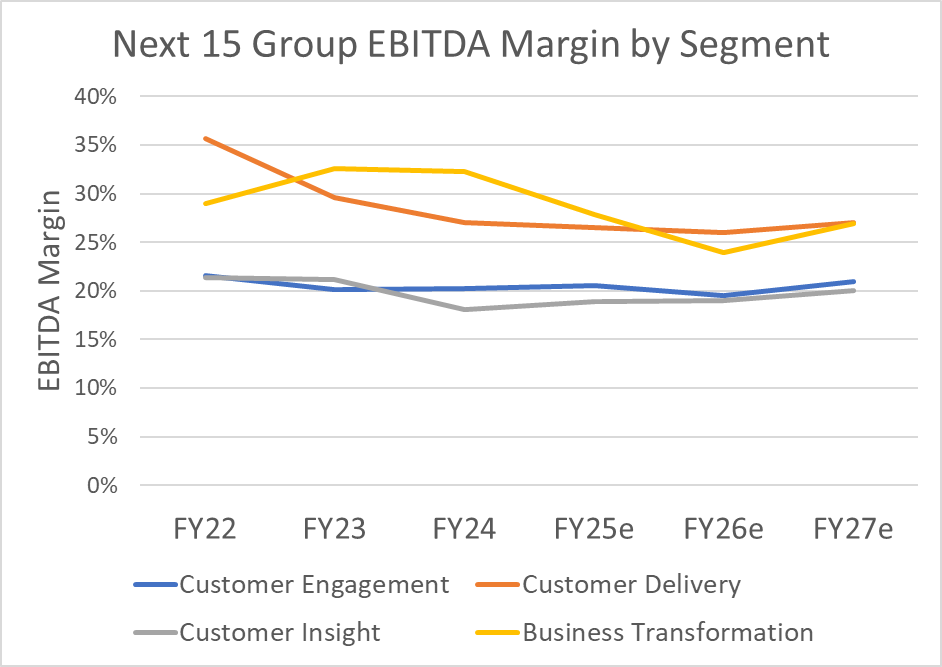
Business Transformation wasn't just the fastest growing part of the business, but the highest margin last year:
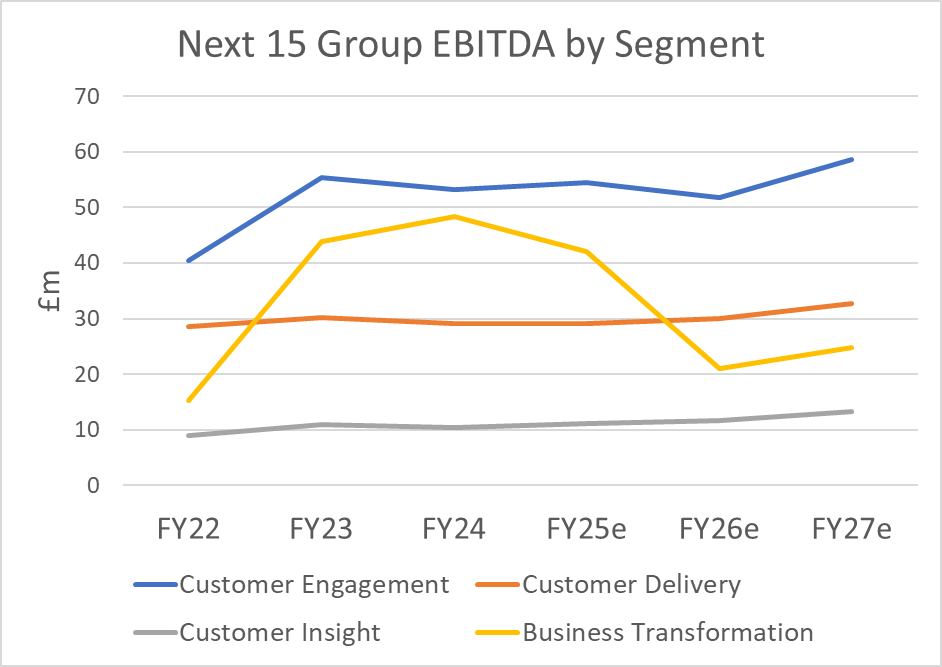
Meaning that this loss of business is having an outsized effect on the group:
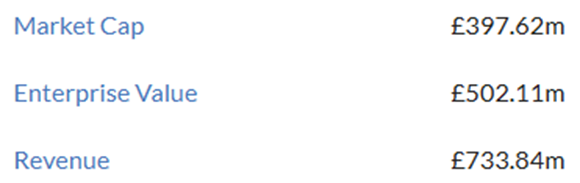
With a market cap of around £400m, this company is close to the lower end of the size of some FTSE250 companies. However, being listed on AIM, it would not qualify for entry even if it was sufficiently large. The company also has around £100m of net debt, although around £30m of that is lease liabilities:
While not terrible, the StockRank doesn't exactly scream buy:
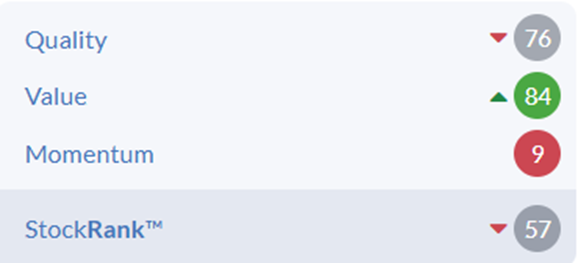
There is no escaping the fact that momentum is poor here and that this company will only attract contrarian investors at the moment.
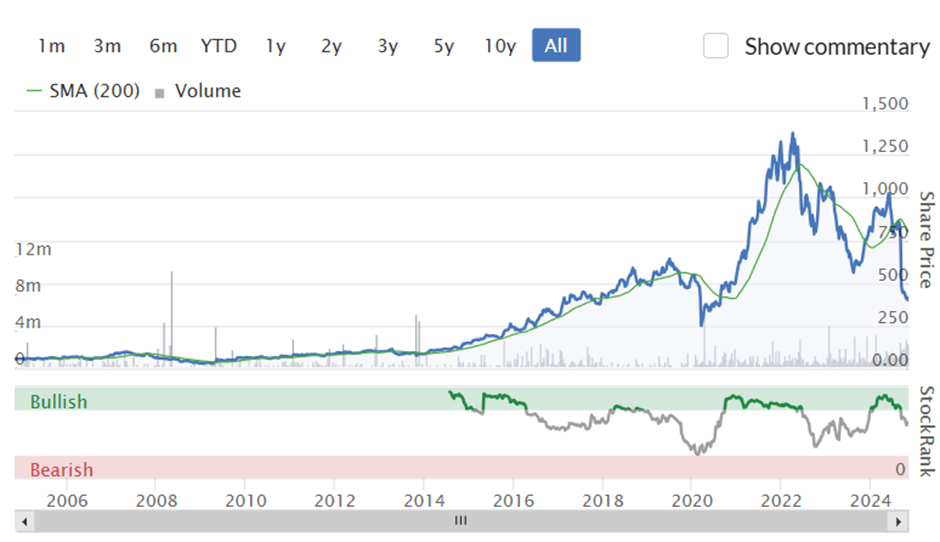
The long-term chart shows a fallen star - a stock market darling that has fallen on hard times.
Business Model
With the number of acquisitions, this is very much a roll-up in the marketing and communications sector, although one that is pivoting to a more data-driven and technology-led approach. They expect work in each of their divisions to feed into each other:
Competitive Advantage
The Quality Rank is okay but not outstanding. However, it has been declining recently:

When I look into the details of the decline, I see that this doesn't seem to have been caused by a decline in key metrics. Here is the Quality Rank from the start of October, after the most recent interims had been assimilated by the Stockopedia Algos:

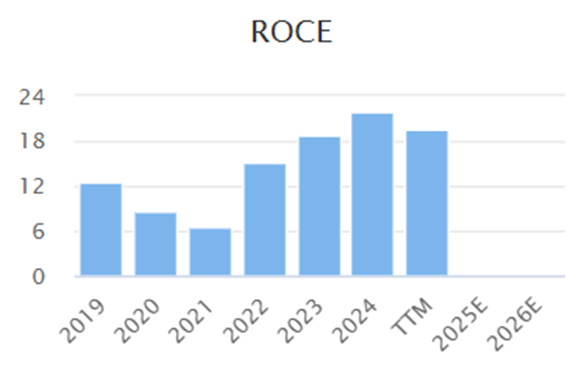
This suggests the recent fall in ranking is due to the improvement in quality metrics for other stocks rather than a decline here. Looking at one of the key metrics, the Return on Capital Employed, this stands at a very healthy level in the last few years, with an improving trend post-COVID:
There are two factors that muddy the waters here, though. The first is that the vast majority of the assets are intangible:
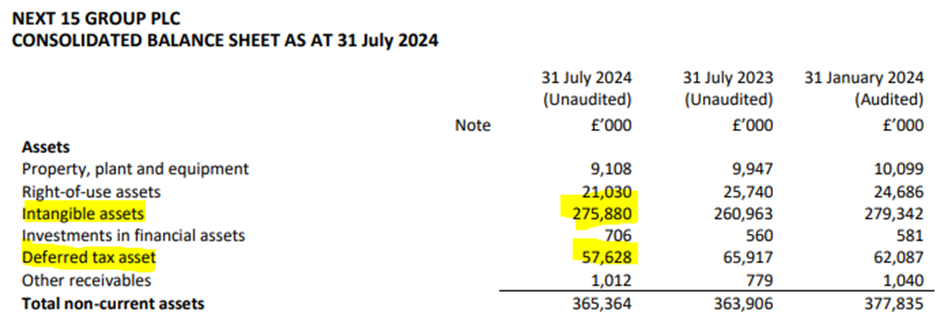
These are a function of the sheer number of acquisitions the company has undertaken in recent years. So, this ROCE figure requires these to be accurately valued on the balance sheet.
The second factor is that this is largely a people business, so it should be asset-light. The benefit of buying into a high-quality business is that they have the ability to grow without requiring significant additional capital, hence the returns from that growth accrue to existing shareholders. With a people-centric business, those returns often accrue to the staff and not shareholders, as the only way this type of business grows is through greater headcount. It seems that Next 15 probably falls somewhere in between; hence, the jury is out on whether this is a high-quality business or not.
The Piotrsoki F-Score is reasonable at 7/9:
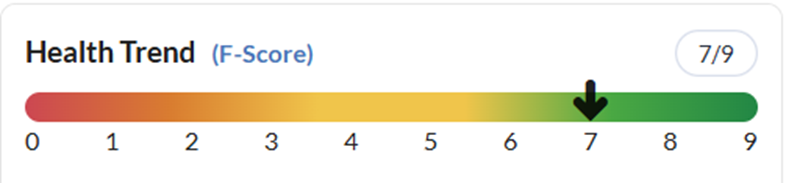
However, it is worth noting that, with 2026 forecasts for a drop in profitability due to the loss of a major contract, several of the Piotroski check list may end up failures in the future. For example:

To me, these appear more like Momentum measures than Quality metrics. Still, it is worth being aware of these quant headwinds that will be arriving in the future.
Financials
Growth and Profitability
Stockopedia shows revenue CAGR as a very respectable 22%. However, with the loss of a major contract, this is set to decline going forward:
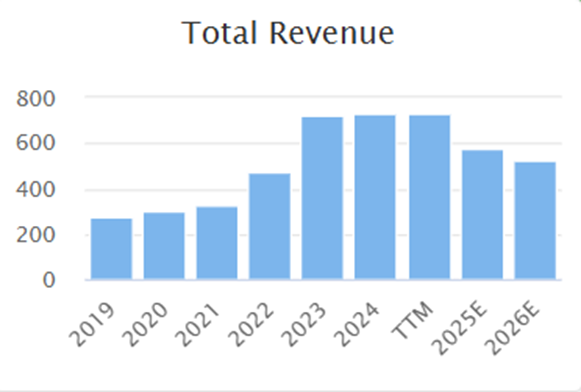
Looking at the forecasts from H2 Radnor, the Customer Delivery and Customer Insight segments look like they are showing steady growth. However, this works out to be slightly less than 10% CAGR revenue growth FY22-27 for these divisions.
Forecast EBITDA growth is also fairly pedestrian, with little sign of any operational gearing. Further acquisitions may enhance this, and there appears to be some in the pipeline. This is what they said in their latest results presentation about this:
• Continue to make bolt-on acquisitions for our businesses at attractive multiples; multiple range of 3.75 - 5.5x for acquisitions in H1 Bolt-on acquisitions in year enhance offering of the acquiring brand and bring new clients
• Expect these acquisitions to add £13m net revenue in FY25; annualised impact of £21m net revenue
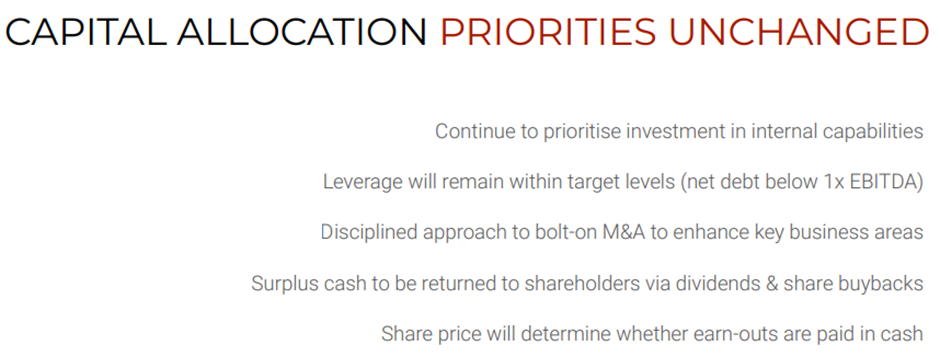
However, with lowly-rated shares, any additions (and earnouts) will need to be paid out of cash flow, limiting the scope for these. This is what the company say their priorities are:
The forward EPS forecasts perhaps don't look too bad when viewed in a historical context:
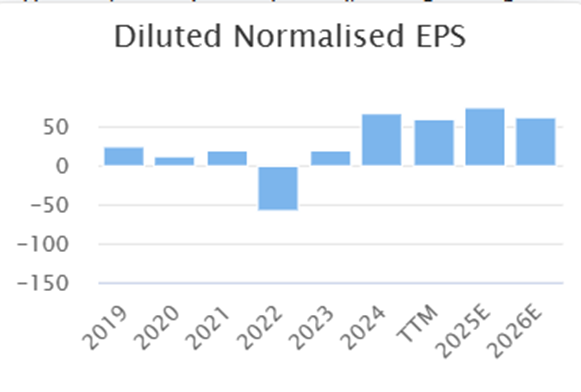
However, this highlights that this is no longer a growth stock. There is a certain irony in a company that advises other companies on how to grow sales and profits that is only able to generate revenue growth via acquisition!
Balance Sheet
The current ratio isn't particularly strong, standing at just over 1.
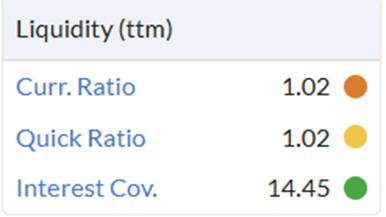
The company has managed to operate with negative working capital in the past, so this appears to be a feature of the business rather than a major cause for concern. The presence of over £40m of current contingent consideration and £6m of provisions is the main reason this looks so weak. The good news is that they have a reasonable headroom on the facilities, and these run to at least 2027:
The Group has a £150m revolving credit facility ("RCF") with a consortium of HSBC, Bank of Ireland, NatWest Bank, Citibank and CIC. The facility is available until December 2027 with an option to extend for a further year. As part of the arrangement, the Group has a £50m accordion option to facilitate future acquisitions.
So, these contingent payments could be met from existing facilities even if there was no short-term cash flow. The interest cover suggests they should not have any trouble servicing their debt. The gearing level is a little higher than most would like, but this is a function of the small amount of balance sheet equity:
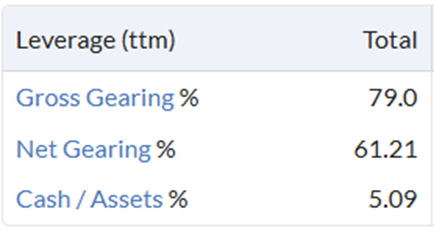
The lack of any real tangible assets means that if the financial situation significantly deteriorates in the future or profitability plummets, there are no real physical assets to protect the downside, which may put off more cautious investors.
Banking covenants are often based on measures such as Net Debt to EBITA. H2 Radnor are forecasting 2026 EBITA of £88.8m. Net debt, excluding lease liabilities, was £74.8m on 30 June, meaning they are comfortably within their leverage target of less than 1x.
The earnouts are not just a current liability. There are significant ongoing earnout commitments from past acquisitions. While the company says that the recent significant contract loss reduces the payments due, these are at least as large as the bank debt:
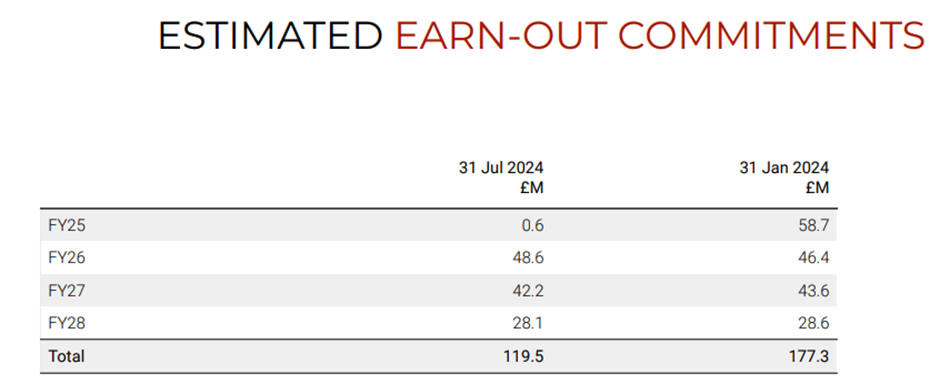
Treating these commitments and the £22.1m of provisions on the balance sheet as debt, the leverage ratio is a far less conservative 2.4xEBITA.It may be fairer to include the Net Present Value of these given the timing, but it doesn't change the maths significantly. Despite their stated aim to keep on acquiring, investors may prefer that they pause for breath and pay down debt and the obligations from previous acquisitions before continuing their spree.
Cashflow
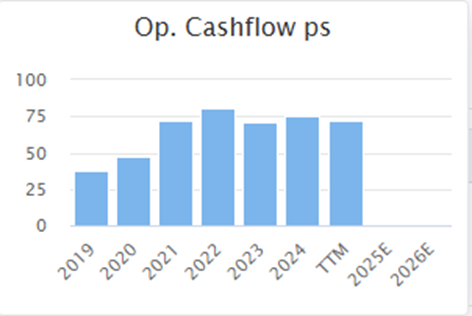
The good news is that this is a highly cash-generative business, with operating cash flow often exceeding normalised EPS:
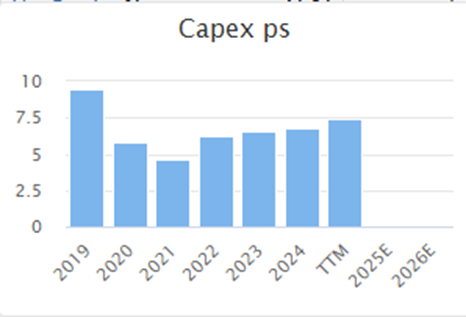
The Capex is consistently light, although it must be noted this excludes acquisition payments:
The result is that free cash flow is excellent:
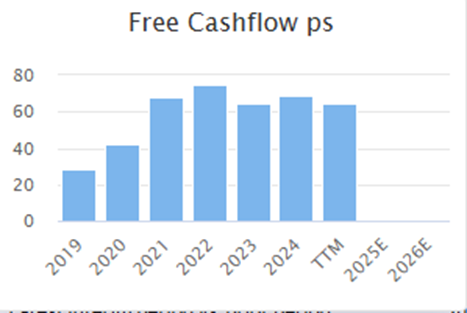
The price to free cash flow of just 6.2 is rated strongly green by the Stockopedia algos:

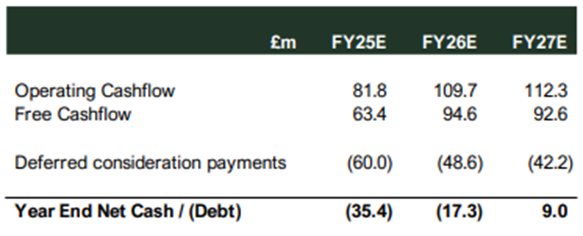
H2 Radnor are forecasting this to improve even further in future years and, importantly, significantly exceed earnout payments:
Dividends/Buybacks
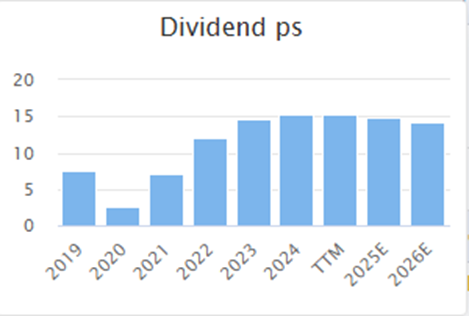
While dividends have grown rapidly in the last few years, they are also forecast to fall slightly in the future:
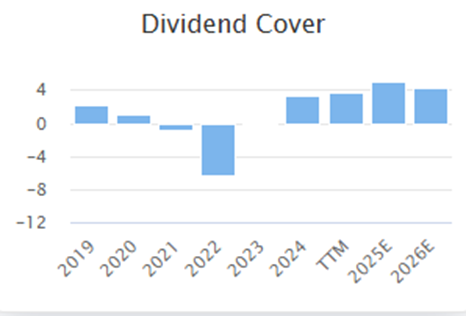
It seems that not all brokers are convinced that they can maintain their dividend and meet their other obligations in the near term. This would seem unusual to me, given that the dividend cover is very high and they maintained their interim dividend paid last month:
The forecast yield of 3.7% is not bad, but it will not attract income investors in the current market.
The company has also been buying back shares. The £30m program was announced with their interim results last year. As is often the case with these things, they bought back shares at between £6-9/per share, but have not been buyers since early July this year, and have not bought any since the recent profits warning, despite the shares dipping below £4. Given this behaviour, I don't see why they wouldn't be a further buyback when their capital position enables it, in preference to any increase in dividend. Investors will have their own opinion as to the effectiveness of this strategy.
Ownership Structure
Looking at the shareholder register, it is clear why the shares have been weak. Not only is there the loss of a major contract, but their shareholder register has several funds that will have needed to sell due to flows out of equity funds in the UK:
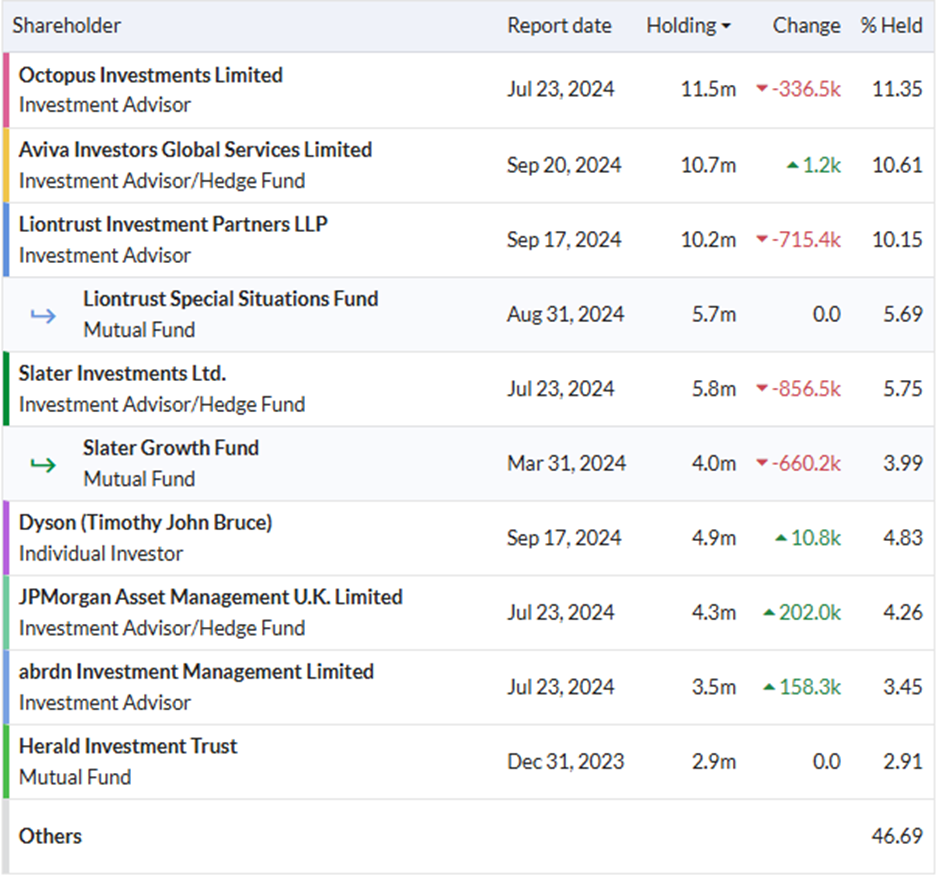
For example, the Octopus holding is likely to be in their IHT products, which had suffered from significant uncertainty in the run-up to the recent budget. Here's how the directors have been reacting to the recent news:
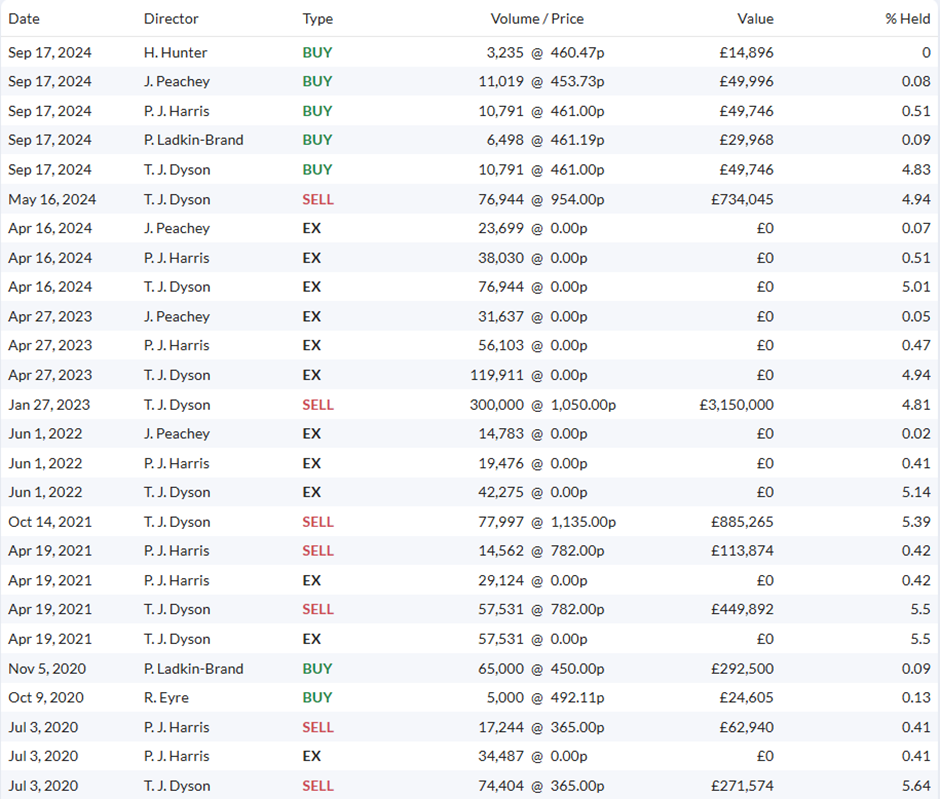
So we have some co-ordinated buys following the recent profits warning. However, these are hardly convincing amounts given the salary levels:
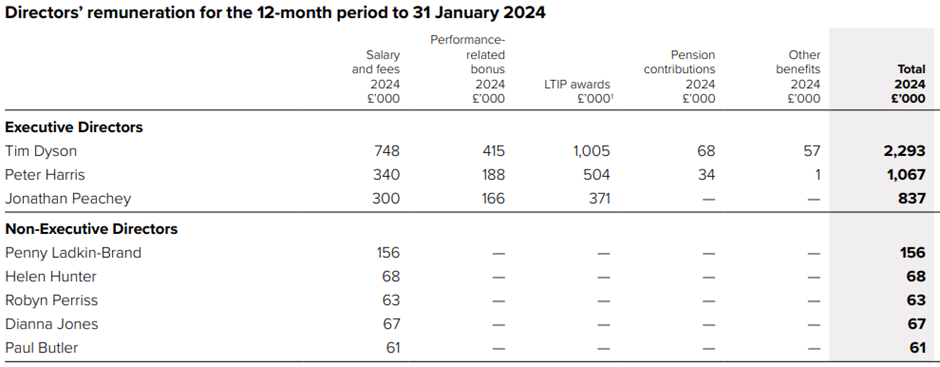
The rest of the directors' holdings appear to come from options exercises, which are often also accompanied by selling. It's hardly a vote of confidence in the future or strategy here.
Valuation
The company is very cheaply rated on a number of metrics:
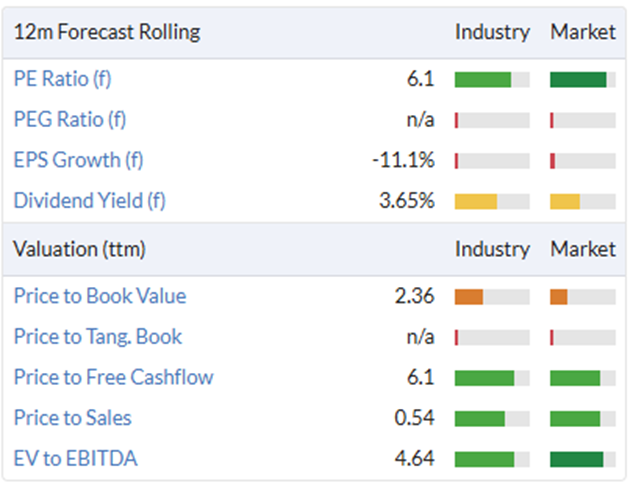
But it is not a clean sweep. The lack of asset support and EPS growth mean that the value rank is good but not exceptional:

One way to consider this sort of company where you have a profit warning in a specific division is to consider a sum-of-parts valuation. Based on 2026 estimates, we know Customer Delivery and Customer Insight are growing revenue by around 10% per year, so I give this a 7xEBITDA multiple. Customer Engagement is largely ex-growth without acquisitions, so I go for 5x here. Business Transformation is still likely to be a fast-growing part of the business but from a lower base, hence I go for 10x.
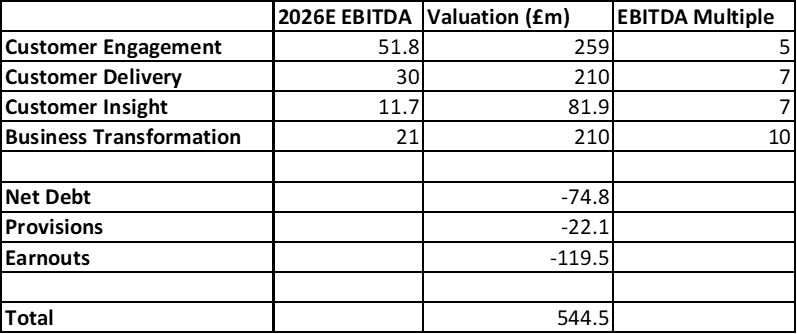
This is all pretty rough, but with c.100m shares in issue, this is around £5.50 a share and could represent a 40% uplift to the current share price. Investors can make their own assumptions here to help guide their decision-making.
Risks
The biggest short-term risk is that the weak market conditions will continue. In the interim results, the company guided investors towards an unusually large H2 weighting as cost savings take time to have an impact. This may well be wishful thinking. After all, the market rarely trusts a second-half weighting. For FY26, the company is also guiding a more modest H2 weighting, so again, there is much to do to hit their numbers.
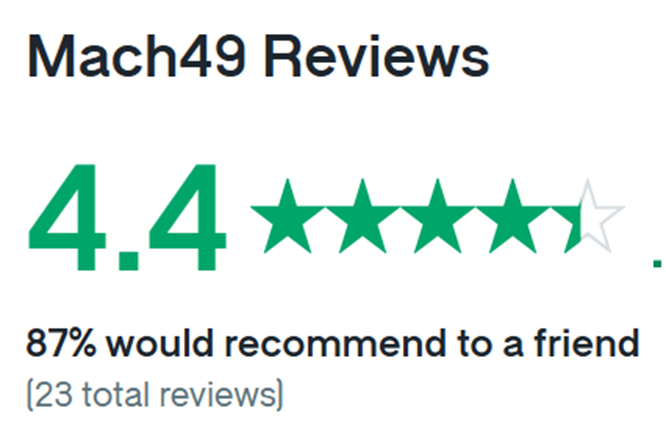
In the long term, the risk is that the unexplained loss of the major contract has more to it than a customer choosing to purchase services from elsewhere. It may be that this loss is the canary in the coal mine and represents a major deterioration in business prospects. While outside investors can never know what is going on internally within a business, it is worth noting that there is little sign of any major problems within the GlassDoor reviews of Mach49:
Recent Trading
When the company warned in early September, this was the big news:
Next 15 has been notified that the contract with Mach49's largest customer has not been renewed after its initial three-year term and will now end on 31 December 2024. This contract had been expected to contribute just over £80m of revenue in FY26. While we anticipate that the client will continue to use Mach49's services in the future, we believe it is prudent to materially reduce forecasts for the financial year to 31 January 2026.
So it seems there may be some prudence here, and with no reason given for the contract not being renewed, some of the revenue and profits may well be written back in the future. However, it is worth noting that this wasn't the only issue:
While the Group has seen strong performances from a number of its consumer-facing businesses, it has continued to see an ongoing weakness in spend from its technology customers as well as a reduction in revenues from its public sector clients. As a result of these factors and the contract ending which will impact the last month of the fiscal year, the Board now believes FY25 revenue will be lower than planned, and profits to be materially below management expectations.
Given the uncertainty caused by the UK and US elections, then it is perhaps not surprising that the company has faced delays here. With their interim results, they add some more colour:
With regards to the second half of this year and into FY26, we are not, at this stage, factoring in a recovery in spending from our technology customers. However, with the recent change in government alleviating political uncertainty in the UK, we do anticipate that government spend will recover in early FY26. Consistent with the Group's performance in prior years, we expect revenues to be modestly second-half weighted. However, the businesses that have seen the toughest trading conditions in the first half of FY25 have reacted by taking significant action on their cost base which will positively impact their profitability in the second half of FY25 and beyond. Accordingly, we expect the Group's profitability to be more second-half weighted than normal in FY25.
This can be viewed in two ways. Either it is a sign of worse to come, or some may conclude that if the company can still deliver roughly flat EPS during a time of poor market conditions, the results will be much better during any recovery.
Sentiment
The Momentum Rank is frankly terrible:

A lot of this is down to the recent weakness in the share price:
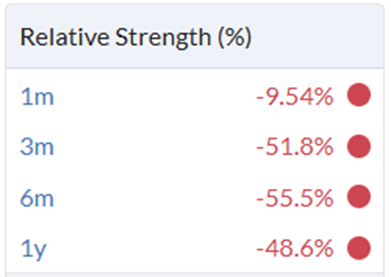
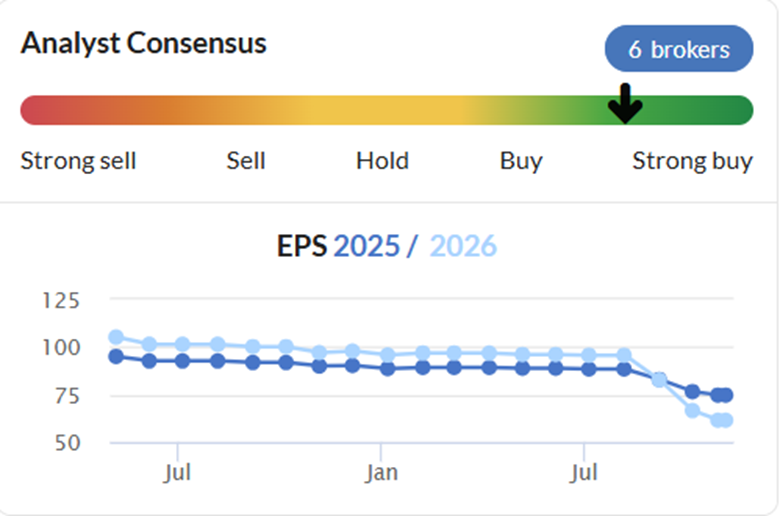
The broker consensus reflects the underlying story. EPS was declining slightly, but it is the update in September that has done the real damage:
Again, breaking out the different divisions is useful:
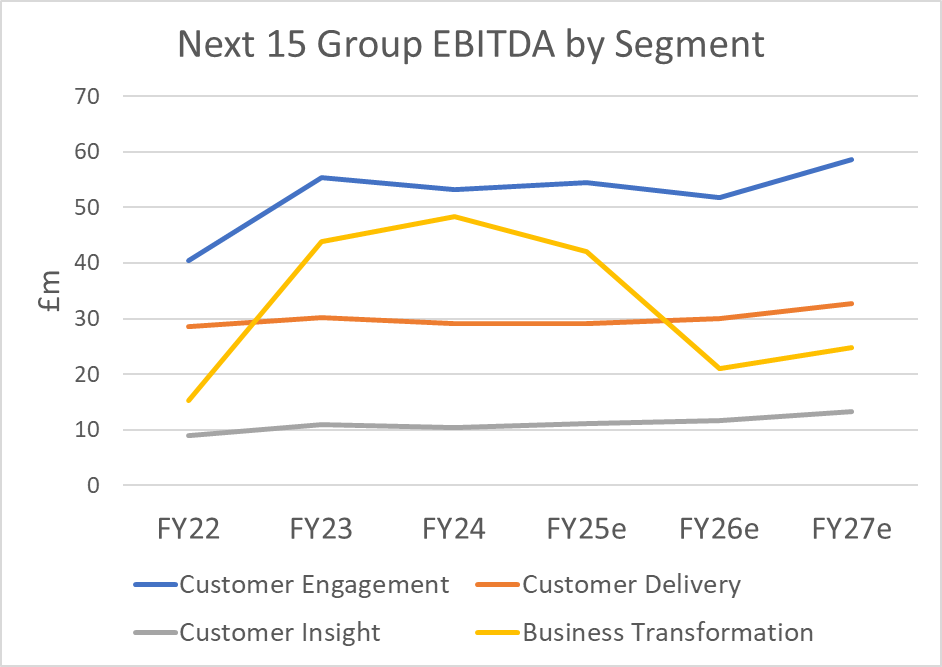
What was meant to be the growth engine of the business has held it back, and until it shows signs of recovery from the lost contract and returns to growth, the shares will likely remain on a low rating.
Conclusion
It appears that the market may have overreacted to the recent bad news at Next 15. A combination of weak UK markets and an institutional shareholder base with their own problems appears to have left the shares oversold. The current woes are with one part of the business, and the rest is largely unaffected (although operating in challenging markets at the moment). Hence, the forward P/E of around 6, together with a sum of parts valuation, suggests there may be an upside here in the medium term. In addition, profits may be enhanced if there is a cyclical recovery in marketing spend. However, without acquisitions, the company has pedestrian medium-term growth prospects. Additional bolt-ons will be possible, but the current low share price limits the scope for acquisitions to those funded from cash flow. While not currently putting the company in financial distress, existing debt and earnout obligations will limit action in this area despite good free cash flow. The risks are that the contract loss, for which no reason is given, is the tip of the iceberg and represents issues that will spill over into the wider business. The lack of significant management share purchases should also give pause for concern. Before investing for a recovery, investors will need to weigh up how the current risk-reward compares to similar opportunities in oversold mid-caps. Cautious investors may wish to wait until there are signs of momentum reversing in both the financial results and share price before considering this further.
Disclaimer
This is not financial advice. Our content is intended to be used and must be used for information and education purposes only. Please read our disclaimer and terms and conditions to understand our obligations.

5 comments
That's a good write up Mark and you've covered all of the main points. Coincidentally I had a meeting with Next 15 (LON:NFG) today where we covered a reasonable amount of ground.
In short the lost contract was in Saudi Arabia and involved providing consulting services to that mad project The Line. Apparently there was rampant fraud in other areas (NOT Mach49) and the client decided to exercise their 3-year break clause. TBH management are sort of wondering whether they should ever have taken on such a mammoth deal and maybe they should have been more explicit in communication but that's in the past I guess. The problem is that in the next financial year they've lost a lot of forecast revenue.
In other areas the public sector has also proved sluggish in terms of getting deals approved and signed off. So they haven't got as much momentum as they would like. Maybe things will start to improve now that all of the elections are over but Xmas isn't far away and maybe any benefits will only happen next year?
It's also fair to say that their current stable of 19 businesses is a bit too much to handle. I think that they are going to rationalise further to cut costs. Not that this stops them being on the hook for £100m of earn-out payments which seems extraordinary.
For me the shares look cheap but not cheap enough to interest me at the current time. They seem to be suffering a bit of a hangover from their lengthy series of acquisitions and I'd like to see business prospects turning up before taking another look.
Earn outs tend to prevent consolidation as they need to keep an intact p&l for the purchased company to measure against. Unless they renegotiate what will presumably be more generous terms.
Thanks Mark, interesting analysis. My main concern with this type of business is what happens when the earn outs end? Vendors leave, and potentially set up in competition (stc!) or key clients leave. The director share buying is also extremely tame as you noted. One guy repurchased just 10% of the shares he's sold in the last year at far higher levels!
Thanks Mark, very interesting, I’ve just taken a posn earlier this week as a contrarian view, but also feel vindicated with the Trump win, he’ll free up the M&A world currently stagnated by the current FTC incumbent, he’ll also remove tax worries associated with entrepreneurship and should help, loosen the purse strings in Silicon Valley which will trickle down eventually. It would be nice to see more directors buying and there has been no sign whatsoever of any share strength which might suggest another leg down. I’ll probably have to average down I’m sure, but Next 15 (LON:NFG) could easily get snapped up by P/E or a competitor at these levels.
Thanks.
I have no current position, but I am watching quite closely. There is little sign of share price support, but, like you, I am happy averaging down, so this is not an issue for me. If the brokers' are correct, this is a prodigious cash flow generator, even if they are struggling with organic growth, so this could easily meet hurdles for Private Equity. Perhaps just the debt and earnouts may limit the abilty for them to lever up the business. At this point, institutions may simply want a liquidity event and a win that the usual 30-40% premium would represent. Management don't have enough to block it, so I think this may be a good call.