Oil & Gas

As a Hedge for Long Duration Assets
I listened to a very interesting interview with one of my favourite macro analysts, Louis Gave. You can find the (pre-Iran war) video here if you are interested:
Louis-Vincent Gave: ENERGY shock as the new MACRO regime
Louis argues that the world is in a reflationary boom driven by synchronized fiscal deficits and accommodative central banks. In such periods, inflationary cycles typically end in one of three ways; and the first and most important is an energy price spike.
He sees early signs:
- Energy equities are already outperforming.
- Commodities and metals are breaking out.
- Fiscal and monetary policy are aligned in a way that historically leads to higher resource prices.
If energy prices rise meaningfully, the entire reflationary regime shifts into a stagflationary one. That makes energy both his highest‑conviction long in the current boom, and the primary hedge against the boom ending.
Energy equities are already outperforming year‑to‑date. In a world of synchronized fiscal deficits and steepening bond curves, upstream producers capture the purest torque to rising energy prices.
- Oil & gas majors for balance‑sheet resilience
- E&Ps for torque
- Upstream integrated operators for cash‑flow stability
- Coal and LNG as geopolitical hedges
Louis says his main question is whether he should add more energy to “cushion a potential blow” if energy prices spike and choke growth. For Louis, this is about providing portfolio insurance. The hedge works because:
- If energy spikes → energy equities surge
- If energy spikes → everything else (equities, bonds, growth assets) suffers
- Energy becomes the only positive‑carry hedge in the system
I think this is the single most relevant insight in his framework, although the video is also worth listening to for his deep insights into the America-China dance, Emerging Markets and commodity outperformance.
UK Government Tax Position
A more favourable UK oil & gas tax regime would disproportionately benefit companies with the largest taxable North Sea exposure, because the Energy Profits Levy (EPL) currently lifts their headline tax rate to 78% and sharply reduces investment allowances. Any rollback or softening of this regime would directly raise after‑tax cash flow for operators with meaningful UK Continental Shelf (UKCS) production.
The EPL raises the headline tax rate on UK upstream profits to 78%. Furthermore, the government is removing the 29% investment allowance, further increasing the effective tax burden. The levy is extended to 2030, prolonging the drag on cash flow. Companies with concentrated UKCS portfolios therefore experience the largest delta if the policy is reversed or softened.
Companies with the most to gain:
1. Harbour Energy (HBR)
Harbour Energy is the largest UK North Sea producer, with the highest absolute exposure to EPL. A tax reduction would immediately lift free cash flow, improve dividend capacity, and strengthen its ability to fund international diversification.
2. Ithaca Energy (ITH)
Ithaca’s portfolio is heavily weighted to UKCS assets, including Rosebank and Cambo. A friendlier tax regime would materially improve project economics and accelerate final investment decisions.
3. EnQuest (ENQ)
EnQuest’s mature, high‑opex assets are disproportionately penalised by the EPL. Lower taxes would significantly improve netbacks and extend field life.
4. Serica Energy (SQZ)
Serica is gas‑weighted, and the EPL applies equally to gas profits. A reduction in the levy or restoration of investment allowances would directly increase cash generation.
A credible shift toward a more supportive UK fiscal regime would:
- Re‑rate UK‑focused independents (HBR, ITH, ENQ, SQZ)
- Improve project sanctioning for Rosebank, Cambo, and other delayed developments
- Increase UKCS M&A activity as assets become more financeable
- Reduce decommissioning‑related distortions created by the current tax structure
Could the UK Government Tax Position Change?
There are credible, on‑record signals that the UK government is actively reconsidering its North Sea oil and gas tax framework, though nothing formal has been announced. The direction of travel is toward possible softening or early termination of the Energy Profits Levy (EPL), driven by investment collapse, job losses, and energy‑security concerns.
Several developments point to a live policy rethink:
- Treasury discussions with North Sea producers are underway about potentially ending the EPL before its scheduled 2030 expiry. This is reported as ongoing dialogue with industry insiders.
- Chancellor Rachel Reeves had planned to announce an early end to the levy but paused the move after oil prices spiked due to the Iran conflict. The plan was real enough that officials were preparing an announcement.
- Ministers have been meeting with industry for months to assess the impact of ending the levy early.
The UK Government is reconsidering because:
- The 78% headline tax rate has slashed investment, with Harbour Energy cutting ~700 jobs and shelving projects.
- BP, Shell, Equinor, TotalEnergies and others have scaled back UK investment or merged units to reduce exposure.
- The Treasury is facing the reality that the EPL has been a disaster accelerating basin decline and undermining energy security.
- The levy was designed for high‑price environments, but prices have normalised, making the tax increasingly distortionary.
This combination has created political and economic pressure to revise the regime. The government is caught between competing forces. Labour must balance climate commitments with energy security and jobs and in England, Reform is gaining traction by pledging to scrap the levy outright. Up here in Scotland, Scottish voters overwhelmingly support continued North Sea development, increasing pressure on Westminster. The recent Gorton and Denton parliamentary by‑election win for the Green Party complicates the political calculus even further.
In my view, the political realities the Labour Party faces make a full repeal politically sensitive for Labour’s client base and therefore unlikely, but a partial softening or early sunset is increasingly plausible.
Based on current signals, the most realistic scenarios are:
- Early termination of the EPL before 2030
- Restoration of investment allowances to revive project economics
- Price‑trigger adjustments to ensure the levy only applies in true windfall conditions
- Transitional relief for pre‑FID projects like Rosebank and Cambo
Oil and Gas are Generationally Cheap (and little else is)
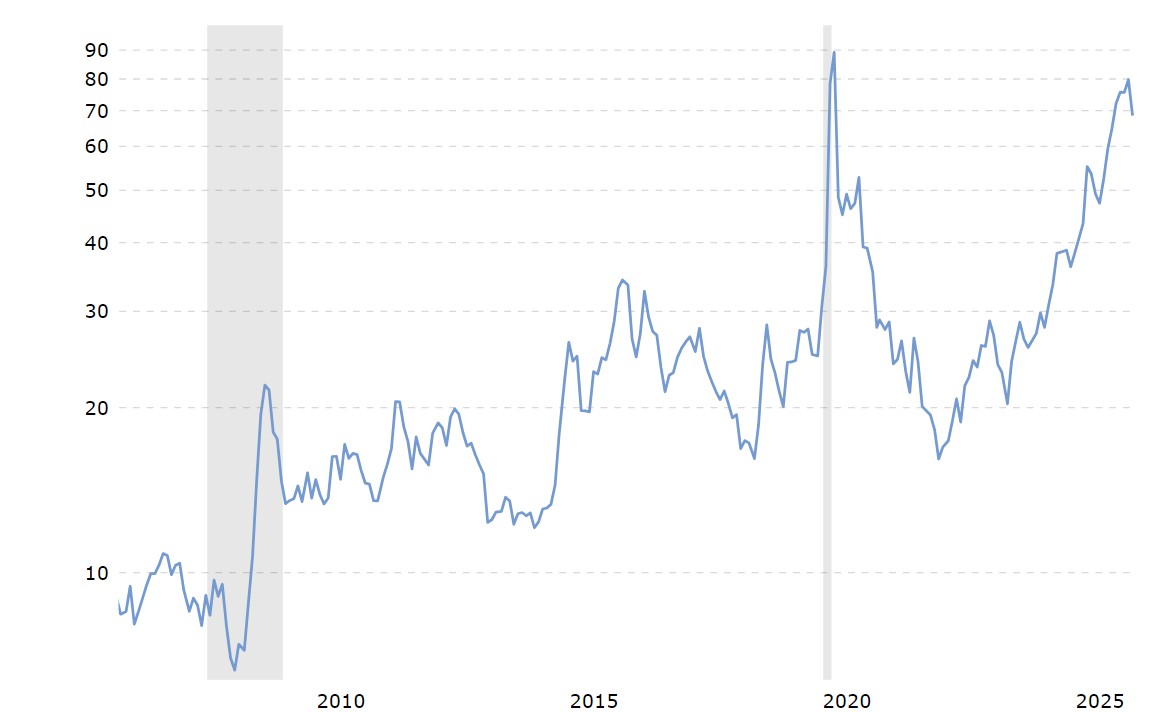
The graph shows the ratio of the price of gold per ounce over the price of West Texas Intermediate (WTI) crude oil per barrel. It tells you how many barrels of oil you can buy with one ounce of gold.
Source: Macro Trends
The long‑term average ratio is roughly 15–20. The ratio today is well above that range, closer to levels seen during periods of oil undervaluation (e.g., 2015–2016, 2020). Peaks in the ratio have historically preceded major oil bull markets such as 2000–2008, 2016–2018, and 2020–2022.
Several structural forces reinforce the “cheap oil” signal:
- Underinvestment in upstream supply since 2015.
- Declining spare capacity outside OPEC+.
- Permian basin in Texas now in decline
- Geopolitical risk premia not fully reflected in spot prices.
- Gold at all‑time highs, which mechanically lifts the ratio even if oil is stable.
- Demand resilience despite recession fears.
When gold is strong and oil is not, the ratio tends to overstate oil’s cheapness but even adjusting for that, oil still seems cheap measured against historic norms.
The Physical Market Was Tight Pre-War
Oil wasn’t behaving like a market with surplus barrels, and the fundamentals point in the opposite direction: inventories are not building, spare capacity is overstated, and non‑OPEC supply growth is slowing. OECD commercial stocks are still sitting near the bottom of their five‑year range, US crude inventories look healthier only because of SPR releases and accounting distortions, and there’s no meaningful rise in floating storage: conditions that would be impossible if a genuine glut existed.
At the same time, much of the headline “spare capacity” in OPEC is political theatre: Saudi Arabia is the only true swing producer, while most others are already pumping at or near sustainable limits, with countries like Nigeria, Angola, and Iraq facing structural declines.
Outside OPEC, the growth engine is losing steam as US shale productivity deteriorates, capital discipline remains rigid, and even strong producers like Canada, Brazil, and Guyana cannot offset global decline rates on their own. Taken together, the supply side is tightening rather than loosening, and the surplus narrative collapses under scrutiny.
Inverted Risk Premia
Risk premia across the oil market had inverted: geopolitical danger was at multi‑decade highs, yet the forward curve was behaving as if risk was zero, a pattern that reflects financial hedging pressure rather than any genuine physical surplus. Storage economics reinforce the distortion, because contango only signals oversupply when storage is cheap and plentiful; today onshore tanks are tight, offshore storage is expensive, and financing costs are elevated, so a contango curve without inventory builds is a false signal rather than evidence of glut. At the same time, systematic trading flows were overwhelming the front of the curve, with CTAs, volatility‑targeting strategies, and macro funds shaping curve structure independently of fundamentals, creating a market where price signals reflect flow mechanics rather than supply‑demand truth.
The Market is Underestimating Demand
Global oil demand continues to rise despite recession narratives, with hard data showing record jet fuel use, record petrochemical feedstock consumption, and record non‑OECD transport demand; sentiment surveys may imply a slowdown, but the physical market reflects tightening.
The idea that China is collapsing is also unsupported by observable behaviour: import volumes remain strong, refinery runs are elevated, and strategic stockpiling continues, contradicting the Western storyline of demand implosion.
At the same time, India has become the world’s most important incremental demand engine, adding more new consumption than Europe is losing, reshaping the global demand map in a way that keeps aggregate growth firmly positive.
Then Trump Went to War
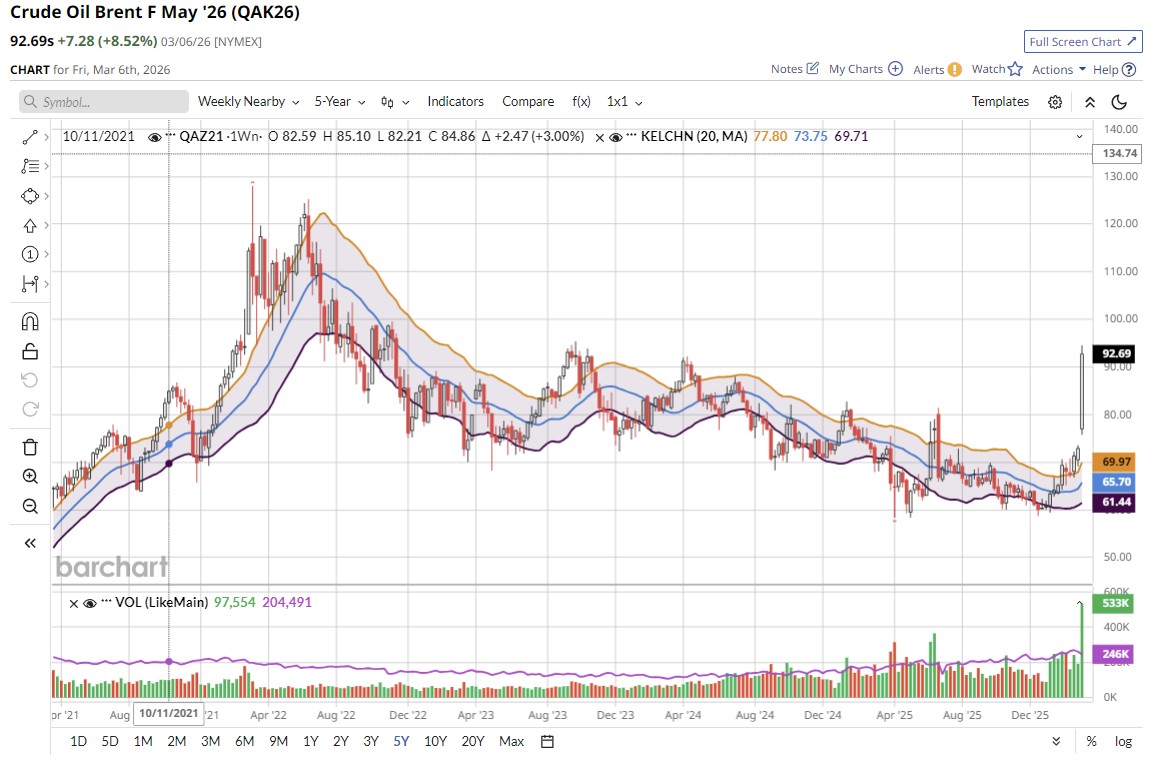
… and Brent (and WTI) decisively broke out of a 3-year down channel. Brent is current trading spot at US$92.69.
The Brent forward curve has slipped into a shallow but persistent contango, with cash at $85 and the first deliverable contract spiking to $92.69 before the strip collapses into the high $70s by late 2026 and flattens near $69 through 2032. This curve shape is entirely inconsistent with tight physical indicators — inventories are not building, onshore storage is constrained, offshore storage is expensive, and financing costs are elevated. The result is a contango without a cause: a structure driven by hedging flows and systematic fund positioning rather than any genuine surplus of barrels.
- Front‑month dislocation: May ’26 jumps to $92 while every subsequent contract prices lower.
- Curve collapses immediately: Jun–Dec ’26 slide into the mid/high $70s.
- Long end anchored: 2028–2032 flatlined around $69, signalling zero belief in structural tightness.
- No physical confirmation: Inventories aren’t building, storage is tight, and financing costs are high.
- Interpretation: This is flow‑driven contango: CTA pressure, hedging flows, and thin liquidity and definitely not a surplus of barrels.
So, the futures curve is telling us the market expects Trump-Netanyahu’s war against Iran to be short and decisive.
What if it is not?
Iran is not Iraq. Iran is larger, more populous, more ethnically diverse, more complex and more competent.
Iran today has roughly double the population of Iraq. The latest UN estimates show Iran at just over 93 million people, while Iraq is a little above 48 million. Iran is vastly larger than Iraq in land area: Iran covers about 1.65 million km², while Iraq covers roughly 438,000 km². Iran is nearly four times bigger.
What if it turns into a quagmire of competing tribes competing for power in a post-revolutionary Iran? It was bad enough in Iraq, but Iran is significantly more ethnically complex than Iraq, both in the number of distinct groups and the depth of their historical, linguistic, and religious diversity:
- Persians (~61%)
- Azerbaijanis (18–19%)
- Kurds (~10%)
- Lurs, Mazandaranis, Gilaks, Baloch, Turkmen, Qashqai, Arabs, and many smaller groups
- Armenians, Assyrians, Jews, Georgians, Circassians, Mandaeans, etc.
Iran’s ethnic map is a mosaic with no single group dominating the entire territory, and many groups have distinct languages, scripts, and religious traditions. Already there are reports of the Trump regime arming the Kurds. You would have thought the poor Kurds would have learned not to trust the Americans after their recent experience in North Syria.
This very fact reveals the surface‑level understanding of the internal dynamics that shape Iranian culture. The distinction between Shia and Sunni Islam is often treated as a footnote, yet for Iran’s leadership it is foundational. At the centre of Twelver Shiism (the dominant tradition in Iran) is the doctrine of the “Hidden Imam”: Muhammad ibn al‑Hasan al‑Mahdi, the twelfth Imam who entered occultation in the 9th century and who many Iranians believe will return as the Mahdi. This belief is not a theological curiosity; it underpins the ideological architecture of the Islamic Republic. The Supreme Leader’s authority is explicitly framed as guardianship during the Imam’s absence, giving Iran’s political system a unique fusion of religious legitimacy, revolutionary mission, and strategic patience. Understanding this worldview is essential for interpreting Iran’s risk tolerance, its regional posture, and the moral‑political logic that drives decisions which, from the outside, can appear opaque or irrational.
It should not be surprising that the Trump regime has such a poor understanding of the complexities of Iran. The State Department and NSC saw a systematic removal, sidelining, or forced departure of career Arabists and Iran experts in a purge during the first Trump administration. This was part of a broader restructuring under Secretary of State Rex Tillerson and later Mike Pompeo, combined with the White House’s “maximum pressure” posture toward Iran.
What if Iran turns into another Iraq burning through US$1.79 trillion in direct US spending, rising to US$2.89 trillion once long‑term veterans’ care and interest on war debt are included? The Lancet estimated the Iraq war cost the lives of over 600,000 people. What will that kind of financial commitment do to treasury yields?
The potential impact on the oil market seems to me to be considerably more potent than the market expects.
Iran is OPEC’s fourth‑largest producer, accounting for roughly 11–12% of the group’s total output, or about 3.3 million barrels per day. Any interruption to Iranian supply: whether from intensified sanctions or physical damage to infrastructure; would immediately contract the global oil market and remove a critical source of barrels.
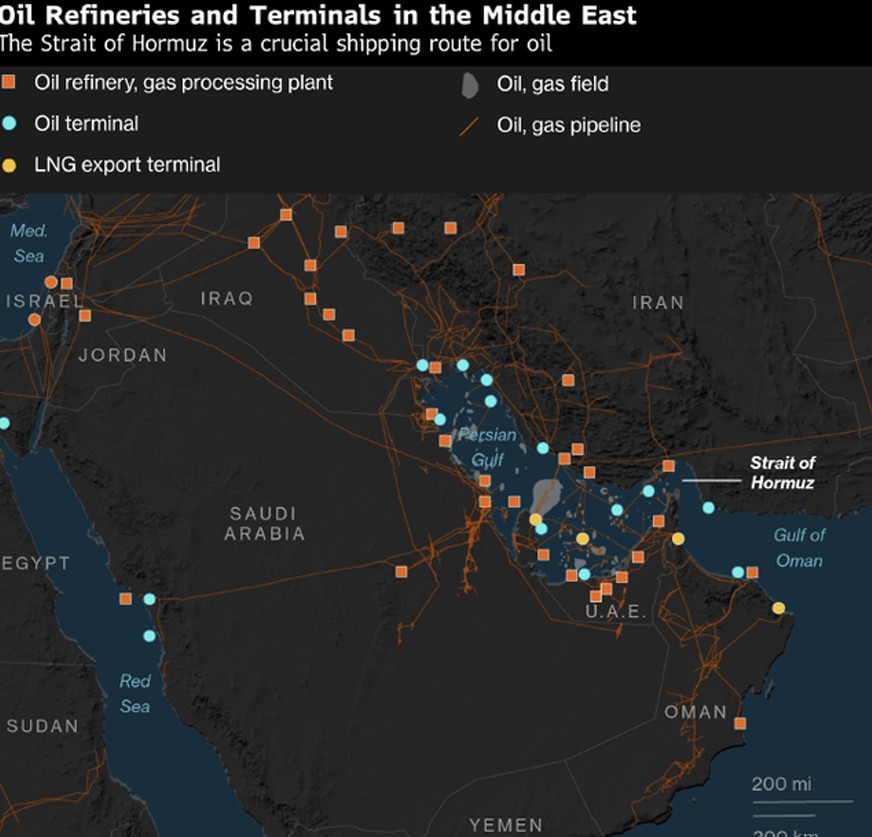
This is a target rich environment:
The Best Laid Plans of Mice and Men
I sold my platinum positions (which continue to look bullish) and a few other non-commodity positions to raise cash to invest in the oil and gas sector on Thursday 26th February. My primary motivation at that time was to create a hedge for some of my longer duration equity positions; I felt oil was significantly undervalued; and I am confident there will be positive changes to the current UK tax regime which is stifling investment at a time of strategic need.
I should have bought my oil and gas positions on Friday 27th February, but prevaricated and thought I would make the final decision during the following week. Trump, of course, launched his attack on Iran on Saturday 28th February and that weekend I thought that was that – I was not prepared to chase green candles as the oil market spiked.
I was surprised to note that Monday bought modest gains in my four target companies and so I committed 10% of my portfolio to four names:
- Harbour Energy (LSE: HBR)
- Ithaca Energy (LSE: ITH)
- Canadian Natural Resource (TSX: CNQ)
- Var Energi (STO: VAR)
The very excellent Massif Central hedge fund who specialise in investment in real assets did excellent write-ups on Harbour Energy and Var Energi which I will email separately. I will do deep dives on Canadian Natural Resources and Ithaca Energi when I get a moment.
It is also worth listening to this Channel 4 interview with a panel which includes General Sir Richard Sherrif, the retired commander of NATO forces in Europe. Sir Richard brings a refreshing honesty and integrity and directness, calling Trump and Hegseth “a pair of gungho nutters”
The point is this senior military man thinks this will end badly and be multiple factors more complex than the Americans think. “You cannot impose regime change from the air”.
Iran could be ten times worse after Trump Israel war, ex-Nato commander says
I believe the market is completely underestimating what a complete dog’s dinner this latest American Middle East adventure will develop into. The Americans do not exactly have a record of success in the Middle East where they are widely despised. I see oil at US$150 before the Summer once the market realises the level of incompetence, recklessness and ill-preparedness of this latest American adventure.
The obvious trades are oil and gas equities, oil futures, gold bullion, build some cash liquidity in your portfolio, sell any long duration assets you do not have absolute faith in, and consider buying VIX as it looks cheap compared to what I believe is to come.
I guess neither Hegseth nor Trump read Sun Tzu’s “The Art of War”?
“The skillful leader subdues the enemy’s troops without any fighting.”
“In war, the best policy is to take a state intact; to ruin it is inferior.”
(Art of War, Chapter 3, Sun Tzu)
Please note events are moving so fast parts of this report are now reading as a little dated ... oil was trading at US$107 on SE Asian markets late Sunday UK time. Also note, that although the UK and Norwegian stocks mentioned opened higher on Monday 9th February, they have heavily hedged their 2026 oil and gas production so cash flows will not benfit to the extent one might hope.
I have dear and close friends in Israel and among the Iranian diaspora in Germany who work for several NGOs seeking political change and supporting women’s rights in Iran. This article is meant as a thesis for investing in oil and gas and should not be read or interpreted in any other way (but you got to admit, the General is right: Trump and Hegseth are total gung-ho nutters).
Alastair Kendall, March 7th 2026
Disclaimer
This is not financial advice. Our content is intended to be used and must be used for information and education purposes only. Please read our disclaimer and terms and conditions to understand our obligations.
2 comments
Nothing much to add to this - though I do think that the market complacency/optimism about what's going on is giving small investors an extended chance to move relatively painlessly into cash. Trump has no idea what he's started, has even less idea how to stop it, and will continue to blunder on, regardless of the death, suffering and economic devastation it causes.
Should have gone with Serica Energy (LON:SQZ)
They will naturally be looking at a share price uplift when they move to the main market at current levels it will walk straight into the FTSE250 which should see a nice boost.
Plus Enquest (LON:ENQ) the company isn’t has solid as I wish it was but with my current hypothesis of a major market correction due soon I could see them sneaking into the 250 as well. That is a lot less of a certainty has it is purely dependent more imo on the ensuing market correction in my hypothesis.
For full disclosure I do own both of these stocks and not giving financial advice just sharing a piece of my hypothesis.