PPHE: 50p for a Pound

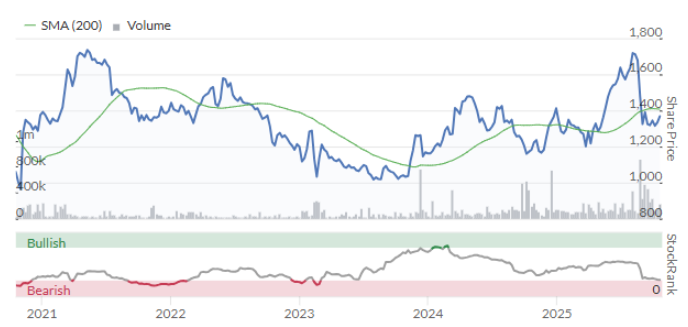
PPHE share price: £13.80
Market cap: £577m
I recently had the privilege of speaking with Daniel Kos, Chief Financial Officer of PPHE Hotel (LON:PPH).
PPHE Hotels are most closely associated with the Park Plaza name but their portfolio is much broader than that. It includes art’otel in London and across Europe, and they have a strategic partnership with the Radisson group (who own the Park Plaza brand).

art'otel Hoxton. Source: booking.com
Although I’m not a specialist when it comes to property shares, I do like to follow the sector selectively: REITs, housebuilders and hotels will all occasionally get a review from me.
PPHE has interested me for some time as the Park Plaza brand is one that I have some familiarity with, and the shares have tended to trade at a steep discount to what the company says its hotels are worth.
The question of what a hotel is worth should not be all that complicated, at least in my mind! If a company’s hotels are objectively worth X, but its market cap says that they are only worth half of X, then we should be looking at a clean bargain and a good investment opportunity.
But it’s not quite as simple as that. The reality is that PPHE’s accounts are complicated, whether we are talking about the company’s earnings or the value of its properties. So I’m very grateful to Mr Kos for taking the time out of his busy schedule to help explain things to me.
Introduction
Mr. Kos started out our conversation by explaining to me that, in his words, PPHE is “not a typical company”.
According to Mr. Kos, a typical company (in this sector) would raise some equity using its own shares, buy assets with the funds raised, refinance the assets, and then look to repeat it.
PPHE does not do this.
The reason is that, in the view of the company, “the stock market is closed”, i.e. their stock is simply not trading at a level where they would be interested to raise equity. This is the view of their major shareholders. So PPHE instead relies on debt and other forms of financing.
For context, the company’s two major shareholders are:
Eli Papouchado, who is considered to own 33% of the company through various vehicles. He founded the business in 1989 and was non-executive Chairman until January 2025. 88 years old, he no longer holds a Board seat, but is still involved behind the scenes.
Boris Ivesha, owning 11%, who has been CEO since 1991. There is also a co-CEO who is responsible for day-to-day operations.

Hot tub at Park Plaza Arena Pula in Croatia. Source: Radissonhotels.com.
How PPHE has raised cash
Bank borrowings are typical for PPHE but back during the Covid period, in June 2021, they raised funds in a more interesting way: by selling off a piece of two hotels.
A financial company from Israel was happy to buy a 49% share of two hotels (Park Plaza London Riverbank and art'otel London Hoxton) and paid cash of £114m to PPHE to do so.
Importantly, PPHE remained the majority owner of both hotels, and continues to operate them on a 20-year hotel management contract.
Boris Ivesha said “the agreement values its assets at the Group's latest EPRA NAV level”, i.e. it gave some credibility to the EPRA NAV valuation (which is supposed to be more accurate than the balance sheet figures).
I should mention that the Israeli insurance company did receive a sweetener in this deal: it was given options over PPHE shares. The situation is always a little complicated!
Balance sheet - historical cost vs EPRA NAV
The company provides a “fully externally valued NAV”, which is normal for a real estate business.
But this is not the same as the number you’ll find on the balance sheet.
The balance sheet shows buildings at historical cost, minus depreciation. It assumes that the buildings are on their way to decrepitude and worthlessness. Mr. Kos pointed out humorously that he is depreciating Park Plaza Hotel Amsterdam, which is 135 years old.
According to the balance sheet, there is shareholders’ equity of just £309m.
But this figure is totally different to what you get with the EPRA NAV. Here’s the official definition of EPRA NAV, and I’ve put the important bit in bold:
Recognised equity, attributable to the parent company's shareholders, including reversal of derivatives, deferred tax asset for derivatives, deferred tax liabilities related to the properties and revaluation of operating properties.
(EPRA stands for European Public Real Estate Association.)
The EPRA method gives PPHE a valuation of £1,188m, rather than a measly £309m, thanks to a valuation uplift of about £850m (plus some other positive adjustments).
If only the complications ended there!
However, there are three different versions of EPRA NAV, depending on which exact valuation method you wish to use - NRV (net reinstatement value), NTA (net tangible assets), or NDV (net disposal value).
Fortunately, all of these methods give very roughly similar answers: the lowest is £1,113m, while the highest is £1,188m.
Using the diluted share count, the book value per share that you get from these numbers is between £26.31 and £28.07 (current share price: £13.80).
Clever value creation
Mr. Kos was kind enough to walk me through some of the methods used by PPHE to generate value.
Let’s start with the £293m of “lease liabilities” that are included when the company calculates its NAV and loan-to-value (LTV), but are excluded when the company calculates EPRA figures.
These are ground rents. PPHE’s modus operandi is something like:
Buy a freehold site
Build a hotel on it
Sell the land under the hotel, pay ground rent.
In calculating EPRA figures, PPHE will remove both the lease liability associated with the ground rent, and also the notional “right-of-use asset”. Both of these balance sheet entries have been created by modern lease accounting (IFRS 16), but they are removed for EPRA purposes.
An example given by Mr. Kos was as follows - any mistakes with the figures are entirely my fault, but shouldn’t matter too much: the point is to show how the company is creating value.
PPHE bought a site for £125m
They turned it into a hotel, the appraised value went up to £250m.
They then sold the land under the building (the freehold) for £170m.
The value of their remaining leasehold asset, even after taking ground rent into consideration, is still £80 million, and is generating cash flow.
For this to work out, the trick is that construction costs have to remain low. In the current era of very high construction costs, it’s not so easy. But I think this is the model that PPHE would ideally like to use, whenever possible. I hope you can see why!
Historic Earnings - some problems
A key point for analysts and investors is that PPHE is a development company, spending big on construction and capex, and taking on construction debt, long before its new hotels can generate income. The recent interim results noted that PPHE was looking to generate £25m of new EBITDA from its recently opened hotels.
This makes historical EBITDA - and indeed any historical measure of earnings - a rather low estimate of future earning potential.
In a similar vein, the company owns some prime London sites, and has a site in New York. The potential of these sites is not yet reflected in current earnings (because they don’t have any) and is arguably not reflected on the balance sheet, either - but these sites could convert into attractive future earnings streams, all going well.
Historic Earnings - some solutions
This is how PPHE calculates its earnings: firstly, they add back the depreciation cost that is required by their accounting standards. As we’ve discussed above, they don’t see it as relevant to the reality of their hotels.
Instead, they deduct an upkeep expense that is calculated as 4% of revenues. They have found that 4% of revenues is a reasonable estimate of the actual cost of refurbishing their hotels on an ongoing basis.
This annual refurbishment cost is much lower than depreciation.
The relevant numbers are shown below, from the recent interim results:
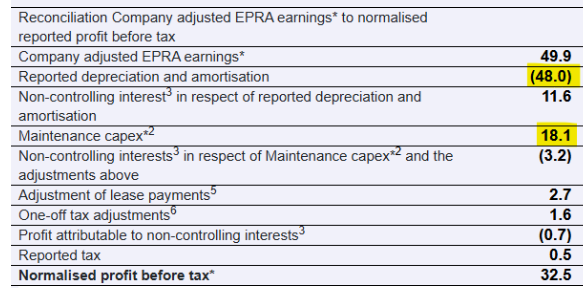
You can see that depreciation (and amortisation) added up to £48m, while the annual refurbishment cost - referred to as maintenance capex - was just £18m.
This annual refurbishment cost reflects how PPHE actually runs its businesses. Individual hotels are expected to set aside 4% of revenues in their own sinking fund. Then, when work needs to be done, they don’t necessarily need to ask head office for an injection of cash - they should have set aside the funds for refurbishment already.
The three largest numbers in the calculation shown above are all to do with depreciation expense vs. annual refurbishment cost. If you do the calculation according to the accounts you get a normalised PBT of £32.5m in H1. Or if you do it the way that PPHE actually manages its business, you get £49.9m of adjusted EPRA earnings in the first six months of the year.
Conclusion
I’ve been AMBER on PPHE shares after their profit warning in August and I’m not inclined to upgrade my stance on the stock purely as a result of a management meeting. However, I hope this article has helped to shed light on how the company operates, and might help you to understand not just PPHE but any other hotel business you might study in future.
And with a current share price that is only half of the company’s NAV per share when calculated using EPRA methods, I must admit that I am inclined to upgrade my stance - but I still don’t see any need to rush. Let’s see if the next trading update brings more reasons for cheer than the last one did.
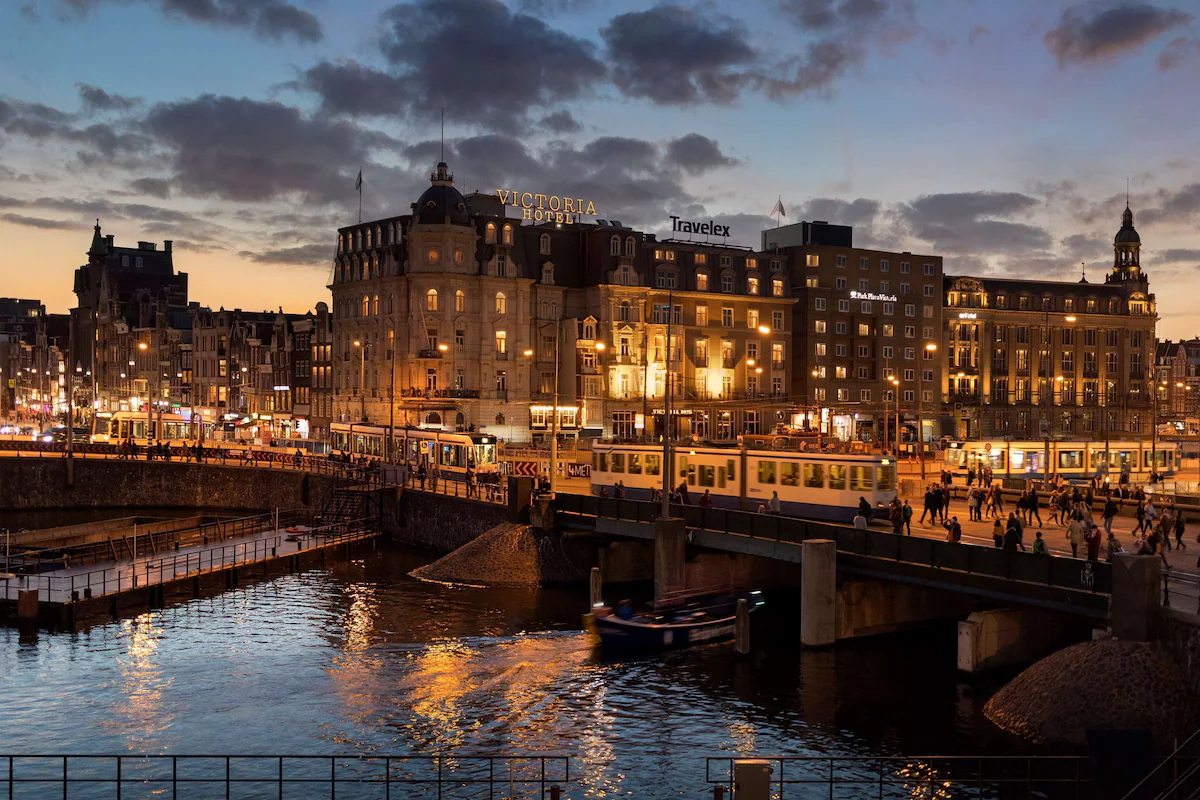
Park Plaza Victoria Amsterdam, which has a rating of 9/10 from 2,350 reviews on Expedia. Photo source: Expedia.
Disclaimer
This is not financial advice. Our content is intended to be used and must be used for information and education purposes only. Please read our disclaimer and terms and conditions to understand our obligations.

14 comments
I'd rather get a pound for 50p....
Thank you Graham, I have been following PPHE and did well with Dalata Hotel (LON:DAL) . I like cheap assets and PPHE fits the bill. Europlaza hold a 32% stake which is my only concern as to if ever the NAV will be realised. Depends on Eli Papouchado I guess.
PPHE Hotel (LON:PPH)
Hi Charles
The shareholder concentration is what put me off investing here as well; the top 3 shareholders own >50% of the company.
If this changed I'd be more interested in getting involved as I do like the business and did well from fellow hotel operator Dalata Hotel (LON:DAL) where the discount to NAV was similarly very large.
A
p.s. thanks for the article Graham
A- It is a No from me as well- one of my criteria is not investing with a large controlling stake. DAL was a good investment for me as well, wish I could find another one. Fuller Smith & Turner (LON:FSTA) and Young & Cos Brewery (LON:YNGA) which I hold are not quite the same. Back in the day made some money in Comfort Hotels, taken over in the 1990's. Hard to find a good hotel operator-who is developing. Let me know if you find one, one of the few things I learnt at Phillips and Drew(through a mate who covered the sector) was the harsh occupancy rate figure (again back in the 1980's) Margin of profit and a loss was a few % on rooms occupied per annum.
Hi Charles
Someone recently put me onto Daniel Thwaites (OFEX:THW) which may be of interest to you.
It's a fascinating company, trading well below NAV.
The main thing that puts me off is that I don't think that they generate enough free cash.
However, I am prone to overthinking things, so it remains on my watchlist and I will definitely be taking a closer look when the next results are released.
Abs
Idid look at it a couple of years ago. I will have to remember why I did not buy it. I do like the sector, think share prices are depressed with general gloom. My travels around Uk suggest otherwise- not booming, but certainly healthy trading. Thank you Abtan
I recall now-after doing AI research. Shares are rarely traded and the family have a blocking shareholding . Here is the AI research. https://docs.google.com/docume...
Fascinating, thank you
If I was younger I might buy a few, but at 67 it is still a no for my circumstances.
Interesting article thank you.
Dear Graham
Thank you for your detailed analysis of PPHE. I have owned shares in the company since 2012 and purchased an additional holding during Covid when the business suffered alongside a heavy fall in the share price. I confess that it was always the substantial discount to NAV that was the prime motivation for my purchases, as this remained largely constant post Brexit and during Covid. I remember your former colleague, Paul Scott, questioning the large gap between the share price and NAV could only be realistically demonstrated by a sale of one or more of its freehold properties. Your interview with Daniel Kos, however, has illustrated the difficulties of analysing the business and I wonder whether it is this complexity that puts off potential investors. Given the age of the major investors, there might come a time when an offer for the company would establish an accurate valuation once and for all.
Kind regards
Phillip
Thank you for the kind and insightful comment, Phillip. Yes - Daniel Kos acknowledges the inherent complexity and made it clear that he is often explaining the company's accounts to potential investors. And congratulations on your investment, it looks like you must have had a fabulous return! Graham
Fascinating. Thanks Graham.
Most welcome, Cricketfan!