Quarto: Illustrating a SuperStock

Last week, Ed completed the introduction to the Stockopedia Strategy Map by looking at SuperStocks – companies that have high Quality, Value and Momentum Ranks. Over the next couple of weeks, I will be taking a look at some of these SuperStocks in more detail. Starting with illustrated book publisher: Quarto (LON:QRT)
Summary
- Quarto has had a turbulent decade with several boardroom bust-ups leading to management changes, ending up with Asian publisher CK Lau becoming an executive director and owning over 50% of the equity.
- Since Lau has been an executive director of the company, the EPS has almost trebled, and the company has had a ROCE that has averaged over 20%, indicating that with him at the helm, it is well-run and has maintained a solid competitive advantage.
- Despite this strong recent track record, the company trades on a P/E of less than six.
- In the past, the company has been heavily indebted. However, the combination of a rights issue in 2020 and good operational cash flow have all but eliminated the debt.
- However, there are reasons for investors to be cautious. Lau, together with major Italian book publisher Giunti, own over 70% of the company. While they have no history of mistreating minority holders, investors are very much in their hands.
- In addition, there are no forecasts in the market. The outlook is cautious but vaguely positive. My central case is that they will do at least as well this year as last year, but it requires trusting management to deliver.
- This is indeed a QVM SuperStock, but one that should not be a significant proportion of an investor's portfolio, given the ownership risks.
Profile
Quarto was formed in 1976 by Columbia professor Laurance Orbach, together with London-based designer Bob Morley and writer Michael Jackson. Originally, Orbach's business partner Sid Mayer was to join, hence the Quarto name, but ultimately decided not to. In the 1970s, illustrated book publishing was too expensive to be economical but very popular with consumers. Quarto understood that there were economies of scale from large print runs, which could be achieved if they sold books in multiple regions.
The company publishes books in almost all categories where a strong visual component is a necessity, such as cooking, art or adult colouring books. Children's books are a very important part of Quarto's catalogue. Series such as little people, BIG DREAMS, which is a series of inspirational biographies aimed at children, are best sellers.

The company was listed on the London Stock Exchange in 1986 with the aim of raising capital to grow by acquisition. Over the years, they have made quite a few, although the last one was in 2016. They had paid a dividend each year that Stockopedia has data for until it was cancelled in 2017. However, the share price has been rangebound over the last 20 years:
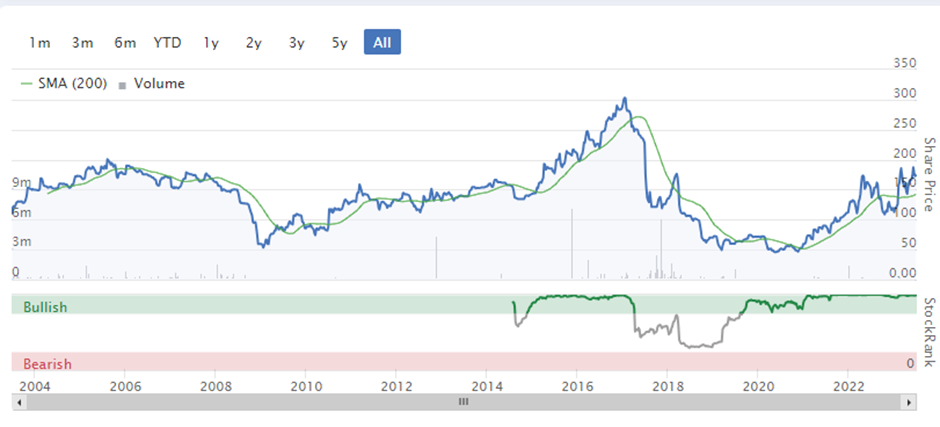
The last decade has been quite a turbulent time for the company. Founder Laurece Orbach was due to step down from his dual role of Chairman and CEO in 2013. However, in 2012 he was ousted from the board by Harwood Capital, who were critical of his stewarding of the company. Things went ok for the company under new CEO Marcus Leaver. The company received a preliminary approach in August 2017, but nothing came of it. However, in November of that year, the company had a profit warning. The 2017 results saw adjusted EPS down significantly on the previous year, a write-down of assets, and the dividend cancelled.
In 2018, in response to poor trading and the apparent inability of management to keep costs under control, Orbach then mounted a successful boardroom coup himself and became Executive Chairman, while major shareholder and Asian book publisher CK Lau became an executive director.

What Orbach appears to have failed to realise was that this activated a change of control clause with the company's lenders and gave them much more control over how the company was run. This required CK Lau to lend money as debt funding to satisfy the banking syndicate. It appears that Orbach didn't really have a planned strategy to turn the company around, so he had to leave the board again. Various management changes ensued, but the company has had some management stability recently, with a Group Finance Director in place for over three years and a CEO, Alison Goff, who has been with the company for just over a year. CK Lau remains an executive director. He stepped in to manage the company more than once in the last few years but now appears not to have a significant day-to-day role within the business.
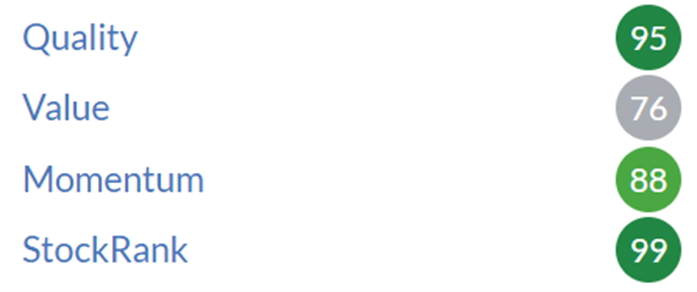
While the Quality Rank stands out at 95, the Value Rank is not exceptional. However, overall this has a StockRank of 99. This is the effect that Ed refers to in his article about SuperStocks. Screening for companies with exceptional Quality, Value and Momentum Ranks rarely delivers any hits. However, by looking for companies that are strong in all three Ranks, investors end up owning a basket of exceptional stocks.
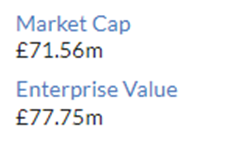
With a Market Cap of just £72m, this is firmly in the small cap space:
As such, there is no broker coverage:
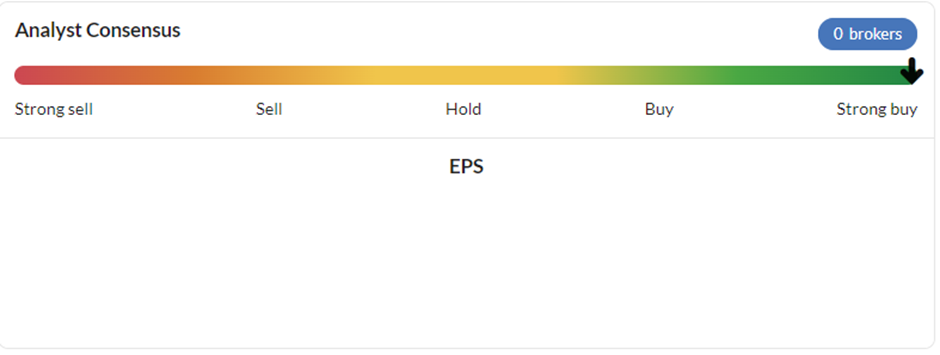
This may put some investors off investing in something where the future is so uncertain. However, it must be noted that broker forecasts are rarely that accurate. In his book Contrarian Investment Strategies: The Next Generation, David Dreman compared over 100,000 consensus earnings estimates with reported figures over the 24 years to 1996 and found that more than 40% of forecasts were out by more than 15%. So the lack of forecasts may give an advantage to the investor willing to do their own work.
Business Model
Quarto's original business model was centred around so-called co-editions, where a book is published simultaneously in different countries and/or languages. They utilise scale and distribution networks to drive higher returns. In recent years the company has moved away from a pure co-edition model to a mix of co-edition, trade publishing, and foreign rights sales. They have also looked to diversify their distribution channels through the use of non-traditional retailers. This leaves them as a global leader in illustrated nonfiction publishing. Their aim is to make and sell books that entertain, educate, and enrich the lives of adults and children around the world.
Competitive Landscape
All major book publishers, such as Bloomsbury Publishing (LON:BMY) or Simon & Schuster, have some form of illustrated publishing, particularly for Children's books. Although, these do not have the specialism of Quarto. It is hard to find figures for market share. However, it is worth noting that one of the reasons that Quarto may be on such a low rating is a market view that physical books are in decline in a world of ebooks. However, in some of Quarto's key markets, such as children's books in the US, Statista shows the market growing in recent years:
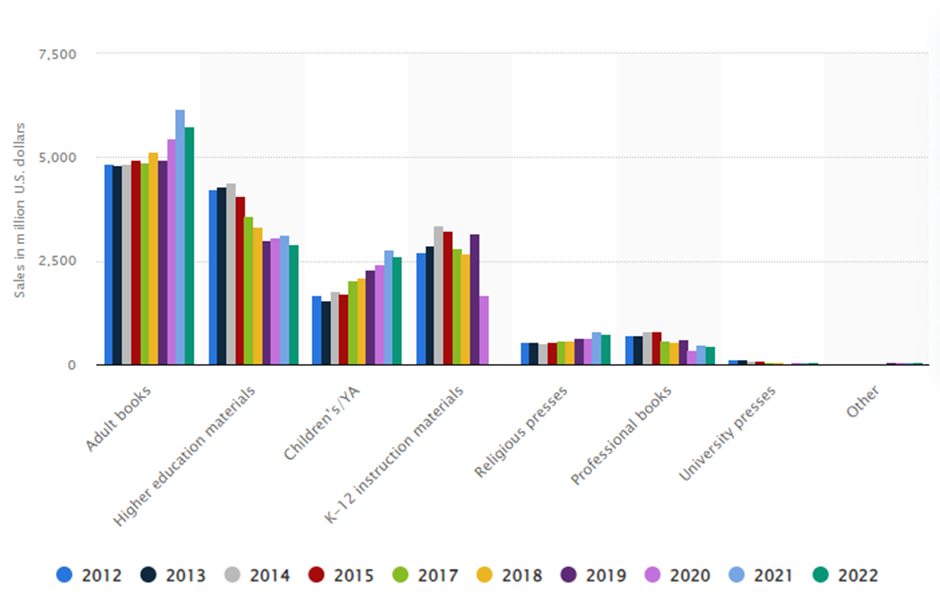
This doesn't guarantee that Quarto can grow. They still have to create titles that appeal to consumers. However, it shows the theory that Quarto suffers from a declining market may not be true.
Strategy
In the 2022 results, Quarto state that their strategic goals as
…continu[ing] to drive organic growth through its publishing and we will launch 2 new imprints in 2023. We will also look at acquiring other related businesses where we believe they can be leveraged across our existing operations and provide a good strategic fit.
Their history has been one of consolidation in the publishing sector, although the management changes and debt burden have prevented this in recent years. With the debt now almost gone, the company may look to grow via acquisition as well as organically.
Competitive Advantage
The company has an outstanding Quality Rank:

The Pitrski F-Score is a very good 8 out of 9 due to positive trends in recent trading. Only a capital raise in 2020 blights that record:

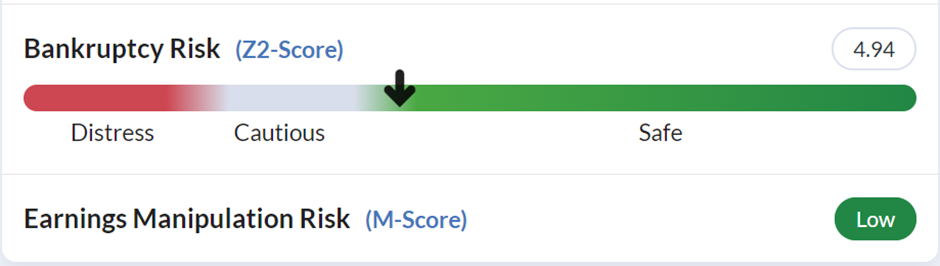
However, the flip side is that the bankruptcy risk is now very low. As is the earnings manipulation risk, with earnings turning into cash and being used to reduce debt further:
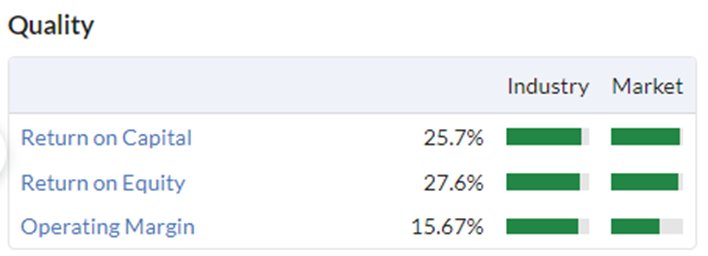
As well as this, the return on capital figures are excellent and well above their cost of capital:
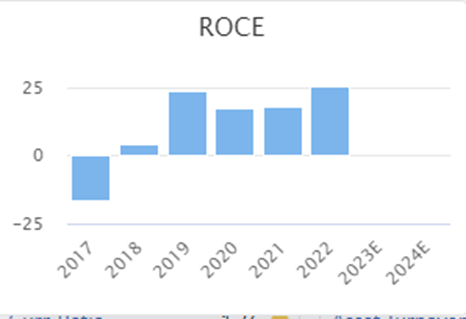
This isn't just a one-off, either. Since CK Lau has run the business, good capital discipline has led to consistently strong returns on capital:
It is worth noting that these are also far higher than fellow book publisher, Bloomsbury Publishing (LON:BMY):
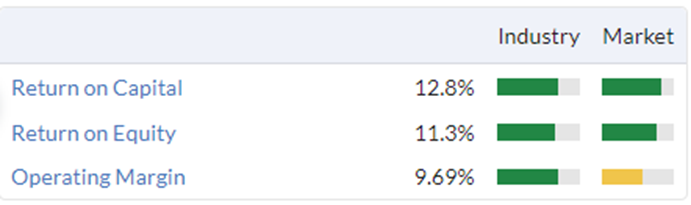
Although it is perhaps hard to pin down exactly where the Quarto (LON:QRT) competitive advantage lies, this suggests that there is indeed a moat in the business. The moat is likely formed from a few factors, scale in a niche area, brand recognition within specific book series, and operational excellence. I don't think any of these are particularly strong in themselves. However, they add up to a significant advantage in this mature sector.
Financials
Growth and Profitability
Topline growth here has been non-existent here, indeed, will be negative once the effect of inflation is taken into account:
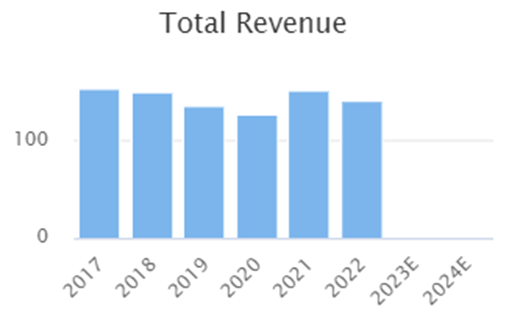
However, the bottom-line picture is far more rosy:
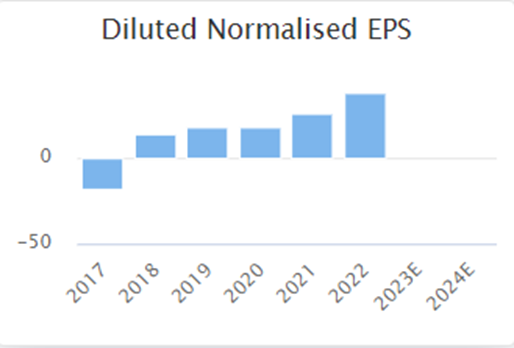
Here, EPS has continually grown and almost trebled in four years. This has come from 2 factors. The first is a focus on their higher margin products that has led to an increase in gross margin:
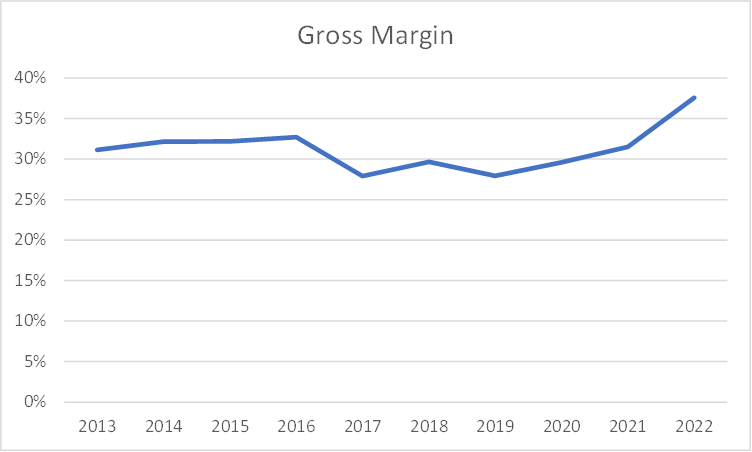
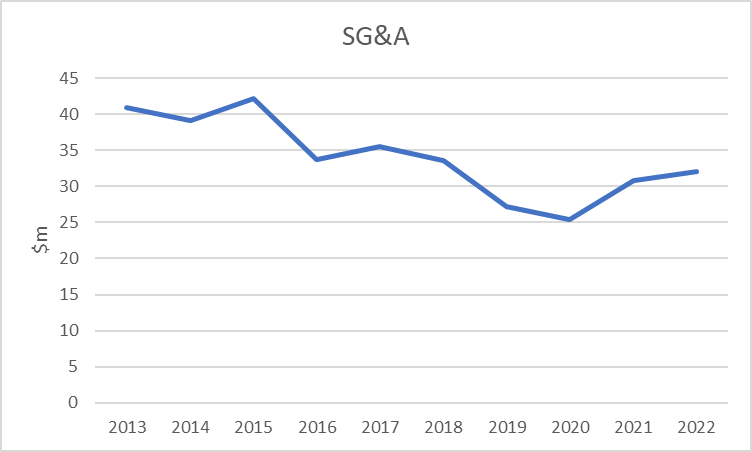
The second is tight control of admin expenses:
Balance Sheet
Although it is flagged as yellow here by the Stokopedia algorithms, I wouldn't consider these figures particularly concerning:
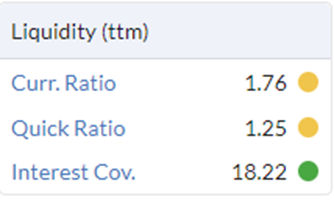
Cash on the 31st of December 2022 significantly exceeded short-term borrowings, and receivables exceeded payables. Unlike many businesses in the current economic climate, Quarto has managed to keep inventories mostly flat, representing about 90 days of stock. Given the nature of the business, this seems very reasonable.
The book value has increased rapidly over the last few years as the company has retained cash flow to pay down debt:
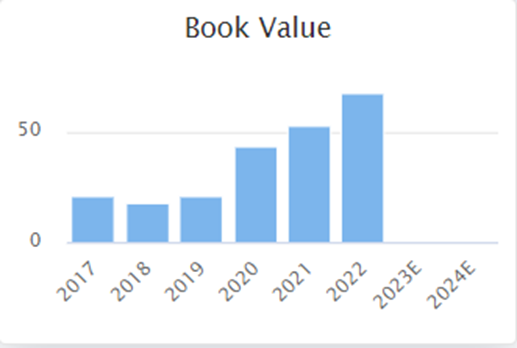
However, it is worth noting that this book value is mainly intangible:

Some of this is goodwill, which I tend to ignore, and the rest is what they call pre-publication costs:
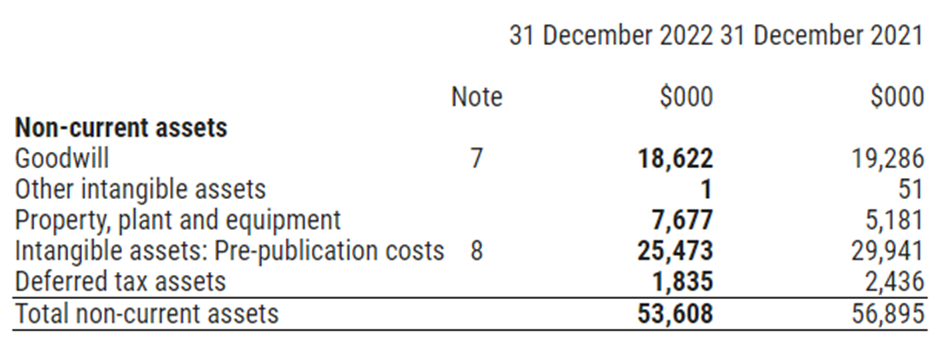
When they create new books, they account for these by capitalising development costs that are then amortised over the life of the products. There is nothing inherently wrong with this accounting treatment, but it does bear careful consideration. In the past, the company ramped up their debt by investing in new products that didn't create the growth in revenues expected.
More recently, though, they have been much more disciplined. In 2021, the company invested $6.3m less than they amortised, and in 2022 they invested $1.7m more. So these figures have been much more balanced, meaning earnings and operating cash flow are much more in line.
Cashflow
The dynamics around the capitalisation and amortisation of pre-publication costs mean that operating cash flow per share is always significantly higher than EPS. The best metric to look at is, therefore, the free cash flow figures:
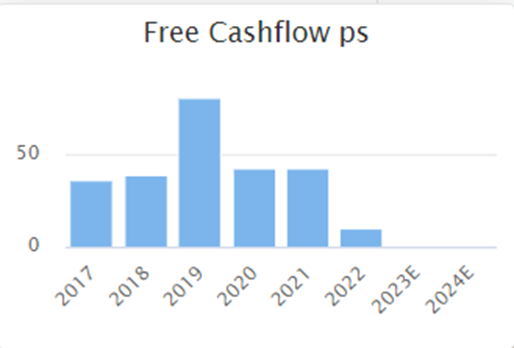
Note that the share count doubled due to the rights issue in 2019, so the free cash flow from 2019 to 2021 is remarkably consistent. However, it weakened significantly in 2022, leaving the P/FCF figure looking unimpressive:

As well as the shift from higher amortisation of pre-publication costs to a small renewed investment into them, the reason for this shift is primarily due to working capital, together with higher taxes on more profitable trading:

This appears to be a normalisation of unusual conditions in 2021, where days sales outstanding were 130 days. At the end of 2022, DSO were a more normal 88 days. This means that, in the future, free cash flow per share will likely be close to the more normal 40c of the last couple of years, and the P/FCF will have a much better ratio of 5.5.
Dividends/Buybacks
The company doesn't currently pay a dividend, and with no broker forecasts available, we cannot see if management is considering this being reinstated. From listing until 2017, the company had consistently paid a dividend:
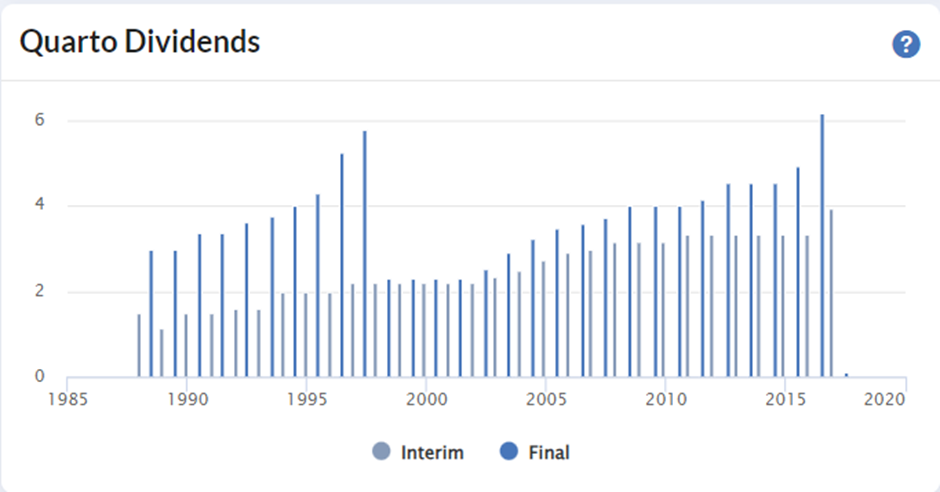
Although this was partially debt-funded in later years:
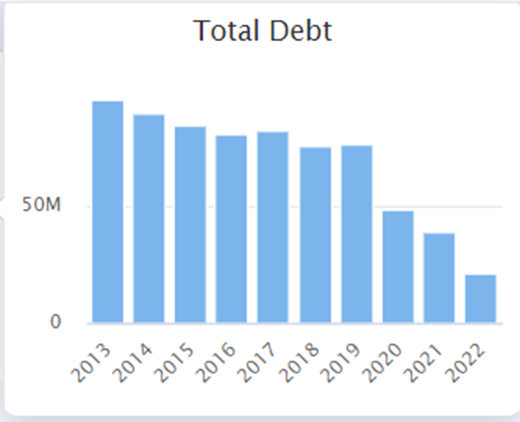
With net debt firmly under control, minority holders would undoubtedly prefer some kind of shareholder return. However, whether a dividend is declared in the future will depend on the view of the controlling shareholders.
Ownership Structure
The main holders here are CK Lau, Montecristo 2019, and founder Laurence Orbach:
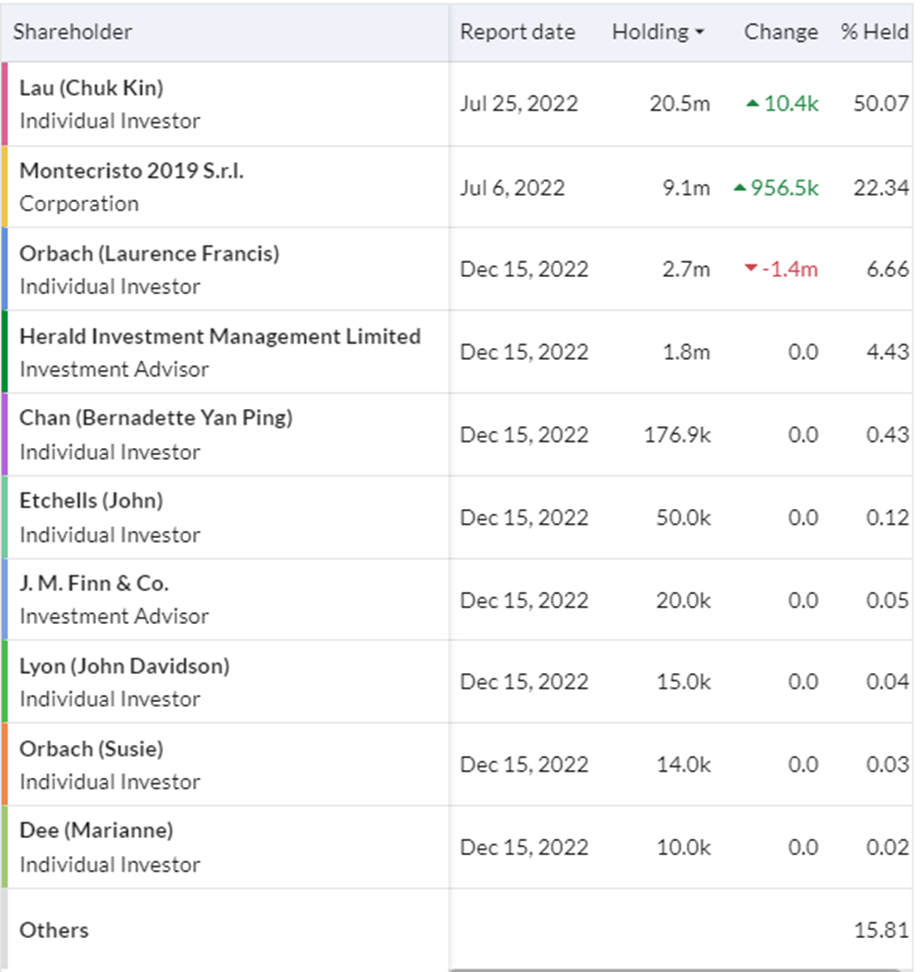
Montecristo 2019 S.r.l. represents the holding of Italy's leading publisher, Giunti, with 20 imprints across a range of genres. The company also operates Italy's largest chain of bookstores, Giunti al Punto, with some 215 outlets across the country. Andrea Giunti Lombardo is their non-executive representative on Quarto's board.
It is worth noting that although Quarto is UK-listed, it is US-domiciled, which means that the UK Takeover code does not apply to it. This means management have been able to buy shares in the market to a much higher percentage than they'd be allowed to for UK -domiciled companies without making a mandatory offer:
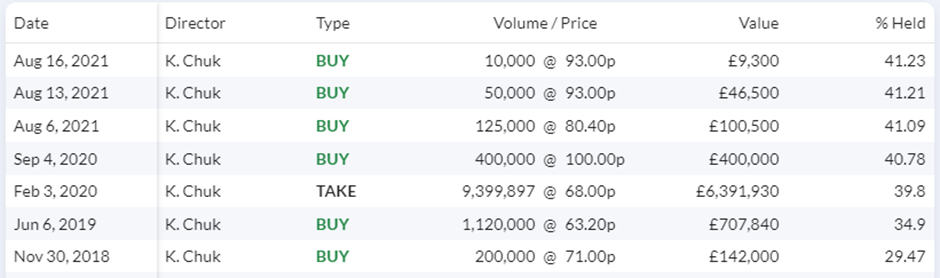
Stockopedia's data provider seems to be missing a few transactions, as CK Lau was buying shares at £1.72 in early June and now owns over 50%:

Many investors like a management team with significant skin in the game since their incentives are then aligned. However, this also means the shares are pretty illiquid, and shareholders cannot guarantee to trade in size on any given day. In addition, holdings of this size mean that Lau & Giunti have effective control over the company and could make a lowball offer or possibly even delist the stock if they wanted to.
However, it is worth noting how these parties behaved when the company needed to raise funds to pay down debt in early 2020. These parties chose to have a rights issue so that existing holders could take up their rights and retain their percentage holdings if they wished. However, they effectively underwrote the offering, meaning that the company was guaranteed to get the cash they needed, and the discount could be minimal. These minority holders were treated fairly in a situation where these parties could have taken advantage of them. While there is no guarantee that Lau will treat minority holders fairly in the future, this track record gives some confidence.
Valuation
The Value Rank is the lowest of the StockRanks:

The company is let down by the lack of dividend yield, free cash flow and price to book:
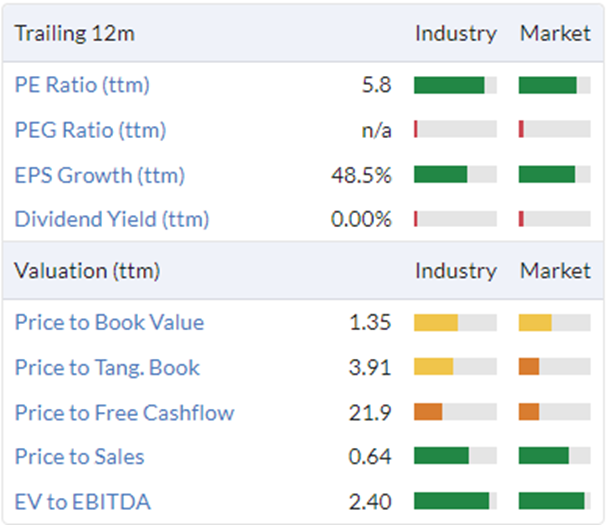
The price to free cash flow figure looks to be due to one-off working capital adjustments. And as with many other high-quality companies, the low Stockopedia rating for price-to-book is inversely correlated to the high return on capital figures. The other figures are outstanding and show how cheap the company is on earnings measures.
The only issue is that, without broker forecasts, these are all historical measures, whereas other companies in the market will also be rated on forward-looking figures. Given the lack of forecast, particular attention needs to be given to trading momentum and any outlook statements from the company.
Risks
Given the controlling stakes, the biggest risk here appears to be a lowball management takeover offer or delisting. While the controlling shareholders have a history of treating minority shareholders fairly, they can effectively do what they want with the company.
While the company has traded well recently, economic conditions are weak, and the company will not be immune to these factors. Without forecasts or clear guidance from the company, investors merely have to trust management to deliver. Their recent track record under current leadership has been very good, but looking further back, the performance has been much more variable.
Finally, the company suffers from risks associated with further digitisation. In some ways, this trend has run its course, and readers often still value physical books when space isn't an issue.
Recent Trading
Quarto doesn't issue separate trading statements or do shareholder presentations, so I am reliant on the 2022 Annual results issued on the 31st of March for any insight into current trading. Here they said:
Quarto remains in a good financial position with a strong pipeline of new title publishing for 2023 and beyond. Our large back catalog is a significant strength and continues to perform well. We feel confident in our ability to navigate the challenging market conditions expected of 2023 and in the broad appeal of our books.
Our people culture has been a focus in 2022 and will remain so during 2023. Attracting and retaining high-caliber staff is vital for the long-term health of the business.
We remain confident and focused on delivering a sustainable, profitable business for the future.
That is a pretty vague but broadly positive statement. Despite the mention of challenging market conditions, I would expect the company to do at least as well as it did in 2022, if not better. After all, the outlook statement that accompanied their 2021 results was almost identical, and 2022 was a year where they delivered almost 50% EPS growth.
Sentiment
The Momentum Rank is strong but not exceptional:

The share price has been positive compared to the market over all recent periods:
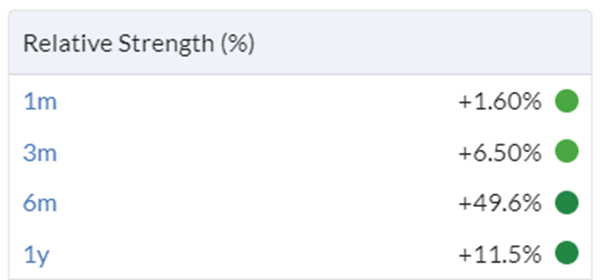
This reflects the solid recent trading performance that is unusual in the current market. Only nine UK companies, excluding Energy, Basic Materials & Financials, grew EPS at a similar rate with an EV/EBITDA of less than three last year. The price is significantly above its 200d moving average, which helps. Only a drop from its recent 52-week high lets it down:
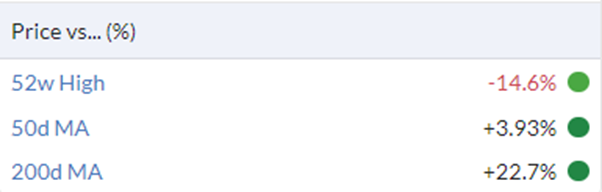
However, without earnings forecasts in the market, the Stockopedia algorithm cannot use Earnings Momentum Factors, such as EPS estimate upgrades, in its ranking process, as it might with other stocks.
Conclusion
Very few companies trade on a P/E of less than six, having grown EPS by almost 50% during 2022, which has been a problem year for many companies. Even fewer have done so with a Return on Capital that has averaged over 20% over the last four years. However, there are some reasons for investors to be cautious with Quarto. EPS growth has been driven by a move to higher margin imprints and tight control on cost. The top line has shrunk in real terms, meaning the company struggles to invest new capital at these very high rates of return. In addition, there are no forecasts in the market, which can make comparisons to other stocks difficult. Perhaps the biggest elephant in the room is the presence of a controlling shareholder CK Lau, who holds over 50% of the equity. Together with Italian publisher Giunti, who hold 20%, these parties have significant control over the future of the business. Due to these factors, the share price has largely tracked the increase in earnings without any multiple re-rating. For any significant re-rating to occur and drive exceptional shareholder returns, then one or more of the following factors is likely to be required:
- A longer track record of sustainable growth
- The introduction of forecasts into the market
- The return of a significant dividend payout
Even without a re-rating occurring, the momentum in the business should continue to drive good shareholder returns, making this a real SuperStock. Although, one that should never be a large part of an investor's portfolio given the associated risks of having a controlling shareholder.
[Disclosure: Mark owns shares in Quarto (LON:QRT) ]
Disclaimer
This is not financial advice. Our content is intended to be used and must be used for information and education purposes only. Please read our disclaimer and terms and conditions to understand our obligations.

9 comments
This hasn’t aged too well. Commentary and rankings have missed the risk here as shown by price action today
Yes, I found the H1 numbers a little disappointing on the sales and earnings, with LfL sales down around 10%. Although, there seem to be some specific reasons for this - primarily some destocking by Amazon and custom sales in the US being delayed. This means that H2 looks to be better than H1, so I still think they will be able to do around 25c for the full year, unless there is further significant deterioration in consumer confidence. This is down quite a bit on the previous year but not disastrous.
The positive is that free cash flow has been excellent at over $10m in the 6m period versus a $60m market cap. The bulk of this has come from the better collection of receivables, but these now match payables in size, and there is still $20m of inventories, so this doesn't look like an unsustainable move in working capital. They haven't achieved it by cutting back on book development either, as investment here matches amortisation. This cash flow means that they have paid down all long-term debt and now have $9.3m net cash, completing the de-risking exercise started by the current management team.
In light of this, the reaction to the H1 results looks a bit of an overreaction to me. We have gone from a historical debt-adjusted P/E of around 6 when the article was written to a forward cash-adjusted P/E of under 5 at the current share price (if I am right about H2 being stronger). Even in these small cap markets, that is a stand-out valuation for a company that isn't in financial difficulty. Valuation alone is a poor indicator of short-term returns, though, and of the factors I said I'd like to see in the article:
...they have slightly blotted their copybook on the first, and there is no news on the other two. So still work to do if they want to see this return to previous highs.
Mark, have you seen this comment from the company's Auditor Mazars? "The Quarto Group, Inc. filed its Annual on Apr 26, 2023 for the period ending Dec 31, 2022. In this report its auditor, Mazars, gave an unqualified opinion expressing doubt that the company can continue as a going concern." https://www.marketscreener.com...
I can't find any other sources for that news story besides that website.
Is that a comment from Mazars or a comment from that website. Have a look at the actual audit report - where they do not express a going concern concern.
Hi Shipoffrogs, just had a quick read-through of the audit report and you are correct, as I can't find any issues mentioned/implied in that article.
However, the impression from that news story and how I read it, implied the auditor had an issue, not the website proving the news. However, now reading the report I'm not sure where that 'news story' is coming from.
Sometimes, you get autogenerated content that misses the point. Or is perhaps old content. When they had large debt and the change of control occurred, they may well have had a qualified audit. I don't have any concerns in this area today, nor do the auditors today, it appears, but a reminder that it is always worth reading the audit report. Thanks.
thanks Mark for a very thorough analysis. i thought also you were very balanced of the risks and rewards. i am a long term holder in a profitable position and have decided that the risk reward is still attractive for my strategy - i agree with you that it is higher risk, and higher reward type investment.
a couple of extra points from me...
director and NED salaries are modest which also gives further 'evidence' that mgt are not taking advantage of their controlling power.
secondly, i work on the simple basis that mgt will try to make money for themselves. thus i agree that one scenario is that they try to buy on the cheap - i also see this as low possibility. another scenario is that they start to pay dividend to give them some return - this i think would increase the valuation. my last scenario is that the best way for them to make money is by acquisition, and the best way to make acquisition is to do so with highly rated equity i.e. now that the ship is stabilised.. they have more incentive to tell the recovery story, maybe even give fcsts to the market.. this will increase the rating which will allow them to buy businesses more cheaply because they are using higher valued equity. i.e. if they got the share price 20 per cent higher it would effectively save them 4m on a 20m acquisition. not a prediction from me but one possible scenario.
lastly, the chart trend looks very much like a multi year head and shoulder bottom i.e. despite all the risks you highlight, the underlying trend is net buyers which is particulalry impressive becasue relative to the small cap market that is massive momentum.
fingers crossed, thanks again for the detailed dissection. disc i hold
Great article. Thanks so much. A useful and reassuring analysis. This has been one of my few successful investments in the last two years. High Stocko rank and my own analysis flagged this one up, and it has been interesting that it is hardly discussed. I know that a few people have bailed out because of the ownership and the risks that you highlight. I am sitting tight for now, as I think that the potential further upside is worth the risk at the moment.
Excellent article - thank you.