Reporting season: Forewarned is forearmed

Despite this modern age of real-time communication, there is still significant anticipation (and nervousness) for what might be uncovered during reporting season. Forewarned is forearmed during this crucial time for DIY investors, so be prepared with this checklist for when the numbers drop.
1. Know when your companies will report: Just like preparing for exams, it is best you focus your immediate attention on those businesses due to report first, as focusing on late reporters may avert your attention from more pressing concerns.
To help you with this we have compiled a report calendar for this season.You can click here in order to read it. Note: We have compiled this list ourselves so if you notice a glaring omission please let us know.
For more obscure cases, be sure to look for this information within companies’ investor relations pages or within any recent announcements. If no normal date is provided, use the previous year as a guide. Very rarely do companies differ too much in terms of timing year-on-year
2. Research Estimates: Though ignored by sceptics, now is a critical time to pay attention to earnings estimates. In most cases this will be an annual report, meaning an analyst can only get 6 months wrong as interims have been reported.
Thus far consensus estimates are for flat earnings in FY23. Despite downgrades outstripping upgrades this confession season, the market has already been normalising estimates over the past three months. Look for margin compression as the most worrying sign. Margins are the profit compounder, so without them, irrespective of where revenue sits, things will be a challenge.
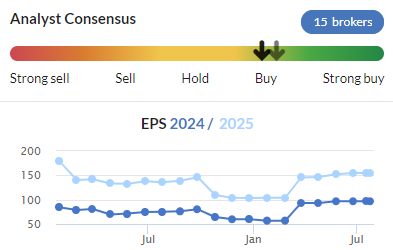
Look for stocks that have seen upgrades since their last report as that is the best indicator the the “market view” on the business has been improving.
Positively, most analysts underestimate expected earnings so as to avoid being disastrously incorrect. Look at the US example, currently they are seeing more beats than misses and all this supports the market rally during what is expected to be the worst earnings results since the depths of COVID.
4. Know the Industry Trends and current macro environment: Understanding the broader trends in the industry and economy can help you prepare for earnings. For some, this is more obvious than others but understanding what is occurring within a sector is essential for holding any stock potentially impacted to appreciate its result in context.
I like to run simple screens with just the criteria “Economic Sector” and “Absolute Price Change 6m”. So what I do first is select a sector and then select price change greater than 0. I then run on the same sector a filter of absolute price change less than 0. What I am trying to do is get a sense of what has been happening in each sector since the last reporting season. This can be a lot more enlightening that just looking at a broad index made up mostly of the Big Miners and Banks.

Note: The first economic sector in the list is “Basic Materials” of which there are 704 companies. Only 164 (23%) have done better than 0% - what does that tell you?
If there have been more outperformers in a sector than losers for the last 6 months, research why has that been the case? Are risks to the upside still? And vice versa if there have been more losers what is going on? Does that pose a risk to any of my holdings in the sector?
What is most profitable (and challenging) is often finding the best performing stock in the worst performing sector, that surprises. What investors hope to avoid is being in the worst stock in the best sector, as that can potentially amplify losses.
5. Review Previous Earnings and Performance: While past performance is not an indicator of future performance, when it comes to companies - I believe good things happen to good businesses. Cited by academics and investing experts as the secret to finding an earnings compounder, long term investing can often be as easy as identify a great business and stick with it.
Empirical studies over many decades show on average good stocks outperform bad ones from previous years. So focusing on companies who are fundamentally sound, creates a platform for continued performance, if statistics over decades are to be believed.

For this I like to look at the company's previous StockRank over many years (at least 5). I can do this by changing the time period on the chart on the StockReport page. I want to see whether my quality long term holdings have a higher rank as part of the Stock’s DNA or is it a potential once off.
During reporting season I will keep my eye on individual ratio changes. The obvious benefit is when a company has reported you can see whether your company has improved or weakened. But I also keep my eye on it if the company hasn’t reported. Why? Because if a factor, say Quality starts to weaken and it hasn’t report, it means everyone else is doing better than before and it bodes well for a possible surprise. If on the other hand say Momentum is improving, but the stock is not really moving, then that means those in its industry may be weakening and therefore this may be a potential problem.

6. Listen to Earnings Calls: Access to companies has been democratised through conferencing software. When I started as an investor such access was on available to a privileged few. Even when managing money, I often only got an invitation if we had funds in the firm.
But nowadays with the proficiency of conferencing technology the invitations are open all. Even those who don’t hod the stock. If your companies offer this, make it a must-view. Management will discuss the results and take questions from analysts. These calls can provide a wealth of information, including further colour on management's outlook for the future and how they're addressing any current challenges.
Most companies will have call details posted at the same time as their result. Some are even taking the opportunity to tell us know the details of the call. Don’t just pay attention to the words from the company, listen to the style of questions analysts are asking as that can be an indicator as to what the “big money” is looking at.
An example for this reporting season is REA Group who on Tuesday 25 July included a link to the webcast to support the report announcement. Go over you companies and have a look. Hint: Often these announcements are not price sensitive so you will have to look closely.
7. Have a Plan: Before earnings are released, plan what you will do in various scenarios. If the company misses estimates or delivers a poor result, what will you do? After all, if you ask, “What should I do now?” it's probably too late already.
So be prepared by having random scenarios planned out. Will you buy more, sell, or hold? Under what conditions? If the result was a disappointment to analysts but still good, will you top up to buy more at a cheaper price? Deciding on a plan will make for calmer decisions in and amongst the daily chaos.
For this I once again point to the Strategy Map articles Ed Croft and Megan Boxhall recently compiled. The fist of the articles can be found here and then you should read the individual strategies that suit you best. We are compiling the articles into an eBook for members for future use. But for now read the articles under the “Screens and StockRanks” section within the “Discuss” area

8. Stay Calm: Earnings season can be volatile, with stocks often moving sharply in response to earnings reports.
Just remember, the first reaction tends to be an overreaction with the reality being that the real money will take time to settle.
Therefore, if you hold a laggard, don’t panic. Regrettably you have already taken the largest part of the hit, so there is no point rushing. Rather, collect your thoughts, do your research and in a cool and calm way assess the impact of the latest numbers on the stock and its adherence to your investing plan. Then make your next move.
Important Information: Stockopedia Ltd ABN 39 757 874 670 UK business registration number 0637267 (“Stockopedia”) is an Authorised Representative of Daylight Financial Group Pty Ltd ABN 77 633 984 773 (“DFGPL”) which is the holder of an Australian Financial Services Licence (AFS Licence No. 521404).
Information in this commentary is current as at date prepared unless otherwise stated. However, please bear in mind that investments can go up or down in value, and that past performance is not a reliable indicator of future performance. For more Important Information please refer to the Disclaimer section of this website.
This communication may contain general financial product advice. It has been prepared without taking into account your personal circumstances, and you should therefore consider its appropriateness in light of your objectives, financial circumstances and needs before acting on it.
If our advice relates to the acquisition or possible acquisition of a particular financial product, you should obtain a copy of and consider the Product Disclosure Statement (PDS) before making any decision.
Disclaimer
This is not financial advice. Our content is intended to be used and must be used for information and education purposes only. Please read our disclaimer and terms and conditions to understand our obligations.
2 comments
Enlightening, Thank you
Good tips, thank you