Screening for turnaround stocks

In a recent discussion with other Stockopedia writers, Megan mentioned that Value-Momentum had been the best-performing strategy in the Stockopedia database. I was initially a bit confused. We typically refer to such stocks as Turnarounds. However, when I look at the long-term performance of the Turnaround StockRank Style stocks, they aren’t particularly great:
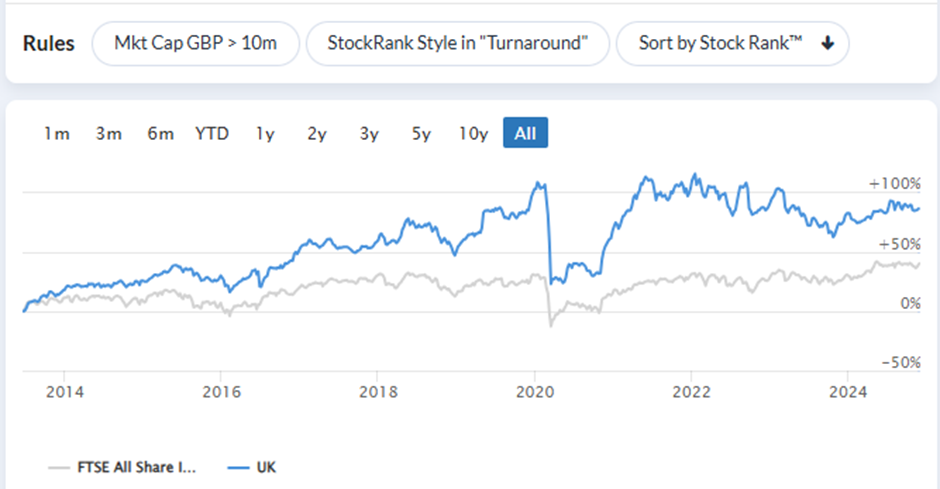
The clue to this mystery is in how few Turnaround Stocks there are:

What is happening is that this StockRank Style is excluding SuperStocks, those that also have a high Quality Rank. When we ignore the Quality Rank and just look at the highest combined VM Rank the results are completely different:
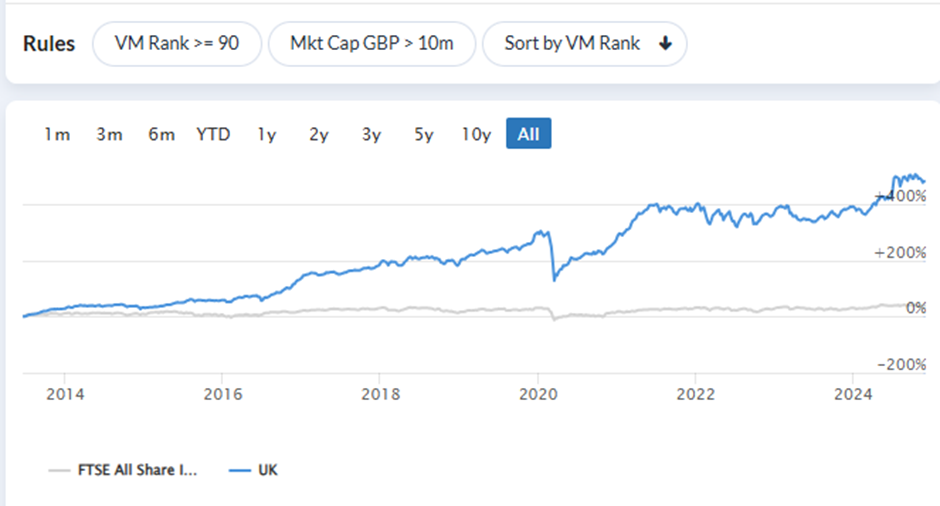
This makes sense. Turnaround investors will be looking for cheap companies that have started to show signs of outperformance but that the market hasn’t fully priced in that yet. Such companies may have yet to show high returns on capital, and improving prospects may not yet have appeared in all the financial metrics. However, there is no reason to exclude companies where this has happened (and hence, the Quality Rank is high), yet they are still modestly priced.
The high-VM Rank even beats the pure QVM StockRank Strategy:
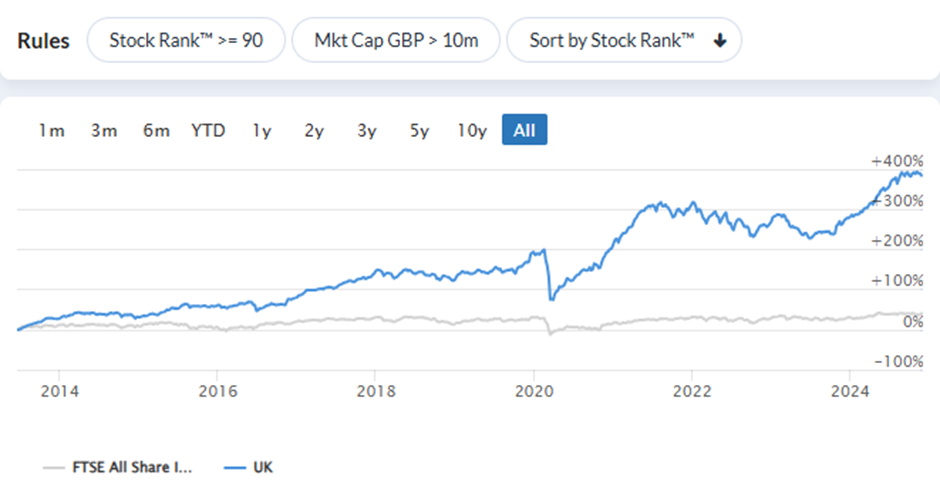
I think it is worth considering why this may be the case. Firstly, this could simply be by chance. However, looking at the graphs, the outperformance of the high VM stocks appears to be because they don’t drop as much in difficult years. The VM strategy outperforms in 2018, 2020 and 2023 (although it doesn’t completely escape the carnage of the COVID sell-off). This could be very useful for investors because down-years are much more likely to cause investors to switch strategies unnecessarily. It seems that by demanding high VM, the strategy avoids stocks that are superstocks mainly because of their Quality-Momentum characteristics. These may be great performers a lot of the time but are susceptible to rapid reversals during weak markets.
Screening for Turnarounds
Knowing this may well be a great investing strategy, I can build a screen to find potentially interesting investments that have strong VM characteristics at the moment:

In addition to this, I have added a couple of criteria that I think make sense. Firstly, I want stocks whose share price has been underperforming over three years:

This means I am avoiding stocks with stale momentum and hopefully identifying those with much further to recover. The second additional criterion I have added is the requirement for forecast EPS to grow, ensuring that the current momentum is backed by positive fundamental changes:

Finally, I exclude collective investments as these metrics don’t tend to be useful for such entities:

The Results
This Screen currently generates 20 UK results with a market cap greater than £10m:
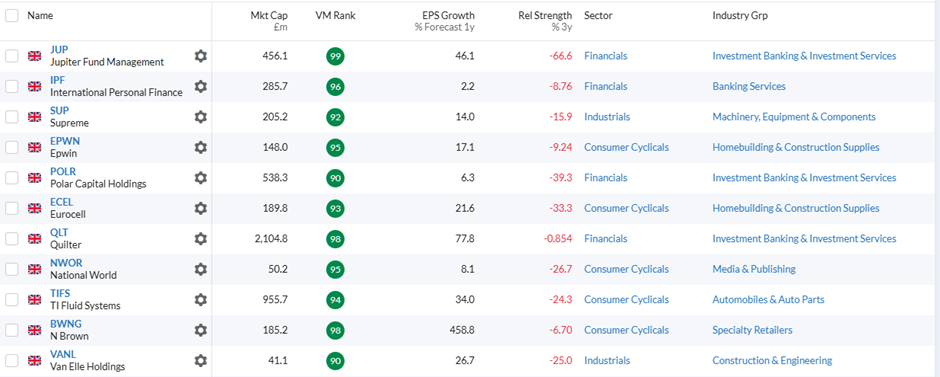
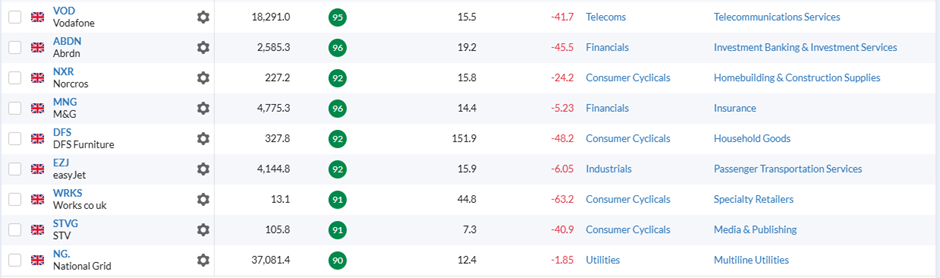
Two of these currently have an agreed takeover offer: TI Fluid Systems (LON:TIFS) N Brown (LON:BWNG) . So, it is not worth analysing these further.
It is also interesting that fund/wealth managers feature heavily in this list with Jupiter Fund Management (LON:JUP) Polar Capital Holdings (LON:POLR) Quilter (LON:QLT) Abrdn (LON:ABDN) and M&G (LON:MNG) . Roland recently reviewed this potentially attractive sector here. So I won’t go over the same ground. Here’s a quick look at the rest:
The shares
International Personal Finance (LON:IPF)
International Personal Finance came up when I wrote about Charles Kirkpatrick’s methods. At the time, the algorithms rated it as the best stock in the UK universe, with a 100 StockRank. Since then, the price has dropped around 20%, reducing the Momentum Rank. However, the StockRank is still at 99.
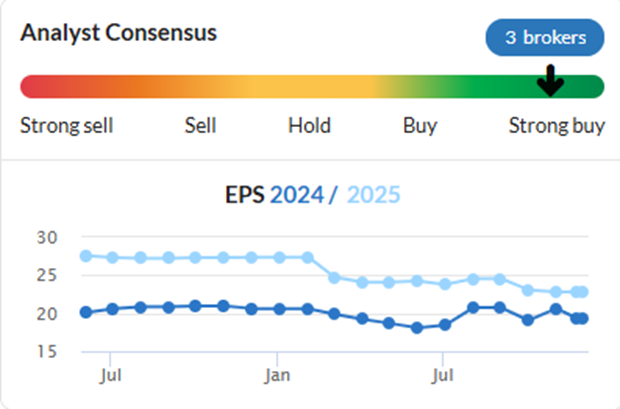
My concerns that the strong momentum wasn’t necessarily backed by improving fundamentals remain. Recent broker forecasts have also moderated somewhat:
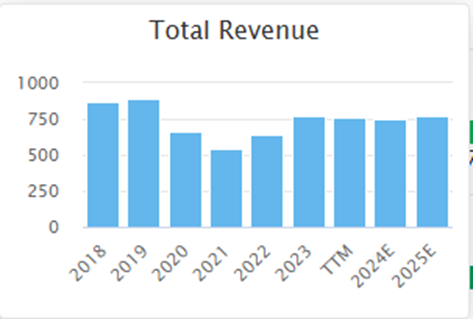
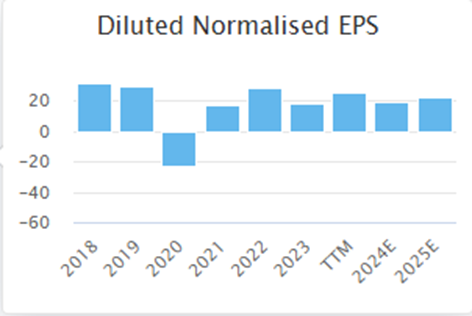
As does my concern that this is a plodder. There is little in the way of top or bottom-line growth over the long term:
However, they have a well-covered dividend that is being increased, and the shares now yield close to 9%:
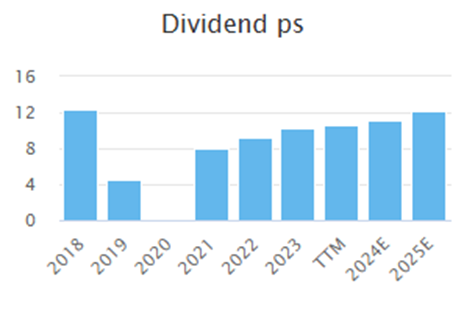

So, this will definitely appeal to income investors, and following the recent fall in share price, the valuation may be too cheap to ignore.
Supreme (LON:SUP)
A P/E of 9 for a company with these revenue characteristics seems far too low:
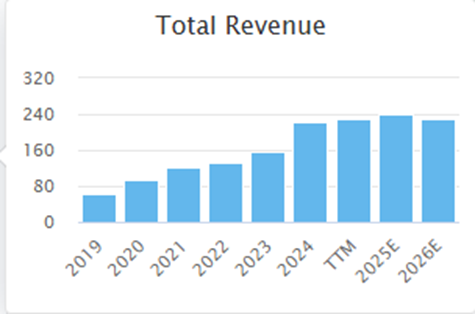
Especially when it has grown without requiring significant amounts of capital:
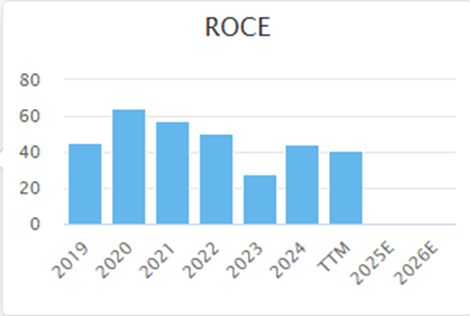
One explanation may be that EPS hasn’t grown as quickly and is forecast to be flat going forward:
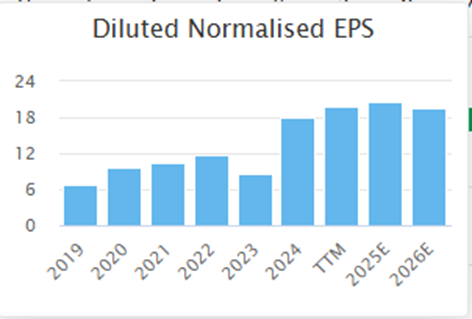
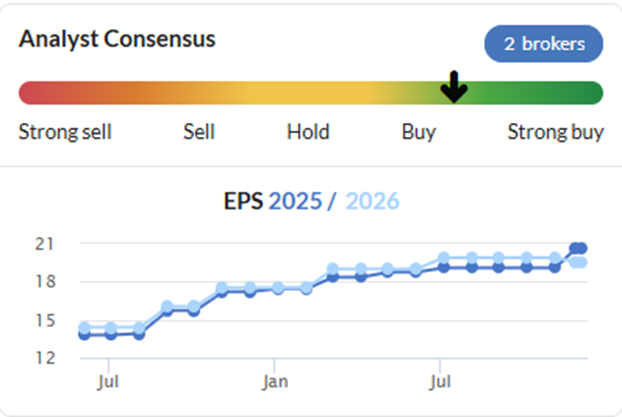
However, with a broker EPS consensus trend that looks like this, it may well be simply a cautious approach to forecasting:
It is cash-generative, allowing it to do deals, such as the recently announced acquisition of Typhoo Tea from administrators. However, there is a sting in the tail. Half of their gross profit in H1 comes from the Vaping category:
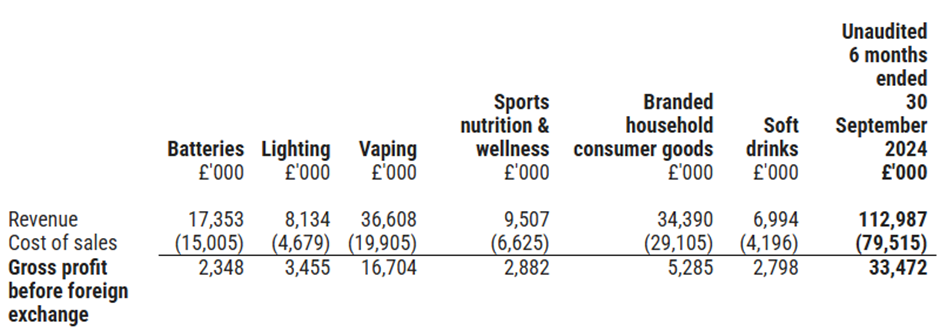
This is increasingly focussed on non-disposable vapes, as they are due to be banned in July 2025:

However, I don’t think further regulation can be ruled out, especially if refillable vapes are treated as disposables by users. Plus, their distribution agreements are not in the Vaping revenue category:
The revenue for third-party disposable vapes, ElfBar and Lost Mary, is reported separately in our Branded Distribution category and totalled £30.3 million for the Period (H1 2024: £26.4 million), an increase of 15% as a result of having this distribution for the entirety of the Period versus only three months last year.
Overall, around 2/3rds of their gross profit is from vapes, and 20% of their gross profit in H1 was still from products that will be banned shortly. This will be a risk too far for many investors.
Epwin (LON:EPWN)
Ed recently highlighted Epwin as one of the clearest trending UK small caps:
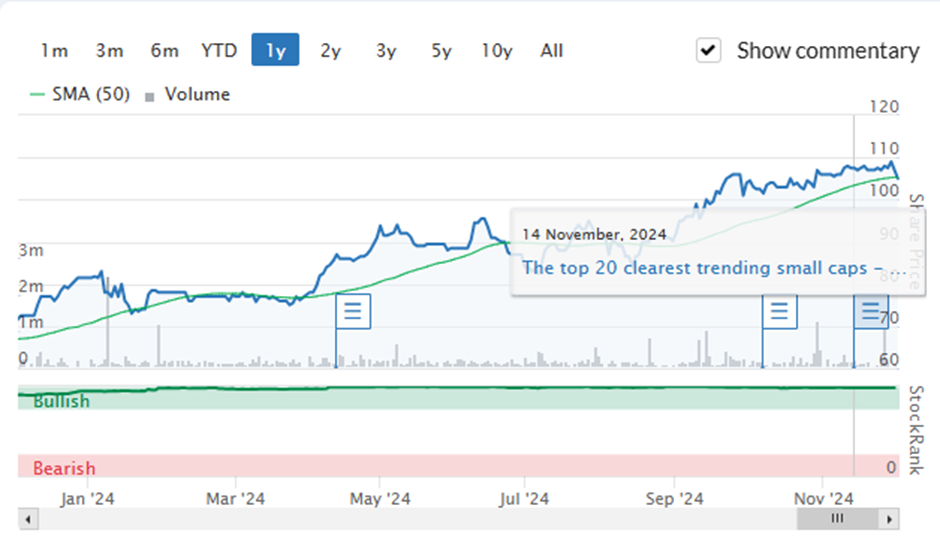
The strange thing is that it is really hard to find out why the stock has been doing so well. The broker consensus has very minor upgrades:
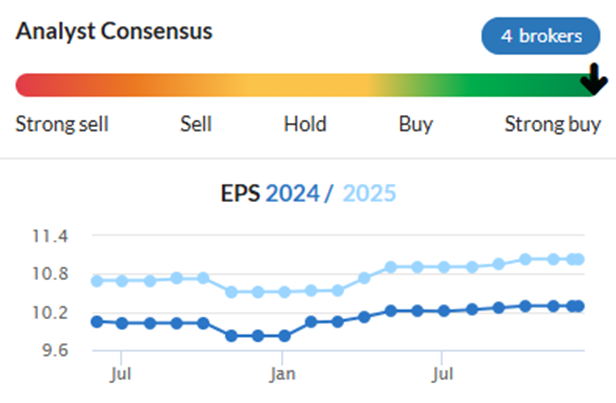
And while the rating is indeed reasonable:
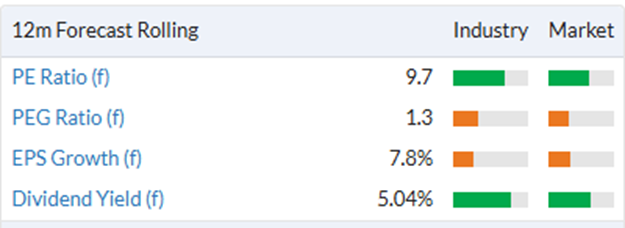
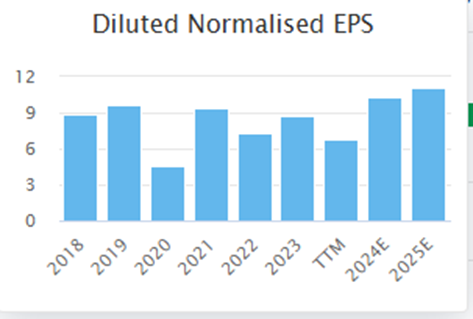
It is not outstanding for a company with fairly lacklustre EPS growth:
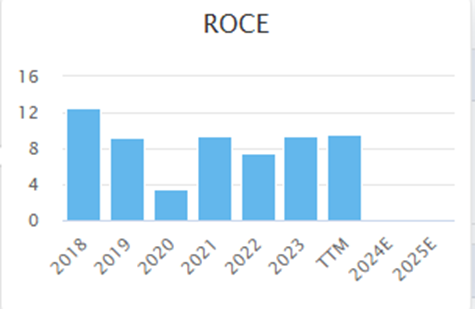
And perhaps more worryingly, a historical Return on Capital that’s probably below their cost of capital:
Presumably, the expectation is that a government committed to building a lot more housing will drive demand for Epwin’s products; however, that is outside of the forecast window. Investors only need to look at the recent share price of housebuilders to see what happens when the market prices are in a strong recovery that takes much longer to arrive than expected. Here is Persimmon (LON:PSN), for example:
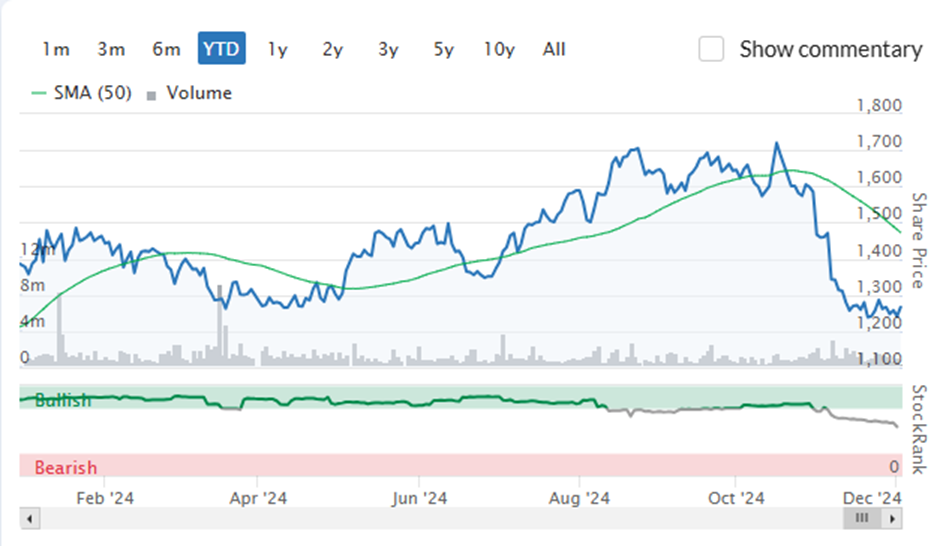
Trend followers will want to hang on in Epwin (LON:EPWN), but unless the fundamentals also start to show positive momentum, they will need a hair trigger to get out when the price momentum starts to fade
Eurocell (LON:ECEL)
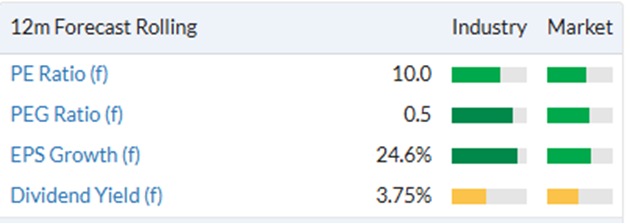
Eurocell is another building products supplier that has done well this year:
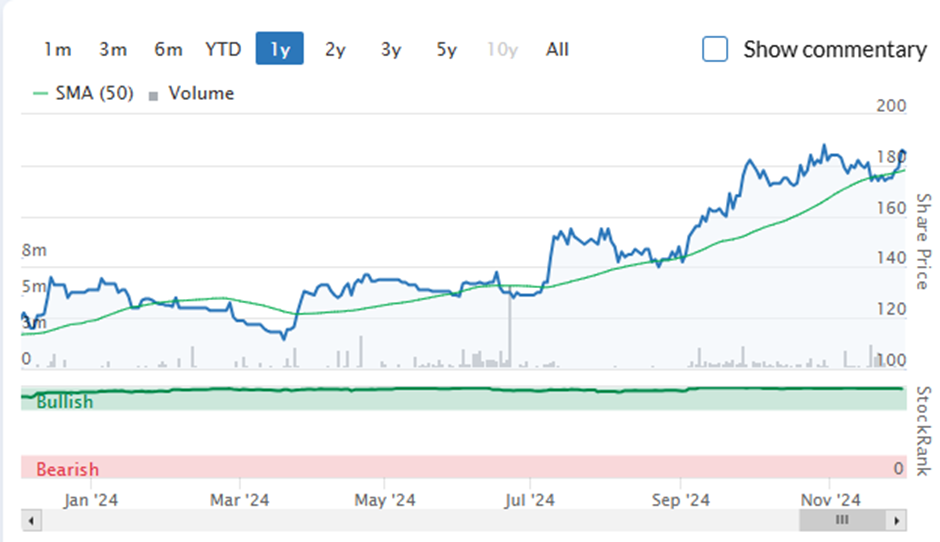
However, unlike Epwin, this rise is backed by improving fundamentals:
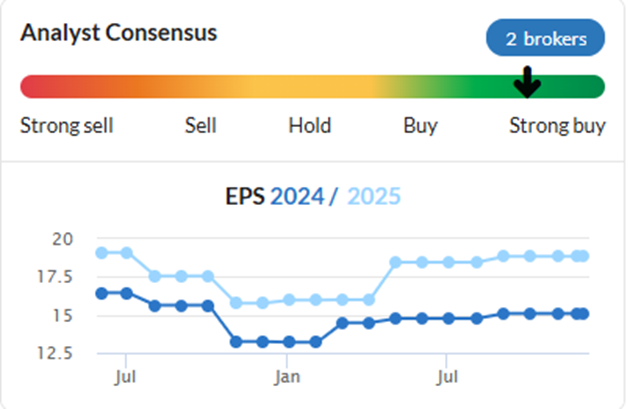
However, it is worth noting that this improvement doesn’t appear to come from improving sales:
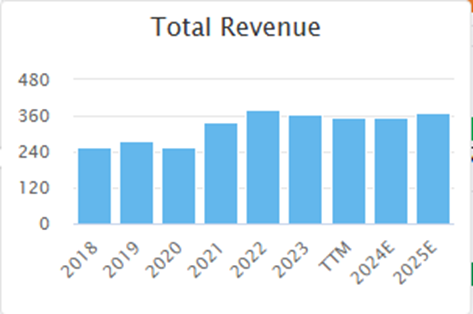
This means the recovery in EPS comes from cost-cutting or other operational improvements:
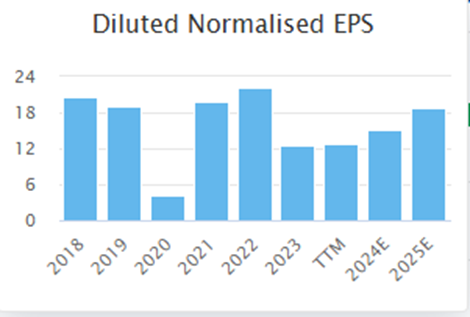
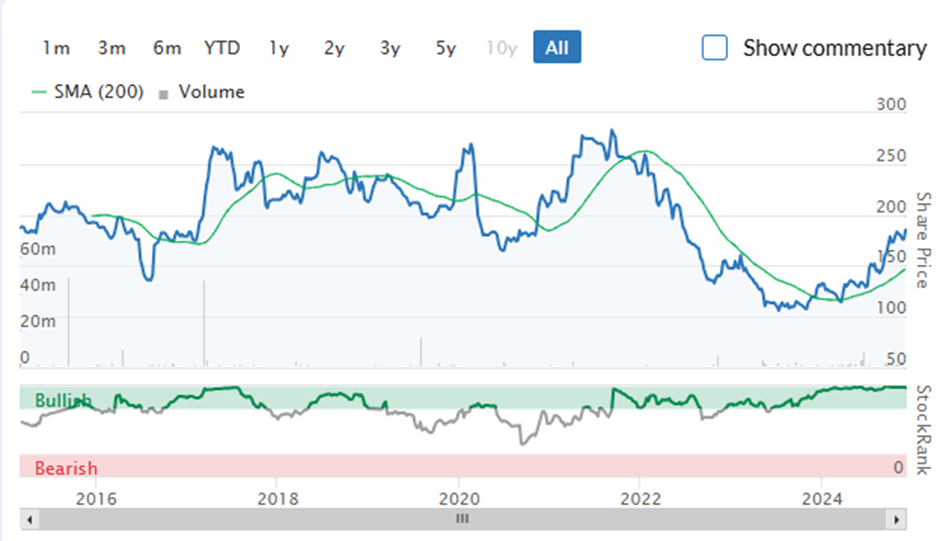
The company was equally profitable in 2019 on lower revenues, so there may well be further scope for improvements. The cheap rating that is picked up in the StockReport is based on forecast figures. The historical P/E is 15.
The current momentum points to the shares approaching their long-term high of around 250p, giving a 25% upside:
However, further gains will almost certainly require them to grow the top line. Something they have been unable to do in recent years.
National World (LON:NWOR)
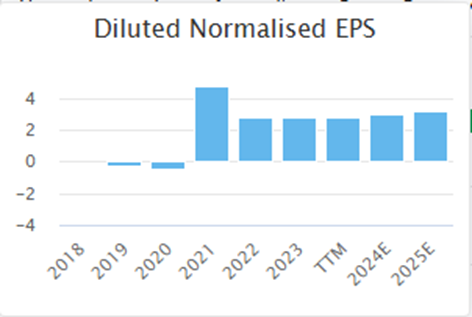
I wrote up a StockPitch for National World in April 2023. Since then, not much has changed fundamentally. The company continues to consolidate in the publishing industry, with the aim of driving publications to a digital-first strategy. The shares remain very cheaply rated on a P/E of around 6, over 20% of the market cap in cash and a modestly growing EPS:
However, on the corporate front, things have been very different. It now seems clear that there has been a pretty major boardroom bust-up between the Executive Chair, David Montgomery and the largest shareholder, Media Concierge, owned by Malcolm Denmark. The solution from Media Concierge is to table a possible offer at 21 pence per share in cash. To become a firm offer, there are a number of obstacles, not least Montgomery agreeing to it.
Independent shareholders, such as Rockwood Strategic (LON:RKW) , appear to be urging the board to engage with Media Concierge to agree on an offer, but the 21p is too cheap. Media Concierge argues the bid is good value on the basis that:
The Possible Offer represents an enterprise value multiple of 7.2x statutory EBITDA and 3.8x adjusted EBITDA for the twelve-month period ended 29 June 2024.
And the implied multiple is:
· at a significant premium to trading multiples for both National World and Reach PLC, a larger, UK-listed, UK regional newspaper competitor, which currently trade at 2.4x and 2.3x adjusted EBITDA for the twelve-month period ended June 2024, respectively as at 21 November 2024.
However, the Reach comparison ignores that half the operating cash flow there goes to the pension fund and probably will for the foreseeable future, so it is actually much more expensive than it seems.
The company has responded that it believes that Media Concierge have acted inappropriately, for example:
In addition, entities affiliated with Media Concierge are currently inappropriately withholding revenues due to the Company totaling £4.4 million.
Something Media Concierge deny. So, all of this is a bit of a mess. In the long term, investors have a business that all interested parties seem to think is worth more than the current share price. However, in the short term, a failed bid and an upset major shareholder could see the price fall back down towards recent lows. This makes it a special situation, and investors need to take a probabilistic approach to the various outcomes rather than pure valuation metrics.
Van Elle Holdings (LON:VANL)
Van Elle is a cheaply rated company:
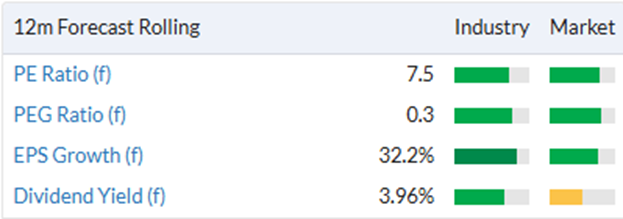
However, this is another one that needs to hit future forecasts to look this good:
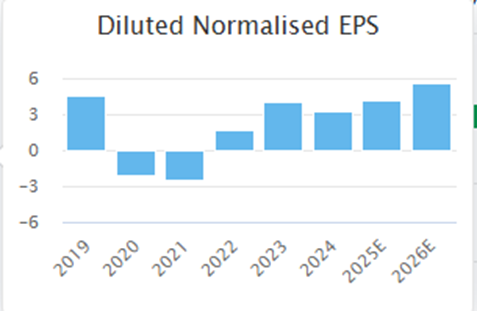
Their recent AGM update doesn’t give much short-term hope of that:
Market conditions in the first four months of the new financial year were challenging across all of the sectors the Group operates in. There are early signs of a recovery in the housing market, with increased enquiry levels and order intake expected to translate into higher revenues in the second half. Delays from the implementation of the new Building Safety Act and general construction sector uncertainty should ease during the balance of FY2025. The transition between Network Rail control periods continues to impact UK rail volumes, with activity levels expected to normalise in the second half.
However, there are reasons to think that most of these headwinds will become tailwinds in the future. Their broker, Zeus, is forecasting an EV/EBITDA of just 1.3 for FY27. Of course, investors need to take far-year forecasts with a pinch of salt, but there are good reasons for optimism. Van Elle is early in the housebuilding process, so we will see the impact of any uplift here before other firms. Rail and other infrastructure projects are at a nadir due to the regulatory cycle. Their Canadian operations, for which they have expensed significant start-up costs, will also start to generate revenue soon.
Perhaps the biggest argument that this remains significantly undervalued is that it trades at a big discount to tangible book value:
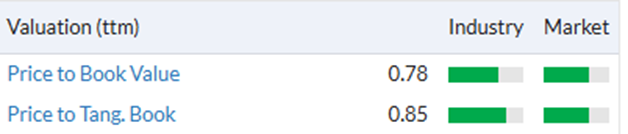
By contrast, much larger competitor Keller (LON:KLR) trades on almost three times that:
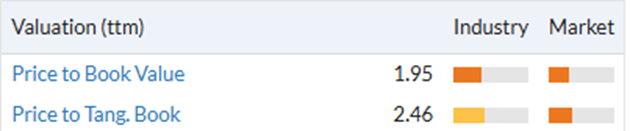
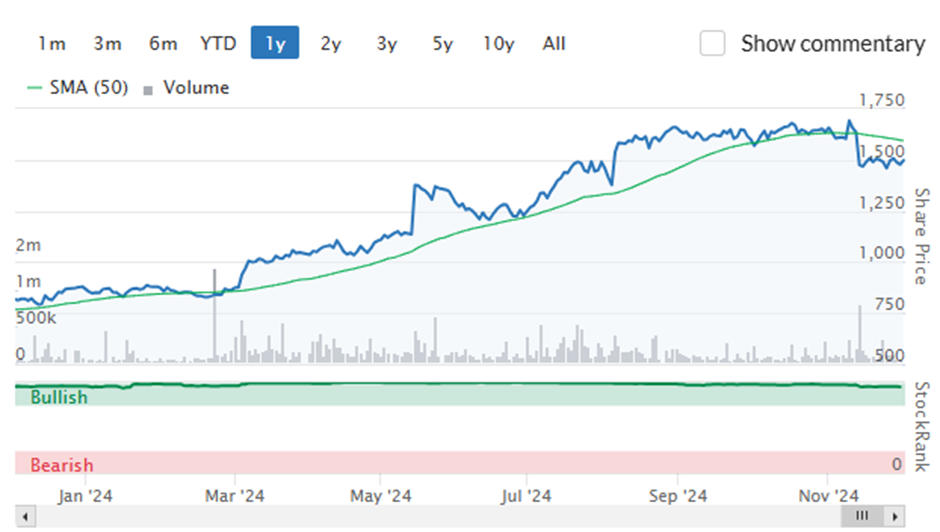
Having done very well this year:
Due to upgraded forecasts:
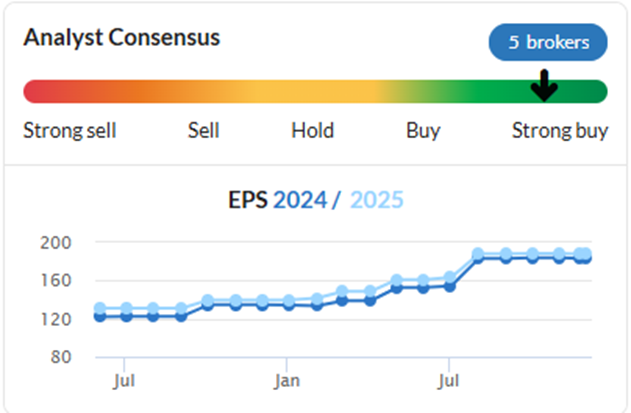
Unless Van Elle Holdings (LON:VANL) can make their assets productive soon, I can’t help feeling that someone like Keller (LON:KLR) will come along and do it for them.
Vodafone (LON:VOD)
Vodafone is very cheaply rated on a number of metrics:
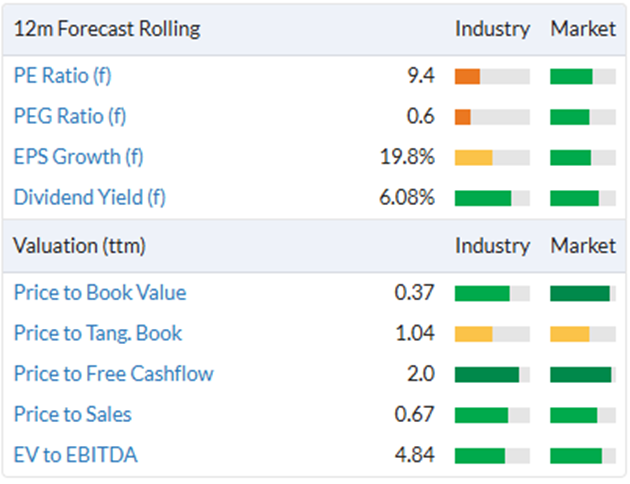
However, I can’t help but feel that many of them aren’t particularly useful for a company where debt makes up so much of the capital structure:
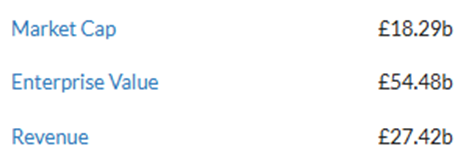
The EV/EBITDA includes the debt and compares favourably to the general market. However, this is a capital-intensive business providing communications infrastructure and a mature one, if these revenue forecasts are realistic:
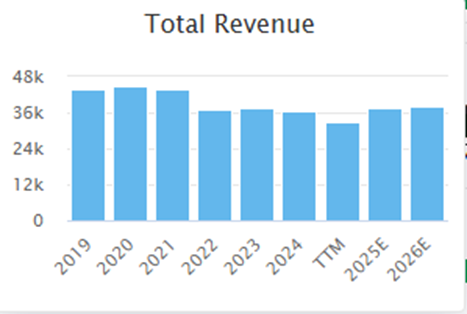
The 6% yield may attract some investors, but again, it doesn’t stand out in the UK markets at the moment.
Norcros (LON:NXR)
Norcross is another company that was featured in Ed’s recent article on clearly trending businesses:
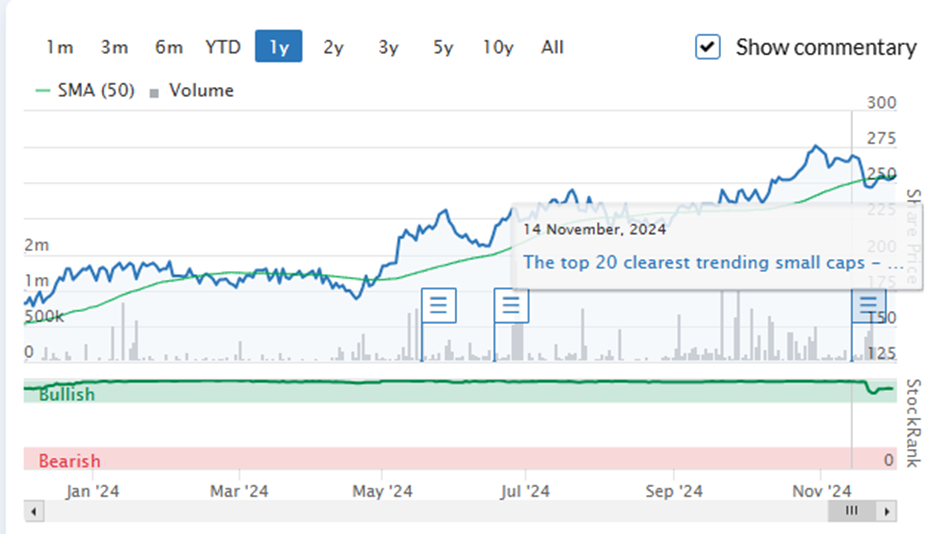
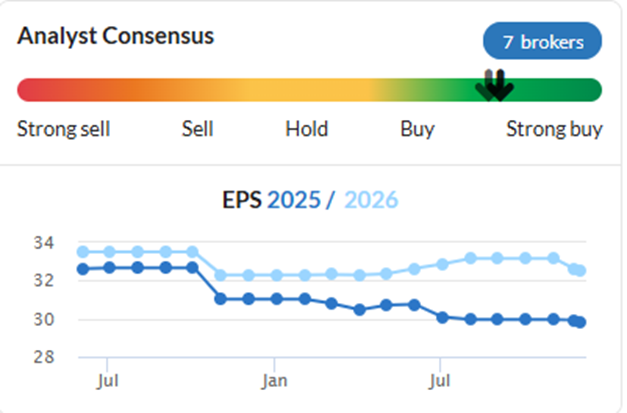
But again, it is a little bit difficult to work out what has driven this. The broker EPS trend for FY25 has been declining, and 2026 estimates are largely flat:
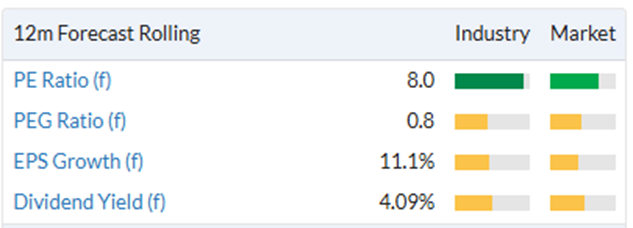
On the surface, the P/E ratio of 8 seems pretty cheap:
However, there is debt and a pension deficit that requires £4m per annum of top-up contributions. On top of this, the adjusted figures that the company and brokers like to provide may not reflect what investors care about, which is cash flow. For example, in the last half-year results, they say:
The reported operating loss was £8.6m (2023: profit of £15.3m) after deducting acquisition and disposal related costs of £25.5m (2023: £3.9m), exceptional operating items of £2.1m (2023: £1.4m) and IAS 19R administration expenses of £0.7m (2023: £0.8m).
Acquisition and disposal related costs included the previously communicated non-cash loss on disposal of £21.4m relating to the disposal of Johnson Tiles UK in May 2024. Other acquisition and disposal related costs represent amortisation of acquired intangibles of £3.3m (2023: £3.3m) and advisory fees of £0.8m (2023: £0.1m). Exceptional operating items predominantly relate to the cash costs of investment in consolidating the warehousing and distribution sites at Grant Westfield.
I’m not sure if advisory fees or the costs of combining a warehouse or pension admin should be considered exceptional for this business. That’s £3.6m. Then, taking the cash pension contributions of £2m per half-year off makes my adjusted operating profit around £12m. This compares to their figure of £19.7m. If this is the typical sort of adjustment, this makes the P/E closer to 12 than 8. Still cheap, perhaps, but not as good value as it first appears. Again, this seems like a stock that investors may well want to hold for the momentum, but they need to be out pronto if that momentum starts to fade.
DFS Furniture (LON:DFS)
This has one of the worst balance sheets of listed companies:
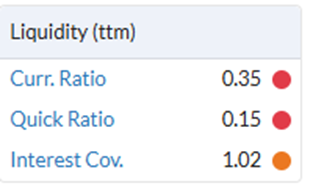
Partly, this is to do with how they receive cash from customers upfront. However, before it was taken over, SCS had the same working capital characteristics, and they kept net cash since they knew that any downturn in trading would suck in cash as working capital unwound. Not so with DFS, who have significant and rising net debt on top:
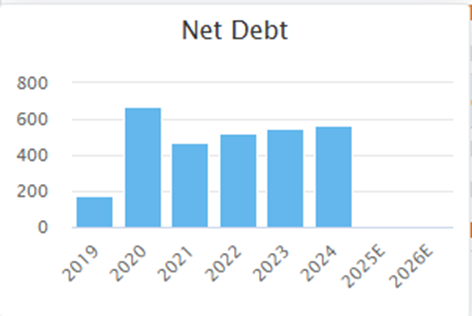
2/3rd of this is lease liabilities, but net bank debt remains significant at £164.8m in June this year. The company reported in-line sales on 22 November, which seems surprising, as most retailers are reporting very tough trading conditions. This may not last. It is tempting to hold a company with a strong momentum rank and get out if that momentum fades. However, in this case, if things go wrong, the shares will be suspended, and investors won’t be able to sell at all.
easyJet (LON:EZJ)
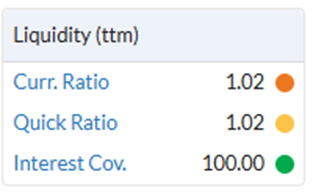
Easyjet is another company that receives customer payments upfront. This means the current ratio isn’t great but not out of line for this sort of business:
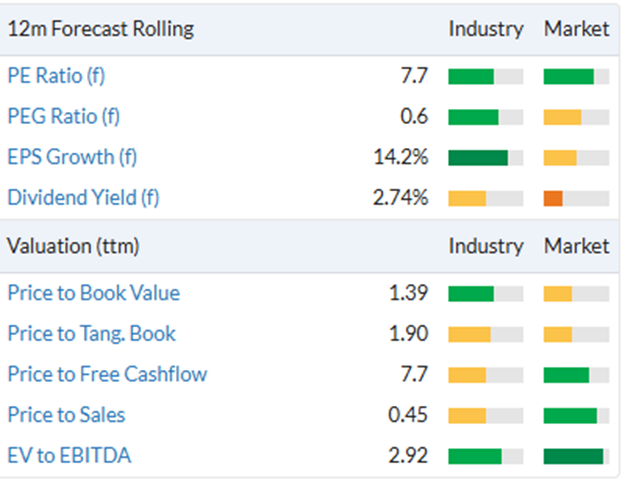
The valuation metrics here are particularly compelling:
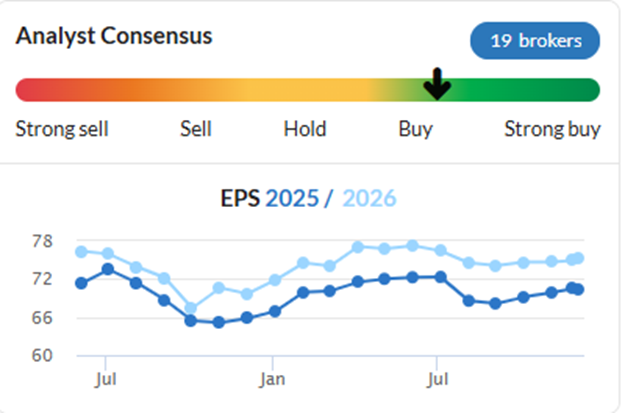
The EPS consensus has been on a bit of a roller-coaster ride. However, recently, it has been an upswing:
Perhaps the best argument for not owning Easyjet is that Jet2 (LON:JET2) looks better run, is cheaper if you account for the cash it holds, and has stronger momentum:
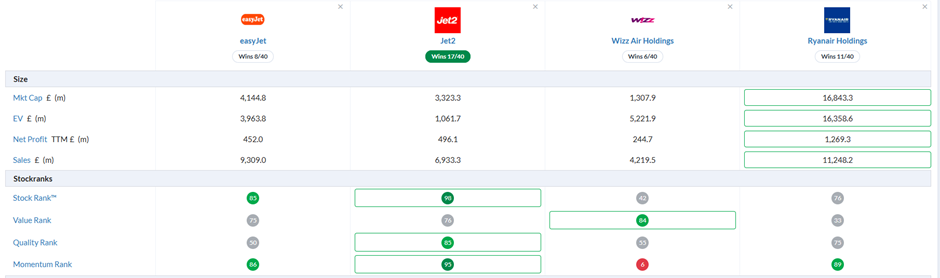
Jet2 (LON:JET2) doesn’t feature on this screen because it is already above its share price 3 years ago. However, it would still be my pick of this sector.
Works co uk (LON:WRKS)
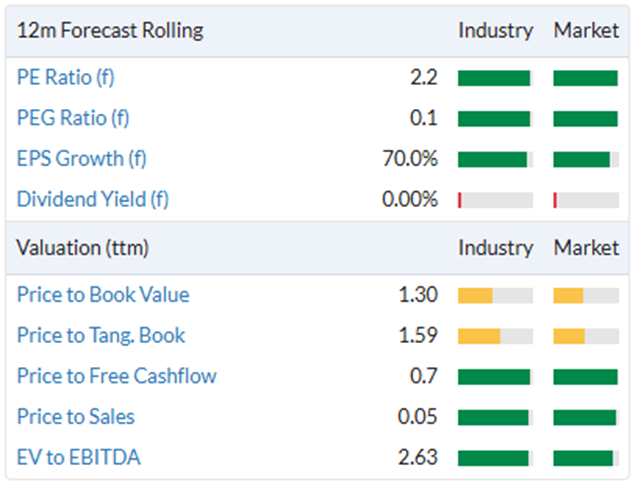
The Works is incredibly cheaply valued on earnings measures:
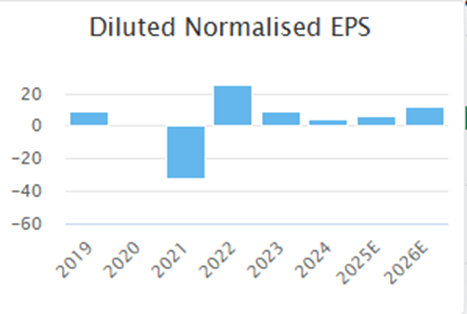
Earnings have been quite variable but are now going up again if you believe forecasts:
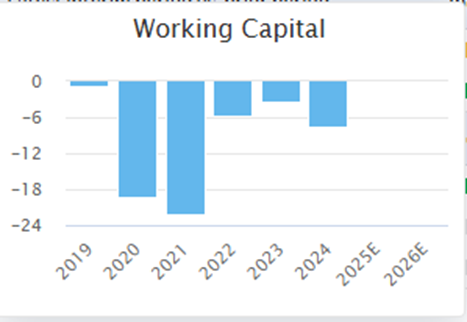
However, it appears risky, with negative working capital:
And significant debt compared to its £13m market cap:
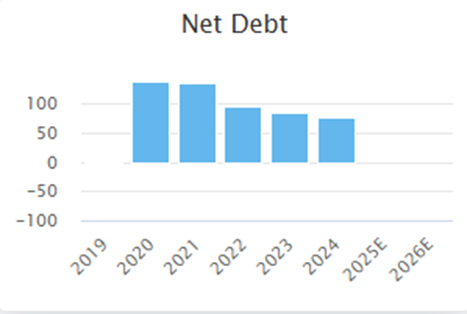
All of this is lease liabilities, and there is no bank debt. However, lease liabilities exceed lease assets by around £20m. This means that the company’s own modelling shows many of the leases on their stores to be onerous. Leases are short, and there seems to be some progress on this:
· Focused on maintaining the overall quality of our store portfolio, ensuring we have the right stores in the right locations for our customers. This included 9 openings, 24 closures, 5 relocations and 21 refits. The business traded from 511 stores at the year end, of which 96% are profitable.
· The majority of closures were of loss-making or low-profit stores where we were unable to agree suitable terms with the landlord. New stores performed in line with internal forecasts and should deliver strong payback of approximately one year.
· Successfully negotiated with landlords on FY24 lease renewals, delivering £0.8m in annual rent savings.
However, this remains a significant risk in weak consumer markets.
Perhaps the most interesting part is that activist investor Kelso group (LON:KLSO) has taken a stake, and Kelso CEO John Goold and CFO Mark Kirkland have joined the board as non-independent non-executive directors. They may well shake things up, in a good way.
STV (LON:STVG)
Again, this is a stock with some interesting valuation metrics:
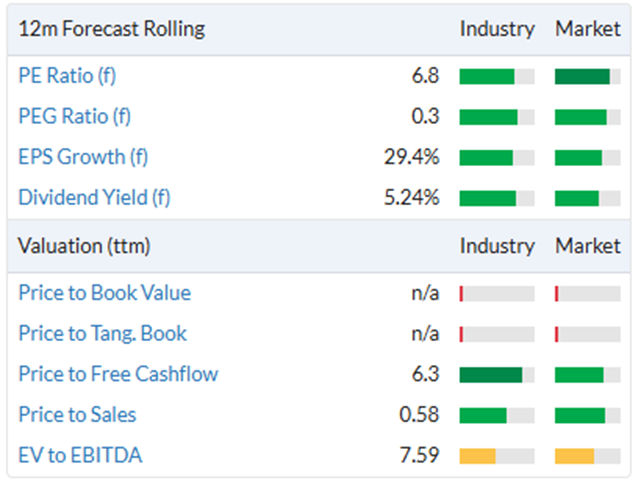
However, the Momentum Rank has been falling recently:
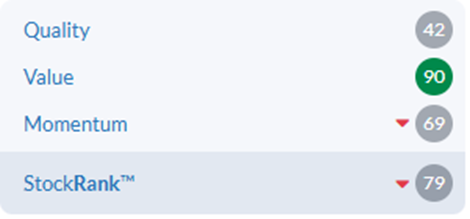
Which may give some investors pause for concern. The issue appears to be due to general small cap weakness, as the share price fall since the Summer is not reflected in broker EPS forecasts:
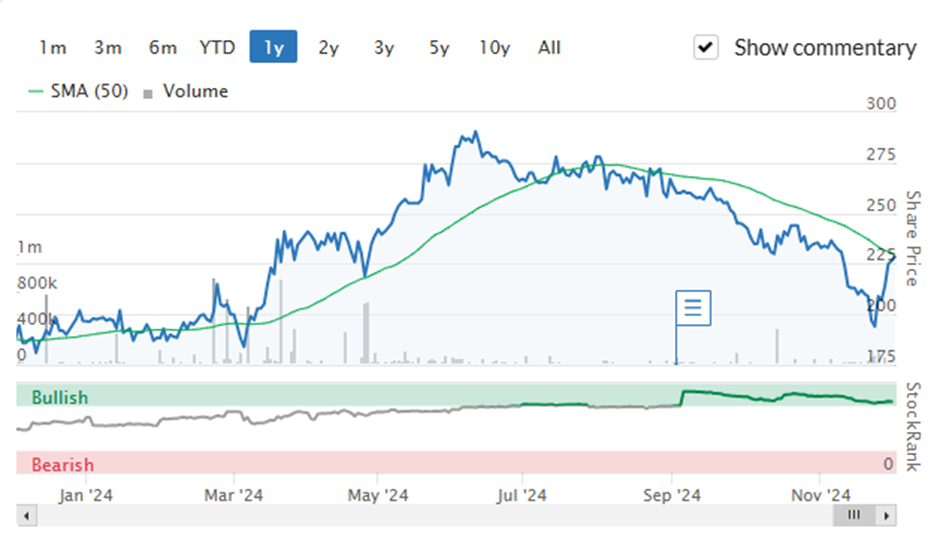
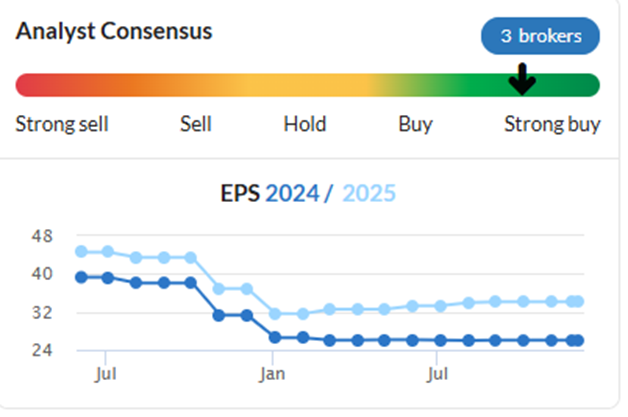
An in-line trading statement at the end of November seems to have arrested the fall and caused a 10% bounce, which may allow the Momentum Rank to climb again. One factor to consider is that there is a large pension deficit. They recently had a new Triennial valuation, which helps add clarity here:
· Funding deficit reduces to £61m from £116m in 2020 valuation
· Aggregate monthly cash contributions slightly lower
· Contingent cash contribution mechanism paused until at least 2028
Although this is a significant reduction, it is still around 60% of the market cap. This means that many of the valuation metrics need adjusting. For example, they say:
The 2025 contributions will total £10.2m, with annual contributions then increasing at the rate of 2% per annum over the term of the recovery plans, in line with the previous agreement.
This is close to the average net profit over the last few years:
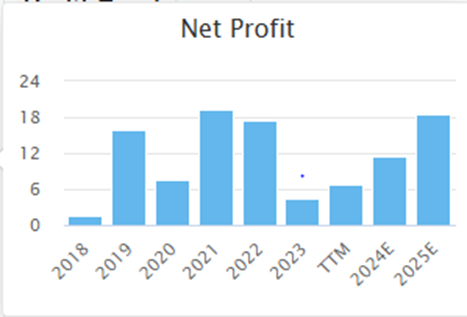
And may explain why the net debt has risen over the last few years:
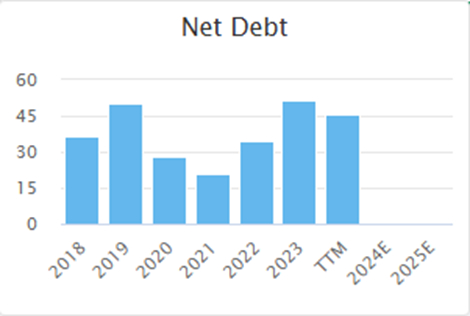
Investors will need to do more work to see what the valuation of the business looks like, including the debt and pension deficit, rather than relying on more simple metrics.
£NG
The broker trend here is impressive:
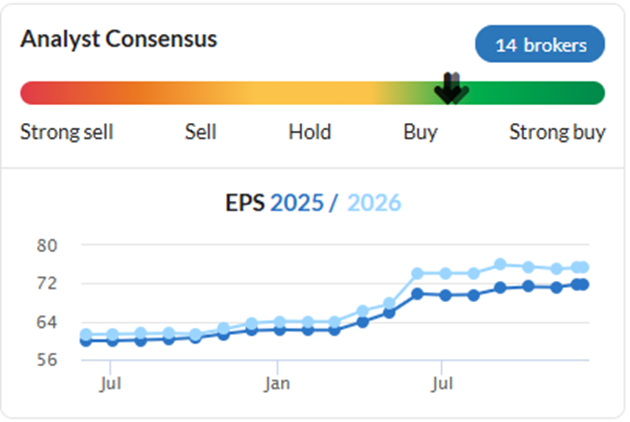
But that is about it, really. The valuation doesn’t look particularly cheap:
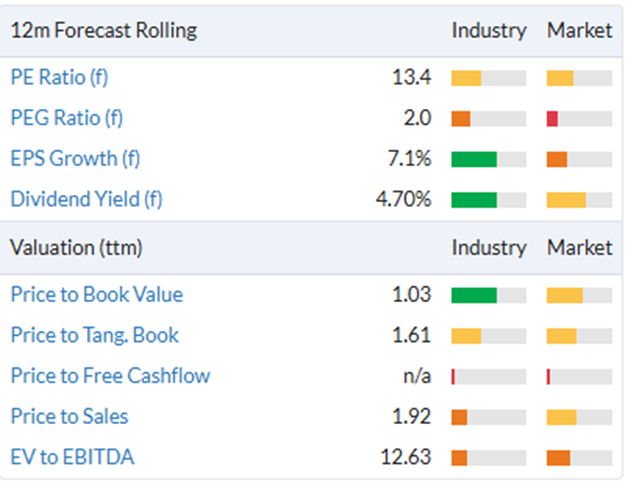
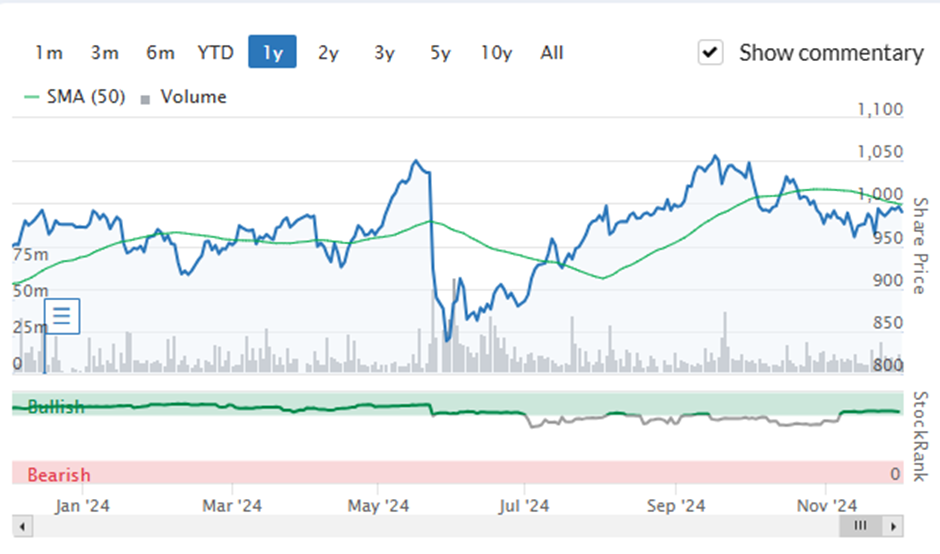
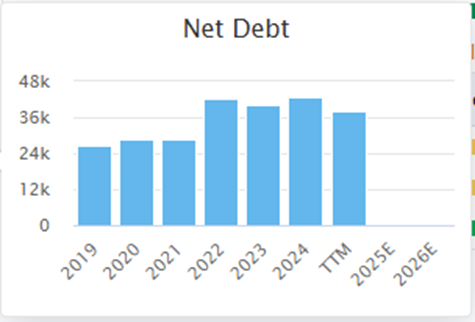
Especially when the large debt level is taken into account. Neither is the share price momentum particularly strong:
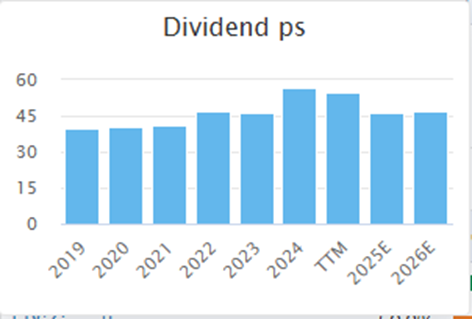
The dividend yield may attract some investors, but this has been funded from debt in recent years:
And is forecast to be cut:
I don’t see the attraction of being an equity holder here, despite what the algorithms may be telling me.
Conclusion
This screen gives several interesting value ideas that are gaining traction with investors but where the good news may not have already been priced in. In particular, International Personal Finance (LON:IPF) Eurocell (LON:ECEL) Van Elle Holdings (LON:VANL) easyJet (LON:EZJ) Works co uk (LON:WRKS) look worthy of further research to me.
However, not every stock with high Value and Momentum Ranks is undervalued. The momentum anomaly is meant to be due to investors’ underreaction to good news, but several of the companies in this screen appear to have risen despite the lack of good news. This may be because they are recovering from an oversold position, or it may just be market noise. As a Value-focused stockpicker, I struggle to buy this sort of stock. My fear of mean reversion is just too great. Others may simply buy, trusting that others know something that has yet to be revealed in the financial figures. The benefit of high V-M stocks is that, if they do, they can simply sell when the momentum fades. However, a few stocks are too risky to follow this strategy. The problem is that if things go wrong, investors will not have the chance to get out. Such stocks should be avoided, whatever their VM Rank.
[Disclosure: Mark owns shares in National World (LON:NWOR) Van Elle Holdings (LON:VANL) ]
Disclaimer
This is not financial advice. Our content is intended to be used and must be used for information and education purposes only. Please read our disclaimer and terms and conditions to understand our obligations.

17 comments
Hi Mark. You wrote: "The second additional criterion I have added is the requirement for forecast EPS to grow, ensuring that the current momentum is backed by positive fundamental changes".
Could you help me to understand where the data of "EPS Growth Forecast 1y" comes from? Does it come from wall street analysts or from the company reports? or somewhere else?
Another question: How did you create this backtesting graph? I didn't find backtesting capabilities on this website when creating a new screen.
It is under Browse > Top Stock Ranks > Top VM Rank
https://www.stockopedia.com/sc...
Thanks for the post Mark. I really like your way of thinking.
I'm kind of new to investing, so maybe my question will seem naive. You wrote: "Two of these currently have an agreed takeover offer: TI Fluid Systems (LON:TIFS) N Brown (LON:BWNG) . So, it is not worth analysing these further."
Could you please explain why these companies are not worth analysing?
Now I see that you have actually answered this question on another article which you wrote on December 11th.
Hi Shai,
Sorry, just seen this. It is a different skillset to analyse a takeover offer, where the outcomes are much more limited. I actually wrote a follow-up article explaining this: https://www.stockopedia.com/co...
Hope that is useful,
Mark
Because they are being taken over soon.
Nice article Mark, I enjoyed that, thanks
Works co uk (LON:WRKS) FYI The 2 directors of Kelso group (LON:KLSO) who joined the Board of Works have now come off having achieved their objective of moving the company to AIM from the main market and ‘strenthening’ the leadership team through a change of Chair
Thanks, AG. I should have remembered that after talking to John at Mello about Works co uk (LON:WRKS) !
I'm surprised how poor the performance is of Turnaround stocks, looking at the charts, quite a number have performed very well this year, such as the banks, Natwest (LON:NWG) Barclays (LON:BARC) Standard Chartered (LON:STAN) and Metro Bank Holdings (LON:MTRO) but l don't know when they were selected for this screen, believe it is quarterly rebalanced.
Looks like Natwest (LON:NWG) would be 2Q, so a 55% rise since then. Metro Bank Holdings (LON:MTRO) only 4Q, still a 44% rise.
Yes, the difference between Turnaround StockStyle and Top-VM Rank is stark. It seems that we can perhaps be quality agnostic, but that we shouldn't be intentionally looking for low-quality! One other nuance is that the Q and M Ranks are correlated because the Piotroski F-Score is largely a measure of Momentum, not Quality, in the academic definition. So this may explain why low Q, High VM is poor overall.
As for banks, they are a bit of a breed to themselves and don't usually work well with typical Value & Quality Factors. I tend to exclude these as I'm not a banking analyst. Perhaps non-experts should buy price momentum in banks and ignore everything else!?
I don't think so, because is 12% of 400%, if you look at the chart it is going from around 420% to 500%, has fallen back since. VM is only up 19% YTD, inc. the 12% anomaly. If so Momentum would be the top performing.
l always have problems buying VM stocks, even with NAPs when it was 10 VM and 10 QM, always had trouble finding 10 VM stocks, never a problem with QM ones. I do hold a few on the screen, Polar Capital Holdings (LON:POLR) M&G (LON:MNG) and TP Icap (LON:TCAP).
I did look at International Personal Finance (LON:IPF) but home loans in Mexico, the mind boggles, not for me.
The Top VM stats are currently being investigated by Stockopedia support, as if you look back, it went up around 12% in a day, which is possible but highly unlikely. Could be caused by a share split. I reported quite a few similar errors, which were corrected but l do have reservations about their accuracy.
Even with the 12% lift, VM (19%), is way behind Top Stockranks YTD, which is 28%, followed by top QM 22%.
VM went up 12% on 4th July 2024.
Given that this is an average of 113 companies, it is obviously wrong. I reported this to Stocko but nothing was done.
I reported it also. But I believe it just the top 25 stocks.
Disappointing that Stocko are correcting incorrect data.
Thanks for the heads up on this Rusty2 & Epitychia. It looks like VM would have still beaten all other strategies even without that 12% in a day (assuming there are no other data errors, of course!):
And the lower downside in weak markets should also be valuable to investors.