Screening For Value: High Earnings Yield Picks

In last week's article, I explained how investors might want to adjust the earnings yield for a company to reflect some of the accounting items that may not be fully reflected in a simple Earnings Yield calculation. In addition, I introduced the concept of what I call "Shareholders' Cash", which I believe is a better measure of what may be excess cash in a business:
Shareholders' Cash = Cash – Debt – Provisions – Deferred Consideration + Net Working Capital - Net Lease Liabilities
(Net Working Capital is only included when negative, and Net Lease Liabilities when Lease Liabilities exceed Lease Assets.)
By adjusting the EV part of the Earnings Yield using Shareholders' Cash (or Debt) and adjusting EBIT for any pension recovery payments, I believe investors can get a better comparative valuation between companies. In the past week, I have been crunching the numbers on the 26 companies left on the Earnings-based Screen:
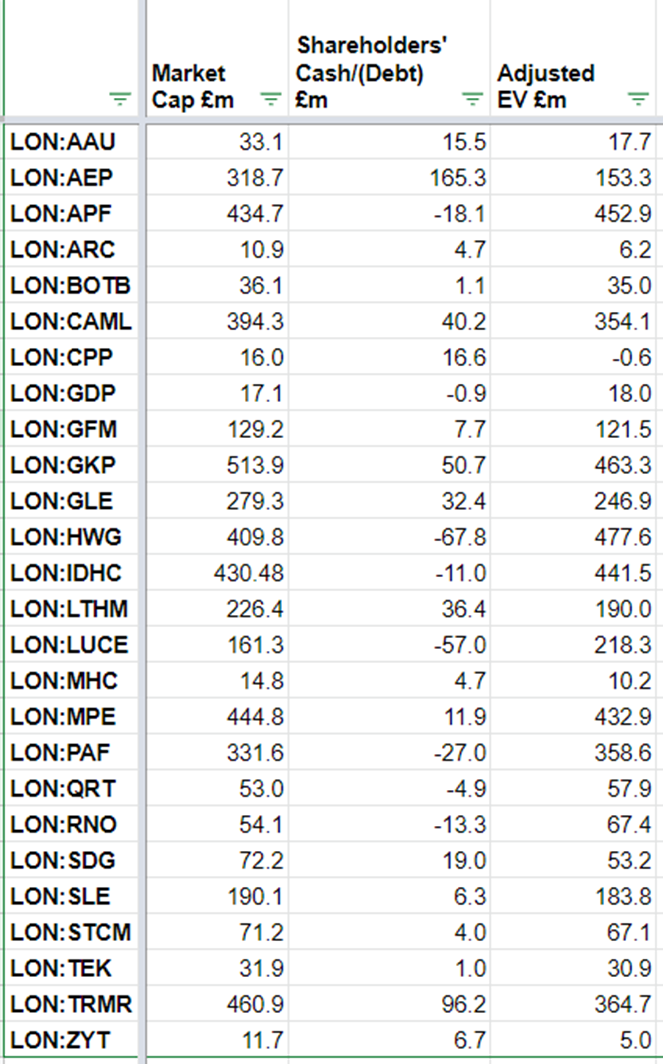
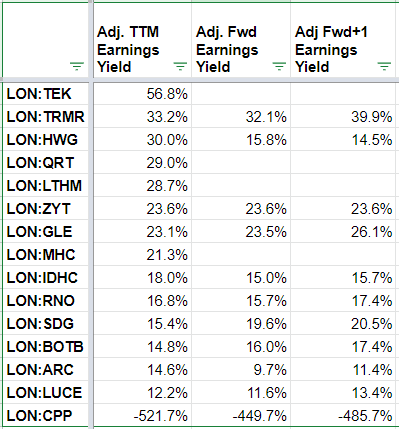
This week I am going to take a look at these companies in more detail, starting with seven of the non-resource stocks that have the highest adjusted Earnings Yield. As well as calculating an adjusted TTM Earnings Yield, I have also calculated forward adjusted earnings yields where broker forecasts or other guidance has been available:
Tekcapital (LON:TEK)
Tek Capital is an IP commercialisation company. Unfortunately, the exceptionally high earnings yield is because the revaluation of their investments goes through the income statement:
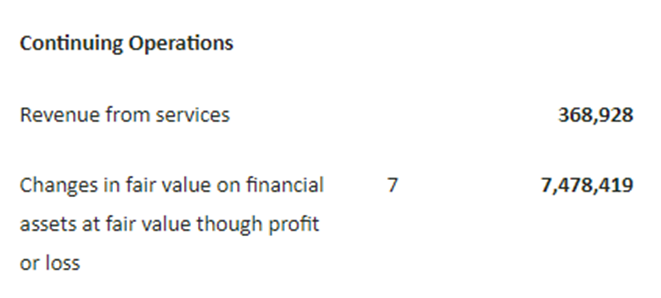
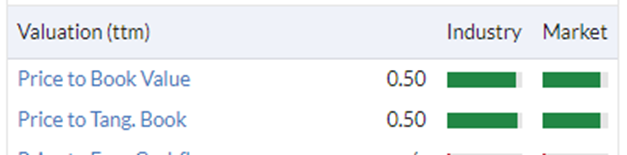
These are not sustainable cash earnings, so an earnings-based valuation is inappropriate for this company. In this case, an asset valuation makes more sense, and here the metrics appear somewhat favourable with a 50% discount to Tangible Book Value:
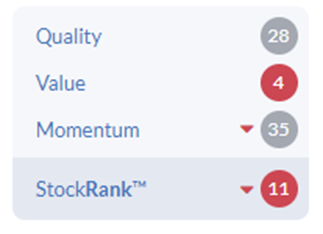
However, these investments are not the kind that usually attracts a value investor, being somewhat speculative. One of their key holdings, Belluscura (LON:BELL) is a listed company, and the Stockopedia StockRank doesn't make a strong case for undervaluation!
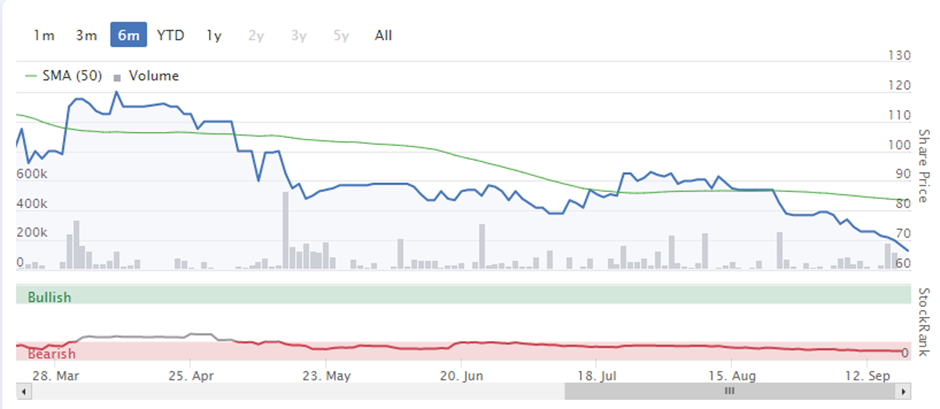
Also, the Belluscura (LON:BELL) share price has fallen since the 31st May Tekcapital (LON:TEK) balance sheet date, meaning that the discount is not as high when marked to market:
Like other IP funds, these are best left to those who have specialist knowledge about the technologies being commercialised.
Tremor International (LON:TRMR)
Tremor is an online video ad tech company. I've got to admit that I don't understand this business and how it makes money despite spending some time on it. As a result, I am tempted to simply heed Warren Buffett's advice and avoid companies I don't understand. However, here are the key bull & bear points as I see them:
Bull Points:
- A 30%+ Adjusted Earnings Yield makes this one of the cheapest stocks on the market, and the forecasts from brokers are for this to get even cheaper:
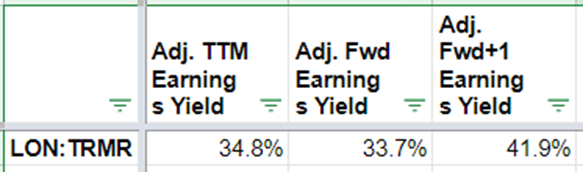
- These figures are even after I have adjusted the cash & debt for the recently closed Amobee acquisition, plus cash spent on recent share buybacks.
- The company operates in a high-growth area where competitors are much more highly rated.
- There is a significant ongoing buyback in place that has recently been scaled up and extended.
Bear Points
- The company is foreign-domiciled on AIM, which the market never likes. In addition, the company, in its current form, is a merger between Taptica and what used to be known as Blinxx. Questions were raised in the past about how sustainable Blinxx's business model was.
- The company has never paid a dividend despite holding large cash balances. The Amobee acquisition was partly funded by debt. Having large debt and large cash balances is an inefficient way of operating a balance sheet.
- The Amobee acquisition looks less than compelling when judged against Tremor simply buying back its own shares.
- A recent SCVR Comment suggests that Tremor has lost market share due to losing access to a key data supplier. The implication is that the management has not been wholly upfront about explaining this.
Overall, the rating appears simply too cheap, but the risk that something goes wrong at some point is significant, and investors will have little to no warning of this in advance. Therefore, investors who are tempted to risk investing in something they don't fully understand should do so with a small position size only.
Harworth (LON:HWG)
Harworth describes itself as "a leading regenerator of land and property for sustainable development and investment". As a property company, this is another case where the high earnings Yield is potentially misleading since it relies heavily on asset appreciation going through the income statement:
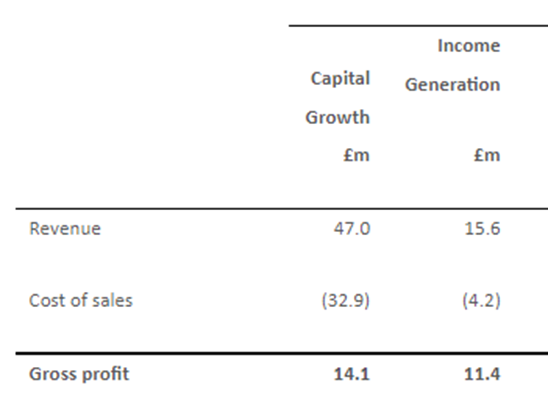
Although in this case, they say, "Increased Capital Growth revenue, which primarily relates to the sale of development properties, reflected accelerated land sales." So these gains are realised rather than unrealised, which adds certainty to them.
Discount to Tangible Book Value is the better valuation metric here, and unlike the more speculative early-stage companies of Tekcapital (LON:TEK), property is something a value investor would consider. The discount of 37% to TBV looks good, but Stockopedia shows this is simply average for listed property funds:
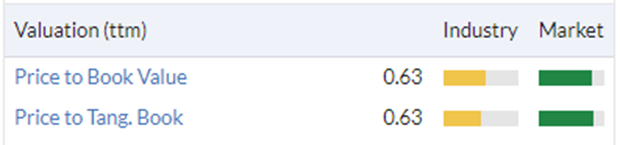
The dividend payout ratio is low, too, with a yield of just 1%. Clearly, this is not a REIT, and they are paying significant corporation tax on the profits from their income and asset disposals. This means they should trade at a discount to REITs, as they will be less attractive to investors with access to tax-sheltered accounts such as SIPPs and ISAs.
Although it appears conservatively run, the non-REIT structure of the company means that I see little reason to prefer Harworth to other similarly-valued listed property companies.
James Latham (LON:LTHM)
James Latham is a timber distributor. While this sounds like a particularly dull business, this has a long track record of conservative, steady growth. Moreover, as a well-run AIM company with operations in the UK, it has often attracted funds designed to mitigate inheritance tax. It is, therefore, surprising to find such a well-regard business popping up on a deep value screen. However, it doesn't take much investment research to get the feeling that the 2022 results, which are generating the TTM adjusted Earnings yield figures, may be somewhat exceptional:
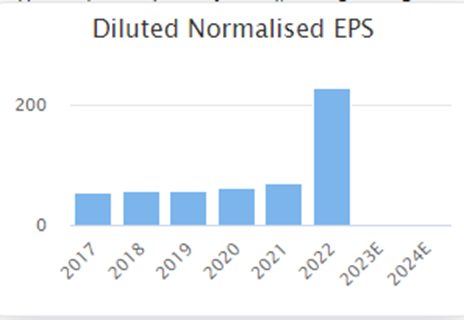
This is partly due to First-in-First-Out (FIFO) accounting rules. When a company is mainly a distributor and immediately passes on costs, a rising inflation environment means their products earn money just sitting in the warehouse. While inflation rates vary between product types, and timber has been particularly volatile, investors should be wary of distributors not currently making bumper profits. In such cases, if sales are flat and prices are rapidly increasing, volume must have fallen off a cliff. There are no such worries with James Latham, however, where sales are up over 50% year-on-year. Helpfully they split this into volume and price:
Like for like volumes taking into account working days and acquisitions, increased by 11.9%, with the growth equally on delivered business from our own warehouses and direct volumes shipped from the ports or from the manufacturers. The cost price of our products is on average 36.2% higher (2021: 7.6% higher) than at the start of the financial year.
However, with timber prices now starting to fall, this effect will reverse, and they are likely to see their sales fall and FIFO acting as a drag on profits. Helpfully, operating cash flow tends to look through these changes since the exceptional profit gains tend to go back out the door again in increased inventories and receivables.
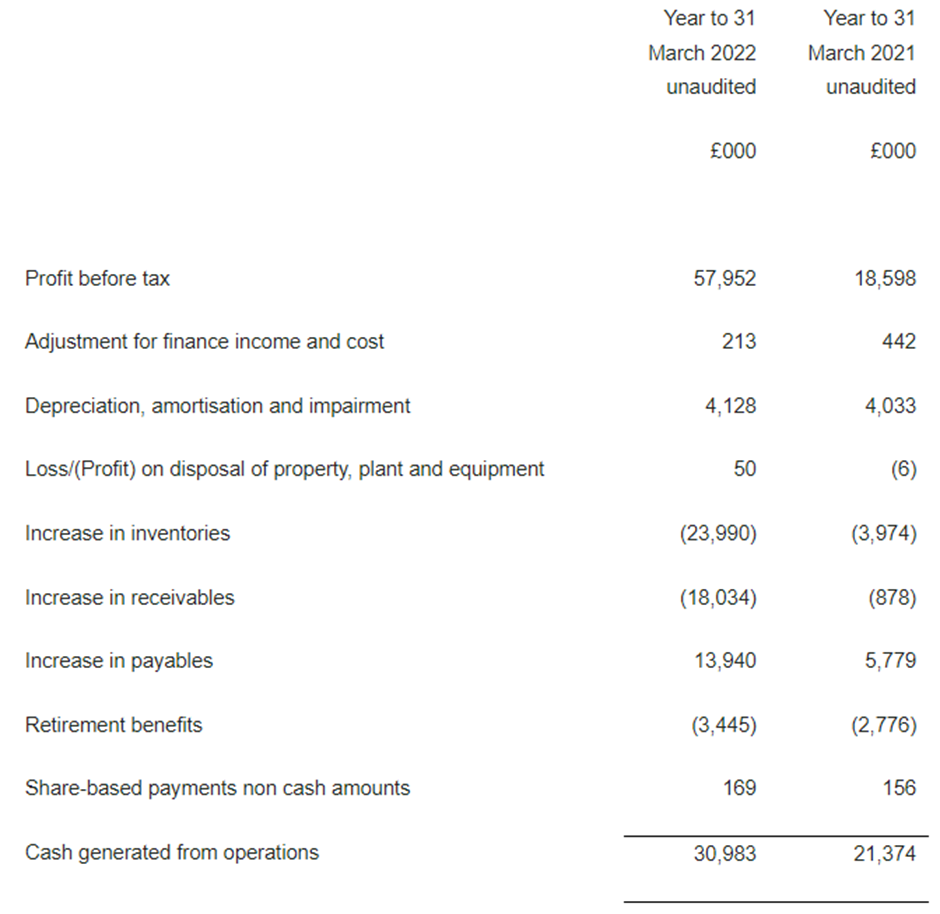
Taking the £31m cash generated by operations instead of the £58m profit before tax gives an adjusted TTM OCF yield of around 16%. Not as stand out as the 29%, but still excellent value for such a well-run business.
However, despite knowing that the working capital flows are likely to reverse when price inflation abates, with no forecasts in the market, there is the risk that volumes will drop significantly too. This is what they said at the AGM at the end of August:
Revenue for the first four months of the current financial year, namely 1 April to 31 July 2022 is £142m. This represents an increase in sales per working day of 15% compared with the same period last year. Prices continue to be the biggest driver of the turnover increases but with volumes slightly down on the same period last year.
The outlook seems to be getting worse, too:
Our customers remain busy but we are now starting to see signs of weakness in some sectors, as inflation, reduced consumer confidence and higher interest rates are dampening demand. There is a small rise in bad debts and in customers needing more time to pay suggesting a more difficult second half of the financial year, as we have previously indicated.
So, some volume reduction should be the central case. Even if trading drops to 2021 levels, £21m of operating cash flow would be an 11% adjusted OCF yield. Making James Latham appear too cheap to me. The market hates declining revenues and uncertainty, so there is no guarantee that the share price won't drop further when FIFO accounting delivers much-reduced profits at some point in the future.
Quarto (LON:QRT)
Quarto is a non-fiction book publisher. This is a challenging sector, and the company struggled to cut costs to reflect the new reality of the publishing business. In 2017 net debt increased as operating profit declined. This led to a boardroom bust-up in 2018, with founder Laurance Orbach returning as Chairman. However, this led to a change of control and gave the banks significant extra influence on the company. In the end, another large shareholder, CK Lau, underwrote the debt and took the helm as Interim CEO. In early 2020, Lau underwrote an open offer to rebuild the balance sheet. This tumultuous transitional period is finally over, and the company has new management and board. Although no longer CEO, Lau remains a significant holder and a recent buyer with over 50% of the equity (as a US-domiciled company, the takeover code doesn't apply here).
Despite its challenges, the company always generated significant operating cash flows. The issue was that these were continually reinvested back into capitalised pre-publication costs. However, the 2020 fundraise plus renewed capital discipline means that the latest results show net debt that was $64m in 2017 is down to just $5.6m. (It was $10.5m at the year-end.) So the company looks much more financially strong than in the past.
The half-year results also show that EPS has more than doubled since last year. This strength has led to the 28.5% TTM Adjusted Earnings Yield I have calculated. There are no forecasts in the market, but H1 is typically the weaker half. However, the Half-Year results contain a sting in the tail when it comes to the outlook:
As we move into H2 this financial year, we expect to see a turbulent second half of the year, with the cost-of-living crisis impacting both the US and UK trade sales. We are also seeing a sharper fall in online sales than expected, impacted not only by the increased cost of living, but as the consumer returns to purchase books from the traditional book stores. Business to business sales is continuing to hold firm, with particular growth through the custom channel. However, we expect this channel to become increasingly more challenging.
Sales and costs are impacted:
Whilst the volatility in freight has reduced, costs remain at the high levels of last year, along with pressure on print prices. We continue to try to mitigate these costs and have actively increased our use of local print suppliers as well as review our inventory policy, to ensure we print at the most efficient quantities. We expect this pressure on print and freight to continue for the foreseeable future.
So, H2 is highly uncertain. They are taking actions to focus on their core business:
We have taken the decision to close our Distribution Service, where we provide Sales & Logistic services for third party customers, which will start to impact our sales from July 2022. We have also decided to sell Smart Lab, our Toy imprint, in order to focus on our core publishing business.
Perhaps the right actions, but reducing scale by exiting low margin distribution only works if you can take out the corresponding costs too.
Smartlab is valued at $2.3m in the accounts. So this sale, plus operating cash flow, could see the debt eliminated here shortly, putting the company on a firm foundation to weather any storm. Some may not like the 50% controlling shareholding of CK Lau. However, he appears to have always treated minority shareholders fairly. His financial backing also acts as a stabiliser for the business. This company looks good value for investors willing to look through the short-term uncertainty.
Zytronic (LON:ZYT)
Zytronic makes touchscreens. These can be the small screens for ATMs or parking meters, but their real speciality, and the high margin business, is making large or uniquely shaped screens. Their typical customers for these have been museums, vending machines and casinos.
The company has been listed for almost two decades but remains a microcap, which isn't always the best of signs. There was some excitement about the company in 2017, causing the share price to rise to £6. However, that was unusual:
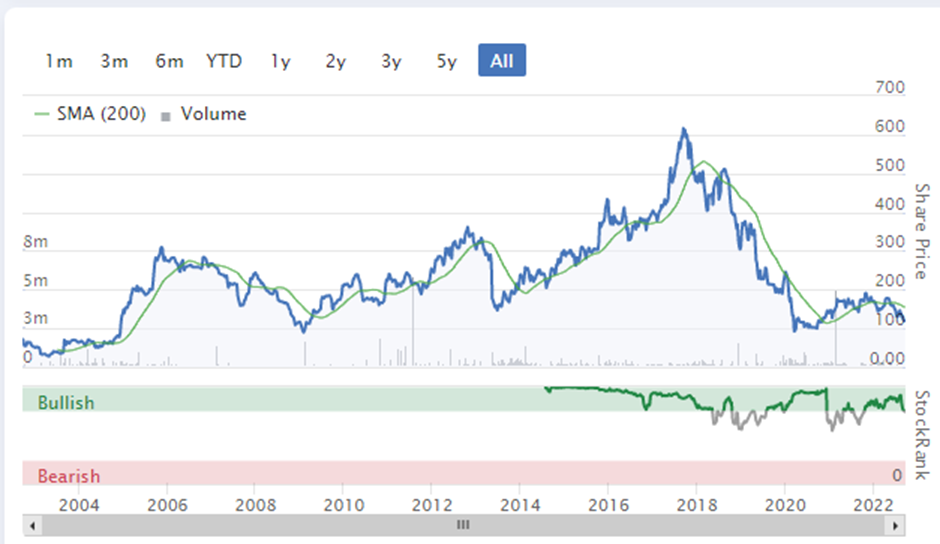
Interestingly, this is another example where market sentiment about a business changes much more than the underlying economics.
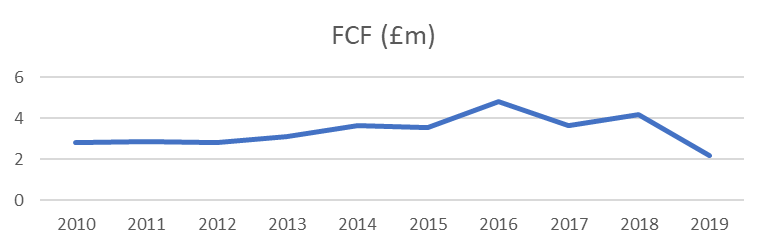
Until 2019, Free Cash Flow was remarkably resilient at £3-4m a year. However, certain products, such as ATM screens, reaching the end of their life started to hurt them in 2019. A brief recovery began in early 2020 before being quickly snuffed out by COVID. The company has never really recovered fully post-COVID. Although orders for existing products bounced back, future sales are based on their screens being designed into future products by their customers. Much of this sales activity is done face-to-face at trade shows, where customers can see and be inspired by the potential products.
The company hasn't been resting on its laurels, though. During this period, they have developed several new products. ZyBrid Hover allows users to operate a touch screen via proximity, not just touch. And ElectroglaZ, a way of providing power invisibly to glass applications. Both of these have the potential to add materially to sales in future years, but again these require trade shows to present these to customers, and these have only really started to come back in 2022.
In the short-term, though, global events have caught up with them, like many businesses, and they warned on profits in an August trading statement:
…due to continued global economic disruptions, the availability and cost of both raw materials and electronic components have proven to be persistent challenges as the second half of FY22 has progressed. This has had a knock-on effect on the Group's customers and has resulted in a lower than anticipated level of order intake being observed over the second half to date.
Their broker Singer have forecasts of £1.3m EBITDA and £0.5m PBT for both 2022 and 2023. While this is relatively modest, the small market cap and presence of a large cash balance mean that even these reduced figures give an adjusted earnings yield of around 24%.
A large cash balance, even one unencumbered, is not that useful if the company simply sits on it, providing a cushion for management to feel secure in their tenure. A few years ago, I would say this was a potential risk with Zytronic. However, since COVID, they have had both a tender offer and a share buyback. Unfortunately, they have exhausted their buyback authority, and the price has now dropped below where they were buying. They have also decided against paying an interim dividend since they want only to pay dividends covered by earnings, and the amount would be too small versus the admin costs of doing so.
I don't think there will be a rapid re-rating with Zytronic. It will take time before the results of long sales cycles show up in the numbers. However, the current valuation looks too low for a business that has the potential to eventually return to generating decent free cash flow. The rock-solid balance sheet of cash, working capital and freehold property means that the company should be able to weather any short-term storm while waiting for sunny skies to appear.
MJ GLEESON (LON:GLE)
MJ Gleeson is a housebuilder focussing on affordable housing. While land sales made up just less than 20% of its operating profit last year, this is primarily a trading business. The 2022 results released last week show record revenue and profits. The company also said that the "Board expects further profitable growth in FY2023", which is reflected in the brokers' forecasts:
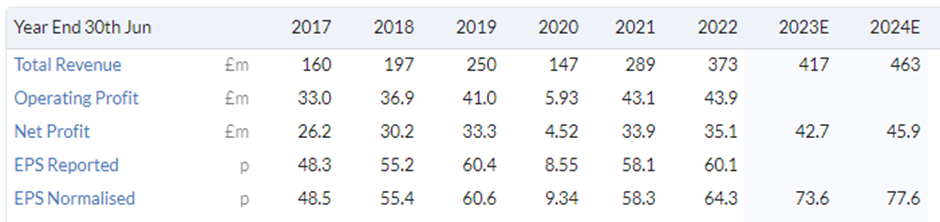
If these forecasts are correct, then this looks outstanding value:
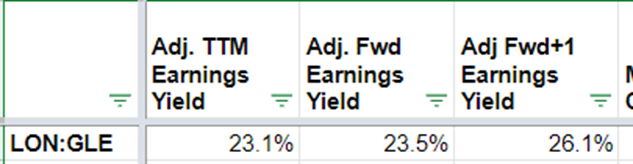
However, the whole housebuilding sector is very cheaply-rated on earnings because the market expects house prices to fall in response to higher interest rates and high costs of living. Using the Stockopedia comparison tool with a few well-known names shows that MJ Gleeson doesn't necessarily stand out against the sector. Its lower yield and smaller size may mean some investors don't prefer it to other housebuilders.
While I don't think it will be immune from any housing market downturn, the company does make the point that:
Gleeson Homes builds high-quality, low-cost homes for first time buyers and people on low to average incomes, a part of the housing market that has been chronically underserved and where demand will continue to outstrip supply for the foreseeable future.
Given that they trade in line with peers but perhaps have more defensive qualities, this will appeal to the contrarian value investor.
Out of seven companies reviewed this week, James Latham (LON:LTHM) Quarto (LON:QRT) Zytronic (LON:ZYT) MJ GLEESON (LON:GLE) have enough positive qualities to make it firmly onto my watchlist. Next week I will review the remaining eight non-resource companies. The following week I will finish my Earnings-based Screen by looking at the potentially cheap resource stocks.
[Disclosure: Mark owns shares in Goldplat (LON:GDP) Luceco (LON:LUCE) Sanderson Design (LON:SDG) Zytronic (LON:ZYT) ]
Disclaimer
This is not financial advice. Our content is intended to be used and must be used for information and education purposes only. Please read our disclaimer and terms and conditions to understand our obligations.

6 comments
Excellent article, thank you Mark
Hi Mark, Reading this series, I became a fan of yours and currently reading your book.
Do you have any screen/folio where we can see all your picks, or maybe you have a place where we can see your current portfolio? I'd be happy to pay for this
Hi Muhammad,
Thanks! I'm pleased you are enjoying the article series and book.
There are a few reasons why I don't publish a public portfolio:
1. Firstly, it's due to the power of public commitment. As you get a bit further into my book, you'll see me describe this in more detail. But basically, public statements have a tendency to fix our mindset. So if I become known as a bull on a particular stock, that starts to become part of my identity, and I am setting myself up to never sell that stock. This might work for some styles of investing, but typically, I am looking to buy undervalued stocks and sell as soon as they approach fair value. That requires flexibility, and I don't want to constrain myself if I can help it.
2. The second is that the type of value stocks I invest in always have something wrong with them and often aren't suitable for all investors. I mitigate this through research, reliance on balance sheet strength, and diversification. My aim with these articles is to show the ways a value investor may look at unloved stocks and maybe sift a few gems from the rubbish. Hopefully, showing my analysis, not just the results, is more useful in the long run.
3. Finally, knowing what I own doesn't tell you how confident I am in something. It may be a 1% position or a 10% position.
You'll get a feel for what I own from the disclosures I make at the end of these articles, but everything that I find interesting genuinely goes onto my watchlist (if it wasn't on there already). The process of these picks making their way into my portfolio is a little more complex, and I describe this in my article on when to buy a value stock. Just because I don't own something this week doesn't mean I won't have started to build a position in the future if the price is right.
While I could certainly collate the stocks from these articles onto a watchlist, this also misses that these are interesting picks at a specific point in time. One of the fundamentals of value investing is that a good company at a bad price is a bad investment. So having an unchanging watchlist for any extended period of time is probably a bad idea. However, there is nothing stopping you from setting up your own watchlist with some of the interesting ideas from the articles plus the results of your own screens and research.
Hope that helps,
Mark
Hi Mark, I'm really enjoying these articles. As an inexperienced investor it is great to see the process involved when looking at shares for value and high earnings yield. Thank you.
Hi Mark,
You have put a lot of work into this and one share in your list stands out. It is GKP. It goes XD tomorrow again this year paying out 4.64%. Also TGA goes XD tomorrow paying out 16.47%.
Figures from dividenddata.co.uk. Hit the dividend impact button twice.
There is also a free book Dividend Income Plus you can get from this site.
The other thing with dividends this year is US shares are benefiting from increasing dividend payments that are paid monthly /quarterly because of the strong $ to the £, & also increases the value of the share price as well.
Hi lightingtiger,
I intend to look at income strategies in a future article, for such a simple metric it is surprisingly complex so warrants some careful exploration.
Cheers,
Mark