Screening for Value: More Earnings-based Picks

In last week's article, I looked at the first set of companies that were identified by my earnings-based stock screen and found four companies that made it onto my watchlist: James Latham (LON:LTHM) Quarto (LON:QRT) Zytronic (LON:ZYT) £GLE.
This week I will be looking at the remaining eight non-resource stocks. But before I do that, it is worth revisiting the adjusted earnings yield figures. This is because that past week has featured a period of market volatility, so prices may well have altered significantly:
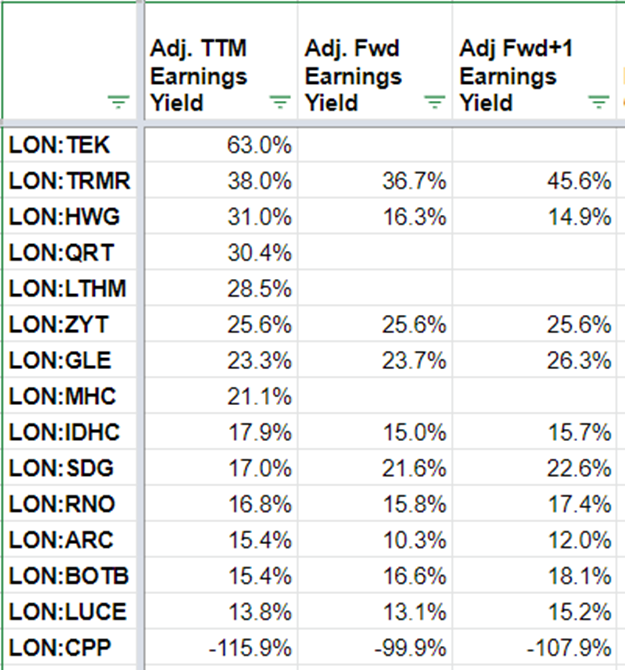
The other adjustment worth considering is where significant acquisitions have been made or dividends and buybacks enacted since the balance sheet date. One example is Tremor International (LON:TRMR) which acquired Amobee, post the last balance sheet date. Here the company says:
The Acquisition consideration of $239 million, as adjusted, was funded through a combination of existing cash resources, and approximately $100 million from a new $180 million secured credit facility. The new credit facility consists of a $90 million secured Term Loan A drawn at closing, and a $90 million Revolving Credit Facility, of which $10 million was drawn at closing.
This means that I increased long-term debt by $90m, short-term debt by $10m and reduced the cash balance by $139m compared to the balance sheet figures. I also estimated the impact of the buyback since the period end.
I don't tend to make adjustments for a small dividend payment or a modest ongoing share buyback, but when significant capital is returned, it is worth updating the balance sheet for this impact. For example, Best Of The Best (LON:BOTB) conducted a tender offer where they bought back 1,045,877 Ordinary Shares at 600 pence per Ordinary Share, for a total consideration of £6,275,262 after their last balance sheet date on 30 April. This has the effect of reducing both the share count and the cash balance by these amounts. In the figures above, I have adjusted for these major transactions.
Now onto the remaining non-resource companies:
Myhealthchecked (LON:MHC)
MyHealthChecked develops and sells at-home diagnostic tests. The sort of revenue & profit growth they have recently generated looks impressive:

…until you realise that they have been providing COVID travel tests. This market will likely disappear entirely in the near term, if it hasn't done so already. They have other products but don't break these out in their revenue reporting. Without broker forecasts, this is almost impossible to value for me.
Integrated Diagnostics Holdings (LON:IDHC)
Integrated Diagnostic Holdings is a strange beast, with a share price quoted in dollars and reporting in Egyptian Pounds. Yet a market cap of £425m shows this to be a fairly large company. Stockopedia describes its business as:
The company operates in the Middle East and Africa with operations in Egypt, Jordan, Sudan and Nigeria. It is engaged in offering services in immunology, microbiology, hematology, endocrinology, clinical chemistry, molecular biology, cytogenetics, histopathology and radiology.
This company is not without geographic or political risk, then! However, it appears to have operated successfully over many years:

Although 2021 appears to have been an exceptional period for the company, and this isn't forecast to continue. Sometimes operating in complex or challenging environments means that a company can generate higher margins due to a lack of competition, and we may well be seeing this at Integrated Diagnostic Holdings:

What is essential when considering foreign-domiciled companies as value investments is that they generate free cash flow and pay it out as dividends, which is the case here:

Despite this, the political situation in Egypt gives me pause for concern, for example, news like this:
Egypt, a country of more than 103 million people, is running low on foreign currency needed to buy essentials like grain and fuel. To keep U.S. dollars in the country, the government has tightened imports, meaning fewer new cars and summer dresses.
This company's very high earnings yield is from its large cash balance and earnings. However, there must be increasing pressure for this cash not to be remitted to the parent company. Unlike, say, a gold producer that flies their gold out for refining and then remits currency back to pay wages, this company relies on cash exiting the country to pay dividends. And these may be at risk.
Although I am often more political-risk-tolerant than most investors, Integrated Diagnostic Holdings is a step too far for me at the moment.
Sanderson Design (LON:SDG)
Sanderson Design owns an extensive historical design catalogue, the most famous of which is Morris & Co. They also have more modern design brands, such as Scion, and high-end ones like Zoffany. They monetise these designs with wallpapers, fabrics and associated products. Increasingly, they have been licensing these designs to companies such as £NXT.
This strategy has been implemented by a new management team who have recognised that the real competitive side of the business is the design side, and in particular, the historical back catalogue of designs that can be refreshed, re-coloured, and re-scaled to keep them up to date. They are still a manufacturer, but their aim is to capture more of the value chain. High-end products are hand painted, so their employment of skilled craftspeople gives them the ability to deliver unique new products and those from their existing design catalogue.
In terms of financials, the company is still some way off the peak operating profit of 2018. However, FY2022 ending 31 January has shown a good bounce back following COVID disruption:
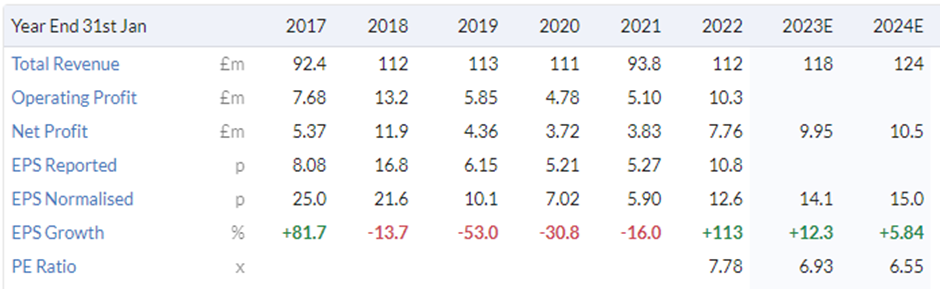
Net cash has been building up and was £19.1m, which gives the Company decent downside protection. When I spoke to the company at the Mello 2022 event earlier in the year, they were keen to expand the business in the U.S., buying a company with U.S. distribution, if possible. However, I suspect the 20%+ collapse in the value of Sterling puts this aspiration on the back burner at the moment.
A pension deficit remains and requires £2.2m of annual contributions. However, even accounting for this, the adjusted earnings yield is 17%, and earnings are forecast to grow. However, the current share price says that the market doubts this. With higher inflation and weak consumer sentiment, this is definitely a risk.
Their Nomad and broker is Investec, so we are unable to see the details behind those forecasts. However, I note that they appointed Singer as a joint broker earlier this month, so perhaps we can expect a note to be available to private investors at some point. In the meantime, we have their half-year trading update to go on. Here Revenue is flat versus the previous year. However, they say:
As set out in our AGM statement on 12 July 2022, we remain vigilant in respect of the world economic environment. Current market conditions are difficult to predict and we are planning for a wide range of possible scenarios in the second half. Despite this, full year trading currently remains in line with the Board's expectations.
Highly uncertain, but it looks like they will miss on revenue but meet expectations for profits. This is possible due to the higher proportion of licensing revenue. Many of these licensing deals keep being extended, so this underpins the future for this side of the business. The company is also a potential beneficiary of the multi-year trend away from minimalist styles towards the more maximalist ones of Morris & Co.
While the consumer outlook remains a potential risk, the recent "fiscal event" is good news for the company. This gave the bulk of tax savings to middle and high earners, who are likely to be the more natural buyers of Sanderson's products.
Renold (LON:RNO)
Renold supplies power transmission products for mainly chain-driven applications. Their revenue has been pretty stable over the last few years, although operating profit was a bit more volatile:

Forecasts are for that revenue to grow but profits to remain flat. Not unusual in an inflationary environment.
As I explained in my article on adjusting the earnings yield, last year, they paid £4.8m in pension recovery payments, which is due to rise to £5.5m going forward. These are expected to continue until 2038, so taking these figures off the operating profit is a good way of adjusting for these cash outflows. However, even after taking these into account, the company still has a high TTM and prospective earnings yield:
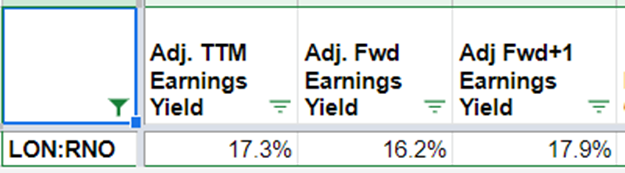
While this looks good, the company hasn't paid dividends since 2005. Instead, the company has been allocating cashflow to their pension deficit, debt repayments and capital equipment. However, that investment has not led to sustainable growth, and the long-term chart shows that investors have lost money for two decades here:
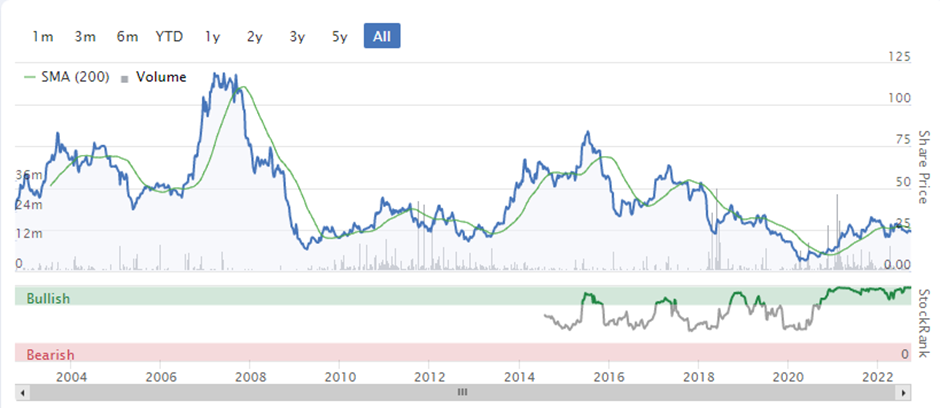
Investing is largely about looking to the future, but this track record means that investors should perhaps take the following from the recent results with a pinch of salt:
However, the Board has carefully reviewed its capital allocation priorities, and believes that both organic and inorganic investment opportunities available to the Group, will deliver higher levels of shareholder return over the medium term than the payment of dividends.
They have in place a strategic plan called STEP2:
As the world slowly emerges from the COVID-19 pandemic, I am delighted that we are launching the next phase of the Renold strategy: STEP2. This is an evolution of the current strategy, STEP 2020, and is built on the foundations that have been created. Whilst there are common threads and similar themes, the major thrust of STEP2 is achieved through both organic and acquisitive growth.
We will continue to modernise and drive efficiency and productivity in the business but also look to grow our revenues, margins and cashflows through both organic and acquisitive growth. We will continue to invest in service, products and operations.
However, the Chairman has been in place since 2017 and the CEO since 2013, so if this growth was so easy to generate, you would think they would have delivered it by now. Indeed, they acquired a business in August, but this didn't look cheap:
The total consideration for the acquisition of €24.0 million represents an acquisition multiple of c. 7.6x June 2022 LTM EBITDA. Identified cost synergies will reduce the multiple comfortably below 7.0x, with additional benefits to be expected through commercial collaboration.
The question arises - why buy a company on 7xEBITDA rather than their own shares on 3x EBITDA?
The earnings from the acquired business have presumably already been incorporated into updated broker forecasts. Yet, when I add in the £20m of extra debt, the earnings yield looks less promising:
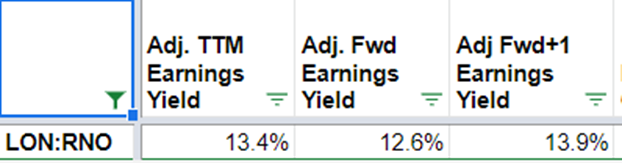
This company may appeal to shareholders who like a modestly valued but fairly steady business. However, without any dividend payments, they would be wise to buy when cheap and sell during any periods of exuberance rather than consider this a long-term holding.
Arcontech (LON:ARC)
It is rare for software companies to appear on deep value screens; the recent trend for software as a service has pushed valuations up across the sector, as the market has placed great value on the certainty of recurring income. Arcontech's real-time market data analytics software benefits from this type of revenue. Its customer list is impressive, with the Bank of England and many major investment banks as clients. However, its product clearly isn't indispensable, since it lost two clients in the past year. This has been reflected in their earnings forecasts:
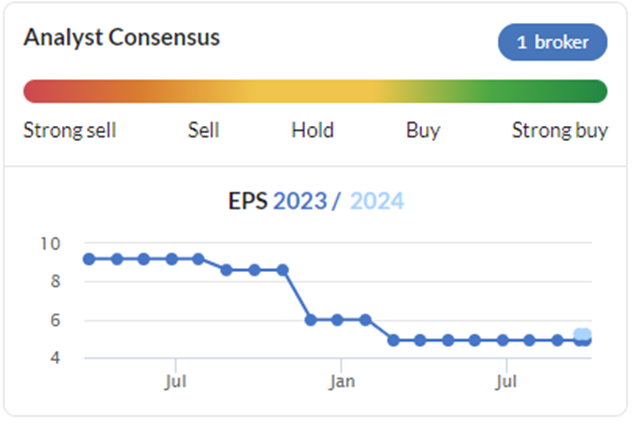
Working from home has also placed increased importance on I.T. budgets and tools. However, according to their latest results commentary, for Arcontech, this negatively impacted their sales:
Through the pandemic it was difficult to visit our customer base in the U.K. and internationally with many of our usual contacts working from home. Budgets were tightly controlled across the board with new projects put on hold and some consolidation taking place.
However, this does mean that the world normalising post-covid provides opportunities:
We have made good progress with a number of prospective customers over the year but recognise that lead times are longer than before the pandemic. In recent months we have seen signs of improvement in the market with new projects being discussed with existing customers and prospective new customers.
These are still not firm orders, however, and forecasts are flat going forward:
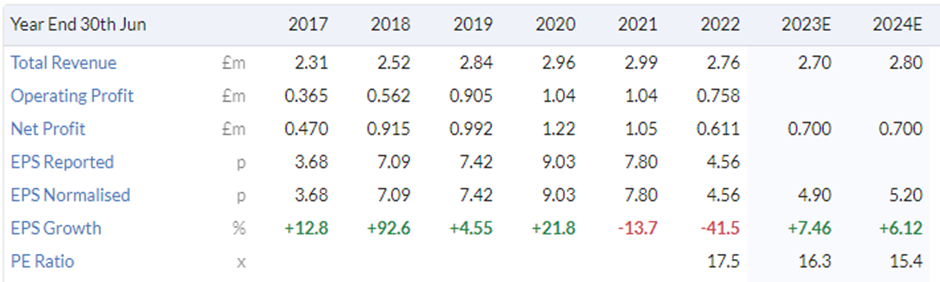
That this company can have a relatively high P/E ratio and also appear on my high earnings yield screen is due to the large cash balance that has been built up through retained free cash flow over the last few years:
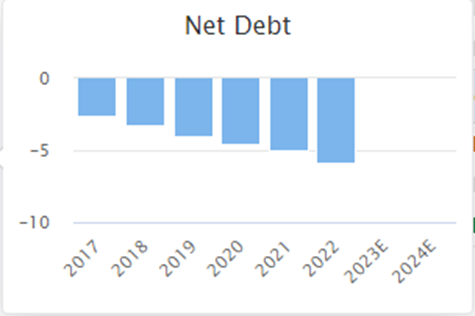
Even making the adjustments for negative working capital that I describe in this article, the company has £4.7m of what I call Shareholders Cash. Of course, this does little good if the company just sits on this cash pile to make the management's life easier. However, Arcontech appears to want to put this to use, saying:
We continue to grow our cash resources which enables us to proactively look for suitable acquisitions. At the same time we are researching alternative products linked to the services we already provide to create additional paths for organic growth. We are in very early-stage discussions with several clients in this regard.
But they haven't found anything suitable to acquire. They may be better off returning cash to shareholders or allowing themselves to be acquired rather than taking a risk being the acquirer.
The forward adjusted earnings yield of 10% means that they are at the lower end of this value screen. However, the quality of the recurring revenue plus the chance that this will grow with new clients and products makes this worth paying a little more for.
Best Of The Best (LON:BOTB)
Best of the Best runs online spot the ball games. Prior to COVID, they were a consistent, cash-generative but unexceptionally growing business. However, their sales and profits really took off during the gambling boom during COVID:

Shareholders got a bit carried away with the idea that this was the new normal and bid the share price up to £30. When mean reversion came along, the share price sold off heavily and currently stands just over £4. Quite some Journey!
I have always been a little sceptical of the competitive advantage here. Setting up a competitor using relatively small amounts of capital is relatively easy. More recently, larger, well-financed competitors have been getting into the act, too, such as Omaze. There may well be value in Best of The Best's database of regular players. However, nothing would stop an existing gambling company with a client list from setting up a similar game.
Despite these competitors, the company remains a cash-generative business and trading in line with expectations was confirmed in the AGM statement on 14 September. These are from their broker finnCap:
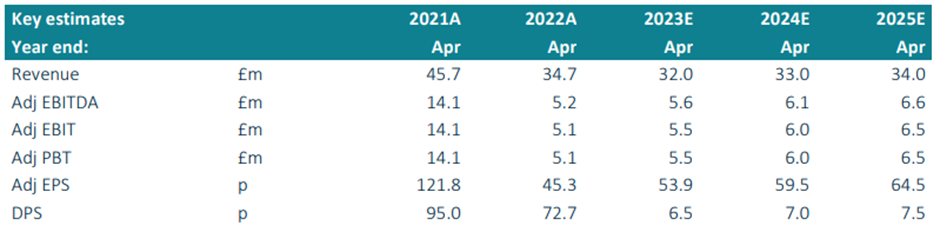
Their broker didn't see the post-COVID mean reversion coming until it was too late, so 2024 & 2025 forecasts should perhaps be taken with a pinch of salt. However, an adjusted earnings yield of almost 17% for 2023 with high cash conversion would appear to be too cheap.
However, the management don't appear to agree. Over the years, the Best of The Best management have proven particularly astute with their market timing. They initiated a formal sales process for the Company when COVID caused a boom in their sales. This ultimately came to nothing, perhaps because the share price got a little ahead of itself. The management then placed around a third of their holdings at the end of March 2021 at £24, when the share price was around £30.
At the beginning of this month, the company announced that Chief Executive William Hindmarch and Commercial Director Rupert Garton were selling two-thirds of their remaining shares at £4 per share. Although they retain 11.86% and 3.35% of the company, respectively, and are selling to a strategic investor, the timing and level of discount may raise some eyebrows.
That strategic investor is Globe Invest Limited, the family office of Teddy Sagi, which brings with it a licensing agreement:
Under the Licensing and Distribution Agreement BOTB will exclusively license to GIL (with a right to sub-license on a B2B basis) the BOTB business model, concept and related services, in all territories outside the U.K.
And a distribution agreement:
The Marketing and Collaboration Agreement will allow GIL to promote BOTB content in the U.K. non-exclusively, based on an agreed revenue share or CPA model. The parties will also discuss and agree cross-promotional commitments in connection with each party's products and services.
While these may bring benefits, they also come with certain reputational risks. Combined with the sale of management stakes below the then-market price, this may be a step too far for some.
Luceco (LON:LUCE)
Luceco manufactures power products such as LED Lighting, wiring accessories and portable power. Most of their products are manufactured in China and sold mainly in the U.K., where they have a market-leading position in several categories. One of their differentiators is that they own a significant proportion of their manufacturing in China, giving control over the whole manufacturing chain and can deliver higher quality products than pure outsourcers.
They have an impressive track record of growth both organically and by acquisition:
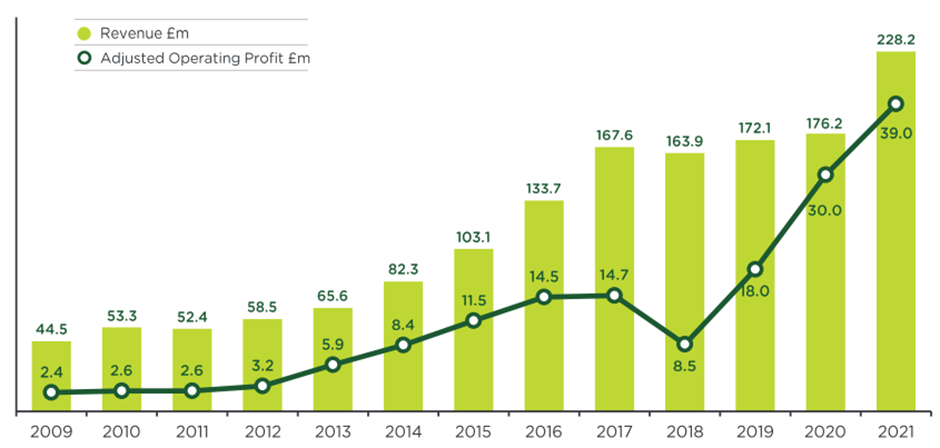
Their latest acquisition was in March this year when they acquired Sync EV to expand their presence in the fast-growing electric vehicle charging category.
In a typical year, the company can generate an operating margin of around 10% and a Return on Capital Employed above 25%, showing that they are well-run, although in a competitive industry:

These positive qualities meant that the share price reached as high as £5 in August 2021, when the post-covid recovery was in full swing. Today the share price is just over 80p.
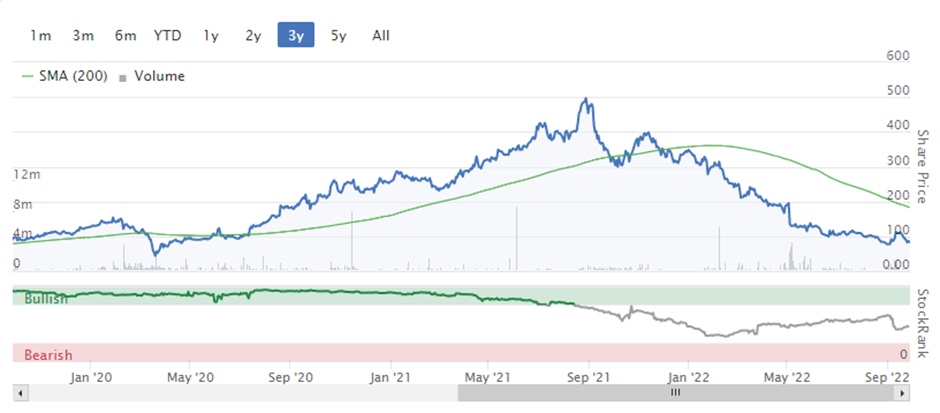
The interim results, released earlier this month, show what has gone wrong. Although revenue has grown, pressure on gross margins, customer de-stocking and increasing costs mean that earnings have returned to 2019 levels. Net debt has increased due to reduced payables, which may concern some, but the company says this is in the middle of its target range. However, this debt means a forward P/E of 7 only gives a 13% adjusted earnings yield. The risks are that sterling weakness and de-stocking will continue to put pressure on margins in the short term.
However, a good business doesn't simply become a bad business because of a few headwinds. So those willing to look through any short-term setbacks will likely see a well-run business on a historically cheap valuation.
CPPGroup (LON:CPP)
CPP Group appeared on my screen with negative adjusted earnings. This is because their final results had £22.3m of cash which was higher than its market cap, even after adjusting for other factors:
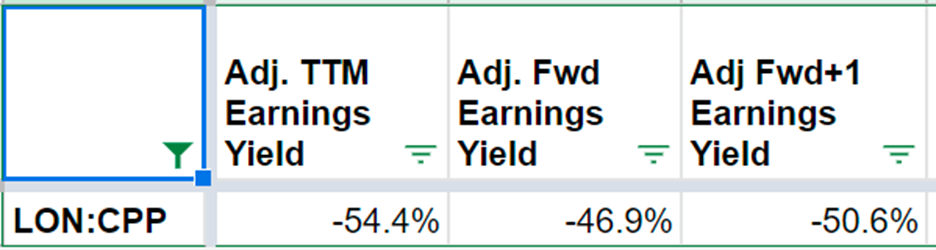
This week, however, we have more up-to-date figures from the interim results, and it now makes sense to take these. Interestingly, the shareholders' cash has increased. However, the market has not taken kindly to these results. Presumably, this is due to the following:
Dividends suspended pending completion of the strategy review (Change Programme)
And more detail is given by the new CEO here:
On appointment, I found a business which had no adequate plan to address the decline in its Legacy Business, which had no sense of purpose, and no strategy for the future. Consequently, much of my time since appointment as CEO has been focused on simplifying the business, simplifying our proposition, and simplifying our management and operating structures. Additionally, the management team and I have been working on a broader Change Programme, the aim of which is to define what CPP's purpose is, and to set a course ("strategy") for the business which over time should improve outcomes for our key stakeholder groups.
I don't think confidence is helped by the tax charge causing a loss despite an operating profit due to profits in multiple jurisdictions. The company operates in countries such as India and Turkey, where difficulties in repatriating profits may exist or at least be subject to withholding taxes. Operating as a provider of assistance and insurance products means that not all the cash is unrestricted as well:
At present, approximately 40% of the Group's cash balances are "restricted" due to either tax, legal, or regulatory requirements.
However, 60% of the cash still exceeds the market cap. Despite this, I'd want to wait to see the results of the strategy review, and in particular, what will be done with all that cash before being willing to risk investing here.
That completes my look at the set of non-resource companies. Out of eight companies reviewed this week, Sanderson Design (LON:SDG) Renold (LON:RNO) Arcontech (LON:ARC) Luceco (LON:LUCE) have enough positive qualities to make it onto my watchlist. In addition, Integrated Diagnostics Holdings (LON:IDHC) Best Of The Best (LON:BOTB) and CPPGroup (LON:CPP) may be attractive to investors who are highly risk-tolerant. Next week I will finish my Earnings-based Screen by looking at the potentially cheap resource stocks.
[Disclosure: Mark owns shares in Goldplat (LON:GDP) Luceco (LON:LUCE) Sanderson Design (LON:SDG) Zytronic (LON:ZYT) ]
Disclaimer
This is not financial advice. Our content is intended to be used and must be used for information and education purposes only. Please read our disclaimer and terms and conditions to understand our obligations.

1 comment
Fascinating read thanks. I hold Luce and consider it a fair risk.