Should I sell if a stock cuts its dividend?

Dividend strategies are popular amongst UK investors. The ability to receive a market-beating passive income from simply holding large, steady companies is incredibly attractive to those who use their stock portfolio to help with living expenses. There is evidence that this kind of Value strategy beats the market over the very long term, although perhaps by less than other value strategies.
Towards the end of 2022, I wrote an article proposing a Value-first strategy. I suggested investors would be better off screening for stocks that meet Value criteria first and then picking a diversified collection of the highest-yielding stocks out of these. However, when I reviewed this strategy in 2023, the results were a little disappointing. What I called the “Safer Income Portfolio” beat some other simple value strategies. However, it underperformed the FTSE All Share, at least on price-performance:
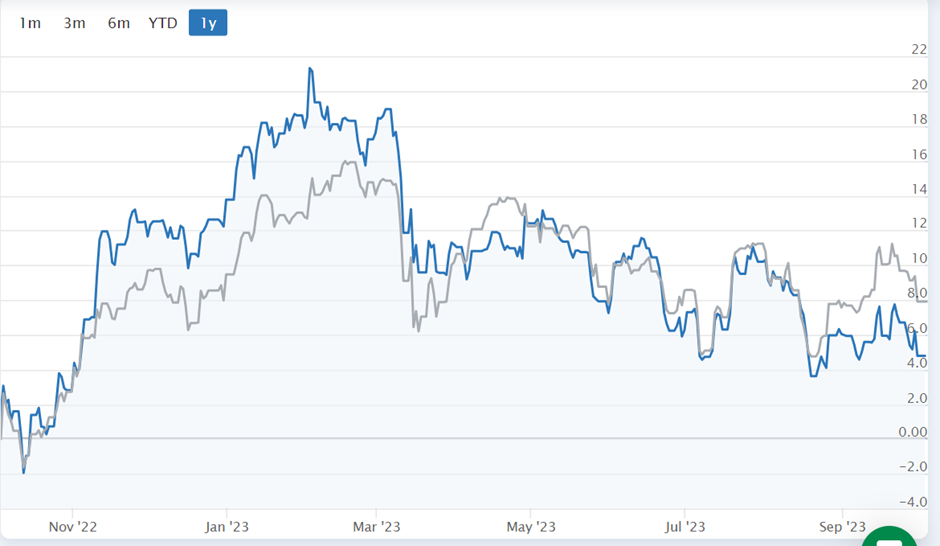
More disappointingly, the portfolio contained four companies that cancelled their dividend payout:
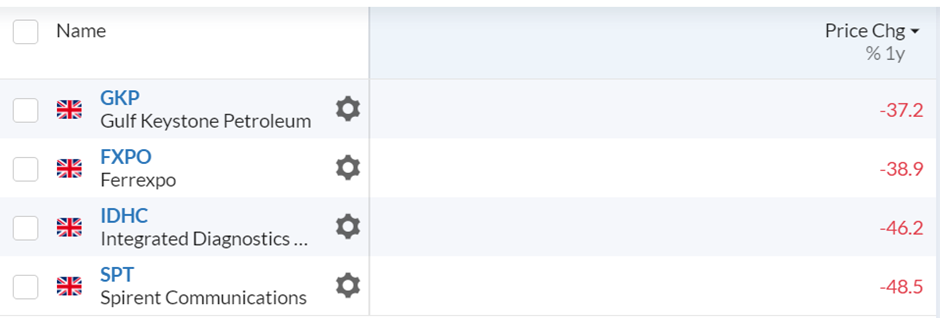
And some that cut their dividend while not completely cancelling it:
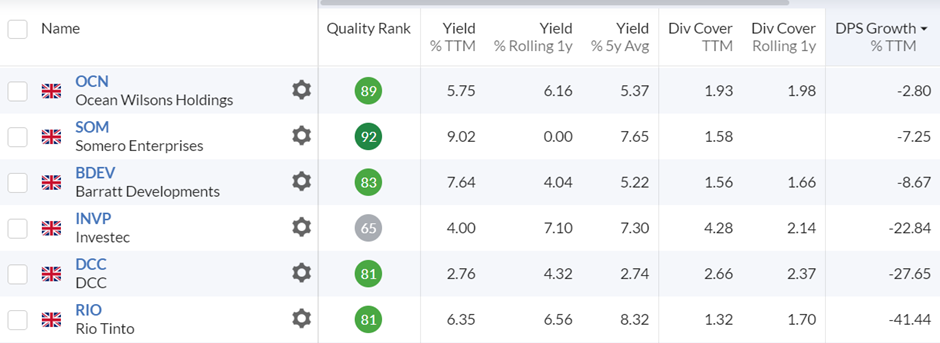
It seems that this income portfolio was not safe enough, and in my mea culpa, I concluded that:
…the riskiest holdings have done the real damage. These stocks clearly had significant political risks when the portfolio was formed...It can be tempting to “juice” the income portfolio with high-yielding but risky or under-diversified stocks. With the benefit of hindsight, I would have picked much more stable businesses from these industry sectors.
However, fast forward another year, the “Safer Income Portfolio” has recovered its underperformance:
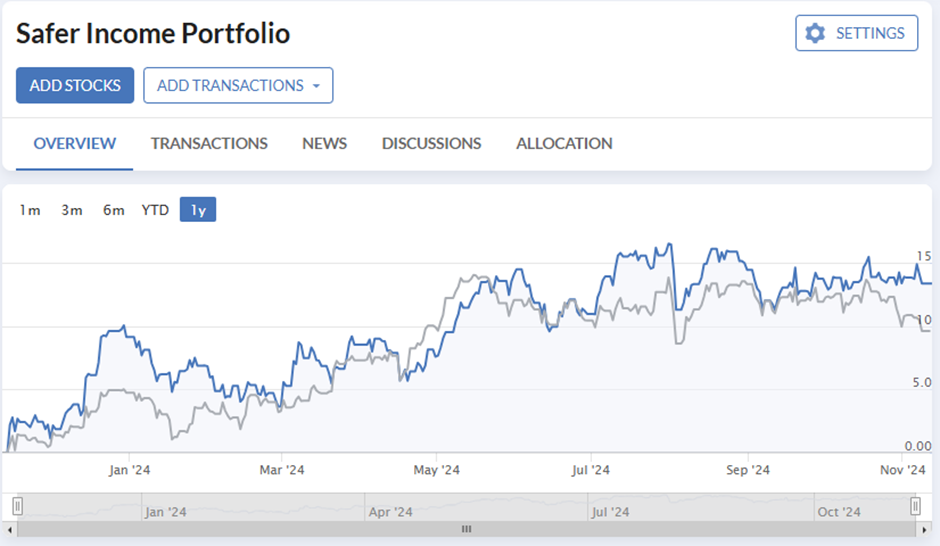
Although the dividend cuts hurt the income, it still delivered a 4.8% TTM dividend yield, meaning that the two-year performance of the strategy appears to have slightly outperformed the wider market on a Total Return basis. This is despite a few more shares joining the dividend cutters, such as EKF Diagnostics Holdings (LON:EKF) , Spirent Communications (LON:SPT) and Headlam (LON:HEAD) .
This leads to an interesting question:
Should I sell if an income stock cuts or cancels its dividend?
Many income strategies simply sell if a dividend is cancelled and reinvest the proceeds elsewhere. The logic seems sound. If investors are relying on that income and are no longer getting it, then they should move their capital to where they are receiving sufficient dividends. In addition, a complete dividend cancellation is often a last resort by company management and suggests that the business is experiencing very significant headwinds in trading. The research Ed and the Stockopedia team have done into profit warnings suggests that it takes much longer than investors think to turn around a struggling business and that investors are better off selling on the first warning:
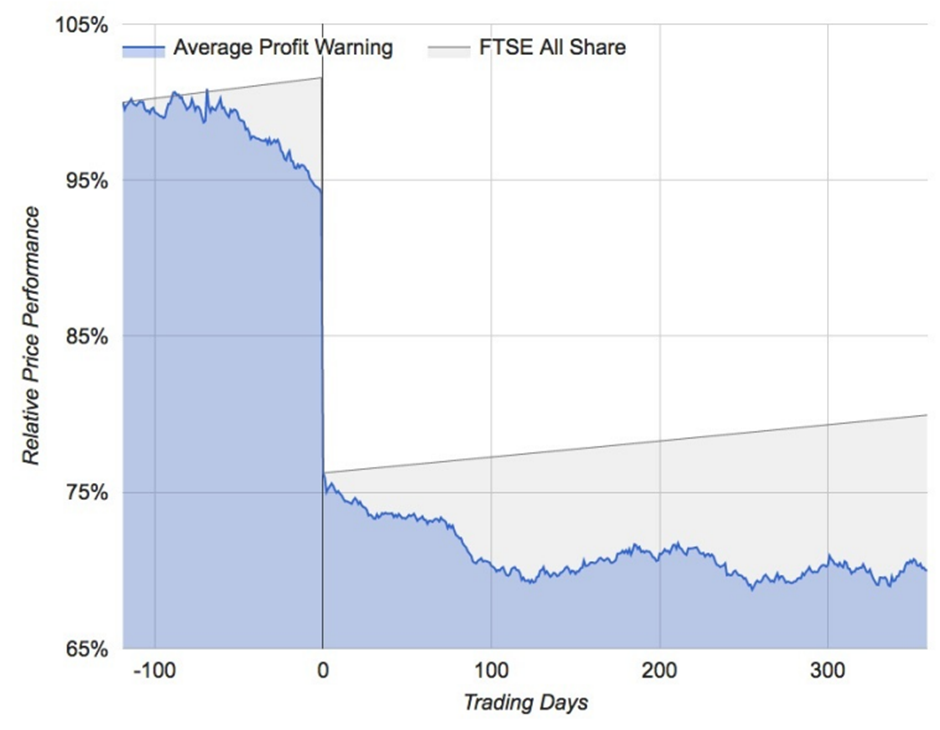
Selling on a divided cut may appear logical. However, financial markets have a habit of defying conventional wisdom. The reason is that secondary effects come into play. When many investors own a stock for its high dividend yield, a dividend cancellation will cause a rush for the door. If income funds own it, they may become forced sellers of the shares as their mandate will not allow them to own non-dividend-payers. In this case, it may be that such stocks become quickly oversold. Investors may be better off holding on, or even buying after a dividend cancellation.
So which is it? Is it a sign of corporate weakness that warns of further pain, or is it an opportunity to take advantage of? This is the question I hope to answer.
What does the data say?
Finding a list of dividend cancellations can be difficult. Thankfully, Alex has been able to use the Stockopedia archives to find over 700 stocks that cut, suspended or cancelled their dividend since March 2020. Here is what the average price chart looks like leading up to a negative dividend surprise:
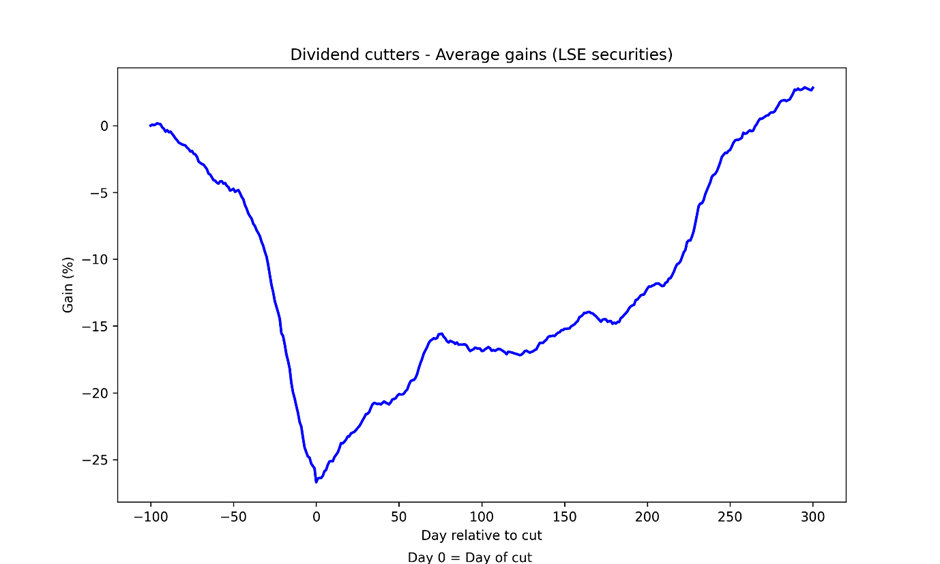
A couple of things stand out from this chart. The first is that the price tends to be weak in the run-up to the dividend surprise. The second is that it recovers quite quickly. On the surface, it would seem that investors should buy following dividend cancellation or cut. However, 475 of these negative dividend surprises occurred in 2020, and for obvious reasons – COVID created huge uncertainty for most companies, and they responded by hoarding capital. If we exclude 2020 from the data, we get a very different picture:
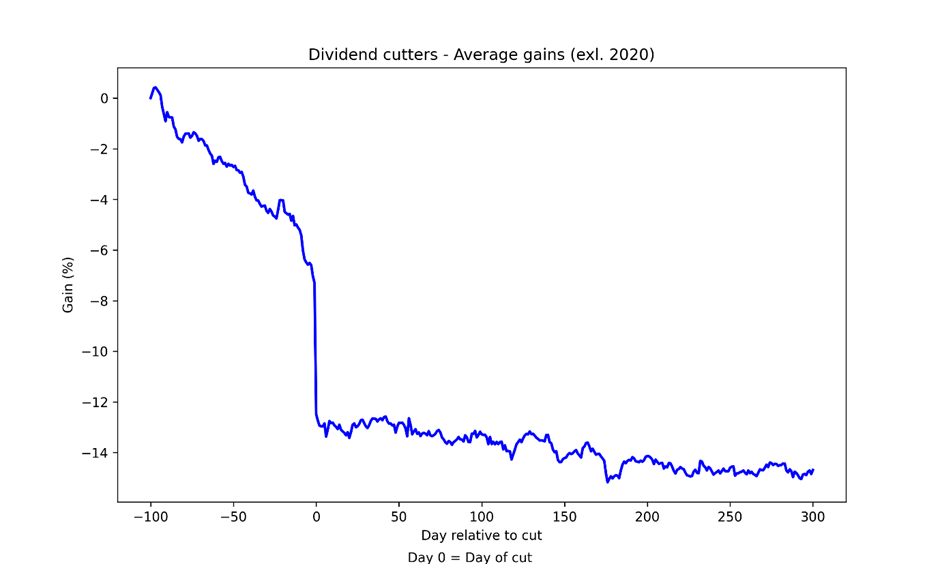
While the biggest drop occurs on the day of the announcement, it seems that the market often anticipates the cut up to three months prior to its occurrence. It seems that investors should be selling at the first sign of news that has the potential to leave a company unable to maintain its dividend rather than waiting for confirmation that the payout has been axed. When building an income portfolio, investors should look for safety above all else. The problem is that this may be a difficult strategy to implement. Investing in high-yield stocks is, by nature, acting countercyclically. The high yield is often a sign that the market doesn’t like the prospects for a stock, and the price has declined. It is far rarer that an already high dividend payout has been increased rapidly with a static share price. Accepting a lower yield but choosing stocks that are growing their dividends may avoid the pain of dividend cuts. However, the so-called dividend growth strategy is an even poorer option. All the evidence points towards it underperforming by simply buying already high-yielding stocks. There are perhaps no easy answers to this dilemma, and investors will need to assess each situation individually when building an income portfolio.
If an investor has failed to anticipate a dividend cut, then they will usually face a painful paper loss. The data above suggests that far from being an overreaction, there is likely to be further pain to come over the next year. Investors would be better off crystalising that loss and moving on to pastures new, especially if they are reliant on the income. The good news is they typically have a month or so to act before further bad news tends to arrive and be priced in.
However, this is not the whole story. I asked Alex to split the data further. Firstly, by looking at the average performance of the stocks that suspended or cancelled their dividend versus those that merely reduced it. Here is the data, excluding 2020:
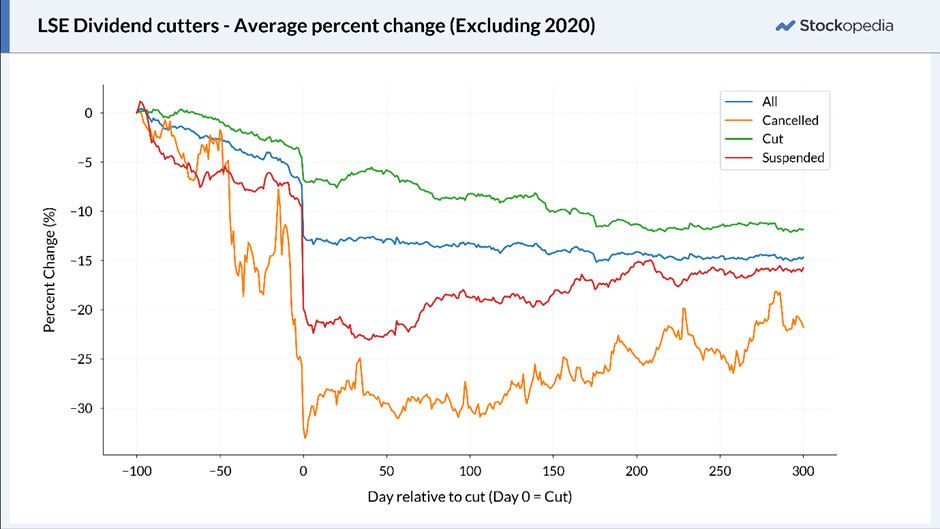
This confirms my second hypothesis: that investors overreact to a dividend cancellation or suspension. While the reaction in the run-up to, and on, the day that bad news about the dividend is released, stocks that merely cut their dividend did much better. However, over the subsequent year, these stocks underperformed the market, on average. Conversely, the complete removal of the dividend is understandably treated much more harshly, but this point tends to reflect a nadir for the share price. Over the following year, there seems to be the possibility of between 5-15% outperformance from holding stocks from the point of cancellation.
The second nuance that I wanted to investigate was if higher-yielding stocks at the point of cut or cancellation behaved differently lower yielders. This could be caused by income funds being forced sellers of formerly high-yield stocks, for example. Here is the high-yield versus low-yield comparison, which I picked as a nominal 4% historical yield at the point of negative surprise:
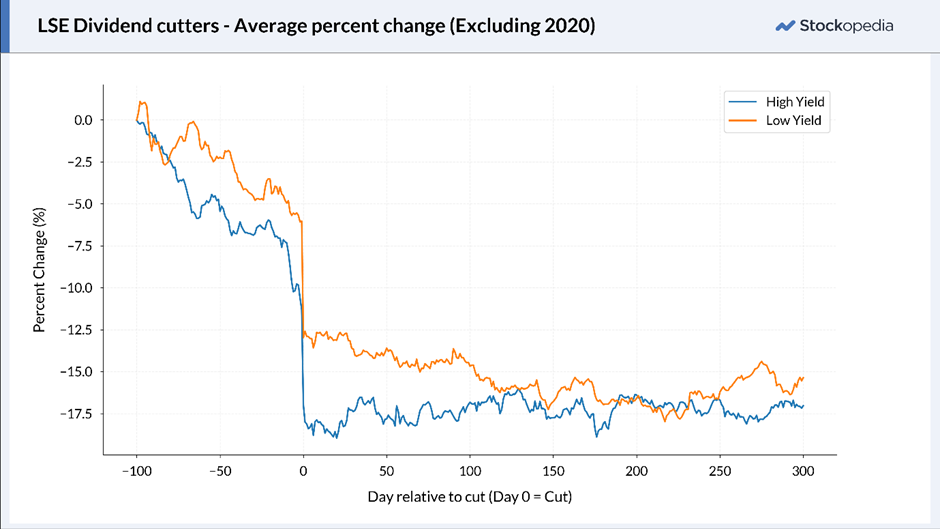
This shows that higher-yielding stocks both anticipated the cut and reacted more severely, but over the following year, they ended up with a similar performance. The performance of the high-yielders is not strong enough to suggest that these should be bought following a dividend cut. However, it seems clear in this data that investors should take the hit and sell lower-yielding stocks that reduce their dividend payout.
The 2020 data is also instructive as well. While investors are better off reacting to idiosyncratic dividend cuts by selling, the same doesn’t apply when large-scale macro events are the cause of negative dividend surprises. During pandemics, financial crises or other widespread sell-offs, the dividend cut is far more likely to be the nadir of the share price:
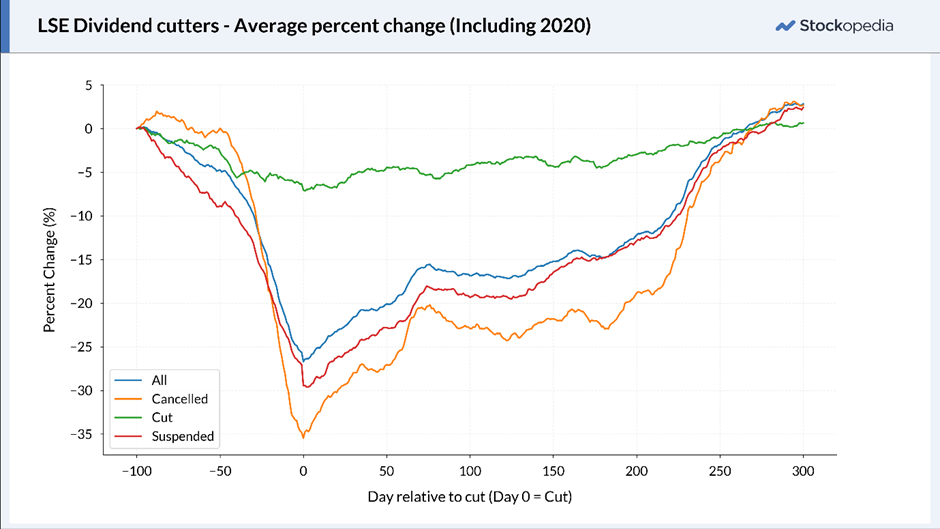
During such times, investors should follow the opposite strategy and hold or even add to stocks that cut their dividends. It seems that the more severe the cut, the bigger the bounce (although the pain of holding prior to an adverse dividend event is also much higher.)
Conclusion
Investors will do better, on average, by selling stocks that cut but don’t cancel their dividends, especially if they are already low-yielders. Cutting a dividend appears to be a sign of further bad news to come. The only exception is if it happens at a time of crisis, such as in 2020, when many stocks are reducing their payouts. Here, a share price recovery is more likely.
The opposite course of action seems best for stocks that completely remove their payout by cancelling or suspending dividends. While investors in these stocks will have suffered significant pain, the sell-off tends to have already occurred. The market both anticipates the cut and reacts quickly on the day of the bad news. Avoiding these types of stocks is hard, particularly for income investors, but the severity of the reaction makes it worth trying. However, at the point of dividend cancellation, the market appears to have overreacted and holding for a recovery makes more sense. A brave but potentially profitable strategy could be to buy stocks shortly after a dividend cancellation to gain exposure to the recovery.
Disclaimer
This is not financial advice. Our content is intended to be used and must be used for information and education purposes only. Please read our disclaimer and terms and conditions to understand our obligations.

23 comments
Thats a really useful article, Mark (though thin coloured lines are a challenge to identify for those of us with defective colour vision!).
What about dividend cover? iDoes the data show a level of cover that significantly reduces the risk of a cut or cancellation – or conversely, a level of cover that should be an early warning?
So TFG have now taken up to just over 11% of Liontrust Asset Management (LON:LIO) which must be top of the list for unsustainable dividends. Or so many of us were thinking, as we wonder whether to sell our losses, or merely hold. But add...? TFG have another view, clearly? I also notice some speculation on LSE as to whether this is a CFD long position, in which case their move still more counterintuitive given a dividend at 16.4% screaming "cut me!"
So in the case of Liontrust Asset Management (LON:LIO) this has become a "What to do if the management DON'T cut the dividend", albeit the dividend is uncovered. And further to which there is some significant director buying on release of today's results (60+40+50k shares) following Monday's disclosure of 11% holding by TFG. Is this a. a bluff b. a deep value call; or c. just a bet on good odds that the worst is now past?
I hold at 29% down.
Really interesting thread. My folio currently yields on paper at least, just over 10%, which is historically improbable. Dividends over 10% currently include VSL - a mistake; but as to SQZ, LIO, SBLK, GSF, NESF, MNG, among others, am I wrong or is the market mispricing..? Wealth managers, insurers and infrastructure REITs seem to be decidedly out of favour; yet this may prove to be a version of any other trend, including Y2K when you could lick up Value and Income It yielding 9% on basis that that noone wanted Old Economy stocks. Three years later boot was on the other foot! I vowed at the time that if I could ever build up and then exchange capital for income sufficient ent to live on, I should then do it.
Hi Brucie5, I share your pain on VPC Specialty Lending Investments (LON:VSL) having sold with a manual stop loss I got tempted back bottom fishing and obviously have sold again on the next manual stop loss, it has not gone back on the list. The same also happened for Gore Street Energy Storage Fund (LON:GSF) today too, hit the loss and gone. Tommy
Well done. I continue to hold both.
Really.
But believe you own LBG Media (LON:LBG) that does buybacks and pays no dividends.
I'm not aware that LBG are buying back shares, I've not seen any RNS update on this. When was this?
Sorry, l had the wrong LBG stock. Not keen the share options though.
It's certainly one of my red flags for getting out, along with profit warnings, downgrades and share buybacks (don't like them, rather see an increase in the dividend). Trailing stop loss, but that is my Achilles heel "give it another week" and then it's heading north of my 15% limit
So you would sell all your US large caps because of buybacks?
I don't own any US large cap stocks or UK ones for that matter
Not sure where i saw this but a rule of thumb is to select high dividend yields up to 7%. Those yielding more than 7% are companies in trouble that are very likely to sharply cut their dividend. One way to distinguish between cash cows and value traps.
I have seen that also, think it was on here.
l don't agree that all over 7% payers are in trouble, a lot in the insurance sector, are paying high dividends. They don't seem to be in trouble. I hold number of them, such as Aviva (LON:AV.) Legal & General (LON:LGEN) Chesnara (LON:CSN) and Phoenix group (LON:PHNX).
Hi Rusty,
I hold all the above in various family member portfolio's, the only questions I have is about Chesnara (LON:CSN) and Phoenix group (LON:PHNX) where the dividend is not covered on the simple screen.
Legal & General (LON:LGEN) goes back to 1.0 cover next year if they hit targets
Aviva (LON:AV.) is the lower at nearly 8% but this is covered.
Any thoughts?
Tommy
Epitychia
That above 7% yield a dividend cut is likely advice no longer applies. There are plenty of shares and Investment Trusts paying over 7% where the dividends are being held and quite often increased. It’s partly a reflection of how undervalued so many UK shares are.
It’s well worth you reading the posts including mine where I listed 13 shares and Trusts paying big dividends with most if not all of them looking safe and some increasing their already big dividends each year. Obviously that’s with the proviso that any share including shares not paying dividends can be hit by unexpected bad news.
Here’s the link for that dividend thread. My post followed by some good replies was on 14th November:-
https://www.stockopedia.com/co...
I excluded shares paying even bigger dividends where a cut is quite likely, but even then not certain .
Liontrust Asset Management (LON:LIO) dividend is 16%. Their Results are this Thursday, so we’ll know whether there’s a cut.
Polar Capital Holdings (LON:POLR) was included in my post on the other thread. They report tomorrow. 9% dividend and good chance it will be held. It will be interesting to read any comment they make on future dividends. (It’s always worth checking out what Conpanies and InvestmentbTrusts say in their updates about future dividends).
Serica Energy (LON:SQZ) share price has been hammered by the UK no more North Sea projects policy. It pays 17%. Even if they halve the dividend it would be above that 7% “it’s in danger of a cut” warning that used to apply.
Also NextEnergy Solar Fund (LON:NESF) an investment Trust paying 12% report on Thursday. A cut is possible.
I hold all these.
Might also be worth flagging some of the best screens for identifying high yield shares which are likely to sustain payouts. I noticed for example the David Dreman one here, since it holds three of my stocks, ASHM, CAML & POLR. from a universe of just six. Apart from Billington, which is by most accounts a very good business, passing no fewer than 12 positive screens, the other two rather high risk.
Stockopedia | David Dreman High Dividend Screen Stock Screen
Following up my reply to Epitychia and his reminder of the days when 7% or above dividend was a big warning sign, today Polar Capital Holdings (LON:POLR) have issued their Results. They are good with AUM up again by 4% to £22.7 billion and with net inflows too.
The headline bit included “a positive outlook for the business,” and “interim dividend maintained at 14p.”
Here’s their small section on the dividend:-
“The Board has declared an interim dividend of 14.0p to be paid in January 2025 (January 2024: 14.0p). Maintaining last year's first interim dividend of 14.0p represents a covered dividend that is 68% of first half adjusted diluted core EPS compared to the prior comparable period when the dividend represented 81% of adjusted diluted core EPS. This reflects the improving results and our confidence in the business and the strength of our balance sheet.”
This suggests a high chance that the 32p final dividend will also be maintained as long as no new shocks to hit the markets. So that 46p dividend gives a yield near to 9%.
So much for that old 7% warning!
Liontrust Asset Management (LON:LIO) another Fund Manager report on Thursday. The share price fall has priced in disappointing Results. Has the fall been overdone? Will they hold the huge dividend? Or will the results be even worse than already priced in.? We’ll soon know. I hold …..at a loss even with the big dividends.
Graham Neary will be covering the Polar Capital Holdings (LON:POLR) Results on the Daily Stock Market Report thread.
It's a topic probably worthy of it's own thread but what is the appropriate timescale to assess the success of a strategy?
I would certainly say a year is too short. Even 5 may be too short, the last 5 are certainly not 'typical' run of the mill years, but then are any blocks of 5?
I would lean towards 7 to 10 as a long term investor (but then I would say that wouldn't I, as I face a few years of underperformance.
Hi doug,
It would be interesting to see longer, but that would decrease the number of stocks in the data set for later years, so it may well be noisy.
But I was not setting out to develop an optimal quant strategy; I was merely answering the question of whether I would tend to do better by selling if a stock in my portfolio if it cuts or cancels its dividend. And there appears to be a clear answer from this data —yes, if it is a cut, and no, if it is a cancellation.
I think if you make a 5-15% excess return holding for a year after a cancellation or save 5% further losses by selling a cutter, on average, then that is a success regardless of any subsequent price action.
Cheers,
Mark
Thank you Mark, I really enjoyed this follow-up article. Stockopedia is really good at data driven articles like this, so I would like to extend my thanks to Alex for making it possible. I remember you were quite downbeat after the first year's performance, but I recall you'd referenced an optimal holding period of around four years, citing the research for Meredith et al in Factors From Scratch and for that reason I'm glad you returned to the performance of the original portfolio, and I would be interested to see it continue, at least for another year or two.
Thank. 1MCF. With Value stocks I'm not sure there is an optimal time to hold. All the academic literature has a 1-yr holding period, which is when EPS declines and bottoms, but the multiple expands significantly (on average), anticipating the rebound, which is where the returns come from. My personal view is that longer is better, well into the period that sees EPS tend to recover and further multiple re-rating, but that has more to do with minimising costs rather than better raw returns. The data seems to point to anything from 1-4 years being ok, but no longer, and probably no shorter. However, I don't think I can say that four is "optimal".
HTH,
Mark
I like Bill Clinton’s KISS (keep it simple stupid) advice when investing, including on the big dividend paying shares and Investment Trusts that make up a substantial part of our portfolios.
So rather than complex systems I take strong note of what they say in Company updates. So often there are strong hints in those when a dividend cut is likely, giving the investor the opportunity to sell well ahead of the share price fall on the day the dividend cut is announced.
e.g if a Company previously confirming a progressive dividend policy suddenly says nothing on future dividend policy or goes further and warns it will be cut.
e.g if an Outlook statement warns of possible problems ahead.
And in reverse if Company statements are confident including details of likely dividend increases then that’s a buy or top up opportunity.
And if there are strong hints in an update that prospects are improving after a difficult spell that’s often a strong buy opportunity.
This way we are often buying shares ahead of the crowds, and also selling them ahead of the crowds.
Why use “systems” that alert us too late on the day a dividend is cut?
My preferred method that has worked very well overall.
So it’s far better for me than complex systems where Company updates seem sometimes to take a back seat. But as always, what matters is what works for each individual investor.