Six more potential neglected bargains

Last week, I introduced the Neglected Firms screen. The idea was that growing companies with few broker forecasts would be slow to be priced by the market. If investors can find such stocks at relatively cheap multiples, they may be getting a bargain.
My adapted version of the screen contained 15 stocks:

In a previous screening article, I concluded that Capital (LON:CAPD) and B.P. Marsh & Partners (LON:BPM) may be worth investigating further. Last week, I added National World (LON:NWOR) Character (LON:CCT) and Nexteq (LON:NXQ) to the list (although it may be a long wait for Nexteq (LON:NXQ) to see a recovery in trading given the management changes there.)
This week, I am looking to see if any of the remaining six trading companies may be hidden gems:
Billington Holdings (LON:BILN)
Billington appeared on the list of small cap multi-baggers when the Stockopedia team analysed the traits of the highest-performing UK stocks over the last decade. For Billington, some of this is due to the timeframe that happened to be used. The share price was particularly low at the start period of the study:

However, much of that rise in share price appears to be justified. Revenue has trebled in that period:

EPS has risen around 6-fold in the same period:

It has not all been a continuous rise. The company faced a difficult time in the aftermath of COVID. However, in a typical year, the company has generated a good Return on Capital:

This means that the company has grown without issuing any shares apart from options exercise:

This isn't all an accounting exercise, either. The cash generation of the business has funded acquisitions, a reasonable dividend, and enabled it to save around a third of its market cap in cash:

Usually, at this point, I would point out that the market has recognised that this is a great business and bid the price up to a P/E of 30 and that looking past multi-baggers is a terrible place to look for future multi-baggers. (The average company that made it into the top-performers list at the point of the Stockopedia multi-baggers study massively underperformed the market afterwards.) However, in this case, this strongly performing business is still on a very modest rating:
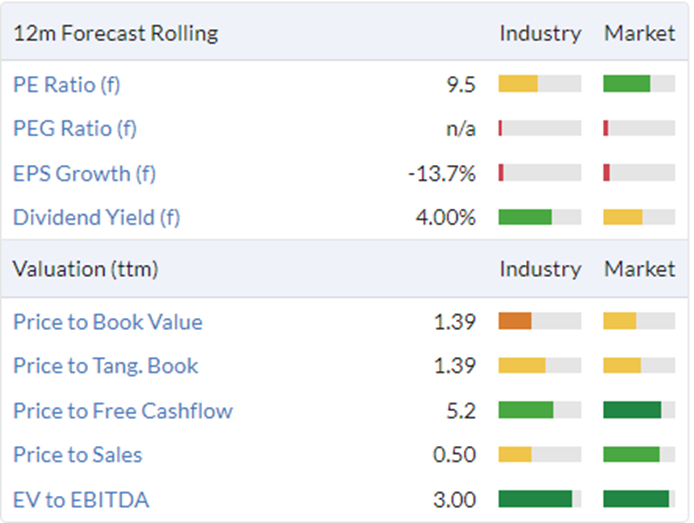
This makes it a rare company that meets all aspects of my MROC framework for finding high-performing shares. It possesses a moat, a long runway, operational leverage, and is cheap.
There are a couple of reasons that the market may not have bid the price up of this stock to a level where all of the great returns have already occurred. The first is that it is viewed as a cyclical stock. While it certainly didn't do well during the most recent economic crises of COVID and the GFC in 2008. These are rather extreme events. There is little sign of cyclicality apart from during abysmal economic times – those that impacted almost all stocks.
The second is that EPS is forecast to decline this year:
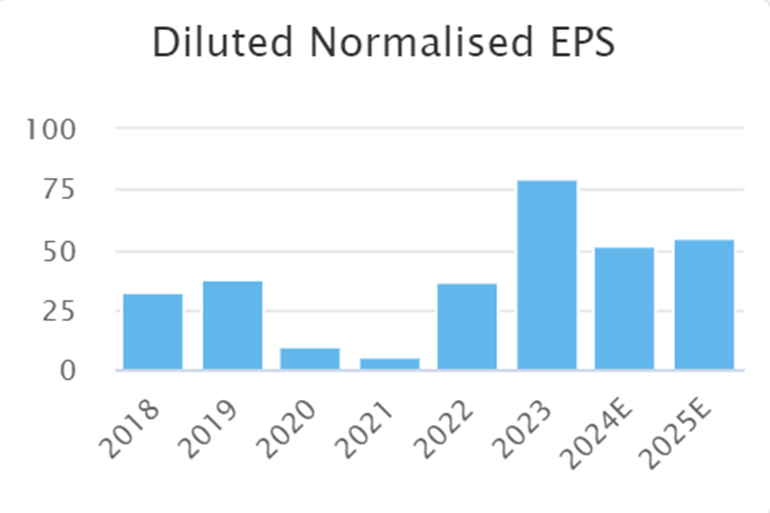
Management has pointed out that 2023 was an exceptional year, driven by the moderation of inflationary forces, and is unlikely to be repeated. However, reading their latest outlook statement, I can't help feeling they may be keeping a bit in the tank:
I believe Billington is increasingly being seen as the steel work contractor of choice and the growth in Billington's market share in 2023 is particularly noteworthy. Whilst there inevitably remain further challenges ahead and market uncertainties are likely to remain for some time, the Group has made significant investments for the future and currently has a record order book. I am therefore confident that with our strong balance sheet and order book Billington will continue to perform well and in line with current market expectations.
Finally, there was a large sale by one of the directors last month:

This holding is in a family trust that used to own a controlling stake in the business, which periodically sells down to diversify its assets. This is unlikely to be related to any view on the long-term prospects for the business. Given the mismatch between the rating and the business's performance, this is more likely to provide an opportunity for other investors rather than represent a risk.
Shoe Zone (LON:SHOE)
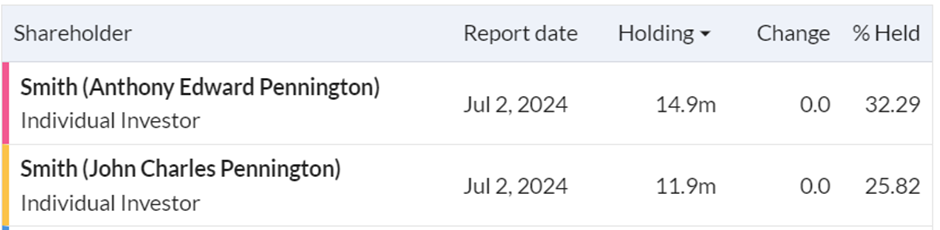
Shoezone is a budget retailer of footwear. Despite being in a competitive and unglamorous industry, the business is very well run by Chairman Charles Smith and CEO Anthony Smith. Together, the brothers have a controlling stake in the company:
The company understandably struggled during COVID-19 when government mandates prevented physical retail, and this was reflected in the share price:
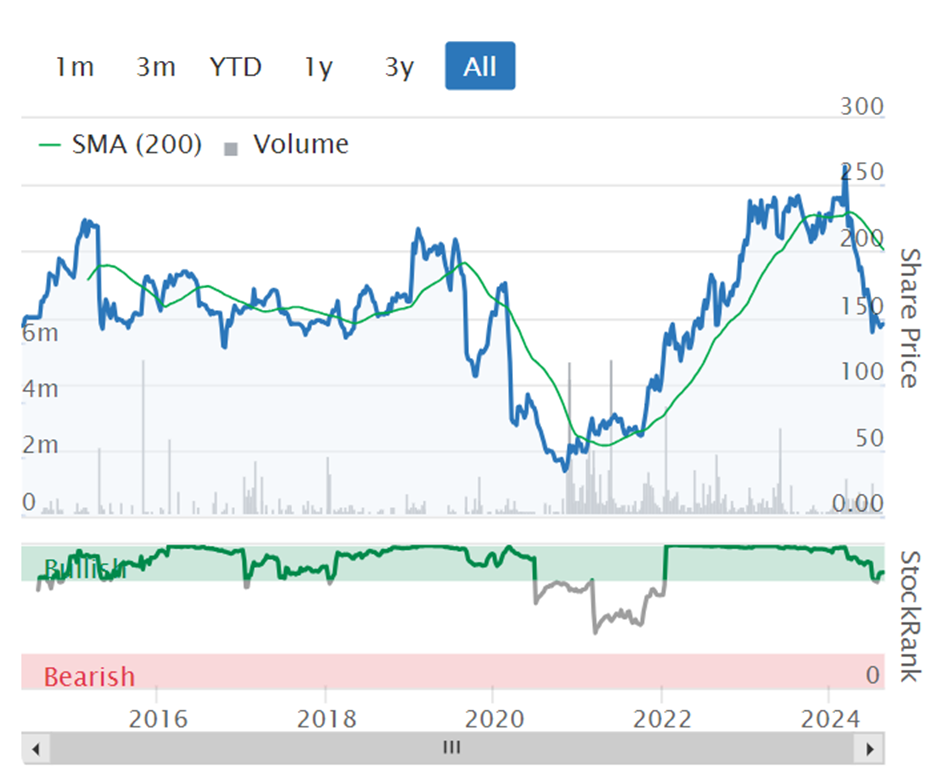
However, the company developed a reputation for constantly beating expectations. This, plus strong cash generation and a tendency to pay special dividends, meant that the shares bounced from around 50p to almost 250p at the start of this year. Buying into companies that always beat expectations can be a good strategy because investors start to expect this and bid up the price even more than can be justified by the upgrades. The problem comes if the company only meets expectations, or even worse, warns, as Shoezone did at the start of July when they said:
Alongside an increase in shipping costs, the company has experienced weaker than expected Spring Summer sales from April to June, due to unseasonal weather conditions.
As a result, the company now expects adjusted profit before tax for the financial year ending 2 October 2024 to be not less than £10.0m.
This was a significant drop, although they had previously reduced expectations slightly:
Our original full year profit before tax forecast was £15.2m, which has been revised down to £13.8m
Their broker, Zeus, converts the £10m PBT into 16.2p Eps, which is what we see on the StockReport:
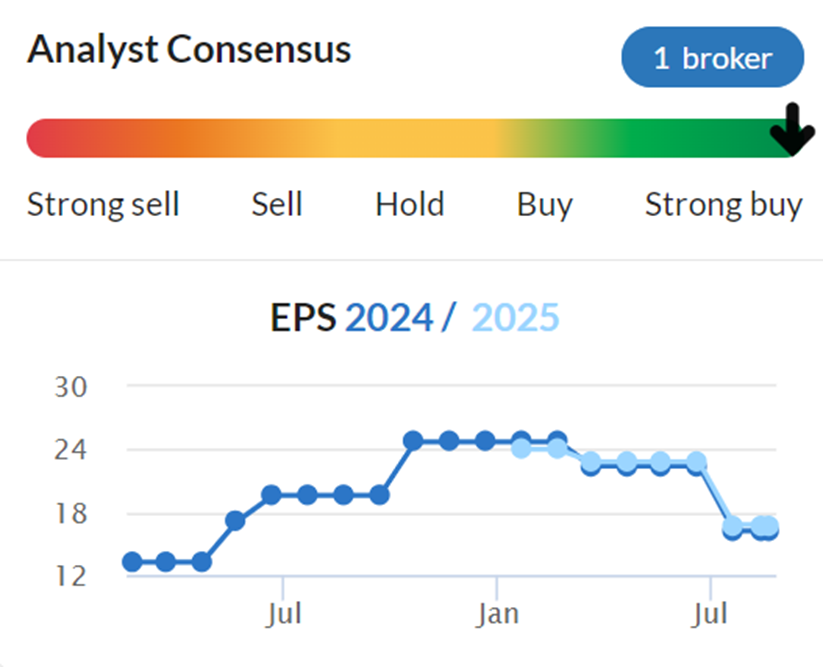
Giving a forward P/E of 9. Not expensive, but not cheap either, for a business where top-line growth lags inflation over the medium term:
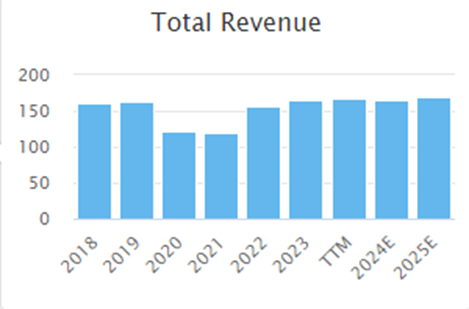
Because of this, the shares have never been particularly highly-rated:
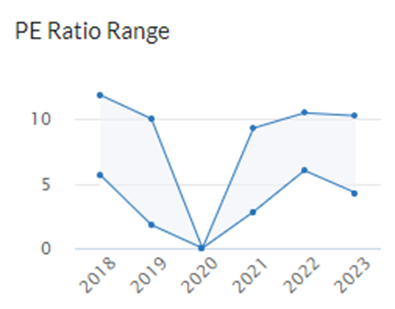
With the shares at the top of this typical range at the moment, it seems that better opportunities may lie elsewhere. However, those who trust that the company's shift to bigger stores will eventually lead to revenue growth may see some value.
Metals Exploration (LON:MTL)
Metals Exploration owns and operates the Runruno Gold Mine in the Philippines. On the surface, the metrics here look exceptional:
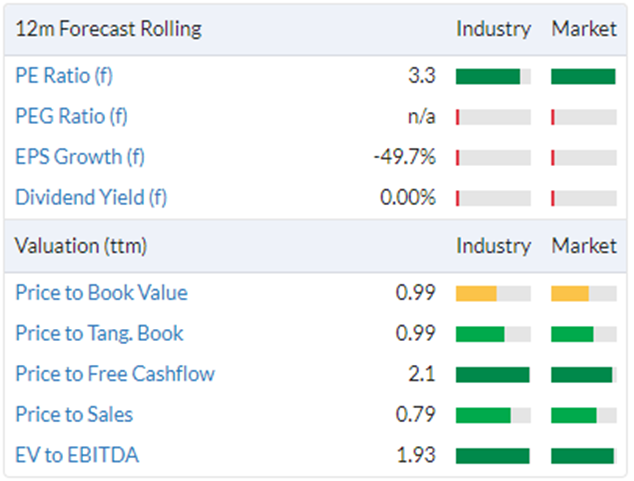
The cash generation in the current high gold price environment has allowed them to pay down significant debt:
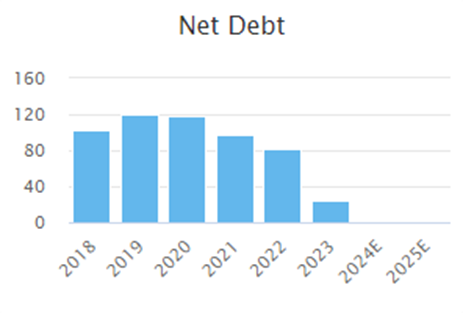
However, as with all mining, a company's resources are finite, and in this case, the current commercial mine life only extends to 2026, making the P/E largely irrelevant. The company is hoping to extend the mine life via near-field exploration. This strategy is often successful, but the skills to assess the investment case here are those of the geologist, not the equity analyst.
Tribal (LON:TRB)
Tribal provides software to the higher education sector. Software businesses are often well-regarded by investors as they tend to be able to grow rapidly without requiring much capital. High gross margins mean that operational gearing tends to be high, and when they win business, clients tend to be sticky.
However, Tribal don't have a particularly good record in this regard. Their return on capital is patchy at best:
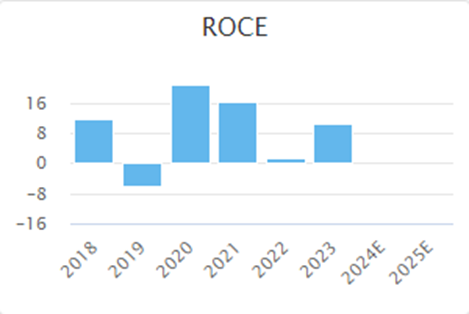
And they have failed to generate any revenue growth over the medium term:
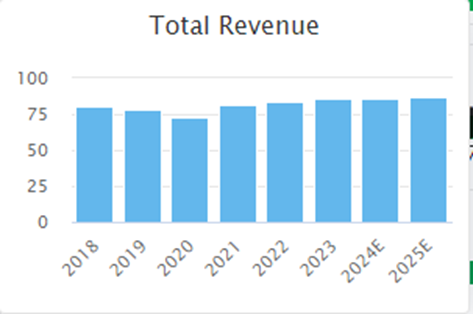
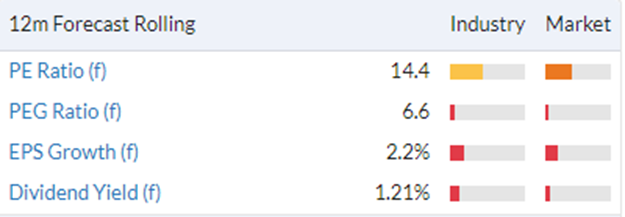
This makes their current forward P/E of 14 a triumph of hope over substance:
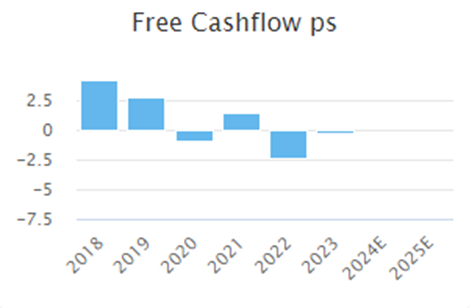
In addition, the company has struggled to generate any free cash flow:
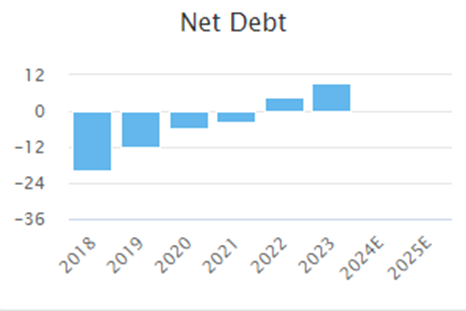
Meaning that they have ended up with net debt:
This is despite working capital becoming increasingly negative, too:
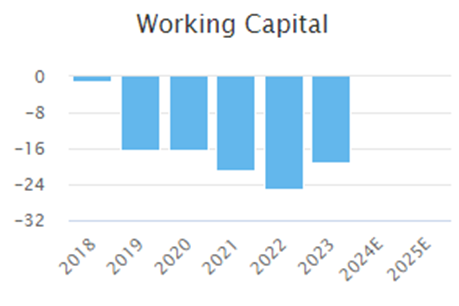
Although the amounts here are small, the trend is worrying. Even the tiny dividend has effectively been paid out of debt, not cash flow.
H1 results were released recently and showed declining profitability:
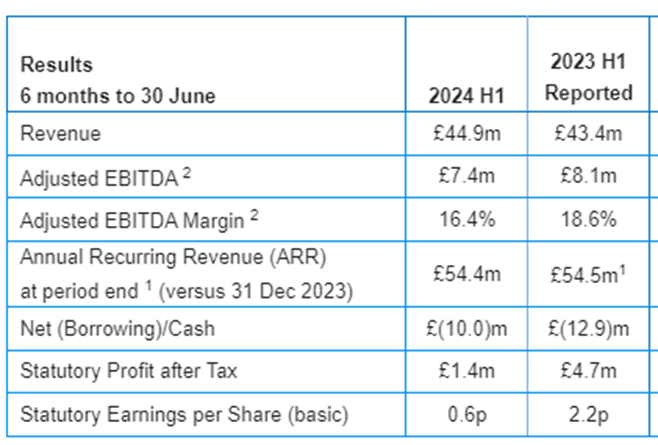
This leaves a lot to do in H2 to deliver full-year results in line with market expectations. Even if they meet these, they look expensive for a company that doesn't grow or generate free cash flow.
Renold (LON:RNO)
It is a stretch to call Renold a neglected firm. It is one of the most discussed stocks on Stockopedia. Probably because it has been one of this year's small cap winners and has been one of the highest-ranked SuperStocks for all that time:
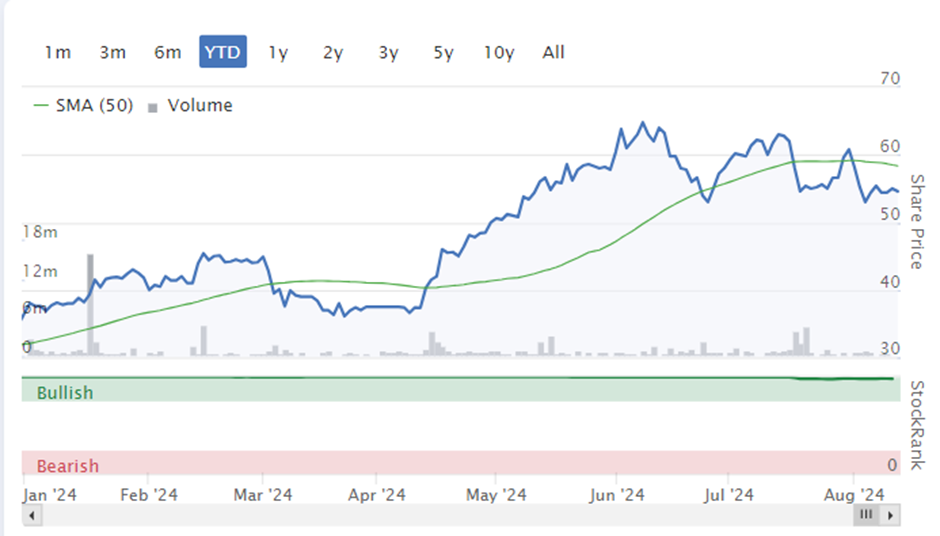
The driver of these returns has been an upgrade to analysts forecasts in April:
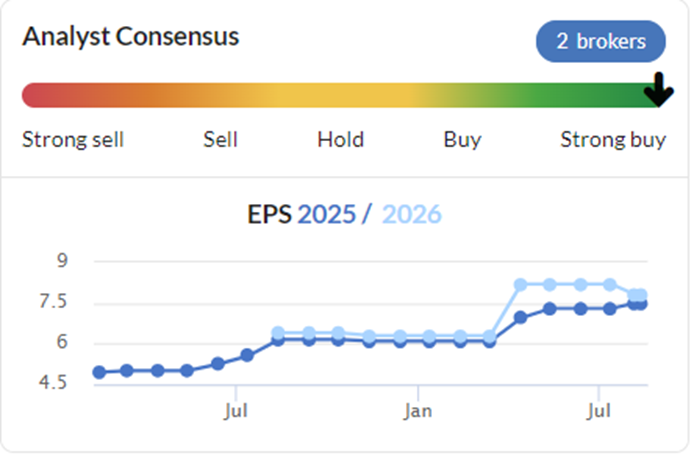
That a 20% rise in FY25 EPS forecasts caused an almost 75% rise in the share price probably reflects that the shares themselves are still on an undemanding rating on the StockReport:
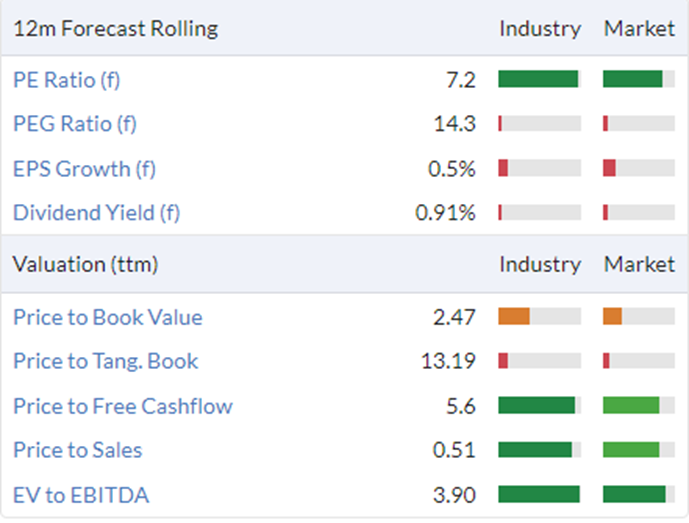
Forecasts have been falling slightly for FY26, and EPS is now looking like being flat on FY25. This means that these metrics are not particularly out of line with other UK businesses that are forecast to have flat medium-term growth prospects:
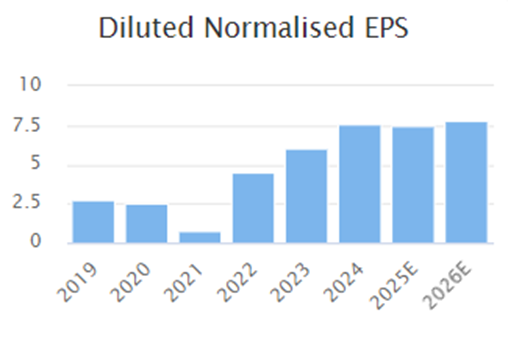
Even so, this doesn't make the company look expensive and may highlight how cheap UK small caps are overall. However, there is a reason why Renold (LON:RNO) may be on such a low apparent multiple. As the following alludes to, it has a significant pension deficit:
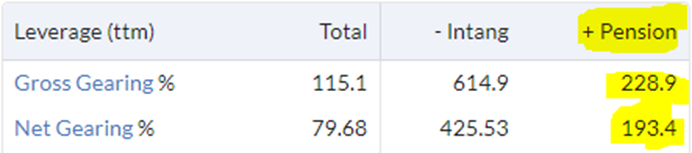
The latest Annual Report reveals the details:
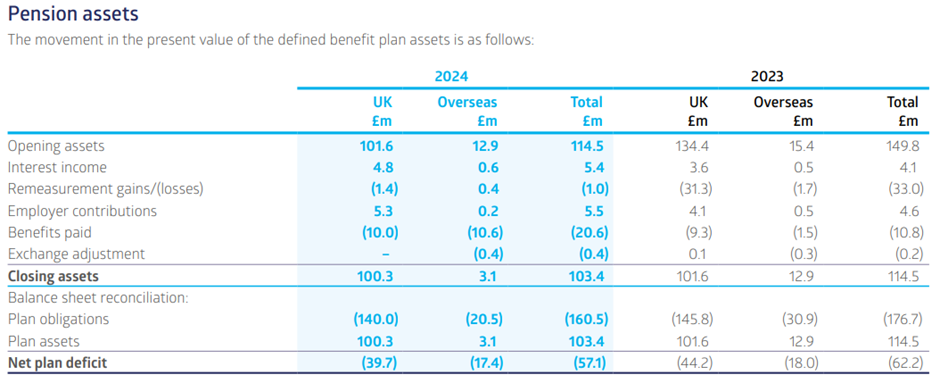
At £57.1m, this is a significant part of the capital structure and one that requires cash payments each year to rectify. With the interest rate cycle likely peaking, this isn't likely to reduce apart from via the recovery payments made. The easiest way is to treat this as additional debt and adjust the EV/EBITDA accordingly. This is what the annual report gives for adjusted EBITDA:

So, investors have about 1.4x to add to the EV/EBITDA to adjust for this, making it 5.3x. This still makes it at the cheaper end of the Machinery and Components Industry segment, just not necessarily stand out amongst the low/no growth businesses:
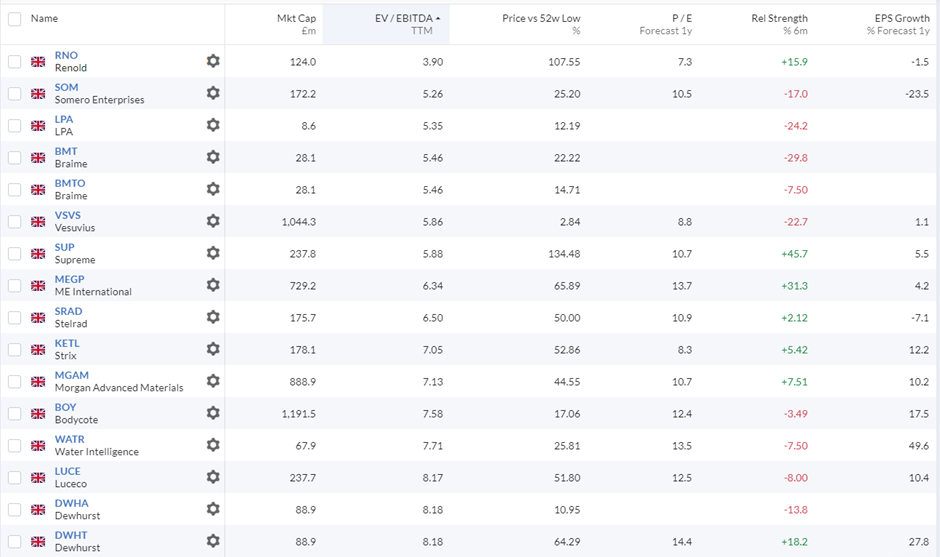
Based on current forecasts, it is probably priced about right. Whether this is worth investing in at the current price probably comes down to an investor's view of whether the company is guiding brokers conservatively and that there will be further upgrades to forecasts during the year.
Solid State (LON:SOLI)
Solid state produces industrial and ruggedised electronic and computing systems. It is the most expensive stock on the Neglected Firms screen but also the one with the fastest revenue growth:
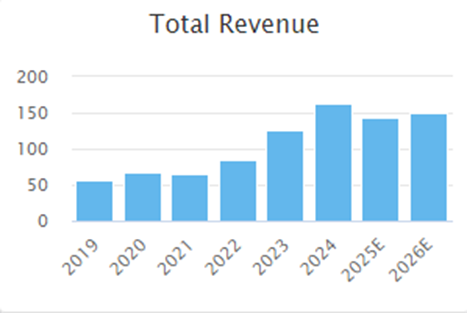
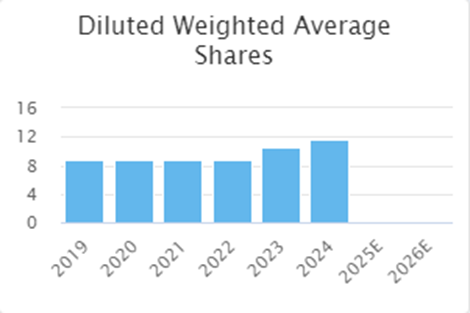
Not all of this is organic growth. However, with share dilution kept to around 30%:
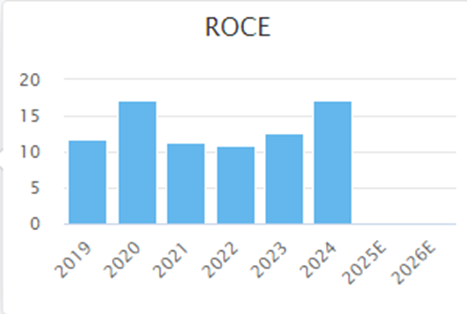
The EPS growth has almost been as fast as revenue growth. In addition, a reasonable Return on Capital means that the net debt here is minimal despite this growth rate:
Unfortunately, it is not all good news. Similar to Billington, the strong 2024 results appear to have been a one-off. With a profits warning in March this year, the EPS is forecast to decline significantly in FY25:
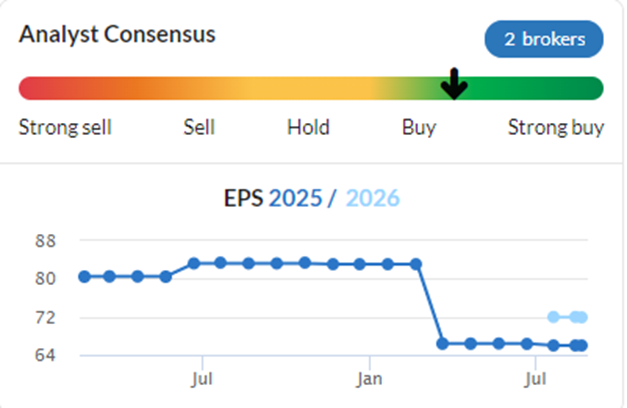
However, the share price doesn't appear to have reacted accordingly, meaning that the forward P/E of 21 now looks a bit rich. Perhaps the biggest argument against owning Solid State is that Billington has very similar historical EPS growth rates, a higher ROCE, and a better balance sheet to fund future acquisitions, yet it is on less than half the multiple.
Not every company that appears on the Neglected Firms screen is a bargain, or indeed neglected. However, the results throw up enough potential good ideas for me to bookmark this screen, and I plan to return to it again in the future. Of the ideas generated, Billington Holdings (LON:BILN) B.P. Marsh & Partners (LON:BPM) Capital (LON:CAPD) Character (LON:CCT) National World (LON:NWOR) and Nexteq (LON:NXQ) all look like potential hidden bargains. Shoe Zone (LON:SHOE) Renold (LON:RNO) are not exactly unknown to Stockopedia subscribers but may provide an opportunity to those who think they can beat current expectations. Meanwhile, Tribal (LON:TRB) and Solid State (LON:SOLI) look overvalued compared to their medium-term growth potential. It will be interesting to see if the future performance of these stocks proves me right.
[Disclosure: Mark owns shares in Billington Holdings (LON:BILN) Capital (LON:CAPD) National World (LON:NWOR) ]
Disclaimer
This is not financial advice. Our content is intended to be used and must be used for information and education purposes only. Please read our disclaimer and terms and conditions to understand our obligations.

8 comments
I bought Renold at the beginning of the year and have been delighted with the performance of the shares. I was about to double up when I saw the directors very significant troughing, which I thought was extreme. The share price took quite a knock and has not fully recovered. I worry more about that than I do about the pension deficit, which should be a diminishing issue over time.
Yes, there is a significant difference between Basic and Diluted figures, and it seems investors should certainly be using the Diluted figures here, given the scale of the options granted to management.
I am not worried about the pension deficit. Pension deficits are the best form of "debt" in that they can't be called. It will diminish over time, but only because the company are making cash recovery payments. So again, this is simply something that can be priced.
Both of these factors reinforce that the company is not as cheap as it appears at first glance and needs to beat expectations to look at reasonable value again, given the share price gains this year have been significantly in excess of any improvement in trading.
Thanks Mark, another good read.
I like the look of Billington. Better to stay clear of Tribal as I work in the educational sector and have dealings with them through their SITS s/w and CRM rollouts. All I'll say is SITS (student records) is good and will finally be getting a much needed upgrade and moving to the cloud for all its customers. Their current s/w looks about 20 years out of date!
Thanks for the background WM. I have heard one of the bull points for Tribal is that everyone who uses their products thinks they are crap, but they are the industry standard, so everyone still uses them. However, this isn't a strong enough argument for me, especially at the current rating. If it was on a P/E of 5 with a reasonably recurring revenue base but a crap product, I might take the risk!
Hi Mark,
I can understand why people complain about their s/w. The 1st time I was introduced to SITS about 8 years ago I was shocked, it was like going back in time to year 2000, it's so outdated. It is regarded as the industry standard.
You open a screen to login and then a few more clicks and screens to eventually get to where you need to be, so you can have 4 or 5 screens open at once. It does what it's supposed to do, but it can be a frustrating process and not intuitive.
The cloud rollout can't come quickly enough and provided they get it right and the rollout is seamless, then they will be onto a winner. It should be a good selling point to even more Uni's
There's 2 main elements to Tribal from what I can see - SITS and CRM rollouts. They are based in Swansea and a few years ago there was Tribal and another company nearby called Crimson which focussed on CRM for Uni's.
The directors and staff all knew one another and eventually Tribal bought out Crimson for the CRM rollouts. My Uni had dealings with both these companies prior to the takeover. SITS is probably the more mature of the product offerings, but the CRM rollouts and upgrades are still an absolute nightmare, it never runs smoothly, no end of problems and what should take a couple of weeks, ends up taking 2 months.
Thankfully I'll be taking voluntary redundancy and semi-retirement this year, so no more painful CRM rollouts for me :) It'll also mean I'll miss the big SITS upgrade next year as well which I was looking forward to.
Great work , Mark. Thank you!!
Thanks for excellent article.
I bought MTL on Ed's 'naps' at beginning of year, as felt world financial situation would be good for gold, and MTL looked a choice plum [3p ish] . On both counts I seem to have made the right choice [does'nt always go that way] .
Just to add a little more info. I did reduce the holding by a third after rapid rise to 5.5p,and fall to 4p [my sale price] it actually fell to about 3.6p ,this due to shenanigans with two large investors who had bailed MTL out a few years back ,when management wer'nt up to the job. The current CEO emerged and turned things round fantastically, as one can see from the current figs. Due to his influence he paid off all debt about april and tomorrow an EGM is called to buy out one of the creditors shares,and reduce the larger investor. Cash is flowing like a train currently due to steady production,and record gold price.
As you say the mine is running out ,but there are plans afoot to explore a nearby gold rich area ,again one hopes there will be some interesting news there tomorrow .
Thanks to ED and now yourself for bringing this little gem [so far ] to my attention. Tony
Many thanks Mark for this excellent piece of work. I will try to find a few hours to look deeper into these additionals as well as revisit some on your first list.
Nice to see a few names that I own on both lists. My problem as ever is impatience and my tendency to sell far too early just because nothing seems to be happening…….
Mark