Small Cap Value Report (Thu 20 Oct 2022) - LUCE, JUP, IGR, IPF, WINE, G4M

Good morning from Paul & Graham!
UPDATE at 12:17 - I'll take a quick look at £G4M next, then we'll be finished by 13:00. Paul.
Agenda -
Paul's Section:
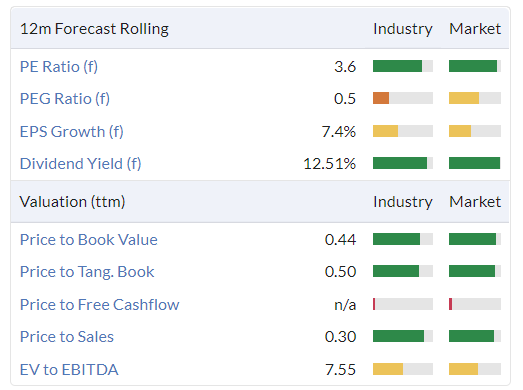
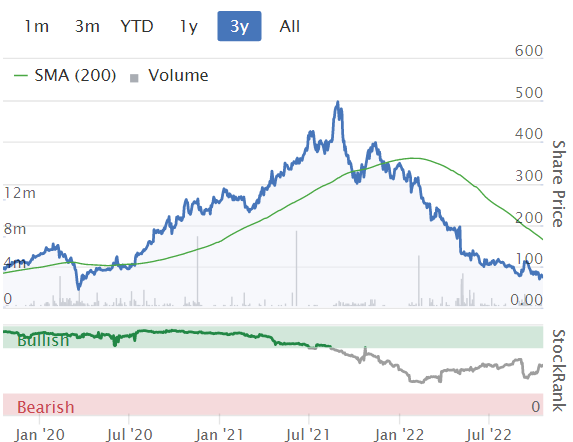
Luceco (LON:LUCE) - it's a profit warning, with broker forecast EPS reduced substantially (down 27% for FY 12/2022, and down 39% for FY 12/2023). I'm concerned about high bank debt here, although it has reduced sharply in Q3 due to reduced inventories. It's now clear that 2020 & 2021 bonanza profits were an aberration, not the new normal. Therefore the plunging share price looks justified on weaker fundamentals, and an uncertain macro outlook. The chart might look oversold, but on fundamentals, I have to say the current price looks about right to me. It could recover once the economy recovers though, and earnings forecasts start rising again - but it feels too early to be anticipating that.
Naked Wines (LON:WINE) - this troubled wine subscription eCommerce business has certainly made some progress. There's a lot of detail in today's update, with the main positives being guidance for a strong profit improvement this year FY 3/2023, and amended bank covenants which give it a lot more flexibility. Although the deeper you dig, the clearer it is that there's still a lot to sort out - especially very excessive inventories, which could contain further hidden losses. Overall though, risk has reduced, and the potential upside looks better after today's update, although some concerns remain.
Gear4music Holdings (LON:G4M) - a fairly solid H1 update, and in line for the full year 3/2022. I discuss the bull & bear points. Overall, I'm seeing the glass half full here.
Graham's Section:
Jupiter Fund Management (LON:JUP) (£495m) - in a sign of the times, another large fund manager has seen its valuation fall below our market cap limit. I’ve always maintained that the time to buy fund managers is when markets are depressed, as the subsequent recovery produces turbocharged returns for the owners of fund management companies. Jupiter is perceived as a company that lacks differentiation in the sector, which has resulted in it being a victim of the transition to passive and automated investment strategies. However, its new CEO appears determined to streamline the business. Furthermore, Jupiter is now going to start buying back its own shares. I would like to see much bigger buybacks, as the business trades on a meagre valuation of just 8x earnings. These catalysts have sparked my interest and I now see this as an interesting contrarian opportunity.
IG Design (LON:IGR) (£86m) - a positive trading update although with no change to full-year expectations. Customers have brought forward their orders to H1, to avoid getting involved with the supply chain problems that made a mess of last year. Therefore, both IG and its customers should hopefully get a more certain result from trading this Christmas. Looking further ahead, it’s not clear when IG will be able to restore their profit margins in the face of rampant input cost inflation. But at least the stock is already pricing in low future margins, providing good upside if they succeed.
International Personal Finance (LON:IPF) (£167m) (-6%) [no section below] - this lender, formerly part of Provident Financial, operates in various Eastern European countries and also in Mexico and Australia. Today’s Q3 update discloses a 15% increase in lending (at constant exchange rates) and a 2% increase in customer numbers. Their digital product is growing particularly well. Total receivables are now at £851m, with a “stable” repayment performance across all divisions. There are however “early signs of a reduction in customer demand for credit”, and IPF says that it is tightening up its lending criteria for high-risk customers.
Rising interest rates and hedging costs have resulted in IPF’s cost of funding increasing to the very high level of 12.8% (up by 60 basis points). It has a below-investment grade credit rating from the agencies. It is also going to suffer a profit reduction of c. £20m p.a. thanks to new lending regulations in Poland. Despite these challenges, the shares may now be worth considering as they lurch into bargain basement territory. Even with the loss of business in Poland, and accepting the high-risk nature of the business, the shares are still potentially too cheap at these levels. [no section below]
Explanatory notes -
A quick reminder that we don’t recommend any stocks. We aim to review trading updates & results of the day and offer our opinions on them as possible candidates for further research if they interest you. Our opinions will sometimes turn out to be right, and sometimes wrong, because it's anybody's guess what direction market sentiment will take & nobody can predict the future with certainty. We are analysing the company fundamentals, not trying to predict market sentiment.
We stick to companies that have issued news on the day, with market caps up to about £700m. We avoid the smallest, and most speculative companies, and also avoid a few specialist sectors (e.g. natural resources, pharma/biotech).
A key assumption is that readers DYOR (do your own research), and make your own investment decisions. Reader comments are welcomed - please be civil, rational, and include the company name/ticker, otherwise people won't necessarily know what company you are referring to.
Paul’s Section:
Luceco (LON:LUCE)
74p (pre market open)
Market cap £119m
Luceco plc ("the Group" or "Luceco"), the supplier of wiring accessories, EV chargers, LED lighting, and portable power products, provides the following update on trading for the three months ended 30 September 2022 ('Q3 2022').
I like it when companies get into a pattern of releasing quarterly trading updates, and wish all companies would do this. It’s much better than leaving big gaps in the reporting, and providing an AGM update on an AGM date chosen seemingly at random. We should cajole other companies to adopt quarterly updates as standard.
Q3 trading - sounds OK, although “in line” means down 11% vs Q3 LY (but up 14% on 3 years ago pre-pandemic, helped by acquisitions) -
The Group has traded in line with expectations in Q3 2022 and generated strong cash flow…
Q4 outlook - has deteriorated due to customer destocking -
However, our order book now suggests our distributor customers will destock faster in Q4 than we originally expected, resulting in Adjusted Operating Profit for 2022 in the range of £20-22m, below previous estimates. Our estimate of total destocking for 2022 and 2023 combined remains unchanged.
Other points -
DIY demand slowed, but is now being stimulated by customer promotions.
Demand from professionals is stronger - especially LED lighting (non-residential) - this ties in with several companies recently saying they’re installing LED lighting, to save on electricity costs. So LED lighting is clearly a good space to be in for Luceco, and was 38% of group revenue in H1.
Reduced inventories in Q3, generating £11m in free cashflow, which has reduced net bank debt considerably, from £53.9m end June ‘22, to £43.5m end Sept ‘22 - this is key, as in my view, net debt had got worryingly high. Net debt is expected to remain the same in Q4.
Customer destocking - is happening faster than expected.
Profit guidance - adj operating profit £20-22m. It doesn’t say what previous guidance was.
Broker update - many thanks to Liberum, for an update note this morning. As is often the case, a fairly benign-sounding company statement, has resulted in large drops in profit forecasts from the broker.
FY 12/2022: adj EPS cut from 12.4p to 9.1p (down 27%) - PER of 7.3 (at 66p/share at 08:24 today)
FY 12/2023: adj EPS cut from 13.7p to 8.3p (down 39%) - PER of 8.0
Those PERs might look low, but bear in mind the 2023 macro outlook is currently looking quite grim, so forecast profits could be slashed again if we go into a proper recession. Although as the company says, it does now have tailwinds in 2023, from reduced freight costs, and the return of more normal customer orders after the destocking in 2022 has finished in early 2023.
Also bear in mind LUCE is carrying a lot of debt, after some rather ill-timed acquisitions. So the PER should be low.
Cost inflation - this is interesting, although as an importer from the Far East, I’m confused as to why forex has moved in their favour?
Our estimate of the total impact of cost inflation emerging from the pandemic has reduced materially in recent weeks as key cost drivers such as sea container and currency rates have moved rapidly in our favour. At current prices, this would lead to a reduction in our annual cost base between 2022 and 2024 once existing inventory has been sold through and current hedging arrangements mature.
This confirms what I’m hearing from other companies, that inflation re cost of goods & inbound shipping, are now reversing nicely. Which reinforces the credibility of forecasts that general inflation should reduce potentially quite quickly in 2023.
As supply chains normalise, we’ll probably see more destocking (because companies won't need elevated inventories any more to ensure supply), which combined with reduced demand in a recession, could end up with a glut of goods, and lower prices, even in 2023?
A lot depends on what happens with energy prices though. But it’s increasingly looking likely that this is a spike in inflation, not long-term, ingrained inflation. In my opinion, I could be wrong, but we’re getting more evidence by the day that supply chains & costs are easing.
Outlook -
There is an unusually broad range of macroeconomic outcomes for 2023.
If pressure on residential RMI activity from reduced household disposable income and fewer housing transactions continues as expected, this is likely to lead to profits in 2023 being similar to 2022, with performance underpinned by tailwinds from reduced customer destocking, growth in EV charger sales and input cost deflation.
The Group's healthy balance sheet, strong cash generation and agile business model will enable it to navigate this period with confidence.
Is the balance sheet strong? It’s got too much bank debt, in my view. That is a concern.
Assuming the bank remains supportive though, the overall position is OK, with NTAV of £41.5m.
The structure of the balance sheet is a very healthy working capital position - the current ratio is 2.7, with a £80.5m surplus of current assets over current liabilities. That’s very comfortable actually. However, this is funded mostly by non-current £58.5m gross bank borrowings. That’s as at 30 June 2022.
Before buying shares in LUCE, I would want to stress test the bank borrowings & covenants, in a downside trading scenario.
My opinion - this is a significant profit warning, with big reductions in forecast EPS in 2022 and 2023. How much of that is already in the share price though? Are the shares are a bargain yet? Not really, I have to say, based on the new forecasts, and the uncertain outlook.
It feels too early to be anticipating a recovery in earnings, so I’ll stay on the sidelines with this share. The debt worries me a bit too, although it has come down nicely in Q3.
It’s now clear that the bumper earnings in 2020 & 2021 were complete one-offs, due to the pandemic. Therefore, unfortunately for shareholders, the collapsing share price does seem justified by the very much weaker fundamentals. So I think we should be pricing this share on much more modest earnings expectations in future. That means people need to avoid anchoring to the peak share price of 500p, and assuming it can recover to that level, as that was (we now know, but didn’t then) a completely unrealistic valuation, based on unsustainable one-off bonanza peak earnings.
.
.
Naked Wines (LON:WINE)
119p (up 26% at 09:45)
Market cap £88m
Two announcements today.
Darryl Rawlings steps down as Chairman, effective today.
David Stead becomes the new Chairman today (existing Director since 2017, formerly CFO of Dunelm, and Boots - looks a big hitter). This is a positive surprise I think, as it had been previously announced that he was planning to step down in Nov 2022.
James Crawford (Interim CFO) - “active discussions” to make him permanent CFO.
New Chairman’s comments -
"I look forward to working closely with Nick and James in the coming months and beyond. My aim, together with the other non-executive directors, is to support them in delivering improved liquidity and sustainable profitability."
Operational & Financial Update
Background - this is a planned update, as this subscription wine business had previously told us that the business model was being actively reviewed, and the focus needed to change from growth, to cost-cutting, targeting profitability, and reducing excessive inventories. Remember also that its reducing cash pile actually belongs to the customers, and would shrink as revenues fall. So the cash position is not anywhere near as comfortable as it might look.
Net cash was £39.8m at 3/2022, but it had received advance payments of £76.0m from customers, so the company's own cash was actually negative at the last year end.
Net cash fell further to £22m at 9/2022.
Revised covenants on the bank facility - which is now linked to adj EBITDA performance of £1m per quarter, instead of the old, rather weird, covenant linked to repeat customer contribution (a metric I always thought looked like fantasy). This looks safe, as H1 has already produced £5-6m of adj EBITDA. So the way I see this new covenant, it’s forcing the company to stop operational cash burn, but gives it balance sheet flexibility (to increase or reduce inventories for seasonal peaks). That looks a good move, and sounds positive.
Going concern - there was a “material uncertainty” note with the FY 3/2022 results, which it says was triggered by the old bank covenant. So although not explicitly stated, it sounds as if the next going concern statement to accompany interim results could be better, we’ll see.
Cost-cutting - very sensibly, costs are being trimmed, saving £18m p.a. compared with previous guidance. This is mostly reduced marketing spending, which is bound to cause revenues to fall - possibly by more than the modest -4-9% that the company guides?
Profit guidance - it reckons adj EBIT (operating profit) of £9-13m can be achieved this year, FY 3/2023, and more the following year. Note that FY 3/2022 results showed £2.0m adj EBIT, so this is really bullish if that can be raised to £9-13m this year, FY 3/2023.
However, the H1 guidance reveals that H1 profit of £4m is heavily adjusted to exclude £12m of “one time” costs relating to restructuring, and provisions against inventories. This is a worry, because the excessive inventories could contain other horrors requiring additional provisions, as is often the case. There’s a one-off gain of £4.8m on disposal of a freehold property.
Commitments to wine growers look a problem too, with some costs involved in getting out of those contracts, so more information is needed on this.
Inventories - this bit concerns me. Inventories were already far too high, so the obvious thing to do is run those down, to generate cash. Instead, WINE has increased inventories further,
Inventory is expected to peak now, remain elevated for 12 months, before reducing...
Year end FY 9/2022 is expected to show inventories of wine at £185m, which is at cost remember. Cost of sales in last year’s P&L was £209m, and revenues are set to shrink this year, so WINE is currently sitting on an entire year’s worth of stock. The plan is to reduce this to £145m by end FY 3/2024, but that’s still a huge amount. Good retailers turn their stock fast, say every 6 weeks. WINE sits on it for a year! Maybe that’s the nature of wine, but it doesn’t strike me as a very good model, and it’s tying up a lot of capital, plus there’s storage costs, breakages, wine going off or corked, etc, to think about. My main worry is that the inventories could be full of wines that customers don’t like, and don’t want to buy. The company has admitted today it’s making provisions against some inventories, i.e. marking down its value to below cost. How do we know there’s not a ton of other product sitting in vats, or warehouses, that’s unsaleable? It’s always a big risk, at any company with excessive inventories. Ted Baker was a good example of that, where I flagged excessive inventories, and it eventually ‘fessed up with a big write-off charge against stuff they couldn’t sell.
So big inventories is now my main worry with this share.
My opinion - there are 2 ways of looking at this -
Bull case:
Big rise in guided profitability for this year & next, now it’s refocused on profit & cashflow, instead of growth. Worries over bank facility & going concern seem to be resolved with amended covenants, so it’s now much lower risk. Brand could be valuable, takeover target maybe? Could be worth a punt.
Bear case:
Inventories still way too high, and it’s only profitable if you ignore a hefty slug of supposedly one-off costs (which may not be one-offs in reality). Revenues now shrinking, which could limit the valuation upside.
On balance, my view is certainly less negative after today’s update, which does show some decent progress, reduced risk, and early signs of a turnaround. But there’s still a lot to sort out. I’ll watch developments with interest.
.
.
Gear4music Holdings (LON:G4M)
113p (up 5% at 12:21)
Market cap £23m
Preamble from Paul - I last covered this online seller of musical instruments & other audio equipment, here on 20 Sept 2022. That was a mild profit warning. As mentioned at the time, the pandemic profits have melted away, so the market’s brutal share price destruction in the last year does make some sense.
Forecast EBITDA of £9.0m only turns into £1.3m adj PBT (per Singers forecast), a wafer thin overall profit margin, on forecast revenue of £155m, this is for FY 3/2023.
Maybe the pandemic brought forward demand, and we know it increased costs (especially freight), creating a hangover, so it’s possible the current year might be a low point, if you take an optimistic view.
What’s the latest?
H1 revenues £66.3m (up 2% on H1 LY) - UK down 3%, Europe up 10% (helped by new Irish & Spanish distribution hubs).
Gross margin softer, at 26.3% (H1 LY 28.0%) - but bear in mind G4M absorbs dispatch costs within its margin, so the margin on a comparable basis to many other eCommerce businesses is in the 30’s, not 20’s. Plus the average transaction value is high, and the returns rate low, so this gross margin does make more sense than you might at first believe.
Net debt of £21.8m at end Sept 2022, has come down £2.4m in 6 months. This is the main negative with this share, although I don’t think it’s a severe concern, because it’s funding a large inventories position, which can be gradually reduced.
Outlook - bear in mind that H2 to date is only 20 days, but even so this reads positively in the context of a depressed share price, I think -

We have strong levels of inventory heading into our peak trading period, our infrastructure is performing well, and we are on track to deploy several new growth orientated website upgrades alongside further productivity enhancements during H2. The Board therefore remains confident that results for the full financial year will be in-line with recently updated consensus market expectations**.
** Gear4music believes that current consensus market expectations for the year ending 31 March 2023 are revenue of £155.1 million, EBITDA of £8.9 million and profit before tax of £1.1 million.
Seasonality - a footnote seems to suggest that a stronger H2 might be expected this year, so chance of a beat against forecasts perhaps? The current forecast assumes 57% revenues in H2, whereas pre-pandemic it was 61-64%. Mind you with consumer confidence so low, it’s a brave person who assumes forecasts will be beaten, but at least this provides some comfort that forecasts might be set conservatively, it’s looking that way to me.
Diary date - 15 Nov, for H1 results (to 9/2022), a nice prompt reporting schedule.
My opinion - I’m encouraged by this. Brokers have left forecasts unchanged, at just above breakeven. Progress is being made in Europe. Margins could improve, if input prices begin to ease, and of course shipping costs have dramatically dropped recently. Putting that together, G4M is still managing to trade profitably, in pretty grim cost and demand conditions. That suggests to me that profit is likely to take an upward turn at some point, once more normal economic conditions return.
Therefore, at £23m market cap, I think risk:reward could be turning positive, so it gets a thumbs up from me.
The other thing, is that there’s the chance of a sector re-rating. I’ve been on about this all year, so am either wrong, or just too early. My theory is that when structural growth resumes, which logically it should, because the move online for a lot of retail is not temporary, it's permanent. The pandemic just distorted things, by pulling forward growth, and then creating the illusion of stagnation the following year. These distortions are gradually dropping out of the system.
Hence I still believe that, at some point, the market could look at bombed out eCommerce shares (many down 90%), and say, hang on these actually are growth businesses after all. And the margins are improving because freight costs have plunged, and purchasing prices are falling due to a glut of supply. It’s possible, and that could easily trigger a big sector re-rating, and some nice multibaggers. I don’t know if that scenario will actually happen of course, but it seems a possibility that’s quite credible to me anyway!
A more bearish view on G4M would be that it took on too much debt, is only trading a whisker above breakeven, and seeing increased costs from things like labour, etc.
So as with so many companies, you can see the glass half full, or half empty.
.
Graham’s Section:
Jupiter Fund Management (LON:JUP)
Share price: 89.55p (+1.5%)
Market cap: £495m
Following on from my coverage of Liontrust yesterday, here’s Jupiter with a Q3 update.
This company’s chart is a disaster: the shares were trading at over 600p in 2017.

Indeed, these look like all-time lows for the fund manager - its IPO was all the way back in 2010, at 165p.
It’s not all about the share price, though. Chunky dividends have been paid and the yield is approaching 15%:
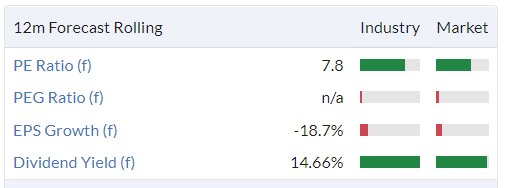
That’s the great thing about this bear market: if you have fresh cash to deploy, there are quite a few of these companies lying about with huge yields and single-digit PE multiples.
However, each case is different and in the case of Jupiter, it’s perceived as a fund manager without a moat. I share this view, and see it as a business which is a legacy of the times when passive funds did not exist or were too expensive to be mainstream.
Key points from today’s Q3 update:
- Assets under management fall from £48.8 billion (June 2022) to £47.4 billion (September 2022)
- Net outflows £0.6 billion. Retail and wholesale flows are negative, while institutional flows are positive (helped by a “large mandate from a sovereign wealth fund).
- Loss of value from investment returns of £0.8 billion.
New CEO: Jupiter has a brand new CEO who is both cancelling job vacancies and reportedly looking to make up to 80 jobs redundant (the company has about 500 employees).
In today’s announcement, he says (emphasis added):
Since my appointment, I have sought to take decisive actions to ensure we have the optimal operating model to succeed in a competitive environment. This includes reducing our cost base, streamlining the fund range and restructuring our management team. Although this work is ongoing, we have made a good start and this, combined with the success of our existing strategies and new growth opportunities ahead of us, gives me confidence that Jupiter is well placed for a return to sustainable growth."
Job losses are always unpleasant, but it sounds to me as if Jupiter’s new CEO has the necessary mindset to get the business onto a surer footing.
Jupiter, like many other fund managers, needs to decide what it is good at and stick to that. There are still 4,000 funds for sale and many fund ranges can and should be streamlined.
Capital allocation: the new policy will be to pay out 50% of annual pre-performance fee earnings in dividends, regardless of the prior year’s dividends. This allows for special dividends and/or buybacks with any additional spare cash.
This is interesting:
In view of... our current valuation Jupiter today announces that we will commence a share buyback programme to repurchase and subsequently cancel shares for up to a maximum consideration of £10 million (the "Programme"). The Programme will commence on 24 October 2022, and is expected to be completed by no later than 31 December 2022.
£10m is only around 2% of the market cap but this is a positive signal. If management remain of the view that their company’s valuation is on the low side, maybe we could get a meaningful reduction of the share count over the next few years?
My view
I can see myself getting interested in this one. Yes, it’s cheap for very good reasons. But we now have two potential catalysts:
- A new CEO who can look at it objectively (he was an outside hire) and is not afraid to make tough decisions, to turn it into a leaner and more focused business
- The potential for buybacks to reduce the share count over time. This could be a big boost for EPS and dividends per share, even if the company fails to grow much.
On a macro level, if you’re bullish on markets recovering over the next year or so, then obviously that’s going to be a tailwind for AUM.
Because of the catalysts, I think this could be a good contrarian investment. Worth looking into.
IG Design (LON:IGR)
Share price: 88.5p (+9%)
Market cap: £86m
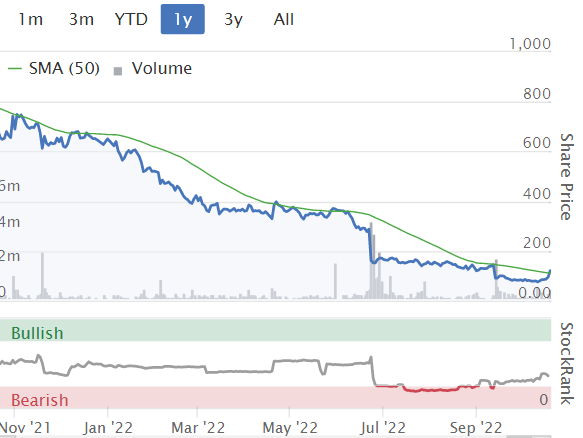
This company has suffered a stunning fall from grace in terms of valuation:
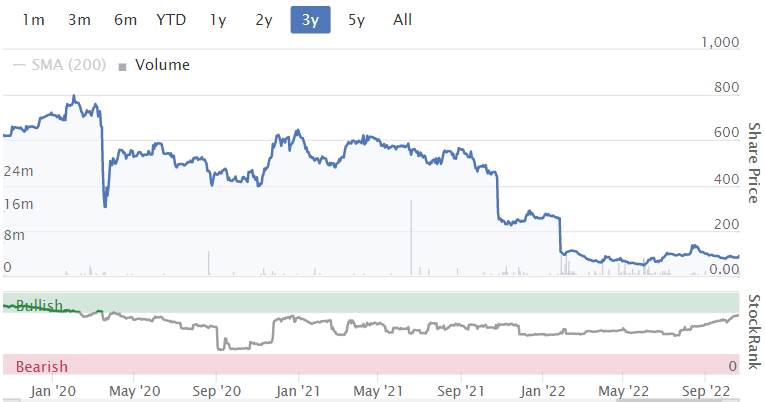
Let’s try to look forward and understand what the future might hold. The company makes greeting cards, wrapping paper, stationery, Christmas crackers, gift bags, etc., and has a very large presence in the United States.
Today brings an H1 update for the six months to September 2022:
- “Sales, profits, margins and cash flow are expected to be significantly improved” (versus H1 last year), and ahead of expectations.
- Despite the H1 improvement, there is no change to full-year expectations for FY March 2023.
The reason, according to IG, is that the better H1 numbers reflect orders being brought forward from H2, i.e. that it’s only a timing difference:
The main reason for this performance is that many customers have brought forward their seasonal ordering so as to avoid the supply chain challenges experienced in the second half of calendar year 2021. This performance reflects the strong relationships that have been sustained with customers and the ongoing demand for the Group's products.
The overall expectation is for “a small year-on-year improvement in profits compared to the prior financial year”. There are “ongoing input cost inflation and signs of a general downturn in consumer sentiment across all of our markets”.
Last year, the company reported full-year revenues of $965m, an adjusted pre-tax loss of $1.3m, and a statutory pre-tax profit of $2.2m.
My view
This company remains in turnaround mode, dealing with a number of huge challenges of which the biggest now is probably inflation.
It published a lengthy section on its new strategy in last year’s results statement (analysed by Paul here).
In short, it abandoned its pre-existing, ambitious growth plans and instead looked to achieve the more basic task of getting back to profitability:
The sheer scale and speed of the change in the cost architecture of the Group's product ranges, particularly in DG Americas, has resulted in the need to challenge the assumptions that underpin the commercial operations to ensure that the business going forward is delivering profitable product ranges based on more sustainable cost structures. As a result, the Growth Plan… is to be replaced by a strategy to restore profitable and sustainable growth.
This is a very large, reputable business here for sale at less than £100m.
Is it a quality business? I’m not sure. It’s a manufacturer of well-designed, popular products that are sold around the world. But the recent issues have exposed vulnerable margins, and if you look at its historic numbers the operating margin was never particularly high.
Here’s the operating margin from 2017 to 2022:

At the end of the day, maybe items such as gift wrap and greetings cards are too heavily commoditised to ever generate attractive margins, even for a company of this enormous scale?
But also, it must be acknowledged that IGR shares are already pricing in a pessimistic view of these margins. Remember that revenues aren’t far off $1 billion. So the market is realistically not expecting margins to improve much in future years.
I will say that I’d much prefer to buy shares in this company now, with very pessimistic assumptions priced in, than to pay an expensive price for it. But it’s beyond me to predict what will happen to input costs here. Management have a huge job on their hands.
Disclaimer
This is not financial advice. Our content is intended to be used and must be used for information and education purposes only. Please read our disclaimer and terms and conditions to understand our obligations.

48 comments
Sosandar (LON:SOS) pI World podcast popped in earlier. Really strong sounding story. Took a modest amount last week after following it for ages until it bounced off recent lows. I have a feeling NEXT are more likely to jump in there after the recent Reversal from Joules. Strong October sales they say and seems to be a crowd pleaser for their target audience.
Gear4music Holdings (LON:G4M) for me it's all about trying to assess what their steady state of earnings are likely to be when things normalise and economic conditions stabilise. They did almost 60p during the pandemic - this looks to be a one off - if they revert to their pre-pandemic levels of around 15p then this would be worth around 150p based on a low-growth multiple of 10. However if they can get back to say 30p then this should attract a higher multiple as they will have demonstrated decent growth, so 500p could be feasible. There is arguably limited downside from these levels, but potentially a lot of upside if they can return to growth so am tempted to have a punt.
Just a general comment that would effect quite a few shares such as IG Design (LON:IGR) Bloomsbury Publishing (LON:BMY) (no positions), packaging etc, a friend who is having her book published by T&H has had it delayed until spring, missing the Christmas market due to a paper shortage because of the war in Ukraine. This could have a knock on effect we might not see until next year’s numbers.
Truss resigns. Election in one week.
Truss resigns. Election in one week.
To be precise: Tory leadership election. My vote goes for Larry the cat.
timarr
Liz Truss gone. Shortest PM ever. 5 foot 5 and 3/4s
Liz Truss just resigned.
On Jupiter Fund Management (LON:JUP) I think the low rating also reflects reputational damage relating to the Chrysalis fund l Chrysalis Investments (LON:CHRY) - I think this has been discussed on this forum before some no need to go over all this again here. Performance on their UK equity funds has also been especially poor, even allowing for the weakness in this area.
In terms of mainstream fund managers, there are several others I would pick over Jupiter, such as Polar Capital Holdings (LON:POLR) Premier Miton (LON:PMI) or Liontrust Asset Management (LON:LIO) all on similarly low ratings but better quality business in my views.
I know there are a few followers of GB (LON:GBG) on here. In one of my very few smart trades this year I sold on the short-lived promise of a takeover at a level nearly twice today's disturbed SP after this morning's TU. It's a company I like whose offerings are levered to the themes of digitalisation and e-commerce. Today's confirmation of full year guidance is undermined by the dreaded H2 weighting for both revenues and margins and a reliance on contributions from FX and M&A.
I'm interpreting the 20% fall this morning as a product of the twin factors of a 10% revenue shortfall and a drop in margin of 16%, ie negative operating leverage, combined with a healthy dose of scepticism over re-confirmed guidance, which, even if met, would be what analysts call low quality, reliant as it would be on favourable currency trends. I note also that the FX tailwinds to revenues are a headwind to the balance sheet in the form of USD-denominated debt.
Does anyone else see it that way or have other thoughts to share?
UPDATE: Edison has just revised forecasts and only sees PBT down an average of (1.5%) across each of the next 3 FYs. Quite a contrast with the market - shares down 23% as I type.
Re £GBG. Share price just seems to be over-reacting to very minor issues. Also looking at short term issues rather than long term prospects. Might stimulate a hostile bid if share price continues to fall. I will hold for the present.
e GB (LON:GBG) - Share price just seems to be over-reacting to very minor issues
Thank you for the reply. I think all the small issues are sufficient in number to amount to a more significant level of concern. But the drop does seem rather full. Particularly in light of M&A interest in the background, though we don't know why the potential buyer pulled out.
Re GB (LON:GBG) anything that mentions the dreaded words 'crypto' and their particular element of the 'fintech' sector, coupled with the clearly visible ups and downs of these horrendous sub-sectors sets me shivering. A very good product range; its the customers that make me shiver!
isn't it all summed up by: expensive valuation, wobbly statement = slammed share price
isn't it all summed up by: expensive valuation, wobbly statement = slammed share price
That would be true if it had been expensive before the TU, but it was at a moderate valuation for growth tech already: EV/EBITDA of 16x (now 13x after the drop). Not expensive for uninterrupted double digit growth over a full decade. Although who knows about the next ten years?
I’ve bought back in which is a contrarian SELL signal of course.
Hi Paul - thanks for the comments on £WINE.
Regarding the inventories, I do think that the nature of wine retailing (especially exclusive wines) requires you to carry a lot of inventory, due to the seasonality of production. Not saying it should be as high as it is, but it needs to be high. You couldn't run a business like naked wines (as opposed to say Virgin Wines) with 6 weeks of stock.
Best
Massimo
Re IGR- I think it worth taking a look at the FY results presentations, the issues that management specify in terms of input cost inflation look to be easing- any thoughts?
It was also the first time in an age that I was actually impressed by a CFO!
Paul Bal seemed to have a good grasp of the various cost issues facing the business and dare I say it, brings some renewed focus on financial and operating control (the previous mismanagement of which having led to the margin issues)
Presentation link below
https://www.piworld.co.uk/comp...
We will be looking at a handful of the companies that have reported this week in the BASH on Monday at the end of the show....
Mello Events is hosting MelloMonday on Monday 24th October 2022 at 5pm. https://melloevents.com/mellomonday-24th-october/
The programme for the evening is as follows:
5.00 pm Welcome and Mello Bliss update from David Stredder
5.10 pm Company presentation by Galliford Try
5.50 pm Alan Charlton & David Stredder discuss ‘Irrational Markets Create Bargains!’
6.10 pm Company presentation by Warpaint
6.50 pm Company presentation by Delta Application Services
7.05 pm Company presentation by Quixant
7.45 pm Karin Shulte presents Investor updates
8.00 pm Mello BASH
If you would like a half price ticket, use code MMSTOCKO50. https://www.tickettailor.com/events/melloeventslimited/772191
There are lots of interesting sessions and all annual pass holders and individual ticket holders will get sent the recordings within 48 hours of registering.
We hope you can join us.
David
I hope that Mello isn't losing its appeal., One way to help ensure it doesn't is to work really hard - all of us, ME, DS and all annual holders - to up the quality of the offering. Next Monday's look the best for a while. See you then.
The half-year TU today from Gear4music Holdings (LON:G4M) is encouraging.
"The Board therefore remains confident that results for the full financial year will be in-line with recently updated consensus market expectations**."
** Gear4music believes that current consensus market expectations for the year ending 31 March 2023 are revenue of £155.1 million, EBITDA of £8.9 million and profit before tax of £1.1 million.
I hold.
I have been reading a number of investment based ideas recently, given my total confusion over what is happening out there. I write this here because for me this is the best stock based discussion board around and it helps me clarify my thoughts on whether to buy or not to buy to coin ol' Bill. Instinctively I believe there is worse to come (full in the knowledge that that is what bear markets do to you as an investor!!) But I am a believer in reversion to mean. We have had a very good decade as investors with low interest rates forcing up asset values. Clearly if you hold my disposition you probably expect the other side of the coin. Why? Inflation and interest rates. My old fella always said "the problem with inflation is once it gets going it seems very hard to stop." He was no financier but had that common sense which always seemed to guide him well. So with that I believe interest rates will go higher than the market expects and inflation will last longer. Low interest rates have encouraged and rewarded risk taking. I have noted the Private Equity (P.E.) businesses making a killing. I know some on here disagree but my view is P.E. is largely a play on buying an ungeared business and gearing it up only to then sell it. That is not always true but it holds water for me. I also read that regulations are preventing the banks from expanding their balance sheets ( I am actually pleased about that given 2008). I have only ever invested in listed markets as I like liquidity and transparency (yes I know). So putting everyone elses thoughts together I come up with a view that probably favours a liquidity crunch. If so my equities in particular will get crushed, so I am not a buyer (Sorry Bill) at the moment. So now I have to figure out if I am a seller at these already depressed levels..........(oh my). Anyway I am hoping this might garner a response all be it I know you all come here for stock level discussions.
Good luck Camtab, I cashed out too early and I've been buying again too early. I would have been much better off doing as you're doing. I survived October 87 (just) and did well from crashes since then but I am not reading this market properly now. I'm watching Ukraine carefully as I do believe there would expressions of relief, through markets around the world if that is somehow resolved. Till then I'll keep trying with the help of Paul's and Graham's observations and the thoughts of other Stockopedia members.
Interesting what you are thinking Camtab, and I am sure we are all having the same thoughts. I have recently had a shake up on my thinking and trying to look more medium to long term.
My gut feeling is the small to mid cap space has been hammered over the past year and is much below the values in the FTSE100 and FTSE250. Like you I am pretty sure navigating the next 18 months is going to be difficult, and its pretty much a lottery trying to work out which companies will navigate it well, especially with take overs taken into consideration. But i also know that when everyone else is selling I should be buying, and P/E's in the value space at present are not over demanding.
I am only interested in good quality companies in the Value share space with a proven track record and on a low(ish) P/E. In the past I would have waited for the opportune moment and bought my full 'stake' in the share, employing stop losses at around 10%. It has served me pretty well and year to date I am beating the FTSE all share but still pretty well down, but of late this has proven to be costly as lows become new lows, and I realised I need to change, for my own sanity as much as anything else. I can't time the bottom I know this and the lurch from greed to fear is making me dizzy.
'Simoan' made a few comments last week, and then Paul reaffirmed on his podcast, which got me thinking, and I am now dripping into the market over the next however long. I am going to buy about a 5th of my stake and then see where it goes from there and keep taking small bites at it. I would sell in to a dead cat bounce if I think it is one, but again little bites.
Profit warnings and companies below 10-15% down in my portfolio would have to be let go.
I understand that I will likely end up with more companies in my portfolio, and the 'cost' of trading is going to increase, but I offset this against the losses sustained in a single full stake share stop lossing out. I also understand that once the bull comes I would have to change methods again.
I am sat at 60% cash now and will see how things pan out, but I do feel more in control of the uncontrollable for now , and in my heart of hearts know that dripping into the market over time has proven historically to make good sense, and doing so in a bear market even more so.
Good luck to all of you out there, and thanks Simoan and Paul for the thought provoking comments.
Time will Tell if this works, but I am sleeping better!
Paul
Hey Camtab don't go all Cat Rutter Pooley on us just yet.
Where to start ... the last decade saw asset prices driven higher which has been good for owners of those assets. Companies cottoned on and started doing the same, buying assets rather than invest in businesses. ie their own stock. So lots of things got very expensive. Naturally that leaves room for falls. Stuff that was easy to gear up looks exposed.
As interest rates were so low all sorts of things became investable. If you view equity and debt as capital ... then of course P.E. used debt because the cost was so low. Now they probably need to swap! in some more equity...to improve the finances. BUT the higher interest rates will suck money away from low return poor investments... and this capital will find a new home. This is actually great because a lot of investment needs to take place... we need to build a lot of energy infrastructure, some renewable, some not.... but not just this, infrastructure throughout the economy needs improving. At some point the Ukraine needs rebuilding... we need more ships...warehouses...better roads etc etc We have enough computing power for now....probably more than enough for a decade. We need more old stuff.
Now of course this doesn't stop the ills of the last decade causing the crunch you fear....inflation may remain stubborn but I can't imagine it can get much worse. Getting asset prices down is part of the solution . And this process can become disorderly with good assets being sold with bad. However as long as you hold good assets you are happy investing in... trust that irrational prices will just be great opportunities. We all know we won't pick the bottom. Im sure something terrible will happen. Im equally sure we will emerge on the other side and in a new world of more normal interest rates and some inflation equities will do quite fine.
I read a lot that inflation can cure the debt problem. As we see now ... the numbers need to be small so the bond market doesn't freak. Given the levels of debt everywhere we have no doubt already done enough to cause a recession. My crude take on housing suggests a 20% fall in prices to maintain affordability. The recession will suppress inflation and leave room for rates to fall. Not so much, I think... but who knows. The maths however on higher and higher interest rates simply don't work. The bond markets reaction to UK policy and the retreat illustrates how things will pan out. Productivity can play a great roll... its impossible to forecast where these gains will come but come they will. As we invest things will improve but more slowly than pumping the economy full of money. Personally I view the last decade as a terrible time for investors and the next one being a golden age.
The trick is to find the gems. There is no rush... we just need to be on the look out for things that should be happening . My best investment of the last cycle was Somero Enterprises (LON:SOM) but I didn't find it until 2011...it was in the 20s. Always remember the the index is just an average ... the US a rather bad one since it is dominated by the last decades winners whereas the UK by comparison, the opposite. UK quoted equities have many companies where things look better not worse and now is the time to do your work, as Paul keeps saying, laying the foundations for the returns of the future.
Cheap things to invest in is great. If they get cheaper its still great. Now is not the time to get more worried. Its going to be sh1tty for a while and then it will get better.
" ... I know you all come here for stock level discussions. "
I think this very much encapsulates the dilemma for many of us. There are so many of the investing greats that advise ignoring the macro altogether and just focusing on the micro i.e. the individual company and its prospects. The main argument being that the future is unknowable and that the global economy has so many moving parts that it is essentially meaningless to make any sort of forecast. I have a lot of sympathy for this view ... e.g. if we think back how not that long ago people were making a good case for a "Roaring Twenties" type recovery post-Covid, any signs of inflation pressure were confidently dismissed as short term inventory problems due to supply chain snarl-ups etc. I think many of these type of cases were made in absolute good faith and thoughtfully argued ... nevertheless, things did not turn out as expected at all.
At the same time, in the summer of last year I was reading Alasdair Nairn's "The End of the Everything Bubble" and listening to GMO's Jeremy Grantham and so on ... who made the same point you allude to: the last decade has been highly unusual in terms monetary policy and asset price inflation all of the world. I had been feeling uneasy for a while and decided to take some risk off the table in the second half of 2021 and early 2022. At the time this felt very uncomfortable, particularly as for the last decade the strategy that would always be rewarded was to "just buy the dip".
What I did not do, however, was to go completely to cash (costs, forfeiting dividends etc) and I am still comfortable with that decision. Sitting 100% in cash brings a whole world of different problems with it I think. The whole process has forced me to revisit some core beliefs about this whole endeavour:
- investing is hard! We have to constantly occupy that space of "strong convictions, loosely held" and I don't think as humans we are particularly well wired for this!
- it is very hard investing "against the tide" - if there is a global risk-off wave gathering momentum, our individual stock picks are not going to be immune.
- for me these high-stakes decisions are easier if I try and avoid an all-or-nothing mindset. i.e. one of the advantages we have as a private investor is not having a mandate to be either 100% in cash or 100% in equity. I just try and find a balance that gives me enough of a stake to profit if things suddenly turn around, but also not so much exposure that I cannot sleep at night because I constantly worry about the next leg down.
- I don't know what is going to happen next and the optimal positioning will of course be obvious only in hindsight, but I don't think we can just assume things will be "back to normal" i.e. ultra low interest rates and negligible inflation. So by implication ,what has worked in the last 10 years, may not be the best bet from here on in. Possibly small-caps may shine when the bond-proxies now have real competition from gilts/treasuries? I am sure somebody could make a good argument for that.
- finally, in the face of a truly unknowable and uncertain future I think (for me at least) the only way to "avoid ruin" is via sensible position sizing and having funds truly diversified across asset classes, geographies, market cap, currency exposure etc. This dampens the volatility (and limits upside of course!) but keeps me in the game and benefitting from continual compounding over a long horizon.
Long-winded brain dump ... but been soul-searching for a while now and find this whole topic fascinating.
Thanks guys. That is exactly why this is such a good board. All of your comments have given me something to think about. Good luck to you all. All the best.
FWIW. I think we are close to the bottom in the small cap sector. The fiasco budget pushed the market down as far as it will go.
The problem is that i don't see a catalyst for a recovery. In addition, i think the US has further to fall.
Overall, strong confirmation that the underlying rules of investing are as important as ever. Diversify over equities, cash, gold and property. Only take the amount of risk you can handle. Use dollar cost averaging. Time in the market beats timing the market.
I found this article by Russell Napier very helpful to try and get a handle on the current macro situation. Well worth a read if you haven’t seen it.
https://themarket.ch/amp/inter...
Hope others here find it useful too.
Thought he sat on the fence a bit too much for me…
Any thoughts on G4M update it sounds encouraging but then what am I to know (I hold having taken a nice profit for once)
Luceco (LON:LUCE) - sounds very similar to what Supreme (LON:SUP) (I hold) said about domestic lighting de-stocking. I think there is a lot of de-stocking going on. Naked Wines (LON:WINE) are doing the same thing - see their RNS today. I wonder if this supports Paul's view that inflation expectations are not too high. If people expected a lot of inflation they might buy stock now to sell at a higher price later - that's what I saw in the 1970s.
Dunelm (LON:DNLM) are trading -8% in Q1 YOY but +36% cf 2020
My view - if nothing else goes wrong on the macro view I think companies trading at or above their pre-pandemic performance and which don't have too much debt are worth buying now rather than trying to time a market bottom. Anyone agree?
Shame about Luceco (LON:LUCE) as they always give frequent and detailed updates. I thought the last presentation was good. They explained how inflation was impacting the business and how they saw this starting to unwind.
They've been pretty awful at forecasting their own sales/profits tho. Id be interested if this was a one off with potential recovery next year but thats been cut even more by the brokers, so it looks like a long haul. Who wants a long haul with such dire growth prospects in the economy.
Personally the price would have to reflect possible further downgrades, China and debt risk to tempt me.
Extremely well timed sale at £3.00 by the CEO
Morning !
I would be interested on your take on the Naked Wines (LON:WINE) announcement this morning Paul/Graham, this is one of the UKs most shorted stocks, but the shares are/were up 30% today...
Morning truegent!
Yes, I also spotted that Naked Wines (LON:WINE) has bounced very strongly today. I always check the top % riser/fallers around 9am, to help direct me onto the most interesting companies to cover in these reports.
I'll start work on WINE now, hopefully section up by about 10am.
Regards, Paul.
Naked Wines (LON:WINE) - Isn't that what happens when shorts cover or the market makers think there's a short squeeze coming?
yes that was my original guess too, i cant see anything madly exciting in the RNS to justify a 30% rise...
Naked Wines (LON:WINE)
yes that was my original guess too, i cant see anything madly exciting in the RNS to justify a 30% rise
Its a fact that the market hates uncertainty - if todays news has removed the short/medium term worries that may be enough to make the opinion of teh market change. If you look at the price today its still below where it was last month before the material uncertainty was flopped onto the table. In summary perhaps natural reversal of a drop that may have been overdone as the news is not as bad as peeps may have feered it could be - albeit i would not be in the slightest bit surprised if this turned out to be some of derad cat type bounce for now.
Fair play to management who released todays news - its not easy to pull one over the market so i ssupect the news today is genuinly good ref reduced risk due to pivot to more sensible plans (did they sack their chancellor recently?)
Thank you Paul, much appreciated, we will not be adding to our holding at this time.
I think you're referring to Luceco (LON:LUCE) ?
It's helpful to mention the company name/ticker in comments, as otherwise people won't know what you're referring to! (especially as the report builds up from 1 section, to c.5 by lunchtime).
I was Paul, apologies. We paid 190p for Luceco which seemed good value at the time, painful now but I do want to support British companies through this very tough time as a small investor.
Sigmaroc (LON:SRC), as mentioned a very positive update given the economic turmoil, especially in Europe, including the UK.
It strikes me that Sigmaroc (LON:SRC) and SDI (LON:SDI), have similar operating strategies, despite being very different businesses. They both operate a buy and build strategy, but rather than buying businesses that are broken with a view to 'fixing them', the approach adopted by Avingtrans (LON:AVG), they seek to acquire what are fundamentally good businesses and look to improve them by identifying and implementing relatively small changes to achieve operational and commercial improvements.
The philosophy of incremental marginal gains as initially promoted by Dave Brailsford when he first became head of British Cycling.
I hold shares in all of the above
Hi Jonno,
I also hold both of these companies, but I much prefer the manner of reporting at SDI (LON:SDI). SDI (LON:SDI) is succinct and clear, whereas I find Sigmaroc (LON:SRC) much more difficult to follow their reporting.
This morning's update for Sigmaroc (LON:SRC) is reassuring in terms of the words, but a 19% like for like increase in revenues only translates to 5% increase in EBITDA. And we should not forget that the 'I' in the EBITDA is an important cash consideration for this company as it has alot of debt.
So, whilst I am bullish about SRC, I am keeping my position size quite small.
I’m a bit concerned there was no numerical update on cash flow or debt from SRC. Their invest and improve strategy is capital intensive and they’ve been burning cash this year.
High capex makes the EBITDA number almost meaningless from a free cash flow perspective.
I learned during my corporate treasury training to be wary of combining high operating leverage with high financial leverage.
With much talk of recession, austerity and high interest rates impacting construction demand in the UK and Europe, I fear this year’s investment may be ill timed.
Morning OldSchool,
I agree that SDI (LON:SDI) is easier to get grips with, in terms of its activities, operational reporting etc. Sigmaroc (LON:SRC) has a lot of balls in the air, but having seen management on several occasions, they come across as competent and I am prepared to give them the benefit of the doubt.
The fact that revenue growth is ahead of EBITDA is not a surprise, given that much of the former is accounted for by inflation and price increases. However, I need to revisit operating margins to gain a better understanding of the big picture.
I run a fairly concentrated portfolio of 25 shares and Sigmaroc (LON:SRC) is a relatively modest at 2.5% or thereabouts.
Sigmaroc (LON:SRC) look at the dilution of shares though. Up 200% on Stocko's figures and combined that with the pretty poor inconsistent margins, I cant get too excited about it, although perhaps now it will work with what it has and not dilute any further. It's historical figures almost give the appearance of serious growing pains, but the forecasts, and asset growth looks excellent, if it can deliver profits with headwinds brewing?
SDI (LON:SDI) (I Hold) seems a different kettle of fish, although on a much smaller scale, and I would say fully priced (perhaps a little expensive?), very little share dilution and much stronger margins, with revenue and profit growing steadily and consistently year on year, key in the current environment imho. This gives me confidence in the management, although how many Senior Managers have ever faced inflation like this?
Two totally different markets TBF but interesting comparisons Jonno, TY.
Paul
No dividends with SDI (LON:SDI) nevertheless I expect to see an SP of 200p befoer too long. I hold.
Two profit warnings on two holdings this morning but still profitable, Luceco and Trifast. I would appreciate your observations Paul and Graham if you have time to look at their statements. Non of it is unexpected, tough times for many companies, how cheap do they have to get?
Good update from Sigmaroc (LON:SRC):
Max Vermorken, CEO of SigmaRoc, commented:
"Every quarter this year has been challenging and Q3 was no different. However, the Group's unique structure, decentralised operating model and diversified end markets have allowed it to be agile in the face of these challenges. As a result, we remain on track to deliver our expectations for this year and retain solid and broadly based order books across the Group.
In these more challenging conditions, the Group's ability to drive continued performance enhancement, efficiency and cost saving benefits is a real competitive differentiator. This not only underpins our near term trading outlook, but is also enabling the platforms to take advantage of commercial and strategic opportunities in their local markets. We have identified programmes that we expect to deliver further significant financial benefits and that can be self-funded. This will enable us to maintain our strong momentum, whilst we continue to assess acquisition opportunities on a highly disciplined basis."