Small Cap Value Report (Tue 13 Sept 2022) - ACSO, TPFG, TRST

Good morning from Paul & Graham.
Agenda -
Paul's Section:
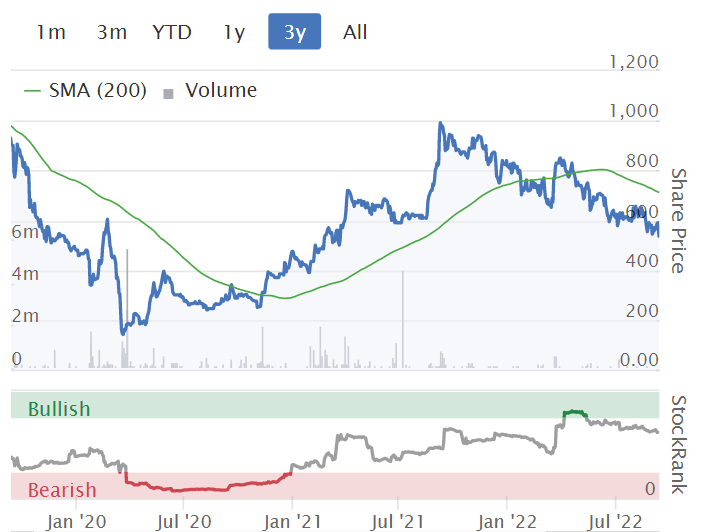
accesso Technology (LON:ACSO) interim results seem to be in line with expectations, and this is confirmed for the full year too (with the key summer season now in the bag). Growth has almost entirely come from European markets bouncing back from the pandemic, with little underlying growth in evidence. The balance sheet looks great, with pots of cash. However, management seem to think spending $10m on shares for employees is more important than giving anything to shareholders, so the priorities don't look good. Cash generation is questionable too. Overall then, it's not for me.
Graham's Section:
Property Franchise (LON:TPFG) (£91m) - these interim results are in line with expectations, and the outlook is too. I’m a big fan of this company although I sold my small stake in it some time ago. Lettings revenues and other revenue streams have helped to cushion the blow caused by a sharp drop in UK sales transactions. The company was also very active on the acquisition front last year, and this caused some dilution, but at least the added businesses helped to produce growing revenues and PBT. Adjusted earnings per share for H1 are down by 8%, as a result of the dilution caused. I suspect that TPFG is well-positioned to make further progress, as soon as the economic backdrop allows for it.
Trustpilot (LON:TRST) (£319m) - this business review service reiterates its revenue guidance for 2022. But thanks to its “flexible operating model”, it expects “significantly more operating leverage in the second half of the year than previously anticipated”. The company remains unprofitable and has been expected to remain unprofitable for the foreseeable future, only reaching adjusted EBITDA breakeven two years from now. Perhaps it can speed up its progress towards positive net income but in the meanwhile I think there are signs of good operational progress. The potentially very strong network effects could help to create a very valuable company, in my view, although the risk of competition can’t be ruled out completely.
Explanatory notes -
A quick reminder that we don’t recommend any stocks. We aim to review trading updates & results of the day and offer our opinions on them as possible candidates for further research if they interest you. Our opinions will sometimes turn out to be right, and sometimes wrong, because it's anybody's guess what direction market sentiment will take & nobody can predict the future with certainty. We are analysing the company fundamentals, not trying to predict market sentiment.
We stick to companies that have issued news on the day, with market caps up to about £700m. We avoid the smallest, and most speculative companies, and also avoid a few specialist sectors (e.g. natural resources, pharma/biotech).
A key assumption is that readers DYOR (do your own research), and make your own investment decisions. Reader comments are welcomed - please be civil, rational, and include the company name/ticker, otherwise people won't necessarily know what company you are referring to.
Paul’s Section:
accesso Technology (LON:ACSO)
590p (pre market open)
Market cap £244m
accesso Technology Group plc (AIM: ACSO), the premier technology solutions provider to leisure, entertainment, and cultural markets, today announces interim results for the six months ended 30 June 2022 ('H1 2022').
These are quite tricky numbers to analyse.
Going through my notes -
H1 revenues up 26% at $63.7m, which is mainly driven by a bounce back from depressed revenues in the prior year in the UK (its second largest market), due to the pandemic. So don’t expect this rate of revenue growth to continue. The largest market (USA/Canada) revenues only grew 4%.
Seasonality - Accesso normally has an H2 bias to revenues & profits.
Outlook - sounds OK -
Full year guidance expectation: With robust revenue growth, gross margin broadly in line with pre-pandemic levels, and a return of the cost base to more normal levels the Group expects its full year results, excluding the impact of its Food & Retail acquisition on its profit, to be in line with the Board's expectations at the start of the year.
Although there is a rather vague comment about a large customer, which seems to have reduced its spending with Accesso, but this sounds as if it’s been absorbed without impacting market expectations -
Short term change in dynamic with large accesso customer: Shift in strategy of large customer has significantly reduced their related virtual queuing revenue in the period and to a lesser degree impacted their eCommerce revenue. This pattern is expected to continue at least through 2022. The Group anticipates this dynamic to normalise long-term as customer's revised strategy takes hold.
Macro conditions - no apparent impact as yet -
We are not yet observing any negative dynamic in our marketplace and our most important trading period for the year is largely complete. Nevertheless, we are monitoring the situation closely.
Profitability - this is the tricky bit. The company trumpets $10.6m of “Cash EBITDA” in H1, but that only translates into $2.9m statutory PBT. Which figure should we be using? The bulk of the difference seems to be amortisation of intangibles, which I would usually ignore.
Capitalised development spending - this was previously a bugbear with Accesso, in that a very aggressive approach was taken, with a huge chunk of the payroll being capitalised. To be fair, this is no longer an issue, with only $0.8m development spend capitalised in H1.
Forex - there’s a large charge at the bottom of the P&L, for $4.9m, called “Exchange differences on translating foreign operations”
As it reports in dollars, and the dollar is strong, then I assume this must be something to do with converting non-dollar assets into dollars? If anyone talks to management or they do a webinar, this would be a useful question to ask for clarification.
EPS - adj basic EPS is up 104% to 13.0 US cents, for H1. With the seasonality, H2 should be higher. Note that EPS in 2021 was boosted by a negative tax charge, which seems to have been something to do with recognising a deferred tax asset.
Balance sheet - looks really good, better than I was expecting. NAV of $181.4m becomes NTAV of $68.4m, once intangible assets of £113m are written off.
Fixed assets are negligible, so this NTAV is sitting mainly in the bank account, with a very healthy $58.7m in net cash.
Where has all that cash come from? Mainly placings, as the share count has gone up from c.28m pre pandemic, to about 41.3m shares in issue now.
Dividends - given that Accesso has such a healthy cash position, why has it never paid any divis? Management says this today -
The Board maintains its consistent view that the payment of a dividend is unlikely in the short to medium term.
Why is that? Possibly because the company seems to be run more for the benefit of management & staff! This bit below particularly grates, given it dismisses any idea of paying shareholders -
Employee Benefit Trust share purchase
Up to $10m of the Group's cash reserves will be used to fund the Employee Benefit Trust to purchase shares in the Group starting in H2 2022. These shares will be used to settle future vests of equity compensation
I don’t know about you, but I think that’s outrageous!
Cashflow statement - isn’t great. The problem here is that all the supposed cash generation in H1 was consumed within adverse working capital movements. Although it looks as if that might have been pandemic-related distortions from the last year now normalising?
But I’m raising an amber flag here, that investors need to keep an eye on future cash generation, to make sure it does actually start properly generating cash - which should be used to pay divis of course.
My opinion - I’m struggling to get excited about Accesso. It’s been around for many years, and the growth story looks a bit stale now. Is there much organic growth to be had in future, now the bounce back from the pandemic has already happened?
If I were a big shareholder in Accesso, I’d be pressing management to demonstrate that it can generate cash, and pay shareholders divis.
The big customer apparently deciding to change strategy in some way, is also a concern. What does that mean? Will other customers follow suit? Who knows.
On the plus side, the balance sheet looks very healthy, so there shouldn’t be any more worries about further fundraisings and dilution.
I see the share price has slipped 9% this morning in early trades, so it looks as if others are also a bit underwhelmed by the results/outlook.
It doesn’t help that Numis is the broker. From my point of view, they’re one of the worst brokers for small caps, because they try to stop private investors getting access to research, and company meetings. I recall once, getting into a meeting at their office was like breaking into Fort Knox! Hence without access to any broker notes, I can’t really value this share.
Graham’s Section:
Property Franchise (LON:TPFG)
Share price: 285p (pre-market)
Market cap: £91m
This is a collection of franchised estate agents, much like Belvoir (LON:BLV) is.
I used to own a few shares of this one - attracted by its high margins, cash flow etc. Franchising can be a very lucrative activity, and TPFG (in my opinion) is an example of a company that does it well.
Let’s check out these interim results, that are in line with expectations:
- Revenue +18% to £13.1m
- Royalties +5% to £7.5m
- Adj. operating margin 41% (last year: 47%)
- PBT +9% to £3.8m
All of this looks fine, except for the decline in operating margin. I think this mostly relates to the £25m acquisition of Hunters last year: Hunters is not fully franchised and therefore some of the revenues and costs from its branches end up on the TPFG income statement.
The increase in the share count arising from the deal also causes an 8% reduction in adjusted EPS.
Lettings vs. Sales
It’s great to see that other revenue streams have taken up the slack caused by a reduction in sales:
The increased lettings revenue and developing financial services revenue from our long-standing businesses offset the impact on them of the market-led reduction in sales transactions.
On a like-for-like basis (excluding the impact of acquisitions), TPFG’s H1 revenues are actually down by 9%, caused by a 21% drop in royalties from property sales.
Offsetting that, there was a 7% increase in royalties from lettings. And then if you add in the impact of the acquisitions, you get the overall 18% increase in group revenues.
From an investor perspective, it’s comforting to see that the company can switch from a sales focus to a lettings focus. That definitely helps to reduce the risk levels, to some extent.
The fact that revenues increased only thanks to acquisitions and declined on an organic basis is far from ideal, but I would venture that it’s understandable in the circumstances. After all, UK property transactions were 28% lower in H1 2022 than H1 2021; it’s impossible to avoid being impacted by this macro backdrop.
Hybrid agents - one of the reasons I’ve had an interest in TPFG is their work on providing “hybrid” services through Ewemove (and more recently through Hunters Personal).
The two brands have expanded to new territories in H1 2022, and TPFG calls it “a very strong performance against the macro environment”. Ewemove’s royalty income increased by 3% in H1.
TPFG also owns Mortgage Genie, but this is still at a small scale.
Outlook - is in line with expectations, and sounds confident (emphasis added below):
"We are extremely well-placed in the current environment and have a substantial growth opportunity to capitalise on. Post period end activity indicates the second half will perform at least as strongly as the first and ahead of H2 2021. As a result, the Board expects the full year results to be in-line with market expectations and this confidence is reflected in the interim dividend for 2022, which I am pleased to report is up 11% on 2021."
The acquisition of Hunters has gone well: “We are delighted with the synergies we have achieved with the Hunters acquisition and by the year end we expect to have achieved all those set out in our original plan.”
My view
In my opinion, TPFG is showing an impressive level of resilience and proving itself as a lower-risk investment in the residential property sector.
You might think that owning an estate agent is a lower-risk method of investing in residential property. But what about owning the estate agent brand and the services that estate agents use? I’m still a very happy shareholder in Rightmove (LON:RMV) and if I was going to add something else from the residential property sector, I’d almost certainly get back into TPFG. Others may find Belvoir (LON:BLV) appealing.
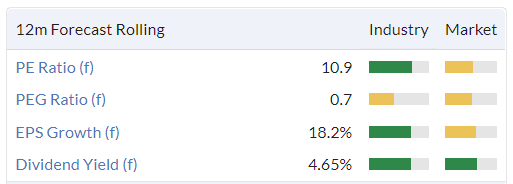
The company is carrying only very modest net debt (£2.6m) and looks cheap to me:
So what have I missed? There must be a bear case that I’ve overlooked?
The only negatives I see are:
- Uncertainty around the macro picture for UK property transactions, which might continue to hurt organic revenue performance.
- The company went from a net cash to a net debt profile, to make acquisitions, and needs a little more time to eliminate its net debt.
- The company might be tempted to get involved with more deals, creating more dilution and spreading management’s attention more thinly (although I don’t see anything wrong with the deals done last year).
Trustpilot (LON:TRST)
Share price: 71p (+15%)
Market cap: £319m
This was priced at 265p at its IPO back in March 2021.
My “IPO rule” is to wait until a recent IPO has fallen by a large amount (say 50%+) before allowing myself to get interested in it.
You could argue that if 2-3 years have gone by since the IPO, then the risk of a severely overpriced company having been brought to market has passed. But more often than not, in my experience, there will be problems and accidents within the first 2-3 years. So there is a good chance that a much better buying opportunity will present itself.
Even after this morning’s gains, Trustpilot is still down by more than 70% from the IPO level. So I’m now interested to see if there are any signs of value on offer here.
How it makes money - before getting into the results, I’d like to explain how Trustpilot generates revenues. This may not be entirely obvious because, as consumers, we get to use it for free.
The company sells “several paid subscription modules for businesses, providing increasing levels of functionality and offered on a software-as-a service basis. These tools enable Trustpilot's paying business customers to invite more reviews, manage those reviews, to derive high-value, actionable insights from them, and to showcase their TrustScores across their marketing channels.
Results - here are the highlights from H1 2022 interims:
- Revenue +25% at constant currency
- Actual revenue +18% to $73m (mismatch in these growth rates caused by the strong dollar).
- Annual recurring revenue +23% at constant currency to $149m.
- Loss of $9m (H1 last year: $17m).
- Net cash $73 million.
Trustpilot has a “commitment to breakeven adjusted EBITDA and underlying unlevered free cash flow” for 2024. In plain English, this means that it should be approximately cash-flow neutral, but the company will be able to apply very heavy adjustments to come up with this result.
The operational highlights are impressive: total cumulative reviews posted on Trustpilot have increased by 32%, and the number of domains reviewed is up by 29%.
Additionally, a “step up in deterrents, detection accuracy, and additional measures introduced to frustrate efforts to manipulate the platform, have led to a year-on-year reduction in the number of fake reviews flagged and removed”.
The whole point of Trustpilot is to help people understand which businesses and websites can be trusted, so these initiatives are crucial. Trustpilot itself needs to be beyond question in terms of the veracity of the content that it hosts. Every fake review that is prevented from reaching the site is a step in the right direction.
Outlook - the revenue outlook for FY 2022 is reiterated (consensus figures suggest that c. $157m can be achieved, per the StockReport).
The bit that has excited the share price (up 15% today) is likely to be this sentence I’ve put in bold:
While we have not seen any significant changes in overall customer demand in our end markets in H1 FY22, we continue to monitor the uncertain macroeconomic environment closely and we think it is prudent to take a more cautious approach to our assumptions for new business growth and retention near-term. However, we benefit from a flexible operating model and expect to see significantly more operating leverage in the second half of the year than previously anticipated.
Remember that the company has just reported a $9m loss on $73m of revenues. The point being made is that small gains in revenues (or small reductions in expenses) can lead to significant percentage changes in profit/loss.
This means that profit/loss might improve faster than expected, even if top-line revenues are only trading in line with expectations.
My view
I’m a big fan of this one. It hasn’t achieved much yet from a financial point of view, but it does offer some things that I look for in a business:
- Network effects: Trustpilot itself talks about the “powerful viral network effect” which it is creating. The more people who use Trustpilot, the more valuable it becomes as a measure of business trustworthiness. There is a “self-reinforcing cycle” as businesses want to show customers their Trustpilot score, and customers want to know if the business they are buying from has a good score.
- Recurring revenue: it’s a software-based subscription service for businesses, with a potentially open-ended lifespan. So long as Trustpilot is helpful, there is no reason for businesses to stop using it.
- Founder-led: the founder remains in charge as the CEO, implementing his long-term vision. The only disappointment is that his remaining stake isn’t bigger (currently 2% of the company).
- Unlimited growth potential: I don’t usually find it impressive when a company talks about its “addressable market”. But I do find it impressive when a potential monopoly in a particular niche still has a very long growth runway. Trustpilot says:
“We believe there has never been a greater need for a universal symbol of trust. At Trustpilot, we are creating a platform that we believe will eventually be used by billions of people and millions of companies.
So what are the downsides?
There are at least two major downsides from my point of view:
- It hasn’t yet made any money. Fortunately, the losses aren’t very large in comparison to its cash pile, and it talks today of positive impacts from operating leverage. Hopefully it will hit its goal of being around breakeven (on an adjusted basis) by 2024. But clearly there is a risk that it will not make any meaningful profits until 2025, 2026, or later, and it could even use up its cash pile over that time.
- It’s possible that some large tech giant - I presume it would be Google - would attempt to eat its lunch (disclosure: I own shares in Alphabet, the parent company of Google). Trustpilot has already generated great scale, but it probably needs to, because otherwise it could wake up some day and find that Alphabet has decided to create a rival product. Google already has an amazing business review service for local businesses on Maps, for example, and could attempt to roll this out to a broader set of businesses.
If you adjust out the cash balance, I think Trustpilot is trading at around 2x ARR (annualised recurring revenues).
I’ve recently been active on the US website Seeking Alpha, where I studied an unprofitable SaaS business trading at an ARR multiple of 20x, i.e. ten times the valuation given to Trustpilot.
If Trustpilot was on the NASDAQ instead of the LSE, I can imagine that it too would achieve an ARR multiple of 20x, and that would definitely price me out of investing in it.
But at 2x, I’m not priced out at all and indeed I find it intriguing.
Disclaimer
This is not financial advice. Our content is intended to be used and must be used for information and education purposes only. Please read our disclaimer and terms and conditions to understand our obligations.

35 comments
In my view, given their attitude to PIs, Accesso Technologies is uninvestable. What an outrageous attitude.
Next (LON:NXT) won't be acquiring and equity stake in Joules (LON:JOUL) 49% drop in price. The rag trade is a savage place.
Is there a risk of Joules (LON:JOUL) not being able to trade and the equity value being wiped out one way or another? Market cap is now barely £12m!
Have you seen what Center Parcs are doing.
"Following the announcement of the date of the funeral of Queen Elizabeth II, we have made the decision to close all our UK villages on Monday 19 September at 10am as a mark of respect and to allow as many of our colleagues as possible to be part of this historic moment."
They are asking any guests who are staying over that period to leave for 36 hours. ROFL.
https://twitter.com/CenterParcsUK/status/1569630938614603777
Pretty disappointing figures from America re: inflation is putting some downward pressure on what was a pretty decent rally.
I'm hoping that small caps will avoid the worse of this sell off, not dropping below recent buying lows..
Very difficult times ATM, although I do feel there is light at the end of the tunnel.
I think the markets have overreacted to these figures. After all the inflation figure has reduced from an annual figure of 8.5% in July to a figure of 8.3% in August which should be relatively good news. The problem seems to be the consensus estimates which forecast 8.1%. Is this just poor forecasting?
Additionally, the month-on-month figure of 0.1% inflation does not seem excessive. In many ways the trend is in the right direction and lower commodity prices will I think continue to feed through.
Good looking numbers from Corero Network Security (LON:CNS) (I hold) and I note that Paul earlier in the year wrote "I’d want to do further research, but I’m definitely encouraged by today’s numbers." Well these numbers look even better but the market doesn't seem to be interested!
£PRV As a long term holder in PRV, I was relieved to see from 9 month trading update today that they are managing current challenges faced by manufacturers well and profits said to be in line. All divisions performing well in constant currency terms and because of significant incomes in USD there may be a currency bonus when the year end comes. Quality business which in my view justifies its premium rating, but your views welcomed Paul or Graham if you get time.
Wonder if anyone else holds LON:BMN Bushveld Minerals - who mine Vanadium - a rather obscure battery play. 6 months results are pretty stellar IMO. Revenue up 80%+ and they have moved from a £10.8m loss to a £15.6m profit. Market cap is £73m. Outlook seems bullish. Share price has hardly moved. I confess to buying on a whim a while back when I seemed to have the golden touch!! (long since gone). Is it a reflection on the market or is there something in the numbers I've missed? Appreciate Miners aren't your territory Paul.
Hello Berkshee. The trouble with Bushveld Minerals (LON:BMN) is that this type of company is so volatile - down 62% over last 12 months. In a few years, in hindsight, you may have been lucky to have picked up some at these low price, but they have really messed investors messed about over the years.
I remember looking at them when they were around 20p, then they split off Ilika (LON:IKA) which got up to around 250p in 2021, now down 62% in the last 12 months. A useful metal in the steel industry, vanadium had caught the imagination in the field of hydrogen storage, in both the off grid energy storage field and a back up for lithium in battery storage. Its best known application in the UK is the Oxford Hub.
Ilika (LON:IKA) is also building a plant in Scotland near Edinburgh, and it may have traction, especially if the government starts to take hydrogen really seriously as it should. In the meantime, following and investing in UK (or even French and Norwegian) hydrogen quoted companies given the market's pessimism and ultra short termism in the current market is like throwing money down the drain.
Pity really. Hydrogen is so exciting if we could really get behind it, and vanadium is a truly long lasting storage material which we need given the limited likely outputs of lithium compared with forecast medium term demand.
If you have access to the Mello back records, there was a really interesting one-off on Metals some time ago. Maybe a couple of years ago, but still very if not even more. Haven't time to look it up right now.
If Bushveld Minerals (LON:BMN) is on the road to investor success then I say it's about time too since I am and have been holding for a long time .
I have re-read the interims from Facilities by ADF (LON:ADF) and am cognisant of the issues relating to the increased costs of vehicle movements in respect of smaller productions in H1, but with a full order book and therefore good visibility for the full year, the company is trading in-line.
Still the market does what the market does. I shall watch from the side lines. Time to switch off the screen as other tasks call.
All the best
Further to my earlier post, I note that Sigmaroc (LON:SRC) and RBG Holdings (LON:RBGP) both of which delivered good interims have also been marked down. Not sure about the so called efficient market theory. It may be applicable to the large cap arena, but from my point of view you can dismiss its application in the small cap world.
You may have guessed that I hold Facilities by ADF (LON:ADF) RBG Holdings (LON:RBGP) and Sigmaroc (LON:SRC) together with Harworth (LON:HWG) and Spectra Systems (LON:SPSY) all of which in my view have posted decent interims.
Facilities by ADF (LON:ADF) interims in-line and narrative is very positive, but for reasons I have yet to fathom, Mr Market is unimpressed. Last time I looked the shares were off 8% close to the IPO price of 50p?
Views anyone?
Facilities by ADF (LON:ADF) Looks like increased costs.
"The cost of the additional mobilisation in H1-22 was c.£1 million, with twice the number of agency HGV driver hires than in H1-21, combined with a 30% increase in fuel costs in the same period resulted in operating profit reducing from 25% in 2021 to 12% in 2022. Fuel costs are passed onto customers during productions but not the costs of mobilisation between engagements."
Facilities by ADF (LON:ADF) I could see it back down at 50p, Profit weighted to H2 with less vehicle movements, and a decent broker report.
Vehicle movements as the back log of location filming was caught up with, coupled with higher fuel costs as hurt profits.
I see it as a great share from 50p upwards as sentiment improves, looks like everyone wants a bargain!
I’ve acquired a modest holding in the low 60.
Much of the IPO net proceeds were reinvested into the business and there is continued growth in the studio/TV/film industry.
Paul S was fairly positive in a recent podcast but did question whether we might be at peak for this creative sector, with a post -COVID spur?
I’ve no funds to spare to add to my holding which is a shame as there are other emerging opportunities which merit opening a position rather than adding to an existing one.
Very good interims from Harworth (LON:HWG) (I hold) though some caution on outlook.
B.P. Marsh & Partners (LON:BPM)
Very sound update here - this company is a sea of tranquility compared to alot of other stuff at present.
NAV here last stated at end of last financial year is 166.5 mill (31/1/22) (i have no reason to believe that figure will have dropped since then ) - market cap at 300p share only 111 million. So widening discount to nav with shareprice having slipped back from highs earlier in the year.
Very decent % improvements in written busiess for its main "investment companies"
Nexus/kentro should do 45% increase 2022 compared to 2020 (calendar year)
XPT should do 78% increase 2022 compared to 2020 (calendar year)
the above two companies should be doing combined $1 billion Gross
Written Premiums this year - so reasonably clear decent exit prospects here as these main investments grow in size and stature.
company has 13 mill ready to invest too at present.
Obviously no one knows what the future will bring but it seems like they know their stuff when it comes to where they allocatre their investments. Note i would expect this company to trade at at discount to nav - so i am not presuming that the share will particularly do much other than stay below the nav declared by the company - obviously there could be hidden value if larger investments can be disposed of at top wack prices.
Been a long term holder of £BPM and there is always a big discount to NAV on this but as it increases so does the share price but at a very slow pace. At some point Kentro will iPO or get bought out and that I hope will be the catalyst for a re-rating but until then we sit and wait.
Heiq (LON:HEIQ)
Early stage company with very interesting IP principally in textiles announces interims today. Milestone payment for HUGO BOSS stake very useful, deal with LYCRA company too. I'm hoping the price is at the bottom, I bought a small stake today. Worth a look.
The Ocado (LON:OCDO) update today is another bad sign for retailers. Average items in a basket fell by 10% during the last quarter (June-August) - that seems steep to me. Inflation means the actual average value fall is 6% and for Ocado (LON:OCDO) rising customer numbers means revenue still grew but not a great sign for the sector. However, I do wonder if part of the fall is due to a comparison against 2021 Q3 when maybe people weren't having as many holidays as this year so perhaps were ordering less food?
Is it just about retail - or is it the drift of the value in this particular retailer? ( Ocado (LON:OCDO) for those not using the Threaded view)
I think your point about holidays is really good - probably add "going out" in that as well, all take away from home cooking sales.
Otherwise, have they lost their way or never really found a good profitable niche?
Partnership with Morrisons (down market, price sensitive) and M&S (solo-eater, up market) both seem a mismatch for something where people are price sensitive or don't buy much compared to those budging trollies I try to avoid being hit by at the big sheds.
I used to use them because of the diverse range of products they used to have and paid a premium for them (sometimes multiples of the "basic" range equivalent). They trimmed out many of those products and now stick to the same core as other supermarkets . I have to go to the local SM to get fresh food - so I might as well get all the boxed goods as well. They only time I use them are when I get an offer for 20% off etc. It sort of makes it worthwhile grinding through their website.
Actually that is another point. Their website used to be substantially better than the other supermarkets. Not only have the others caught up, but Ocado has got messy and confusing. I use to use it in interviews for candidates to compare to other SMs with Ocado showing some excellent UX features. No differential anymore, other than colour.
They lost their value for me. I wonder if that is a common pattern? Not differentiated as Sainsburys, Tesco etc all do deliveries and def not cheapest. What advantage does Ocado have? Are they really operationally more efficient ?
Interesting - thanks.
Just to offer a counter-view, I use Ocado (LON:OCDO) a lot actually. In particular I find they have short-notice slots available for free or £0.99 delivery charge if you know when to check and I think the app is excellent. Waitrose/Sainsbury's (the only ones I have checked) just don't have the slot availability I am looking for.
Another thought though - I wonder if they are losing out a bit to Deliveroo and other short-notice grocery companies. Again, where I live quite a few people get short-notice grocery deliveries via Deliveroo - it's very convenient albeit it's also expensive as the products available tend to be marked up at higher values than in the shops. That must be eating into £OCDO's basket value as well.
Do you see any likelihood of Ocado (LON:OCDO) ever making a profit? Maybe I am being simplistic, but there seems no reason business-wise for the company to exist.
so true, maybe if diesel was 50p/litre and electric 10p/kwh?
Patrick - my curiosity got the better of me and ended up placing an order. Every single item was on offer, but still knocked up over £100 and maintained their average. Disappointingly quite a few out of stock items so had to grab a slot next week and hope they are back in.
I was amazed at the availability of slots and all for £0. That isn't promising as an investor though! I agree with you on the mark up, generally prices felt high compared to Waitrose (my normal) which is quite a challenge - although the offer prices got it lower. I even checked a few "MRPs" or comparable products and some are higher. I guess this is the delivery charge, it is seen as more palatable?
The website is less cluttered, but not as clean and crisp as it used to be. Still got 50,000 steps to get to checkout!
Overall better than I remember, but not as "surprising" as the early days. At least delivery charge is great, can't beat £0 (yet!).
I'd love to see some analysis on the cost breakdown of warehouse tech, website, and delivery staff and van compared to the equivalent of Sainsbury's home delivery or just plain ordinary shopper going to a physical supermarket (still got staff, heating, buildings, local restocking etc). Also interesting to see how energy costs change that.
I have a short position in Ocado (LON:OCDO) - rationale:
Cost headwinds - They're massively exposed to all sorts of issues here:
Sales headwinds
Operational gearing
Higher sales will not drop through to profits here - the gearing is working against them massively. Their model was fully tested in 2020 with an unlimited volume of sales, and they couldn't make that profitable - I would be very surprised if they could make it work now.
'Technology company'
In terms of the 'Smart platform this is a tech company etc' argument - I would suggest the market is full of solutions to this particular problem at the moment, and Ocado's solution is already way out of date compared to some of the other software being funded by the massive amounts of venture capital chucked at the 'Quick commerce' / 'Last mile' area over the last few years.
The whole of the general 'Food delivery' sector (Uber/Deliveroo/Just Eat/Getir/Ocado etc etc) is going to have to consolidate at some point - it's too crowded, and nobody is making any real money.
Summary
My view - Ocado will continue to do poorly and will emerge (if it does) from the recession with a lot more debt, a lot more shares in circulation, and will at some point will end up in serious trouble or maybe acquired (to be broken up for parts).
More directly than holidays, it's than restaurant and pub volumes have been amazing this summer. As people spend more time socialising with the glorious weather, they cook and eat less at home. The Barclaycard consumer spending stats for Jul and Aug support this.
However the Barclaycard stats also show the general grocery sector holding up better in ££ sales than Ocado. Which means they are losing out, competitively. So I would have question marks whether they have a strong Retail operations anymore, compared to the other supermarkets who have caught up online.
Yu (LON:YU.) posts a profit upgrade based on amazing trading so far this year. Not a surprise, as clearly with energy rates rising and more switching activity, they have benefitted.
However I find their timing odd, given that Truss is soon to announce the business energy support scheme, which could have a material impact on growth. If a price cap is implemented, then Yu will lose out. As a small player, they have benefitted from their competitors customers shopping around for better energy deals. However, if there is a price cap, there is no comparison behaviour, as all suppliers are essentially the same price. We saw this in the consumer markets.
Yu is high rated for continued revenue growth.
I sold out last week in The Boon Fund due to this uncertainty. So looks like I've made a wrong call, should have held at least until today!
What seem like good results this morning from RBG Holdings (LON:RBGP) - though it is always difficult to decipher with litigation financing. The M&A and "normal" legal services seem to be doing well.
You mean RBG Holdings (LON:RBGP)
At last hopefully some good news (I hold), knowing my luck it will be completely drowned out by bad CPI figures in the US.. If I remember correctly the last update included a debate about bonuses being paid.. Anyway I am down 33.3% (a mathematically pleasing 1/3).
It seems a reasonable interim from ELCO today Paul (we hold), their SaaS revenue's are growing and there's a small dividend. If you have time to look at this I'd be interested to know if you think the shares are still too expensive. as per your last comment on them.