Small Cap Value Report (Tue 2 Aug 2022) - NWOR, RBG, DVO, GYG, BAG, FTC, REVB

Good morning from Paul & Graham! Today's report is now finished.
Agenda -
Paul's Section:
National World (LON:NWOR) (£53m) - I run through the bull and bear points for this newpaper/digital publisher. It looks cheap, and has almost half its market cap sitting in cash on the balance sheet, earmarked for acquisitions. Despite a strong H1 profit performance, macro storm clouds are gathering, with a deteriorating trend in revenues so far this year. Profits need further cost-cutting to be sustained, which can't carry on forever. It doesn't have any of the historic baggage of RCH (no pension deficit, or debt), but I'm lukewarm on the longer term prospects for NWOR.
Revolution Bars (LON:RBG) (£34m) (I hold) - a surprisingly upbeat year end (FY 6/2022) update. It's trading in line with expectations. House broker forecasts 1.6p EPS (£4.2m adj PBT). Extensive site refurbs (19 done, 18 more in new year). Successful trials of 2 new formats. Has solid balance sheet with net cash. Market still not convinced, due to historic, extensive problems, but the business looks in good shape now, and cheap. Really good mgt I think. Shrugging off macro conditions.
Gyg (LON:GYG) (£10m) - 20.5p (down 35%) [No section below] - H1 trading sounds fine, in line with mgt forecasts. H2 outlook is good, with strong order book & pipeline. In line with FY 12/2022 mkt exps of E5.0m EBITDA. Cashflow problems assisted by loan from major shareholder Harwood Capital.
Separate bombshell announcement that it plans to de-list (hence shares down 35%) - this is a big, and growing danger for holders of micro caps - beware! Particularly where there are a small number of controlling (over 50%) shareholders, as is the case here. Much though I admire Harwood Capital’s stock-picking skills generally, they also have form for persuading investee companies to de-list, thereby squeezing out private shareholders (at a bad time/price in this case). Although to be fair, GYG never should have floated, it’s unsuitable for public markets, and has had a disappointing & erratic performance. So there's little point in retaining the listing. It snatches the potential upside away from PIs though, which is a pity given that the trading update is good.
Revolution Beauty (LON:REVB) (£84m) - profit warning - shares have collapsed since the CFO left in May. Auditors need another month to check the FY 2/2022 figures. de-stocking by customers, and inflation/supply chain have hit the new financial year, with H1 (Mar-Aug 2022) now expected at breakeven, but still a good full year expected due to the H2 seasonal weighting of Xmas. My main concern is what looks like massive over-stocking, by my calculations nearly a year's worth of inventories are on hand, which is a potentially major problem. Hence I suspect it might need to warn on profits again, so am staying safely on the sidelines. EDIT: Zeus slashes forecasts for FY 2/2023 by two thirds, to just 1.5p adj EPS.
Graham's Section:
Devro (LON:DVO) (£312m) - Solid interim results from this international maker of sausage casings. Net debt falls despite an increased capex bill, as the company invests for growth. There is a small increase in the long-running dividend. Devro’s profitability is suffering slightly from the lag between cost increases and the passing on of those increases to its customers. Since this is the food industry, I share Devro’s confidence that it will be able to pass on the inflation to its customers. This stock is modestly valued and I’m not sure that this fairly reflects the quality and track record of the business.
A G Barr (LON:BAG) (£608m) - This soft drinks company provides a trading update that’s in line with expectations. Revenue growth is very impressive (19% underlying) but volume growth isn’t given yet, and may only be around 4%. At least the company is able to pass on price increases to customers without much difficulty! The balance sheet was very cash-rich the last time it was published, and BAG shares accordingly trade at a premium earnings multiple that they might not otherwise enjoy.
Filtronic (LON:FTC) (£32m) (+2%) [no section below] - this company has been listed for a long time, and the track record is patchy at best. But today’s results show profits of £1.5m on revenues of £17.1m (+10% versus the previous year), despite the company being impacted by the semiconductor shortage. Cash generation was good and the company finished the year with net cash of £3.1m (excluding leases).
Filtronic provides communication components and subsystems, and its success depends on contract wins in the aerospace, security and telecoms industries. Today’s outlook statement promises continued revenue growth and points to a healthy order book, though the CEO acknowledges “the somewhat unpredictable nature of the economic and the current geopolitical situation”.
These are the best results I’ve seen from Filtronic in several years, and particularly impressive given the challenging supply chain backdrop. I can see why investors might feel that the shares are worth a flutter based on continued positive momentum in 5G investments, satellites and aerospace/defence spending. However, it is worth noting that analysts at Edison are modelling a fall in Filtronic’s adjusted PBT to £0.9m in the current financial year, due to a lower-margin product mix, before hopefully bouncing back in FY 2024.
Explanatory notes -
A quick reminder that we don’t recommend any stocks. We aim to review trading updates & results of the day and offer our opinions on them as possible candidates for further research if they interest you. Our opinions will sometimes turn out to be right, and sometimes wrong, because it's anybody's guess what direction market sentiment will take & nobody can predict the future with certainty. We are analysing the company fundamentals, not trying to predict market sentiment.
We stick to companies that have issued news on the day, with market caps up to about £700m. We avoid the smallest, and most speculative companies, and also avoid a few specialist sectors (e.g. natural resources, pharma/biotech).
A key assumption is that readers DYOR (do your own research), and make your own investment decisions. Reader comments are welcomed - please be civil, rational, and include the company name/ticker, otherwise people won't necessarily know what company you are referring to.
Paul’s Section:
National World (LON:NWOR)
20.6p (up 8% at 11:00)
Market cap £53m
For the 6 months ended 2 July 2022, so half way through FY 12/2022.
This is a newspaper group, the reincarnation of the old Johnston Press, but without the legacy problems of debt, and pension schemes, both of which have gone. So think of it as a smaller, less complicated Reach (LON:RCH) .
Key H1 numbers -
Revenues £43.5m, iup 3% on H1 LY.
Slowing trend though - revs +5% in Q1, +1% in Q2, and down 6% in July.
Adj PBT £5.6m in H1, up from £3.5m H1 LY - a very good result - driven by slightly higher revenues, and tight cost control.
Digital revenues are useful, at £8.2m (up 41%).
Adjustments are mainly restructuring costs of £1.3m (£3.3m in H1 LY), which I would argue are not one-offs, but an essential way to keep a newspaper business profitable, as it slowly declines. Therefore I would lean towards valuing the business on statutory profit of £3.9m in H1 (£0.9m loss in H1 LY). See note 16 for the adjustments.
Note that, even though profits rose, EPS actually fell (H1: 1.6p adjusted, or 1.1p statutory) - due to an increased number of shares in issue.
Further cost savings of £3.0m annualised will be done by end 2022, but this restructuring is to cost £2.5m - mainly severance pay. See what I mean about restructuring being ongoing, not exceptional?
This is reinforced by staff numbers - down from 1,262 a year ago, to 1,179 now. So maybe NWOR is likely to keep incurring several £m’s each year in severance costs, as it gradually downsizes? How long can it keep cutting, is the other big question for this sector - also relevant for distributor Smiths News (LON:SNWS) which has almost run out of depots that it can close without impairing its ability to operate.
All of which means that profits in this sector are not sustainable, long-term. Hence the shares should be seen as cigar butt shares, and be on very low PERs, and have very high dividend yields because they’re not going to last.
Actively pursuing several acquisition targets - this is the most important thing, with cash being nearly half the market cap. So the outlook for this share really hinges on how wisely that money is spent. Potential upside here if good acquisitions are made at keen prices, which should be possible given how beaten up the sector is.
Minimal capex is expected - of £1.5m p.a. in future. There seems to be very little fixed assets, so NWOR must outsource printing of the newspapers externally.
Going concern note - is fine, and irrelevant due to the £25.7m cash pile.
Balance sheet - very good, with scope to fund acquisitions, a key bull case for this share.
NTAV is £21.7m, including a £25.7m cash pile. Although I would deduct these items from cash to arrive at net cash: last instalment of £2.5m deferred consideration due, £1.0m borrowings, and maybe the £1.5m provisions. So adjusted net cash is £22.2m, or £20.7m, depending on whether you want to adjust include provisions as a cash deduction.
So I would say NWO has a war chest of maybe £15-20m that it could safely use for acquisitions. I don’t know what potential acquisitions are out there, but in the past it has made sense for smaller publishers to be gobbled up into a group, then a load of duplicated costs removed. Or maybe NWOR will try to do something in the digital space, although they won’t get much for £15-20m.
Cashflow statement - is super simple. NWOR generates healthy, genuine cashflow, which is accumulating in a growing cash pile. The only significant cash outgoing was the penultimate £2.5m deferred consideration outflow. There were no divis paid, but the commentary today says a progressive dividend policy will start with 2022 results, so in spring 2023.
NWOR will have plenty of scope to pay out big divis, or retain cash for more acquisitions. That’ll be a tug of war between management and shareholders, I expect.
Outlook - the “at this stage” bit sounds hesitant - are they signalling that things could get worse? Sounds like it to me -
The trading environment remains difficult with the prospect of a further slowdown in the UK economy. Despite these macro-economic challenges, increased investment in the development of our portfolio of digital sites and commercial opportunities and the tight management of the cost base will support future profits and cash flow.
At this stage, the Board expects the business will perform in line with its expectations.
As the Group successfully implements its strategy, the Board anticipates being able to initiate dividends at the time of announcing the 2022 full year results with a progressive dividend policy.
Valuation - Dowgate has helpfully posted an update note on Research Tree, many thanks. This points out that H1 is well ahead of what was expected, at £5.6m H1 PBT (it expected £4.1m). So the full year forecast of £8.1m adj PBT looks soft, given that £5.6m is already in the bag from H1. Although a weakening of demand, and hence revenues, due to macro factors and structural industry decline, suggests to me that having soft forecasts is sensible to avoid a profit warning later in 2022.
My opinion - I can see why some readers like NWOR shares. Having almost half the market cap sitting in cash, which looks genuinely surplus to requirements, hence usable for acquisitions, does appeal.
Dividends are due to commence in 2023.
On the downside, newspapers are slowly dying, we’ve known that for years. Every now and then the stock market gets excited about digital growth, so this share (like RCH) is probably best seen as a cash cow for a few more years, in the hope that the cashflows are used to build something longer term in the digital space.
At least NWOR shareholders don’t have to worry about the huge and uncertain pension liabilities at RCH - which could melt away, or could remain a millstone, we don’t really know. At NWOR it’s much cleaner, with no pension issues that I’m aware of.
NWOR is set to make c.2.3p EPS this year, and next (if they’re lucky), but driven by constant cost-cutting, to offset declining revenues expected. That’s not a very good investment proposition, in my view, because they can't keep cutting forever.
The cash pile could be used for acquisitions, which could then boost earnings, and bring down the PER from 9 currently, to what maybe 5 or 6 possibly? But why would you want to pay any more for a declining business, that’s bolting on other stuff to prop up a fundamentally declining business?
For me, I’ll keep a watching brief, and it would really need to be something significant happening on the digital side that would make me want to take an interest in this share. It’s cheap for a very good reason, as is RCH and SNWS.
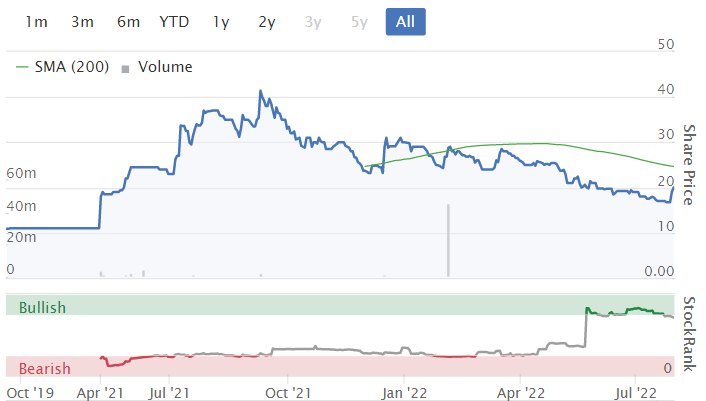
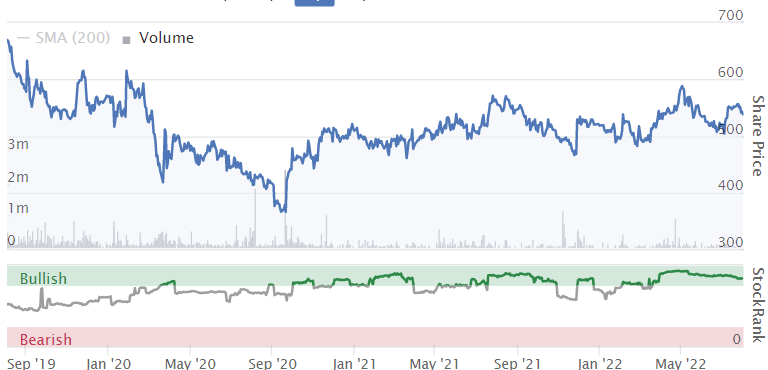
Share price since listing in Sept 2019 -
.
.
Revolution Bars (LON:RBG) (I hold)
14.6p (pre market open)
Market cap £34m
Here are my notes on key points -
Traded in line with expectations (upgraded on 14 June 2022). No footnote. I've already complained to the house broker!
LFL sales flat (vs LY, or pre-pandemic? Not clear).
Mitigating inflation (e.g. energy largely fixed until spring 2023).
Focus on staff retention, so spending less on recruitment.
Xmas bookings building much earlier than last year - confident in outlook. Corporate parties market coming back.
19 refurbs done (28% of estate) - delivering target 2-year payback.
2 new sites trading well.
Both trials of new formats (Playhouse, and Founders & Co) “initially been well received”, potential for expansion.
FY 6/2023: 18 more refurbs planned, and 6 new openings. Exciting pipeline of new sites.
Net cash £2.6m at 6/2022.
Significant & sufficient headroom (via bank facility).
Results out on 18 Oct 2022.
My view (I hold) - the market still hasn’t forgiven RBG for all the problems in the past, and heavy dilution (share count: 50m to 230m after 2 placings) means position sizes need to be much larger to recoup previous losses (if that happens at all). Refurbing sites is doing the trick - robust performance when others are struggling. Mgt are superb, hands-on operators, in my view. Finncap forecast is £4.2m adj PBT, 1.6p EPS. Target young customers not particularly impacted by cost of living squeeze, and want to "partay" as my niece says!
Shares look cheap to me, but the whole sector has been hit hard, understandable in current conditions. Time for me to do another mystery shop, I think, maybe this Friday afternoon?!
Revolution Beauty (LON:REVB)
27p (down 56% at 09:55)
Market cap £84m
Good grief, this has just come up on my top movers list, down 56% this morning, on high volume (7.8m shares traded so far today, and there will for sure be big, delayed prints later from institutional sellers). In total, there are nearly 310m shares in issue.
It only floated in July 2021, as one of many eCommerce wonder stocks, that nearly all seem to have since crashed. It’s amazing to see a whole sector just collapse from being highly rated for many years as growth companies, to being increasingly bombed out & eschewed. As a value/GARP investor, I don’t care about stock market sentiment, so am looking for any potential bargains this sector drop might throw our way.
I’ve not covered REVB here before, so will have to go through the background first, before I get stuck into today’s update.
When things have fallen this much, one of the key things I always focus on is balance sheet strength, and whether there’s risk of equity dilution, or even insolvency.
(and change to final results announcement date)
Revolution Beauty Group Plc (AIM: REVB) the multi-channel mass beauty innovator, announces a change to its full year results announcement date and a trading update.
Accounts are very late and not coming out until end Aug 2022 - 6 months after the year end, which is ridiculous, so there must be something wrong (even if it’s just being disorganised), despite the denial below.
Final results for the year ended 28 February 2022
The Company will now report its final results for the year ended 28 February 2022 ("FY22") on 30 August 2022. This is due to additional time required to complete the Company's audit. Management is not aware of any material issues that have been raised by the auditors during the audit process to date. The annual report will be sent to shareholders and made available on our website on the 31 August 2022.
Although REVB did change its CFO in May 2022, which would have been disruptive I imagine. It’s unusual to see a CFO changed a couple of months after year end, as usually they would want to get the audited accounts done, then leave.
No wonder the market took fright at this, with the steep decline in share price getting underway in May 2022 (it’s now dropped by ¾ in the 3 months since then).
The trading update on 6 May 2022 said FY 2/2022 performance was in line with market exps, guiding revenues of £194m (up 42%) and adj EBITDA up 73% to c.£22m. Note there’s a heavy H2-weighting, as H1 adj EBITDA was £5.1m, so guidance in May ‘22 implies H2 adj EBITDA of £16.9m, a 23:77 ratio for H1:H2 adj EBITDA in FY 2/2022.
The trading update’s tone just 3 months ago sounded upbeat, including positive outlook comments.
Note that 71% of sales came via retail stores, and 29% online, which surprises me, as I thought REVB was supposed to be an online disruptor in the beauty market.
Further back, a small acquisition was made in Feb 2022.
Broker Liberum joined Zeus to become joint brokers on 30 June 2022 - prelude to a fundraising I speculate?
Getting back to today’s trading update -
REVB products are now in c.15,000 stores worldwide.
Q1 2023 (Mar, Apr, May 2022) - problems have emerged, which all seem rather obvious to me, why has this surprised the company? -
… we have seen short-term challenges as a result of post Covid retailer updates during Q1 FY23 (notably in the USA), cost inflation, supply chain issues and the war in Ukraine.
Profit warning for H1 of FY 2/2023 -
As such, we now expect the first half of the year to deliver low single digit revenue growth versus H1 FY22, resulting in a small adjusted EBITDA loss for the six month period ending 31 August 2022. For the full year to 28 February 2023, we now expect between £215m - £225m net sales and adj. EBITDA of between £18m - £20m.
Clearly that’s a bad performance currently, a small H1 loss, down from £5.1m adj EBITDA in H1 last year.
Although the full year guidance still looks decently profitable at £18-20m, although how real are adj EBITDA profits? I’ll have to look into that.
More detail, which is interesting -
US retailers over-stocked, so have reduced purchasing. Should normalise in H2. This is a recurring theme we're hearing from other companies, which could trigger plenty more profit warnings, I reckon, as supply chains begin to ease, and consumers buy less stuff but at higher prices. Hence retailers don’t need to buy as much stuff as they de-stock.
Digital customers also de-stocking as sales slow.
Russia/Ukraine - not just an excuse, REVB was trading in those countries, which ceased. £9m impact on annual revenue.
Cost inflation - especially in logistics & freight. Higher staff costs. Surely this should have been budgeted for, suggesting weak financial controls (perhaps explaining why the CFO was replaced?)
Outlook - I’m not sure I have much confidence in their confidence -
As we approach the seasonally stronger second half, and actively manage costs across the business, we will benefit from leveraging our overhead base in line with previous years.
Confidence in the second half is underpinned by significantly increased retailer distribution in H2 FY23 versus H2 FY22.
"While the Group has been impacted by near-term economic and political headwinds, we remain confident in the strength of our long-term strategy and the significant growth opportunities open to us. In particular, we remain focused on innovation and the development of new categories while continuing to further build brand awareness, especially in the US.
"This has been a period in which we have strengthened our market position and built sales across geographies, despite the unprecedented macro-economic backdrop. We have continued to deliver against our omni-channel strategy and are now in 15,000 stores worldwide. We secured a second UK retail partner with Boots and launched into 2,800 Walgreen stores. This has been achieved by providing our customers with the highest quality beauty products at the best possible price."
Debt - oh dear, it has net debt, although it doesn’t look to be at problem level -
As at 31 July 2022, the Group had net debt of £21.2m driven by an increase in stock, working capital and capex requirements. The Group has a £40m revolving credit facility which the directors believe provides sufficient liquidity for the future.
Remember that higher inflation impacts cashflow at many companies - because rising prices means that 2 debits go up in value on the balance sheet (inventories and receivables), but only one credit goes up (payables). Hence the impact of higher inflation means more cash is sucked into working capital.
The last published accounts showed net cash of £17.6m at 31 Aug 2021, so to have moved into a net debt position of £21.2m in 11 months is unsettling, even if it was planned (a new £40m facility was put in place in Oct 2021.
Balance sheet - the last published one was as at 31 Aug 2021.
This shows NAV of £86.5m, including £22.6m intangible assets, so NTAV was £63.9m - adequate, I would say.
It also includes the entries for the only significant acquisition made (from a related party, hmmm) called Medichem, with £16m of the consideration deferred into 4 annual payments of £4m each, yet to be made.
Hence the structure of the balance sheet should not have significantly changed since 31 August 2022.
Inventories look very high at £89.9m (at cost price remember) at 31 Aug 2021, and it sounds like that figure will have gone up even more, given that today’s update refers to “an increase in stock”.
This reminds me of Seraphine (LON:BUMP) (I hold) yesterday, in that REVB looks to be massively over-stocked. Deducing that it might currently have about £100m in inventories at cost, then applying a gross margin og 48% (achieved in H1), I estimate that current inventories would fuel about £192m in revenues (excl.VAT). With full year revenues of c.£220m expected for this new year, that means it could be holding about 319 days worth of sales in its warehouses! Which is crazily high.
This is the main question to ask management - why are they holding such excessive inventories? How much of that is slow-moving? Maybe this is why the audit is delayed, as the auditors have to check inventories for slow-moving lines, and make a provision against anything that can’t be sold above cost.
Hence I’m ringing an alarm bell here, that I think REVB has problem levels of inventories, maybe it was budgeting/buying for much larger sales? Or maybe some stock has been provided to retailers on a sale or return basis?
It’s not right anyway, so the excessive inventories are a red flag for me. There could be trouble ahead, with another profit warning, I suspect - if the company needs to take write-downs against some of the inventories. Looking at the product on REVB’s website, a lot of it is subject to the vagaries of fashion. On a 48% gross margin (H1 actual), anything REVB has to sell at half price, turns from a 48% gross profit, into a (2)% negative gross margin. So that would need a partial stock provision against it, because it’s net realisable value in accounting standards, which would presumably include the costs of selling it.
My opinion - it’s easy to get too gloomy when a profit warning comes out, and the share price plunges.
The market cap has dropped to only £84m here now.
Is it going bust? No, I don’t think so, the balance sheet looks OK, although I am very worried about what seems like extreme over-stocking, which could result in the auditor (who needs more time, remember) insisting on a heavy provision against slow-moving stock. Or, if the slow-moving stock is dribbled out in the new financial year, at discounted prices, that would hit the profits again. Either way, I reckon another profit warning is probably already gestating. So why get involved now, when there’s all this uncertainty?
On the plus side, make up is a decent margin sector, and REVB has built up a decent-sized business. My niece tells me the products are good, and reasonably priced.
At some stage then, it could be an interesting share to look at, but for me, not before the auditor has approved the FY 2/2022 results in about a month. Then we can look at it again with fresh eyes (with maybe just a touch of mascara, if I decide to mystery shop this company too!)
EDIT: Many thanks to Zeus, I've just seen an update note from them. It makes sobering reading. Forecast profit for FY 2/2023 and next year, are slashed by two thirds. This becomes only 1.5p adj EPS for this year, and 1.9p next year. That's terrible! So if that's the new base line level of profits, then it's difficult to justify a share price of any more than say 20-40p. the current price is 27p, so it's probably in the right range, based on the information we currently have. End of edit.
Graham’s Section:
Devro (LON:DVO)
- Share price: 186.2p (-0.5%)
- Market cap: £312m
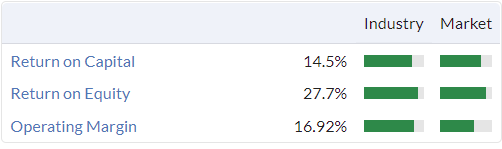
This is a mature business involved in the making of collagen casings for sausages. It doesn’t tend to cause much controversy or attract much comment, but a quick look at the quality metrics will show that it’s probably a decent business:
Today’s half-year results are described in a neat little table:
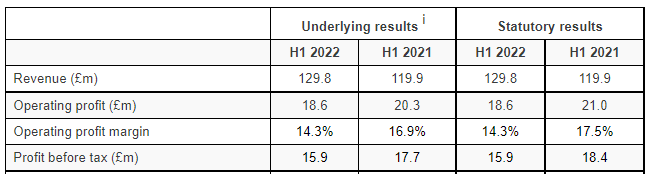
As you can hopefully see, there is no difference between the underlying and the statutory results in H1 2022. So it’s a clean set of results.
Sales - We have an 8.3% revenue increase, or 8.8% at constant currencies.
Food price inflation is obviously quite high right now, so some of the revenue increase is going to be due to that - the company says revenues grew to the “continued success of our strategy, as we take market share, and the initial benefits of our pricing actions”.
The company then provides a very helpful revenue bridge (wouldn’t it be great if every company did this?):

This makes it crystal clear: about half of the revenue increase came from higher volumes, and nearly the same amount came from changes in prices and the product mix.
Profits - as the first table showed us, there was a reduction in profitability and the operating profit margin. An explanation:
Operating profit reflects good operating leverage offset by inflationary pressure, which will be fully offset, mainly by higher selling prices in the full year, and higher costs to drive growth including new product development.
We’ve said before that in times of high inflation, that pricing power becomes important: can companies pass on their rising costs to customers, and can they do it quickly? Doing it slowly, for some companies, might mean the difference between surviving and not surviving!
There is little doubt that food producers are able to pass on their costs, and are able to do it quickly. In the case of Devro, it might not yet have fully passed on rising costs, but it’s in the process of doing it - and it’s confident that it will be able to pass them on this year.
Free cash flow - £3.2m. This seems low, but there is a regular capex bill at Devro and they’ve spent a little more this year, trying to develop new products and increase capacity:
We have also recently committed to further production capacity increases in 2023 leading to capital expenditure remaining slightly above depreciation next year. These capacity increases are required based on the multi-year demand growth we see in our planning. The financial returns on the incremental capacity are well above our cost of capital. We expect the capacity added in China and Czech Republic during the second quarter of 2022 to be fully utilised by the 2022 year-end.
As you can see, this is another international company with broad geographical exposure - that’s very valuable to have, in my view!
Balance sheet - net debt is £95m, which is down compared to the same date last year. As I’ve already said, the Devro capex bill can be expensive, but cash generation from operations tends to be strong enough to pay for it (and also to pay out some dividends - the company has paid a dividend for nearly 30 years).
On the balance sheet, total borrowings add up to £120m, and I’ve noticed that a big chunk of this falls within “current liabilities” - i.e. it might need to be paid back within a year.
It turns out that about half of the borrowings are in the form of a bank RCF that is maturing in June 2023. The going concern note tells us more:
The group is well advanced with the banking syndicate to renew the facility, with an expectation of signing the renewal in September 2022. However, should this facility not be renewed, the group's financial forecasts indicate adequate headroom to operate under various scenarios having taken account of different mitigating actions within the Directors' control.
It doesn’t seem like there is too much to worry about here. Devro is a mature, profitable business that is well within its banking covenants.
Outlook - full year expectations are unchanged. The “robust first half performance, solid order books, pricing action and ongoing momentum” give confidence.
My view - as I said at the top, this one doesn’t cause much of a fuss in the world of small-cap investors. It’s a bit boring and it generally just does what it’s supposed to do: make collagen casings and sell them at a profit, and pay a dividend to shareholders.
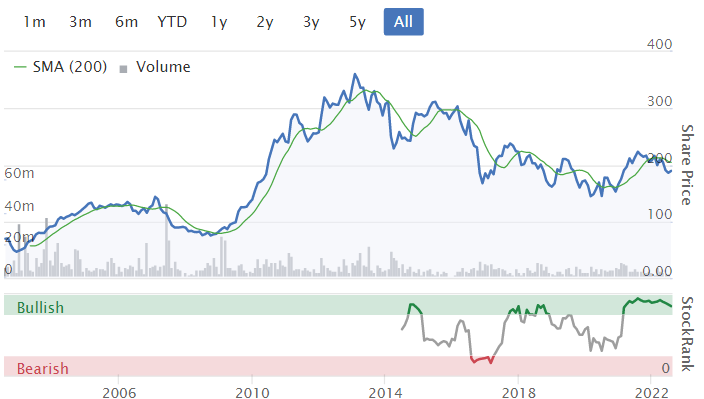
That dividend is now offering a decent yield, according to Stocko:

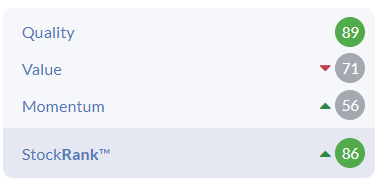
Stocko also likes the quality and value:
Personally, I feel that this company is a little bit unloved and underappreciated. It probably won’t multi-bag in the short-term, but the same is also true of most companies.
On the other hand, it probably will continue to report annual profits and dividends, which it has done almost without interruption for decades. It’s a far more reliable performer than most companies of this size. What’s not to like?
.
A G Barr (LON:BAG)
- Share price: 543p (unch.)
- Market cap: £608m
This is a well-known drinks company, though I must admit that I’ve not tried many of its brands. I’ve had IRN-BRU and Snapple, and I think I’ve had Strathmore (but this is just water!). As for the others, I’m not sure!
Anyway, this H1 trading update is in line with expectations. Like the rest of us, drinks companies have had a tricky few years to deal with, and it’s reassuring to see some stability in the performance now:
Like-for-like revenue growth in H1 is 19%; the actual reported revenue growth is 16%.
(Small calendar differences from one year to the next can easily knock a percentage or two off top-line figures, but not every company reports these differences - just something to bear in mind. There’s always an element of interpretation at work in financial analysis, even for something that you might think should be straightforward, like the sales number!)
Here’s the company’s explanation of their success in H1:
Our growth has been driven by ongoing brand investment and the successful execution of our pricing and promotional activity. Trading performance further benefited from the year on year Covid recovery across the market, particularly in the on-trade and out of home sectors, as well as the exceptional British summer weather in recent weeks.
This all sounds very positive, but note that this trading update doesn’t give any detail in terms of volume growth.
The broker note does give an opinion on this: they think that volumes increased by 3% to 4%.
If volumes are up by less than 4%, and like-for-like revenues are up by 19%, this leaves lots of room for inflationary price increases. Some of the price increases might be due to “brand investment” (i.e. the company itself stimulating demand) but probably most of the increases are down to the fact that there is too much money chasing too few goods.
The outlook statement helps to confirm the importance of inflation:
We anticipate that the UK's current high level of inflation will continue across the balance of the year, with economic conditions becoming increasingly challenging for consumers and industry alike. Across the second half of the financial year we will continue to invest behind our brands and believe that our strategy will support continued growth. At the same time we will take appropriate mitigating action to limit the full year impact of cost inflation.
My view
BAG shares are more on the expensive side, but there’s still a lot to like here:

I’ve double-checked the January 2022 balance sheet. The company had effectively zero borrowings and net cash of £68m. That’s a very significant war chest for a company of this size and needs to be reflected in the market cap (currently around £600m).
If you subtract the cash balance from the market cap, you’re left with a company trading at around 13x next year’s PBT estimate. It’s not so very expensive, in my view.
Why wouldn’t I buy the shares? Well for one thing, as already mentioned, I haven’t got much familiarity with the company’s drinks, beyond two or three of them.
I also think that the heatwave this year should have helped the company a lot, but volume growth of perhaps 4% doesn’t strike me as particularly strong, and the trading update is merely in line with expectations.
These aren’t serious quibbles: as a long-term hold, I think that A.G. Barr is a decent choice. It’s clearly quite good at passing on inflationary prices to its customers.
You may have more conviction than me, especially if you’ve researched their portfolio in greater detail and if you aren’t hoping to time your purchase to coincide with a rainy summer (when the share price might be more depressed than it is now!).
Disclaimer
This is not financial advice. Our content is intended to be used and must be used for information and education purposes only. Please read our disclaimer and terms and conditions to understand our obligations.

49 comments
At the risk of being antagonistic Paul your comments on newspapers are well off the mark and actually don't really take account of the industry statistics - they might be your perception but based on a flawed underlying assumption that really needs correcting.
If you look at the print industry newspaper buying is habitual. The average age of a newspaper buyer is early 50's but the average mortality is around 80. It is currently likely that print newspaper buying will continue to exist for decades to come. Now whilst that isn't a growth industry there are many businesses currently on high multiples that won't be around in decades to come either so pricing these shares as dying businesses is a false perception. ie their earnings are significantly underpriced whereas sexier companies with ultimately lower longevity are often overpriced. The reality is that newspaper companies have the ability to be cash cows and pay above average income for a long time to come.
Now that doesn't mean these businesses can't be screwed up by management, face cost inflation issues they can't pass on or many other business risks but no more so than any other business. Like any business they need to adjust with consumer behaviour and since more content is being read online it makes absolute sense that these businesses continue to invest in journalism and content creation whilst operating both print and digital and monetising both. That's not a slowly dying business model. In fact content will likely increase in value over time from trusted sources given the relative simplicity of creating false or misleading news by anyone with a laptop and internet connection.
What we shouldn't do is take todays perfect storm of increased print inflation, freight issues, consumer income squeeze and ukraine news hurting advertising and argue that these businesses are somehow dying and worth less than other consumer based stocks. That is simply wrong and in actual fact given the relative price inelasticity they are probably more resilient than many over time.
Keller (LON:KLR) H1 results announcement today looked pretty good to me yet share price fell 6%. Not a a high PE growth stock and has a strong Stockopedia Stock Report so can anyone enlighten why the negative reaction. The main negative I can see is the impact on operating margin of the cost inflation they are seeing. Main points:
Management were very positive and maintained guidance for full year results - which according to Stocko has seen a number of broker upgrades. I know Paul had a look at Keller (LON:KLR) back in June and it is a particularly busy week for results but any chance of a retrospective look later in the week?
As a former £DVO employee albeit some time ago now…. I agree it’s a solid business but the historical final salary pension schemes (closed 2004) were a concern and look like they are a significant drag for investors. I’m certainly not an expert in this field but it does seem to consume a decent part of the profits made by the company.
From year end report - 2nd March 2022.
I very much like the look of CentralNic (LON:CNIC) and have taken the plunge on a pull back today. I think you hold P.S. ?
Bullish trading update on the 18 July with H1 rev up 92% to $335m and EBITDA up 85% to $38m. Debt coming down ($65m) and plenty of cash ($94m).
Bullish on the outlook they say top end of guidance which is $570m to $603m and EBITDA $66m to $70m.
Forward P/E below 10, a lot to like here, and must rerate at some point if they can produce or perhaps beat those figures. Its been a long time coming but it looks finally like it could deliver.
I very much like the look of CentralNic (LON:CNIC) and have taken the plunge on a pull back today
I have held for a while and like the progress. I would just raise the concern that much of the recent growth has been derived from advertising-type activities and that will likely slow down in the current climate even if the company is not vulnerable to the decline of third party cookies. On a more positive note, the rest of the business is an amalgam of Verisign and GoDaddy, growing faster at less than half the price.
Dear Paul and Graham
In Stockopedia's Stock Reports (on individual shares ) do you think it would be a good idea for Gross Margin to be included along with Operating Margin (which of course is already included).
I am no analyst, but it seems to me that the Gross Margin figure can be revealing. . And , for instance, if the Gross Margin is excellent, while the Operating Margin is poor, then there is sometimes hope for improvement.
But you would know better than me!
i now see that foolishly i've chosen a rather busy day, so i won't expect an instant answer.
Hi Nettle, I would be all in favour for gross margin to be included in the StockReports. It's a great metric for many sectors, although (as with all metrics) needs to be handled with care, especially when using it in many different industries and sectors.
Maybe suggest it using the green blob?
Graham
Thank you timarr for your response to my post yesterday on Thinksmart (LON:TSL) . When I first invested in Think Smart in June 2020 I bought in at 20.5p and I currently hold 40,000 shares at an average of 51p. If I deduct the 3 returns of capital my average share price is 45.7p. If I accept the Scheme of Arrangement I will make a loss of £3.8k. It is interesting that yesterday Simon Thompson in the Investors Chronicle stated that investors would be well advised to oppose a Scheme of Arrangement that would see them realise the value in a US tech fund close to a 12 month low. Simon goes on to say that this is a very poor time for private shareholders to crystallise value in their Block shares. In mid January this year Think Smart exchanged its minority holding in Clearpay for shares in Australian stock exchange listed Afterpay. When the matter completed on the 1st Feb 2022 Thinksmart received 618,750 Block shares which were trading at $128 and they are now trading at $77. The dominant share holder of Think Smart Ned Montarello pointed out in February "that all the analysts covering Block have a target price of between $200 to $250." Now Mr Montarello wants to acquire our shares for his buyout vehicle when the share price is $77. Pardon me if I say this "stinks". I will be voting against the Scheme of Arrangement.
Yes they are correct all these and shareholders have not been treated fairly ( not for the first time though ) , but you can still make a 26% return if you buy Thinksmart shares now and go short on Block shares.
Thanks Paul/Graham, glad to see Filtronic (LON:FTC) on the list for today. Good results out this morning and slightly better than the trading update a little while back. Also a couple of good orders since their year end. Bought some at the open this morning.
Best of luck with this one, Ned.
FYI, to save people asking, here is our agenda so far today (at 08:18), to show you what we're planning on looking at (subject to change of course, if something moves in price a lot, we move that up the agenda) -
(also we do like it when readers flag up something really good/bad that we might have missed! Please remember we can't cover everything, so we tend to steer away from tiny cos & in line with exps updates unless we think there's something interesting/good value there) -
On £GYG delisting and Harwood Capital's involvement I do wonder if Seraphine (LON:BUMP) may go the same way now that the market cap is greatly reduced from IPO and Harwood increasing to a 5% position initially.
Mills hasn't got anywhere near enough leverage at 5% of Seraphine (LON:BUMP) (I hold). I'd be more worried about Mayfair Equity Partners at 42.7% who probably could take BUMP private if they wanted. Although that would trash its own reputation, as nobody would touch any future floats from them possibly?
Just shows, it's vital to check the shareholder register at under-performing micro caps, as the upside could be whipped away any time by major shareholders forcing it to de-list.
This is the type of shareholder list that worries me - at Gyg (LON:GYG) - i.e. 2 or 3 major shareholders, one of which (Harwood) is a known, aggressive activist, that likes to take over companies on the cheap by persuading management to de-list!
I remember a few years ago, I was livid at Harwood taking a bowling alley company called Essenden private, at a woefully low valuation. Then re-floating it at multiples of the price a few years later! Sharp practice I would say, but perfectly legal of course.
.
Fulcrum Utility Services (LON:FCRM) seems to tick a few the boxes Paul mentioned for de-listing risk, with Bayford Group also holding a few other private companies.
Finals for FY22 were out yesterday, turnaround underway but it's early days with the new management team, revenue usefully higher at +31% but various challenges to profitability, net cash at ~50% of mkt cap following big placing of ~21m at 12p in Dec 2021, and certain asset sales are planned as part of the refocus on the core strategy of utility infrastructure and asset ownership growth.
The company touts the long-term structural tailwind from the UK's transition to a low carbon economy and a net-zero future, but I wonder it might be de-listed long before shareholders see any of that benefit play out..
Paul I think this is a holding for you and you were planning on taking a look based on yesterday's SCVR but I understand there are lots of updates at the moment. If you do get the time, I'd be interested to get your view on yesterday's update and the de-listing risk, thanks !
Re Purplebricks (LON:PURP) - some interesting initiatives announced today but I think their biggest problem remains that they are caught between cheaper online-only rivals like Strike (anecdotally I have noticed they have for sale boards on a lot more houses in SW London than Purplebricks) and those who can arguably better market less sellable homes like highstreet or specialist agents (as my personal view is online agents aren't as attractive for selling harder to sell or specialist properties). However, as a fellow reader pointed out last time Strike's balance sheet looks awful so there is a potential investment case for Purplebricks (LON:PURP) being the 'last person standing' in the online agent space although I am not entirely confident it will survive the cash burn long enough. Would welcome others' views. (I don't hold).
I also think there is a longer term risk that online estate agents in their current form could be made entirely redundant - see the London-based initiative Invisible Homes.
Purplebricks (LON:PURP) is going off my watchlist now. I've been tracking as I saw it as a deep value situation; the equity value of their Homeday stake, as well as their cash pile.
But cash continues to dwindle, and will do so in 2023, as they indicate only profitable in 2024.
Homeday - it looks like it is now suffering very badly in Germany, plus high-flying, loss-making tech valuations have come crashing down in the last few months.
Chairman has bought a sizeable 6-figure stake today. So maybe there's some value I'm not seeing.
Revolution Beauty (REVB)
“Is that all you got sucker”
This is a touted share by equity analyst Paul Hill who I really rate.
I just can’t see the attraction here and there is real bullshit factor in their ambitions / claims that seems to be unravelling and I just don’t get this .
Adjusted EBITDA figures are a major red flag and look meaningless .
“Industry disrupters” - I can’t see what they are disrupting apart from selling a lot of stock to some major retailers who are screwing them on price because their brands can only compete on price ? Downward spiral for sure .
The management claims of the past year are starting to look pretty exposed .
Not a share I have followed too closely so I could be off track but they seem to be to be a lightweight fighting in a heavyweight division and if as Muhammad Ali said to George in the rumble in the jungle “Is that all you got sucker”
Looks a sucker stock to me.
[edit] Purplebricks: FY-Apr £42m loss, presumably as expected. "I am convinced that the potential for Purplebricks is huge." Well, that's a relief. "Even our culture, which in the early days of Purplebricks was heavily male dominated, has changed."
"We will continue to have the best people." Well, I doubt that.
Revolution Bars (LON:RBG) report an in line update, with Xmas bookings looking good. 2m in the bank, doesn't sound a lot but they appear content.
This is the fourth time I have owned these and yet to lose money, however a statement in the previous update continues to gnaw at me, something along the lines of "we are not going to worry about the share price too much".
if my memory is correct, then that's says to me they don't have my best interests at heart, so should I take my first loss on them? Over to our mystery buyer for his input.
For me, I'm not at all confident that the Revolution Bars (LON:RBG) target market (young working professionals, 23-30?) will not be squeezed from inflation.
If they were targeting 18-22 uni students, then yes - I would agree. Easy to just keep borrowing more money on student loans or tap the bank of mum and dad.
Of course, its a DYOR type view on who will get squeezed in the next 12 months, as we've not had an inflationary environment like this for a long time in the UK.
I'm setting that view off against a much higher rate of employment that has benefitted this age group. Not so sure about the uni students though, when I was a uni student I was quite heavily influenced by differences in the price of beer between establishments.
Paul good summation on NWOR .
One bill point you missed is the regulatory changes that are going to be brought in that will increase the revenue from online significantly .
This is coming for sure .
“Tech giants like Facebook and Google will soon have to pay newspapers and new media for using their stories. New laws being drawn up by the Government are being modelled on a system introduced in Australia which requires platforms to negotiate payment deals with news organisations.”
Personally I’m very comfortable with this share, by the end of the decade it will have more cash than its market cap plus still have its brands .
Those brands have a clear value that aren’t on the balance sheet ?
Online brands with good followings with likely increased revenue from google / Facebook are a strong bull case .
So if share price ends up below cash with some good brands I fail to see how it would be bought by private equity ?
Slightly concerned a few of the directors have left in the past month which raises an alarm .
I held significant positions in this and Reach and fortunately bailed out of Reach before it’s capitulation, Alongside Reach NWOR looks so much better .
Also very illiquid so it has to be a real long term hold .
I thinks it’s going to end up getting taken out in around 2-3 years.
How interesting, thanks PlanetX! I didn't understand a couple of bits, typos? You can edit your own posts within 1 hour of posting, if that helps.
Can we quantify the likely income from Google/Facebook, etc? Sounds like that could be the trigger I'm looking for, to make NWOR and possibly RCH more interesting as investments for me - the digital side getting interesting again.
Regards, Paul.
Paul
I’ll correct typos sorry - fat fingers and part dyslexia .
There was an industry report I read somewhere a few weeks ago that estimated the current revenue from google / Facebook for all UK publishers versus a guesstimate under what they thought “would be”
From memory (not a good one) and I will try to find it today so I’m not talking total rubbish -
NWOR was ranked 5th largest UK publisher which was much higher than I realised , I recall if showing current revenue 2m region versus “new model” 6-8 million .
Let me try to find it just in case it was all a dream and give a link .
Thanks planetx! I just wasn't sure what you meant in a couple of points, wasn't being pedantic. Understood re dyslexia.
It's a really useful point though, re potential income from Google/FB, I'd be interested in hearing more about that, as it could be material to the valuations on RCH & NWOR, so thanks again for flagging.
Regards, Paul.
Happy to clarify the points, not sure which aren't clear but of course its a bull case not a bill case.
Paul, the article below will hopefully assist you , it gives some estimates on additional income from a media bill. It also mentions: ”National World is the only publisher on this list that has disclosed how much it receives – £1.2m a year – from Google and Facebook under current licensing deals. Our research suggests that, under an Australian framework, it would receive £5m to £8m a year.”
https://pressgazette.co.uk/goo...
National World (LON:NWOR)
Thank you Discodave4 and Planetx for sharing your research here, it's much appreciated.
I clicked through to the link you shared (https://pressgazette.co.uk/goo...) and then went down a rabbit hole.
The article seems to imply that it's easy to estimate future digital content payments from Google/Meta. However, I didn't feel this would be an easy task after coming across the Australian legislation.
https://www.legislation.gov.au...
Some thoughts having skimmed through it:
How original content will be classified I have no idea.
If multiple news outlets report the same story, does only the first one get paid?
https://pressgazette.co.uk/goo...
If this is correct, then surely there's a possibility that NWOR are already receiving contributions from Google/Meta and there will be no material increase down the line (this revenue is already classified as "Other Revenue" in the accounts.)
Apologies for the scepticism. I actually think National World (LON:NWOR) looks decent value when looking out a few years, but for now I can't see how Google/Meta will meaningfully contribute to that outlook.
A
National World (LON:NWOR) (no position)
Interesting thoughts on the potential future google/FB revenues.
Do you know if these will be in addition to or in replacement of the money that National World (LON:NWOR) already receives from social media companies? I believe some of this revenue (£0.7m in H1) is already included within Other Revenue.
Thanks
A
My understanding is that currently NWOR receive circa 1.5 to 2 million from google / Facebook.
Under legislation proposed like in Australia this will be a regulated requirement and will increase significantly and I am remembering seeing an estimate of 7-8 million. (DYOR ! here or wait for developments )
The legislation hopefully will hit next year so the Silicon Valley robber Barrons that are Google and Facebook who will have to pay their dues for content.
Hi planetx, have posted the link (above) which I think may be the article you may have been quoting from.
Well found thank you , that’s the one .