Stock Brief - ITV (LON:ITV)

ITV shares leapt by over 15% last week after announcing a strong set of Q3 results. It appears that the company is effectively executing its ‘More than TV’ strategy to combat the declines previously seen in traditional TV viewership.
It seems as though ITV took the market by surprise when it announced that total advertising revenue was expected to reach a record this year, whilst the company’s studios division continues to perform well both domestically and internationally.
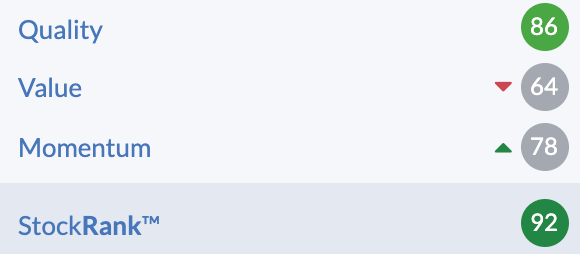
Since reaching a low of 58p during the onset of the pandemic, ITV’s shares have now doubled in price, but do the shares still offer good value?
Profile
What are the company's principal business activities, how does it generate its revenues?
As an integrated producer broadcaster (IPB), ITV creates, owns and distributes content on a variety of platforms globally. ITV’s principal business activities are split into two segments: Broadcast & Online (now the Media and Entertainment division) and ITV Studios.
The Broadcast division operates all of ITV’s commercial channels, delivering iconic channels such as ITV, ITV2, ITVBe, and CITV across multiple platforms. ITV currently hosts the largest family of free-to-air commercial channels in the UK. The platforms through which ITV operates include both linear television and on demand via the ITV Hub, ITV’s OTT service, or through pay providers such as Sky and Virgin.
ITV’s vast range of channels and its ITV Hub generate significant revenues from advertisers. The company’s proposition is appealing to television advertisers, with the scale and reach of ITV’s unrivalled in the UK.
Furthermore, through the company’s Subscription Video On Demand (SVOD) services, such as BritBox, it is able to generate revenues from consumers that are willing to pay to engage with ITV brands and content.
The ITV Studios division looks after the company’s international content business. The division produces content in the UK and internationally across 12 countries. ITV Studios is one of the largest independent producers in the world, with over 46,000 hours of content in its catalogue after having carried out a series of strategic acquisitions since 2012.
ITV Studios produces and distributes a wide range of programmes, including drama, entertainment and factual genres. The division generates revenues from its global formats and distribution business, which sells and commercialises its finished programmes around the world. The customer base is increasingly diverse, producing content for international broadcasters and over-the-top (OTT) platforms.
In ITV’s latest Q3 results report, revenues were split 57% in Media & Entertainment (£1,594m) with 43% attributable to ITV Studios (£1,193m).
Size, Sector & Exchange
With just over 4 billion shares in issue, at the current share price of 124.9p, the market capitalisation stands at just over £5 billion. The company operates in the Consumer Cyclicals sector, and more specifically, the Media & Publishing industry group.
As a large cap blue chip company, ITV trades on the London Stock Exchange, and is a constituent of the FTSE 100.
Business strategy
ITV undertook a comprehensive review of its business strategy in 2020, after the pandemic highlighted the need to strengthen and diversify the business model. The review emphasised the need for the company to accelerate its existing ‘More than TV’ strategy to ensure that ITV remains ahead of rapidly changing viewing, content production and advertising trends.
ITV’s More than TV strategy centres around the company’s strategic vision of being a ‘digitally led media and entertainment company that creates and brings our brilliant content to audiences wherever, whenever and however they choose.’
The company aims to achieve its ambitions by delivering on three critical elements: Growing UK and Global Production, Transform Media and Entertainment (Broadcast) and Expand Direct to Consumer.

Source: ITV website 'Our Strategy'
In order to grow the UK and global production, the company has outlined that it will need to: develop new hits, attract and retain leading talent, expand its scripted business and globalise and maximise the value of its key formats and brands. ITV has also disclosed that it will consider selective value-enhancing acquisitions in both scripted and unscripted content in order to gain creative talent and IP.
The company has now restructured its Broadcast & Online division to create the Media and Entertainment division in order to better serve changes in viewing habits. The division has two underlying business units: Broadcast and On-Demand. Broadcast focuses on the company’s linear channels, whilst On-Demand is responsible for the AVOD and SVOD (Advertising Video On Demand & Subscription Video On Demand) and DTC (Direct To Consumer) businesses.
To continue the transformation of the company’s former Broadcast & Online division, it will take the following steps: continue to drive mass audiences to its linear channels, drive on-demand viewing by accelerating the ITV hub development, grow its addressable advertising capabilities, and build more strategic partnership with advertisers.
To expand ITV’s Direct To Consumer assets, both in the UK and internationally, the company created BritBox in 2019. Initially launched in the UK, ITV has now successfully launched BritBox US and BritBox Australia. There are now firm plans to continue the BritBox roll-out internationally, and other initiatives are being developed to grow and enhance DTC engagement.
History & Growth
ITV started its journey back in 1955, a year after the Television Act of 1954, which made commercial television in the UK possible. After the Broadcasting Act of 1990, regional companies were able to merge for the first time in the UK, which paved the way for the consolidation of ITV.
It wasn’t until February 2004 that ITV, the owner of 11 of the 15 regional licenses at the time, was formed. ITV now owns 13 of the regional licenses (acquired Channel TV in 2011 and Ulster TV in 2016) and sells advertising on behalf of all 15.
Since 2012, ITV has taken a more proactive role in international content production and distribution, acquiring a number of these businesses across the UK, US and Europe. In 2017 alone, ITV acquired a controlling stake in UK production company World Productions, French production company Tetra Media, and Italian production company Cattleya.
Recent News
Q3 Trading Update - On 10th November 2021, ITV announced its Q3 trading update for the 9 months to 30th September 2021. The update was well received by the market, and included the following highlights:
- Total external revenue was up 28% at £2,381 million (2020: £1,860 million) and up 8% compared to 2019
- M&E revenue was up 26% at £1,594 million (2020: £1,267 million), with total advertising revenue (TAR) up 30% within which total AVOD revenue was up 54%. Total M&E revenue was up 9% compared to 2019 and TAR was up 8% compared to 2019
- Total advertising revenue (TAR) for 2021 is expected to be the highest in ITV's history. Profit to cash conversion is expected to be around 60% in 2021, up from its previous guidance of 30%, due to the stronger than expected TAR performance
- Total ITV Studios revenue was up 32% at £1,193 million (2020: £905 million) and up 6% compared to 2019
Commenting on the results, Carolyn McCall, ITV Chief Executive, said: "By any standards, ITV has had an outstanding nine months. Both our Studios and Media & Entertainment (M&E) businesses have performed very strongly… Today's results further illustrate that ITV has successfully completed the first phase of its More Than TV strategy and is accelerating the second phase of digital transformation as we evolve our products, user experiences and ways of working."

Source: ITV Q3 Trading Update 2021
Catalysts
Trends & Events
Although traditional linear TV viewership has declined in recent years, this fall has largely been offset by a significant structural change towards on-demand streaming. The Covid-19 pandemic not only accelerated this transition, but led to an all round increase in viewership, including linear television.
ITV has been a big beneficiary of these tailwinds, especially with its on-demand business segments. The latest Q3 results highlighted the increasing importance of its AVOD and SVOD businesses to the group’s financial performance.
The company’s AVOD focus has been reaping rewards with a 22% increase in monthly active users, reaching 9.6 million at 30 September 2021. ITV plans to further roll out its redesigned ITV Hub with improved functionality and increased personalisation and is currently on track to double the number of hours of content available on ITV Hub over 2021.
The company’s SVOD business, which centres around its BritBox subscription offering, has also been an impressive performer on the back of these structural trends. BritBox recently launched on Xbox, and has a notable backline of content for the next year. BritBox International is also contributing strong growth across the US, Canada and Australia, and recently launched in South Africa in August. More markets are set to be targeted in 2022.
Risks
What risks does the business face?
Operational - The industry is subject to both structural and cyclical changes in consumer behaviour, whether it be in the way that people consume content, or the type of content they are more inclined to consume. ITV’s ‘More than TV’ strategy aims to respond to these structural changes, however, it must continue to invest and develop content that resonates with consumers if it wants to successfully compete with its larger international peers.
Competitive - ITV is well established in the UK market, but faces increasing competition from larger international peers such as Netflix and Amazon Prime. These streaming giants have more financial muscle and much more comprehensive content backlogs and reach than ITV, and could pose a longer-term threat to the viability of ITV’s offering.
Growth - Growth has been quite inconsistent in recent years. Furthermore, as ITV continues to grow its operations internationally, it exposes itself to more business and competitive risks. Strategic content based acquisitions have worked in the past, but as ITV plans to accelerate its strategy, this might lead to riskier acquisitions being taken on in the future in the pursuit of growth.
Summary
Bull points
Unique market-leading position in UK broadcasting, strong Q3 results demonstrate that the company’s ‘More than TV’ strategy is working, excellent content backlog after years of investment, appealing valuation and will shortly be resuming dividend payments.
Bear points
Inconsistent growth in recent years, structural decline in linear television viewership, larger international peers a potential threat due to the scale and reach of their operations.
After a surprisingly strong set of Q3 results, it seems like there’s lots to look forward to for ITV shareholders as the company accelerates its ‘More than TV’ strategy. Despite the structural declines in traditional TV viewership, ITV is proving that it can change with the times.
Comcast’s acquisition of Sky $39 billion in 2018 also highlights the appeal of attractively valued UK companies. It’ll be interesting to see what the future holds for ITV!
Disclaimer
This is not financial advice. Our content is intended to be used and must be used for information and education purposes only. Please read our disclaimer and terms and conditions to understand our obligations.

3 comments
Excellent review on Itv (LON:ITV) Keelan which is my biggest position being 11% of my portfolio by value and 6% by cost. Like jonno I added last year and my average cost is 67p.
I have long held the view that ITV is ridiculously cheap when you consider the World demand for well made TV drama which keeps ITV Studio's so busy.
If ITV was an American Co. it would be triple this price.
Many investors have long felt the SP is heavily manipulated by the big players and one day some bright guy will write a Best Selling book on what goes on in the Markets. ITV might then dramatize the book and have another winner on their hands. I can't wait!
Great overview Keelan
In my opinion the market continues to be myopic and obsessed with total advertising revenue especially that delivered free to air. It pays scant regard to the enormous back catalogue or the value of ITV Studios. Where else can one buy a quality media company with excellent scripted productions such as Line of Duty, the Body Guard and more recently Vigil, to name for PE of less than 9 and prospective forward yield of 4.5%..
Itv (LON:ITV) is in sound financial health although the investment rating would suggest that it is financial difficulty. However on the downside it lacks scale compared media behemoths such as Netflix, Amazon et.al, but nonetheless this is more than compensated for in the share price.
What I think is immaterial to the share price however and no doubt the market will continue with its myopia until and if the company is the subject of a bid or perhaps buys Channel 4. Any bid would I feel be contested with a take out price well north of £2, assuming it is not blocked by the government. There endeth my tuppence worth.
Needless to say I am a holder having added last year, fortunately at 59p.
On principle would not invest in ITV or any other British TV company.Their wall to wall adverts featuring children yelling for people to do something about climate change are child abuse .The children have been brainwashed into believing fears about global warming are facts rather than opinions.
Noone has explained to them how zero carbon policies will probably lead to mass inequality,poverty and widespread power cuts.What MSM TV media is doing is what religous cults do to their children and the executives of ITV,BBC,Sky and CH 4 & 5 should be arrested for child abuse.