Stock Pitch - Polar Capital (LON:POLR)

The Stockopedia Investment Club (SIC) is Stockopedia HQ's own investment club. We pitch stocks to each other and to the site so you can see our (evolving) research process and give your two cents on the Club's decisions.
You can see all the SIC posts here and read Ed's introduction to the Club here. We hope to bring many more pitches in 2021 - but first, let's revisit the final pitch of 2020: Polar Capital Holdings (LON:POLR) .
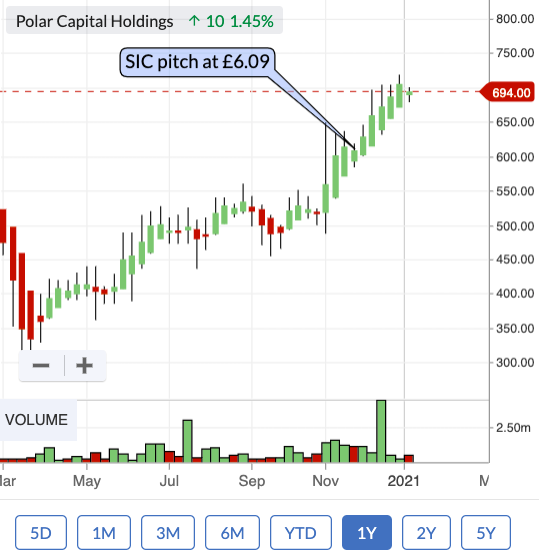
Polar was pitched on the 18th of November 2020 when its share price was 609p and its StockRank was 97. Since then, shares have appreciated by c14% and the StockRank has come down slightly to 94.
This growing specialist fund manager aims to be a leading global investment management boutique and backs up its ambitions with a track record of top quartile investment performance over multiple time periods.
Supported by a robust, net cash balance sheet and spearheaded by its best-in-class Technology Trust, Polar is growing organically and via the acquisition of talented investment teams.
But the rise of passive funds is driving down sector margins. So is there room for sustained outperformance from the likes of Polar, or has active fund management had its day?
Summary
Bull Points - Modest forecast earnings multiple given history of double digit operating margins, returns on capital, and compound revenue and earnings growth; Strong cash flow generation and healthy net cash balance sheet; scalable, capital-light business model; positive investment track record.
Bear Points - Low-cost passive funds are taking market share and driving down margins; key person risk; vulnerable to stock market or economy downturn; overweight exposure to big tech.
Profile
Polar Capital Holdings (LON:POLR) trades on the AIM Market, in the Financials Sector under Investment Services. A StockRank of 94 is made up of:
- A Quality Rank of 90,
- A Value Rank of 44, and
- A Momentum Rank of 99.
Stockopedia classifies this as an Adventurous Mid Cap High Flyer. It brings high quality growth to the Investment Club portfolio and, as a fund manager, is viewed as a geared play on a stock market recovery.
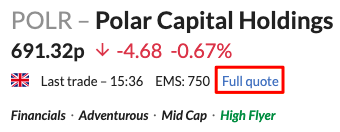
The group's EMS of 750 means you can expect £4,500 of stock tradable on bid/ask, so liquidity could be an issue for some. It has an average volume of 196,000 shares which is about £1.35m traded in value daily. (This information can be found by clicking on 'Full Quote' at the top of the StockReport.)
The forecast P/E is only 12.7 times forecast earnings, which looks cheap for a consistently high margin business, although the forecast PEG of 3.4 suggests growth could be an issue. However, it is worth noting that Polar qualifies for two Momentum Screens:
- Bold Earnings Revision Screen, which looks at earnings momentum, and
- Value Momentum Screen, which looks for undervalued stocks with positive price momentum.
Increasing assets under management is the key profitability driver and Polar can grow this both organically and by buying in additional specialist fund management teams. On that note, the majority of Polar's investment teams have outperformed their peers and benchmarks over time and the Polar Capital Technology Trust is particularly well regarded.
This trust is responsible for more than 50% of the group's AuM - an important point to consider.
The forecast dividend of 5.35% is attractive. Dividend cover over the past six years does come in at just 1.1x, but it can afford a high payout ratio due to its net cash position, operating profitability, and capital-light business.
Business & Model
What is the company history & what does it do?
Polar was founded by Brian Ashford-Russell and Tim Woolley in 2001. Ashford-Russell and Woolley were previously responsible for the management of Henderson Global Investors’ technology funds.
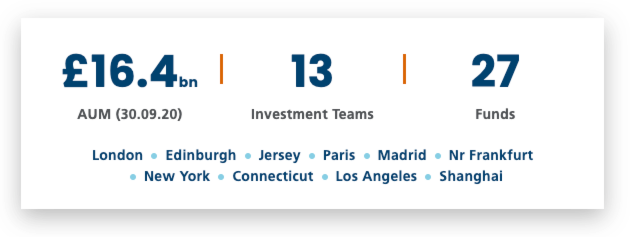
Since then this specialist active management group has built a broad family of funds diversified by asset class, geography, sector, strategy and structure. It now has some £16bn of assets under management (AUM) and its 13 teams run 27 funds.
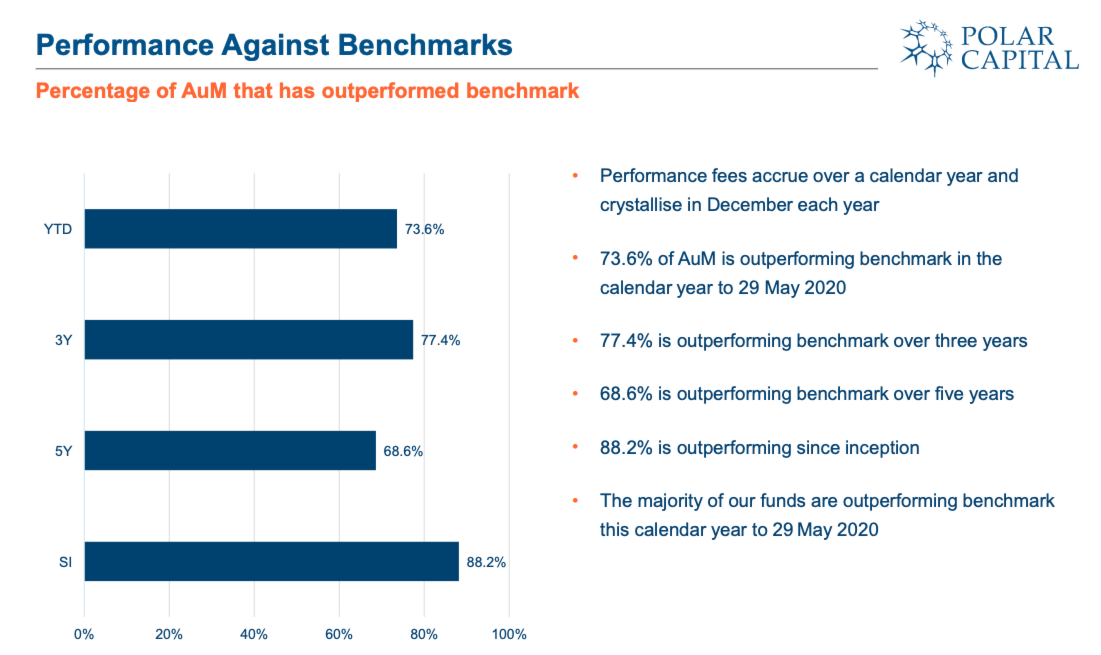
Polar's active funds tend to have high active shares, meaning they differ meaningfully from their benchmarks. What's more, there is an impressive track record of outperformance. Over 70% of the group's AuM have outperformed their benchmarks on a year-to-date and three-year basis.
The ongoing charges figure (OCF, previously known as the total expense ratio) is typically around 1%. It's a highly profitable model.
What are the key business segments and revenue breakdown between them?
Revenue Split | ||
FY20 £’000 | FY19 £’000 | |
Investment management fees | 130,837 | 126,197 |
Investment performance fees | 22,297 | 51,729 |
Loss on forward currency contracts | -1,420 | -403 |
Total revenue | 151,714 | 177,514 |
You can see that around 86% of revenue comes from investment management fees, meaning that assets under management growth and overall scale is important to increasing profits.
What is the business model? How does it make money?
Polar operates as a scalable business platform for specialist, active fund management teams. It is structured into three main business areas: Fund Management, Operations and Distribution.
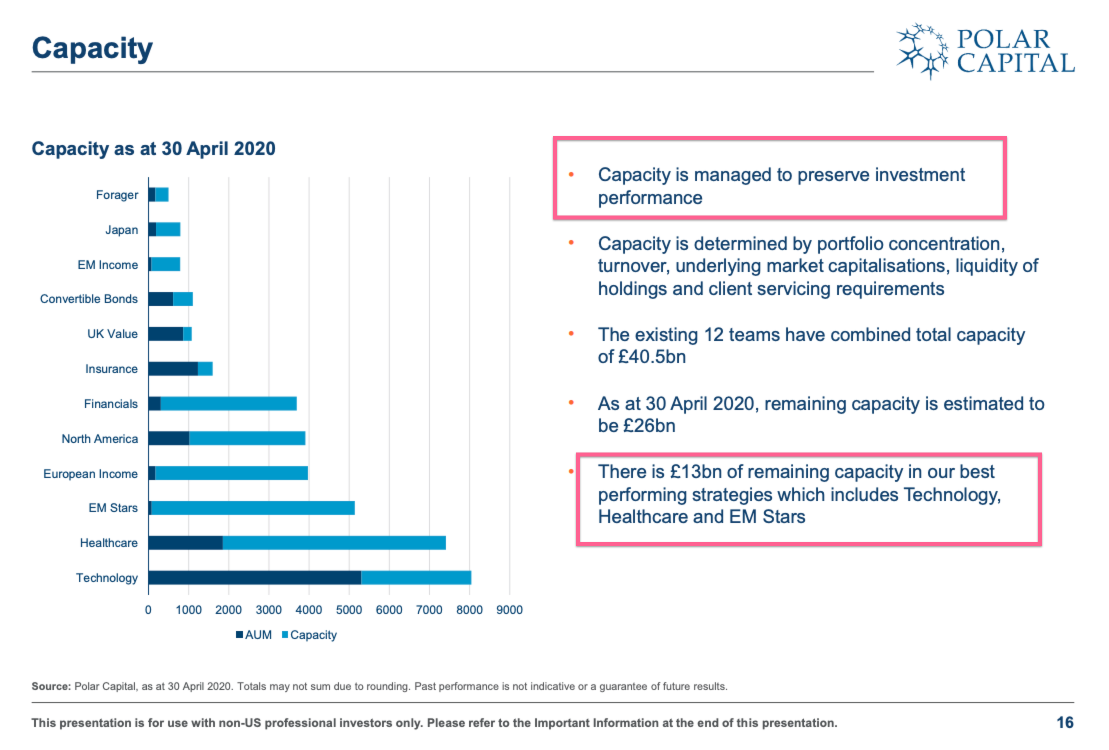
Once existing funds reach capacity, rather than continue to grow these funds and risk dragging down performance, Polar instead tends to add additional fund management teams.
This last point is important: Polar caps fund capacity in order to protect investment returns rather than chasing scale directly.
In terms of structure, the group has:
- Investment teams that manage long-only and alternative funds and trusts,
- An operations team that provides compliance, risk monitoring, IT, product management, finance, central dealing and the oversight of the third party service providers,
- Third party services, which provide portfolio accounting, custody, and back office services to ensure resources are concentrated on fund management, and
- Distribution and marketing teams that distribute its products to wholesale professional investors.
Market & Competition
What is the state & size of the company's market?
Active Management has been under pressure in recent years, with assets flowing into passive management. According to data provider EPFR, over the past ten years passive equity funds have enjoyed inflows of more than $2tn and active ones have suffered outflows of over $1.5tn. Meanwhile, Morningstar says there is now over $12tn in index funds globally.
This is accelerating the consolidation of traditional active management, with fund managers seeking safety and enhanced profitability in scale.
Who are the company's key competitors?
There are plenty of active fund managers out there. Polar operates in a highly competitive industry and says in its most recent annual report that the threat from competition has increased since 2019.
Ultimately, though, if Polar can continue to demonstrate benchmark outperformance, then it should attract fund inflows, which will drive profitability.
What is the company's strategy?
Polar seeks to attract inflows through superior investment performance over time. The group constrains fund capacity in order to protect performance.
Polar's internal workplace culture is key. Each team is like a franchise business. It maintains an entrepreneurial, collegiate, and transparent environment for its staff. This helps it attract and retain talented people.
It also selectively acquires complementary investment teams that are then plugged into its platform.
In particular, Polar is focusing on its institutional customer base and is looking to expand across the US, Continental Europe, and Asia and Australia.
Financials & Ownership
What is the record of growth & profitability?
The Financial Summary shows steady, c10% revenue and earnings growth over the past six years. Forecasts are for 14% EPS growth in 2021.
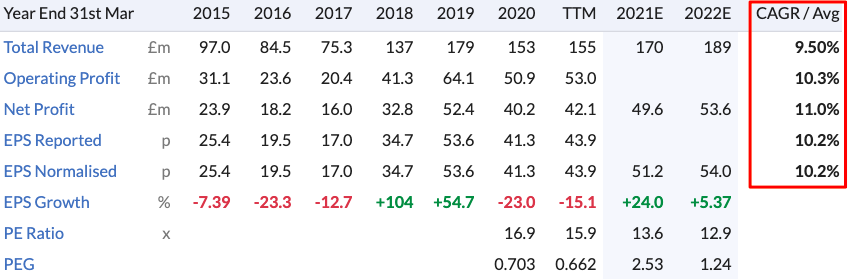
Asset management is a highly profitable business model. This shows up in Polar's Quality Rank of 90, and its exceptional double-digit operating margin and return on capital figures over time.

What is the state of the balance sheet?
Polar's financial health is a key strength - in fact, maintaining balance sheet strength is an explicit part of Polar's stated strategy. There is no debt and the company has £150m in cash on the balance sheet.
An F-Score of four rightly flags up the group's pricing power, though. This is an industry-wide headwind and a key driver of ongoing consolidation. Polar will be hoping its investment track record is enough to attract inflows and gain market share.

What is the ownership structure of the company and do management have stakes?
Polar's shares are quite tightly held.
The largest individual shareholder is one of the firm's own fund managers: Robert Gurner - who runs the European fund - has 8%. Christopher Mills (Harwood Capital) is a big investor at 7% in the firm.
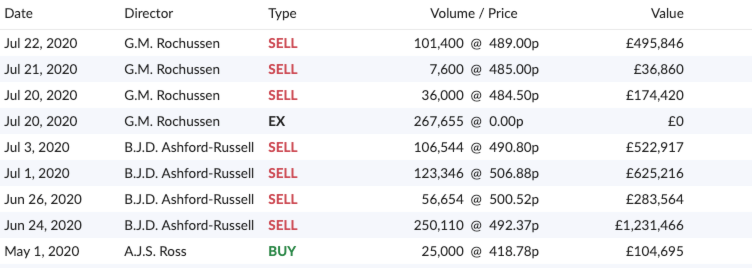
The founder has recently sold quite a lot of stock and the CEO has also sold recently, albeit both at much lower prices around June/July.
There has been minimal shareholder dilution, which helps earnings per share growth.
Valuation
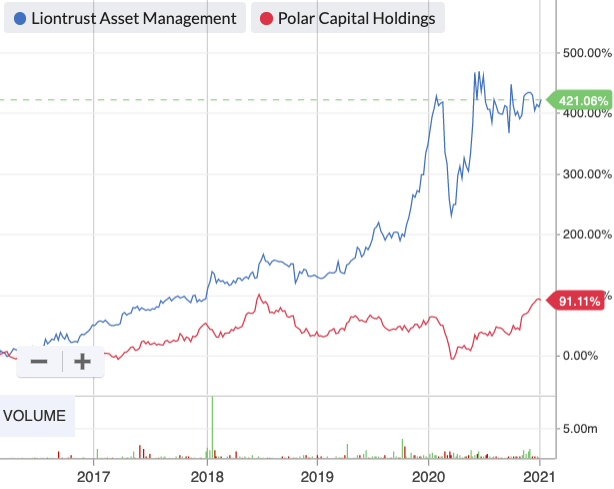
Even after recent rises, a forecast P/E ratio of 12.7x suggests Polar is cheap compared to peers like Liontrust (on a forecast PE ratio of 15.9x). That gap has reduced in recent weeks but over the longer term we can see that Polar lags its listed peer.
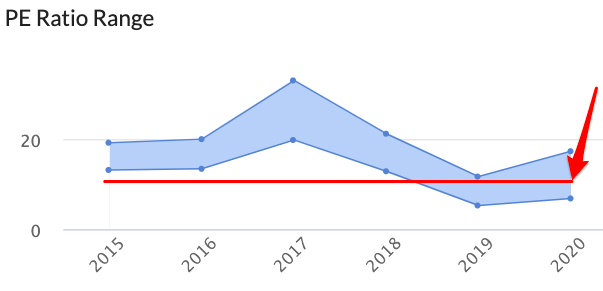
Polar also has £150m in cash on the balance sheet. If you strip out that cash, it's trading at just over 10x forecast earnings. Even after increasing over the past month or so, shares trade at the lower end of the group's historic range - the PE ratio has been well above 20x in previous years.
Trends & Catalysts
Are there any catalysts could drive a rerating in the medium term?
Polar has been busy buying up investment teams.
- In October it bought International Value and World Value Equity Team from First Pacific
- Polar acquired Dalton Strategic Partnerships on the 17th of December for an estimated £15.6m (up to a maximum of £21.5m depending on AuM). Dalton is a UK based boutique asset manager with AuM of £1.24bn (as at 15 December 2020).
These additions help drive earnings growth and diversification. The latter deal, which is expected to complete this quarter, also provides Polar with broader wholesale and institutional distribution into Europe, particularly in the German market.
The company stands to rerate on fund inflows, earnings growth, further news flow in terms of bringing in new teams, and any wider economic growth. In the meantime, it is reliably cash generative and pays out an attractive 5.28% forecast dividend yield.
Risks, Threats & Hurdles
What are the biggest risks, threats or hurdles that the business may face?
- High Technology weighting - Polar has £9bn in big tech funds. That's more than 50% of its £16.4bn AuM. It could get hit more than its peers if there's a technology crash,
- Key person risk - the loss of investment teams/stars could hurt AuM,
- Culture drift - the 'collegiate and partnership ethos' that permeates the organisation appears to be an important factor in attracting and retaining employees and driving investment outperformance
- Competition - active fund management is a competitive industry and faces a big threat in the form of passive investing.
Recent Trading & News
Annual report for the year to 31st March 2020
'Despite these challenges, our technology and healthcare teams in particular have proven resilient... The longer-term impact [of Covid-19] is unknown and continued volatility of markets will be a feature for some time. We believe that with our strong balance sheet, resilient operating platform and diverse range of specialist strategies, we are well positioned for the future.
Unaudited interim results for the six months to 30th September 2020
'Given the market backdrop, the Polar fund strategies with a clear growth/quality style profile have performed well. Our diverse and differentiated range of sector and regional fund strategies, and our performance led culture, gives us confidence in our ability to withstand market turbulence in these uncertain times.
'There remains significant capacity in our strategies and we are well positioned to continue delivering above average returns for our clients and shareholders over the long term.'
Sentiment
What do the brokers currently think and are they upgrading estimates?
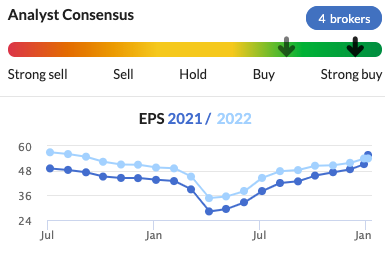
After a drop in the middle of 2020, analyst earnings estimates have since been on the rise:
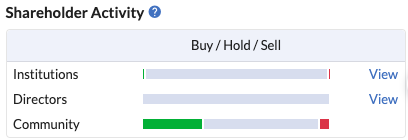
We can see from the Shareholder Activity box that the community has also been buying:
What would the person selling to us be thinking and who are they?
- Some investors might be worried about the exposure to big tech
- There may be concern over the near-term outlook for equities and/or the global economy
- Index tracker funds might continue to take share and drive down industry margins
Conclusion
After considering the stock pitch, the SIC voted 10-5 to buy Polar Capital on the 18th of November at 609p.
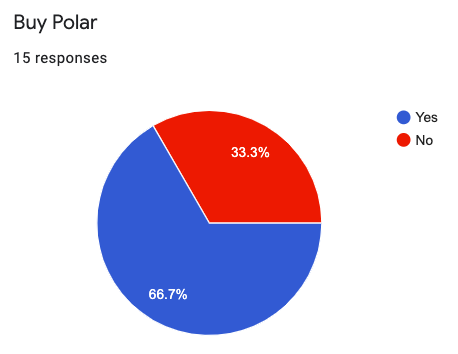
The Club continues to hold, but what do readers think? Is active management in structural decline, or is Polar's valuation too low given its history of high margins, investment outperformance, and shareholder returns?
Disclaimer
This is not financial advice. Our content is intended to be used and must be used for information and education purposes only. Please read our disclaimer and terms and conditions to understand our obligations.

30 comments
Good write up - thank you. Useful to also see how tech dominated their assets under management are (from their recent half year results):
Jack thank you for your concise exposition.
I bought Polar Cap Holdings two days before your investment club meeting. I felt I received some confirmation from Richard Leonard in the excellent PI World interview. The publication of this stock pitch is welcome further confirmation. The most important confirmation however has been the rise of 11.5% since purchase and the expected receipt of a substantial dividend tomorrow.
I have always been impressed by the business model of the Asset Management Company. I recently investigated three asset management companies and came to the conclusion that Polar Capital Holdings (LON:POLR) seemed to be the best Value for Money version of the business model that I could find.
The question of passive v active management is very pertinent I feel. One of the attractions of active management is the feeling that Fund Managers should be able to beat the averages. As we know this is often not the case. Considering that Technology is the largest element of Polr's portfolios it is reassuring to note that this week's Investor's Chronicle indicated that Polar Capital Technology Trust (PCT) had beaten the World Technology Index by 36% over the last five year.
ETF's can also sometimes act as a stimulant to Fund Manager portfolios. Purchases of the NASDAQ ETFs help PCT by virtue of the fact that 25% of PCT's holdings consists of Apple, Microsoft and Google.
I expect Technology to continue to do well over the medium to long term but I think the reversion to economic normality will also provide growth opportunities to Polr's portfolio holdings in Healthcare, Emerging Markets and cyclical Value.
Hi Jack
I can see POLR have grown revenue and profits when viewed in the longer-term, but in the short-term their performance has been highly cyclical with performance fees presumably varying largely in accordance with how the stockmarket is doing.
So if one buys this in the wrong point of the cycle, I am taking the view that one could be in for an extended period of fairly poor perfromance.
Or do you think management actions to strengthen the business are such that profit can be more reliably grown going forward?
Kind Regards, Martin
P.S. That is not to say it will not a decent six-month or one-year trade (say) from current levels
Great Synopsis Jack.
As a former financial advisor I would say some active managers will struggle in the future-size is always the killer. However, what works in PC favour is their clever use in monitoring of Fund Manager who use their Platform, this should hopefully provide a rich vain for future talent. However, performance is key and style drift or continued underperformance against sector returns is likely to be punished via removal from clients portfolios.
To counter this: the rise of ETFs ( and now the dissecting of specific areas within an ETF) will continue and the combination of low costs, liquidity and low entry point will be the catalyst for change. Many smaller investors will probably elect, via there advisors/online platform provider to combine ETF and specialist managers, such as the likes of Polar Capital, Slater Growth and Liontrust (example being say Tech play via PC and passive wider Nasdaq tech play via ETF-thus two horses in the same race).
A lot comes down to the management skills within PC and there ability to continue to evolve the business - in my experience that is were the problem lie: being a good fund manager does not necessarily make you a good manager to run the business.
Best regards,
Mark
Valuation based on FCF is however atrocious. P/FCF 82.5. What has caused the drop in FCF in recent years? and is this not a cause for concern? After all FCF are "real" returns contrary to Earnings.
Interestigly Polar has been adding to its position in Synairgen SNG, announced affyer hours. Comment on SNG
My thoughts why buy the stock rather than the fund/s well huge amount of consolidation going on in this sector so the funds don't have the chance of being bought out at a premium the stock does.
The Insurance fund although it has a bad twelve months due to covid prior to March 20 was a strong performer and is now starting to recover nicely and as Jack says capital light business that can be easily scaled up once the building blocks are in place.
The sheer scale of qe unleashed also will eventually have to end up somewhere in 08/09 it was stocks and bricks and mortar this time round 4-5 times more qe has been unleashed than in 08/09 personally think it will be rinse and repeat with a 5-7 year bull once covid shackles are off.
Regards Andy
I purchased this after listening to Richard Leonard end of year review on the always excellent piworld, His Polar Review starts around 6:15, but the whole clip is well worth listening to, his other tips are already up since he hightlighted them
https://www.piworld.co.uk/2020...
Yes it was actually Richard Leonard's PIWorld podcast that made me take a closer look and after some consideration I pitched it and buy it personally. Thanks to Jack for writing this up. The forecast 12x PE seemed very moderate to me for an active house that is quite aggressively building long term value. Multiple expansion is 50% of an equity investor's return. The forecasts are very beatable. I have concerns about the heavy exposure to Tech... but I also think the passive/index tech bubble may continue to silly levels. 5% yield is pretty handsome too.
Totally agree Ed - that pretty much mirrors my intro to it and ongoing feelings. I'll keep a close eye on it as I can see it hitting a level where there might be better growth opportunities, but as you say the divi should not be overlooked.
Ed,
Same question I posted to Jack yesterday and waiting for response, why the time lapse between the date of Stock Pitch and when it is posted here ?
Thanks mate
@voodoobar
"Same question I posted to Jack yesterday and waiting for response, why the time lapse between the date of Stock Pitch and when it is posted here ?"
Well - this comes down to a few things really:
We're trying to chronicle the club's account, and I'm pushing for the team to write up new pitches ASAP after they've been pitched to the club.
I am currently pushing for us to even de-couple the 'pitch' write-ups from the Investment Club decision making - so that we can increase the volume of pitches, but also the cadence of them - firstly to 1 weekly, then to 2 weekly perhaps.
So we may start publishing pitches before the club votes on them... and essentially use the pitch write-ups on the site as the club consideration content.
We shall see.
I certainly don't want the club to become a "copy trade" vehicle.... but I do appreciate that people are starting to see the Club write-ups as part of the service. That comes with quite a lot of responsibility!
Ed,
Many Thanks for your reply , and look forward the Club write-ups.
Jack,
Why the time lapse between the date of Stock Pitch and when it is posted here ?
Thanks
Thanks, Jack.
Why buy this, instead of the PCT trust?
(And if you were were looking for a trust, why buy PCT, now, instead of quite a few others? SMT, to give the obvious example; or USA, ATT).
A few reasons why I'd pick POLR over the PCT trust. POLR offer better diversification - 50% in tech, but also good chunks in insurance, healthcare and EM. It's also a great platform which is able to add new fund management teams and increase AUM. Finally, POLR is very cheap (around 12 times earnings) so a way to get exposure to tech at a bargain price.
Regarding the comparison to SMT - PCT is much more conservative and generally avoids all the really frothy stuff, such as Tesla. So, clearly going to lag SMT in this sort of environment, although of the two I'd much rather own PCT going forward.
Thanks. I get my diversification through a spread of trusts/funds,though I'm probably too heavy tech. Tbh, I've pretty much stopped picking stocks in the current volatile environment, preferring to, er, trust the better managers than myself. It worked for me in 2020 (up 43% total return, would have been far higher if I'd changed my approach from the start).
I'll obviously have to keep alert to a tech sell off.
Good article Jack.
I very nearly bought a couple of months ago, I was waiting for an opportunity when it dipped below £5 again and guess what...it never did. Kicking myself because even at510 and 520 it looked cheap. I've made this mistake before, if you're an investor rather than a trader don't worry about the last few pence, that's my advice. If you're right and it doubles over a couple of years you won't be worried about paying a few pence more.
What made me wait for this extra margin of safety in this case was the fact that it is essentially a geared play on the market, especially tech (as pointed out). Looks like a mistake now though.
Certainly agree on that point. I did the same with £IPX. Waiting for dips and missed out. I do hold Polar Capital Holdings (LON:POLR) and a nice write up here. Thanks as ever Jack.
Polar Capital Holdings (LON:POLR) is one of those shares that has hardly ever retraced in the past 6 months. Can never find a decent dip for an entry point!
"if you're an investor rather than a trader don't worry about the last few pence, that's my advice. If you're right and it doubles over a couple of years you won't be worried about paying a few pence more."
Never a truer word.
Polar Capital has been ,with Boohoo ,my two largest positions over the last few years and will remain so for the foreseeable future. Thanks for such a brilliant report on the stock,which only reinforces my commitment to the company
I own Polar Capital Technology Trust (LON:PCT) ,another POLAR fund which has outperformed this one. Their healthcare fund has been less exciting. I probably wouldnt buy this fund as already a POLAR holder (no pun).
Hi Javaheart - I think you may be confusing the holding company with its funds. There are valid reasons to hold both, but they are different propositions and it’s important to be clear on that.
You are correct. I knew that but was thinking about funds at the time of writing, thanks for clarifying.
Afternoon Jack (I find it very difficult to say Hi J**k)
Another brilliant logically laid out analysis from the club that I have Saved as a profile for when I "DMOR" (Do my own Research)
This is a New Years Plan of mine - Be more rule based and less confirmation biased in my approach to my purchase (AND Sale) decisions.
After BJ's announcement last night I may well have the time available to do just that!
It's great because
The above leads me as with others to look out for the Clubs Sales decisions when appropriate. Keep up the good work
That is an extremely good point Ezlifeme. As we all know, selling is much harder than buying and as so many of us hold positions in the club's buys, knowing when they sell would be invaluable. That is not to say we would mindlessly sell too (as if we would!) but it would certainly act as an excellent rationale upon which to make our own sell or hold decision.
Hi Jack,
Thanks this was really useful. I'm just starting out in investing so particularly interested in the process followed. When it comes to valuations do you ever carry out discounted cash flows or prefer to stick to the relative valuations of PE comparison?
Hi falsegods,
If you're just starting out then let me know if you have any general questions. Just getting to grips with Stockopedia, the Ranks, and Screening in Learn, plus reading and talking stocks in the SCVR is a good start.
We do have a step for DCF valuation in the stock pitch template, but time constraints mean we often don't include it in the analysis. I've been trying to get this pitch off my desk for a couple of weeks now but have been distracted with other reports & the festive season! So no time for a DCF this week.
DCFs are sensitive to inputs and are very much GIGO (garbage in, garbage out) so it adds another layer of analysis in terms of considering appropriate cash flow projections and discount rates.
It's a very valid (but sensitive) tool. Multiples are a useful and practical shorthand that are more readily comparable. They can give you a good insight into valuation when compared to the peer group, the company's historic range, its growth prospects, the profitability of its business model, and similar considerations.
Thanks Jack. I’m basically trying to add structure to my decision-making process and have been creating my own template that covers off valuations (DCF & relative ones) along with making use of Porters 5 forces, SWOT & PEST analysis.
I’ve spent a long time looking at DCF and just picked up Aswath Damodaran’s book ‘Little book of valuation’ which seems to boil it down pretty well so far and echoes your comments.
Stockopedia, and the SCVR in particular, has been invaluable already and I’ll certainly be incorporating as much from the stock pitch process as I can!