Synthomer: gearing up for a recovery?

Over the past few weeks, I have been looking at some stocks making 52-week lows. I've been following the funnel from the initial screen, doing some initial checks, which ruled out some companies, and am now at the stage of deciding which companies should make (or stay on) my watchlist.
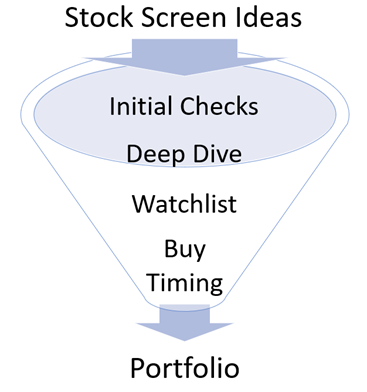
One of the best ways to get to the meat of this is to start to look into the details of what a company does, and writing a Stock Pitch article is a great way of doing this. Our Stock Pitch articles all tend to follow the same format, and it is for a good reason: the consistent layout means that all of the major considerations when investing are likely to be covered. This week, I have picked Synthomer (LON:SYNT) for the simple reason that this is the stock from the screen ideas that I know the least about. The gains in potential insight for me are greatest in my area of least knowledge.
Summary
- Synthomer (LON:SYNT) is a small-cap, Main Market-listed speciality chemicals producer which sells its products to other businesses. It has a history dating back to the 19th Century, and some investors may remember it by its former name, Yule Catto. It has three divisions: Coatings and Construction Solutions, Adhesive Solutions, Health & Protection and Performance Materials.
- With a StockRank of just 45, this won't appeal to quant investors. The Momentum Rank is one of the lowest in the market, at just 1, reflecting a weak share price and broker downgrades over the last year.
- I am always fascinated by this type of stock. Shareholders who held shares at the peak price four years ago have lost almost 99% of their money. The company paid a dividend per share in 2021 greater than the current share price. (Although there has since been a rights issue, so the total amount paid out in dividends would be less than the current market cap.)
- On the surface, the company's quality metrics are uninspiring. However, in the period 2010-2019, it had an ROE that averaged above 20%. A combination of weak EBIT and acquisition accounting, increasing their book value due to goodwill and acquired intangible assets, makes the current figures appear much worse.
- The large acquisitions the company made in the past couple of years have built scale, but also contained the seeds of the company's downfall. The debt they took on has exaggerated a fall in the value of the business due to the inflationary pressures and market conditions. The debt has also made the company's finances look stretched, and although they have plenty of liquidity, they recently needed a relaxation of banking covenants.
- The gearing, combined with weak trading, has seen the share price reflect the continued downtrend in brokers' forecasts over the past 18 months, including a 20% fall this week in response to the interim results. However, if investors accept that this is a cyclical business where trading will reflect global market conditions, there are signs that the company may now be undervalued.
- However, it would be a brave investor who jumps in now. My research shows that contrarian investors are better off avoiding stocks with terrible momentum characteristics, on average. Those interested in benefiting from any recovery may be better off waiting for signs that the recovery is underway, even if they miss some of the initial share price gains.
Profile
The company traces its history back to the 19th Century. Scottish brothers, George Yule and Andrew Yule, were partners in the warehousing business in Manchester before founding businesses in India. Andrew Yule and Company became a major business enterprise in India. George Yule became active in Indian politics, shaping the early landscape of the Indian independence movement. In 1863, he established George Yule & Co. in London as a purchasing arm of Andrew Yule & Co. On their deaths, control passed to their nephew David Yule and in 1920, he and Thomas Catto renamed George Yule & Co. to Yule Catto & Co. Limited.
Andrew Yule & Co. was sold to the Indian government in 1969, and Yule Catto became a UK-listed company in 1971. In 1980, the company acquired Revertex Chemicals, with the aim of becoming a speciality chemicals business. Over the next 30 years, the company made many strategic acquisitions and divestments to build scale in this industry. In 2007, the group sharpened its focus from a diversified chemical business to being a speciality polymer business. In 2012, the company changed its name to Synthomer on the basis that the majority of its business already traded under that name.
More recently, the scale of the acquisitions increased. In July 2019, Synthomer announced that it was going to buy OMNOVA Solutions for an enterprise value of $824 million, completing the deal in April the following year. In October 2021, Synthomer announced the acquisition of Eastman Chemical's adhesive activities for $1 billion.
This acquisition spree has led to an increase in revenue:
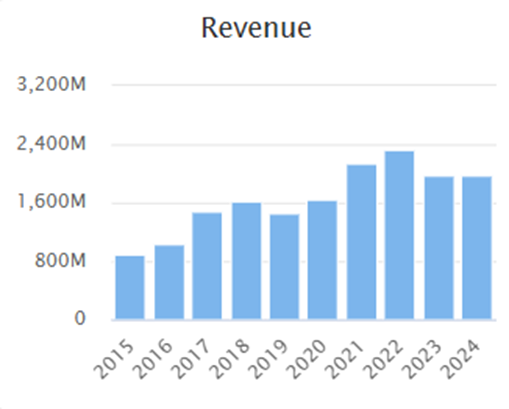
However, it has come at a cost. The acquisition of OMNOVA in 2019 came with a 1-for-4 £204m rights issue, and Synthomer financed the acquisition of the adhesives business from a £205m equity placing at 485p.
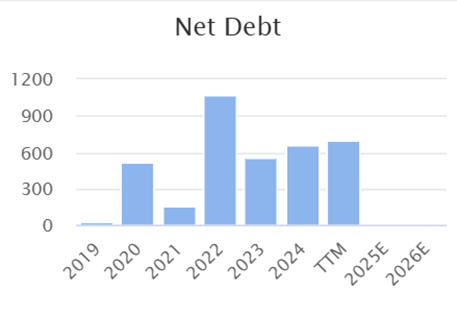
Despite raising equity, the scale of the deals led to net debt soaring to over £1bn at the end of 2022:
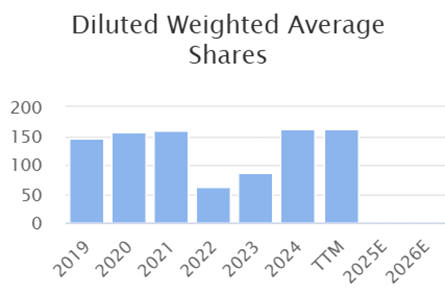
A weakening of trading and commodity inflation following the Ukraine invasion led to the company needing a rights issue in September 2023 to raise gross proceeds of approximately £276m. This also came with the 20-1 share consolidation. So the shares in issue graph doesn't capture the scale of the share dilution. In 2018, they had 340m shares in issue, but this was equivalent to just 17m after accounting for the 20-1 consolidation. Today, there are 163m shares in issue, some 9.6x as many after accounting for the consolidation.
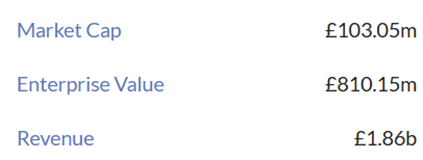
As well as raising fresh equity, the company has also been divesting itself of businesses it considers non-core. In December 2022, it announced the sale of its Laminates, Films and Coated Fabrics Businesses for £208m on an enterprise basis. In April 2024, they received €27.5m for the Compounds business. In April this year, it divested William Blythe Limited, its inorganic chemistry business, to its management team alongside H2 Equity Partners, for consideration of £30m. Despite getting around £260m for the divested businesses and the £276m rights issue, net debt is still perilously high at £638m in the half-year results released this week.
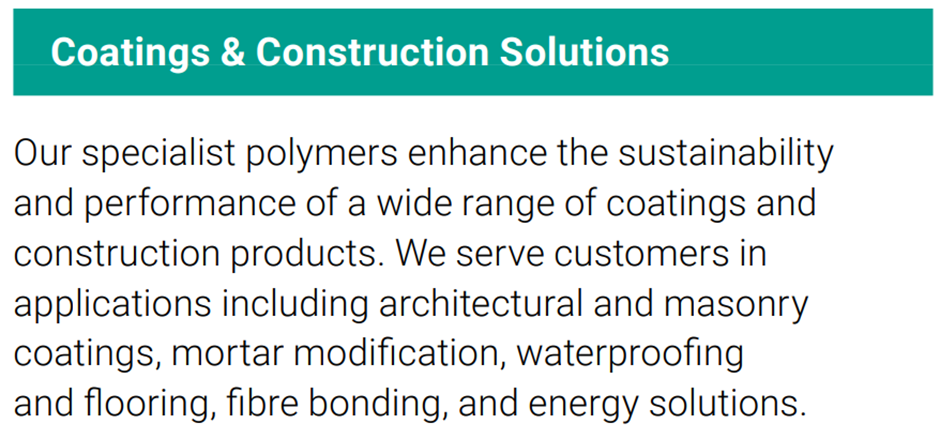
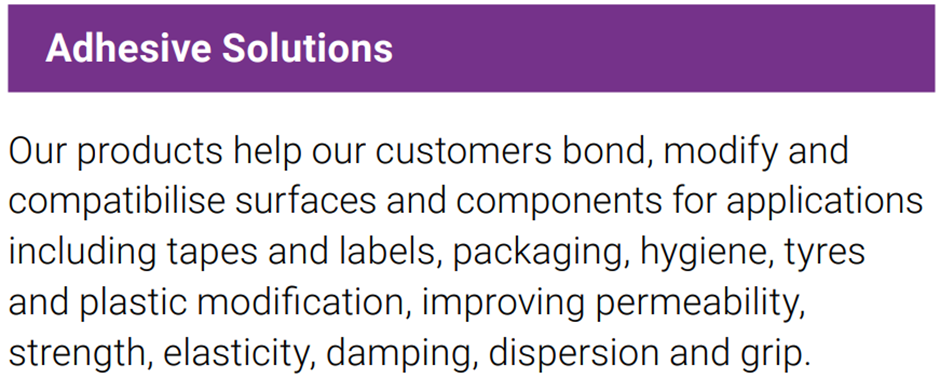
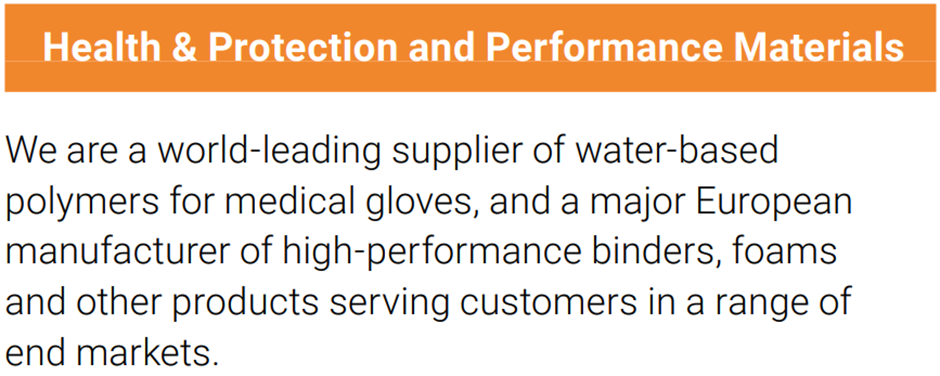
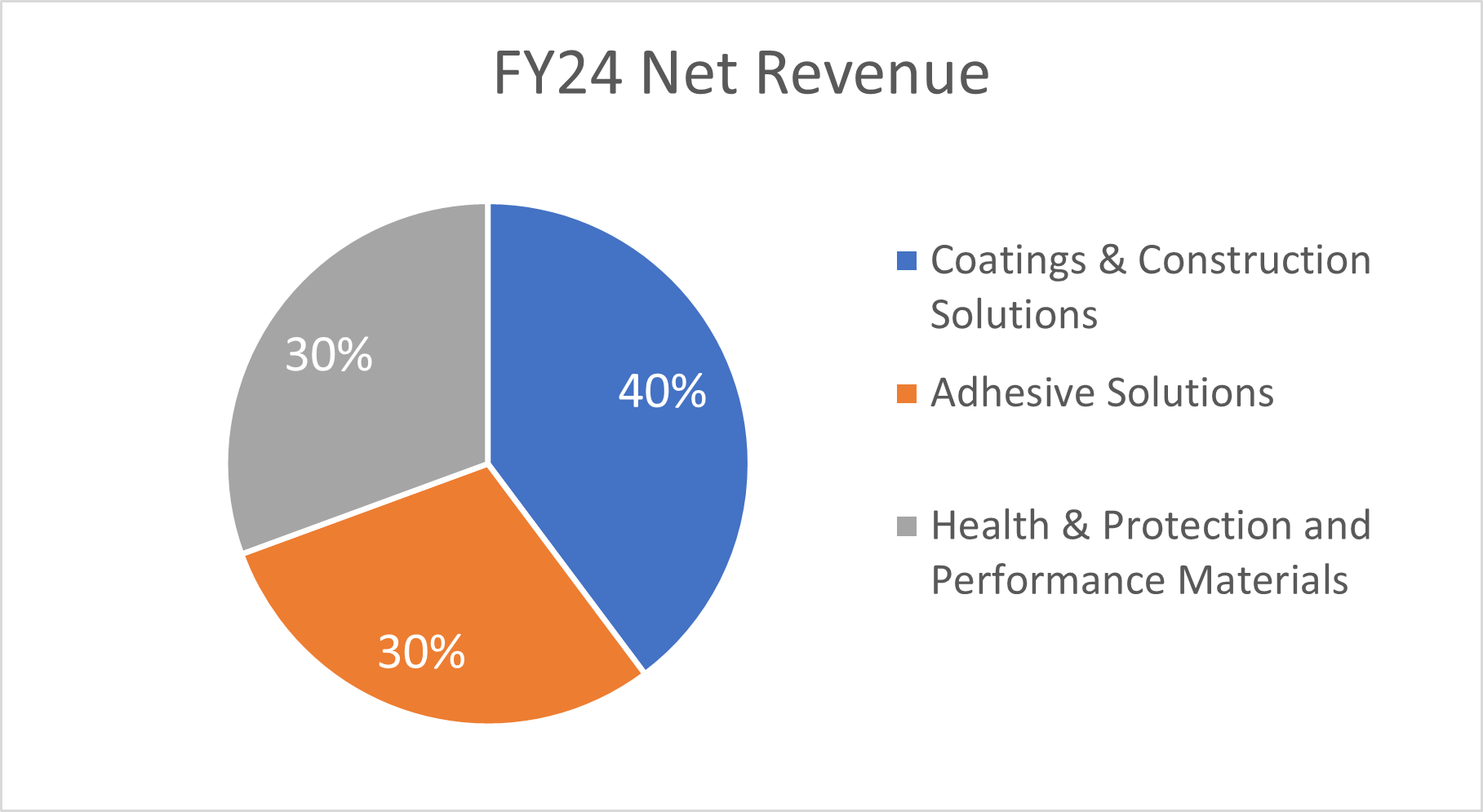
Following the acquisition of the adhesives business from Eastman Chemical, the company splits their reporting into three divisions, which they describe as follows:
Here's how the revenue breaks down for FY24:
And for 25H1:
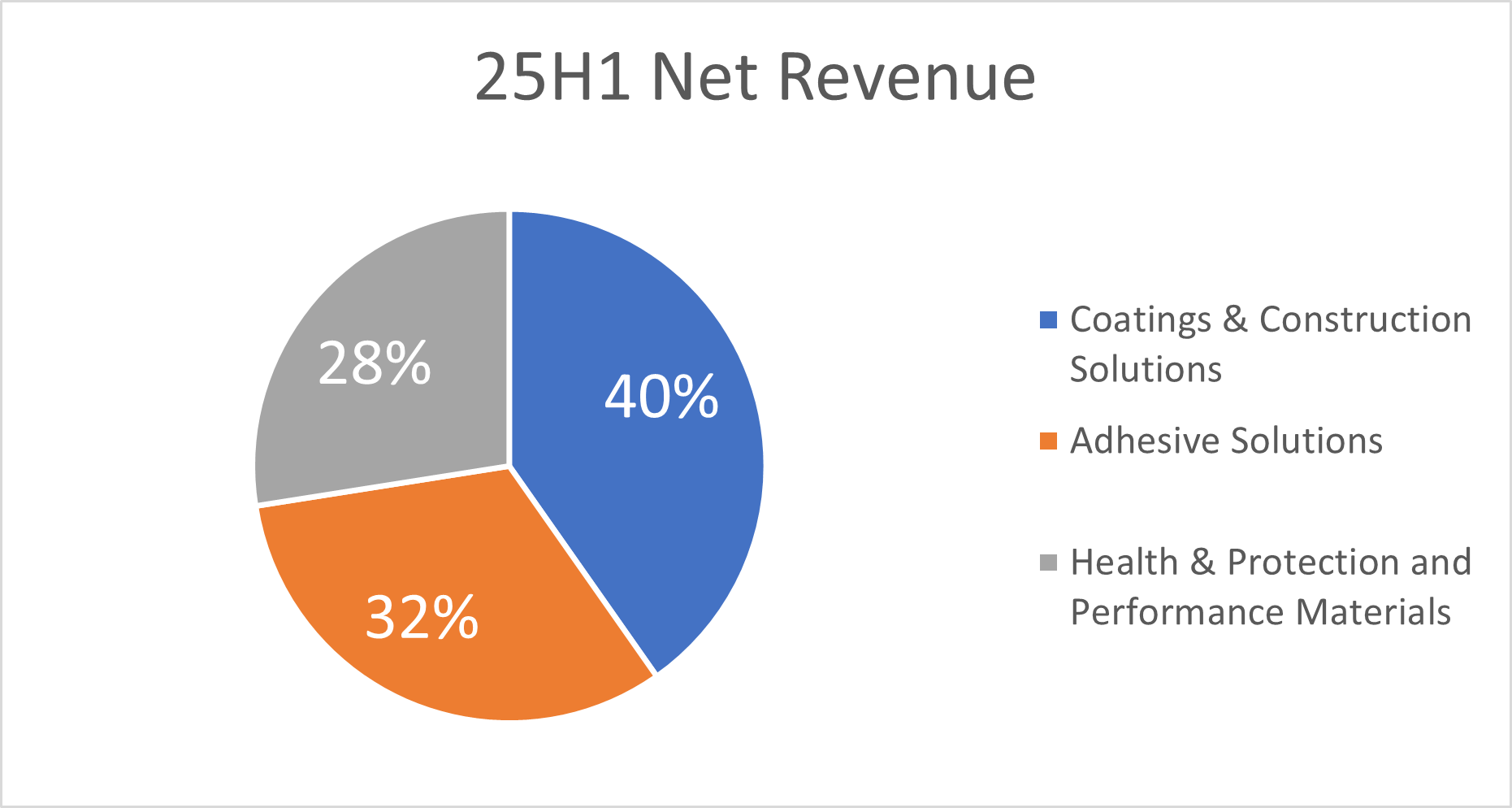
On a revenue basis, this is a reasonably balanced business between its different segments. However, on EBITDA, almost half came from the Coatings and Construction Services in FY24:
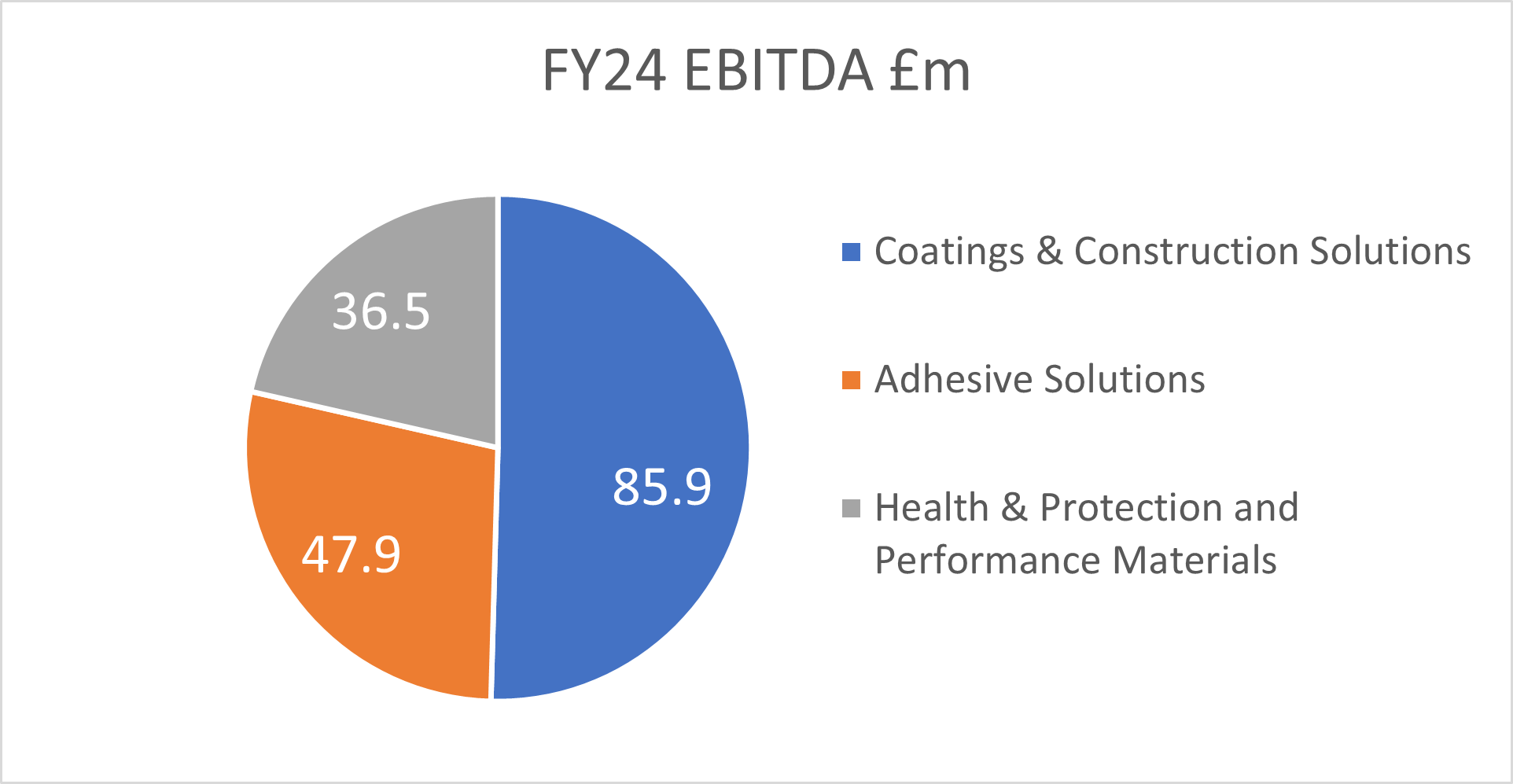
This division dominates the adjusted Operating Profit:
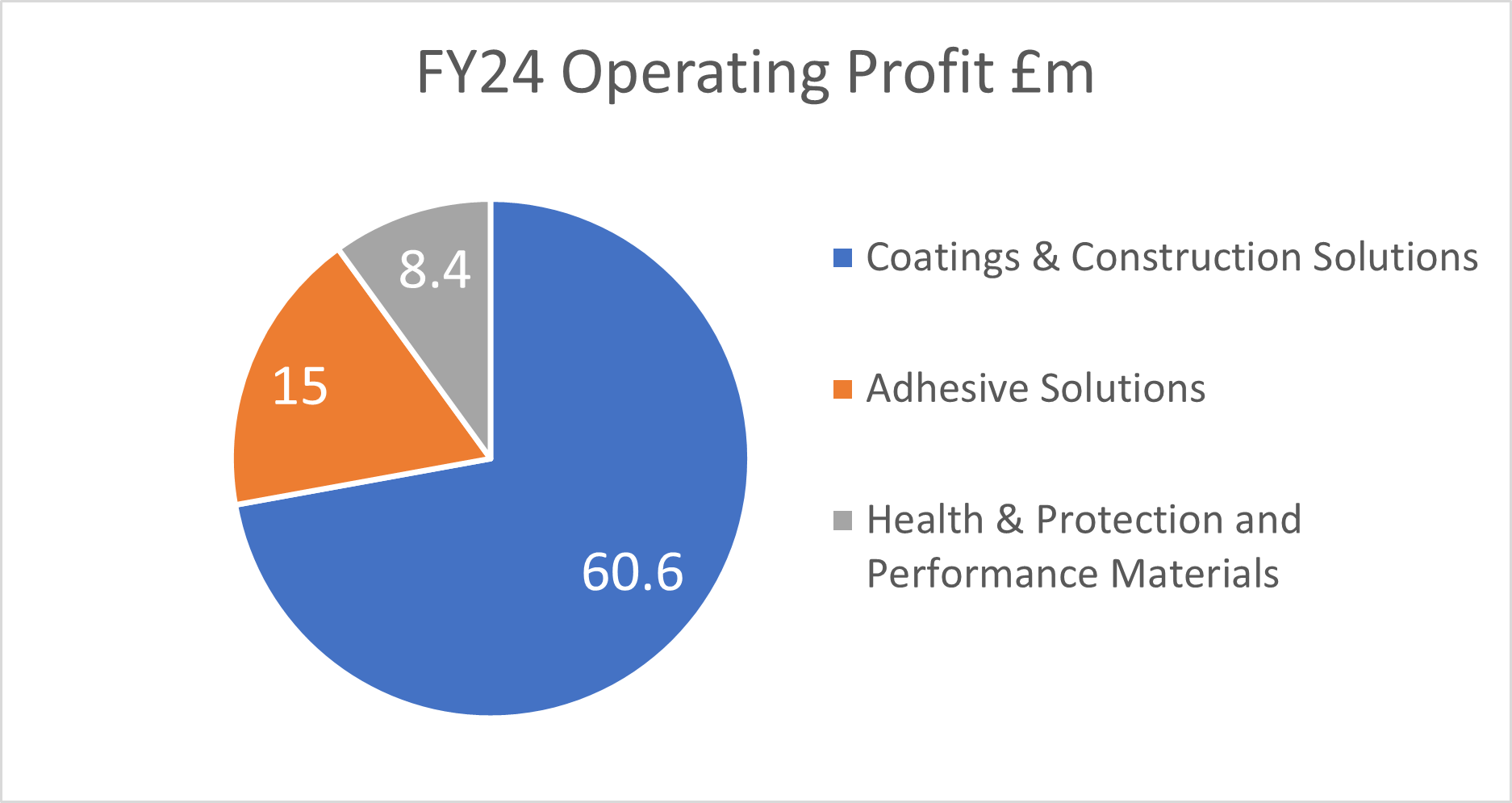
Things look a little more balanced in the half-year just reported:
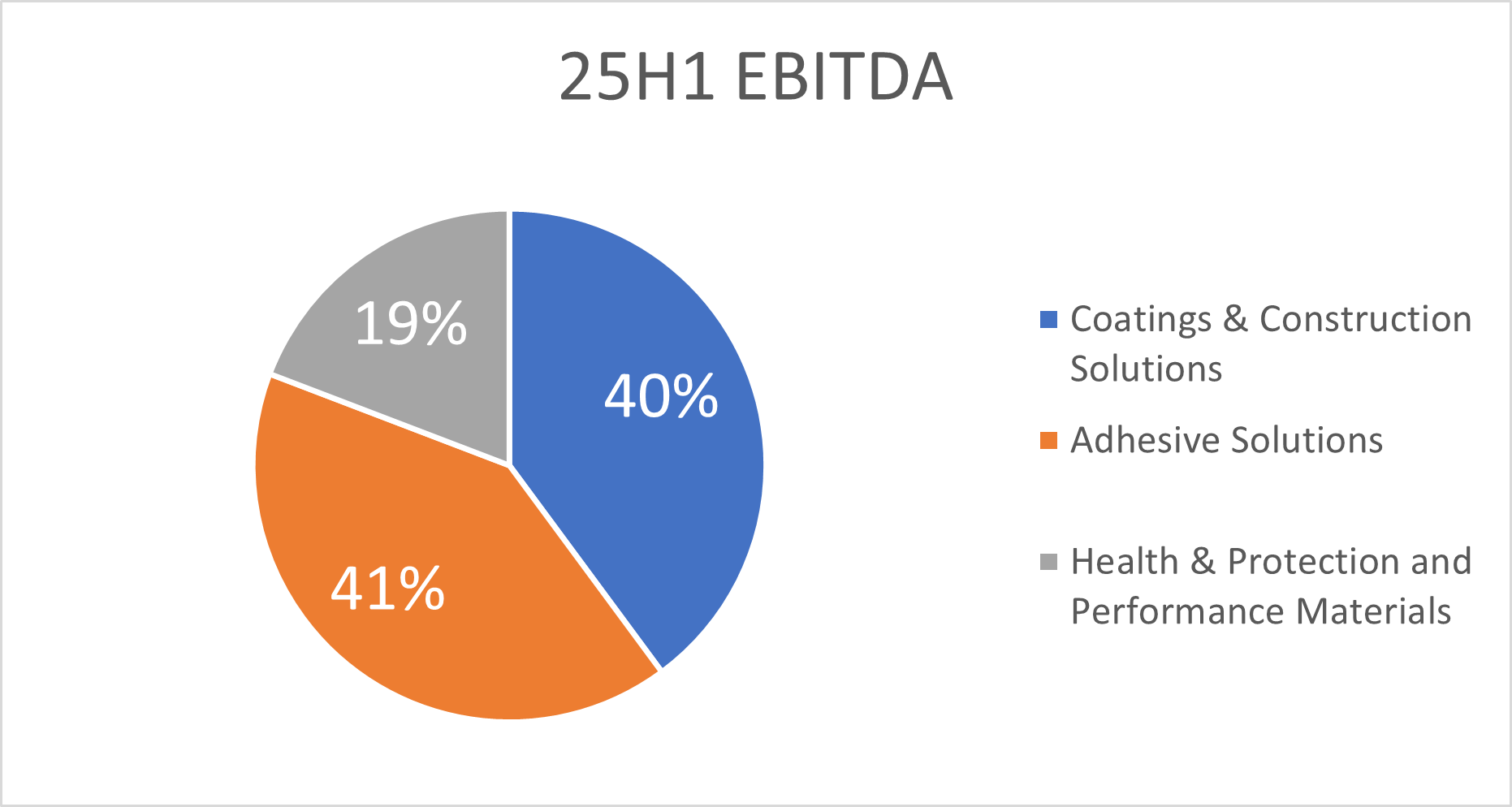
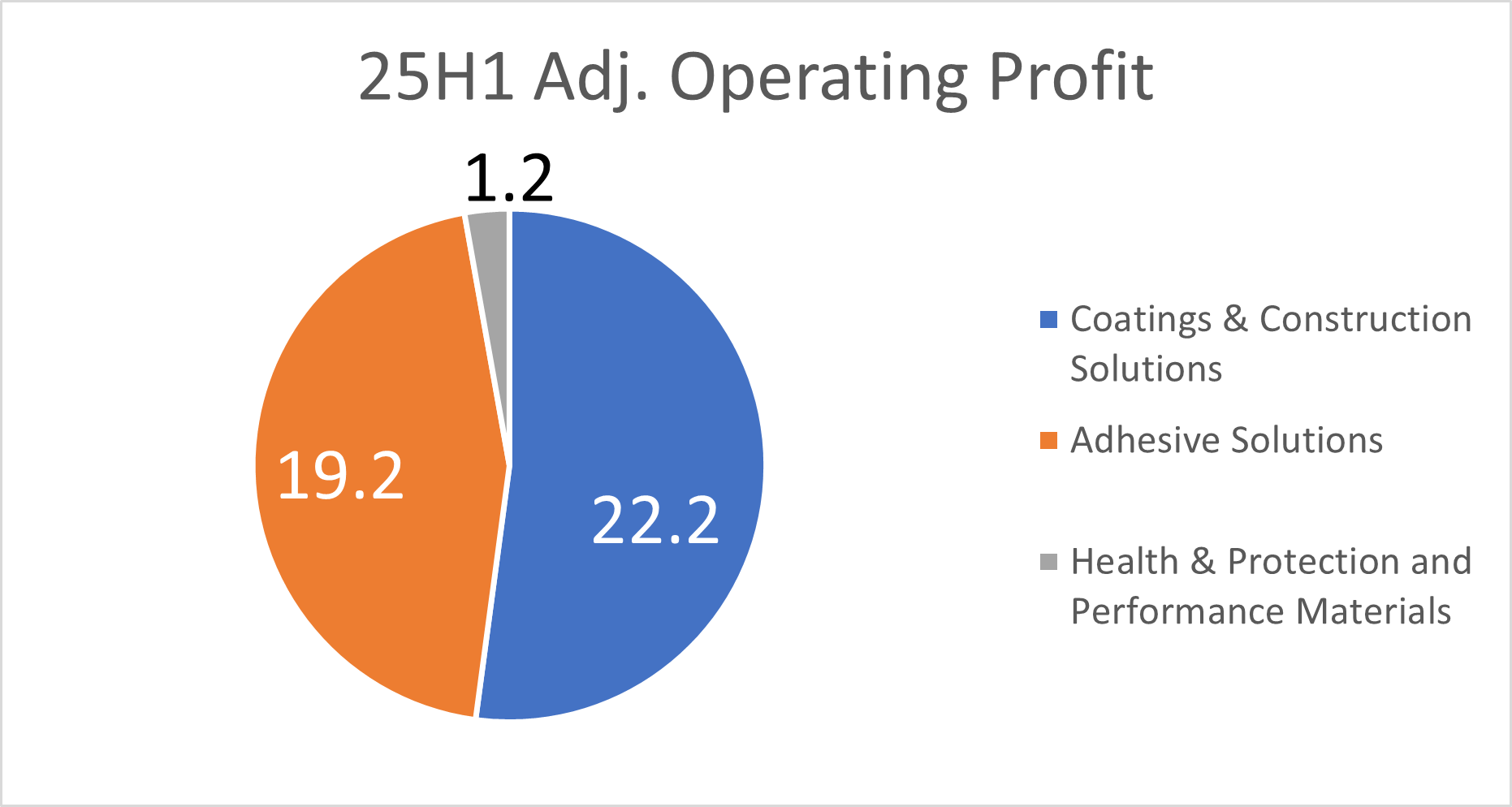
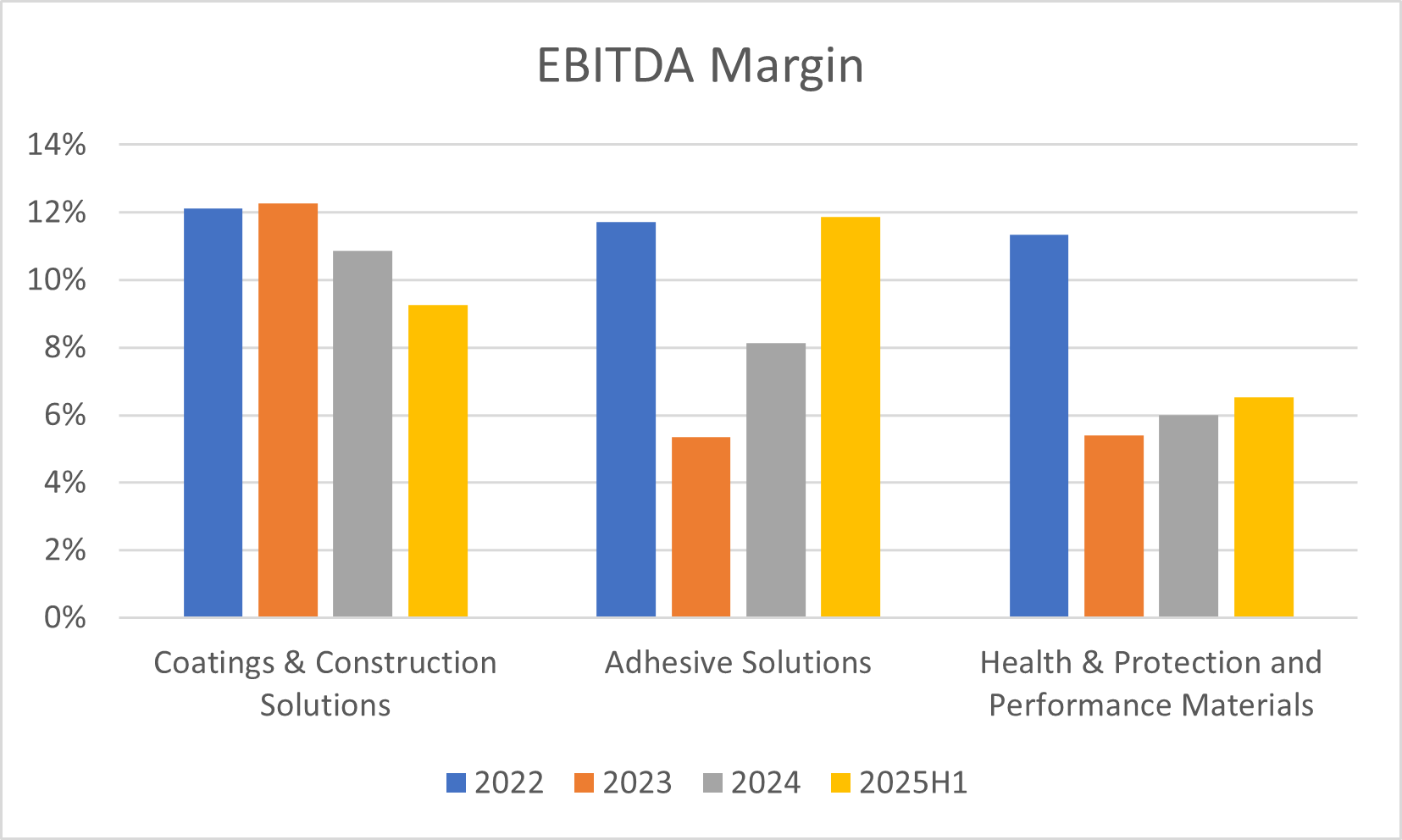
This is because EBITDA for Adhesive Solutions is recovering, but Coatings & Construction Solutions has declined, and is a continuation of the trends seen over the last few years:
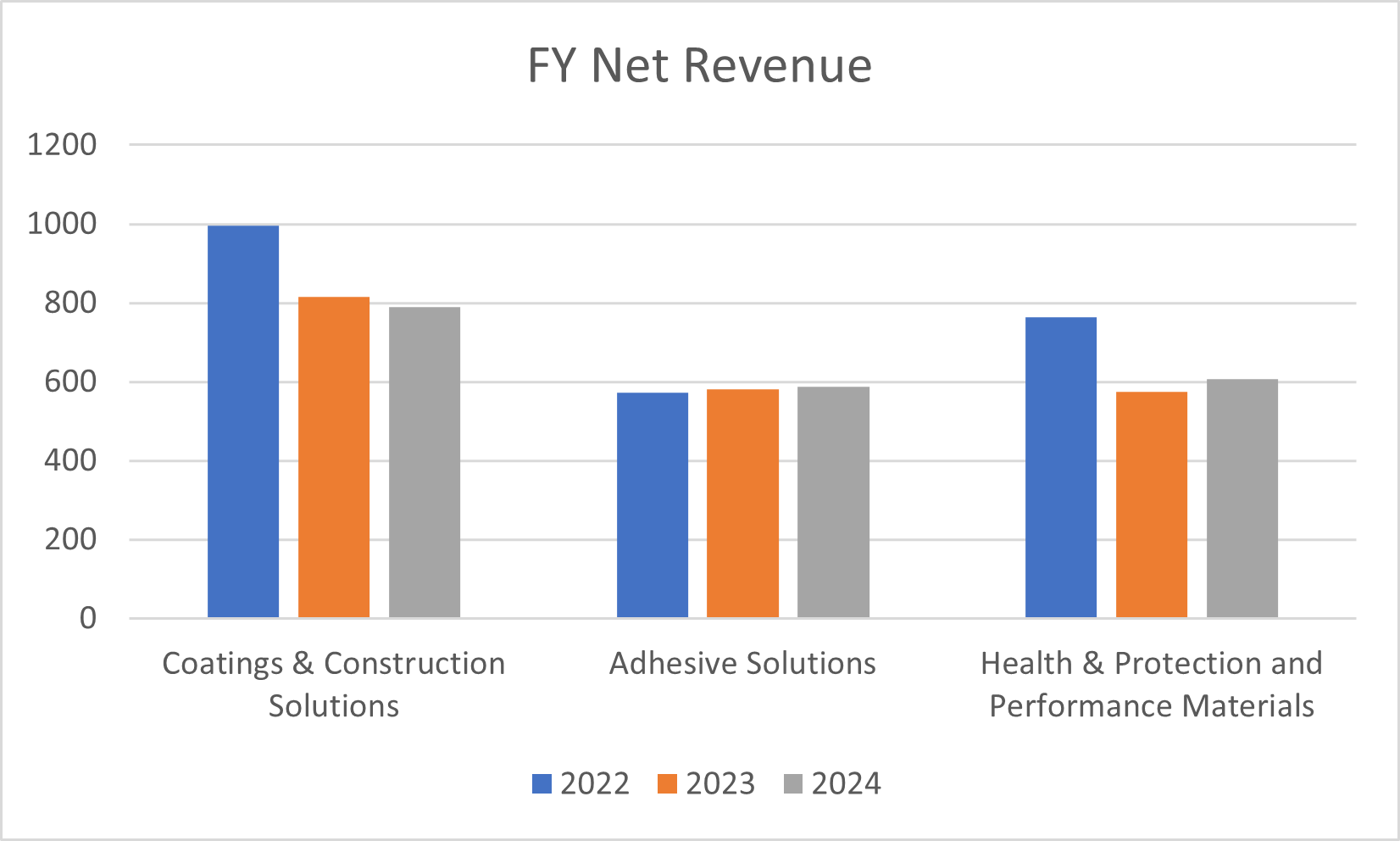
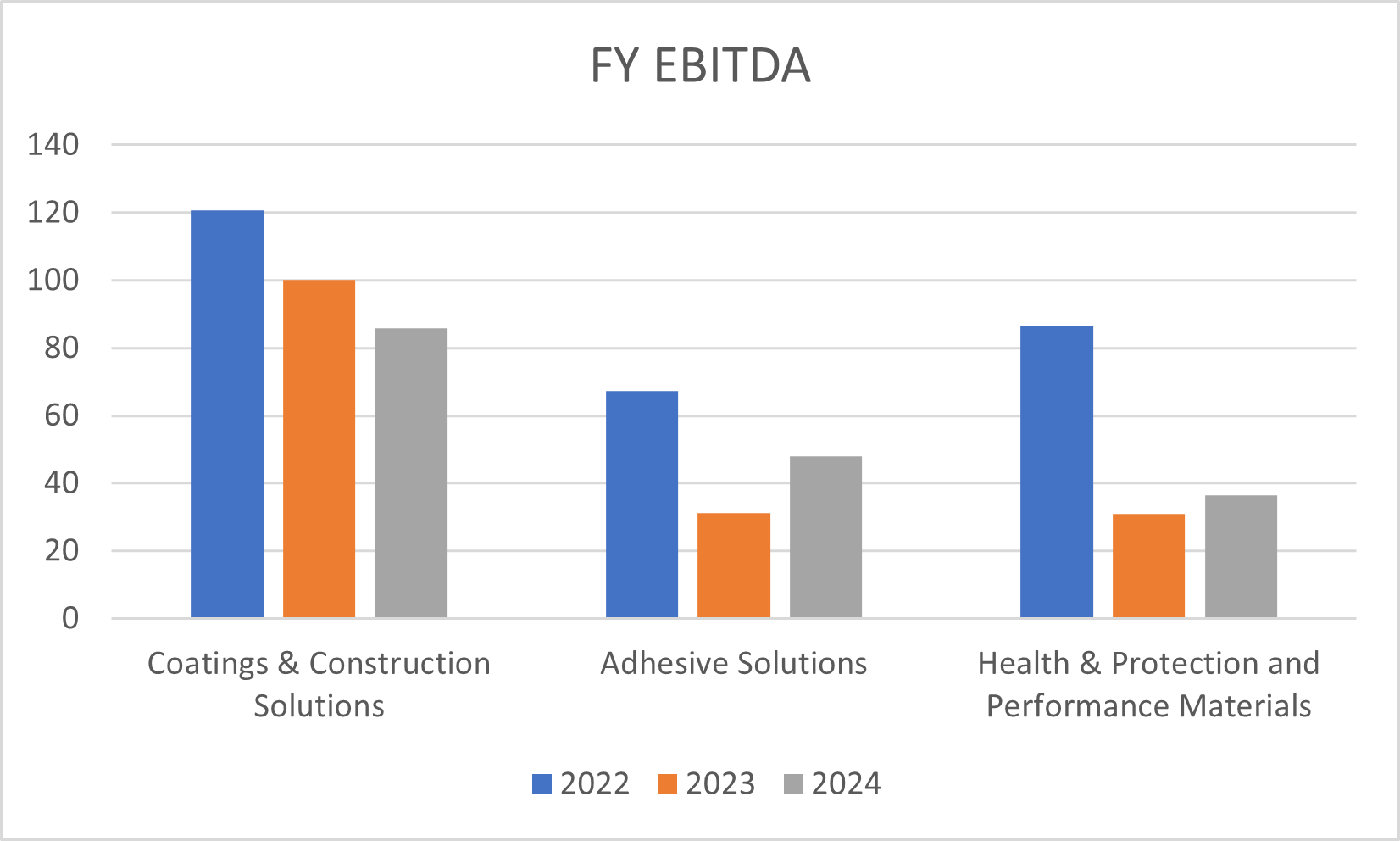
The EBITDA margins highlight these same trends:
While not terrible, the StockRank doesn't exactly scream buy:
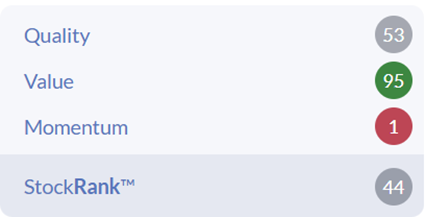
There is no escaping the fact that momentum is one of the worst in the market and that this company will only attract contrarian investors at the moment.

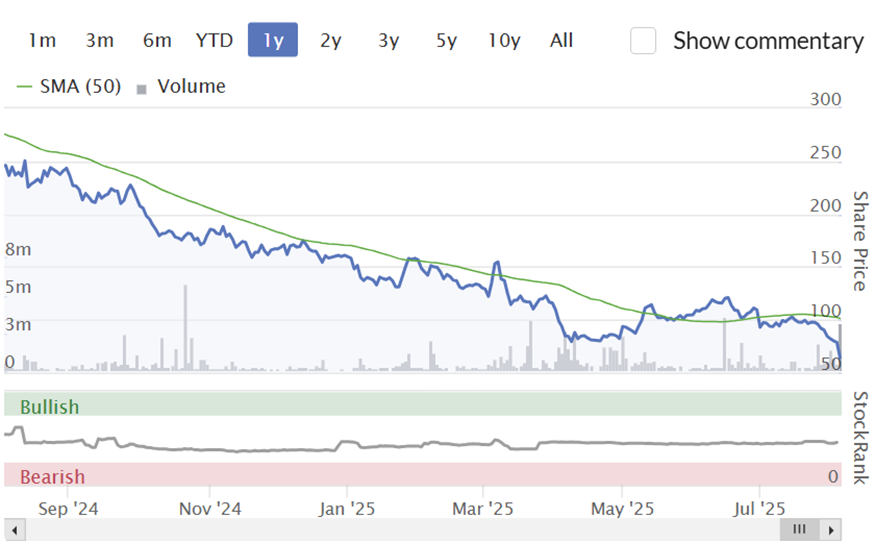
Following the falls this week in response to the interim results, the share price keeps making new lows:
Business Model
Synthomer's business model is based on creating innovative and sustainable solutions for the benefit of customers and society. They are largely a commodity supplier, but they have scale and experience, which should give them a modest competitive advantage. However, the inability to pass on inflationary pressures
In addition, 20% sales volumes are from new and patent-protected products, and they collaborate closely with customers to develop new products and enhance existing ones tailored to their needs, with an increasing range of sustainability benefits.
Their historically largest division, Coatings & Construction Solutions, is highly exposed to the global construction industry, which has been weak recently:
..our specialist polymers enhance the sustainability and performance of a wide range of coatings and construction products. We serve customers in applications including architectural and masonry coatings, mortar modification, waterproofing and flooring, fibre bonding, and energy solutions.
Their other divisions are less exposed to cyclical factors. However, their scale means that they will still be exposed to global factors, and especially inflation in raw materials. This is how they describe these:
In Adhesive Solutions our products help our customers bond, modify and compatibilise surfaces and components for applications including tapes and labels, packaging, hygiene, tyres and plastic modification, improving permeability, strength, elasticity, damping, dispersion and grip.
In Health & Protection and Performance Materials we are a world-leading supplier of water-based polymers for medical gloves, and a major European manufacturer of high-performance binders, foams and other products serving customers in a range of end markets.
Competitive Advantage
The Quality Rank is okay but not outstanding:

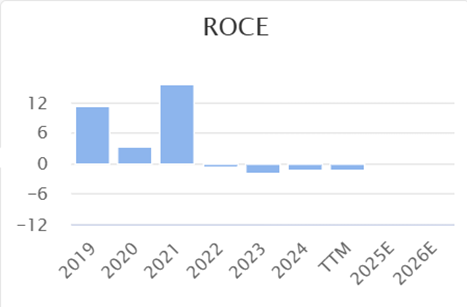
Perhaps the biggest challenge with investing in this business is the very low Return on Capital:
Part of this is the difference between Reported EPS and Normalised figures:
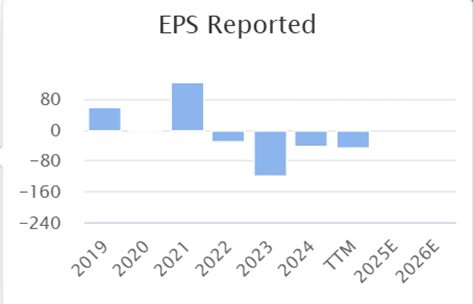
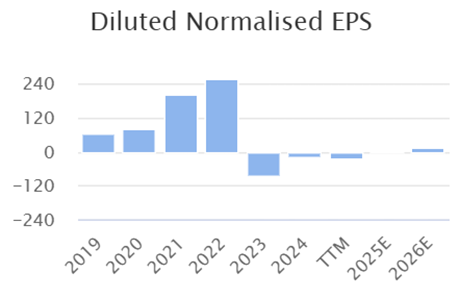
The other factor that is having an impact here is that the vast majority of the capital employed is goodwill, arising from the significant acquisitions:
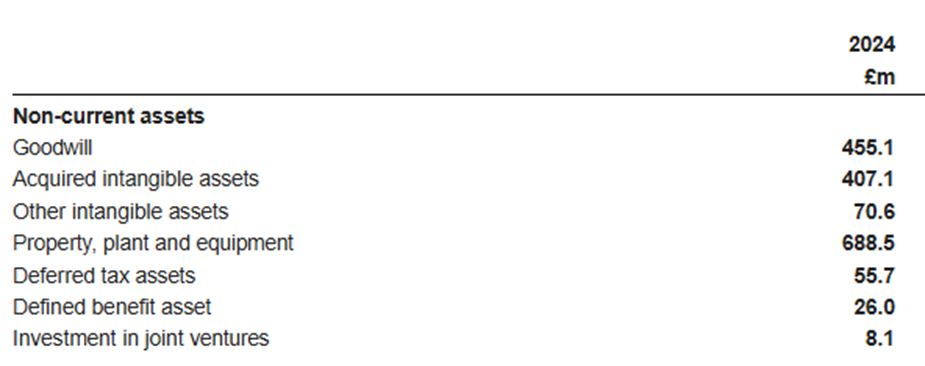
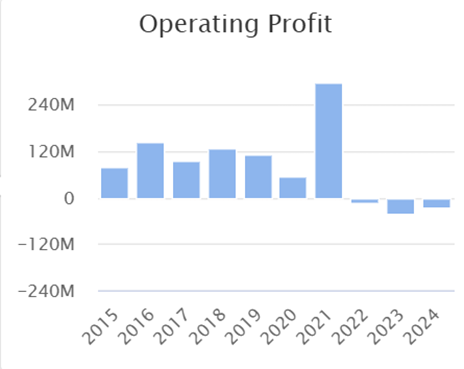
They may well have overpaid for these businesses, but the scale of the collapse in share price may be beyond the scale of overpayment. However, the biggest impact on low ROCE is the collapse in profitability. Prior to the two large acquisitions, the company earned an average of around £100m operating profit. The acquired businesses should enable it to earn double that, meaning that the return on capital and hence Quality Rank would be materially higher if trading improved:
A reasonable Piotrsoki F-Score partially saves the Quality Rank:
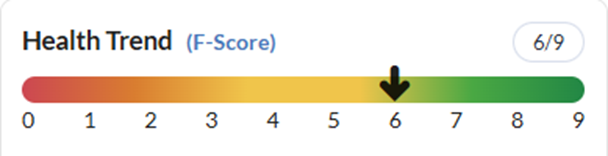
Here are the current failures:


Again, these are related to the current weak trading. However, things look worse on financial strength metrics, which, unsurprisingly, given the size of the debt, are flagging a company with distressed financials:
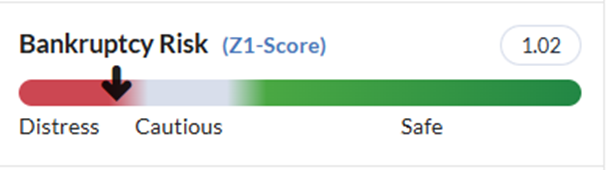
This is backed up by an announcement in early July where they announced a further relaxation of their banking covenants:
Following the agreement, the net debt:EBITDA covenant ratios required under the Group's Revolving Credit Facility and the UK Export Finance facilities have been increased from not more than 4.75x in December 2025, 3.5x in June 2026 and 3.25x in December 2026 to 5.25x, 4.5x and 4.25x respectively. While the Group expects to be within the 5.0x ratio previously required in June 2025, for prudence this has also been extended by 0.25x.
Financials
Growth and Profitability
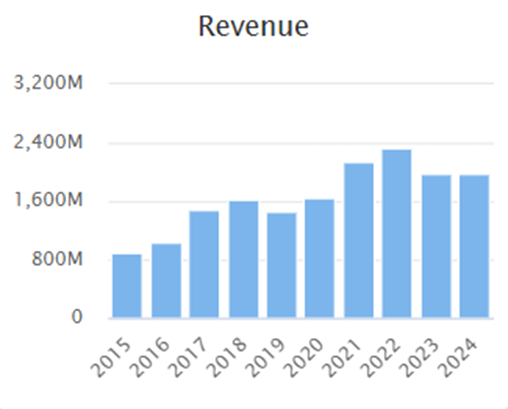
Revenue growth from 2015 to 2022 was good, with sales almost tripling. However, this was largely due to the series of acquisitions they made. While it would be too difficult to get a precise handle on organic growth during this period, I would expect it to be modest, at best.
EPS has similar growth but with exaggerated effect, as you would expect. This also looks to be a cyclical business, exposed to the global economy and one which takes time to pass on commodity inflation through to customers:
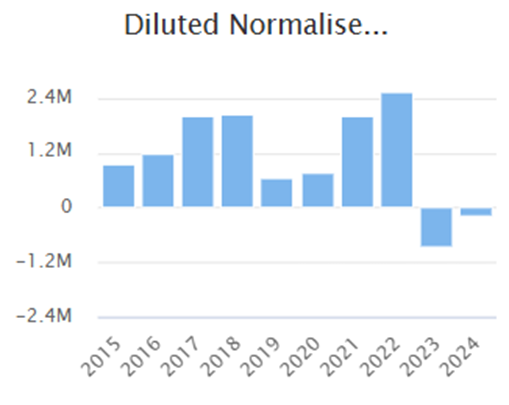
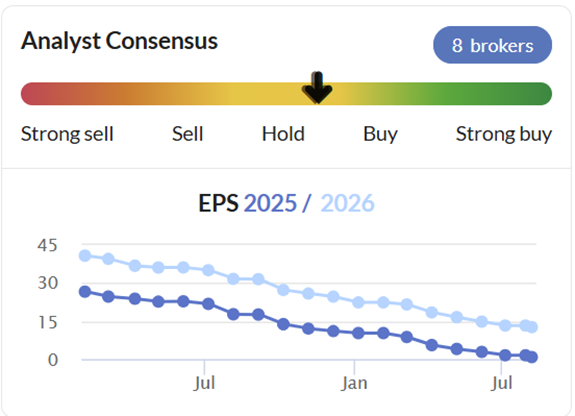
The EPS growth has also been less impressive due to the scale of the dilution over the years. It seems obvious that no matter how well the company performs in the future, it will never reach its previous share price peak. Even an improvement in share price looks a long way away, as the earnings trend has just tracked continually downwards over the last 18 months:
Balance Sheet
Although the current ratio is marked as amber here, 1.64 represents a perfectly reasonable value for this sort of business:
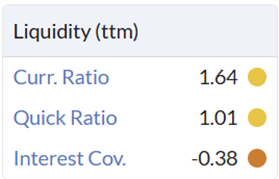
However, the Quick Ratio and Interest Cover reveal that this is a high-risk investment. Gearing is relatively high:
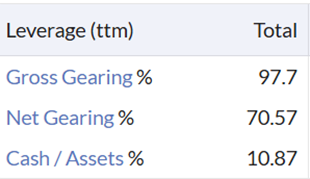
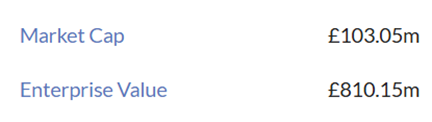
Indeed, with the market cap collapsing recently, debt is the majority of the capital structure here:
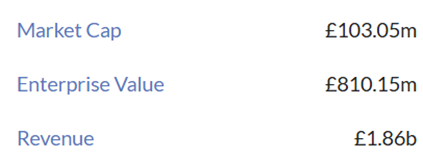
In the Final Results to 31 December 2024, net debt was £597m. In the half-year results released this week, net debt has increased further to £638m. They say this is primarily due to normal seasonal working capital moves, and they have plenty of liquidity:
Net debt increased in period due to usual seasonal cash flow profile; balance sheet derisking continues
− Net debt increased in H1 2025 as expected, reflecting typical seasonal net working capital patterns, capital expenditure phasing and FX translation; non-recurring cash outflows reduced significantly as expected
− Covenant net debt: EBITDA ratio of 4.8x as at end June; £430m+ in committed liquidity prior to £129m repayment of the remaining 2025 bonds in early July; covenants relaxed until end of 2026
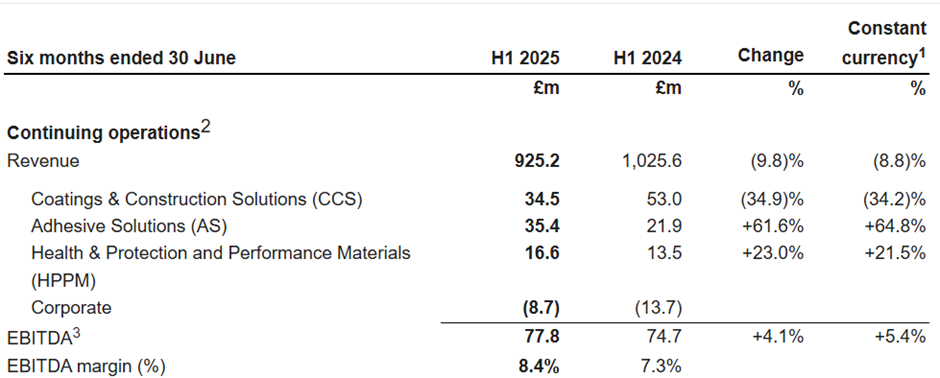
In terms of the other side of that covenant calculation, the HY results saw a modest improvement in EBITDA due to better margins and a recovery in Adhesive Solutions:
Cashflow
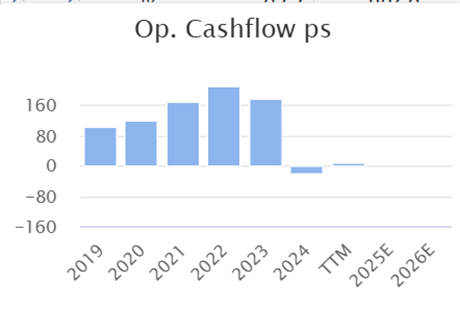
Historically, this has been a cash-generative business, with operating cash flow growing. It even held up well in 2023 when EPS fell into losses. Operating cash flow collapsed in 2024, although on a TTM basis, it is now just positive:
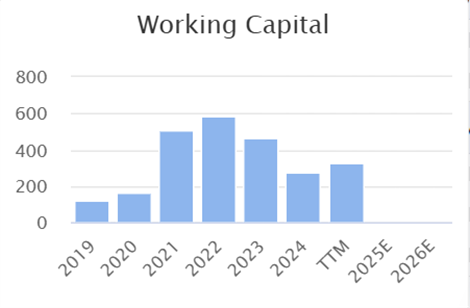
Part of this was the release of working capital:
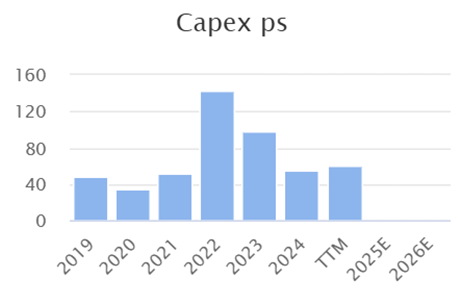
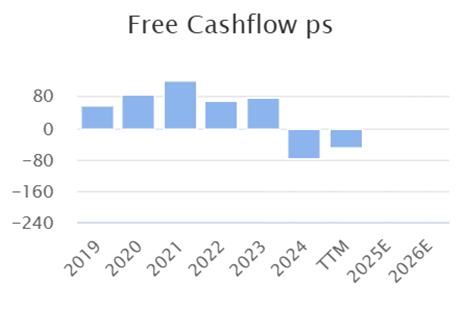
This is a capital-intensive business, and even with capex reduced in 2024, this has failed to generate free cash flow:
Dividends/Buybacks
Unsurprisingly, given the current perilous state of the finances, there is no current dividend paid. However, the long-term track record shows that the company has been committed to progressive dividends in the past:
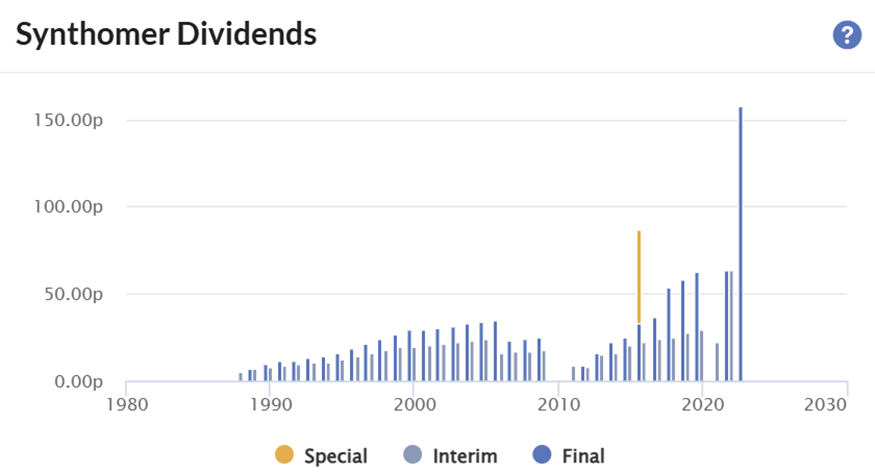
This further highlights the company's exposure to global economic conditions. Dividends have been cut completely twice previously, in the GFC and during the COVID pandemic. Given the scale of the debt, it is safe to assume that there will be no resumption of dividends anytime soon.
Ownership Structure
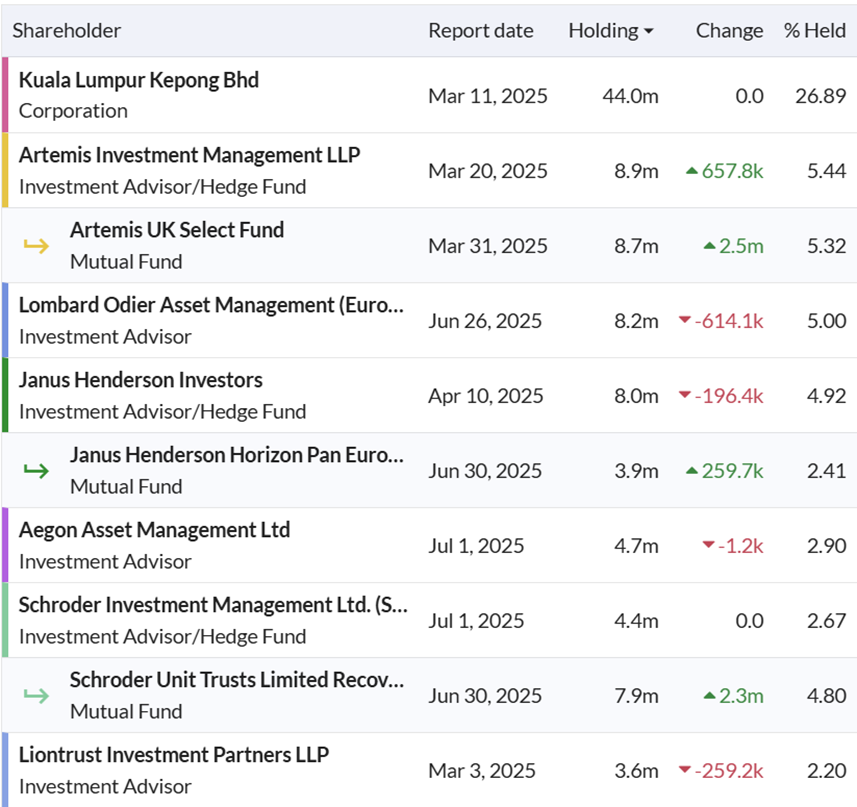
The largest shareholder here is Kuala Lumpur Kepong, a Malaysian-listed producer and processor of palm oil in Malaysia and Indonesia:
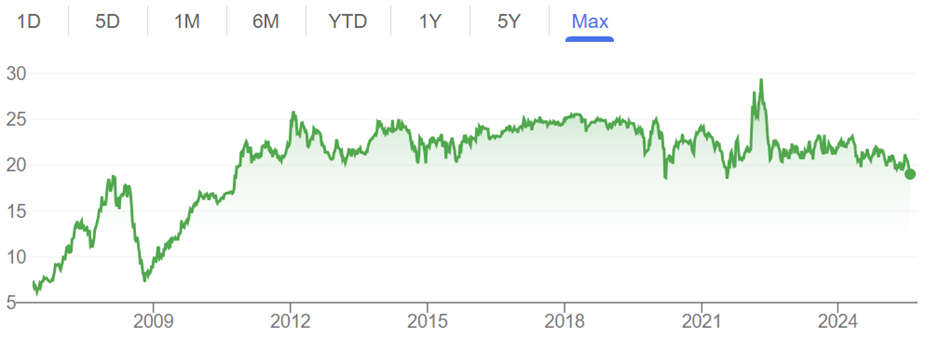
While they haven't had the collapse that Synthomer have had in share price, KLK has had a largely flat share price over the last decade:
They have been supportive shareholders of Synthomer over the years and underwrote the rights issue in 2023. The rest of the register is well-known UK funds or hedge funds. However, it is worth considering that notifiable holdings only cover 50% of the register, of which KLK is over half of this. It means that there are many smaller holders here.
Since the rights issue, there has been some modest director buying, but nothing that would give investors a sign that a big turnaround is imminent:
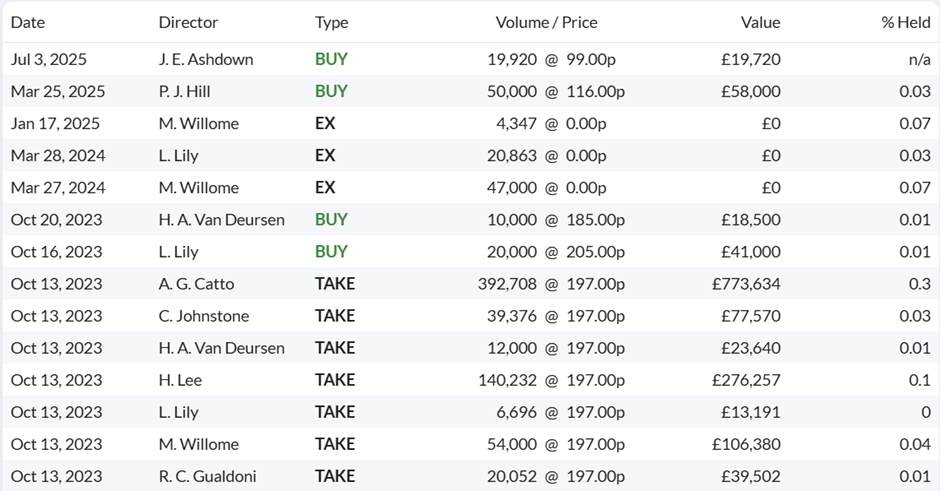
Not yet included here is the CFO buying 20k of shares following this week's interim results. However, at less than £13k worth in value, this isn't a huge vote of confidence.
Valuation
The valuation metrics here are a real mix, with the company being rated green for earnings, sales and book value measures, but red for the rest:
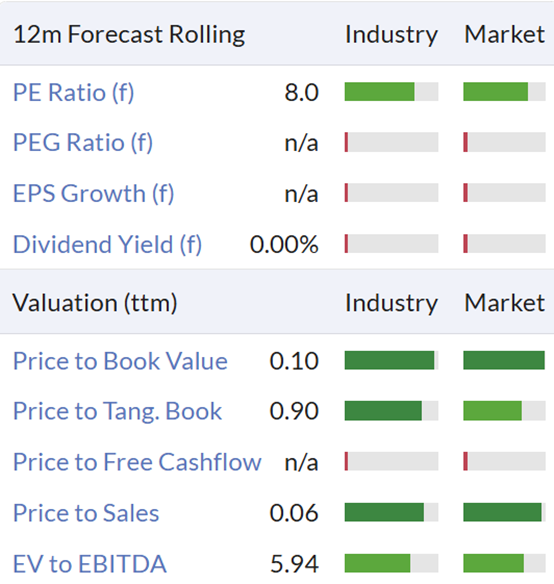
Overall, the Value Rank is very strong:

It is worth noting that the low P/E is dependent on them hitting FY26 forecasts. These may not be particularly challenging in a historical context. However, the downwards trend in earnings forecasts doesn't give great confidence in this figure. The other factor is that, when the debt is so large, measures that use the EV are much better. Here, the EV/EBITDA offers reasonable value at around 6, especially if 2024 proves to be the trough for this figure.
The reality is that the current level of EBITDA isn't enough to make the company profitable at the bottom line:
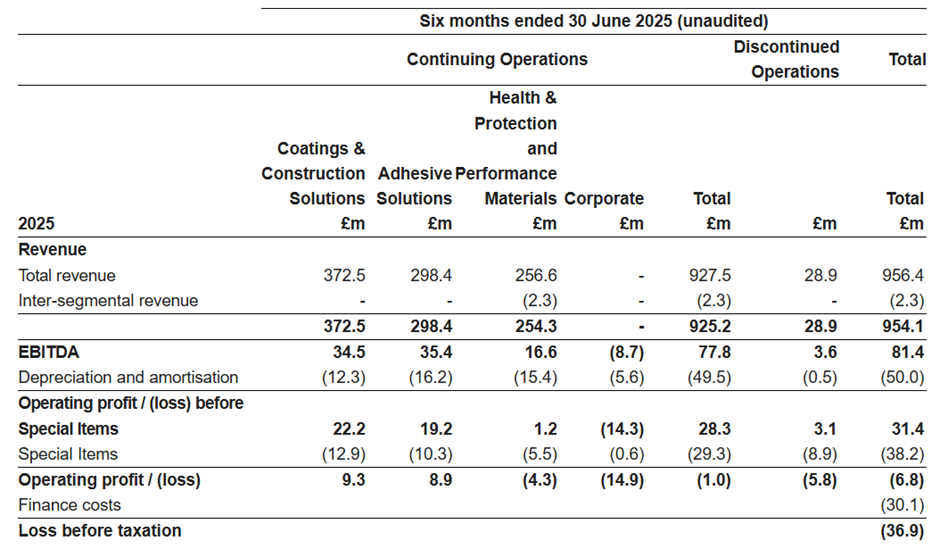
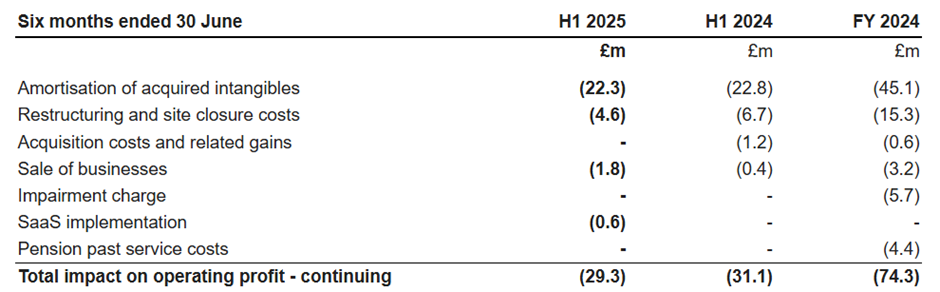
The combination of central costs, special items, and the large finance charge on the debt means that they continue to report losses. Most of these special items are made up of amortisation of acquired intangibles. However, restructuring costs are also large, and given the current trading, likely to be recurring:
One of the main qualities that suggests there may be value here is the discount to TBV. We need to be careful with this figure. It is essentially the difference between two large numbers: the fixed assets plus the net working capital, and the debt. While the debt would remain the same in a firesale situation, the fixed assets and working capital are unlikely to sell for their balance sheet value. The scale here means that these figures are unlikely to provide much downside protection.
Value investors typically ignore intangible assets as it is hard to determine whether they could generate an economic return for a company or be worth anything to acquirers. However, the scale of the intangible assets here, and the lack of any meaningful write-down forced on them by auditors, means that there could be value in these.
It is worth noting that Synthomer paid roughly 10xEBITDA for what now constitutes their Adhesive Solutions business and a similar amount for OMNOVA. This is probably The Winner's Curse, and by winning the effective auction to acquire these, they will have overpaid. However, if we assume these specialist divisions could be sold separately for, say, 7xEBITDA each, this would generate £1.2bn. This would be enough to pay down the almost £700m of debt, close down the corporate entity and return around four times the current market cap in cash to shareholders.
Risks
Debt
The biggest risk to the company is likely to be the sheer size of the debt they have taken on to fund past acquisitions and associated capex. When the debt is so much larger than the market cap, this severely limits the actions they can take to reduce debt, as any equity raise would be highly dilutive.
They have covenant waivers in place:
The Group agreed in June 2025 to extend the period of temporary covenant relaxation to ensure that appropriate headroom was maintained. Accordingly, the net debt: EBITDA ratios required under the covenant have been set at not more than 5.25x in December 2025, 4.5x in June 2026 and 4.25x in December 2026. Reducing leverage further towards our 1-2x medium-term target range remains a key priority for the Group.
However, the leverage ratios they are currently operating with are considered far higher than is prudent for a listed company:
The Group's net debt: EBITDA for the purposes of the leverage ratio covenant increased from 4.6x at 31 December 2024 to 4.8x at 30 June 2025, principally due to the higher net debt at the period end…
Tariffs
Given their global trading, they are not immune to rising global tariffs. In the latest half-year results, they say:
Limited direct exposure to new tariffs across Group, largely being offset through surcharges
So the direct impact they face is limited, and they aim to simply pass on costs to customers. However, anything that raises prices and creates uncertainty has the power to lower demand, and this is what they appear to be seeing:
Tariff changes however resulted in greater customer demand volatility in Q2, improving in June after slowing in May, with Continuing Group volume (7.1)% vs H1 2024
Recent Trading
The company issued half-year results this week, where they said:
We now expect to deliver some earnings progress in 2025 compared with Continuing Group EBITDA of £143.1m in 2024, and for a positive cash performance in the second half to result in Free Cash Flow to be broadly neutral for the year as a whole. We expect our newly-implemented cost reduction programme (over and above the previously-identified self-help and strategic plans) to mitigate the more subdued end-market demand conditions that we expect to persist for the remainder of year.
This suggests that the bottom is in for trading, at least measured by EBITDA. However, analysts appear to have made a further small downgrade to expectations in response to these results:
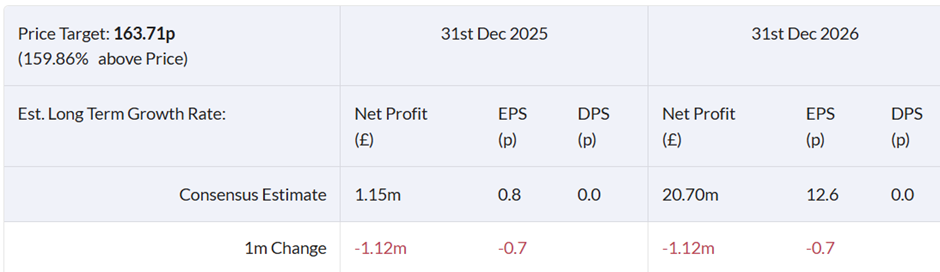
This may be due to the higher net debt, where interest costs will impact the EPS but not EBITDA. However, they should be a big beneficiary of any falls in global interest rates if the interest rate cycle continues to turn down.
Sentiment
The Momentum Rank is pretty much the worst in the UK market:

A lot of this is down to the recent weakness in the share price, with the shares almost continuously making new lows:
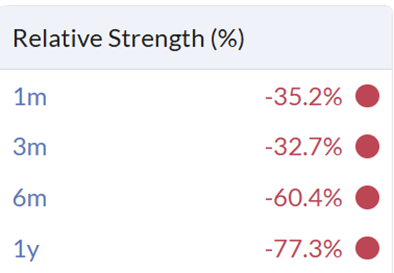
However, the broker's consensus is also in a continuous downtrend:
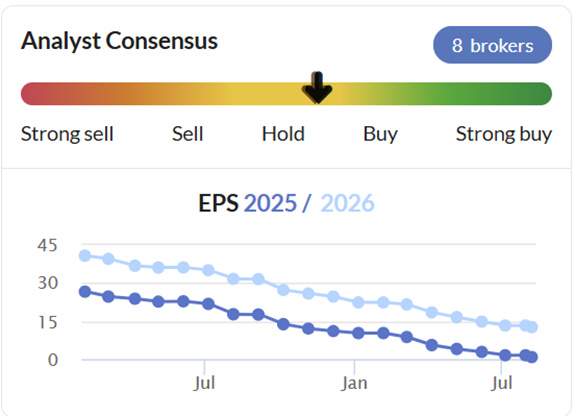
While the company is well covered by eight analysts, its history as a large cap means that none of the research coverage is available to individual investors. This puts smaller investors at a disadvantage as we have to wait for consensus expectations to appear in Stockopedia.
The very low Momentum Rank should give investors pause for thought here. After all, my research into investing in Contrarian stocks suggests that avoiding those with the lowest Momentum scores would generate higher returns, on average, at least for a portfolio that is rebalanced annually:
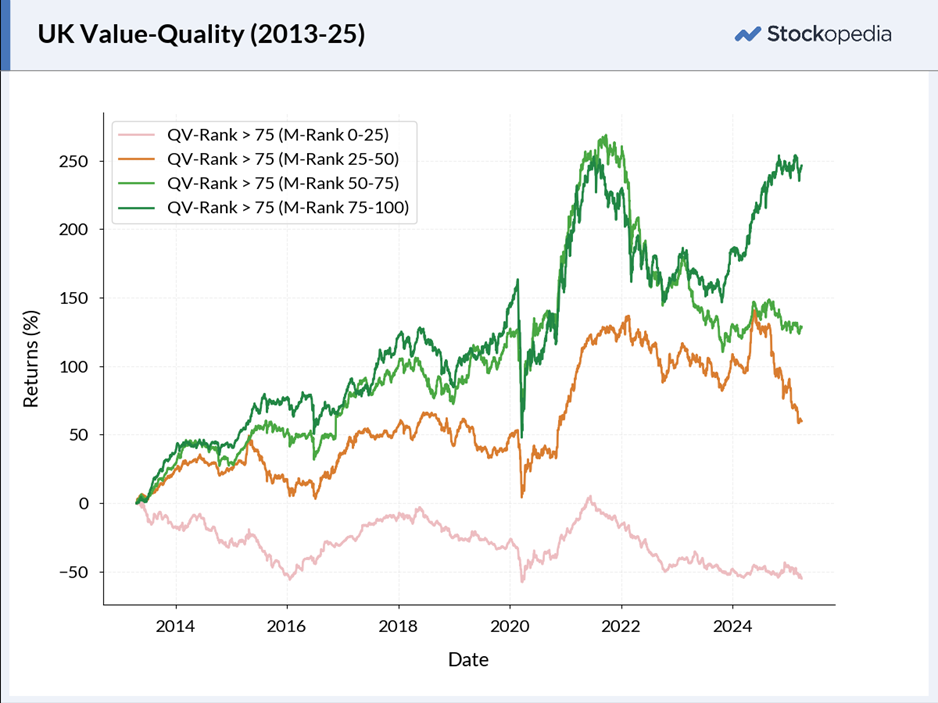
Conclusion
As the 95 Value Rank suggests, there may well be value here. After all, this was a £400m company a year ago, and £100m today, with the major change being a deterioration of trading, in a cyclical business, at a time when we know the global economy is under pressure. The price-to-sales ratio is now tiny for a business that had historically generated reasonable returns on those sales. The reality is that the debt is so large here that the equity is really just the difference between two large numbers, and small changes in the underlying business are magnified significantly.
The debt also adds to the risk. The company has required a relaxation of banking covenants - lenders appear to recognise that this is a cyclical business that should recover in time, and the company has plenty of liquidity. However, we cannot rule out the need for a further rights issue or even a debt-for-equity swap. Either of these would significantly dilute existing holders (although with a rights issue, they would have the option of maintaining their stake). Despite being high risk, the gearing also means the upside to holding the equity is large, if things go well. The downside is limited to 100%. This may make the risk-reward favourable, although it should probably not be a large position in any investor's portfolio.
The momentum is truly terrible here, with the Momentum Rank one of the lowest in the UK market. This actually has a certain attraction to contrarian investors, such as myself. When a company's shares decline for a significant period, and investors have lost almost 99% of their investment over the last four years, holders end up with immaterial amounts. The poor momentum scares them from adding to an already under-weight position, and they sell at any price, simply to tidy up portfolios. This psychology tends to lead companies' share prices to decline too far and enter value territory. However, my research into contrarian stocks suggests that, on average, contrarian investors would be better off avoiding stocks that have the lowest momentum characteristics. Unless an investor is willing to invest for a medium-term recovery and ignore how low the share price may get in the short term, they may be better off waiting for brokers to start to upgrade earnings and/or the share price to show some strength.
Disclaimer
This is not financial advice. Our content is intended to be used and must be used for information and education purposes only. Please read our disclaimer and terms and conditions to understand our obligations.

12 comments
Thank you Mark : a very good assessment of Synthomer (LON:SYNT) . I would highlight the FCF figure of negative £30.3m in 1H 25 recovering to broadly neutral for the full year2025 . This suggests to me some form of bottoming . This company has to be one of the most operationally geared for a potential recovery .
As an aside ,in KLK 's annual report SYNT has a carrying amount of M$2,231.8m , having been written down last year by M$180m , but is still more than 10x today's value . Not sure what this implies exactly but the calculations were based on value-in-use considerations .
I hold .
Great article. It never ceases to amaze how companies make the same mistakes time and time again. Here we have clueless management (previous lot) making disastrous acquisitions at the wrong time in the cycle. I think the US adhesives was worth about a third of what they paid. KLK must have been mad..the Hon Catto shows himself as an ineffectual clown. Tragic really.
I've been tracking Synthomer (LON:SYNT) for a while. It clearly is in a very "special situations" basket, with ongoing covenant holidays all that is keeping the equity value not going to zero.
For years after COVID, the company blamed overstocking of nitrile gloves for their woes. However, that overstocking has now been gone for a while, and yet the company doesn't make a song and dance about recovering all those lost sales. Perhaps they are being outcompeted by cheaper Asian manufacturers?
They concede as much with their pivot away from "basic chemicals" (I think that's the term?) because of increased competition, depressed margins there.
So they have a strategy to focus and grow "speciality" chemicals. However, what's not to say they are also being outcompeted there by Asian competitors? I think one will have to do deep research in this area, to see if Synthomer has a moat and pricing power. Because this is the thing that management have banked on to rescue the company in the next few years.
Meanwhile, I don't know why KLK keep holding. KLK is a big owner of rubber plantations and producer of latex. Which, of course, was a big part of Synthomer's business - making rubber gloves and other things. Now its less of a focus for Synthomer - is there even a strategic rationale for KLK to own Synthomer?
Thank you Mark, good luck to the company and shareholders. It rang a loud bell for me though, many years ago, pre Stockopedia when I was even more naïve, we'd built a holding in BTR the industrial conglomerate. Terry Smith wrote a damning sell note on it basically saying it was built on sand, the shares fell and we added. We lost £20,000 before it had shrunk and merged with Siebe to form Invensys. There was a mountain of goodwill from multiple acquisitions which almost disappeared when push came to shove. I've followed Terry Smith since.
Based on your assessment of Zotefoams probably need to buy a load of these
I’ll certainly consider buying synthomer at some point, just probably not yet. As zotefoams has shown, you can be a capital intensive, indebted business with a history of destroying shareholder value, struggling to pass on risking input cost, but in the right hands, with inflation moderating and with a focus on controlling costs it can become a good investment. The obvious parallels between the two businesses are not lost on me
Of course the debt here is from acquisitions and in zotefoams case capital investment, but in both the seeds of a recovery is present, with zotefoams a bit further on in theirs. After all, most businesses are not consistently great or terrible , they go through wild swings in both trading and sentiment and my role as a value investors is to avoid (or short) the expensive businesses where the outlook is poor, and buy the cheap ones that are recovering.
Thanks for the article Mark. I had and still hold a small and now smaller position. You mentioned going short and was wondering which way you would generally do this and whether in a normal trading account? Thanks, Mike
Great article. I think it's an important one to position size correctly . You could easily multibag with a small upswing in the enterprise value but more massive dilution or even administration are on the cards with a further downturn in trading
Thanks. I totally agree, which is why I was keen to point out that this should not be a big part of anyone’s portfolio, even if they like the risk reward here. The good thing about this sort of scenario is that as an equity holder the most you can lose is 100%, the bad news is that would still be painful if one oversizes one’s position.
Ok - position size 1%.
That aint going to get the Porche GT3 out of the garage, even if it was in there.
Ok - position size 1%.
I would go that far personally
each individual investor has their own risk tolerances - imho this is very much a binary bet with so little downside protection - that should be clear. The upside on such sharees if you get the bottom right can easily be 5 X or more. Just look at £MCB - thats gone more than 5 X from lows and had similar issues which it has overcome.
We would all have said at the bottom that McBride (LON:MCB) is a risky investment and many would have said its a basket case.
All one needs to do with shares like this os either steer clear or take your own responsibility if it goes wrong. for most small position size - but there are probably many savvy investors here who wont Paul at putting 5% of their pot into am risky share - and many of them will have doen agreat deal of DYOR before doing that.
in summary every investor is different ref their risk profile - so that i would say not everyone will be limitting themselves to 1%
anyone who is risk averse though will probably have zero invested here.
Under going concern the company claims that it has liquidity through to December 2026 assuming reasonable operating conditions.
Are UK bankruptcy laws different to the U.S. Chapter 11, I ask because it makes the downside more likely to be a dilutive rights issue forced by creditors if the alternative is liquidation. Major shareholders and their intents are of interest here as are the creditors.
Are you assuming a recovery in the underlying business segments to allow them to refinance debt or is it largely a speculation that they will be able to make divestments at fair prices.
A spicy wee meatball at 61p for sure, not for the faint of heart.