What Retail Investors need to know about Private Equity?

I recently did an article on Debenhams, where a private equity consortium bought the firm in 2003. It re-floated three years later. 13 years later, shareholders are nursing a 70% capital loss!
So, I start investigating some UK IPOs because of the nature of private equity. Because they businesses to turn it around (general consensus) and offload it to others. These buyers are private investors or offload to the market at premium valuation (in most cases).
The intention is not to demonise Private Equity role in offloading businesses to the IPOs market. But, whether retail investors can profit from them private equity-backed IPOs.
Next, we explore the red flags signalling to retail investors to sell, or not take part in the IPO.
P.S. It is not an in-depth research, but gets people discussing the topic.
Let’s begin.
Are all private equity firms bad?
Well, they perform a necessary function of turning the businesses around. It can be closing down unprofitable stores, cutting staff numbers or reorganising debts to keep the business alive.
The issue people have is the use of leverage.
For example, Debenhams had £100m in debt before their private equity takeover. And within three years, Debenhams owe £1.9bn. Even worse, is the business didn’t expand, so no reason for it to borrow huge amounts of money.
Other UK Businesses with Private Equity connections
Bonmarche
on Sales?
Bonmarche was part of The Peacock Group before the group went into administration. Bought by an affiliate of Sun European Partners LLP called BM Holdings Management S.A.R.L & Partners S.C.A in 2012.
The price tag: £10m.
What happened?
Sun Partners affiliate bought a part of Bonmarche. (The brand closed 160 stores with a loss of 1,400 jobs.) The closure of loss-making stores helped turned the business around. 18 months later, it raised £40m in the stock market, valuing its IPOs at £100m.
900% in 18 months, crazy right!
For Sun European Partners, it offers 20m shares to investors at 200p each or £40m, an instant 300% profit!!! It still controls 52% of the shares.
What happened to Bonmarche since the IPO?
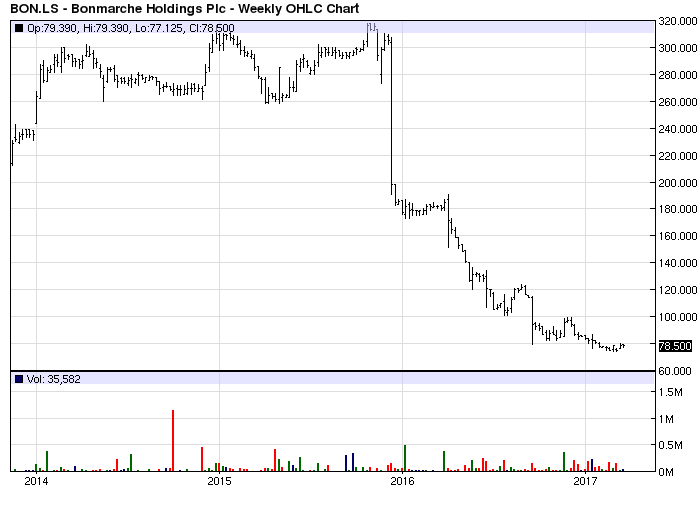 Shareholders weren’t pleased when shares tumbled by 65% to 77
pence, valuing it at £39m. According to the company, this is down to the warm
weather causing like-for-like sales to drop by 8%!
On Sun Partners’ financial stake on Bonmarche. Even if they sold the remaining holdings, it would bank another £20m. Taking total profits to £50m in five years’ worth of work.
Why has the share price collapsed?
Bonmarche doesn’t have a debt problem because net cash stood at £10m. The problem lies in the competitiveness of the retail sector. And being a niche (the older ladies’ generation) can get you so far.
Also, Bonmarche is prone to downturns.
Even established businesses like NEXT PLC, Debenhams and Primark are struggling to grow sales. So, a small player like Bonmarche is likely to suffer far worse.
PETS AT
HOME still a good business?
The business operates pets store for the animals’ lovers in the UK. It has been through two private equity transaction. First bought by Bridgepoint for £230m in 2004. Under Bridgepoint stewardship, sales double to £404m, while EBITDA tripled to £70m.
What happened?
In 2010, KKR bought Pets at Home for £955m. (BTW, Bridgepoint earned “8-times” returns on its initial equity investment.)
The IPO occurs in 2014, valuing it at £1.2bn at £2.45/share.
Results from private equity
Pets paid out hundreds of millions of pounds in dividends and interest to KKR, including a £135m dividend in 2013. The reason is that it owed KKR and its management of £600m in payment-in-kind notes. Payment-in-kind securities are a type of mezzanine financing.
Example of Payment-in-kind
Let’s say you offer £500,000 in PIK notes with a maturity of five years. The notes pay a 15% interest every year, or £75,000.
The difference is INTEREST gets added to the original loan. After year 1, that loan grew to £575,000.
By year 2: Interest is £86,250, and the loan grew to £661,250 and so forth.
So, leaving Pets with bigger loans and interest every year.
Following the IPO, KKR stake fell to 43.6%. We don’t know how much KKR got from the net proceeds of £280m. In 2015, KKR sold 21.6% of the company or 108m shares. The cash proceeds were worth £300m.
How much did KKR make from Pets at Home?
Nobody knows. Because the details are COMPLICATED and unavailable. Also, we don’t know if Pets were paying huge dividends to KKR during the period of private ownership.
Why has the share price collapsed?
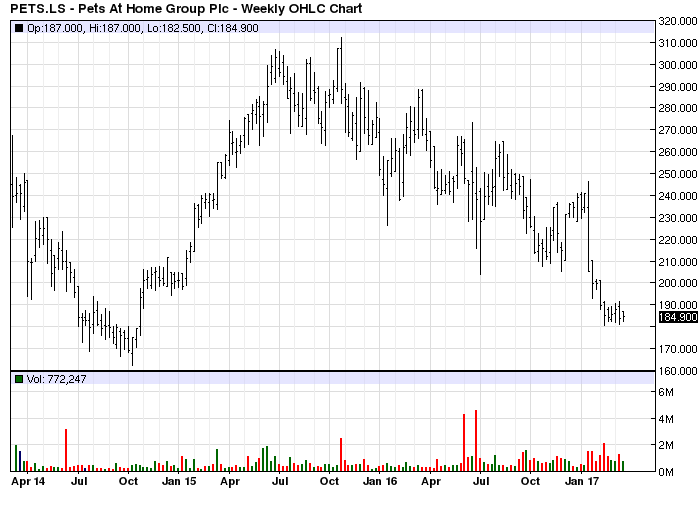
The level of collapse isn’t like a Bonmarche. Currently, the
share price of Pets at Home is £1.84/share or a drop of 25%. Pets at Home is
making money with operating margin at 12%. The problems lie with having too
much debt. And investors are spooked if Pets has an off year. Now, Pets has deleveraged
by cutting total debt by 60% to £200m.
Is it a Buy?
I can give you that information, only if I did a full analysis.
And, Moving On
Stock Spirits
This is a Central and Eastern European spirit producer. And created by private equity firm Oaktree Capital Management.
What happened?
The IPO raised £207m at £2.35/share, with additional share sale of £52m. By 2014, Oaktree exit the firm in bizarre fashion. Oaktree sold its remaining 36.8% stake (72.67m shares) at an 11% discount at (£2.75/share). Also, despite a lock-up period lasting till 22 April. (they sold early April)
Why has the share price collapsed?
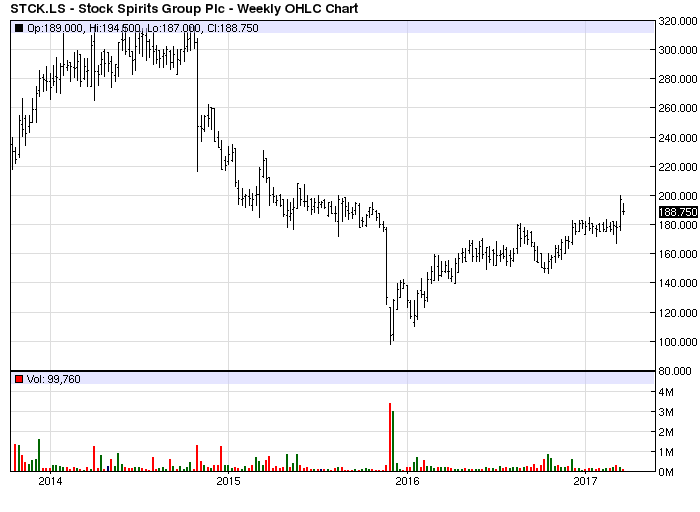
Five to six months after Oaktree sold its entire stake, Stock Spirit shares lost 25% in a day. The culprit?
A profit warning.
Management expects annual profits to be £7.8m lower than expectation. The cause is a levied tax of 15% at the end of 2013 by the Polish government. It explains why Oaktree was quick to sell before investors discovered the change in regulation.
Stock Spirit fell further to £1/share, before recovering to £2/share. (still 17% below IPO price)
Now, for some new positive for the little guys and gals.
SSP, your
brand operators during long-distance travel
One of the few bright spots is SSP or known as Select Service Partner.
The company bought by EQT Partners in 2006 for £1.822bn. It does brand catering and retail units at over 125 airports and 270 train stations. These brands include Starbucks, Burger King, WH SMITH, Upper Crust and M&S Simply Food.
What happened?
It floated in 2014 at an IPO value of £1bn (a bargain already) at £2.10/share. The offer raise £482m with the intention of paying down debt. It helps to reduce SSP’s net debt to £450m.
Did EQT do well with their investment?
Again, we will never know!
We do know they sold its remaining 20% stake to raise £275m in 2015.
Why did SSP shares rise in value?
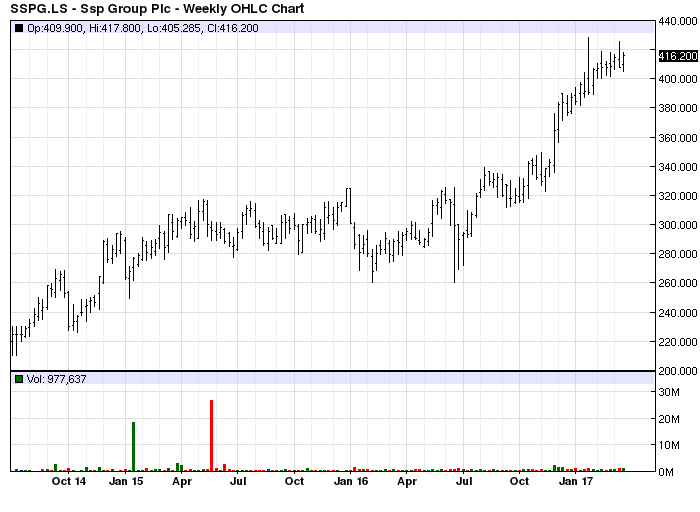
First, SSP business model is successful because long-term
distance and air travel are growing. There are more and more people using these
services.
Second, it operates well-known recognised brands. People knows what they are getting. Plus, it is a convenience for them.
Despite the success of its business model, valuation has to make sense. And for SSP, it did.
Remember EQT paid £822m more for this business than the floatation valuation, eight years ago. The proceeds raise helped reduce financial leverage. Meaning if SSP continues to churn out profits, the equity-component will rise in value.
Today, shareholders are sitting on 95% capital gains, valuing it close to £2bn.
WHEN TO BACK OR NOT TO BACK PRIVATE EQUITY IPOs
The last section will look at factors that make businesses a great buy or a big no-no for your portfolio. In most cases, Private Equity firms acquire profitable businesses.
They won’t acquire a business with inconsistent profits or making losses consistently because banks won’t borrow the money. If they do, then the responsibility lies with private equity or retail investors.
Below are some factors why you shouldn’t back IPO from Private Equity: -
-Always check the total borrowing size.
When I did my Debenhams piece. The consortium bought the business for £1.7bn, but Debenhams had debts of £100m.
Three years later, the same valuation was offered in the IPO, but total debt ballooned to £1.9bn.
So, when it comes to valuation, always add net debt to market capitalisation.
Lesson: Always check total debt before the private equity firm took over the business. And again, if they list on the market.
-Checking the competitiveness of the company. So, with Bonmarche, there was no debt (net cash of £10m). But it was vulnerable to a slowdown in consumer spending. The last financial crisis saw it closed 160 stores from a total of 400.
Lesson: Avoid weak competitive businesses with weak brands.
-Sometimes you can’t spot the red flags during the IPO. But trouble starts to brew months later. In Stock Spirit case, Oaktree sold its remaining stake at a discount to current share price. That should raise alarm bells!
The reason was a regulatory change of alcohol taxes leading to a profits warning.
Lesson: Watch out for company’s stake sold at a discount. Also, check with changes to regulatory issues affecting the bottom line.
Okay, but when do you invest in a private equity backed IPO?
-When the private equity firm sold or (value it less) than they acquire for it. But it must be a recognised brand and earns consistent profits.
One reason why a private equity would sell it for less than they acquired is because of the top end of the business cycle.
The other reason is they desperately need to raise money to pay off loans, and would sell for any price.
Lesson: Invest when the private equity is putting the firm up for sale.
-When the company paid off most of their loans. Years after the IPO, these profitable businesses go on a deleveraging crusade, but their stock price never recovery.
WHY?
Because they lost their reputation in the investment community. With market value below IPO and still profitable, it can be your time to invest in the company.
FINAL THOUGHTS
These are just some factors to avoid investing in IPOs. Any companies with these symptoms would be a bad investment, regardless whether it is backed by private equity.
Some IPOs (those AIM stocks) would make a worse investment for the retail investors. Like everything else in life, there is a pro and a con for everything.
CALL TO ACTION
What are your thoughts on Private Equity? Do they do a good job or screw the business long-term sustainability? Leaving them vulnerable to rivals and financial institutions.
Finally, are there private-equity backed IPO that you made a profit from or lost some of your initial investment. Love to hear your thoughts.
Disclaimer
This is not financial advice. Our content is intended to be used and must be used for information and education purposes only. Please read our disclaimer and terms and conditions to understand our obligations.
12 comments
OrangeTree - I did a similar analysis sometime back. Private Equity is a broad term and not all private equity houses are the same. There do seem to be a high number of disasters shortly after IPO for Private Equity though.
If you think about it Private Equity's job is to sell for a high price. It is their business to generate returns. So they will tend to sell when the time is right and they can get a good price. Financial engineering is a commodity type area. Who can't add debt to a business? The key is whether a business can be improved. Yell was a private equity float I think that went bust. A fair few have. The AA appears to be struggling under its debt load at present.
Not all Private Equity businesses are just full of financial engineers. Merlin Entertainments came from Private Equity. Also as you say SSP Group. 3i Group is a private equity company and focuses on building businesses rather than financial engineering.
I think a lot of IPO success is sector driven. With private equity such a big area it tends to drive the IPO arena. However, I wouldn't have a "it is a private equity IPO I must avoid it mantra." Domino's Pizza in the US was a private equity IPO that did very well.
Generally, though I think founder IPO's, privatizations and spinoffs perform better. You have to look on a case by case basis. I recall Mark Slater saying there is some research that IPO's in general do badly over the long-term as they take place when markets are booking.
What would it take to get you to do a full analysis of Pets at Home? I think the timing to do this is excellent, as KKR just announced they would halve their stake. With the stock trading near its lows, the price will be very pressured.
Does anyone have an insight on why PETS cannot get its return on equity higher? The business model of combining retail with vet care is clever, and it SHOULD have a sustainable competitive advantage in that the costs of acquiring new customers should be lower. The reason that customer acquisition cost should be lower is that it is being absorbed across two different businesses. Moreover, there should be a spillover effect, and once the customer is in the store it should be much cheaper to get them to buy the other business' product.
When I look at PETS, I think of the now-off-market Petsmart in the US. Petsmart was able to achieve huge return on equity numbers, almost unreal. Petsmart went from 25% return on equity and grew that to over 35%. How is it that Pets at Home is stuck with a sub-10% return on equity? I have noticed the same sub-par return on equity for Greencross Limited in Australia (GXL.AX) which has copied the entire Pets at Home business model.
Is there something structural in these businesses that do not let them get the higher return on equity? Is this all about bad private equity deals silently sucking out all of the returns? Are the managers at PETS and GXL just not good enough to focus on getting a better ROE? Those are the kinds of questions I would want to see a full analysis try to address.
Lol. You know what they say, "Time is money!"
Hi Pone,
I had to send my wife into PetsAH a couple of weekends ago as there was an essential rugby match on the box. Panic stations as dog food 'not in stock'. It was delivered 48 hrs later at 20% discount to retail price via Amazon.
I think that's pretty structural
rleonardw, well Amazon pressures all retail, but the fact of the matter is that Amazon cannot compete with veterinary medicine, and being able to cross sell services with merchandise is a powerful differentiation with high barriers to entry.
The problem with PETS is that they overpaid for most of their vet service businesses. Now they have a ton of goodwill on the balance sheet, and their actual returns against that goodwill is extremely mediocre. This makes it a very interesting business but not a very good investment.
Orangetree,
I work in Investment banking. I'm simply telling you the principal reasons why PE firms use debt. As a banker, my role is to protect the bank and makes sure that, in a worst case scenario, we're going to get our money back.
You've highlighted some deals that have not turned out well. Those deals that have done badly look to have done badly because of stock specific issues. In the main, the overall majority of deals do not turn out in the manner that you've highlighted.
JakNife
Morning JAkN.
I agree with your explanation of some of the motives for PE using leverage on the investments that they make. Companies with low operational leverage are well suited to using higher financial leverage to spice up equity returns in a tax efficient manner while imposing discipline on managements that sometimes use the flexibility given by a steady income stream to try and build empires or chase sexy non-core profit streams in add on businesses they don't understand. I made a few bob taking utilities private on this basis 20 years ago.
I think there a few other reasons worth bearing in mind. The addition of debt is also a means of funding a leveraged recapitalisation allowing the PE sponsors to repatriate their initial investment prior to (or preferably in addition to) a later exit through an IPO or trade sale. It can also be used in the form of cum warrants Mezz or PIK preferred as a means of stripping out earnings before they drop through to the ordinary shareholders once the IPO has taken place.
As you say, the lending bankers seek to protect themselves and make sure they get their debt and interest repaid in all circumstances but these interests aren't necessarily the same as those of the buyers of the new equity. Too many IPOs seem to end up in the hands of somewhat naive PIs who don't necessarily understand who is getting which pieces of the pie. If you don't know who the sucker is in a poker school after the first few hands, it's probably you etc..
Best,
Gus.
Gus,
Thanks for backing up what I am trying to get across. Could not possibly put it better myself!
Okay,
Why don't you highlight some examples of PE-backed IPOs that have made money for the ordinary shareholders?
Mine is SSP, what's yours?
In a previous life (late 90's/early noughties), I worked closely with a number of Private Equity firms and the associated Leveraged Finance bank lenders and other sources of finance such as the Junk Bond managers. Highly intelligent and savvy operators but frankly not the most philanthropic members of society - in many ways the precursors to the Hedgies but with a slightly sharper dress sense and better table manners. Some did add value by shaking down poor management, focusing a dysfunctional business structure with undervalued assets or simply giving a business the space and investment to grow away from the glare of the stock market. Many, in my experience, did not and simply looked to buy cheap, asset strip, do a leveraged recapitalisation and then tart up the residual with a lick of paint to flog it back to an unsuspecting public shortly before the wheels dropped off. The whole game was made all the more toxic by the prevalence of a "personal carry" whereby the PE sponsor (often a small team of individuals) had a personal stake in maximising the returns from the equity investment on exit (i.e. the IPO) with few scruples about the after market. Used car salesmen in all but name but with a few more £000's on the commissions. Not quite sure why the fund managers kept going back to buy these IPOs apart from stumbling across the occasional dog that had its day and perhaps the fact that it's somebody else's money that they were investing.
Of course it's all completely different nowadays and the generous spirit of Mother Thersa pervades the market and the PE boys only ever sell a quality product at a fair price with complete transparency on the underlying business.
Caveat emptor.
Gus.
Private equity uses debt for three principle reasons:
1. To lever returns - a 10% return on investment becomes a 20% return on investment if you use enough cheap debt.
2. To tax enhance returns – debt is deductible and reduces the tax payable by the business.
3. Because PE houses believe that debt imposes a discipline on management in terms of forcing them to provide cash at the appropriate time to pay the interest bill.
Whilst you’ve identified some “bad uns” there are also plenty of “good uns.
JakNife,
Don't you ever wonder if too much debt is a bad thing? Sure, it might impose discipline, but management can only do so much if the average industry growth is 4-5%.
I know the cash flow generation would pay off this debt, but that is a perceived misconception. Most of the time it goes into the back pocket of the PE Firms.
P.S. PE Firms takeover recognised businesses. And most are established and growing at a slow pace.
Which is why when debt gets too high, the retail investors and financial institutions have to foot the bill.
It is always about the "exit strategy"