What’s going on in the gambling sector?


One of the bombshell announcements of the recent budget was Rachel Reeves’ decision to impose much higher duties on the gambling sector.
In a budget whose overall market impact was limited, these duties were one of the standout pieces of news, and they immediately affected many share prices.
In this article I’m going to take a look at the changes to the tax regime, how these changes will affect various gambling firms, and hopefully reach some conclusions at the end.
For disclosure, the only gambling stock in my portfolio is, unfortunately, Evoke (LON:EVOK).
What has changed?
HMRC produced a policy paper on the day of the Budget, so that’s a good place to start.
Remote gaming duty: as the name suggests, this applies to online casinos where the player isn’t present in the physical location where the bet is taking place.
Rachel Reeves has almost doubled RGD from 21% to 40%.
The rationale? Apart from raising money, the policy paper says:
The government has targeted the biggest increase in tax on remote gaming (for example online slots and casino games), which is generally considered to have lower operating costs and to be more harmful than other forms of gambling. The intention of the Remote Gaming Duty rate increase is to disincentivise gambling companies from pushing consumers towards what are considered more harmful products.
General betting duty: this applies to bets made with a bookmaker, regardless of whether it’s in person or online. These are typically sports bets.
GBD has also massively increased, from 15% to 25%, but only for bets made online.
Both Remote Gaming Duty and General Betting Duty are charged on the operator’s gross gambling profits, not total revenue or net profits. The taxes are supposed to apply whenever the customer is based in the UK.
Interestingly, the GBD increase does not apply to bets made in-person at licensed betting premises, only to bets made online.
And it does not apply to horse races, or to spread bets (I'm long IG group (LON:IGG) and its share price surged on Budget day).
Turning again to the government’s rationale for raising duties on online bets:
The government has sought to balance evidence and views that remote betting is not as harmful as remote gaming, whilst also recognising the growth in online betting and its lower costs compared to retail operations. The government will therefore implement a lower tax rise for remote betting than remote gaming, while keeping General Betting Duty at 15%.
I can’t say I understand the rationale which justifies the duty increase on the basis that online betting has lower costs compared to retail operations: if one way of doing business is more cost-efficient than another, does that immediately suggest that the cost-efficient method should be taxed more? I don’t see it!
And without wishing to veer too far into the rights and wrongs of the decisions, I think I could make a counter-argument like this: bookmakers are often physically located beside pubs, which means that customers who make physical bets are very likely to be under the influence of alcohol. If the goal is to clamp down on harmful gambling behaviour, does that not suggest that alcohol-induced physical betting should be disincentivised even more than remote betting?
But enough of that. Some other important facts:
Bingo Duty: this is completely abolished, which the government says “supports lower risk activities”. I suppose that’s true - I’ve never heard of bingo players being forced into destitution by their gambling habit.
When the changes apply: higher Remote Gaming Duty applies from April 2026, while higher General Betting Duty applies from April 2027.
Expected impact: the government expects to raise an additional £1 billion+ through these measures annually, and they believe that some gamblers may “choose to gamble less, switch to alternative gambling activities or gamble through the illegal gambling market” as a result of the lower expected return from the bets they are offered.
The responses of gambling shares
Rank (LON:RNK) was a big winner on the day, although the excitement rapidly died down:
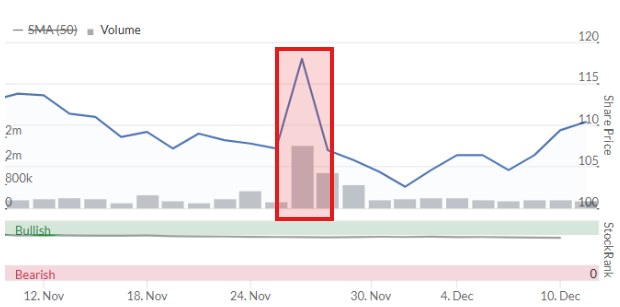
The reason? It’s primarily a land-based business, and the tax changes are explicitly designed to work against its online competition.
Indeed, Rank owns the Mecca chain of bingo clubs, and they might have been the biggest single winner of the Budget.
However, the excitement quickly died down as investors digested the full impact of the new tax regime. There were no tax cuts, after all: only tax increases. And Rank’s online businesses would be on the hook to pay more.
On the evening of Budget Day, the company outlined the cost: a £40m reduction in operating profit before mitigation.
This was made up of:
£46m of higher RGD on the UK Digital Business, a huge cost for a division that made UK underlying profit of c. £25m last year
Offset by £6m benefit from the abolition of bingo duty.
Rank noted that their profitability, investment plans and even the competitive landscape would all “inevitably be impacted”.
Rank’s CEO called the increased RGD “a very significant blow to the regulated betting and gaming industry in the UK.”
My view: I’ve been reasonably bullish on Rank (e.g. AMBER/GREEN in October) but the size of the blow to the digital business is enormous and does make me question this stance.
Total underlying LfL operating profit for the entire Rank group was £63.7m last year (FY June 2025) and £46.3m the year prior. This is a business that has struggled with profitability in the past, particularly with cost inflation at its physical sites. The digital business was seen as a way to improve its overall quality and diversify operations, but now this too has turned out to be a major source of risk. Perhaps I should be neutral on this share now?
The Entain (LON:ENT) share price also reacted positively to the Budget:
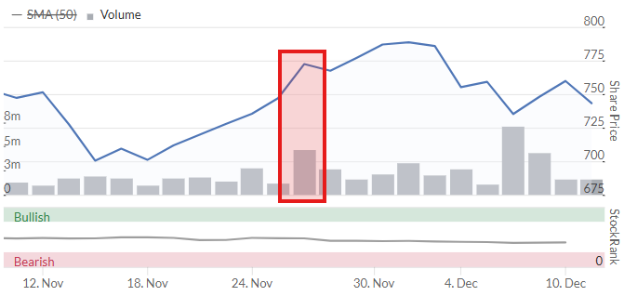
Entain owns Ladbrokes, Coral, bwin, Gala Bingo and various other brands with heavy presence on the High Street - and therefore perhaps might be beneficiaries of the new competitive dynamics?
But Entain’s statement on the evening of the budget said they were “disappointed”:
Today's announced tax changes… will see regulated operators limited to providing a less attractive and lower quality customer offering compared to the unlicensed and untaxed black market.
It stands to reason that a black market operator will be able to provide far better odds than a licensed operator who has to hand over 25% to 40% of their gross gambling profits to the taxman. And that's before we get into corporation tax, safer gambling regulations, etc.
The financial impact for Entain? An additional annualised cost of £200m to their UK & Ireland Online business, before any mitigating actions.
Entain was helpfully precise in quantifying the hit that they expected to suffer after mitigating actions (which include reducing their marketing and promotions efforts): a cut of £100m to EBITDA in FY26, and then a £150m cut in FY27. For context, market expectations had been for FY26 EBITDA of £1,220m: so it was a serious blow, but not a fatal one.
Evoke (LON:EVOK) (I have a long position in this, unfortunately)
I’m inclined to sell my shares in Evoke, as I am now even more concerned that the company’s financial problems may be terminal (I’ve been holding onto my position only out of stubbornness, and since the shares are such a tiny portion of my portfolio.)
The problem with Evoke is that it probably needs to raise fresh equity, and any unexpected blow to performance increases the likelihood of this happening:
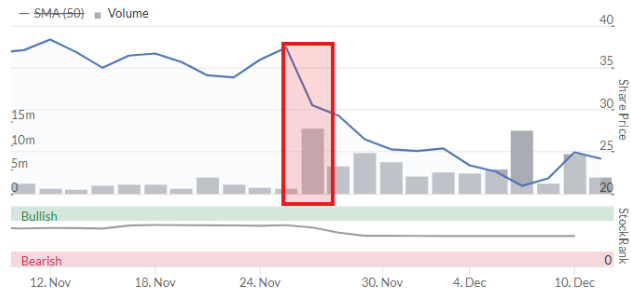
Evoke owns William Hill and has a heavy online presence under 888 and other brands.
It was scathing in its response to the UK Budget announcement:
It is the Board's assessment that RGD at 40% will result in substantial and far-reaching changes to the entire UK operating environment for betting and gaming, including driving further growth in the unregulated and untaxed black-market. As a result, the Board believes that the significant changes in RGD announced today will ultimately reduce the amount of tax generated by the UK gambling industry.
In their view, thousands of industry jobs have been put at risk by these changes.
The financial impact on Evoke is disastrous: £125-135m of additional costs on an annualised basis, with 50% of this to be mitigated in various painful ways: “supplier savings, reduced marketing, retail store closures, operating cost savings, and potential changes to the customer proposition”.
While they also suggested that they might benefit from consolidation and increased market share, I’m not sure if the existing equity will be around to see that. Medium-term guidance was withdrawn and I fear that the equity here has a very high likelihood of being worthless or close to worthless, depending on what happens if/when the company tries to carry out a fundraise.
The company has just announced a Strategic Review, which includes the potential sale of the entire group.
Flutter Entertainment (LON:FLTR) shares had a much more positive reaction:
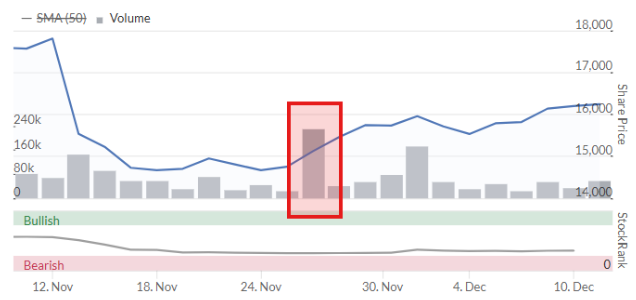
Headquartered in New York, Flutter’s enormous international scale makes the UK Budget a less important event.
In its response, Flutter said that it would mitigate 37% of the total £540m estimated impact to EBITDA in 2027.
And I tend to agree that its scale means that it has the potential to benefit from collapsing and shrinking rivals: in any industry, regulations and taxes tend to favour the biggest players.
As the largest scale operator, Flutter has the opportunity to deliver material second order mitigation benefits, including market share gains.
After mitigation, the estimated net impact for FY December 2027 was $339m, which is less than 10% of Flutter’s total forecast EBITDA.
In a similar vein, Playtech (LON:PTEC)’s stock price has been very strong - this is an international business where the UK Budget can’t even stop it from meeting market expectations.
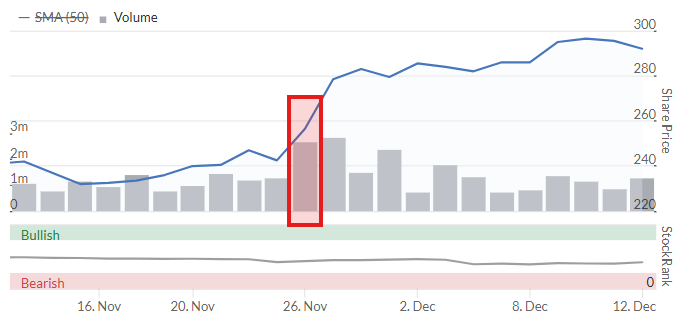
This is what they said:
…given the Group's geographic diversity across regulated markets and strong performance and prospects outside of the UK, Playtech remains comfortable that it can meet market expectations for the full year 2026.
Conclusion
This was a momentous Budget for the gambling sector and I do tend to think that it will drive business into the arms of online, offshore operators who aren’t licensed or taxed. Policing offshore operators is extraordinarily difficult and I’m sure that more punters will find a way to place bets away from the UK’s tax and regulatory system.
The black market currently controls between five and nine percent of the industry, according to various estimates.
This is low compared to other countries, but it has been on the rise in recent years and that trend should continue.
For investors, the lessons that we learn are straightforward, almost boring: the companies with the greatest international diversification away from the UK, the biggest scale and with reasonable balance sheets have done better. Which is no surprise, really: when bad news arrives, the least risky companies will outperform.
Looking ahead, I'm still inclined to invest in this sector - but primarily in companies with a high level of international diversification (Flutter and Playtech). It has become rather difficult to imagine that serving UK gamblers can be a lucrative business in the years ahead.
Disclaimer
This is not financial advice. Our content is intended to be used and must be used for information and education purposes only. Please read our disclaimer and terms and conditions to understand our obligations.

13 comments
Well on the bright side for gambling operators - all those extra benefits paid will no doubt go in large part to them anyway
(Bingo duty abolished, 'supports lower risk activities.' I've never heard of Bingo players being forced into destitution by their gambling habit.)
I am a gambler but not a Bingo player as it is a game of total luck. But I can see the addicts in the shops and the games come around quickly every few minutes. One person I know plays all the time and I know he is banned from one shop because he loses too much. He can't afford to play every day. At times I don't think the shop staff like being kept overly busy by the Bingo players. I'm not saying that they are all addicts, just that every game as addicts. Is this another thing which as been poorly thought out, or am I missing something?
Great article Graham. I'm also interested to see how this might effect gaming realms, who are growing internationally, but hard to see it not having some negative impact.
An impressive read, thanky you Graham for putting so much work into it. IG group (LON:IGG) and Plus500 (LON:PLUS) which I hold are about as I'll go in regards to betting. On an aside, I used to be employed on an aristocratic estate which , a long time ago, changed hands on the turn of a card.
It's another example of a politically motivated attack by the govt on an entire sector. Farmers, private schools, gambling, oil & gas.....the left hate them all.
You use very emotive language Joe, are you alright?
I'm invested in Rank (LON:RNK) and here are my thoughts. I think the industry will be able to mitigate, and Rank is better positioned than most.
So really, I expect the next update from Rank to go like "we have evaluated mitigating actions, and guess what, we're able to chop a big part of the £40m hit we quantified". "Furthermore, the new changes might result in fundamentally structural changes in the online industry, as well as in Bingo, that we can capitalise on in the coming years".
I have very little sympathy for these pure play gambling companies.
Back in the 90s, telephone credit accounts were the main off-line option for punters who couldn't make it to a shop or the racecourse. Gambling debts weren't enforceable at that time so it was in the interest of the bookmaker to ensure players were betting at an affordable level. They did this well, all whilst allowing a decent sized bet and a fair amount of winnings before small and reasonable staking restrictions and rarely account closures (so rare that it was a badge of honour). Their customer service was excellent and I felt they genuinely cared about the relationship.
The reality for the last 10-15 years is that showing any sign that you may win (even small amounts) results in stake restrictions, often down to pence. Traders decision. And no, you can't challenge it or have it changed. You can, of course, stake as much as you wish on casino games as long as you stay within the affordability limits (the maximum they can take off you without falling foul of regulators).
I know companies need to make a profit and they always managed that whilst also offering the chance to make a few quid if you put in the hard work. It feels like they've squeezed and squeezed until the only customers they want are new ones, existing small staking acca punters chasing a jackpot win or problem gamblers with high levels of affordability. If your business model is to restrict an ever higher percentage of your less profitable customers you're always going to need an increasing number of new ones to replace them. Eventually you'll run out of newbies.
Any business that treats its customers poorly for any length of time will eventually hit problems. No matter how good the tail winds in their market, eventually the tide turns and there will be head winds like now. That's when you see the benefit of customer loyalty if your treatment of them has earned it. Does anyone remember Ratners famous gaff in the early 90's?
Not all in the sector are bad though. I receive great service from IG group (LON:IGG) and love their products so much I'm a shareholder too. That's the way to do it, win-win.
Yep all very true. It's a total disgrace how the industry is run. And the gaming board do absolutely nothing to protect consumers. I am either banned or restricted to pence on every online bookie, usually for making very small amounts of money. Perhaps Betfair exchange will be the big winner, that's where all my bets are placed, not that I have a choice as it's the only place I can get on. Btw I'm not a big better either, £20 bets etc, email barred, restricted, with no right of reply! The majority of the sector is a total scandal imo
I can’t say I understand the rationale which justifies the duty increase on the basis that online betting has lower costs compared to retail operations: if one way of doing business is more cost-efficient than another, does that immediately suggest that the cost-efficient method should be taxed more? I don’t see it!
I cant understand how anyone doesnt get that online is free lunch compared to physical locations.
rates , rent building insurance and maintenance - higher staff costs (local workers) - higher costs for staff travelling to work and lunch whilst there etc
one big issue is that physical stores provide something much more useful to the community too ref keeping towns going (not having empty boarded up shops etc)
the powers that be should have years ago moved to getting a fair share of "where uk consumers spend their money" - from ten organisations that receive then mney -
we all know google facebook amazon indeed UBER and the like pay as little as they can in the uk system - and they really dont contribute anything useful to the country beyond soem token inmvestment they might make in he uk - they suck it all out abroad - leaving less proper "uk land based companies" to pick up teh tab for everything
beyond crazy imho
i would say gambling companies are an easy target so ref the specific concern here - obviously labour are creating a story to justify the extra tax increases - that they know will be less unpopular than other similar targetted stuff.
Needs some typos spell check changing para 13? Really useful. Send to your MP?
Can you let me know specifically please Snowdrop? Thank you.
I've sent it through a proper spell check now, thanks!