Daily Stock Market Report (Wed 8 Jan 2025) - NVDA, TIG, IGP, LIKE, TPT, SHEL, VCP

Good morning!
Upcoming event: Ed, Megan and I will present a live webinar tonight at 5pm to discuss our current views on the markets. See you there!
12.30pm: This report is finished for today, thanks for dropping by!
Spreadsheet accompanying this report (updated to 3/1/2025).
Companies Reporting
| Name (Mkt Cap) | RNS | Summary | Our view (Author) |
|---|---|---|---|
Shell (LON:SHEL) (£159bn) | Q4 update | Gas production significantly lower than Q3 | AMBER/GREEN (Roland) |
| Flutter Entertainment (LON:FLTR) (£36bn) | Update on US sports market | Revenue warning: Too many ‘favourites’ winning sports events in Q3. | |
| Team Internet (LON:TIG) (£297m) | Possible Offer (published after mkt close yesterday). | Two possible buyers, both at 125p. The board is considering both of them. | PINK (Graham) |
Victoria (LON:VCP) (£128m) | Trading Statement | H2 trading stronger than H1. Full year earnings in line with expectations. | RED (Graham) |
Intercede (LON:IGP) (£107m) | Trading Statement | New orders added to existing pipeline for Q4. Full year performance ahead of consensus. | AMBER (Roland) |
Kistos Holdings (LON:KIST) (£95m) | Trading Statement | Production in line with guidance | |
Topps Tiles (LON:TPT) (£75m) | Q1 TU & CEO Succession | LfL sales +3.5% Q1 (to Dec), +12.5% last 5 weeks. CEO intends to retire after 18 years with TPT. | AMBER (Roland) |
Likewise (LON:LIKE) (£47m) | TU | On track to deliver profit exps for FY Dec 2024. Rev +7.5%. Buying logistics centre near Plymouth. | AMBER (Graham) |
Hornby (LON:HRN) (£43m) | TU | Q3 sales +7%. FY March 2025 forecast “remains on track for YoY growth”. No formal market exps. | |
PROCOOK (LON:PROC) (£42m) | Q3 TU | In line with exps. Q3 rev +11%, LfL rev +3.4% outperforming UK kitchenware market. | |
Ground Rents Income Fund (LON:GRIO) (£22m) | Possible Cash Offer | GRIO Board has not engaged with the potential buyer. Three bids, highest at 34p (48.5% premium). | PINK |
Summaries
Intercede (LON:IGP) - up 10% to 201p (£117m) - Contract orders and renewals - Roland - AMBER
This digital ID software firm has announced $5m of new contract wins, but the modest size of today’s earnings upgrade suggests to me that some of this may be business as usual. I admire Intercede’s high quality metrics, but visibility on earnings seems limited and I think the price is up with events, so I’m staying neutral.
Topps Tiles (LON:TPT) - up 6.7% to 40p (£78m) - Q1 Trading Update and CEO Succession - Roland - AMBER
The tile retailer is benefiting from trade growth, but higher-margin consumer demand appears to remain weak. I suspect margins remain under pressure, a trend that’s been present for several years. Although I can see some value potential here, earnings visibility seems poor at the moment. With a new CEO incoming, I’m happy to stay on the sidelines.
Likewise (LON:LIKE) - up 8% to 20.6p (£50m) - Trading Update - Graham - AMBER
It’s an “in line with expectations” update from this floor covering distributor, where the ex-Headlam CEO is very excited about growth prospects. Total revenue is up 7.5% and there are plans to increase capacity by 35%. They will also complete their geographic footprint with a Plymouth facility. This could be worth backing but at this stage of its development and at this expensive-looking valuation, I think you need a strong belief in management.
Victoria (LON:VCP) - down 10% to 101.65p (£117m) - Board Change & Q3 Update - Graham - RED
I’m downgrading this one from AMBER/RED to RED in the light of the interim results (published in November) and the subsequent lowering of the company’s credit rating by Fitch. In general I can be bullish on companies even if they have non-investment grade credit ratings, but VCP’s rating is deep in junk territory, its credit metrics have shot past comfortable levels, and it needs to plan for its August 2026 note refinancing. At least it has about 18 months left to do this. Victoria borrowed these funds at a rate of 3.625% and it’s unthinkable that similar rates will be offered to it again.
Short Sections
NVIDIA (NSQ:NVDA)
Down 6% yesterday (£2.8trn) - Keynote speech at the Consumer Electronics Show - Megan - GREEN
When NVIDIA (NSQ:NVDA) shares suffer a set back, it’s a pretty major amount of capital that has been moved. The company’s 6% decline yesterday wiped $221bn off its market capitalisation - that’s a bigger market cap than any company listed in London.
The fall can most likely be attributed to some profit taking after the company’s shares hit an intraday all-time high following the keynote speech made by chief executive Jensen Huang at the Consumer Electronics Show in Las Vegas on Monday.
Huang used his speech to hail the “ChatGPT moment for general robotics is just around the corner”, hinting that physical artificial intelligence might soon be available for public use, just like OpenAI’s large language model. I am not sure how I feel about the looming spectre of a humanoid robot assembling its arsenal in preparation for general use (if you’re not terrified at the prospect, you should watch Wallace & Gromit’s recent adventure in Vengeance Most Fowl). But regardless of where AI is heading, it’s clear Nvidia will remain at the heart of the industry for some time.
On Monday Huang also unveiled a variety of new partnerships which will see its hardware and software used in multiple markets. For example, the company has signed data storage group Micron as its memory partner for gaming semiconductors. And it will provide chips for Toyota’s driver assistance programs, Uber’s autonomous driving initiative and the technology behind Aurora’s self-driving trucks.
Regardless of your interest in the future of AI, it’s worth paying attention to Nvidia shares because of the impact they have on the market. If you were to buy an S&P 500 tracker today, 7% of your investment would be in Nvidia (the Magnificent 7 as a group account for 39% of the premier market in the US). Nvidia’s share price movement yesterday dragged the S&P 500 down as a whole and also sparked a sell off in other AI stocks, including Palantir and Tesla (down 8% and 6% respectively).
I like Nvidia and think the AI gravy train will continue to deliver for some time. But the company’s dominance in the US markets is a worry, because if something goes wrong at Nvidia, the whole market could begin to unravel.
Team Internet (LON:TIG)
Up 29% yesterday to 117.8p (£297m) - Possible Offer - Graham - PINK
Two private equity firms have spotted value at TIG: an American group and a European group, and they have both proposed a takeover at 125p. Both of them offered bids at lower levels that were rejected.
Current status:
The Board is currently considering both approaches with its advisers, including limited interaction with the Potential Offerors, and will make further announcements in due course as appropriate.
I was AMBER/RED on this in November (share price at the time: 99p) on the day of a major profit warning, after an advertising technology business acquired by TIG earlier in 2024 had seriously underperformed. Something that really bothered me was the discovery that the company had been buying back its own shares despite having about $100m of net debt. I was also put off by the complicated structure of the group and the lack of growth in its core assets.
However, two different sophisticated buyers both coming in at the same time, at the same price, is strong evidence that the valuation may have simply fallen too far: at one point it fell down as low as 77.5p, for a £200m market cap, vs. EPS estimates of 23p. So it was trading at only a little over 3x estimated earnings at the low.
The directors at TIG can now play the buyers against each other and wait for one of them to make a better offer. So I don’t think they need to rush into accepting either of the bids, which are only offering a PER of 5.4x anyway. If the buyers really believe in the underlying quality of the group, shouldn’t they be willing to pay substantially more than that?
Shell (LON:SHEL)
Down 1.6% to 2,574p (£156.6bn) - Q4 update - Roland - AMBER/GREEN
Today’s update from Shell warns of a fall in gas production during the fourth quarter of 2024 and “significantly lower” profits from its chemicals and products business. I don’t have access to broker notes for Shell, but press commentary suggests that several analysts have cut their Q4 earnings forecasts following today’s update. However, I suspect the impact on Shell’s full-year results will be modest. In itself, I don’t see today’s update as a serious concern.
In my view, Shell remains in good shape, with significantly improved profitability compared to the pre-pandemic period. CEO Wael Sawan appears to be pulling back from investments in electricity and renewables and I think it continues to make sense to view this business as a leveraged play on oil/gas prices and industrial activity.
At current levels, forecasts suggest the business could generate a return on equity of around 13% this year. With the shares trading just above book value, Shell’s valuation looks reasonable to me and I am confident the 4.4% dividend yield will remain safe.
However, the stock is also trading on 13 times 10-year average earnings (CAPE 10y), according to Stockopedia. My research suggests that’s at the upper end of its historic range. I would personally prefer to wait for the energy sector to suffer one of its periodic slumps before considering a purchase.
Graham's Section
Likewise (LON:LIKE)
Up 8% to 20.6p (£50m) - Trading Update - Graham - AMBER
This update is in line with expectations (or to quote them precisely, “on track to deliver” expectations).
Likewise Group plc (AIM:LIKE), the fast growing UK floor coverings distributor, is very pleased to announce that Total Group Revenue for the year ended 31 December 2024 ("FY24") was £150.8 million. It is particularly encouraging that this important milestone has been reached.
Key bullet points:
Total group revenue +7.5%
Sales in Likewise Floors +15.5%, while the acquired carpets wholesale “Valley” saw a decline of 3%.
Based on the strong Q4 trend, annualised sales would approach £175m, but this does not allow for seasonality.
Plans from the company are ambitious, with another 35% increase in capacity planned for 2025 across facilities in Glasgow, Derby and Newport. Additionally they are going to complete their UK network with the addition of a logistics centre near Plymouth. Operational cash flow will be used to fund all of this.
Buyback programme: Likewise announces a very small buyback programme for only £200k. I see that this follows a £250k buyback in July. All told, that's less than 1% of the current market cap. I wonder what the point is - are they trying to signal that they think their shares are cheap? If so, the value isn’t jumping out at me:
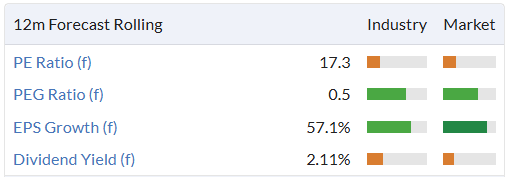
And they aren’t exactly drowning in cash: the cash balance was £3.2m as of June 2024, plus they had various bank loans adding up to c. £10m. So it makes sense to me that they should keep the buybacks at token amounts for now (actually it would make more sense to me if they didn't bother with them at this stage).
CEO comment:
"Following four years of developing the Group's Sales and Operational infrastructure we have stepped up to a new level of performance in H2 2024.
With significant new product launches in Q4 and more planned for Q1 and 2 this year, the Group is well placed to continue the exponential sales increase into 2025.
We have excellent Teams of people throughout our businesses, in Product, Sales and Marketing, Warehouse and Transport, to capitalise on the significant opportunities before us.
We are absolutely on the correct course to build a really meaningful flooring distribution business in the UK."
Estimates: Zeus have left forecasts unchanged for the next two years, including revenue of £160m (2025) and then £172m (2026), with adj. PBT doubling to £4m (2025) and then growing further to £5.2m (2026).
Graham’s view
The ex-CEO of Headlam (HEAD) seems very excited about his new project at LIKE and a comparison of the two shares reveals some stark differences. Sales at HEAD have fallen from a high of over £700m to c. £600m, while LIKE (boosted by M&A) is rushing towards higher sales from a very low base.
Measured by their price to sales ratios, LIKE (at 0.33x) is nearly twice as expensive as HEAD (0.18x). HEAD is not only cheaper in terms of price to sales, but it also has a stronger balance sheet backed up by a freehold property portfolio. The catch is that HEAD is loss-making and in retreat.
The question is when (or whether) higher sales will translate to meaningful profits at LIKE. Today’s update says that H2 saw “evidence of operational gearing and improving profitability as the Group aspires towards a more acceptable return on sales”. The lack of meaningful profits to date is the main reason why the notion of the company buying back shares seems premature to me. But if you believe in the forecasts, profits should see a bounce in 2025.
Perhaps it could be worth backing a management team who are ambitious and excited to steal market share from their former workplace?
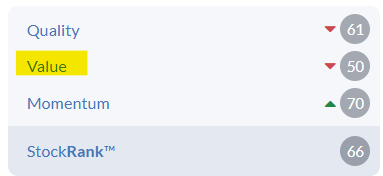
Personally, I find this to be a very troublesome and unattractive sector in which to invest, and I would want to see very clear value on offer before taking a positive stance. So I still can’t get this any higher than AMBER.
This is consistent with what the StockRanks are saying:
Victoria (LON:VCP)
Down 10% to 101.65p (£117m) - Board Change & Q3 Update - Graham - RED
I’ve been moderately negative on this one (e.g. in October). The balance sheet is in sharp focus with net debt at £658m (Sep 2024 balance sheet), including a large Euro-denominated note that matures in 2026. The Sep 2024 leverage multiple was 6.2x, which is far higher than I (and most lenders) would be comfortable with. The leverage multiple (net debt/EBITDA) typically needs to stay below 3x for most companies.
The simple fact that net debt is nearly six times the market cap is a big warning, and has resulted in some amazing share price volatility - the share price has recently doubled from its low.
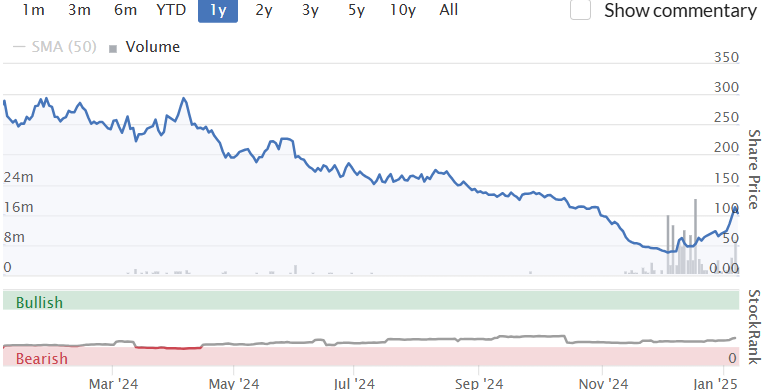
Short-sellers had a lot of fun with this one but there are no longer any notifiable positions on the short side: the big money has already been made on that trade.
Today’s update is in line with expectations: demand remains subdued but H2 is expected to benefit from various management actions as the company attempts a turnaround. They are targeting £32m of fixed cost savings this year, through various business reorganisations and integrations. This is part of a total package of £80m of cost savings to be achieved by the end of FY March 2027 - a remarkable number in the context of a £120m market cap!
They reassure on improved performance and “a sharp increase in earnings” over the next two years. This is based on demand normalising, operational leverage, their “self-help” initiatives, etc.
Board change: a US institution with an 11% shareholding gets a new NED on the Board, as the previous one resigned.
Debt situation: I remain deeply concerned about the risk levels attached to this one.
It’s fair to say that it’s in “high risk, high reward” territory as the recent doubling of the share price demonstrates. However at a leverage multiple in excess of 6x this can only be described as extremely high risk: the only reason I have not been RED already is the absence of financial maintenance covenants attached to VCP’s notes. If the notes had financial covenants then they would most likely be broken already, given the current state of trading, and VCP would be in technical default.
However, in the absence of covenants, VCP still has the time to come up with a solution, i.e. a refinancing, and this will be made easier if financial performance recovers over the next year.
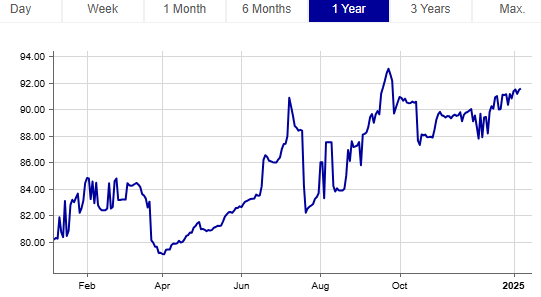
Victoria’s August 2026 Note has seen an improvement in price to 92 cents, vs. 87.5 cents in October. It should gradually approach 100 cents as August 2026 approaches, if lenders are confident of a refinancing. But bear in mind that if it’s an equity refinancing, that could spell huge dilution for shareholders:
Credit rating agency Fitch downgraded Victoria from BB- to B+ in May 2024.
Worryingly, Fitch downgraded it again in December (external link) from B+ to only B, and the outlook remains negative.
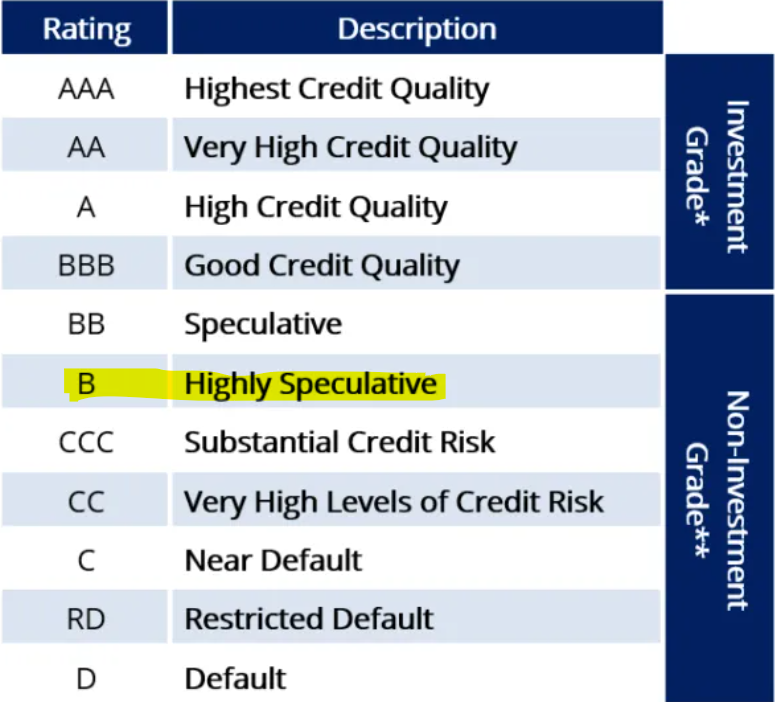
According to Fitch:
'B' ratings indicate that material default risk is present, but a limited margin of safety remains. Financial commitments are currently being met; however, capacity for continued payment is vulnerable to deterioration in the business and economic environment.
Explaining their decision to downgrade Victoria further and their negative outlook even at this lower rating, Fitch said:
The Negative Outlook reflects our expectation of negative free cash flow (FCF) for FY25-FY28, which coupled with high leverage and low interest coverage, is likely to increase refinancing risk in FY26.
Graham’s view
I’m going to downgrade my stance on this from AMBER/RED to RED. It’s not fashionable to have much trust in credit ratings agencies these days but I do find that the debt perspective is often more rational than the equity perspective, and if Fitch are worried about the refinancing risk next year then I think that needs to be taken seriously. The leverage multiple alone (>6x) is a major red flag. So this one is getting a downgrade from me
Roland's Section
Intercede (LON:IGP)
Up 10% to 201p (£117m) - Contract orders and renewals - Roland - AMBER
We don’t always cover contract awards in these reports. They are often already priced into current market forecasts and are effectively business as usual.
Today’s update from digital identity security specialist Intercede appears to be an exception to this.
The company signed over $5m (c.£4m) of new contracts in December, which has prompted management to upgrade its 2025 guidance.
These orders, combined with expected additional conversion of the existing pipeline in Q4 FY25, means that the Company now expects financial performance to be ahead of market expectations for FY25* and further underpins confidence looking forward towards FY26 and FY27.
The new contract awards are with a varied mix of new and existing customers and include both licences and service agreements. Customers listed include an Asian government, a Middle Eastern airline and US federal agencies.
Updated forecasts: Intercede helpfully specifies existing market expectations as being for FY25 revenue of £16.1m and adjusted EBITDA of £3.3m.
The company hasn’t provided new guidance today but Research Tree subscribers do have access to updated forecasts, with thanks to broker Cavendish.
FY25e: adj EPS +3% to 4.9p (previously 4.8p)
FY26e: adj EPS +3% to 4.4p (previously 4.3p)
The modest size of these upgrades suggests to me that some of the contract awards announced today might be seen as business as usual, after all. Note that FY26 earnings forecasts remain c.10% lower than FY25, suggesting limited visibility on the new business pipeline.
Roland’s view
As I commented yesterday when I looked at Corero Network Security, Intercede boasts the kind of high margins and strong quality metrics I look for in a software business:
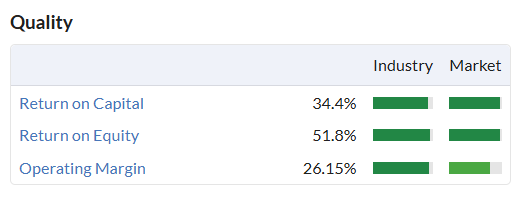
Today’s contracts suggest Intercede is successfully expanding its reach into new geographic markets, reducing its historic dependence on the US public sector. I see this diversification as a positive, assuming margins are maintained.
However, I think it’s probably worth remembering that FY24 (y/e March) was a bumper year for Intercede, with revenue of £20m and net profit of £6m. FY25 and FY26 earnings are expected to be >50% lower than in FY24. This might also help explain management’s enthusiasm for announcing new contracts ahead of the year end of 31 March.
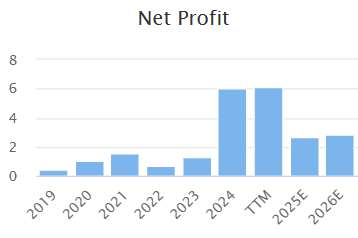
Forecasts have been upgraded more materially on two occasions over the last year, but today’s more modest upgrade does not suggest to me any substantial change in the company’s near-term outlook.
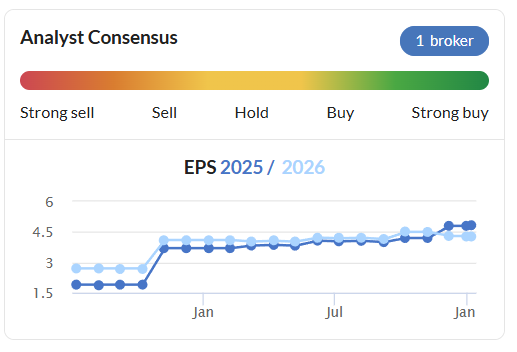
Indeed, I can’t help feeling that today’s good news is already firmly priced into the shares, which trade on a forward P/E of over 40:
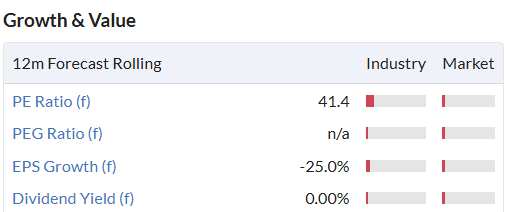
Personally, I’m a little surprised today’s share price rise has exceeded the increase in earnings forecasts. This means Intercede shares are actually more expensive now than they were yesterday.
While I can see some things to like in this business, the shares are too expensive for me at current levels. I’m going to maintain Graham’s recent AMBER view on this small cap.
Topps Tiles (LON:TPT)
Up 6.7% to 40p (£78m) - Q1 Trading Update and CEO Succession - Roland - AMBER
Retailer Topps Tiles is up today, after announcing a 4.6% rise in sales for the 13 weeks to 28 December and the amicable departure of its CEO.
Sales growth is said to have accelerated during the most recent five-week period, with sales up 12.9% versus the prior year and like-for-like sales up by 12.5%.
Trading update: Like B&Q’s owner Kingfisher (which also owns Screwfix), Topps Tiles appears to be benefiting from trade demand offsetting weaker consumer spending.
In Topps Tiles, the total number of active registered traders at the end of the period was up 7% year on year to 141,000, with the number of new traders registering in the quarter more than doubling year-on-year, both in store and online.
To illustrate the point, trade sales during the quarter to 28 December rose by 13.5%, compared to overall sales growth of 4.6%.
We don’t have a revenue split today, but trade sales in Topps Tiles accounted for 62.8% of sales in 2024. This suggests to me that there was a significant fall in consumer sales over the last quarter.
In Topps’ FY24 results, the company noted that trade customers bring “repeat purchases and high degrees of loyalty”, but receive “advantaged pricing” resulting in lower gross margins (than consumers). There’s no comment on gross margin in today’s quarterly update.
Elsewhere, the company says its other main business, Pro Tiler Tools, is continuing to perform well, with sales up 20% year-on-year over the quarter.
CEO Departure: CEO Rob Parker has decided to leave the business after “an extended period of consideration”. He’s been CEO since 2019 and was CEO for 12 years prior to that.
This departure seems amicable and he will remain in place until a successor is appointed.
CMA review: Topps Tiles acquired retailer CTD Tiles (30 stores) out of administration for £9m in August 2024. This deal is currently being reviewed by the CMA, so any contribution being made was excluded from today’s update
A decision on CMA’s Phase 1 review is expected on 17 February 2025.
Topps has 300 stores, so the CTD estate would represent a 10% addition and might provide a useful boost to sales.
Outlook: today’s update does not mention performance against expectations, but broker Zeus appears to have left its FY25 forecasts unchanged today. I’m assuming this means today’s update is in line.
Consensus forecasts on Stockopedia suggest Topps adjusted earnings will rise by 58% to 3.8p per share in FY25, although this needs to be seen in the context of last year’s 48% earnings slump.
FY25 forecasts remain lower than FY23 adjusted earnings of 4.5p per share.
Roland’s view
Topps Tiles is a market leader in its niche, but trading conditions appear to remain difficult – or at least, mixed. While trade demand is good, higher-margin consumer business is weaker. I wonder if the profitability of the company’s large store estate could be under pressure at present.
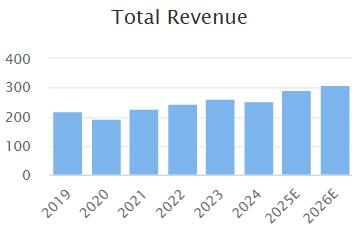
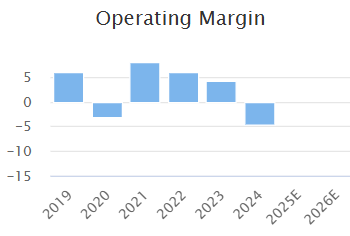
Certainly, we can see that while revenue has trended steadily higher in recent years, aided by acquisitions and trade growth, profits have fallen as margins have collapsed:
The StockReport shows net debt of £77m, but checking the balance sheet shows that this is made up of lease liabilities, with the group maintaining a modest net cash position excluding these obligations.
I don’t have a problem with big lease liabilities when they relate to profitable stores, but Topps Tiles’ underperforming consumer business makes me wonder if some of these stores may be borderline in terms of profitability.
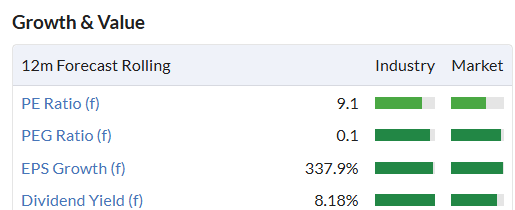
Topps Tiles continue to look cheap on valuation metrics, suggesting a possible opportunity if profits do recover:
While there may be an opportunity here, I can also see some risks. Personally, there are other retailers I’d rather own.
I’ll be interested to see the company’s half-year results and to hear from the new CEO, when appointed. For now, I’m going to remain neutral.
Disclaimer
This is not financial advice. Our content is intended to be used and must be used for information and education purposes only. Please read our disclaimer and terms and conditions to understand our obligations.

66 comments
Hi all, I know you have done loads but any chance of a comment on the PROCOOK (LON:PROC) trading update today? Cheers
DD
I have always respected your comments.
Friendly advice is to stay away. I can see that there are several posts on PROCOOK (LON:PROC) and the technical analysis on it .
On fundamentals and multiples this is another meaningless UK listing that will end badly for its shareholders.
All the best
Thanks Yiannos yes I noted your warning and I haven't understood why the stock ranking is high and the stock has climbed 50% or more over the last month?? I'd be really interested in Roland or Megan or Graham giving it the once over. DD
Apologies all round
Posted this exact same message on Paulypilot earlier which I have never done before but no takers whatsoever ! But I’m really struggling here.
Could anyone please educate me a bit about bond yields with all the news about them today.
Why do bond yields matter ?
How do bond yields impact share prices ?
What causes bond yields to change ? Aren’t bonds paying a fixed level of interest that doesn’t change over time ?
Similarly, reports today that rising bond yields are bad news for Rachel Reeves ( “reducing headroom”) . Why should this be the case, surely government bonds are paying a fixed level of interest that won’t change for the lifetime of the bond ?
Why has today’s news particularly impacted the FTSE 250 and smaller companies and not the larger ones ? My portfolio has taken an absolute bashing today with some aim stocks ( all well known on here and most very respected) down getting on for 5%.
Apologies for my naivety . I’ve done all sorts of googling today to try to get to the bottom of all this but am none the wiser, in fact even more confused !
Any assistance would be gratefully received !
Others on here will answer this better than me but as an example if you can currently get say 4.8% on a ten year gilt this is seen as the risk free rate (assuming bond held to maturity).
As equities are viewed as a riskier asset they should yield more than a bond (they don't at the moment) so market has repriced downwards today to increase the overall market yield to compete with gilts.
Although the interest is fixed the privce of bonds can move up or down until repayment yields going up bonds drop in price and vice versa.
Mid cap companies in general have to payer higher interest rates on borrowings than blue chips so rising yields means any company is going to have to pay a higher refinancing rate than say 5-6 months back.
Higher yields/interest rates then means more of profit is eaten up to fund debt so profit warnings expected in the future.
Thank you so much Phoenix
No probs if he's about RD Howarth might chip in he's mustard on bond markets and yield curves.
Ask chatgpt 'what are the consequences of rising bond yields'. Looks to be an accurate succinct answer
I would add that bond yields changing for investors, is not the yield, that is fixed, it is the price of the bond.
So the government borrows £10 @ 5% for 100 years in a low interest environment that bond might rise in price to £12 which would mean if you bought in the market you would only get 4.17% yield. But if you held to maturity you would lose £2 (20%) on maturity redemption.
But if people lost confidence the bond might drop in price to £8 in which case you get a yield of 6.25%, and if you held to maturity you would also gain £2 (20%).
Yields like dividends are typically paid at fixed points (annually) so if you buy in and out, you might not get the interest payment.
There are things obviously about tax implications, some people want income some want capital gain (or loss).
Obviously you can then buy into things like Invesco Bond Income Plus (LON:BIPS) or Vanguard USD Em Mkts Govt Bd UCITS ETF USD Dis (LON:VEMT) where you are buying a whole basket of bonds, and the company manages it all for you, with a declared dividend instead.
I hope that helps
Tommy
You will not get this answer from anyone or any book.
It’s very simple-the higher the yield the higher the risk of not getting paid on maturity. Therefore this affects all assets especially equities.
I have mentioned many times on this forum that bonds that trade below 60 are basically worthless and I have given many examples of plc’s that their bonds were trading at these levels. Same with government bonds-the higher the yield the higher the risk.
Take this from someone that have seen his country’s bonds trading at over 25% yield! The GREEK problem started with the continuous downgrades when the DEBT/GDP passed 120%. The US ratio now is 124%!
All the best
Have you ever seen the film Margin Call, Yiannos ?
At the absolute critical point, at the dead of night, the big beast ( Jeremy Irons) asks the clever young analyst to explain the problem.
He asks him to explain the problem as if he was addressing a small child, or possibly a dog.
Do you think, and I ask respectfully, that you could try again to answer my queries in the same light ? As if you were talking to a very young individual, or even a mentally challenged adult.
Do you think you could do that Yiannos ?n
And debt/GDP in Japan is now 217%.
If you control your own currency it can be argued that a different set of rules apply.
Honestly!
You moved on this thread now. You really have to do some digging about the zero rates in Japan over the years and the implications of that.
Bank of Japan owned half of those bonds. There was no efficient market for years-Japan’s Lost Decades was the name given by the US!
This must be now over 30 times you feel you have to tag me. No need to answer again to you. The problem I have is that you are misleading others here.
Sigh.
Nobody is "tagging" anybody. I don't feel the need to tag you I'm afraid. That isn't how stocko works.
If you reply in a thread so that the comment is grouped with others on the same subject it automatically notifies the original poster. You can disable it in your settings.
And you can argue that the Bank of England owning £895bn of gilts at peak QE was completely different?
And that our gilt market during the Truss debacle was efficient when you couldn't get a bid on a long gilt, or the long end distortion in the sterling curve that has persisted for ever?
I lived in Japan for 20 years. Funnily enough I might actually be fully aware of it all.
Hi Lockinver,
Several years ago The governor of the Bank of England, Mark Carney, talked about the 'Kindness of Strangers' whereby foreign investors leant money to the UK so that the country could keep functioning despite its debt levels.
Bank of England says UK's reliance on 'kindness of strangers for finance is rising
My understanding is that foreign investors (aka 'Strangers') are under no obligation to lend money to the UK government. However, what the 'Strangers' perceive as higher risk lending means they want a higher return on their lending in case the UK defaults on its Bond repayments. At the moment the UK Debt/GDP is around 98%, hence, the 4.8% rate. If the Debt/GDP Ratio increases then the 'Strangers' could well ask for a higher Bond price because of the higher perceived risk. Should the 'Strangers' decide not to lend anymore money to the Labour government because they believe the risk of not getting paid is too high or if Rachel Reeves cannot raise enough money through the markets, then Rachel Reeves may have to raise taxes again in her spring budget in order to make up the shortfall between tax receipts and spending. Alternatively, the government could rein in its spending plans.
Bank of England says UK's reliance on 'kindness of strangers' for finance is rising | Reuters
David.
That's a pretty good explanation David.
An overseas buyer of gilts will want to know:
1. Will he get his coupons on time and repayment at maturity?
2. What will £ be worth against his home currency when the bond repays?
3. Will the bond pay a return that is higher than projected inflation over its lifetime?
4. What will the Bank of England do with interest rates while he holds the bond? He looks silly if the BofE hikes rates after he buys such that he could have earned more over the bond's lifetime leaving his money on deposit.
5. Are there other sovereign bonds which appear to be better value on a risk adjusted basis?
6. Is the UK govt likely to flood the gilt market with new issuance after he buys his gilt and depress the value of all gilts trading in the 2nd hand market by permanently altering the balance of supply & demand?
7. Is the maturity of the bond (its lifespan) a good match for his portfolio - are they issuing a 10 year bond when he would really prefer a 20 year bond to match his pension scheme payout profile more precisely?
8. What is the Bank of England planning to do with those gilts it hoovered up during QE (Quanititative Easing) and is sitting on? Will they sell after he buys?
Once he has taken those into account he will decide what yield he needs to earn to persuade him to buy the bond. Bonds are usually issued close to par (i.e. a price of 100) and they vary the attraction of the bond by tinkering with the coupon.
So an overseas buyer may see that 10 year US treasuries are trading at 5% and decide he needs to earn a coupon of of at least 5.5% to persuade him to buy a UK gilt instead. That 0.5% would be referred to as a "50 basis point spread" in bond dealing jargon.
Great explanation re point 6 which could happen as I believe uk (and US) have an avalanche of bonds they need to sell in 2025.
I'm assuming point 6 means to get the avalanche away they would need to offer even higher coupons to attract buyers , which would depress the price of the bonds the person in your example held as he would have bought at a lower coupon rate ?
This link should take you to a Neil Woodford blog posted today about bond yields and what affects them. I don't know if it would be of any value to you.
https://www.woodfordviews.com/...
How depressing is the uk market …. is it really worth the hassle :/
Housebuilders
The drop in the share prices of the entire sector is astounding.
Back to the days after Brexit and lower than Covid.
The market has taken the view that based on the yields rising in the last few days, no more rate cuts are possible!
The companies are solvent, dividend paying and not distressed.
There must be values on offer now but I guess the momentum most likely drags them lower.
Not for the brave but for astute investors!
From the Telegraph "Britain’s house prices fell unexpectedly for the first time in nine months during December, according to Halifax, as the return of rising borrowing costs squeezed buyers."
Also "Rachel Reeves is on the brink of breaking her fiscal rules and being forced into another tax raid, economists have warned, as borrowing costs surged to the highest level since 1998."
Car industry upcoming armageddon ?
Met a car industry Sheffield guy few days ago
Asked about the state of the industry
He is a fairly big player and sells trade to trade
He was very damming on the actual solvency of the big players saying that many are actually insolvent if they apply actual current values to their stock as opposed to previous valuations
In short the FD has not revalued stock to reflect actual inventory value and this is done purely so they dont breach their loans / covenants
Sounds horrific
Also very poor practice by a decent FD but when the company existence and valuation metrics are on the line nothing like a bit of overstatement of stock to delay the inevitable
Huge red flag , if you invest ask them how the inventory is valued and are the working on current market value .
Run for the hills
Interesting comment planetx. Thanks for sharing, though the car industry is just not one I have been able to bring myself to buy into.
On top of that many companies in this sector have 2 giant payables and receivables totals on the balance sheet that may dwarf the value of other assets. It could get messy if there is cross contamination in the sector and bad debts rear its ugly head.
Victoria (LON:VCP)
Insider has bought an additional 1.2 million shares since Xmas. Now over 6% ownership!
Insider involved has an interesting past…the FT wrote a few articles on it…I’d recommend them
Tiddler Made Tech (LON:MTEC) awarded £7m contract over 2 years. No RNS though
https://www.madetech.com/news/...
Mkt Cap £36m with decent cash on BS. Confident AGM statement in November:
https://newsfile.refinitiv.com...
Made Tech (LON:MTEC) strange no RNS for new contract? Was it previously reported somewhere?? I hold
It's on their website DD. I had to search for it too..No idea why no RNS. Strange for that amount!
Any one know why Bloomsbury Publishing (LON:BMY) is down 5% today?
Hi Thomas, it's the bond yield rising that's causing panic in the markets.
Thank you.
On the macro side, FTSE 250 tanking - bond yield's under pressure.
As I write the 10 year bond yield is 4.8 and the budget fiscal headroom of circa 10 billion has gone.
The Telegraph had earlier reported (at 4.63 yield) that this was the highest since 2008, easily eclipsing the Liz Truss budget fallout.
Telegraph goes on to report that its a lack of buyers and just not bond vigilantes to blame.
EDIT - should have read 4.78 - not 4.8
I guess that accounts for why my Aviva (LON:AV.) and Legal & General (LON:LGEN) shares are falling through the floor.
Bond yields rising, Avica and L&G shares dropping.
I really don’t understand this equation. The yield are rising because the price of bond has dropped. Unless you are a short term investor, you are not going to be out of pocket. Your treasury notes are a bit cheaper but you are keeping it to maturity and I will argue this is a better entry point for new buyers.
The gain is free of tax and many platforms allow retail investors to purchase directly.
For Aviva and L&G its a zero sum change and the price drops may have something to do with liquidity.
It’s difficult to understand if you have no experience, but the easy way to explain it is that when insurance companies have to meet their requirements/obligations then they do this at the current market value.
All the best
In very simple terms, nearly all aseets are priced off treasuries - so if the yield on these rises, the yield on all other assets will have to rise too (for equities prices will have to drop to produce a higher earnings yield).
True, FTSE250 is under 20K at the moment, what a glorious start of this year...
RBG Holdings (LON:RBGP) I don’t see it captured in the summary table above, but it looks like things are getting heated at legal firm, RBG Holdings with Ian Rosenblatt’s consultancy agreement terminated immediately today "due to breaches of the Consultancy Agreement, breaches of Restrictive Covenants, and offensive behaviour unbecoming of a solicitor and consultant to RBG Holdings plc”. I suspect the board room tussle here will get more fractious in the weeks to come.
James, I left RBG out because of the low market cap - £2m now! G
Graham, the note that the offer for Team Internet (LON:TIG) (published after mkt close yesterday) was actually published during market hours.
NVIDIA (NSQ:NVDA)
Fall started after Huang said that quantum computing is about 15/20 years away and then adding that this will probably be 30 years away. The rise in yields also accelerated the selling. Then all quantum stocks started to lose about 20% and the fall continued after hours and also this morning. All these stocks have made gains of about 2000% in a couple of months! He has also emphasised the growth in robotics.
All the best
#NVDA
Any interesting Robotics plays out there worth looking at?
He hasn’t mentioned any!
Regarding NVIDIA (NSQ:NVDA) , I read recently that Chinese startup DeepSeek has recently released a new AI model that they trained on a budget of $6m, using older generation NVDA chips (as NVDA are not allowed to sell their newer advanced chips to china). It outperforms most other available AI models currently. Surely this has a profound impact on future AI spending, as they have demonstrated it can be done with limited resources?
Likewise V Headlam
Looks like likewise are as we say in Rotherham “shoving it up” Headlam
Basically the ex management of headlam are nicking their staff and customers and turnover.
Not much talk of margin and profit in their RNS today plenty on turnover
Think this looks grim for headlam
Likewise looks interesting
A very useful business tactic that my former chairman used to drill into us was
“Identify the enemy
Put a target on their back
Then go after them”
Admittedly he was ex special forces and had fought in the Falklands but a lot of his military background did translate well into our day to day battles .
Do miss him .
Sounds similar to Tapi v Carpetright and we know how that ended.
Likewise (LON:LIKE)
Furthermore, the months of H2 FY24 progressively provided evidence of operational gearing and improving profitability as the Group aspires towards a more acceptable return on sales.
CEO always planned for better returns nearer targeted 200 million sales. They have just hit £150 million
Intercede (LON:IGP) announced an above market expectations for March 2025 Y/E with expected revenue of £16.1m and EBITDA of £3.3m. However, this is lower than 2024. On checking previous news there was a large one off US government order of $8m.
Reviewing the trends of revenue, profit and cash are on a steady upward path with no negative numbers in the balance sheet to be concerned about along with confirmed and expected orders for 2026 and 2027. This company has a promising future.
Just needed to add the AFAIK is Asia leading cybersecurity provider which also good news since this now gives rise to further growth outside the US market.
Van Elle Holdings (LON:VANL)
Rockwood Strategic (LON:RKW) Richard Staveley has increased his position from 7.2% to 8.3%.
Van Elle Holdings (LON:VANL) looks undervalued on a range of metrics and will benefit from a recovery in house building and construction. However I would say that as I hold a large position bought at around the current price.
Morning Megan,
Nvidia and the magnificent seven!
Great companies, but? You may want to listen to the recent podcast by Howard Marks ‘On Bubble Watch’. One of the great investors, especially when it comes to behavioural psychology.
I would also add that the level of government debt, especially in America, is frightening and a Trump presidency is likely to exacerbate debt levels
Yield curves are attracting attention due to weakness in the bond market as we kick off 2025. The curve has steepened since I last looked at it... and US 30-2s are now 64bp, compared to US 10-2s 41bp ( virtually flat only weeks back). Neither particularly high. Inflation expectations haven't budged. ISM data yesterday was strong, particularly in services. Bond volatility and equity volatility is picking up... at 102 and 18 respectively. Non farm payroll data on Friday is unlikely to be weak. Next week its CPI data, the only new info we get is the last month... and as usual 0.2-0.3% is manageable. Last year it was strong. It goes without saying that strong isn't good. I havent read a view suggesting it should be particularly strong so suspect that in the short term there could well just be a preference for cash over bonds and equities to travel through any volatility brought about by the new Presidency. J Authers is good today but sheds no light on the situation, so maybe it's all just noise.
Happy New Year and Good Hunting... lets hope its a good one.
( Note: a hedge fund adds short exposure to long to calculate Gross exposure and most run Gross between 100-200%. Ahead of anticipated volatility ( Trump) they reduce Gross, normally across the board. This reduces fund volatility as market volatility rises. This creates strange price movements that are difficult to understand and may explain what is going on. )
Award-winning AIM writer Andrew Hore beat the wider AIM market in 2024. He hopes his recovery picks for the year ahead will do the same.
Builders’ and plumbing merchant business Lords Trading (LON:LORD) has remained profitable despite the unfavourable trading conditions. Profit has slumped over the past two years, though, following the Covid-related growth in home improvement demand, but this year should mark the bottom.
The company raised £7.1 million from the sale and leaseback of a property near Heathrow. This was acquired for £6.3 million as part of the George Lines purchase and £3.1 million of the payment was deferred until completion of this deal. Year-end net debt of £23.8 million is forecast. If there are no acquisitions the debt should start to fall.
In November, newly appointed chief operating officer Steve Durdant-Hollamby acquired 52,605 shares at 37.4p each. He has nearly three decades of experience in the sector and has been brought in to help the chief executive and 32.5% shareholder Shanker Patel grow the business.
In 2024, pre-tax profit is expected to decline from £10.4 million to £6.4 million. Annualised cost savings of £2.6 million have been achieved. A recovery to £8 million on a 3% improvement in revenues is predicted for 2025 and the recovery should then gain momentum. The shares are trading on 12 times estimated 2024 earnings, falling to less than nine in 2025. There is potential for cyclical recovery over the next few years. Buy.
https://www.ii.co.uk/analysis-...
Fcst 12mth rolling p/e 9.2, peg 0.3, eps growth 39%, yield 3.43%
Slater investments hold 4.25%
Oh dear - 'Slater hold 4.25%' - thats enough for me. Slater used to be a top UK Fund but its been rubbish for the last few years, even taking account of the miserable general performance of UK stocks.
'Award-winning AIM writer Andrew Hore beat the wider AIM market in 2024...'
Well it would be pretty disappointing if he hadn't given how poor the index was!
Lords Trading (LON:LORD)
it might be factually correct but its cheeky to say the following ref this company
There may be targets that have not dealt with the downturn as well as Lords Group Trading.
Ok they cant dictate the shareprice (ike they might have done well operationally) but the shareprice here the last 24 months is down 52% - eurocell is up 14% and epwin 31% so to me on comparison with other obvious similar companies they themselves have delivered poorly for shareholders over the last 24 months - that being the case are they being cheeky here ref commentary?
I havent looked at the company before but the historic stuff seems very patchy - at least with Epwin and Euorcedll they have proved they can churn out decent profits consistently rather than only when there has been boom times. Hey ho perhaps the new head honcho will work miracles and transform this company into something it hasnt been previously.
Firstly, may I reiterate my positive feedback for the job that Graham, Megan and Roland are doing on the new DSMR. I am pleased that most focus is still trained on small caps and (smallish) mid caps as that is where more value is added.
I just wanted to mention that if the above table is supposed to be a full summary of news for the day, including mega caps like Shell then there seems to be the odd glaring omission on some days. Today it is the absence of the Flutter trading update. I don't hold but others here surely do and also the run of bad sporting results in the US (for Flutter) probably has implications for other UK gaming stocks with US exposure, so important news.
Apologies that was missed, I will add it now.
Thanks, Megan. To be fair, I suppose Flutter Entertainment (LON:FLTR) has moved its primary listing to New York. I sometimes forget how many have sadly followed this trend (e.g. Just Eat, Tui, Ashtead etc).
Everybody cannot be pleased .Only some of the people some of time!!!! time.Europe as a whole especially Germany and France not to mention the homeland is economically a bit of a basket case. Like fising in a small river or shallow water.The might of american capitalism love it or hate it is where the money is Companies like Flutter, Asthead and CRH have all moved their listing to the us others like ARM have been bought. I have migrated to the US stockmarket mainly over the last five years watching the movement of the FTSE is like waiting for paint to dry. Then if you consider NVDIA as Graham has pointed out this morning effect on the general market we ignore the america at our peril.This is a great site with great people but please consder the US say 25% of the time or more.
The DAX is matching the SP500 over the past 3 years, so maybe those who say Germany is deindustrialising are overstating their case. The DAX definitely doesnt deserve to be talked down based on its performance since October 2022.
Fair point, sparkler! G
There was a post yesterday about EV charging points which also suggested that there was a very large increase in the number of EVs being bought in the UK in December. However, according to this article, this figure flatters to deceive. Robert Forrester of Vertu Motors (LON:VTU) says companies selling cars must achieve at least 22% sales of EVs or they can be fined £15k per vehicle over 22%. This has led to a situation where companies have held back the sale of petrol and diesel cars until the start of 2025. Must be very annoying if you were the intended owner of one of these vehicles:
Car makers 'withholding deliveries of new petrol and diesel models until January' to hit 2024 EV sales targets