Sanderson Design Group: adjusted profit up 47% on US growth, but UK sales stay weak

Analyst’s view:
The recovery here is largely driven by US Brand sales and an improvement in external manufacturing. The UK and ROW Brand sales continues to decline. While the gains from cost-cutting in manufacturing look to be largely in place, if that US strength can continue, the current forecasts look very acheivable. However, the share price has now doubled on no changes in forecasts (FY27 EBIT was actually cut following FY26 Results), which leads me to suspect that it is the current ongoing boardroom battle that has been behind the rise. The Chair appears to have admitted defeat and agree to go in an orderley fashion. However, that doesn't resolve the largest shareholder's concerns over board pay and executives ability. The good news is that if the board pay can be slashed or we see a recovery in UK branded sales then these could lead to a further improvement in profitability. So while the company doesn't appear to be on a particularly cheap rating any more, there are enough future catalysts for me to keep our mildly positive view.
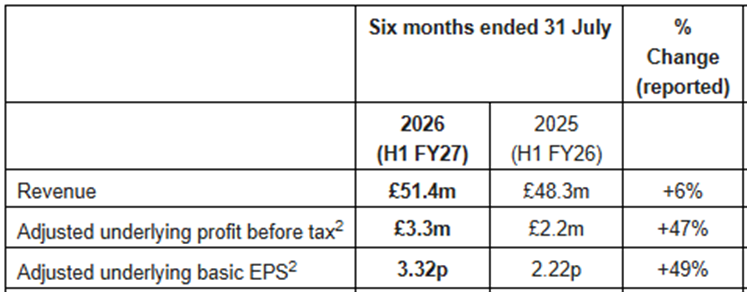
The headline figures look good, with revenue up 6% year-on-year, leading to a 47% improvement in Adj. PBT:
However, this remains a tale of two regions. UK sales continue to be weak, whereas US sales are driving all of the growth:
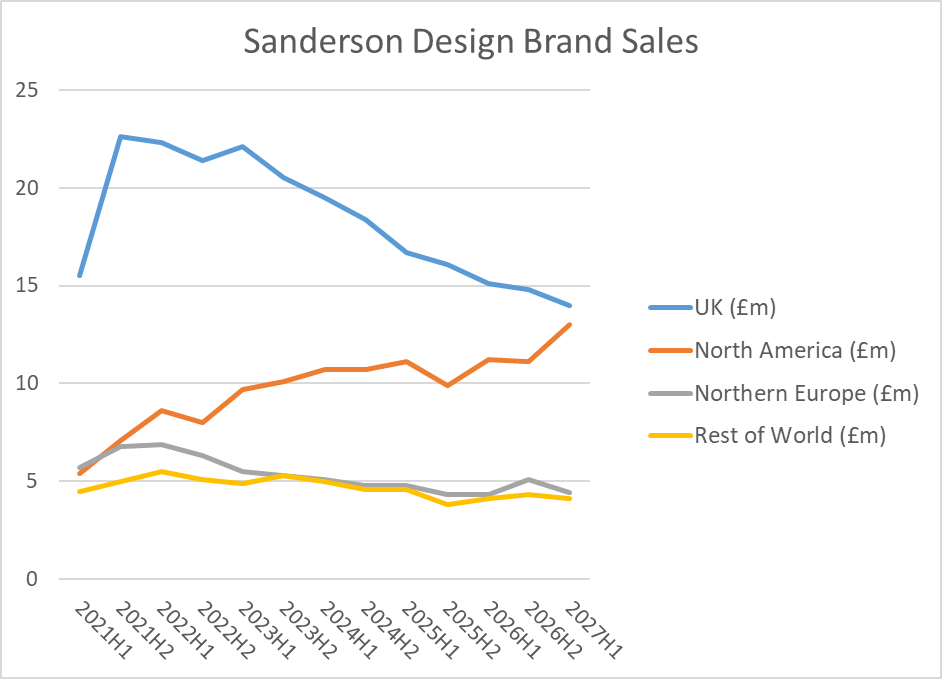
The US is likely to overtake the UK in sales in H2 this year.
In terms of Brands, Morris & Co continues to maintain its recent recovery, but the big jump came from the core Sanderson.
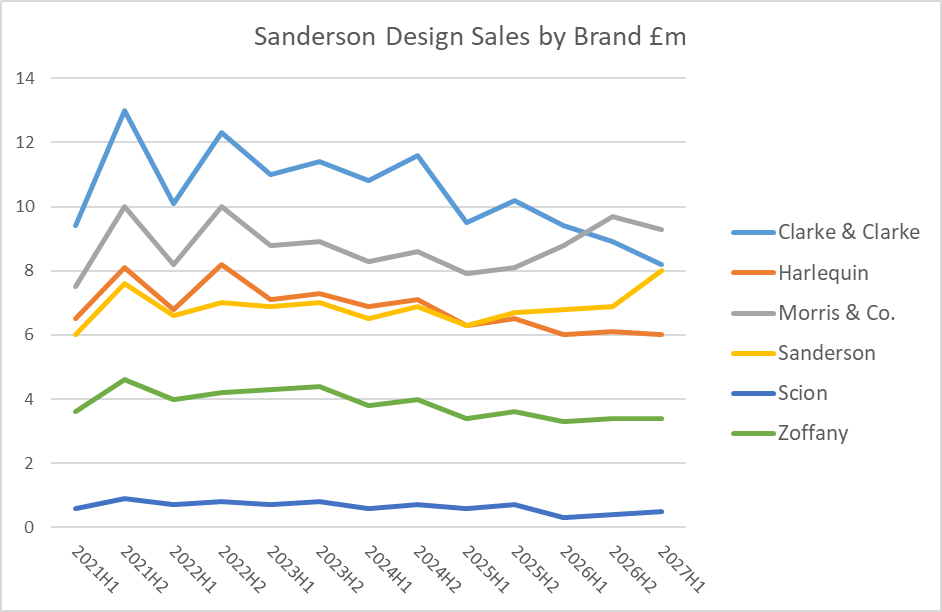
It seems that despite 250 years of independence, the US attraction to the UK Royal Family remains:
The Highgrove by Sanderson collection has been the most successful launch to date and created a clear halo effect on the broader Sanderson brand.
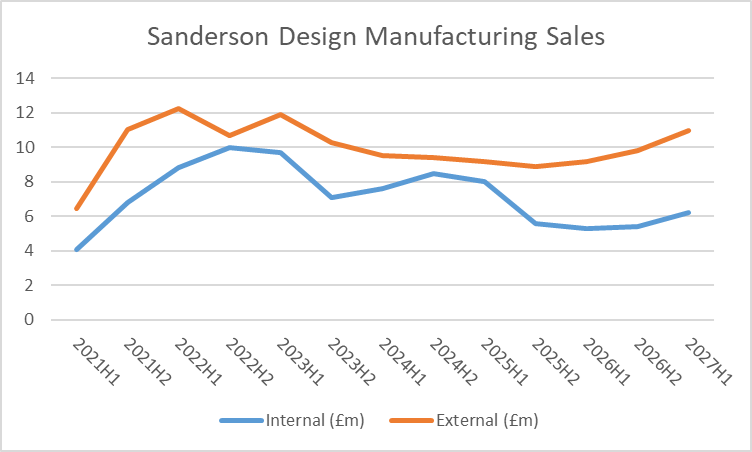
External Manufacturing is another highlight, with revenue recovering close to recent highs:
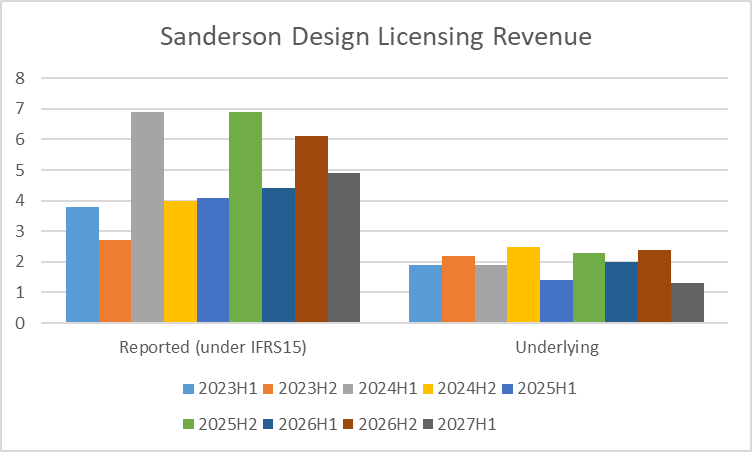
Licensing:
This remains strong on an IFRS15 basis. However, taking away the accelerated revenue figure from the total suggests that this may have been a weaker half for sales above contracted minimums:
Profitability:
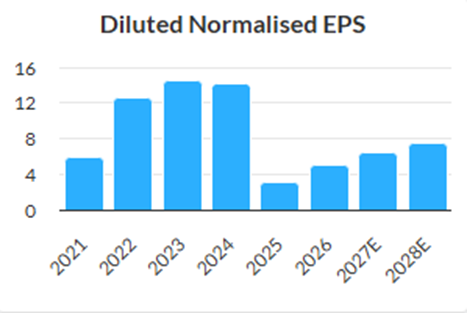
In the past, I have suggested that Sanderson may have been caught out by the sudden decline in their revenue, and managemnet were a little slow to cut costs to reflect this, in my opinion. Combined with a relatively high gross margin, this means that the StockReport shows a huge decline in EPS on a relatively slight revenue fall:
While the Gross margin for the branded business has remained consistently high, Manufacturing has been a lot more variable:
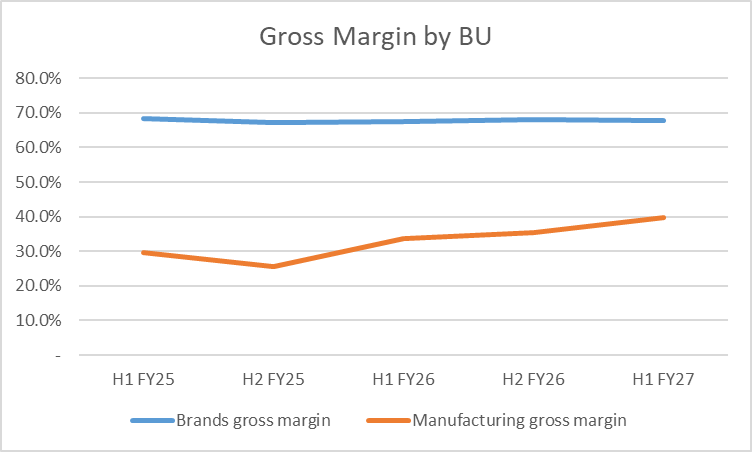
From a low of around 25% in 25H2, this figure now stands at a much more acceptable 40% in these results.
That focus on costs in the manufacturing division also aids the recovery in profitability there:
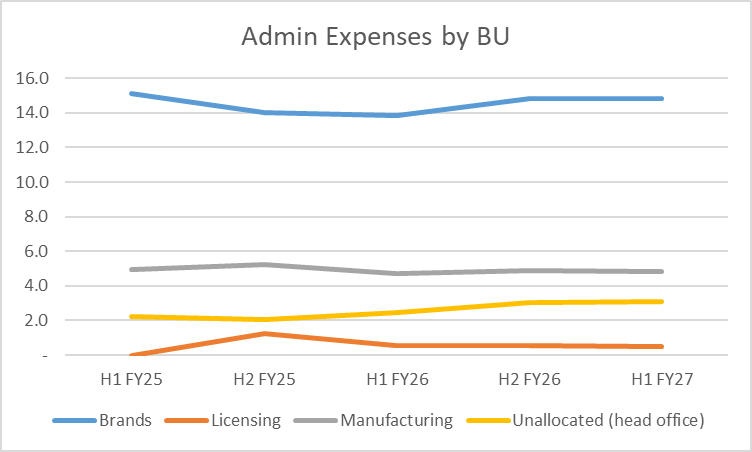
Although it is one of the smaller costs, Head Office costs appear to have increased by about 50% in the last 18 months or so.
Despite the high gross margin and strong US sales growth, Brands continue to be loss-making, and it is the strength of the recovery in Manufacturing that is driving these positive results:
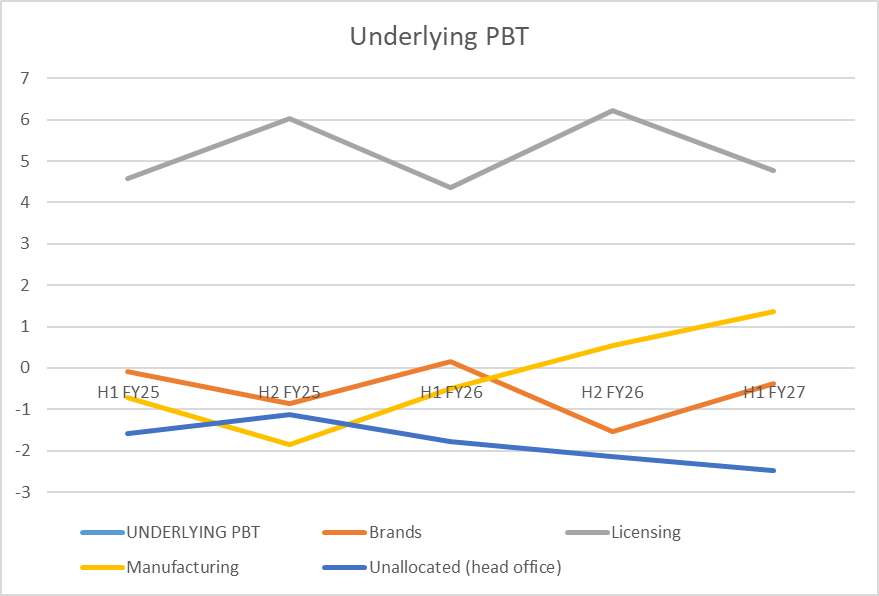
Overall, this remains highly dependent on licensing revenue, and while the businesses can't really be separated, it shows how important this part of the business is.
One thing I think is missing from the reporting is what the licensing revenue would be from a pure sales perspective, excluding the minimum licensing guarantees. This would give us a measure of actually how profitable each period is based on sales. At the moment, it is almost impossible to tell, given the huge impact of licensing sales on the results, and that is skewed by IFRS15 revenue recognition requirements.
Adjustments:
All of this is on an adjusted basis, and it is important to look at what goes into these adjustments:
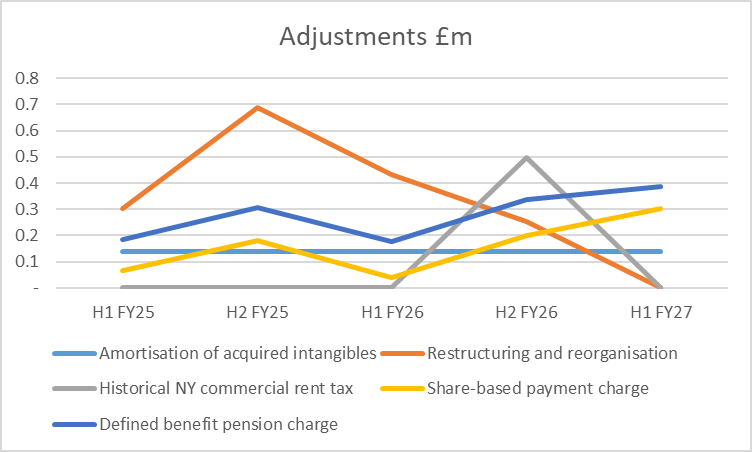
It is good to see the restructuring charge go to zero, as many companies restructure every year and ask us to ignore these costs. Share-based payments jump, perhaps due to the higher share price; at the very least, we should take the fully diluted share count in any valuation.
The defined benefit charge remains. While the company says it is in an accounting surplus and doesn't have to make recovery payments, these administration costs will continue until it gets a scheme buyout, so it seems unrealistic to exclude them.
The alternative in any valuation is to exclude the cost of any buyout from the net cash. Management has previously guided that this will cost high-single-digit £m.
Balance Sheet:
The good news is that the company has the cash to enable that buyout:
Net cash increased to £10.4m (31 January 2026: £9.8m) after £1.3m of EBT share purchases
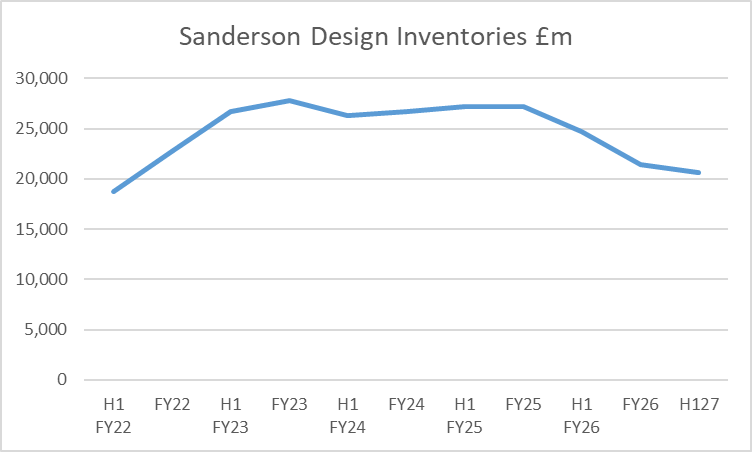
Part of this cash rebuild reflects efforts to reduce SKUs and, therefore, inventory holdings. They make some further progress in this H1 on that front:
There is also a significant "minimum guaranteed licensing receivables" asset, which represents the cash that will be received in the future from licensing sales, where the revenue has already been booked under IFRS15. The current value has risen to £5.3m from £4.4m a year earlier, and the non-current figure has risen from £12.6m to £13.3m. Since these are guaranteed payments, they could be treated as cash.
The company is keen to point out that cash generated has gone into EBT share purchases. However, their behaviour here looks a little strange. We only found out that the EBT had been lent money to purchase shares and was active in the market in the Final Results, when they said:
Post year end, the Group has provided funds totalling £1,400,000 to the EBT for the purchase of shares to satisfy the future vesting of share schemes, as set out in our capital allocation policy. As at 23 April 2026, 1,513,683 shares had been purchased using these funds at a total cost of £855,000.
Most companies RNS this sort of event separately before purchases start, and announce each purchase. Given the scale and the speed of these EBT purchases, I don't think we can rule out this having an impact on the strong rise in the share price during this period:
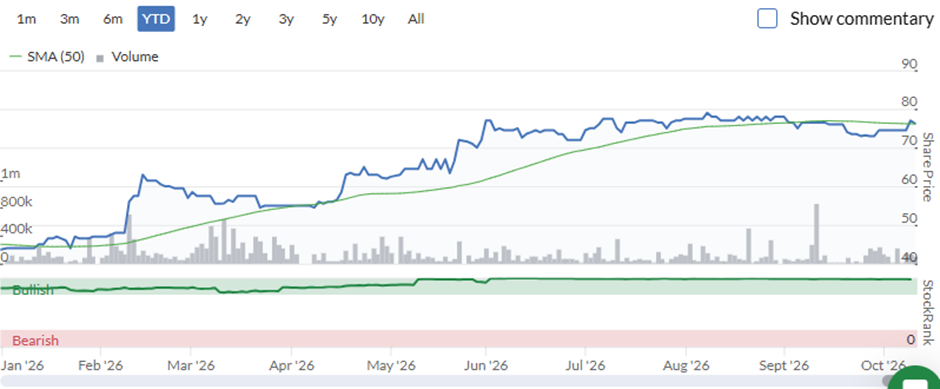
After all, there is no sign of any changes to trading being reflected in broker forecasts in this period:
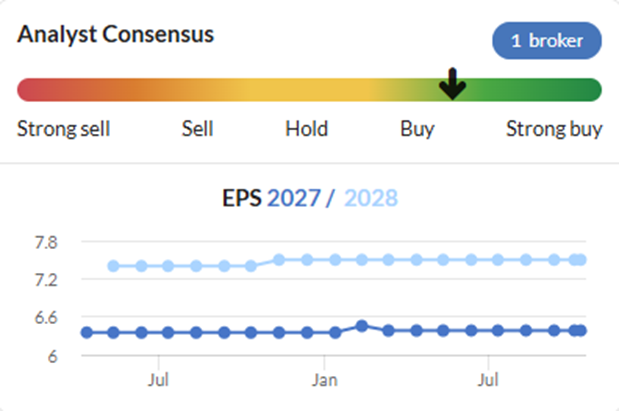
The company doesn't appear to give any update on this today, beyond saying that £1.3m had been spent in the reporting period to 30th June.
Management changes:
The other keen buyer during this period appears to have been LBV Asset Management:

They are a London-based fund manager, and have been trying to remove the Sanderson Chair. A separate announcement today sets 29th October as the date for the requisitioned GM to vote on removing Dianne Thompson and appointing Stephen Brooke to the Board.
LBV says the company has drifted into "inaction and inertia" and needs new leadership to push through change. Shareholders backing it have criticised the cost of fitting out the Voysey House headquarters, slow progress in the US, and executive pay. They say the CEO and CFO packages amount to about 36% of group profit, and quote the CEO's package at £729k.
With my conspiracy-theory tin-hat on, I wonder whether the EBT purchase timing has also been about strengthening the Board's hand in this battle as well as offsetting dilution. Typically, shareholders need 20%+ of the equity to have the right to appoint a board representative, and LBV has not managed to reach that level of holding.
Anyway, Dianne Thompson appears to have agreed to bow out gracefully, as in today's results, they say:
Dame Dianne Thompson, Non-Executive Chair, will have reached nine years' tenure in the role in February 2028. In line with corporate governance best practice, the Board is managing Chair succession in an orderly and considered manner, and intends to appoint independent consultants in January 2027 to oversee the search for a successor for Dame Dianne. The focus will be to appoint an individual who brings the required skillset, experience and independence to support the continued delivery of the Group's stated strategy.
However, I'm not sure this will placate LBV. After all, removing a board Chair is often the first step in forcing out a CEO and CFO. If one of their main critiques is the scale of board pay relative to corporate delivery, that won't change with a Chair retirement and a new Chair appointed by the same Board.
Outlook:
They are guiding in line for the full year:
We are pleased to have delivered a solid performance in the first half of the year and that the positive momentum we've seen across Manufacturing and US sales has continued into the second half of the year. We are on course to deliver full year results in line with current market expectations.
I can't see any updated note on Research Tree. The last substantive note from Singers in April kept the FY27 revenue assumptions the same at £102.9m, but cut adjusted EBIT from £6.2m to £5.7m. However, higher interest assumptions kept the PBT forecast at £6.5m. (The dividend assumption was cut from 2.2p to 1.5p, and today's flat 0.5p dividend declared looks in line with the reduced figure.)
This means that the full-year target needs very little from H2. H1 adjusted PBT of £3.3m is already 51% of the £6.5m forecast. Today's release says the market consensus is still £6.5m PBT, on slightly lower revenue of £102.0m. At that revenue level, H2 revenue would fall about 1% vs last year. Either way, hitting the full year only requires H2 PBT of about £3.2m, roughly in line with H2 FY26.
A H2 fall in licensing is already expected and in forecasts. However, manufacturing sales in the note now look too low, creating potential upside to these forecasts. The H2 for Brands implied in the in-line statement is undemanding, but again will be highly dependent on continued US momentum. Central cost estimates now look a little low given this H1, so they may offset potential sales upside.
Overall, I see these as comfortably in line on the key adjusted PBT metric.
Valuation:
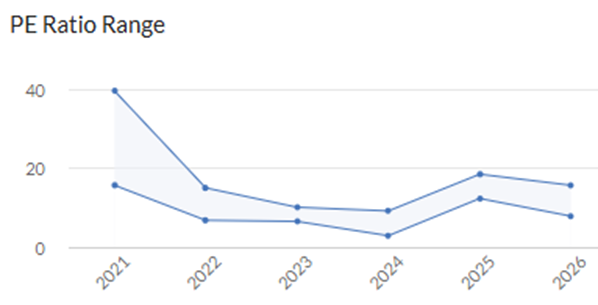
Assuming no change to forecasts today, the forward P/E is around 12. I don't think we should count the net cash, as most of that is earmarked for a pension buyout. This isn't expensive, but this has rarely traded at high multiples:
At 1.5p forecast for the full year, the dividend yield is only 2%. A reluctance to raise it suggests a recovery in the declining UK and ROW markets is further away than the company would like.
Brokers are forecasting a P/E of around 10 for FY28, and the high gross margin means that if core branded sales can return to growth in more than just the US, then the increased sales will probably drop to the bottom line quite quickly.
Mark's view:
I am a little sceptical of the recent rise in the share price, which has now almost doubled on no increase in broker forecasts (indeed, EBIT was downgraded, and only increased interest on their cash position keeps PBT at previous levels). Recent demand for shares appears to come from two sources: EBT purchases and a fund trying to kick out the Board.
The good news is that if the fund is successful in their aims, then cutting board pay will drop directly to EPS, as will any recovery in trading. The current valuation is higher than it has been for a while. However, it probably isn't excessive if we view this as a largely recurring licensing business, with a consumer business tacked on the side.
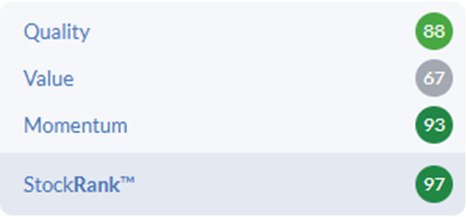
While the current valuation looks up to date with current events, there are enough potential catalysts that would improve things going forward (e.g. a recovery in UK-branded sales, or board salaries slashed) that I am happy to stick with the Stock Ranks on this one. AMBER/GREEN =
Disclaimer
This is not financial advice. Our content is intended to be used and must be used for information and education purposes only. Please read our disclaimer and terms and conditions to understand our obligations.
Discussion on Sanderson Design (3)
Comments here are also visible in the Daily Stock Market Report
Sanderson Design (LON:SDG): Given in H2 last year they achieved £3.1m adjusted PBT, and this HY is £3.3m, full year expectations of £6.5m implies just £100k H2 growth. I initially assumed maybe they weren't expecting a good half for licensing but looking at the HY results their profitability has increased across categories and the outlook sounds positive. I'm therefore assuming they're being conservative with their full year expectations unless I am missing something?
I hold and feel a global buyer for SDG could emerge.The success in building the US business makes this more likely-in my opinion.
Excellent, in-depth analysis on Sanderson Design (LON:SDG) today - many thanks Mark.