SIF Folio Q3 review: I’m preparing for a recovery

After nine months, my rules-based SIF model portfolio is now dead level with its FTSE All-Share benchmark so far this year.
An encouraging period of outperformance during the summer has withered away, leading to a fall of around 3% during the third quarter. One reason for this may be the portfolio’s lack of exposure to the energy sector – Shell (LON:SHEL) and BP (LON:BP.) made decent gains in Q3 and are large enough to move the whole market:

However, I see this as a short-term headwind. I remain comfortable with the longer-term results my system has provided.
SIF has delivered an annualised gain of 7.3% since its inception in April 2016, compared to 2.2% for the FTSE All-Share index (both figures exclude dividends):

My main concern at the moment is that performance may be being held back by the portfolio’s heavy cash weighting – about 50%.
While I’ve previously viewed cash as a comfortable form of downside protection, I fear that I may have become too comfortable with cash. SIF is meant to be an equity portfolio, after all. Holding too much cash effectively limits the portfolio’s upside potential.
In the remainder of this piece, I’ll review the portfolio trades I've made over the last three months. I’ll then explain how I’m planning to deploy more cash and position the portfolio more aggressively for a potential upturn.
SIF portfolio review
I added four new shares to SIF during the third quarter and also sold four shares. So the portfolio has a somewhat different makeup to when I last reported on progress at the start of July.
Here’s how SIF looks at the time of writing:

(SIF folio positions on 2 October 2023)
Note: As a quick reminder, SIF is a virtual portfolio, but I mirror all the SIF positions in smaller size in my own real-money portfolio.
One thing that hasn’t changed over the last three months is the name of the portfolio’s least-loved stock.
International automotive distributor Inchcape (LON:INCH) remains unloved by investors, despite a reassuring set of results in July. The group’s half-year accounts showed pre-tax profit up 9% to £204m, with matching free cash flow of £202m. The interim dividend was increased by 28% and CEO Duncan Tait sounded confident about the remainder of the year:
“full year results expected to be towards the top end of the range of published market consensus”
The StockRanks remain positive, too, with a score of 93/100 and Super Stock status.

I continue to think Inchcape looks both decent and cheap, on nine times forecast earnings despite a trailing return on equity of 17%.
Although I accept that the macro environment carries some risk, I think Inchcape’s geographic diversity and distribution focus partially offsets this.
SIF’s position is due for review at the end of October. If the shares no longer pass my tests at that time, I may be forced to sell. Otherwise, I’ll hold on a little longer.
In the meantime, let’s take a look at the shares my rules did prompt me to sell during Q3, together with the new stocks added during the quarter.
SIF trades in Q3 2023
Trading rules: As a quick reminder, the shares I buy are selected from my main SIF buying screen.
After nine months, all shares are reviewed and tested against the rules in my SIF sell screen. If a share passes all of these tests, it can remain in the portfolio for a further month.
Stocks sold in Q3
Ramsdens Holdings (LON:RFX) - this chain of pawnbrokers has been performing well, but the stock appeared to peak when its interim results were published in June (SCVR review here).

Ramsdens’ share price has drifted lower since, perhaps due to concerns about the outlook for its luxury watch and jewellery sales. Consensus forecasts have remained stable, but suggest minimal earnings growth over the next 12 months:

The falling share price meant the stock failed two of my momentum rules when I reviewed it in August, triggering a sale.
Bought: 24 October 2022 at 172.5p
Sold: 1 August 2023 at 231p
Total return (including dividends): 37%
ME International (LON:MEGP) - this self-service photo booth, laundry and foodservice machine operator double-bagged for SIF and was one of my biggest winners for some years.
ME Group is a somewhat quirky, owner-managed business that has experienced some big highs and lows over the years I’ve been following it. After a difficult period during the pandemic, the business has staged a strong recovery and appears to be diversifying quite successfully.

The shares continued to pass my screening tests after its nine-month initial holding period was over, so ME Group ended up staying in the portfolio for 15 months. However, the share price has levelled off recently and broker forecasts have flattened out after a period of upgrades.

I sold the stock at the end of August, after a slight dip in earnings forecasts triggered a sell signal from my screen.
Bought: 31 March 2022 at 72p
Sold: 29 August 2023 at 159.2p
Total return (including dividends): 140%
Qinetiq (LON:QQ.) - this defence engineering group has not maintained the earnings upgrade momentum seen last year, following the start of the war in Ukraine. This may be a reminder that the defence spending upgrade cycle won’t necessarily benefit all companies equally and at the same time.
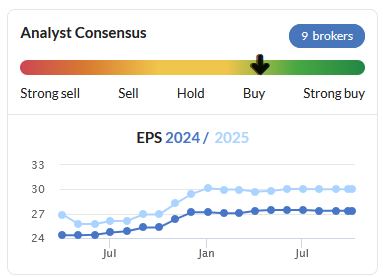
The company’s StockRank of 77 and Neutral rating pretty much reflects my own moderately positive view on this stock. I don’t see anything much to worry about, but there may be better options elsewhere.
I sold Qinetiq from SIF in August for a small loss, after the shares failed several of my momentum tests.
Bought: 14 November 2022 at 333p
Sold: 29 August 2023 at 317p
Total return (including dividends): -3%
Argentex (LON:AGFX) - I had quite high hopes for this currency management specialist, but Argentex has remained stubbornly out of favour with investors despite strong quality metrics and continued growth – operating profit rose by 16% in H1 this year.

I don’t know whether the problem might be a comparative one. Some rival FX specialists have delivered faster growth, I think.
Meanwhile, my understanding of Argentex’s business model is that it’s relatively high touch compared to some others, so may not scale as easily.
The stock looks decent value to me at current levels, but a falling StockRank may yet prove a warning of problems to come.


I sold SIF’s Argentex shares at the end of September, after they failed several momentum tests in my nine-month review.
Bought: 20 December 2022 at 126p
Sold: 26 September 2023 at 106p
Total return (including dividends): -15%
New stocks
I added the following new stocks to SIF during the second quarter.
Ten Entertainment (LON:TEG) - this operator of ten-pin bowling alleys issued a solid half-year trading update in July, just before my purchase. Full-year guidance was left unchanged and the company said it was continuing to open new centres, while maintaining a net cash balance.
Interim results published in late September seemed slightly less positive to me, with cost inflation of 6% but total sales only up by 3.2%. The company says it has maintained prices at 2019 levels, but these facts together suggest to me that Ten’s pricing power is limited and volume growth must be minimal.
However, the group’s quality metrics remain strong and the valuation seems quite reasonable.
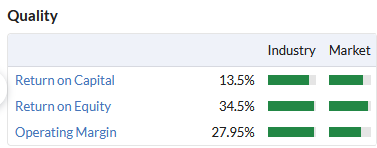
I’ll continue to hold TEG until at least April, unless it issues a profit warning.
I added Ten Entertainment to SIF on 18 July 2023 at 282p.
Bodycote (LON:BOY) - I looked at this industrial heat treatment specialist in an in-depth Stock Pitch in November last year. I quite like this market-leading business, so I was happy to be able to add it to SIF in August, albeit at a higher price than when I’d previously reviewed the shares.

Half-year results in July were described as “modestly ahead of expectations” and showed decent cash generation and a 30% increase in operating profit.
The valuation continues to look reasonable to me and I’m happy to keep holding, although Bodycote’s heavy exposure to the automotive sector does suggest some cyclical risk.
I added Bodycote to SIF on 1 August 2023 at 692p.
Centamin (LON:CEY) - this Egyptian gold miner has been a somewhat consistent performer over the years, as it’s faced periodic headwinds from both political and cyclical conditions. But investors who’ve had good timing have done quite well:

I’m no expert on gold miners, but Centamin qualified for my screen in August and July’s interim results did not seem to suggest any serious concerns.
The valuation looks undemanding to me, given that the price of gold remains at a relatively high level.

I added Centamin to SIF on 8 August 2023 at 91.3p.
CRH (LON:CRH) - this Irish building materials group has just shifted its primary listing from London to New York, but it remains listed on the LSE.
Recent trading has been good, supported by apparently strong market conditions in the US.
A quick analysis also suggests to me that CRH’s US-listed peers generally trade on higher valuation multiples.
The stock’s forecast P/E of 12 doesn’t seem excessive, although Stockopedia’s High Flyer rating is perhaps a sign that the valuation is relatively full. I await developments with interest.
I added CRH to SIF on 5 September 2023 at 4,496p.
Cash weighting: what I’m doing
Selling four and adding four left the number of holdings in the portfolio unchanged at 11, at the end of the quarter.
However, my position sizing is based on a theoretical maximum of 20 holdings. This number has rarely been reached, and certainly not for some years. As a result, the portfolio’s cash weighting has been hovering around 50% for some time now.
This is how the situation looked at the end of September:

I’ve increased my standard position size gradually over the years to reflect the portfolio’s growth. But I’ve always maintained my original policy of basing my position sizing on the following formula:
Position size = (Portfolio size * 0.8)/20
In other words, I leave a 20% allowance for drawdown or losses and then divide the remaining 80% of the portfolio by 20.
This approach should allow me to absorb significant losses while still being able to fund a full 20 positions. However, I think it is becoming too inefficient and is no longer providing SIF with sufficient market exposure.
To try and address this, I’m going to maintain the 20% drawdown allowance, but I will reduce the expected maximum number of holdings from 20 to 16.
This will have the effect of increasing my standard position size by 25% while still maintaining a reasonable level of diversification, in my opinion.
My 20% drawdown allowance should mean that in principle, I can still go slightly above 16 holdings if I choose to.
I’m not going to make any change to existing positions, so this will be a rolling change as new stocks join the portfolio. I’ll review progress at the end of the year.
Final thoughts
I hope you found this review of my rules-based portfolio useful and interesting. For anyone who’d like a more in-depth overview of the rules and process I use to run this portfolio, I’d recommend a look at this piece.
I’ll be back at the end of the year with another quarterly review. In the meantime, please feel free to share any thoughts or comments on this long-running experiment in the comments below.
Disclosure: at the time of publication, Roland owned all the shares listed in the SIF portfolio.
Disclaimer
This is not financial advice. Our content is intended to be used and must be used for information and education purposes only. Please read our disclaimer and terms and conditions to understand our obligations.

4 comments
Thanks, Roland. I find that your SELL screen used as a checklist helps in deciding whether and when to sell.
Thank you Roland - I always look forward to your quarterly reviews.
Roland, when you buy a position, do you go all in on day one, or have multiple purchases?
I tend to buy once a month over a 10 month period. You hold for a minimum of 9 months, so our initial holding periods are similar, but are there any stats proving which is the better purchasing method?
Hi GloucesterBob,
I buy the position for SIF (and my own portfolio) in one single transaction.
I think the pros and cons of each approach depend on several variables, for example:
I'm not sure it's possible to make a generalised comparison, as every situation is likely to be different.
Roland