SIF Folio stays ahead - I put some cash to work with Morgan Sindall

Will the coronavirus outbreak mark the start of a wider economic downturn and the end of the long-running bull market? I don’t know.
Personally, I won’t be selling anything. I bought shares for my own portfolio last week and feel confident that the prices I paid will look good value with the benefit of hindsight.
This week, it’s time for my rules-based SIF fantasy fund to deploy some of its surplus cash into the market. As a reminder, I mirror this fund with my own money, as a separate offshoot from my main portfolio.
The SIF fund took a painful hit last week, but it wasn’t any worse than that suffered by the wider market. Indeed, SIF seems to have outperformed so far this year:
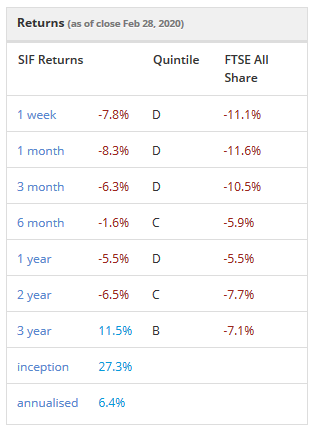
One reason for this may be the portfolio’s large cash balance. SIF didn’t buy anything in February but has continued to sell stocks on schedule. This has left the portfolio with just 14 holdings and a cash weighting of nearly 40%.
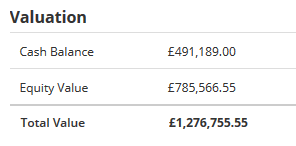
The fund’s last purchase was Finsbury Food on 21 January. However, last week’s sell-off has cut stock valuations and provided fresh feedstock for my SIF screen. As a result, my screening results have improved and there are now several stocks I can consider buying for SIF.
At the top of my screening results is an old friend, construction and regeneration group Morgan Sindall. The firm’s subsidiaries include Lovell, Muse Developments, Overbury and various investment and operating divisions of Morgan Sindall.
These companies are responsible for recent projects such as the 2018 Brixton Civic Space development and the Loftus Garden Village development in Newport.
I first added Morgan Sindall to the SIF fund in 2017, when the position generated a healthy 59% total return for the portfolio.
SIF Folio Morgan Sindall buy report (Feb 2017)
SIF Folio Morgan Sindall sell report (Nov 2017)
SIF no longer has any exposure to the UK construction sector, following last week’s sale of Michelmersh Brick Holdings. So now could be a good opportunity to correct this imbalance.
Morgan Sindall Group (LON: MGNS)
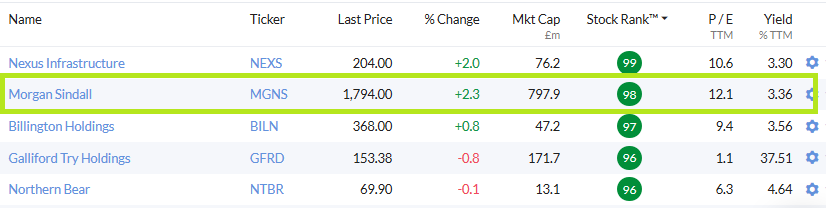
Stockopedia’s algorithms appear to share my view that this firm is one of the best stocks in the construction and engineering sector. The company currently boasts a StockRank of 98 and lies just behind small cap Nexus Infrastructure in the sector league table:
Outsourcing and contracting companies generally have a bad rep here at Stockopedia -- and with good reason. Many of them have delivered painful losses to their shareholders in recent years, most notably Carillion.
Morgan Sindall hasn’t been among these serial disappointers. The MGNS share price has doubled in five years, as have the group’s profits.
Chief executive and founder John Morgan appears to have dodged the pitfalls common in this sector. He’s built a business that delivers attractive returns and boasts a solid balance sheet.
February’s full-year results highlighted another excellent performance, with pre-tax profit up 11% to £90.4m. The value of secured orders rose by 14% to £7.6bn, triggering a round of broker upgrades.
Mr Morgan sold £4.1m of his MGNS stock following February’s results, but he still owns nearly 9% of the company, a holding worth about £71m. Unlike most FTSE 350 bosses, his interests should be aligned with those of shareholders. I see this as a big advantage, especially in this sector.
Earnings offer value
Morgan Sindall’s ValueRank of 67 is the stock’s weakest factor score. I don’t think the figures are too bad, but I do think it’s fair to say that this is definitely not a value play.
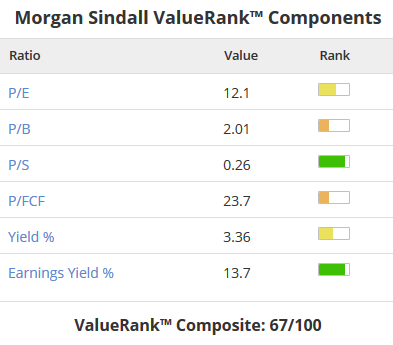
What we can see here is that the shares look fairly valued on 12 times trailing earnings, but that free cash flow appears to have been poor in 2019. Looking at last year’s financial statements, this seems to be the result of a big movement in working capital:
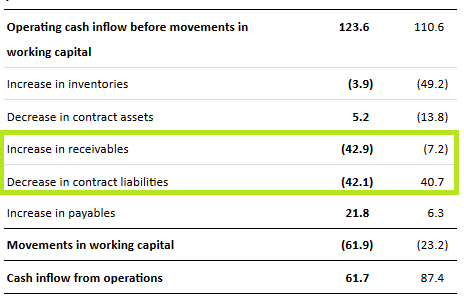
I can’t find a specific explanation for this in the results, but looking at previous years, swings in working capital aren’t unusual. In a business of this kind, which must fund and gear up for major projects, I don’t think it’s a major concern.
I’d be more concerned if Morgan Sindall didn’t have a strong balance sheet and an excellent record of cash generation. The company reports average daily net cash in its results. Here’s how this figure has evolved in recent years:
Year | Average daily net cash | Year-end net cash |
2016 | £25m | £209m |
2017 | £118m | £193m |
2018 | £99m | £207m |
2019 | £109m | £193m |
Earnings yield: The final element of the ValueRank that interests me is Morgan Sindall’s earnings yield (EBIT/EV) of 13.7%. This is well above my screening threshold of 8%. This suggests to me that the business is valued quite modestly, assuming the current level of profit can be sustained.
Quality: built to last or house of cards?
Morgan Sindall scores highly for quality. At first glance, it’s not hard to see why:
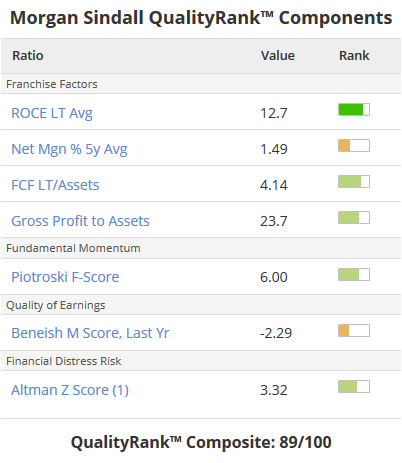
The long-term average return on capital employed of 12.7% belies a much stronger performance over the last four years:
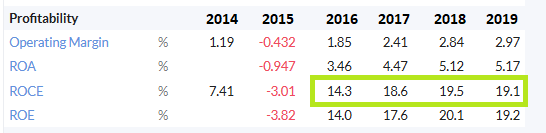
However, I think it’s worth pointing out that this impressive performance may indirectly highlight a risk for shareholders.
We can calculate capital employed as ‘total assets minus current liabilities’. Morgan Sindall’s capital employed is relatively low, at around £434m for 2019.
From what I can see, there are two reasons for this. The first is that the group doesn’t really have much in the way of fixed or non-current assets. That’s what I’d expect.
But the second reason why ROCE is high is that the current ratio is quite low, at 1.1x. This liquidity ratio tests how easily a company could meet liabilities due within one year using current assets such as cash and receivables.
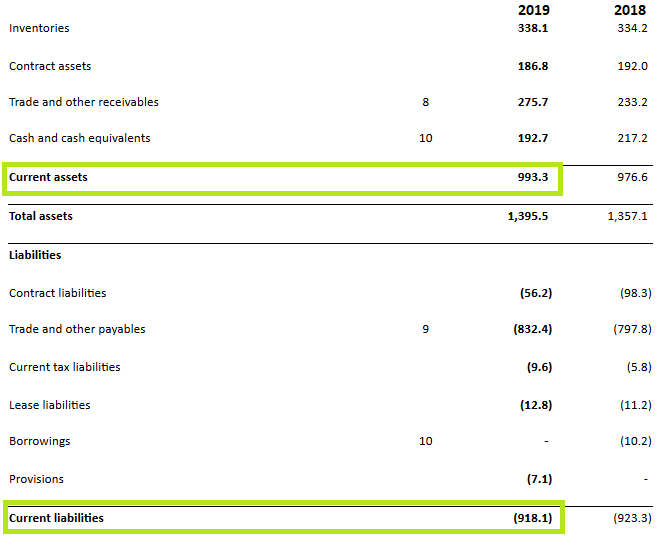
As we can see, Morgan Sindall’s cash and receivables alone would not be sufficient to cover its trade and other payables. This suggests that management expects to be able to convert inventory and receivables to cash more quickly than supplier payments (payables) come due.
We can calculate this, but the StockReport provides the key figures to save us the trouble:
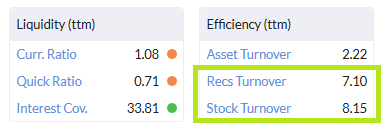
Morgan Sindall turned over its receivables 7.1 times last year, collecting payment from its clients in an average of 51 days. Inventory turnover was even faster, averaging 45 days.
In contrast, my sums suggest that on average, the firm’s suppliers had to wait 109 days for payment last year.
Morgan Sindall appears to collect payments promptly while enjoying more generous payment terms from its suppliers. This isn’t unusual in this sector and the group’s track record of daily net cash suggests that this approach has worked very well in recent years. I would argue that the company appears to manage its working capital more successfully than some rivals.
However, bad debts within receivables or other unforeseen problems could cause cash flow to become tight. I’ve no reason to think that this is likely in 2020. But if you believe we’re nearing the end of the economic cycle, then it might be worth monitoring these ratios.
Resilient momentum
As I mentioned earlier, Morgan Sindall’s 2019 results showed that the group’s secured workload rose by 14% to £7.6bn last year. This appears to have prompted City brokers covering the stock to lift their forecasts for 2020:
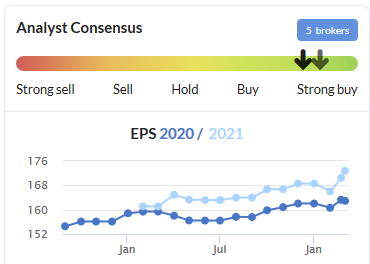
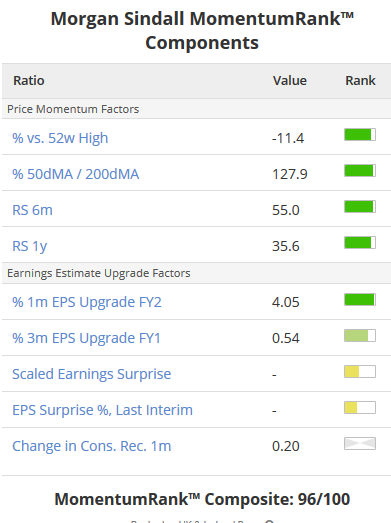
This strong earnings momentum trend contributes to a very high MomentumRank of 96/100:
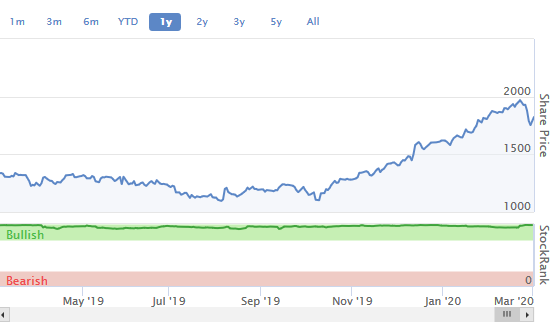
Although the share price has dipped recently, the shares were a big beneficiary of the Boris bounce seen late last year:
My decision
The SIF portfolio is run on rules and deliberately ignores most macro concerns. So any concerns I might have about the wider outlook for the UK economy aren’t really relevant here.
I continue to view Morgan Sindall as one of the best businesses in this sector, so I’m happy to put my money here rather than in -- for example -- a pure-play housebuilder.
Given that this stock passes all of my screening tests and displays no obvious red flags, my decision is straightforward. I’ll be adding the shares to the SIF Folio and to my own holdings this week, after this article has been published.
Disclosure: Roland owns shares of Finsbury Food
Disclaimer
This is not financial advice. Our content is intended to be used and must be used for information and education purposes only. Please read our disclaimer and terms and conditions to understand our obligations.

1 comment
Interesting analysis . Thankyou