Small Cap Value Report (Fri 23 Feb 2018) - DRV, SGI, RMV

Good morning!
Stocks I've noticed so far are:
- Driver (LON:DRV) - trading update, "comfortably ahead of Board's expectations".
- Stanley Gibbons (LON:SGI) - proposed refinancing.
- Rightmove (LON:RMV) - final results.
If you have any further suggestions, please let me know.
Also, Paul updated yesterday's article in response to many reader requests, so there are many stocks covered in that article now. You can read it here if you like.
Thanks,
Graham
Driver (LON:DRV)
- Share price: 75p (+15%)
- No. of shares: 54 million
- Market cap: £40 million
This is a "global construction consultancy". It helps clients manage large building projects by providing a range of consultants from a wide variety of disciplines.
It was unprofitable during 2015 and 2016, then was refinanced in early 2017 and recovered to make a small profit last year. Paul described it as a "nice turnaround situation" when those results were announced.
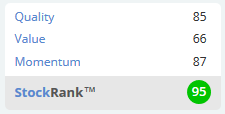
The StockRank has recovered from a very weak score a year ago, to the current fantastic score:
Today's update informs us that performance continues to improve:
Trading results in the first four months of the financial year ending 30 September 2018 are significantly ahead of both internal forecasts and the equivalent period last year. Current activity levels are also high and the Group has a healthy pipeline of potential assignments for conversion in the months ahead. Taken together these factors indicate that the outcome for the year as a whole is likely to be comfortably ahead of the Board's previous expectations.
So we are "significantly" ahead for the first four months of the financial year, and therefore the full-year results are likely to be "comfortably" ahead of expectations.
Why the discrepancy in language used between these time-frames? There is no guarantee that business will continue to be lively, of course.
At the annual results statement, the Chairman reiterated that it is "notoriously difficult to predict activity levels", and that "fluctuations in activity" are a feature of the business.
I was badly stung investing in a firm providing professional services to the construction industry, which has soured me from returning to the sector. No matter how cheap a company in the sector looks, nothing can be done about a cyclical downturn. And the staff need to be paid a salary, regardless of how bad the conditions are.
Having said that, there are investors I respect who do participate in this sector, and I believe that it may be possible to time your entry and exit into these stocks if you are extremely adept. But it's something I've found difficult, personally.
Anyway, back to Driver. Brokers have upgraded PBT forecasts by 15% for this year. The EPS upgrade is a little lower, as in a separate announcement today, 1.5 million new nil-cost options have been granted to the Chairman and top management. Versus 54 million shares currently outstanding, those new options could make a small dent in EPS.
The new adjusted PBT forecast is £3.1 million. Hopefully, the exceptional costs will be a lot lower this year (last year, the exceptional costs wiped out nearly all of the adjusted figure).
If the exceptional costs turn out to be lower, then Driver's current PE multiple might be a bit cheaper than the market as a whole. Stockopedia computers currently have it on a 15x multiple.
Is the company better than average though? I don't know if this is a share to hold for the long-term. It seems more like a share where you do well if you can time the cycle it is operating in.
Stanley Gibbons (LON:SGI)
- Share price: 5.6p (+15%)
- No. of shares: 179 million (before new issuance)
- Market cap: £10 million
It has been quiet from Stanley Gibbons since it announced interim results (to June) at the end of December.
Stanley Gibbons is primarily a stamp dealer. It was mismanaged into ruin, almost. Investors have been bracing themselves for some kind of resolution to the
At the interim results, with the share price at 3.75p and a market cap of £7 million, I argued that the shares were probably worthless, and the share price was still too high.
My reasoning was very simple . The company was still loss-making, and it told the market it was "likely" that a resolution to its balance sheet would require the "restructuring" of £17 million of bank debt. Debt restructuring is usually unkind to existing shareholders.
This proposed refinancing involves a new institutional investor putting in £19.45 million, as follows:
- £7 million of the bank debt will be acquired by Stanley Gibbons
- The rest of the bank debt (at least £10 million) to by acquired by the institution
- £2.75 million payment by the investor to buy the debt owed to Stanley Gibbons by its Guernsey subsidiary (in administration)
- £6.2 million equity injection at 2.5p, resulting in 248 million new shares. The fund will own 58% of Stanley Gibbons.
My opinion
I am surprised, to say the least. It looks as if the existing shareholders are doing well, as they will continue to own 42% of the company. That could easily have been 1% or less, in my opinion. So I would vote for the deal, if I was in their shoes.
As to the merits of the current share price, you will see that the fund is buying a majority stake in the company and is doing it at 2.5p. So I think I will remain cautious about the idea that the existing shares are worth somewhere in the 4-6p range.
The investor taking part in the deal is a successful and very competent value-oriented fund. It's quite interesting to me that they would get involved in this company - they must have seen something they like in the business, or feel that they are getting an excellent entry price.
After all it's been through, Stanley Gibbons will hopefully be a much more focused operation from now on. The balance sheet might be kept under better control, as is implied by the reference to a "capital-light" business model below:
The Directors believe that the injection of liquidity contemplated by the Subscription and also the Debt Restructuring will give the Group the opportunity to become a market-leading, capital-light, stamp and coin dealing platform.
It will continue to have that £10 million debt overhang, albeit to a shareholder rather than to the bank. So while it will benefit from presumably no longer being in breach of covenants for the foreseeable future, that debt does need to be taken into account when valuing the shares.
It's also quite possible that the company is still loss-making. The company claims today that continued poor trading is "largely" due to legacy issues.
Group trading continues to be subdued in large part due to legacy issues, including, in particular, a reduction in investment sales of high end collectibles and a shortage of working capital.
Summary
Putting this all together, we have the following major positive points:
- a very good institutional fund buying most of the shares and committing itself as a steward of the company going forward
- reduced indebtedness and an improved working capital position
On the negative side:
- the share price is much higher than the level at which the institution subscribed
- debt of £10 million still outstanding
- the company might still be loss-making, and its prospects may be poor if stamp collecting is a dying industry.
Not knowing any stamp collectors myself, I have the (possibly false) impression that stamp collecting is something pursued by previous generations, and is of little to no interest to younger people today. Am I wrong in this? If it's true that the industry is in secular decline, what will be the catalyst for trading to improve?
Overall, I do think that the negatives outweigh the positives, particularly at a large premium to the price paid by the new institutional investor. The current share price would produce a market cap of £24 million after the new shares are issued, or an enterprise value of £34 million taking into account the outstanding debt.
Rightmove (LON:RMV)
- Share price: 4419p (+2.5%)
- No. of shares: 91 million
- Market cap: £4.021 million
Big-caps
As there was a paucity of small-cap news this morning, I've decided to talk about this big-cap which most of use are familiar with.
Having checked the market caps for the FTSE 100 constituents, it looks to me like Rightmove could be challenging to enter this index soon. Hammerson (LON:HMSO) has a market cap of £3.8 billion, while G4S is just a little bit higher than Rightmove, at £4.05 billion.
As an aside, as small-cap investors, I think it's easy to underestimate the merits of big-cap investment. There are some great companies at the higher levels (they are the biggest companies, after all, so they must be doing something right).
And while their pricing might be considerably more efficient than small-caps, there is still plenty of volatility to benefit from - NMC Health (LON:NMC), easyJet (LON:EZJ) and Just Eat (LON:JE.) are all up by more than 70% over the past year, for example.
Personally, I've been buying the dip in British American Tobacco (LON:BATS). I don't expect an extraordinary return from it, at least not in the short-term, but it nicely complements the riskier parts of my portfolio.
Most readers I've spoken to do have some big-caps, US stocks, and funds, in addition to their individual UK small-cap holdings. It's always worth remembering how wide the investment landscape is.
Anyway, back to these results. Growth continues:
Financial Highlights
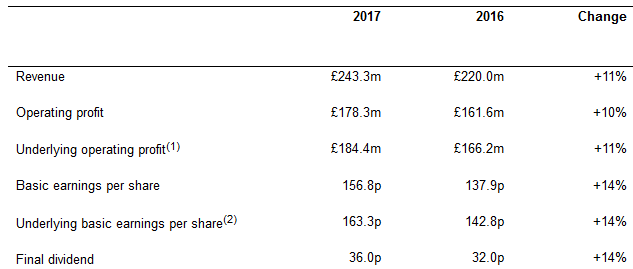
Checking the momentum of trading, I see that in 2016, revenues were up 18%, and operating profit up 18%. So we have a deceleration in sales.
These highlights remind me of one of the reasons why I like this company so much - it's a cash machine. It returned £130 million in cash to shareholders in 2016, and returned £140 million in 2017. And it continues to raise the dividend.
There are also the buybacks to consider. When a good company buys back its own shares, it results in extraordinarily good things for shareholders. It's no coincidence that two of the other big-caps I own, Burberry (LON:BRBY) and Next (LON:NXT), have a tendency to buy back their own stock.
In Rightmove's case, it has seen its share count decline from a peak of about 133 million in 2006 to just 91 million today. For context, the share price in 2006 was less than 500p.
But are its best days behind it? Certainly, the growth rates reported today are the weakest since the financial crash of 2008-2009.
So we might not want to award it a very racy valuation, if growth will be modest from now on.
On the other hand, it does tend to enjoy operating margins in the region of 73%, with a truly capital-light business model.
Also, as the number one company in the sector, ahead of ZPG (LON:ZPG) and OnTheMarket, and since it's basically a directory, it enjoys fantastic network effects. A bigger market share means more listings for consumers and more data with which to make the site better. The value of their competitive position is massive.
Some will disagree, but taking all of the above into account, I don't believe that this is a very ambitious valuation:
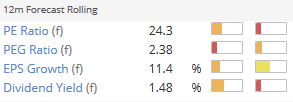
(If the dividend yield seems a little low, bear in mind that buybacks are typically about twice the size dividends. The "buyback yield" over the next year is going to be another 2.5% over the next year, if not more, if this trend continues. The combined yield of dividends and buybacks together is probably more like 4%.)
CEO - the long standing co-founder/CEO left last year, but the transition to his successor (the former COO) is said to have been "seamless".
Outlook - the outlook statement is confident:
Our clear market leadership coupled with the value of our products and data positions us well for the future. With Average Revenue Per Advertiser continuing to grow from a stable membership base the Board remains confident of making further progress in 2018.
Market share - It looks like there was a reduction in market share for Rightmove over the past year. In the Annual Bonus Plan discussion the company says "there was a lower growth in time in minutes spent on Rightmove platforms year on year than our nearest competitors."
That's certainly a concern, and it's important that this trend is improved.
The bear argument is that there aren't enough barriers to entry to prevent Rightmove from losing its #1 spot to hungry competitors.
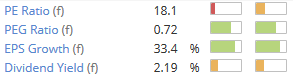
But if you look at ZPG (LON:ZPG), it trades at an 18x multiple despite not yet having the #1 spot. The market is saying that there is plenty of value in being #2.
Conclusion - I think this is a really interesting share and it's one that I have on my watchlist for a potential purchase.
That's all for today and for the week.
See you next time!
Graham
Disclaimer
This is not financial advice. Our content is intended to be used and must be used for information and education purposes only. Please read our disclaimer and terms and conditions to understand our obligations.

42 comments
There is a detailed report on Driver Group's recent AGM which can be found in the ShareSoc members area here: https://www.sharesoc.org/members-area/
To access the report, you'll need to be a full member of ShareSoc, which is a not-for-profit organisation that supports individual shareholders and campaigns for shareholder rights. If you're not already a member you can join here: https://www.sharesoc.org/membership/
Once you've joined, you'll receive an invitation to register for our "members network" private social network, from where you'll be able to access the report (and reports on 100s of other meetings). If you're already a member and have any difficulty accessing the report, please do not hesitate to contact us here: https://www.sharesoc.org/contact-us/
Hi Graham, didn't Paul Scott have this as a good short in August last year, when the share price was at £40.70
xcity
Next are buying back again, and this is instead of another special dividend. Their post Christmas update was positive enough for Next to feel confident enough to go for buybacks again.
Hi timarr
Brilliant reply! Agree with most of it.
Not so sure about “in a perfect world the last thing a company should do is pay out dividends.”
Take Next again. I remember almost buying at 30p many years ago, but decided against because share had quickly 5 bagged from 6p when it looked as though they were going bust. Had I bought then and still hold the dividend yield alone last year would have been 10 times that 30p buy price!
Reinvesting dividends is often THE way to maximise returns. Another reason why I much prefer them to buybacks.
And surely it is wrong to include buyback yield in the dividend yield?
Finally I’m still bemused about “buybacks...result in extraordinarily good things for shareholders.” What are these extraordinarily good things?
Hi Ken
I think the full quote is correct:
When Next (LON:NXT) or Rightmove (LON:RMV) or Burberry (LON:BRBY) buyback shares at a discount to their underlying value there's a compounding effect on the valuation. Essentially the remaining shareholders are being given a larger fraction of the future earnings of the company. And future dividends, if they're paid.
The important thing is that the company is able to continue to generate those earnings in perpetuity. A "good company" is one that has exactly those characteristics. If you like, the company is reinvesting your dividends for you, but with the benefit of avoiding any tax. Assuming those earnings are maintained this ends up supercharging your returns through compounding effects.
To take a counter-example, many years ago I was a shareholder in Character (LON:CCT). The directors engaged in an aggressive buyback scheme right up to the point where they suffered a significant profit warning and had to issue more shares to fix the problem. Character (LON:CCT) is exactly the wrong type of company to engage in buybacks - it's operating without much a moat and is exposed to the fickle nature of producers and buyers.
I fully appreciate that the idea that dividends aren't optimal is hard to stomach, but in a rational world that would be true for the reasons given above. Unfortunately, as we well know, company managements are often irrational and profligate with shareholder value, which is why taking a dividend is a sensible option. It's also sensible if you like investing in companies with less certain earnings streams or competitive advantages than the ones mentioned above.
In short: I think Graham is absolutely correct. But it's critical to apply this only to good companies and not to all companies.
timarr
Thanks for the discussion on Next buybacks.
I'd make one cautionary comment about the psychology. It leads to a series of EPS increases which investors may think of as growth in the business when it is really financial engineering. This becomes a problem if it creates the impression of the business being higher quality than it really is. Though never a problem for anyone who does their sums.
I also wonder whether the Next strategy means that the shares are a sell if the company aren't buying back, even if they have money to spare? They presumably have the best view of underlying value.
It leads to a series of EPS increases which investors may think of as growth in the business when it is really financial engineering. This becomes a problem if it creates the impression of the business being higher quality than it really is.
Obviously that's not a Next (LON:NXT) specific issue - in fact it's the increase in EPS that's the incentive for many managements to make share buybacks. It artificially inflates profitability and the share price, helping hit share option price targets. I actually wrote about the research around this ages ago:
http://www.psyfitec.com/2009/1...
It's one reason you have to look hard at any company performing buybacks - if the buybacks don't have any obvious rationale other than boosting the share price then that's dubious. If the reason is related to the shares being undervalued then that's more credible, as it's benefiting long term shareholders.
With Next, all things being equal, I'd say that if they're performing buybacks then they're probably a buy, otherwise you have to take a view on future growth. Whether you equate that to a sale is another matter - share price is a combination of net current value (aka intrinsic value) plus future growth prospects (plus or minus irrational investor optimism / pessimism, but let's ignore that). Buybacks should never take account of the latter, but it's a definite factor in a purchasing decision.
At the moment the market doesn't have much confidence in Next's ability to grow earnings, I'd guess.
timarr
timarr
Thanks for your very interesting reply.
Unfortunately I missed out one key word - RECENT.
It should have read:-
“Next have bought back more than half their shares. Despite wisely only buying back when they think their shares are cheap, nearly all their RECENT buybacks were ABOVE the current share price.”
And for the last few years, and since the share price fell from £80 to £36, with some of their buybacks at over £60, the investors who have been rewarded are NOT those who stayed, but those who took advantage of a willing buyer (Next) to get out.. I bought after the big falls at £38 and so far have gained both from the share price recovery AND the now large dividend, unlike those who bought much higher.
Next DO operate a sensible buy back policy, and only buy back when confident the share price is cheap. Many Companies buyback regardless of price. There are many examples of catastrophic buybacks.
E.g Banks buying back heavily ahead of the banking crash and following those buybacks with rescue rights issues! And In the US huge sums are spent on buybacks (see LEX article for many examples) including one Company
alone spending more than the entire one year NHS budget!
I.e even if sometimes long term shareholders eventually benefit, it does seem an incredibly expensive way of going about it! So many other ways the $1 TRIILLON spent on them in US could have been invested?
Hi Ken
The research on buybacks is pretty damning, they generally destroy value in favour of managements. Buybacks only really took off after share options schemes were popularised by management consultants in the 1980s and 1990s as a way of aligning management and shareholder interests. They don't, of course, they incentivise managements to do short term things to prop up the share price at the expense of long-term investors. It's always worth spending a bit of time looking at any holding that does this, to try to work out for whose benefit it's being done.
It's true that Next (LON:NXT) have bought back some shares at above the current level - basically about £290 million over 2015 and 2016. But this has happened in the past - they bought back a billion pounds worth of shares between 2007 and 2008 only see the share price drop well below the buying price in 2009. People complained at the time but in retrospect those shares were purchased at an average price of £17.43 and shareholders have since seen over £30 worth of capital appreciation and over £10 of dividends.
People get hung up on income, but in a perfect world the last thing a company should do is pay out dividends. The average, risk adjusted return on equities is somewhere between 4% and 8% (yeah, that's economics for you, accurate as ever) and any company that can invest its earnings to get a better rate of return than that should do so. Dividends should only be paid out when they can't beat that level of return, which then gives us shareholders the problem of finding something else to generate those returns.
In truth, of course, companies often do incredibly stupid things with our capital which is why we usually prefer they give it back to us so that we can do our own incredibly stupid things with it. But those few companies - like Next (LON:NXT) - that have long term records as good as this should be given the benefit of the doubt, in my view.
timarr
Graham. Great updates. Thanks.
Not convinced though by your comment that “when a company buys back its own shares it results in extraordinarily good things for shareholders.”
NEXT have bought back more than half their shares. Despite wisely only buying back when they think the share
price is cheap, nearly all their buybacks were well ABOVE the current share price.
Also a 1.5% or whatever buyback should not be included in the dividend yield.Investors get real money with a dividend or special dividend. There is no cash pay out with a buyback. And if the share price goes down after buybacks, no obvious reward to shareholders at all.
There was an excellent LEX article in the FT onbuybacks recently, covering their many faults and a few plus points.
I also hold NEXT and much prefer it when they cancel their buybacks and opt for special dividends instead. Last year their dividends and special dividends gave a superb yield of nearly 10%. That’s real money.
That's wrong.
Since 1999 NEXT have repurchased 227 million shares at an average price of £15.98 out of an original stock of 375 million shares. Of those only 8 million were in excess of the current share price, and half of those only marginally.
The net effect of the repurchases has been to lift EPS today from £1.63 per share (i.e. the EPS if shares hadn't been retired) to £4.14 per share and increase dividends from 62.3p per share to £1.58 per share. Shareholders who held their shares for the whole period have seen over twice the level of dividends they would have seen if shares hadn't been bought back.
It's true that many share repurchase schemes are value destroying, especially where they're directly related to share option schemes, where management aim to boost the share price to hit the option price to benefit themselves. However, where the buyback is at levels below a company's intrinsic value they're inherently value enhancing for the shareholders that hang on, as the NEXT figures show, and they have the secondary effect of getting rid of more fickle holders.
However you don't have to take my word for it, here's Warren Buffett from the Berkshire Hathaway 2016 shareholder letter:
NEXT's rationale for repurchases over special dividends has been set out several times - here, for instance:
https://www.theguardian.com/bu...
In summary, with NEXT, share buybacks have enhanced EPS and dividends for the remaining shares because the company has been disciplined in exercising them. That's rewarded long-term shareholders to the advantage of short-term investors. Which is exactly how shareholder capitalism ought to work, in my view.
timarr
Graham - good write up on Stanley Gibbons (LON:SGI) .
You seem surprised that existing shareholders still retain such as significant stake in the business. My view is that the shareholders have been wiped out but via the back door. Existing shareholders may own 42% but of what?
In order to inject the capital they have, I'm sure Phoenix would have structured the £10m shareholder loan as a preferred debt instrument but with equity type returns (>c.16% interest at a guess).
This will be compounding for 5 years (Payment In Kind not cash paid) against shareholders equity and you'll end up with shareholder debt >£20m. This is how Phoenix will get their return. There will be no dividends in the meantime for ordinary shareholders. My guess is they could probably sell their equity in 5 years for 2p and still make a good return if the get their loan repaid!
Shareholders are left with a deep out of the money option which is probably close to worthless (unless the business sees some miraculous recovery with very strong outperformance!).
The bounce today is a temporary relief rally IMHO. Once people realise the exact terms of the deal and that the shares are worthless, they'll drift down towards what Phoenix paid (a great short if the stock was borrowable!).
Do shareholders honestly think that a vulture fund would be handing out free cash !? Deep value investors - beware of swimming with sharks.
You have been warned !
re: Stanley Gibbons (LON:SGI)
Great points there!
I did intend to put a remark in the article saying that it will be fun to see what the interest rate is on this loan. The devil is in the details, etc.
Thanks for your feedback.
Graham
Graham,
Thanks for covering Driver. On the face of it Driver (LON:DRV) is a construction consultancy. However I notice it has very good quality metrics for its sector and after more digging I noticed this:
Chairman Steven Norris said in December: "The Group's strategy remains to focus on those areas of expertise where we have a particularly strong position, in claims and dispute resolution and in expert witness work, and to consolidate the Group's position as one of the pre-eminent firms in its areas of expertise. Concentration on this clearly articulated aim has demonstrably so far delivered rapidly improved revenue growth and better profitability."
Perhaps Driver is more attractive than it seems and more upgrades are to come? Ian
re: Driver (LON:DRV)
Hi Ian,
Yes, they have a wide range of expertise, including in dispute resolution etc. It's all construction-related, as far as I know.
If the economic conditions keep improving, yes I would expect more upgrades!
Graham
Hi Graham
Re: Driver (LON:DRV)
It's "construction", but only in the broadest sense. Basically their main business is providing technical based legal expertise into engineering project disputes where something has gone wrong. As most infrastructure projects end up overrunning they end up with a lot of business in these areas. So "construction" can be anything from oil rigs to airports. About 40% of the business is based in the Middle East and they're particularly favoured when there's a dispute under common law involving a party from a different legal jurisdiction.
The Buffetology Fund holds, I think. Keith Ashworth-Lord obviously thinks they have a moat but they look a bit different from most of the other holdings as far as I can see.
I like the company, it's a bit different but I just can't get beyond the thin margins and the idea that most of the value walks out at the end of the day to have a pint and a pie somewhere ...
timarr
timarr,
Yes Buffetology hold Driver (LON:DRV) and I think Keith views it as a recovery stock, (as do I).
Keith commented in 18 moths ago. "It briefly lost its way – not for the first time – in 2014/5 but is coming back strongly under new management".
Yep, I had a look back and the most recently comment seems to be from March last year when Ashworth-Lord commented:
Having had a look back at the Buffettology Fund's investing principles the key quality metrics look like FCF and ROCE. Neither of those look pretty right now, but historically they were quite good. Maybe I'll take another look here.
timarr
Thankyou very much Effortless Cool. Also sharw.
MrKen
Mrken,
These notification forms seem to be designed to make what should be a simple communication unnecessarily opaque and confusing. You will, however, find one %age is labelled "previous" and one is labelled "resulting". For example, the announcement you mention regarding Fulcrum Utility Services (LON:FCRM), the shareholding has been reduced.
Resulting situation on the date on which threshold was crossed or reached
5.20%
Position of previous notification (if applicable)
6.02%
EDIT: Simoan explains below that this was due to more shares being issued, rather than a sale by this shareholder - another example of how these announcements fail to communicate relevant information clearly.
EC,
These notification forms seem to be designed to make what should be a simple communication unnecessarily opaque and confusing. You will, however, find one %age is labelled "previous" and one is labelled "resulting". For example, the announcement you mention regarding Fulcrum Utility Services(LON:FCRM), the shareholding has been reduced.
I have no idea why these RNS announcements are so confusing and very often misleading either. Something should be done about it. There was a share issuance on 6th Feb following an acquisition so Killik have not sold a single share, they just hold less as a % of the shares in issue. Quite why it's taken over two weeks for this announcement to see the light of day is another matter entirely...
All the best, Si
I couldn't agree more about these holdings notifications, they are designed to confuse
A general question regarding notification of a major holding in a company via a Form TR1/ RNS. For example this morning a Killik reported a change in regard to Fulcrum Utility Services of 5.2%/6.02%. My question is - how can i tell if the holding went up or down??
Thankyou in anticipation.
Mr Ken.
edit - answered by Effortless Cool while I was typing
Off topic.... you're looking very smart in your new photo Graham ;-)
HHMMM; is One allowed to say such things in the current Liberal, Liberal space...... corresponds methinks very much to a Whistle.
So pleasing to see that so many agree that it is still OK to pay compliments; long may it continue.
andrea34l is clearly Graham's mother :D
Thanks andrea. The cheque is in the post :)
G
In advance of Graham's overview of Driver (LON:DRV), investors may be interested in this excellent presentation by Mark Wheeler COO of Driver. I have been invested since the mgt team shake up and refinancing and have high expectations for the group as they start to deliver strong margins off the back of a refocused business.
http://webcasting.brrmedia.co.uk/broadcast/5919d52d2fea63527a1ed6c2
I anticipate them being acquired for in excess of £60m in the coming years although quite often this is not always the best outcome for investors.
AGM on 28th Feb at 3pm in London.
Off topic I know. I see this morning someone called Intrepid Capital Management have taken 7% of Gattaca. I know you have covered this company before many times and wondered what you make of this news?
Hello yellowdog
Excuse the interruption. I met these guys in their Jacksonville office about 10 years ago. I don't think they did global at that time and just US. They were small cap contrarian and special sits minded guys. The founder has a good track record in US. Detailed work and willing to take a lot of risk going against the grain (he's proper southern red neck and I think he'd be pleased with that description not annoyed...defo not Wall St standard issue...likes his Nascar and guns and thinks we Brits and Europeans are all a bit commie). I noticed them in the UK as they have a decent size holding in Quarto Inc (LON:QRT) a stock I know and have analysed in detail (I held, got out before it fell as realised the complex number didn't add up). FWIW I think they are making a mistake in seeing value in Quarto but I might be wrong and them right. I think the stock is a private take out at low to zero level due to debt its underlying earnings can't support...but the founder is buying stock and another interested party so looks like they may seek control even at a premium from current price...looks like madness or non financial motivation from what I can understand. To be fair to them they did buy in after the falls and somewhere around lows.
The global fund is very small so they can invest right down the cap scale. The US founder very good IMO. The Quarto thing made me doubt whether they were doing their work outside US.
All the above said, knowing they are interesting in Gattaca makes me think I should look at the stock.
Best wishes
Added for clarity: To be clear....the founder of Quarto is estranged from the company for approx 5 years and probably quite sore about how it happened...so not an insider
PS to be clear....the founder of Quarto is estranged from the company for approx 5 years and probably quite sore about how it happened...so not an insider
Thanks lavinit for the comments. I like your description of the founder.
I've been in and out of Gatc for years but thought after the last trading statement that would be it for me as the company continued to disappoint. However after todays news i am going to revisit it.
They have gone to 7% fairly quickly. I assume from your reply that ICM are an investor not an activist?
I think they would self define as investors not activists. Frankly its quite a grey area unless you are someone like Ackman that shouts to the world you're an activist or total hard case battler. With Ackman I feel his activism is self-promotion and fund raising schtick (I've met him a couple of times and very pleasant and affable...but having met battler activists too I never felt he was in that mould...but I met him before the Herbilife stuff etc).
I'd compare ICM founder (don't know with global PM) to someone like Odey who I also know...name dropping :) ...in UK that is very forward on pointing out what is wrong with a company in private but not usually public with it. I'd love to have been in the room for discussions that Crispin and Mike Ashley have...it would be sparky but I reckon they'd get on like a house on fire too.
Hi there, I have no opinion on that I'm afraid. Fortunately, it appears that you have been answered intelligently by others!
G
Another vote for Driver (LON:DRV).
Morning Graham, hope you're well, Driver (LON:DRV) comment would be welcome.
Thanks in advance.
re: Driver (LON:DRV)
Hi matylda, there wasn't much to discuss with it just being a short trading update but I made a few comments anyway :)
Thanks for the suggestion
Nevertheless, much appreciated.
I didn't really know how to take the statement but it seems the market has taken it with much more bullishness than I am inclined to give it.
A great weekend to you and thanks again as always.
My morning smallcap tweet:
Stanley Gibbons (LON:SGI), Driver (LON:DRV), Finsbury Food (LON:FIF)
Stanley Gibbons (SGI) refinanced by Phoenix UK Fund. £6.2m of shares at 2.5p, a 48% discount. Phoenix takes over debt. Phoenix will own at least 58% of co.
Driver Group (DRV) Trading in the first four months of the FY are significantly ahead of internal forecasts. Guides FY comfortably ahead of the Board's previous expectations.
Finsbury Food Group (FIF) new £45m revolving credit facility on improved terms for five years and can be increased by up to a further £45m.
Stanley Gibbons (LON:SGI) - the company that refuses to die? Yet another “last throw of the dice” this morning with a proposed refinancing via the Phoenix fund (kind of appropriate).
https://www.investegate.co.uk/stanley-gibbons-grp--sgi-/rns/proposed-refinancing/201802230700047534F/
Looks like the debt deck chairs are moved around on the Titanic by the various stakeholders with the existing shareholders left with 42% of a slightly de-geared company and an extended five year grace period for the main remaining debt. Not pretty but hats off to SGI management for keeping the corpse going. Dr. Frankenstein would have been proud of them....
Gus.