Small Cap Value Report (Thu 18 Nov 2021) - FCAP, WINE, ASAI, FIF, EYE, BEG

Good morning! It's Paul & Jack here with the SCVR for Thursday. Today's report is now finished.
Agenda -
Paul's section:
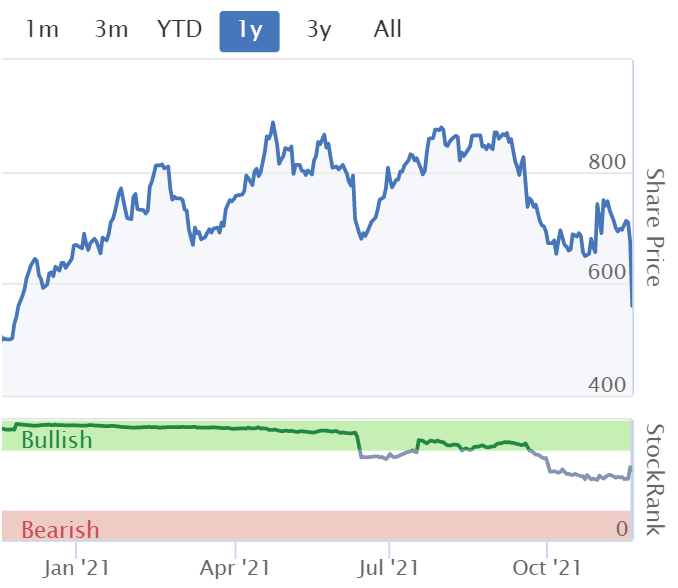
Naked Wines (LON:WINE) - shares have been clobbered today, on publication of interim results which show the growth story has shuddered to a halt. Full year guidance is cut. The bull case for this share really doesn't stack up any more in my opinion.
Finsbury Food (LON:FIF) (I hold) - AGM trading update is a bit light on specifics, but says the business continues to trade well, and is mitigating supply chain & cost pressures. Looks very good value, for a decent quality business.
Eagle Eye Solutions (LON:EYE) - an impressive trading update, with the growth rate accelerating, and EBITDA comfortably ahead (no figures given though). Although the growth is being recycled into higher costs. I like the company, but the valuation seems toppy - so it's up to you to decide if that's justified or not.
Begbies Traynor (LON:BEG) (I hold) - good growth in H1 profits, mainly from acquisitions. On track to meet full year expectations. I see potential upside here, as insolvencies are likely to increase as Govt support measures are phased out. Still reasonably priced. Looks good.
Jack's section:
Finncap (LON:FCAP) - many will know finnCap due to its retail investor-friendly equity research policies. The interim update today is predictably good given the conditions, although there are some signs of moderation. The shares are cheap on a trailing twelve month basis, but performance over the medium term is harder to gauge. Cyclicality is a risk, and the shares are not overly liquid, but trading continues to be strong, there's scope for upgrades, and a near 5% dividend is useful.
Asa International (LON:ASAI) - high risk microfinance provider to low-income female entrepreneurs in developing markets. Covid and lockdowns are still disrupting business, so the situation remains volatile. If the group can navigate these conditions it might be worth assessing the longer term prospects at some point, but more due diligence required.
Explanatory notes -
A quick reminder that we don’t recommend any stocks. We aim to review trading updates & results of the day and offer our opinions on them as possible candidates for further research if they interest you. Our opinions will sometimes turn out to be right, and sometimes wrong, because it's anybody's guess what direction market sentiment will take & nobody can predict the future with certainty. We are analysing the company fundamentals, not trying to predict market sentiment.
We stick to companies that have issued news on the day, with market caps up to about £700m. We avoid the smallest, and most speculative companies, and also avoid a few specialist sectors (e.g. natural resources, pharma/biotech).
A key assumption is that readers DYOR (do your own research), and make your own investment decisions. Reader comments are welcomed - please be civil, rational, and include the company name/ticker, otherwise people won't necessarily know what company you are referring to.
Paul's section
Naked Wines (LON:WINE)
560p (down 17%, at 09:07) - mkt cap £411m
Half Year Results for the 26 weeks ending 27 September 2021
Disruptive business model continues to drive growth as the largest direct-to-consumer wine business in the world with 947k Angels
The Netflix of the wine world, or just an online wine retailer in a fairly crowded space? I recently rejoined Naked Wines as a customer, and it struck me that the original “Angels” concept of sponsoring small producers of wine, then later receiving exclusive wine produced by them, seems to have been heavily watered down. This time, it didn't feel any different to ordering wine from Virgin Wines Uk (LON:VINO) .
My introductory case of wine half price wines from WINE might have been good, but by the time I arrived in my London household (several days after ordering the wine) it had all been consumed. The labels looked nice anyway, which is my usual method of choosing supermarket wine.
Today’s interims from WINE strike me as pretty awful. The company has always been creative with how it reports profit - supposedly huge profits from repeat customers, which is then used to fund growth via heavy marketing spend & introductory offers.
There’s a big problem with that story today - there’s no growth to speak of. In the key USA market, revenues actually fell 3% to £74.4m in H1, despite spending £13.4m in “investment in new customers”.
Bulls might point out that the company is now up against the toughest prior year comparatives, which benefited greatly from the first wave of covid, as we’ve seen from many eCommerce companies. Last year’s boom is this year’s tough comparative.
Other problems that WINE reports today include: supply chain issues, impacting product availability, delivery issues, and higher cost of customer acquisition - which seems to be a big problem for online companies, e.g. higher online marketing costs clobbered the profits at Best Of The Best (LON:BOTB) recently (I hold).
Total H1 revenues are £159.3m, up only 1.4% on H1 LY (or +6% at constant currency) - despite all that marketing spending. That really makes me question the business model. If the company has to spend heavily on marketing & introductory offers just to stand still, then the growth story is not credible to me.
H1 adjusted profit before tax is only £1.7m - improved from a loss of £(2.7)m in H1 LY (last year), with a higher gross margin, and reduced advertising spending looking as the main reasons for the improvement in profitability. It’s still negligible profit though, for a company valued at £411m.
Adjustments to profit were large last year, but small this year, so the adjustments only boost profit by c.£400k in the latest H1 numbers, so no issues there.
Full year guidance - has been reduced.
There’s an admirable level of detail provided, but for me the key numbers are that FY 03/2022 revenue growth is now expected to be only 2-7% (at constant currency) - which translates to almost nothing in reported currency.
So negligible growth, despite spending £35-45m (guidance) on new customer acquisition.
That’s just not good business is it? It suggests to me that the customer lifetime value (LTV) looks much worse than the previously reported numbers. Customer churn must be quite high, if WINE is having to spend so much on customer acquisition, just to stand still.
Balance sheet - looks fine. The £57.1m cash pile is really customer cash, note the larger offsetting £76.4m creditor for “Angel” deferred income. A business model where customers give cash to the company in advance of receiving the goods, is good business.
The other noteworthy point is that inventories has shot up to £127m, which looks very high, given that these are recorded at cost. Applying a 42% gross margin (actual in H1) translates inventories into £219m at the revenues line. That’s about 8 months sales, which looks like very slow stock turn. This could indicate problems, if this very high level of inventories contains slow moving stock, that might require heavy discounts to shift it. I hope this slow-moving wine doesn’t end up in the Christmas wine package I recently ordered!
The company says it deliberately chose to increase inventories, to secure product availability, but to my mind buying 8 months worth of product in advance seems excessive. So a possible problem here.
My opinion - I’ve always been sceptical about Naked Wines, because of the creative accounting - showing huge profits from repeat customers. Nobody else reports numbers like that, of the other eCommerce businesses I follow. It’s just accepted that heavy marketing spend is necessary to maintain and grow the business. For me the key point is that WINE isn’t growing much, if at all, despite continued heavy spending. That indicates a big problem to me, and I see these numbers very negatively.
Personally, I wouldn’t touch this share, because the growth story looks to be broken - the company’s now having to run to stand still, in what is a highly competitive market. I don’t believe that WINE has invented a disruptive business model. But opinions may differ on that, so if you’re still bullish on WINE shares, do please share your thoughts in the comments section - we like to hear a range of opinions.
Shareholders have taken a lot of pain in the last few months, similar to holders of many other eCommerce businesses.
.
Finsbury Food (LON:FIF) (I hold)
99.5p (up 1.5%, at 11:22) - mkt cap £130m
Finsbury Food Group Plc (AIM: FIF), a leading UK speciality bakery manufacturer of cake, bread and morning goods for both the retail and foodservice channels...
The current financial year is FY 06/2022.
The resilient performance of the previous financial year has continued into the current financial year. Sales for the first four months of FY22 grew by 8.3% to £106.2m, driven by a stable performance in UK retail, continued robust recovery of foodservice and a very strong overseas performance.
Supply chain & inflationary pressures -
We have responded quickly to mitigate much of the impact of these challenges through commercial negotiation and other initiatives.
Outlook -
Finsbury continues to make excellent progress in becoming a more efficient group with increasing synergies and scale benefits. We will continue to manage industry headwinds while driving the business forward and look forward to updating the market again in January."
My opinion - a reassuring update, but it doesn’t tell us how the business is performing against market expectations. I think investors much prefer it when this is stated specifically. We’re left to assume that trading must be in line with expectations, but there’s always some doubt, if it’s not directly confirmed.
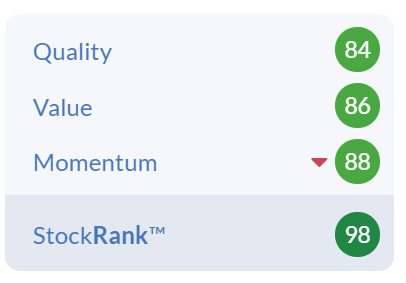
As the Stockopedia graphics below show, this looks a decent quality business, at a very modest valuation. It’s reassuring that supply chain problems and inflation seem to be under control.
This share seems obviously under-valued, in my view, and I think a more rational valuation would be maybe 120-150p - which leaves room for a takeover bid to offer a decent premium, if it catches the eye of a larger group, possibly.

.
Stockopedia's emotionless computers also give it a thumbs up - not a guarantee of success of course, but it improves the odds -
.
Eagle Eye Solutions (LON:EYE)
602p (up 5.6%, at 10:42) - mkt cap £157m
Eagle Eye, a leading SaaS technology company that creates digital connections enabling personalised, real-time marketing through coupons, loyalty, apps, subscriptions and gift services...
Expanding customer relationships deliver revenue and EBITDA growth
The current financial year end 06/2022.
This update sounds very good - here’s my summary of the main points -
Q1 revenue growth rate of 35% vs Q1 LY
Acceleration in growth rate from +27% in the previous quarter
Guidance raised for FY 6/2022, but no figures provided - “comfortably ahead of management expectations”
Costs (payroll) will rise “to support future growth”
Continued to win new contracts, name drops some big clients
New 3 year, £5m loan agreed (helpful in avoiding dilution)
Sales pipeline continues to grow internationally, and is at record level
My opinion - I like the business, although it’s small, and not making any significant profit. So it’s all about the growth, and high quality client list.
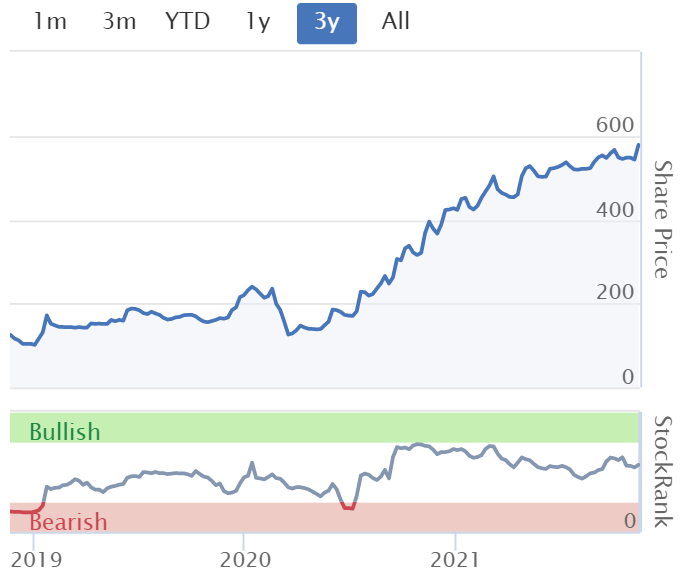
How to value it? As a value/GARP investor, the current price looks multiples of what I would personally value the company at. Therefore, this share is for people who like the story, the growth, the big name clients, recurring revenues, but don’t really care about profitability or valuation. There’s nothing wrong in that, it’s an approach which has been a very lucrative area for many years in tech shares. It’s risky though, as an inflated valuation can quickly unravel if growth slows. No sign of that here though, the company looks to be growing strongly, and there is a lot to like about this company - just not the high valuation!
.
.
Begbies Traynor (LON:BEG) (I hold)
139p (flat, at 12:28) - mkt cap £211m
Begbies Traynor Group plc ("the group"), the business recovery, financial advisory and property services consultancy, announces an update on trading for the six months ended 31 October 2021. All figures are unaudited.
Decent numbers in H1 -
The group is pleased to report a strong financial performance in the six months. Group revenue increased to c.£52m (2020: £37.5m), with adjusted profit before tax growing to c.£8m (2020: £5.0m), principally reflecting the benefit of acquisitions completed since January 2021.
Net cash of £1.2m at 31 Oct 2021 - not bad, considering insolvency practitioners have a lot of working capital tied up in extended receivables (they often get paid at the completion of a job). Significant headroom on bank facilities.
Outlook -
As previously guided, we expect our results will have a second half weighting as we anticipate an increase in insolvency activity over the remainder of our financial year (to 30 April 2022). Overall, we remain confident of delivering market expectations* for the full year, which will represent a year of significant growth.
* current range of analyst forecasts for adjusted PBT of £17.0m-£18.5m (as compiled by the group)
Thank you for the helpful footnote.
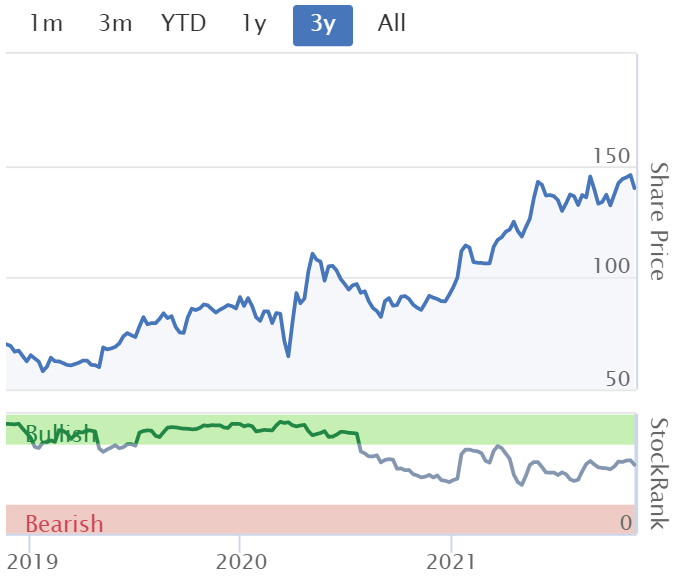
Valuation - I’ve checked a couple of broker notes from Sept 2021, available on Research Tree, which pencil in 8.5p and 9.1p for EPS this year, FY 04/2022. Stockopedia is showing 8.8p broker consensus, which ties in with the broker notes.
At 139p that gives a current year PER of 15.8.
I’m comfortable to value BEG on next year’s forecast of 10.0p, so a PER of 14
Also, there could be earnings upside on next year’s forecast, due to the withdrawal of Govt support measures, which is likely to result in increased case numbers for insolvency practitioners, as zombie companies collapse in due course.
My opinion - Begbies looks reasonably-priced, and is probably about to enter a period of increased activity, with a largely fixed cost base. That could prove lucrative, so I still see an opportunity with this share.
.
.
Jack’s section
Finncap (LON:FCAP)
Share price: 37.4p (+2.47%)
Shares in issue: 177,851,680
Market cap: £66.5m
(I hold)
finnCap is building an advisory service business ‘focused on the business of tomorrow’.
It currently provides strategic advice, capital raising and related services to corporate and institutional clients and high net worth investors. The group has a PI-friendly equity research policy and conducts a number of activities including: equity advice and fund-raisings, public and private M&A, debt arrangement and advice, and NOMAD services.
Sam Smith CEO and Richard Snow CFO will provide a presentation later today on Investor Meet Company: https://www.investormeetcompany.com/finnCap-group-plc/register-investor
- Total revenue +55% to £31.7m,
- Capital Markets revenue down from £16.3m to £15.6m,
- Cavendish revenue +283% to £16.1m,
- Adjusted PBT +67% to £7.2m; statutory PBT +75% to £6.3m,
- Adjusted EPS +62% to 3.54p,
- Cash balances up from £20.4m to £22.6m.
Overall equity issuance on AIM in H1 was broadly stable at c.£3.0bn (H121: £2.9bn) with a number of larger transactions. finnCap market share was c.6% (AIM fundraisings greater than £5m) (H121: 7%) reflecting slightly lower deal activity in its client base which had been boosted by COVID-19 related deal flow in the previous year.
Market trading activity has been lower since Summer. The group believes this was influenced by lower retail trading in AIM stocks following a return to work. I’ve had a similar hunch over recent months, with many previously popular ‘lockdown’ stocks derating and generally tougher conditions for many private investors, so it’s interesting to hear finnCap say this.
The M&A market saw a continuation of the strong activity levels from Q4 of last year, with several high-quality mandates already under execution.
Total Deal and Advisory fees grew by 75% to £24.9m, with 39 transactions completed in the period. These include £250m of equity raised through 14 placings and an IPO, 13 private M&A transactions advised on with an aggregate value of c£1bn, another three public M&A transactions (aggregate value of c£500m), and six completed debt financing mandates raising c£250m. finnCap continues to invest in headcount across the business.
Current Trading - Q3 started well with a further placing for Genedrive (LON:GDR) , the completed sales of GCSEPod and Intelling, and the IPO of Eneraqua raising £20m (due to complete in the next few days). The deal pipeline is ‘solid’ with further potential IPOs, equity fund raisings, and private M&A transactions to complete in the coming months.
The group recently upgraded its FY22 outlook in October. No new upgrades are announced today, but the previously revised figures are for full year revenue of £45m-£50m, with staff costs of between 58-62% and non-staff costs of around £10m.
The equity market is quieter in terms of trading volumes than at this time last year. The issuance market remains solid although, with higher institutional sensitivity to valuations, ‘getting deals done is comparatively more difficult’.
Activity in the M&A market remains favourable, but the group does not expect to match the H1 revenue performance in H2.
For finnCap Capital Markets, the group says: ‘delivering H2 revenue at levels similar to H1 (of £15.6m) would be an excellent outcome for the Capital Markets team.’ Regarding Cavendish, it adds ‘Activity levels are now lower than in H1, but the finnCap Cavendish team has already completed a further two deals since the half year end and we expect the team to deliver a good full year result with revenue above £20m.’
Commenting on the results, Sam Smith, CEO, said:
Today's results show that our strategy of building a broader financial advisory firm - focused on servicing the needs of the business of tomorrow - is working. We will continue to invest across all areas of the business to broaden our offering and ensure that we can help our clients drive their growth, capitalise on opportunity and deliver their ambition.
This performance, together with our strong balance sheet position, has given us confidence to increase our dividend plans for FY22 as part of our long-term commitment to give shareholders an attractive payout which increases over time. We now expect to pay shareholders a total of not less than 1.75p for FY22 with 0.6p at the half year.
That would be a dividend yield of at least 4.7%.
Conclusion
The key question for cyclical investment banking industry companies is for how long the current favourable conditions will persist. If this is a more sustainable dynamic, then it’s not hard to see the share prices of these companies appreciate further, as there is value on offer.

There are some signs of slightly moderating conditions, but finnCap will be paying out a near 5% dividend in FY22, while shares trade on just 7.7x trailing twelve month earnings and 4.1x TTM free cash flow. It’s also investing in headcount, although the company has not been able to take market share year-on-year, which I was looking for.
Cavendish, the sell side M&A advisory business, has roared back to life and finnCap expects the division to continue performing well ‘albeit in more subdued markets’. Another aspect to consider is how much of enlarged profits go to shareholders, and how much is retained by staff. The H1 share-based payments charge has increased but profit attributable to equity shareholders is also up strongly, so for now there is enough to go round.
Analyst Progressive Equity says: ’The increased share-based payments for the year (£1,500k for the full year, compared with £832k in H1 2022 and £344k in H1 2021) will reduce our reported pre-tax profit by 8% to £7.6m (from £8.2m).’ FY22 unadjusted PBT and EPS are reduced by 8% and 10% respectively ‘reflecting the increase in share-based payments’.
A marked downturn in conditions is always a risk here too and this will happen at some point, but when is hard to say. It could be years away given that markets are supported by the weird alchemy of modern macroeconomics.
For now, finnCap looks modestly valued and is investing for future growth. A more subdued H2 is anticipated, with revenue in the range of £13.3m and £18.3m though. Business is fundamentally cyclical and the shares are not overly liquid, so there are risks to holding.
I think you can argue it both ways, and it will pay to continue monitoring market conditions, but ultimately the company is trading well.

Asa International (LON:ASAI)
Share price: 155p (+6.9%)
Shares in issue: 100,000,000
Market cap: £155m
This sounds interesting: a ‘microfinance’ provider to low-income people (more specifically female ‘micro-entrepreneurs’) in South Asia, South East Asia, East Africa, and West Africa. A commendable raison d’etre, but is it too risky for the average UK investor?
Its performance so far suggests caution is warranted, with a general decline in price beginning before Covid.

Around 1.4bn people (c25% of the global adult population) do not have an account at a formal financial institution and are therefore financially excluded. ASA believes it has an addressable market of c338m low-income female prospects across its 13 operating countries.
The group has 2,036 branches, 2.5m clients, and $440m of outstanding loans in its portfolio. Looking a little more closely at its territories shows the following split:
South Asia
- India - 409 branches
- Pakistan - 313 branches
- Sri Lanka - 66 branches
South East Asia
- The Philippines - 326 branches
- Myanmar - 96 branches
West Africa
- Nigeria - 263 branches
- Ghana - 133 branches
- Sierra Leone - 44 branches
East Africa
- Tanzania - 105 branches
- Uganda - 103 branches
- Kenya - 30 branches
- Zambia - 13 branches
The history of the group is also quite interesting, starting off with a $2m loan from the Bill and Melinda Gates Foundation back in 2007. The rest is too detailed to get into, but you can find the timeline here.
From the company:
Underlying ASA International lies the vision of the Group’s founder – Shafiqual Haque Choudhury – to improve the lives of underprivileged people and bring about social change, which ultimately led him to create the cost-efficient ASA Model in Bangladesh. ASA International has replicated the ASA Model internationally, in Asia and Africa, with the aim to further expand. The Company distinguishes itself by being a socially responsible lender in the way it treats its staff, clients and communities in which it operates.
There’s $103m of unrestricted cash and cash equivalents liquidity across the group and a pipeline of funding deals under negotiation totaling c$198m. With the exception of India and Myanmar, all other operating companies achieved collection efficiency of more than 90%.
India collections improved to 70% from 64% in September as markets recover from recent lockdowns. Collection efficiency, excluding instalments due from clients receiving the one-time loan restructuring offered by the Reserve Bank of India ('RBI'), decreased to 91%.
Sri Lanka collections resumed to 91% following the end of nationwide lockdowns.
Collections in Myanmar improved to 68% from 55% in September despite the partial lockdown imposed by the local government.
Uganda collections improved to 94% from 89% in September with fewer local lockdowns and travel restrictions across the country.
Portfolio quality remained ‘challenging’, particularly in India. However, the benchmark PAR>30 for the group, including off-book loans and excluding loans overdue more than 365 days, improved to 11.8% from 13.8% in September, and PAR>90 improved to 8.6% from 10.2% in September. Excluding all loans which have been overdue for more than 180 days and, as a result, have been fully provided for, PAR>30 improved from 5.2% in September to 4.8%.
PAR means portfolio at risk, and PAR>30 means the percentage of the gross loan portfolio for all open loans that is overdue by more than 30 days.
The group's operating subsidiaries, excluding India, the Philippines and Myanmar, collectively have been able to reduce PAR>30 to 2.0%.
The number of clients remained around 2.5m, while Gross OLP increased to $440m (1% higher than in September 2021 and 2% higher than in October 2020). Collection efficiency has remained broadly stable.
Covid - Since March 2020, the number of staff members confirmed as infected by Covid-19 increased to 443 of over 12,800 staff, with two deaths. Confirmed infections amongst 2.5m clients increased to 19,458 from 18,218 in the previous month, resulting in 676 deaths since the start of the pandemic. Of the 676 client deaths across the group, 451 are from Myanmar, with 7 of those deaths occurring in October 2021.
The group says:
Please note that, while the Company's operational performance appears to gradually normalize in most countries except for India, Myanmar, Sri Lanka and Uganda, the risk of additional challenges to our operations should not be underestimated, as we have recently seen in for instance India and Myanmar, due to (i) the still relatively high infection rates, (ii) the current lack of available vaccines in most of our operating countries, (iii) the risk of the introduction of more infectious COVID-19 variants in our operating countries as have been observed in the United Kingdom, South Africa, Brazil, the Philippines, Myanmar and India, and (iv) the associated disruption this may cause to the businesses of our clients.
Conclusion
It seems risky to me, although the group’s intentions are commendable.
Given the broad spread of emerging market micro-financing activities, Covid remains a considerable risk. India, Myanmar and Sri Lanka in particular are seeing ongoing disruptions to business activities resulting from high infection rates. That puts me quite firmly on the sidelines for now.
Other risks include jurisdiction, currency, asset/liability duration, loan quality, and financial health. The revenue chart tells a story: strong growth up until Covid, at which point the disruption has set the trajectory back.

Such an enterprise could grow quite large in time though, as I imagine there is a lot of demand for financing in its target markets.
I’m curious about the company but I can’t say I’m comfortable with it, so if anybody has done any further work or opinions to share on Asa it would be great to hear them. It’s outside my circle of competence at the best of times and right now the backdrop is particularly complex. Still, an interesting company, one possibly worth keeping tabs on over the years to see how it fares and to become more familiar with the business model.
It looks like these business updates are monthly, so there appears to be a good level of communication with the market at least.
Disclaimer
This is not financial advice. Our content is intended to be used and must be used for information and education purposes only. Please read our disclaimer and terms and conditions to understand our obligations.

60 comments
In reply to Mojomogoz
Re Wiatrose and northerners - Waitrose has 7 stores in Yorkshire. But who needs Waitrose when we have Booths, the best supermarket chain in the country.
Happy shopping
Richard
No offence intended…I’m from northern Scotland….when someone’s says wine I assume they mean home-brew ;)
Market death by a million cuts?
This is much better and healthier environment IMO than the prior engorgement by smothering meme-bull asphyxiation. I'm going to guess though that most of you have this latter perversion?!
My performance for this year maxed out approx May and then the gain halved through August. Then another leg up just touching below the highs Sept, cycle back up Oct, back down a bit now. About a 1/4 of the peak ytd gain lost at this point. Portfolio being pretty volatile.
I felt really bad and stressed in May as it was too good and too easy. Thought about selling the lot as didn't feel right. It was too good...and 2020 was too good...and 2019. And many of the preceding years too since c.2015/6 for small cap/AIM punters (I never keep that close a record as the past is not that relevant and is a trap for false comprehension). TBH its been pretty easy going since 2009. The only way is up.
I don't know how things unfold from here (I have a view obvs but another time). However I feel happier about stuff. I feel more comfortable that everyone and their dog ain't a stock genius anymore (okay there is the occasional performance blowhard still on Twitter...bet they go quiet when down 30%). I like that people feel loss in loved stocks (maybe that they'd followed the hype and crowd on). Heck I'm hoping that some of the stocks I like and hold sell off some more just to make the opp richer. If stocks need to earn their future returns again then I can have better balance in my portfolio and differentiate things. It feels to me now that people are being confused and inconsistent on pricing stuff.
If people are feeling this last 6 months or so are bad then I reckon they shouldn't be picking their own stocks. Ignore the hype and people that always report mega returns year in year out. These people are probably not stock picking geniuses. They are likely taking massive single factor directional risks and exposed to potential big shocks.
I take enough risk to target 20-25% pa. IMO that is a huge amount of risk and I'm very risk tolerant (I get some big moves in stocks that are controversial). Some years I'll way outperform that (though typically still limited as I seek unrelated risks) and some years will be way below. Rough ride over time. If you believe that 20-25% can be smooth and easy then you're on crack.
what I mean is it feels like every step forward at the moment is accompanied by a slightly larger step back. Small and persistent - bit like an annoying mosquito you just can't get rid of! It is that confusion and inconsistent pricing that just irritates me in a market. I guess the flip side is that it does throw up some nice opportunities too.
Usually this time of year is better for stocks and gains though. I hadn't expected much from the last 6 months and to be fair I didn't get much either - reasonably pleased to have only given a little back after a very good Jan-Apr but I was hoping for a bit more of a late year rally. That seems to be reserved only for a handful of very richly rated big tech in the US though. So indices are close to highs but the vast majority of stocks are not it seems!
If I can average 20% p/a I'm more than happy. I target a little less, 12-18% and even that isn't smooth and involves a decent chunk of risk.
From April 2020 returns were fantastic as the short lived covid bear market ended and then began a bull market that is approaching previous highs for the UK markets(FTSE) and new highs for the US(Dow). I had stellar returns(500+ percent) from April 2020, but the last six months has been nowhere near as good for me performance wise. That make sense to me because UK stocks are near years long resistance levels on the FTSE 100 index charts and so upside is harder. Unlike the US index which powered into new highs, where the titans of Tech profited enormously during Covid as lockdowns forced working at home and increased use of US tech services.
My strategy has changed now that I have Stockopedia, which I've used now for just over a month. Using screens I've found more stocks and therefore can take smaller profits of 10 or 20 percent returns and because of compounding it does better than say one big 50 percent return which is much harder to find but I had to rely on when trading from a far smaller stock watchlist. I had a good 20 percent profit in SLP which using Stockopedia's research made me comfortable in holding. I think with tapering on the horizon, profits will be harder to come by in the UK markets as profit taking becomes more prolific and risk off increases , but with good screening of stocks and excellant timing, there will always be some good gems that will provide excellant returns in any market condition.
I go differently. I try to find things that I believe have at least 100% upside and then have patience as long as the underling fundamentals don't go against me. Time horizon indeterminate but means something like 2-3 years. The stock is likely disliked for some reason near term so the initiation period may be choppy and down. Its not infallible approach and can be volatile or testing...eg I will often go nowhere when everyone else seems to be having a party.
I think trying to clip 10-20% returns repeatedly over short horizons is a high level skill that most will not durably master (in a trending and good liquidity environment it may seem possible). If you can do it then you can make more than most though.
I believe that my approach has durability and a type of long volatility (-ish) in it assuming I don't take risk in things that go bust (note, it's not truly possible to be long volatility through straight stocks). Clipping smaller returns has a potentially nasty short volatility tail to it imo - more risk of severe locked in losses.
But takes all sorts to make a market...and maybe I'll blow myself up!
In the early to mid stages of a bull market or after a big correction, a buy and hold strategy for large profits,100% plus, is optimal I believe, but nearing market index highs, I think that a taking profits earlier strategy works better, simply because many have already made big profits on the run up to the highs and therefore are more likely to sell. The taking of smaller and more frequent profits is a strategy many fail to appreciate as the power of compounding can generate greater returns than the rare multi-bagger.
Buy and hold does work well at times. At the market bottoms, many stocks will muti-bag, and then it can be easy to believe that one is a trading genius, which I have fallen prey to but have learnt my lesson since, instead of just being in the right place at the right time catching a rising tide that raises all boats. So, I think one's strategy should depend on the market conditions rather than a one size fits all strategy. Clearly, owning a large portfolio for years into the start of a long bear market, I would imagine the drawdowns to be a nightmare.
Some shares are definately worth holding though for long periods, such as SLP, which has given spectacular returns from the lows. As long as you can find such gems, than a buy and hold strategy would work the best, but these are not so easy to find. Easier now though with Stockopedia.
But each to their own I'd say.
I know this isn't a share for Paul or Jack to comment on, but I'd welcome others' views on the update from Atalaya Mining (LON:ATYM) today. It looked rather positive to me.
Hi FREng
I had sold out just before the dividend was announced, other things going on in life and took the profit off the table, obviously with my impeccable skills the dividend and holding of the price wrong decision.
Anyway looking through today, and I appreciate that I am a simple farmer by origin, this looks a good set of results, they are using the free cash to expand and fund the future expansion, always a challenge (I currently work on Woodsmith mine Anglo American (LON:AAL)) and know the history from living locally and the challenges of stakeholders, so it will always be a long journey to get to the promised land of production, but the information, without providing the drilling results seems promising.
The confidence to commence releasing funds is also a good sign from management, though obviously a lot will depend on future copper prices, but the slight rise in prices will eventually be offset by the Solar input, minus capex obviously.
Tommy
Dumb Naked Wines (LON:WINE) comment - I had been an 'angel' since about 2015. The attraction was for £15-20 twice a year got a ticket to go 'taste' 100+ wines for a few hours...few friends and party on dudes!
Anyway, covid has wrecked the party...and for several years in the UK the quality of the wine has gone down. They've lost a number of producers supply at the £15-45 per bottle area with some of those wines coming with really great discounts to genuine retail price too (eg I got case of 2014 Domus Aurea for c.£30 per bottle -> not bad https://www.winebuyers.com/en/...). There have been other good deals along the way that have made the subscription worth it. However...
...pre covid the quality of wine was going down IMO and the availability of a good 'angel deal' declining (ie like being an angel investor and funding the winemaker...supposed to get you better value). Prices had become more like the High St and the wines more at decent supermarket status rather than say some of the Waitrose choice (you Northerners wont understand). I also became a bit irritated having to try lots of new wines that didn't impress (they will refund if you really hate it...but its all a bit a pfaff and feels bad to always ask for your money back)
Anyway, I left a month ago...I would have left a year ago but they offered me to remain an angel and not pay for the last year.
Wine is not a limitless commodity if its going to be decent-ish (obvs can knock out alcoholic juice!). UK Naked Wines seem to have a supply problem IMO. Maybe they are sacrificing ground for US Naked Wines?
I've never really felt that their marketing spend model was well suited to volume growth...this is a company that should go after loyalty, quality and margin IMO
Naked Wines (LON:WINE) Bill Brewster, US value investor guy who has a well followed podcast said some time ago that he thought the quality of the wine had gone down in the US so stopped his subs.
Ugh!! this is one depressing market to be around at the moment. It's like death by a million paper cuts....
Yes 1 or 2 cuts each day, wipes out all the good gains elsewhere.
Surprised how Naked Wines (LON:WINE) has bounced back, is around 640p now.
It most certainly is! Yet another day where my entire portfolio is in the red! 20% down in the last 6-8 weeks. How much longer is this cycle going to last I wonder??
In the US at least, this is historically the worst day of the month. It's only on average of course!
I listened to a talk from a PE fund that only invests in consumer facing businesses but that are tech focussed. One of the things he mentioned was that they view physical space as just another marketing channel. Historically, physical vs facebook(targeted) vs google (broad search), simply did not add up i.e Physical space was too expensive. That has now changed and he spoke about a couple of businesses that were taking space in high footfall areas because the commercial property offering was so compelling. Secondly Currys (LON:CURY) (I hold) have been telling the market for quite some time the cost of a client to them either through physical space or digital online is the same.
Paul's comments re Naked Wines (LON:WINE) simply emphasise some of these points. Effectively cost of online marketing is clearly up as "everyone" has to have an online presence. Secondly, companies like Currys (LON:CURY) and clearly many others have cleaned up their property portfolio to make a more compelling offering. The era of omnichannel offering really is upon us which is throwing up a lot of potential opportunities.
I hope that's all made sense!
Jack, thank you for the write up on Asa International (LON:ASAI) - Asa International, it's not a company that has ever come up on my radar but I really like the idea of microfinance to reduce poverty.
For the last few years I've been donating to lendwithcare.org which offers microfinance around the world. Just thought I would place it here for anyone who likes the idea of ASAI but maybe doesn't want to invest in it.
I have mentioned this before but I am in the wine industry and I can assure you that Naked Wines (LON:WINE) do not enjoy a good reputation in the industry. Would not touch with a barge pole
How so?
Who has a good rep in the industry?
(I like wine but do not work in anything like that sector)
The Wine Society is great, but then the business model is very different - owned by members where the focus is on the customer/member rather than shareholders and profits. Been a member since I was 18 years old and they remain my go to option for wine purchases beyond the odd visit to Majestic/Waitrose/specialists. Never saw the attraction of companies like Naked Wines as a consumer (or investor).
Who has a good rep in the industry?
(I like wine but do not work in anything like that sector)
The Wine Society without doubt. I'd suggest any independent wine merchant that doesn't overcharge like Naked do. Apart from a very occasional emergency buy from a supermarket, we only purchase wine from three places 1) The Wine Society, 2) a most wonderful wine merchant in the north of England I am not prepared to name for entirely selfish reasons :-) and 3) directly from the vineyard. Naked are "all fur coat and no knickers".
All the best, Si
"all fur coat and no knickers"
That takes me back over fifty years ... ...' Close the Coalhouse Door' at the Flora Robson Playhouse.
Berry Brothers, Corney and Barrow,J and B, Tanners, The Sampler, Handford ———there are many fine wine merchants who offer excellent service and work on very fine margins. I should know being a Director for many years of one of them .
Berry Brothers, Corney and Barrow,J and B, Tanners, The Sampler, Handford ———there are many fine wine merchants who offer excellent service and work on very fine margins. I should know being a Director for many years of one of them.
The trouble is these are very serious large merchants where the average bottle price is way above that of Naked and The Wine Society, and seriously more than Naked customers are liable to pay. Unfortunately, consumers in the UK are generally scared of going into their local independent wine merchants, which is a shame, because they would drink much better wine for the same price if they did. Good examples round here would be Noel Young in Cambridge or Joseph Barnes in Saffron Walden. Noel Young actually makes some very good quality affordable wine himself under the Magpie Estate label in Oz.
Disclaimer: I have met both Noel Young and Joe Barnes!
All the best, Si
I used to be a Naked Wines (LON:WINE) 'Angel'. We drink wine every day and I was attracted by the story. We stopped buying after a year or two when it became apparent that the value for money of the wine seemed worse than we could get from other suppliers who also support small growers and that there were no other benefits that made the difference worthwhile to us. I am not a shareholder in Naked Wines (LON:WINE) nor do I plan to be.
Interesting - I think that at the £10+ price point, the wine we buy from Naked Wines (LON:WINE) is significantly better than we find elsewhere. Taste preference I guess
Just join the Wine Society as a consumer in the UK. Or get a membership as a Christmas present. It's a co-operative so no investing angle, just good wines.
They've been working with wine makers since 1874.
I second this. They dont do much discounting, but, the reasonably priced wine (6-9) is almost always better than what you can get from supermarkets at the same price - even with stacked discounts - and if you go upmarket, usually very competitive compared to specialist suppliers.
And it is a co-op - when you join you get a share and members play a full part in running TWS. There are capitalist models other than listed companies.
There is a community website like NW's but it is mostly moderated by members and so you can get good commentary on that they are doing wrong (after all we own it, the implementation of the new ecommerce platform was a bit erm shaky in places) and on other suppliers and along with positive comments, some realistically negative ones
andrewb
I used to buy a lot of our wine at Majestic but these days the quality of many of the Aldi wines is exceptional for the price and imo way better value at £6 to £9, so we mostly buy there. Lidl is not as good for their cheaper wines, but they have regular additional what they call “Wine Tour” offerings and some of these are superb both for quality and value. The next such offering, their Winter Wine tour (limited number and when it’s gone it’s gone) in their stores from Monday. They give marks out of 100 from their resident Master of Wine for these specials, and grade them too, with 90 and above”Outstanding” high 80s “very good” etc. I’m not convinced it’s a wise marketing ploy as many just go for the wines with the highest marks so those can sell out fast.
What’s more they often discount any wines remaining from their previous wine tour a day or so ahead of the new wines coming on sale at just £3.99. I’ve had some incredible buys of wines previously as high as £9.99 at that £3.99 price.
This is what NW is up against unfortunately, and the big supermarkets too, and for them it’s across the whole offering.
Just join the Wine Society as a consumer in the UK
And there's a dividend, that can only be inherited. The more you drink, the more your heirs get from them when you die. We got a few £100 from them after my dad died - mind you he'd worked hard for that!
Agreed. I stopped being an angel many years back - the story was good, the wines weren't so much.
And then the whole mismanagemnt of the Majestic/Naked merger demerger made me think their business acumen was probably suspect to boot. (As a customer, I quite like Majestic, to be fair.)
I'll also add some bullish commentary on Naked Wines (LON:WINE) (I don't hold but will buy today).
I do think the model Naked employs is differentiated and allows for better wine to be produced at the same price point. What's more, the bigger Naked gets, the better winemakers and larger production runs it can fund, meaning that the model has a flywheel effect.
I think that the repeat customer numbers and retention stats published today are evidence that the model works. I further think that the better the product offering gets, the less the company will need to depend on awareness marketing.
And I think it is screamingly cheap at under £400m. Standstill EBIT of £37m, much of which is effectively ARR would be valued in the $billions, and many US investors, more accustomed to platform business models consider this to be one of the cheapest quality companies in the world.
And just to pick up on the point raised by Paul about growth slowing - yes, that is true. And I think inevitable following a period which pulled forward several years of growth. Frankly, the fact that there is still growth is impressive (unlike Gear4music Holdings (LON:G4M) for example).
Hi Paul - on a constant currency basis, sales in the US for Naked Wines (LON:WINE) were actually up 7%. I'm also curious why you are willing to consider 2 year comparators for some companies that have been COVID beneficiaries (e.g. Gear4music Holdings (LON:G4M)) but not with others, such as Naked Wines (LON:WINE)?
Naked Wines (LON:WINE) publish a rolling 12 month standstill EBIT number - currently £37m, meaning that after today it would be trading at 10x EBIT (less on an EV basis) if they only marketed to replace churn.
Hi MassimoJack,
Naked Wines (LON:WINE) publish a rolling 12 month standstill EBIT number - currently £37m, meaning that after today it would be trading at 10x EBIT (less on an EV basis) if they only marketed to replace churn.
The trouble is, today's interim results disprove that ridiculous £37m figure. WINE operated at close to standstill in H1, and made negligible profit.
The company has a track record of being very creative with the non-statutory numbers (remember the original claim of 20 year customer lifetime value), so I just don't believe the claimed standstill EBIT number. It's disproven by the actual results.
Regards, Paul.
Hi Paul - I just wanted to respond on this point, as I don't believe the results to discredit the EBIT Standstill number.
The direct marketing spend plus the loss on first trial cases (investment in new customers in Naked Wines (LON:WINE) speak) doesn't hit the existing angels really at all. Once you're an angel/customer, those costs don't drive revenues from you.
So the c. £35-40m of advertising costs and losses on trial cases are only targeted at 1) New customers to replace customer churn of c.20% p.a. and 2) New customers to provide growth (between 1-7% this year). The way these marketing campaigns work, as you've alluded to, each additional marginal customer is harder to win. So the 20% replacement new customers are easier to win than the the 1-7% growth new customers.
That means that of the £35-40m spent to win new customers, only £16m or so needs to be spent to replenish the annual churn, meaning that if that was £WINE's only goal, they would remove between c.£20-25m from their operating expenses. So even assuming breakeven, there's £20-25m of EBIT right there. Other G&A costs would also be lower for a business not geared to grow, so I think it's perfectly possible that the standstill EBIT would be in the region of £30-37m.
Best
Massimo
Naked Wines (LON:WINE)
Hi MassimoJack, Paul, and all other Naked contributors here.
I'm a little late to the discussion but thought I would throw in some additional comments:
---
Repeat Customer Revenues are still forecast to grow b +10% this year, which isn't bad given the 63% growth last year:
---
As much as I would like to use the company's calculation of £37.2m Standstill EBIT, I don't think it makes sense to do so.
All of these figures are from the last 12 months, so, for example, using very low marketing spend back in 2020, or assuming a 101% payback rate, to project future profitability just doesn't make sense.
I also can't quite get my head around the £16.2m replenishment spend and what proportion of this relates to marketing or discounts, or how it is actually split between H2 FY21 and H1 FY22 - I see what the company is trying to do here, but it's not telling me very much.
Perhaps Standstill EBIT will settle somewhere between the pre-covid numbers and the current ones, maybe c£20m.
MassimoJack - I completely agree that this is like ARR, so I personally apply a high multiple, which would justify most of the current Market Cap of £485m.
Which leads me to growth...
---
It's hard to see where growth will come from, as so much cash is used on the growing administration costs and what's left will only generate a few £m of incremental revenue each year.
This is the main thing that puts me off investing. Hopefully the administration costs levelling off at some point so that excess cash can actually be generated will change the potential upside here.
---
Here are historical churn rates for any interested (NB: not completely accurate - some numbers changed and I couldn't be bothered to go back and update.)
It looks like 20% churn for a few years is normal, before this moderates off., which isn't bad at all if acquisition costs are recouped in the first 2-3 years.
If the company can generate the cash to spend more on new customer acquisition (not only on replenishing lost customers), then this would make the business model far more interesting.
---
Finally, a word on a newly listed competitor - Winc - https://www.stockopedia.com/sh...
This is a much smaller US-based competitor, but is has a P/S twice as high as Naked Wines (LON:WINE) . One of these valuations is clearly wrong.
---
I have no position for now, but I'll be keeping a close eye as I am intrigued about when (not if) the company will start investing more in its growth.
Cheers
A
Hi MassimoJack,
Hi Paul - on a constant currency basis, sales in the US for Naked Wines (LON:WINE) were actually up 7%.
Fair point. I did mention the difference between constant & reported currency in overall sales, but not specifically for the USA, saying -
Total H1 revenues are £159.3m, up only 1.4% on H1 LY (or +6% at constant currency)
I'm also curious why you are willing to consider 2 year comparators for some companies that have been COVID beneficiaries (e.g. Gear4music Holdings (LON:G4M)) but not with others, such as Naked Wines (LON:WINE)?
I think it's because WINE makes such a big deal of the supposed longevity of customers, and the (claimed) highly profitable repeat business. Therefore I would expect sales to continue growing, albeit at a slower rate than last year's bumper pandemic effect. The fact that sales have almost stopped growing, despite continued heavy marketing spending, scuppers that story in my view. In reality, the marketing spend seems to be necessary just to replace customers who drop off. That's a massive deterioration in the investment case for WINE.
Whereas with Gear4music Holdings (LON:G4M) it's completely different. They've never claimed to have a long lifetime value per customer. They've always been very open that many sales are one-offs, which is fine because it fully recoups the customer acquisition cost on the first order.
So I think there is a difference.
Remember that WINE originally told the market that customer LTV was 20 years. That was obvious nonsense, and they reduced it to 5 years I think. The point I'm raising, is that the interim figures today suggest this is probably considerably overstated still. After all, if they're spending £35-45m on new customer recruitment this year, and revenues are close to standstill, then what is that telling us? The only logical explanation is that there must be considerable customer churn. Hence they need to spend a lot, just to replenish the customer base for lost customers.
The commentary from WINE also talked about reducing marketing spend to preserve the quality of new customers. To my mind that suggests maybe the company has already got the best quality customers, and growth may now be harder to achieve.
Balancing that up with the valid point you make, that 2-year comparatives are still very good, is quite tricky. Maybe I should have emphasised the 2-year growth rate, so it's a good point you've made, thanks.
Regards, Paul.
Hi Paul - thanks very much for the reply. Much appreciated - you're a gent.
Massimo
Would there be any chance of a look at Crest Nicholson Holdings (LON:CRST): chaps trading statements is saying results will be marginally ahead of expectations with a strong second half and they are still running a net cash balance.
Its been on a downtrend for several months but has been rumored as a private equity target appreciate it is about 100 mil over the normal 700 mil market cap cut off point.
Naked Wines (LON:WINE) HY report out today, the market does not like, shares are down 18%. Figures seem to be ahead of Stockopedia forecasts though.
At the end of Oct an American fund manager on CNBC hyped Naked Wines (LON:WINE) as "the Netflix" of wine giving the shares a boost. WINE has a US listing.
How much is the binge drinking subscription then? Netflix has huge economy of scale and can re-sell its product across the world at low marginal cost.
With Naked Wines (LON:WINE) sales were always going to drop against Covid consumption rates. The most worrying aspect for me is the reduced return on customer investment of 1.7 X and the reduced spend on customer acquisition.
The model remains interesting in terms of existing customer spend and retention but clearly growth is slowing and customers are harder and more expensive to attract.
As I said somewhere else on this site, I don't see how their model Naked Wines (LON:WINE) is sustainable in growth terms when they appear to only be patronising small vineyards. To have mass market appeal the wine producers would need to be much more sizeable to claim bigger market share.
Whilst I am a member, but not shareholder, I do however enjoy their wine selection- it is fairly priced and rarely get a poor bottle. So I'd be happier if they remained 'small'.
Naked Wines (LON:WINE) down 20% currently. Another lockdown winner running out of steam. I haven't looked in much detail, just sold. Happily my Royal Mail (LON:RMG) position is larger so overall running to stand still.
There is a webinar at 12pm today with management of Castings (LON:CGS) who will present the recently released HY results. Register here
Very good presentation thankyou. Impressed by a down to earth pairing and would recommend others take a look because not quite the dull old business I expected! Not a shareholder currently for complete transparency.
I think Royal Mail (LON:RMG) is probably too big for you guys too look at but a very good set of intermis this morning and announcement of return of cash to shareholders and share buyback. I topped up on the market open
It is, however there are posters who are interested in the results, so its always worth mentioning.
fine company and a great long term hold especially at these prices
I think Royal Mail (LON:RMG) must be about unique in having a senior guy from the Unions participating in the results presentation. On today's interims, he contributed only as a cut away video - but at the full-year results in May, he sat on the panel with the management. Different investors will like this or not - but it is definitely different and I think a positive as increasing productivity and improving employer/employee relations in the UK operations is key to the investment story.
I also hold. With the disclosure today of the cash flow generation from GLS and Royal Mail being separated out for the first time and with a special div and buy back announced - I personally think that a full separation of GLS and Royal Mail might not be too far away, which I think could be a catalyst for the share price.
Royal Mail (LON:RMG)
I also hold royal mail too - must admit it was a bit of punt , but numbers good / balance sheet great and future prospects acceptable. It does look like the GLS side of things is the star peformer here. Certainly ref the royal mail side of things we know its probably been open war in the past betwen staff/unions and management - so the more both parties can't find an agreeable way to modernise and move forward with the times the better for everyone , not convinced though that unions and management here will ever find a fair true middle ground without causing ructions for te other side - kudos though if they can avoid any nightmare scenarios in that regard in the future.
I did have a laugh at the fact that they have confirmed that 43 centres now don't need pen and paper to sign in. I simply cannot believe any company would have been doing soemthing that backward for the last 5 years and only sorted tech related sign ins now - crazy. Perhaps this indicates how far behind the pack they are ref the modernisation plans - hey ho the worse they are now in tat regard the easier it should be to get future efficiency gains.
Rmillarie. I agree there are lots of low hanging fruit for efficiency gains at Royal Mail (LON:RMG) - the most important is parcel sorting automation, where Royal Mail is still below 50% automated versus the comp at I believe >90%.
Hi Paul,
Any thoughts on the first set of interim results from very recent Marks Electrical (LON:MRK) (Marks Electricals). I did a quick summary of the main points from the IPO document here in the comments:
https://www.stockopedia.com/co...
https://investegate.co.uk/mark...
I don't currently hold but see a lot to like here
@mginvestor
A good update from Begbies Traynor (LON:BEG)
For me the update from Begbies Traynor (LON:BEG) means little downside to FY broker forecasts, given HY in the bag and almost 50% of FY broker forecast. And guiding good start to H2 and a bigger H2 vs H1.
Whereas there's now a bigger possibility of overperformance in H2 if insolvencies recover quicker than expected. I personally think there's up to - 5% and +10% range to the current EPS estimate, and at just 15x PE happy to keep holding, even though my entry price was sub 95p.
(I hold)
Begbies Traynor (LON:BEG) insolvencies have been low because of Govt. support, once that is taken away, I expect them to increase. There has also been huge rise, x10, in gas prices, which is not capped for businesses, so they will be paying the full increase. I know some companies have closed down production because not possible to make a profit with gas price so high. Wages are also going up.
Fonix Mobile (LON:FNX) in line statement along with the announcement of a new partnership with Venntro who have over 2500 white label dating websites. Sounding good so far and potential for upwards revisions as the year progresses. Year end 30th June. I have a small holding and am watching closely.