Stock in Focus: Will the Redde-Northgate merger create a super stock?

There are no new stocks I can add to my SIF folio this week. So instead I’ve decided to take a look at an interesting deal that’s due to complete later this quarter.
The planned merger between accident management firm Redde (LON: REDD) and van hire business Northgate (LON: NTG) was a big surprise to me. I couldn’t really understand the logic behind this combination.
The only obvious thing I could see that linked the firms was their chairman. Avril Palmer-Baunack was chair of Redde until the end of July 2019. Ms Palmer-Baunack then took over as Northgate chair on 12 August. On 29 November, the merger was announced.
Winners & losers?
My instinctive view is that Northgate shareholders are getting the worse half of this deal. Although the firm faces cyclical headwinds and some company-specific issues, fundamentally I think it’s an attractive business.
Former chief executive, Kevin Bradshaw, had been MD of Avis Europe for five years, so had experience in this sector. He was guiding Northgate through a turnaround programme aimed at maximising return on capital employed. This was (slowly) starting to deliver positive results, in my opinion. However, Mr Bradshaw wasn’t part of the merger plan, or perhaps didn’t agree with it - he stepped down with immediate effect when the merger was announced.
In contrast, Redde has delivered attractive shareholder returns since 2012, but is now facing a weaker outlook. Profit forecasts were cut in March last year, after a cautious set of interim results. Another earnings downgrade followed soon after, thanks to the loss of a major contract.
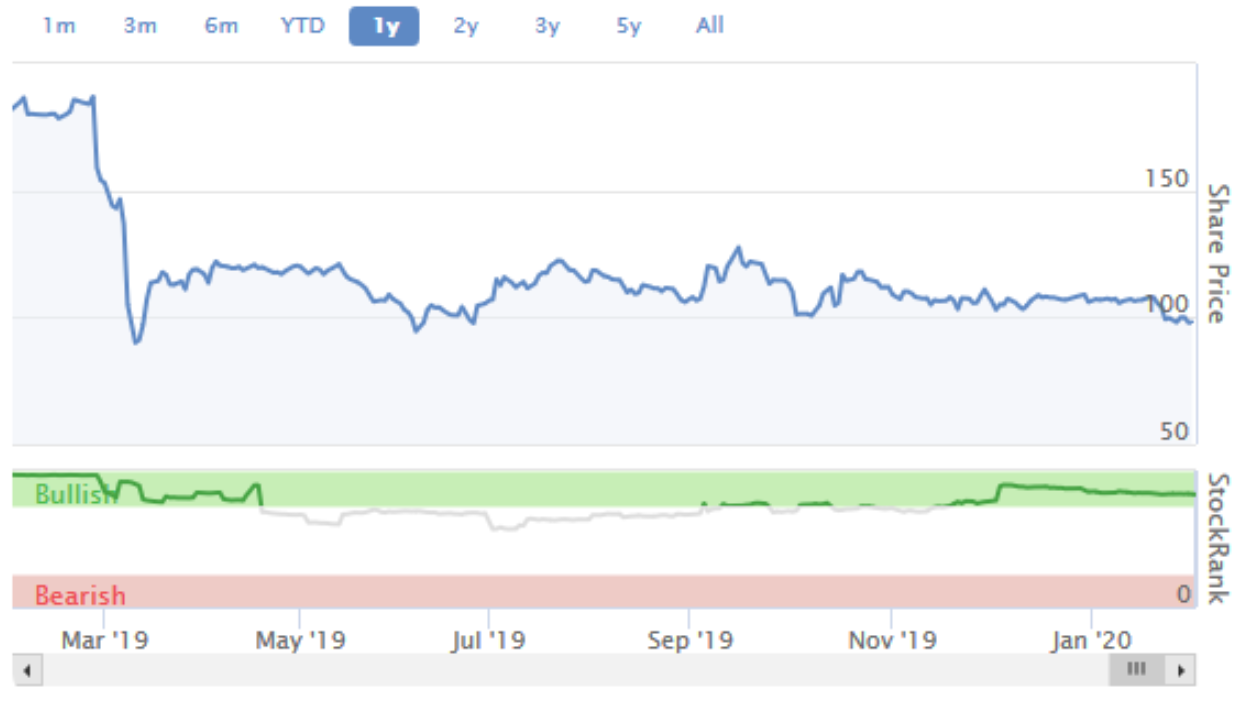
Regulatory change is also a permanent risk for companies such as Redde, which rely on income from personal injury claims. New rules on such payouts are due to come into force in April 2020. Is it a coincidence that this merger has been proposed just at this time? I note that Redde’s smaller rival NAHL has just issued a profit warning for 2020 and suspended its dividend.
I admit that my sceptical view on this deal is highly subjective and possibly mistaken. So I decided to take a fresh look at the proposed merger, using a quantitative approach. My aim was to try and understand what the combined business might look like - and whether I’d like to own it.
A sum of the parts approach
What I’ve done is to use a sum-of-the-parts approach to see how the two businesses might look when combined. I’ve then considered other factors that could affect the performance of the merged company.
To start with, I thought I’d try a slightly cheeky approach and simply average the two company’s StockRanks. Here’s how each firm scores at the time of writing:
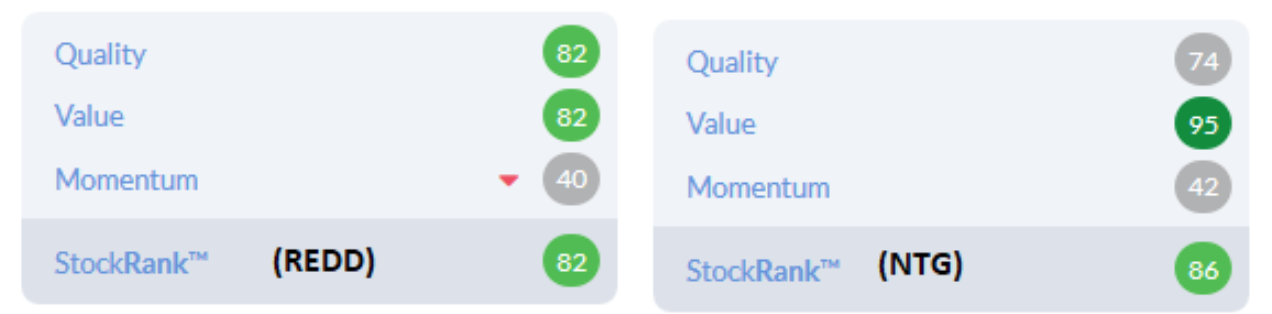
Here’s how they’d look averaged together (I’ve weighted the ranks to reflect each company’s market cap):
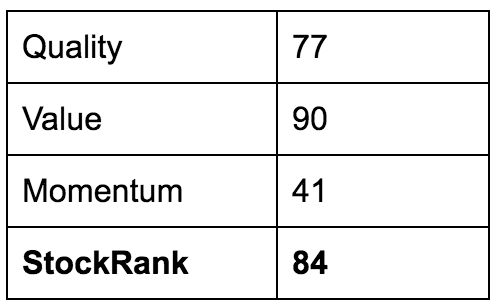
This isn’t meant to be a serious evaluation. But it does seem to suggest that the two companies combined could enjoy a high QV Rank. High quality and value scores, plus poor momentum, could make the combined stock a classic contrarian play.
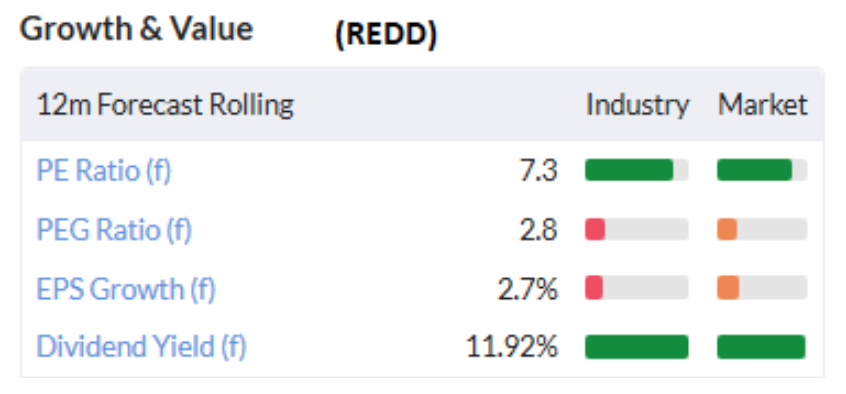
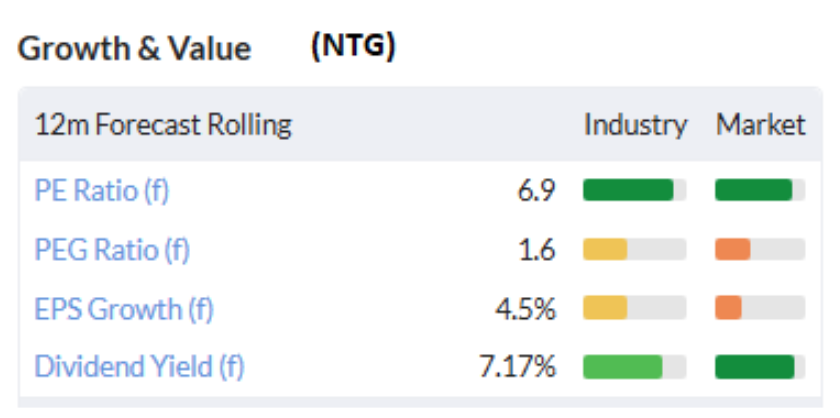
This view is supported by both companies trading on about seven times forecast earnings and offering very high dividend yields -- 11%, in the case of Redde.
Of course, sometimes companies are cheap for a good reason. Merging two unloved businesses in the hope of creating a more highly-rated enterprise carries significant risks, especially for shareholders.
Let’s take a more detailed look at how the two firms may look when combined. As usual in these articles, I’ll structure this analysis around Stockopedia’s value, quality and momentum factors.
Value buy or value trap?
The simplest way to combine two businesses is two bring them under common ownership but leave them operating independently. That’s what I’m assuming here - I’ll consider the subject of synergies and cross-selling opportunities later.
Note: These calculations are based on the last-seen NTG share price of 268p and the terms of the merger, which will see REDD shareholders receive 0.3669 new NTG shares for each REDD share.
Here’s how the combined firms’ accounts for the last four years might look:
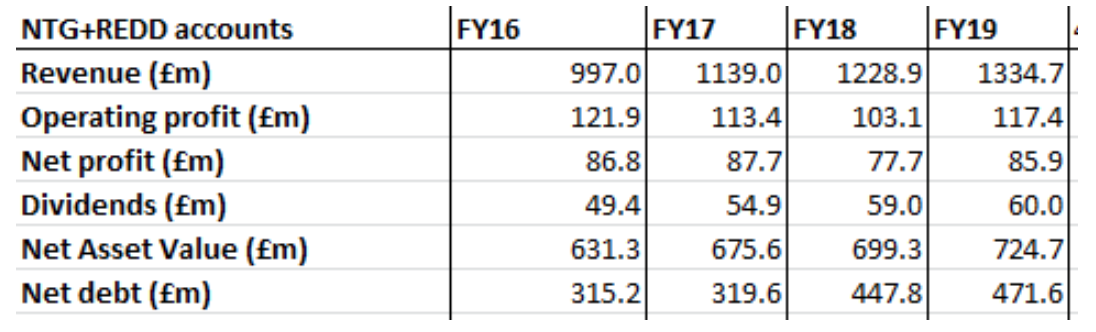
Revenue and dividend payouts have risen, but profits have not, despite an increase in NAV and net debt. That’s not an encouraging start.
If we compare recent years’ performance to the current NTG share price, then the combined firm is very much in value territory:
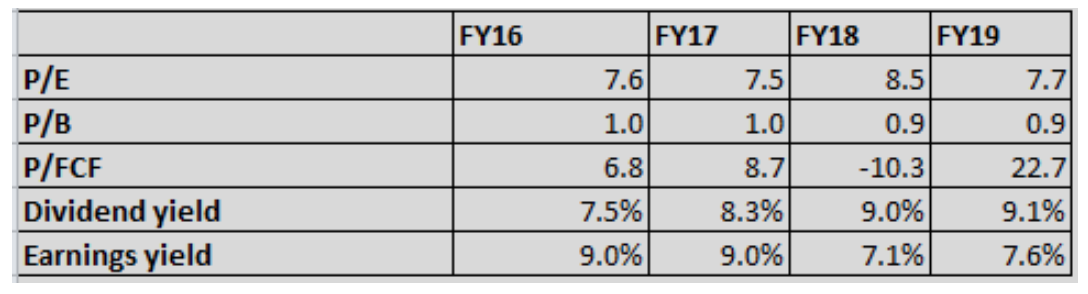
Despite this modest valuation, earnings yield (EBIT/EV) has been falling. Free cash flow has also deteriorated.
Meanwhile, the rising dividend yield suggests that affordability may be worsening. This is confirmed with a look at dividend cover:

So far, the numbers suggest that the combined group would look cheap and offer a high dividend yield that’s still covered by earnings. That’s not so bad.
However, there’s some evidence that profitability may be worsening and that leverage could be rising. Let’s take a look at some quality metrics to find out more.
Quality: very average
To gain a quick snapshot of the potential quality of the combined group, I’ve focused on profitability, cash generation and leverage. Here’s a view of how the combined group’s free cash flow and balance sheet might have changed over the last four years:
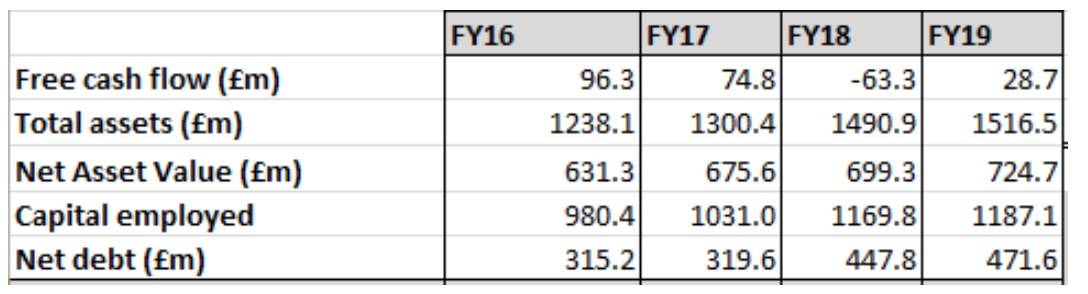
The picture isn’t very encouraging. The combined company appears to be using more assets and more debt to generate less free cash flow.
The combined group’s profit margins and return on capital are not too bad, but they have deteriorated over the last four years. Leverage has risen, too:
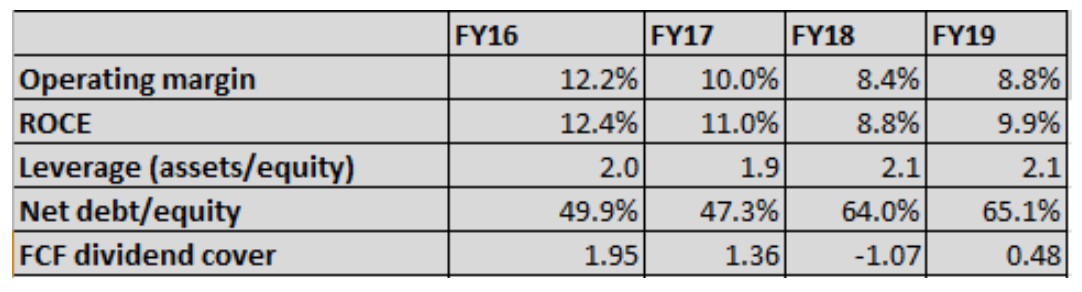
In fairness, profitability improved last year, albeit at higher leverage. But the combined companies’ free cash flow wouldn’t have covered the dividend in either of the last two years.
Can synergies boost weak momentum?
Brokers following both companies downgraded their earnings forecasts multiple times last year:
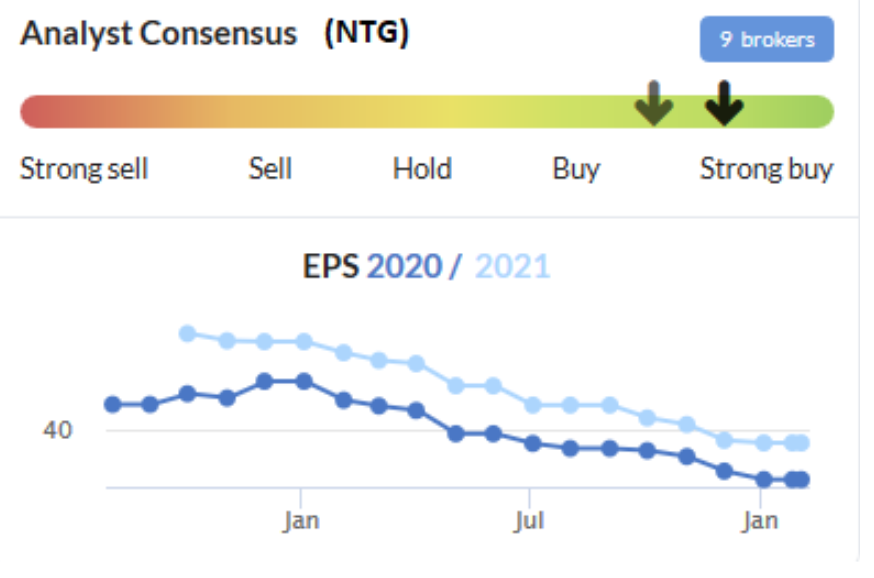
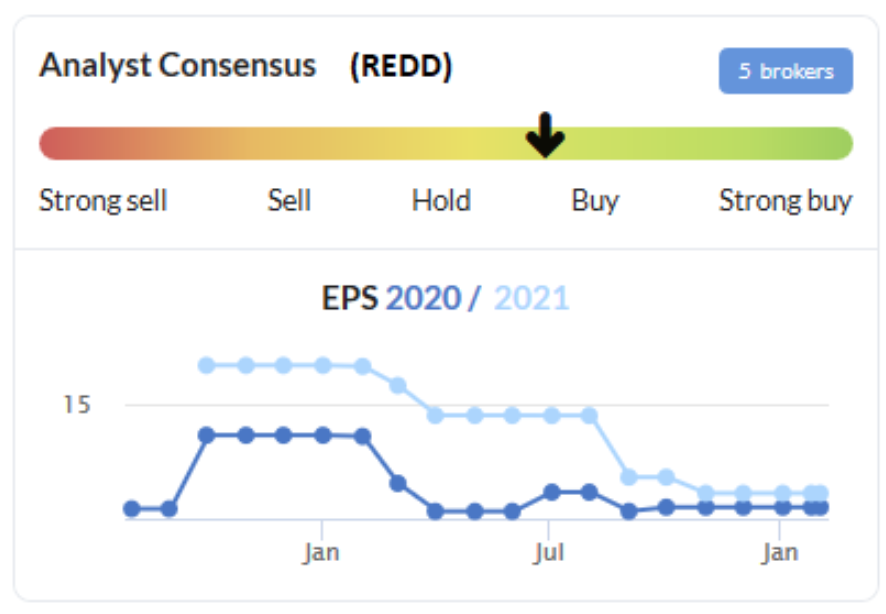
Based on these forecasts, earnings momentum is weak, justifying a modest valuation.Will the expected benefits of the merger be enough to provide a more positive outlook?
Cost savings: The merger proposal promises “pre-tax cost synergies of at least £10m per annum” by the end of the second year following completion. These are expected to come from consolidation of corporate and support functions, combining the two companies’ site networks and consolidating their accident and fleet management operations.
Assuming a tax rate of 20%, I estimate that cost savings could add 3.3p per share to earnings. That equates to an increase of 9.5% on last year’s pro forma earnings for the combined business. Based on this, I don’t think cost savings will be enough to restore the combined group to meaningful growth.
Cross-selling opportunities: The merger is expected to create a business that can offer an increased range of fleet management, accident management and vehicle hire services. But I’ve no way of quantifying how this will change the market opportunities available to the combined group.
My view
Before the merger was announced, I saw Northgate as a focused business with good scale. Although it was a turnaround situation, the problems seemed manageable to me. If the firm’s share price was at current levels as a standalone business, I’d probably view the stock as a buy.
My view of Redde was that it was potentially a lucrative investment, but would always be vulnerable to regulatory risk. This put me off investing, as this kind of risk isn’t manageable in the way that I think Northgate’s problems should be.
I think the effect of the merger will be to widen the range of potential outcomes. Each business must solve specific problems and be generally well managed. But they must also be successfully integrated to create additional shareholder value.
I suspect that the group’s directors will enjoy uprated remuneration packages to reflect the new company’s mid-cap status. But I think that shareholders face greater risks. Although I think this combination has potential, I’m not convinced I want to own the shares.
Disclaimer
This is not financial advice. Our content is intended to be used and must be used for information and education purposes only. Please read our disclaimer and terms and conditions to understand our obligations.

4 comments
A friend asked me look at this. My view was simply that Redde shareholders were getting a better deal than the bidder based on quants and the SP graph since the deal was announced. Looking at the Redde stock report cash and debt over the last few years seemed to say like Fontella Bass "Rescue me"
For me this a watch from the sidelines type situation.
Happy to be proved wrong, for everyone's benefit
I have been following Redde for the last several weeks hoping I would see other commentaries on the announced merger. My expectation was based on the announced terms: 0,3669 shares for each Redde share. The silence of knowledgeable analysts led me to believe I was mistaken in believing this to be a terrible deal for Redde shareholders. Now that we are on the verge of the deal going through, it looks as though my first impressions were well founded.
Since the announcement of the planned merger, the value of Northgate's shares offered in exchange for Redde's shares ran well below the latter's quoted price. Now, at today's quotes, the merger values a Redde share at 101,08 (275,5px0,3669) is in line with the Redde quote (101,80). In other words, the purchase price is finally aligned with the quoted price, but after a bloodletting on the part of both companies. The price of Northgate's shares has declined 21% since the day before the merger was announced (350p on November 28), while Redde's has increased by 3% (98,5 on November 28).
Considering that Northgate is reputed to be the weaker of the two but will become majority owner of the new group, one would have thought it would pay a premium for Redde. As the above figures indicate, not only is this not the case, but Redde shareholders will gain nothing in the exchange.
Particularly, it should be noted, that there is every likelihood that they will also take a cut in their dividend. Today Northgate's forward yield is 6,99% and Redde's 11,68%. The latter reflects Redde's miserable performance since February when it disappointed the market by failing to raise its dividend and then announced the loss of a major contract. To remain a Redde shareholder required an act of faith that 1) the dividend would at least be maintained, and that 2) management would recuperate or replace the lost business. In both cases, these hopes seemed to be in the process of realization until the announcement of the merger.
We now see that Redde will be taken over by a company in an entirely different business with significant management problems, that the dividend will almost certainly be cut, and not by a little, and that, under these circumstances and understandably, the investment of the shareholders of Redde, already compromised, is and will be further devalued.
The interests of Redde's management do not seem aligned with those of the company's shareholders. Yet the major stockholders have lined up to back the merger. What might be their and management's motivation?
"I note that Redde’s smaller rival NAHL has just issued a profit warning for 2020 and suspended its dividend."
Redde (LON:REDD) and NAHL (LON:NAH) aren't the same type of business at all
Hi xcity,
Thanks for your comment. I'd be interested in know more about your views on these stocks.
My understanding is that both NAHL (LON:NAH) and Redde (LON:REDD) make a lot of money from personal injury claims. So I think they are comparable, in the context of the forthcoming regulatory changes.
I agree that NAHL doesn't do credit hire, so the two businesses aren't a direct match. But I think NAHL's profit warning relates to activities that Redde is also involved in.
Regards,
Roland