Two high quality tiny titans: Tandem and MPAC

Time marches on and in business, change is the only real constant.
Given that dynamic environment, I think sensible rules of thumb can outlast highly engineered and complicated models. They feel like more robust and fundamental truths to steer by.
For example:
- Assumption 1: a strong stock price can indicate improving prospects that are not fully priced in by the market.
- Assumption 2: a low price-to-sales ratio indicates a relatively cheap share price (profit margin, business model, and financial health considerations aside).
Pair these two assumptions together and you have a reasonable starting hypothesis that company A is modestly valued with improving or undervalued trading prospects. Maybe you’ll find something to disprove that hypothesis, but it’s a solid place to start.
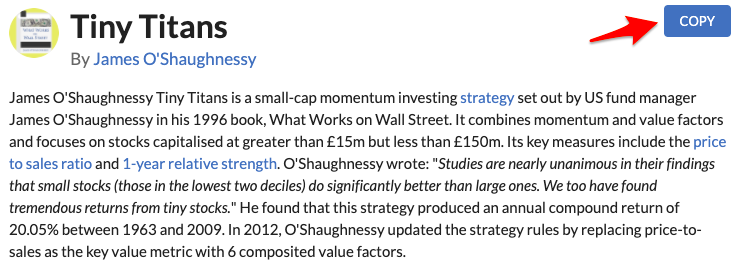
You’ve also just described James O’Shaughnessy’s Tiny Titans (more or less). This screen regularly beats the market with just a couple of simple and intuitive rules that allow it to recruit a deep field of fast-moving stocks.
Its minimalist central criteria (of price-to-sales < 1x and relative strength 1y of > 0%) does mean that no thought is given to financial health, cash flows, quality of earnings, or scale of opportunity - but it’s easy to add some of these checks in by copying and customising the screen.
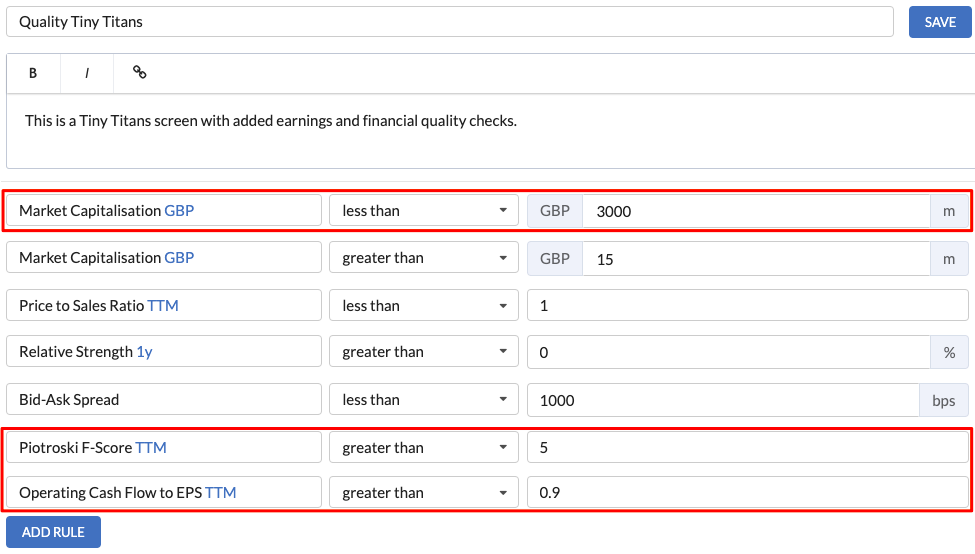
Below I’ve added two additional criteria: an F-Score of > 5 (for financial health) and an operating cash flow to EPS ratio of at least 0.9 (to show accounting earnings are backed up by cold, hard cash).
I’ve also loosened up the market cap limit to look at bigger stocks on the move.
Here’s the screen. There are many promising candidates here including a couple I have covered before such as Premier Foods, Gear4Music, Computacenter, and Volex.
All of these are exciting companies worth revisiting - but for now I’d like to look at two small caps I haven’t covered before: Tandem and MPAC.
Tandem (LON:TND)
Market cap | Spread | Op CF to EPS | F-Score | Price/sales | Relative strength 1y |
£19.4m | 779bps | 2.9 | 8 | 0.5 | +157% |
(I hold)
I’ll start with Tandem (LON:TND) given it released its half-year results yesterday.
This bike and leisure toy developer and retailer comes with a lot of history (and not all of it good).
If you remember, Character Group took a nasty tumble a year or so ago after Hasbro pulled their Peppa Pig license. That could be a risk here with Tandem’s outdoor leisure licenses, but it also owns some well-regarded bike brands that are over 100 years old.
On top of that, shares are superficially cheap even after recent share price gains. So there could be value here.
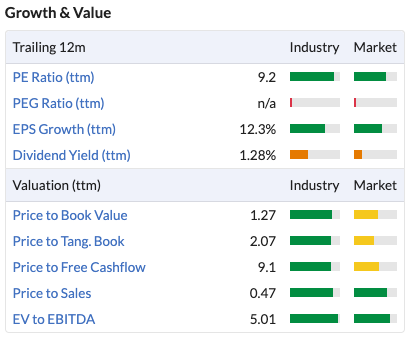
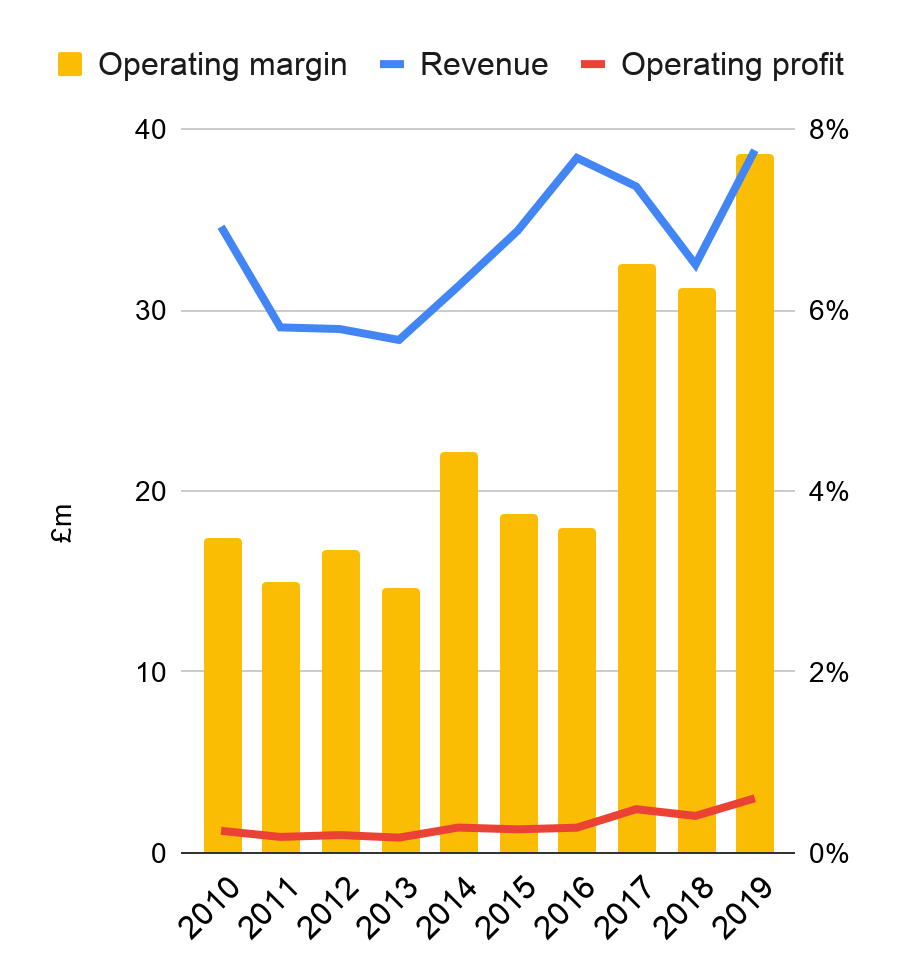
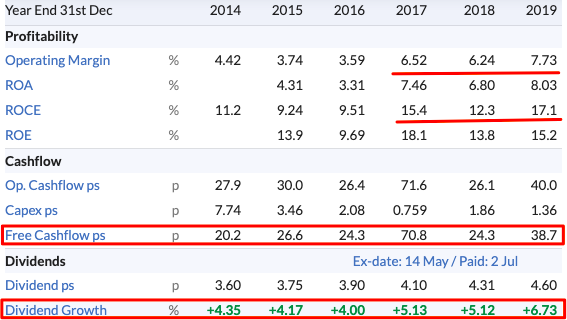
A decade of data shows a mixed performance, although the ongoing margin expansion looks promising:
I’ve actually been trying to buy a bike. It’s impossible right now.
A couple of chats with local retailers reveal a worldwide supply chain issue post-COVID. Bike manufacturers are waiting on standby, ready to manufacture - they just can’t get the parts they need from China. Meanwhile, everybody wants a bike so they can avoid the bus.
This demand has enabled a bumper first half for Tandem despite the supply chain issues. And there are also tentative signs those constraints are easing as we head into the second half.
Half year update
The group generated 22.7p of earnings per share in H1 (see yesterday’s half-year report here). Today its shares are 400p.
What’s interesting with Tandem’s results is the fact that it historically makes up most of its full year profit in the second half. Fair enough the first half of 2020 is far from ordinary, but it’s still a pattern worth bearing in mind.
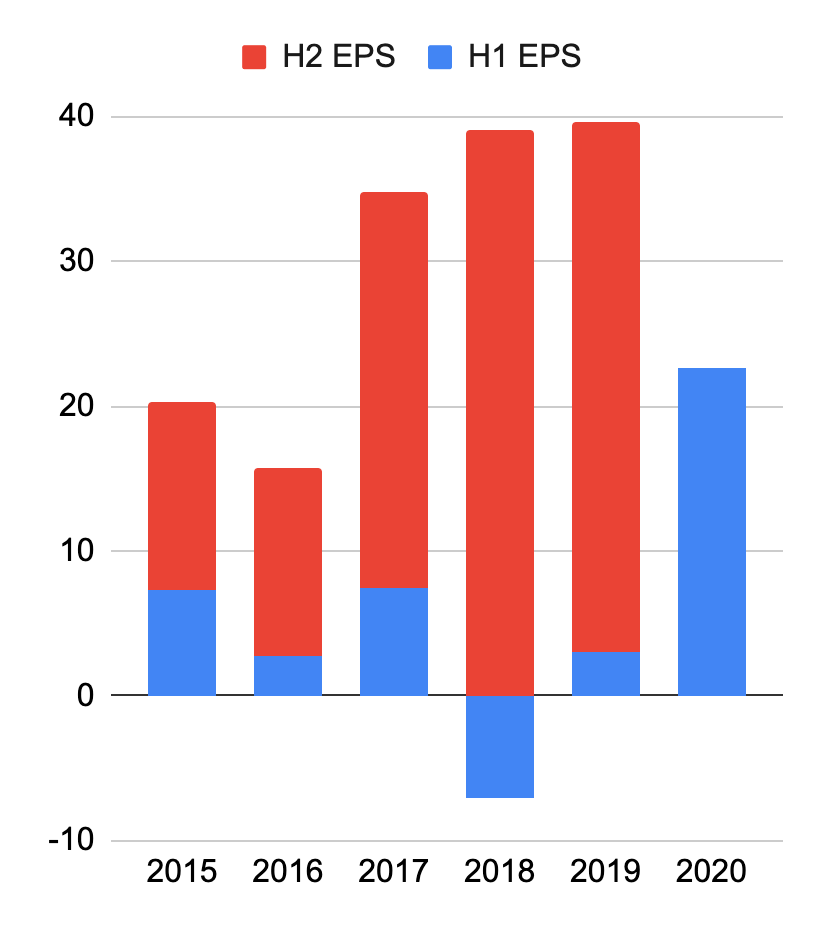
Stretching back to 2015 (and ignoring 2018, which had a loss-making H1), the average H1/H2 earnings split is about 20/80. So in the recent past, 80% of full year profit has been generated in the second half.
If you were to keep this relationship for FY20, that would imply H2 earnings per share of 90.8p and full year earnings per share of 113.5p. Now I don’t think that will happen, but if it did, that would put TND on a PE ratio of 3.3x.
In reality it would be more prudent to look at H2 2019 EPS and apply a haircut to that. In the second half of 2019, TND generated 36.6p of diluted earnings per share. Let’s say it only generates 75% of that figure this time around.
That would make for FY20 EPS of 50.15p and a PE ratio of 8x. That’s still very cheap in my view. Of course, things are changing fast at the moment so who knows what the winter has in store.
Uncertainty aside, there are some interesting snippets on current trading and H2 outlook:
From the second quarter onwards, revenues were at exceptional levels with significant growth with both independent bicycle dealers (IBD) and national retail customers… stock availability has improved significantly during September and is expected to continue into the final quarter in the lead up to Christmas.
… We are very pleased to report a strong performance from our B2C online businesses, with revenue from many of our outdoor product ranges including spas, trampolines, outdoor play and football goals ahead of the prior year.
… Our outlook for the remainder of 2020 continues to be broadly positive, although at this stage it remains difficult to confidently forecast the full year result.
It’s hard to put any numbers to that, but given that TND managed to roughly treble operating profit year-on-year in the period that included lockdown, assuming -25% year-on-year for H2 seems appropriately conservative to me.
Another point: the group mentions ‘a strong performance from its B2C online businesses’. The group says it is actively investing in this area. A look around their websites suggest there could be some low-hanging fruit here and it could be a promising growth driver.
Past warning signs - not all plain sailing
That said, the Tandem share price never really went anywhere in the years leading up to 2020:
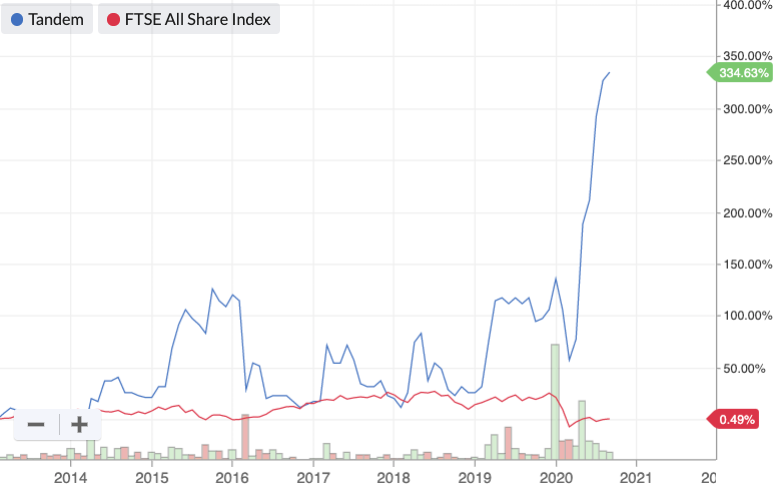
It does seem as though TND has turned a corner, but looking further back reveals a number of warning signs.
In the past, wealth has not necessarily accrued to shareholders. In fact, it’s been quite a toxic relationship with grievances including:
- A low dividend payout ratio,
- High management remuneration, relative to market cap, and
- A lack of engagement with shareholders.
Hopefully this has now changed for the better, but both Paul and Graham have had a lot to say on Tandem in the past.
A few Small Cap entries stand out:
- Jun 28, 2018 by Graham Neary
‘Sadly, this stock has been very costly to me… Back in 2015, I was convinced that it was going to do very well for investors. I "backed up the truck" and made it my biggest position. The profits that I imagined did not materialise. 2015 and 2016 results were uninspiring… The most disappointing aspect of the performance, from my view, is the sense of wastefulness.’
Note: at this point, directors were paying themselves £800k a year - about 4x what the company was paying out in dividends to shareholders and, remarkably, about 10% of its market cap at the time.
The team had also recently spent c£4m on acquisitions with apparently little payback.
An entrenched management team at odds with its shareholder base - yes, Tandem was cheap in 2018 but there were also some grave warning signs...
- Feb 10, 2020 by Paul Scott
Question marks arise again earlier this year:
Board changes - oh dear, this is a dismal section of the announcement. It reads like one of those emails that you write when you're drunk, intending to delete it, but then mutter "Sod it!" under your breath, and hit the send button anyway.
The long-serving Non-Exec Chairman, Mervyn Keene, has decided to retire on 31 July 2020.
The long-serving CEO, Steve Grant, will become the new Chairman.
The group FD becomes the new CEO.
Musical chairs then, with no fresh blood other than a (yet to be secured) new CFO.
Included in this update was a rather remarkable statement from outgoing chairman Mervyn Keene that hinted at a toxic relationship with shareholders (assuming those are the ‘keyboard warriors’ referred to below):
‘When I was appointed Non-Executive Chairman the share price was 110.5p. Today as I announce my intention to step down the price is 205p per share. Despite this, it is disappointing that internet posters, who often hide behind absurd pseudonyms, continue to type inaccurate statements and offensive remarks.
‘There are an irritating few of these keyboard warriors who have no commercial experience but think that they could run the Group better.’
Bizarre words to hear from the chairman of a listed company.
Worryingly, Paul added back in February:
I've had a lot of feedback from Tandem shareholders that the Board are terrible at communicating with shareholders, and seem to view outside shareholders as a nuisance. The Chairman's comments below rather reinforce this perception.
- Jun 26, 2020 by Graham Neary
Graham picks the thread up again in June, noting a rather awkward AGM:
The Non-Executive Chairman, Mervyn Keene, saw only 57% of votes go in his favour, with 43% against.
And the new Director, MA Taylor, was elected with just 59% of votes in favour.
You won't need me to tell you that this is an extraordinary level of dissent to see from the shareholders of a publicly listed company.
It sounds like a fascinating tale of micro-cap mismanagement, dubious capital allocation, corporate governance and communication issues, choppy trading, and activist investing.
Recent trading does suggest a change for the better. Sure there are risks heading into the winter but, as above, it’s not hard to imagine TND generating upwards of 50p in earnings per share given 22.7p of H1 EPS and a traditional H2 weighting.
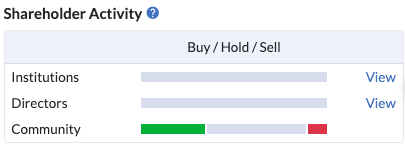
That’s not certain, but I do think the risk/reward is interesting here. It looks like the community has made up its mind, at least.
Conclusion
There are some important company-specific risks to bear in mind at Tandem, namely the historic relationship with shareholders. It does seem like action is being taken on this front.
In the group’s September 2019 presentation management lists ‘improving communications with investors in order that the Group’s performance is recognised’ as a major objective.
The pension trust is another stakeholder to bear in mind in this equation. TND has recently had to promise not to pay dividends in excess of pension payments.
That said, it seems likely to me that Tandem can hit 50p of full year earnings per share, with further scope to surprise on the upside. There are always risks so DYOR - this winter more than ever - but the shares look cheap to me and I’ve taken a small position.
There are some promising financial characteristics to TND: good margins, robust free cash flow, and steadily rising dividend payments among them.
Retail investors can gain a real edge in this part of the market, but stock liquidity is an issue and the corporate governance risks are greater too. That said I do think there could be value here given the cheap valuation and strong trading.
Do I think Tandem can become a £400m company? No, not right now at least. But do I think it can become a £40m company? Yes, and that would be a more than 100% return, which would be quite tidy!
Let’s see what the winter brings.
MPAC (LON:MPAC)
Market cap | Spread | Op CF to EPS | F-Score | Price/sales | Relative strength 1y |
£59.5m | 339bps | 3.2 | 9 | 0.75 | +81.6% |
Mpac (LON:MPAC) develops smart, cost-effective packaging machines for global businesses.
It figures on this list due to its strong momentum, financial health, and modest valuation, but what makes it stand out right now is the recent eye-catching acquisition of Switchback Group for an initial consideration of $13m in cash, with a further $2m potentially payable down the line.
This Ohio-based packaging equipment manufacturer has a strong position in the high growth craft brewing industry. It’s right in line with MPAC’s stated strategy of becoming a market leader in full-line packaging solutions for the pharmaceutical (3% of revenue), healthcare (52% of revenue) and food and beverage (45% of revenue) sectors.
It also provides a solid platform for further expansion into the US.
The unaudited results of Switchback for the year to 31 December 2019 showed revenue of $14.2m and profit before tax of $2.1m. If you include the contingent payments but knock off the net cash, you get a total acquisition price of $10.1m meaning MPAC has paid 0.71x sales or 4.8x PBT.
This looks good value to me especially if MPAC can realise synergies and use Switchback as a base for further expansion.
Tony Steels, Chief Executive, said at the time:
The acquisition of Switchback represents another key stage in the strategic development of Mpac, providing a strong USA footprint, together with a great range of products, talented employees that have demonstrated entrepreneurial growth to become market leaders with embedded customer relationships… Switchback's performance during the COVID pandemic has been strong with a good orderbook, demonstrating the high quality of the business.
Looking at MPAC’s website, it seems like quite a complementary deal with little overlap in terms of markets or products. The facts that Switchback is exposed to the fast-growing craft beer market and its trading has been robust through COVID also bode well.
What’s more, the group’s president Dave Shepherd is staying with the firm to ensure continuity. All in all, this looks like it should go very much in the “good acquisitions” pile.
Modest valuation despite promising activity
MPAC’s revenue chart tells a story.
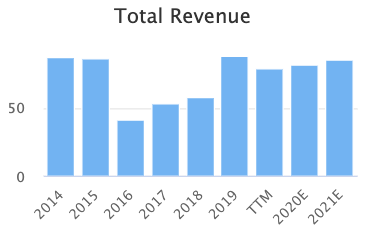
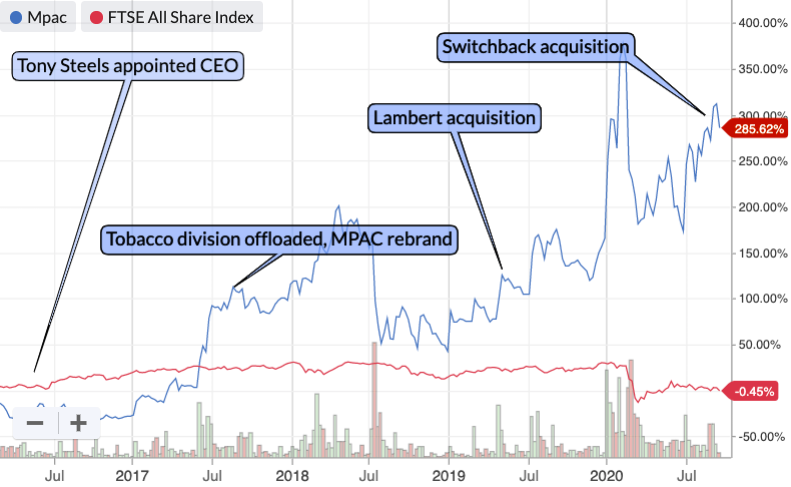
Back in 2016, MPAC was still called Molins and current CEO Tony Steels had just joined the group. It was a bad year and trading was weak. At this point, Molins broke its results down into two segments: Packaging Machinery and Instrumentation & Tobacco Machinery.
The former division’s markets were in growth, the latter’s were in decline.
In 2017 Molins became MPAC, offloading the nicotine division to focus on its growth markets of pharmaceuticals, healthcare, and food and beverage. It looks to have been a well-judged strategic pivot.
2018 saw an increasing order book, enhanced sales and profits, and an improved net cash position.
Revenue in 2019 was up 52% to £88.8m, with the acquisition of Lambert for £15m adding 160 staff and expanding MPAC’s presence in the medical and consumer healthcare sectors.
And then, fast forward to today: a resilient first half with lockdown successfully navigated and an exciting new acquisition that expands the group’s F&B footprint in the US.
Although the forecasts are actually for revenue to come down a little, given the apparently successful change in strategy and what looks like two well-judged acquisitions, perhaps MPAC can surprise to the upside. Even if not, the longer term picture looks potentially promising.
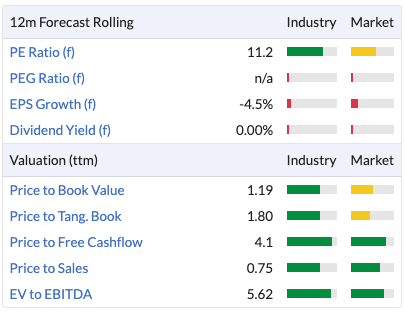
In the meantime, the group looks modestly valued despite the strong share price. So if MPAC can rustle up some meaningful earnings growth, you might hope for an increase in stock multiples as well.
The group has a pension but a look at the balance sheet shows that this has been in surplus for the past three years and looks to be in reasonably good shape. It’s actually two schemes: one UK (£20.4m surplus) and one US (£3.1m deficit).
The past couple of years have seen pension payments of £3m or so, which is a material amount of MPAC’s cash generation. It looks to be under control but progress on this front could really free up the company for additional investment and acquisitions.
Capex has ranged between £1.4m-£2.3m, so the group is paying more into its pension schemes than it is investing into its own business.
Key risks
On that note, I would put MPAC’s pension schemes as its primary risk. They are large relative to the operating company - combined gross liabilities of more than £400m compared to MPAC’s market cap of £60m and enterprise value of c£42m.
COVID, obviously, continues to be a risk. The group’s recent interims show that business has been affected, although it has remained profitable through lockdown.
And then there is the market in which MPAC operates. I don’t know much about packaging machinery, but I imagine there are some large rivals that can generate economies of scale and drive down margins.
Whether or not MPAC has enough about it to differentiate itself and protect margins remains to be seen, although the Switchback acquisition does look interesting.
Conclusion
A lot of MPAC’s longer term prospects depend on how much value its services add. Is its form of machine packaging more of a commodity-like market, or is there a bit more value-add that allows it to protect margins? That’s something I need to look into further.
It looks to be bouncing back from lockdown - order intake was 6% below prior year in H1 with several projects deferred, but by June it was actually up 14% year-on-year to £45.4m (HY 2019: £39.3m).
From what I can see, MPAC is modestly valued despite remaining profitable and cash generative through a challenging period.
The change in strategy in 2017 and a couple of sensible acquisitions since make it look interesting, with an increasing order book hinting at good growth prospects going forward.
At current levels it’s one I intend to do some more digging on. Any thoughts here are welcome!
Disclaimer
This is not financial advice. Our content is intended to be used and must be used for information and education purposes only. Please read our disclaimer and terms and conditions to understand our obligations.
13 comments
I hold Mpac (LON:MPAC) and Tandem (LON:TND) and recently added to the latter, after watching the presentation by the Jim Shears, CEO on Mello. My initial position in Mpac (LON:MPAC) resulted from watching the interview with Andrew Robinson, aka Castleford Tiger, on PI World quite sometime ago. Tandem was also reviewed by Andrew in the same interview. A big thanks to Andrew and Tamzin for alerting me to the potential of both companies.
Anyway enough of my rambling, the purpose of this post is to alert Stocko members who are not already aware of the announcement today by Mpac (LON:MPAC), which looks interesting given the focus on renewables and battery technology. No financial metrics are disclosed, but nonetheless it does appear to open an exciting and perhaps unthought of avenue for MPAC's technology.
Investegate |Mpac Group PLC Announcements | Mpac Group PLC: Mpac new contract
The Tandem CEO will be interviewed live on the show tonight
https://www.stockopedia.com/content/we-are-back-mello-monday-is-tonight-835336/
Tandem group analysis has overlooked some very severe supply chain issues facing the cycling industry that make 2021 an intriguing year .
After the tsunami of demand this current year the worlds major bicycle brands have been thumping down such large orders that lead-times have gone through the roof , Shimano is now reportedly over 1 year and SRAM is up to 6 months from 1 month , add one that assembly time , shipping time and 2021 is certainly a year with poor supply .
Whilst for sure sales in the bicycle industry 2021 will be on the basis that they will be able to sell whatever they get .
The further risk is then that presumably if demand softens at back end of 2021 that will be met with the arrival of the high inventory levels as suppliers have finally arranged shipments .
The exception to this would be the brave brands / companies that ordered big at the start of the curve (march / April this year ) or the ones with the muscle to push to the front of the queue , and Tandem are probably neither of those .
It would be very interesting for shareholders to find out if tandem group have orders placed and a supply chain that can supply product to feed the undoubted demand . I would guess this is on the unlikely side .
Thats the summation from an industry perspective so look at the order book and supply chain and if / when products will arrive otherwise there will be nothing to sell .
Hi Jack,
Excellent write up which I've only just round to responding to. I've held MPAC since 2016 and for me its a prime example of why I don't believe in automatic stop losses - especially with smaller companies. I had a holding @109p and then (with a deep breath) bought again @52p, the rest is history. I've therefore followed the MPAC story for some time.
My penny worth on MPAC is that the specialist packaging market has a high barrier to entry - especially in Pharma. Also packaging is (nearly) never the most expensive part of the product equation but a major indicator of product quality - so it needs to be got right - and thus price is not the driver. This applied to the old Tabaco Business too.
Never appreciated the Pension overhang until I joined Stocko but apart from that I intend to hold for the long-term.
What makes me feel uncomfortable about MPAC is if I add the EPS reported over 5 years the message I get is that on a normalised basis 5 years EPS is 80.4p, whereas on a reported basis EPS is 31% of this number at 24.8p and FCF generated is negative -19.6p. So the numbers we're all using to calculate our ratios are ignoring some big costs and the business is not generating cash.
I guess most of this is down to the rules on reporting acquisitions. The basis of which has been argued about for as long as I can remember. For me I think acquisition costs are real costs and ought to be written off against profits over a period particularly if MPAC regularly buys other businesses.
Thanks for the write up on Mpac (LON:MPAC) Jack (I hold). A couple of further things to consider from my own notes:
- Following the recent interms the broker said 'Looking ahead, H2 has begun well, with un-seasonally strong July bookings, especially in North America & Healthcare, with Food & Beverage not far behind’. Granted, NA sales might be pent-up demand following their slightly later and steeper first COVID wave.
- I wonder if the company could benefit from worries about security of supply following the first wave of COVID. There is pressure, especially in the healthcare industry, to localise supply chains to avoid the disruption we saw in the first wave. To take one example, the Financial Times noted that the UK Government has upped UK made personal protective equipment from about 1% pre pandemic to an expected c.70% later this year.
- Their tax charges against the company seem to have been low in the FY19 results and H1 this year. I noted previously, possibly from a Small Cap Value Report, that they were in receipt of credits/refunds but as they have resumed profitability during 2019 that situation may now reverse. I haven't fully looked at this yet but might be worth examining. Corporate tax in 2019 was about 5% - I am definitely no tax expert but that sounded low to me but that may be my naivety.
The Equity Development broker notes on Mpac (LON:MPAC) are very useful and worth a read. They're a good next step after this article for anyone looking to research this share further.
Hi Jack,
I was tempted by Tandem (LON:TND) back in June when Graham covered it in the SCVR. It was 288 at the time but decided against a holding due to size of the pension deficit liabilities, supply chain issues and the excessive spread. Looking at the share price now I wish I had invested! Oh dear.
Hi,
I attended the ?TND investor meeting yesterday and sensed that the aspiration to engage with shareholders was genuine, and yesterday was a definite good start in my view. I was also impressed with management and their vision and commitment. ?TND seems to be in a good place with high demand for their products, if anything the issue seems to be satisfying that demand. The company now has net cash and the dividend is firmly on the rise, with the pension deficit being the the main drag on potentially significant dividend growth. It is not inconceivable that the cash pile could be used to potentially deal with this and then move to raise the dividend thereafter.
Overall I came away with the view that ?TND is very much in a good place right now, and still significantly undervalued, and I topped u p this morning.
Apologies, the ? thing with the ticker is not working (again)?
It's a £ thing - Tandem (LON:TND)
Hi Frederick,
As John says, try "£ + TND" rather than "? + TND" hopefully that works next time.
Thanks for the comments - I did actually try to get an invite to the presentation but it was too late in the day. I've just looked at the presentation uploaded today (here if others are interested).
I'm aware that there have been a couple of false dawns and frustrated holders at Tandem (LON:TND) in the past but it does seem like there's some good momentum there now, with a bit of growth potential in online too. Even if the group doesn't do anything there, hopefully the strong demand and apparent easing in supply constraints is enough to bring home a solid H2
Hi Jack
Superb commentary on both companies. I recently bought a small holding in MPAC.
To think that I attended a presentation by Tony Steels just after his appointment and while the company was still Molins and switched off, thinking that tobacco machinery was a sinking ship. Oh how I failed to cotton on to the catalyst for change, unlike the Castleford Tiger, who has sizeable holdings in both MPAC and Tandem. Still better late than never as they say.
All the best
Nice read Jack. As an employee in the Pharmaceutical industry, I'd say Haver & Boecker are probably the market leaders in packaging technology. There are fairly high barriers to entry for new companies to the industry so will be interesting to see if Mpac (LON:MPAC) can gain traction. I have also seen Albertina Group with a reasonably strong presence in the sector, unfortunately I think both are private companies.
Most will take up some form of service contract with the suppliers of the machine technology, for Maintenance purposes, so it could generate ongoing revenue if they can get their machines into enough production facilities.
Cheers Forbsy that's interesting - I've just had a quick look & reckon you're right in that they're both private. Not much info on them but good to know the names.
Pharma was just shy of 50% of Mpac (LON:MPAC) revenue when I checked so not insubstantial. Plenty more work to do on the company but I quite like what I see so far