Cloudbreak Discovery - Seven Gold Targets at Crofton
RNS Number : 7540ZCloudbreak Discovery PLC21 October 2026
21 October 2026
Cloudbreak Discovery Plc
('Cloudbreak', or 'the Company')
Cloudbreak Identifies Seven Gold Targets at Crofton
Cloudbreak Discovery PLC (LSE: CDL) is pleased to announce the identification of seven priority exploration targets at its Crofton Gold Project in Western Australia, following the completion of a detailed review and interpretation of historical geophysical and geochemical data. This complimented the extensive fieldwork undertaken, which comprised geological mapping, rock-chip sampling and soil geochemistry across the highest-priority target areas.
Highlights
· Seven exploration targets identified at Crofton, comprising four high-priority and three lower-priority targets following an integrated review of geophysical and historical geochemical data.
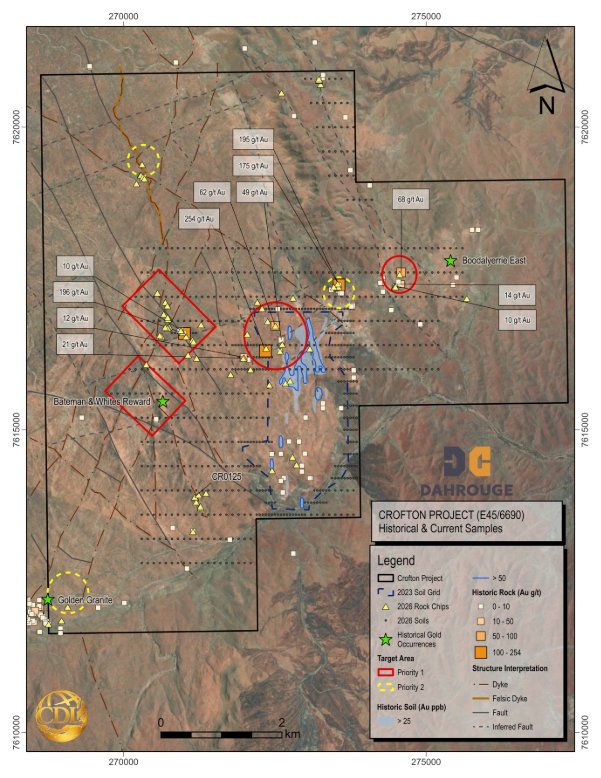
· The high-priority targets, set out in Figure 1, have been defined through the combination of structural complexity, magnetic signatures, historical gold occurrences and anomalous gold geochemistry.
· Initial field observations have identified hydrothermal quartz veining, intrusive dyke structures and localised occurrences of copper oxides and chalcopyrite within the quartz vein system. These observations, together with historical gold occurrences, provide additional geological information to guide ongoing exploration at Crofton
· Historical workings across the project have returned high-grade gold results of up to 253 g/t Au and 215 g/t Ag from sampling undertaken in 2021.
· Historical production from the Crofton workings between 1901 and 1910 is reported to have averaged approximately 150 g/t Au.
· Detailed interpretation of high-resolution aeromagnetic data, integrated with historical soil and rock-chip sampling, has identified a number of prospective structural corridors for follow-up exploration.
· Several NW-SE trending structures are associated with known historical gold occurrences, while a prominent series of NNE-trending magnetic dykes may define an additional prospective structural corridor.
· Completed on-ground fieldwork, geological mapping and detailed rock-chip sampling focused initially on the priority target areas, alongside an expanded soil sampling programme.
· The programme is designed to define and refine drill targets for the next stage of exploration at Crofton.
Cloudbreak Managing Director Tom Evans commented:
“Crofton represents an exciting opportunity to systematically explore an area with a genuine history of high-grade gold mineralisation and production.
“Our recent integration of the high-resolution aeromagnetic data with the historical geochemical, information plus this comprehensive field campaign by our team has identified six more priority targets, including four that we believe warrant immediate follow-up.
“Initial fieldwork has provided further geological insight into the project's structural setting, including the identification of hydrothermal quartz vein systems, intrusive dyke structures and localised occurrences of copper oxides and chalcopyrite associated with quartz veining. While the significance of these copper occurrences remains to be determined, they provide an additional element for investigation alongside the project's established historical gold and silver occurrences.
“The geological mapping, rock-chip sampling and expanded soil geochemistry programme completed is designed to test and refine our exploration targets. Importantly, this work enables us to look beyond the known historical workings and use the structural and geophysical interpretation to identify areas where additional gold mineralisation may occur.
“The combination of historical high-grade gold occurrences, prospective structural corridors and newly defined exploration targets provides a strong platform for the next stage of exploration at Crofton, while we continue to progress our exploration portfolio across Western Australia.
“Paterson, I look forward to updating shareholders when the final results of the airborne survey is completed.
“At Darlot West, planning for the Company’s proposed air-core drilling programme is also progressing. The Company has received the required regulatory approval for the proposed programme and is currently awaiting completion of the heritage survey process before drilling can commence. We will provide a further update on the timing of the drilling programme once this process has been completed.
“Lastly, I would like to reiterate that the company remains fully funded for its currently planned exploration activities.”
Crofton Gold Project – Seven Targets Identified
The Crofton Gold Project hosts historical high-grade gold workings and has been the subject of a detailed review of available geophysical and geochemical datasets.
Consultant geophysicists Terra Resources completed an interpretation of high-resolution aeromagnetic data, acquired at 50 metre line spacing across most of the project area. This interpretation was integrated with historical surface geochemical data, including soil and rock-chip sampling, to identify areas of enhanced exploration potential, set out in Figure 1.
The project is predominantly underlain by the Yilgalong Granitoid, with the eastern margin underlain by basaltic rocks of the younger Kylena Formation.
Several NW-SE trending faults have been identified across the tenement, with a number of these structures associated with historical gold occurrences, including Rockland, Bateman and White’s Reward. The structures are evident within the aeromagnetic data and occur predominantly within the Yilgalong Granitoid.
Figure 1: Crofton - Historical and Current Sampling Programmes
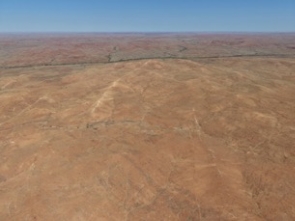
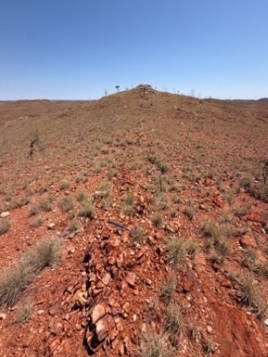
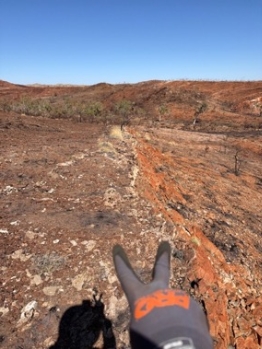
Initial field mapping has also identified a dominant NNW-N structural trend characterised by hydrothermal quartz veins, some of which are mineralised (Figure 2). A separate NNE-trending structural system has been observed, with some structures intruded by mafic dykes (Figure 2).
The aeromagnetic interpretation further highlights a series of NNE-trending magnetic features within the granitoid. Field observations have identified both felsic and mafic intrusive dykes, together with quartz veining associated with the mapped structural trends (Figures 4 – 7). These features provide additional geological context for the interpretation of potential mineralised structures and will be investigated through the ongoing exploration programmes.
Following the integration of the structural interpretation with historical gold occurrences and anomalous Au geochemistry, four high-priority and three lower-priority exploration targets have been defined.
The four high-priority targets are characterised by combinations of:
· Intersecting and cross-cutting structures;
· Significant magnetic gradients indicative of changes in lithology;
· Historical gold occurrences; and
· Anomalous historical gold results from soil and rock-chip sampling.
Figure 2: Dominant NNW-N structural trend of hydrothermal quartz veins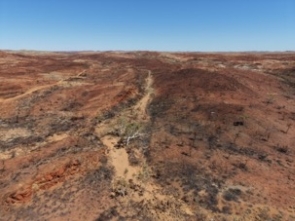
Figure 3: NNE trending structure with local mafic dyke intrusions
Figure 4: NNE Trending Felsic Dyke
Figure 5: NE trending Dolerite dyke
Figure 6: NNE trending Quartz Vein Occurrence - contact
Figure 7: NNE trending Quartz Vein at Basalt-granite
Field Exploration Programme Completed
Cloudbreak has completed an on-ground exploration programme across the priority target areas set out at Figure 1.
The programme comprised:
· Detailed geological mapping;
· Rock-chip sampling across identified structural and geological targets; and
· An expanded soil geochemistry programme to extend existing historical sampling coverage.
The work was designed to validate the interpreted geological and structural targets, expand the Company’s understanding of the distribution of gold mineralisation and identify priority areas for potential drill testing.
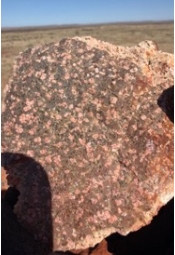
Figure 8: Felsic Dyke*
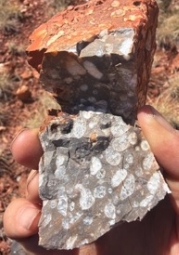
Figure 9: Amygdaloidal Basalt*
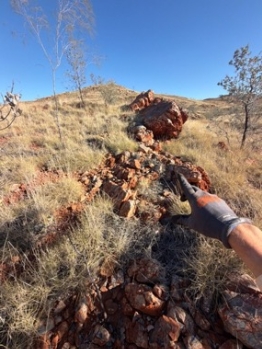
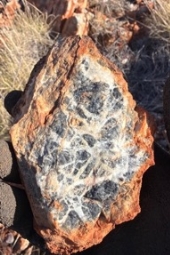
Figure 10: Quartz Veining *
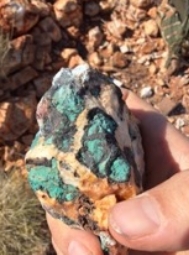
Figure 11: Localised copper oxide mineralisation (malachite)*
*Note to Figures 8 – 11 “Visual estimates of mineral abundance should never be considered a proxy or substitute for laboratory analyses where concentrations or grades are the factor of principal economic interest. Visual estimates also potentially provide no information regarding impurities or deleterious physical properties relevant to valuations.’
Initial geological observations have identified hydrothermal quartz veining, intrusive dyke structures and localised occurrences of copper mineralisation within the quartz vein system.
Copper oxides, including malachite, have been observed in association with quartz veining, in a geological setting similar to that of the historical gold mineralisation. These occurrences appear to be restricted to discrete sections of the veins. In the southern part of the tenement, near sample location CR0125 shown on Figure 1, copper mineralisation was observed within an approximately 25-metre-long section of a quartz ridgeline approximately 1.5 metres wide (Figure 11).
Although these copper occurrences are localised and their economic significance has not been established, their apparent association with the gold-bearing quartz vein system warrants further investigation.
Ongoing geological mapping, rock-chip sampling and geochemical analysis will seek to establish the distribution, extent and significance of the observed mineralisation and further assess the relationship between the quartz vein systems, structural features and historical gold occurrences at Crofton.
These results will be used to refine the existing target inventory and establish drill-ready targets for the next phase of exploration.
Historical High-Grade Gold
The Crofton Project has a history of high-grade gold production and exploration.
Historical workings within the tenement have returned high-grade results, including sampling undertaken in 2021 which returned results of up to 253 g/t Au and 215 g/t Ag. Historical production between 1901 and 1910 is reported to have averaged approximately 150 g/t Au.
While historical production and sampling results are not necessarily indicative of future exploration results, Cloudbreak considers the combination of these historical gold occurrences with the newly defined structural and geophysical targets to provide a strong basis for systematic exploration across the project.
This announcement contains information which, prior to its disclosure, was inside information as stipulated under Regulation 11 of the Market Abuse (Amendment) (EU Exit) Regulations 2019/310 (as amended).
-END-
For Further Information, please contact:
Cloudbreak Discovery PLC
Peter Huljich, Chairman
Tom Evans, Managing Director
Tel: +44 207 887 6139
Tel: +44 7851 703440
Marex Financial
(Broker)
Angelo Sofocleous /
Matt Bailey
Tel: +44 (0) 207 655 6000
Email: corporate@marex.com
About Cloudbreak Discovery PLC
LSE listed Cloudbreak Discovery PLC is a leading gold, precious and base metals resource explorer. Cloudbreak is focused on mineral exploration in Western Australia with the aim of bringing near-term cashflow and driving shareholder value. Through its wholly owned subsidiaries, the Company will develop its array of mineral assets, whilst continuing to generate new projects with a particular focus on commodities with high intrinsic value. Cloudbreak's generative model across the mineral sector enables a multi-asset approach to investing in the commodity cycle.
Competent Persons Statement
The Information in this report that relates to exploration results, mineral resources or ore reserves is based on information compiled by Mr Edward Mead, who is a Fellow of the Australasian Institute of Mining and Metallurgy. Mr Mead is a consultant to Cloudbreak Discovery Plc and employed by Doraleda Pty Ltd. Mr Mead has sufficient experience which is relevant to the style of mineralisation and type of deposits under consideration and to the activity that he is undertaking to qualify as a Competent Person as defined in the 2012 edition of the `Australian Code for Reporting Exploration Results, Mineral Resources and Ore Reserves' (the JORC Code). Mr Mead consents to the inclusion of this information in the form and context in which it appears in this report.
This information is provided by RNS, the news service of the London Stock Exchange. RNS is approved by the Financial Conduct Authority to act as a Primary Information Provider in the United Kingdom. Terms and conditions relating to the use and distribution of this information may apply. For further information, please contact rns@lseg.com or visit www.rns.com.
RNS may use your IP address to confirm compliance with the terms and conditions, to analyse how you engage with the information contained in this communication, and to share such analysis on an anonymised basis with others as part of our commercial services. For further information about how RNS and the London Stock Exchange use the personal data you provide us, please see our Privacy Policy.ENDUPDEAXEEAEXKFFA