The Week Ahead (20-24 July): takeovers, Terry Smith, Euro rates, US tech earnings, Howden Joinery

Welcome back to The Week Ahead. With the school holidays looming, newsflow is winding down a little – with one exception. Takeover activity continues, with a flood of bids from private equity and trade buyers keen to take control of UK firms.
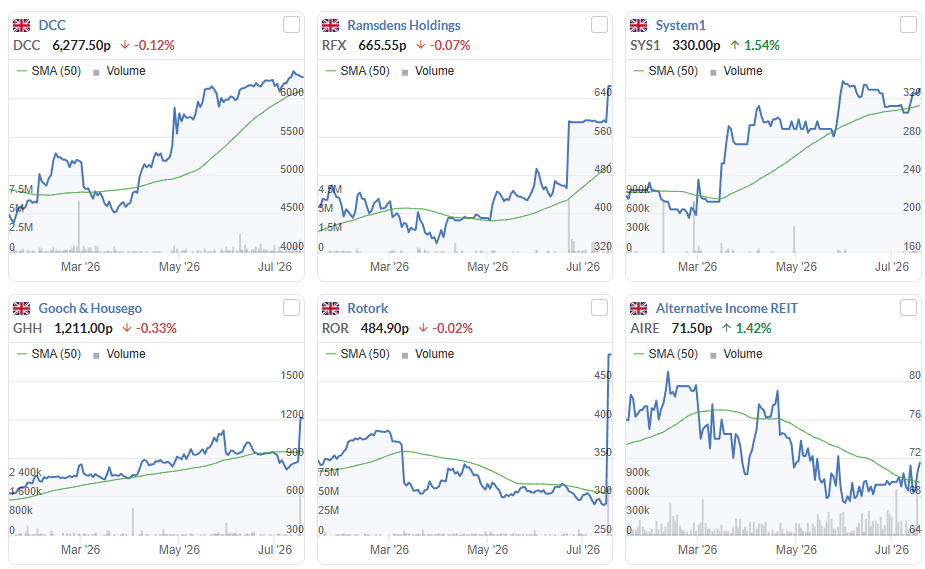
This week alone has seen recommended offers for Rotork (LON:ROR) and Gooch & Housego (LON:GHH), an increased and recommended offer for Ramsdens Holdings (LON:RFX), plus possible bids for DCC (LON:DCC), System1 (LON:SYS1) and Alternative Income REIT (LON:AIRE).
Other big cap bid situations rumbling along in the background include easyJet (LON:EZJ) and SEGRO (LON:SGRO).
The discrepancy between valuations in the US and UK market is certainly one part of this. Firstcash Holdings (NSQ:FCFS), the company buying Ramsdens, trades on a 2026E P/E of 20. Prior to receiving a takeover offer, Ramsdens was trading on a 2026E P/E of 7, despite being a more profitable business than FirstCash:
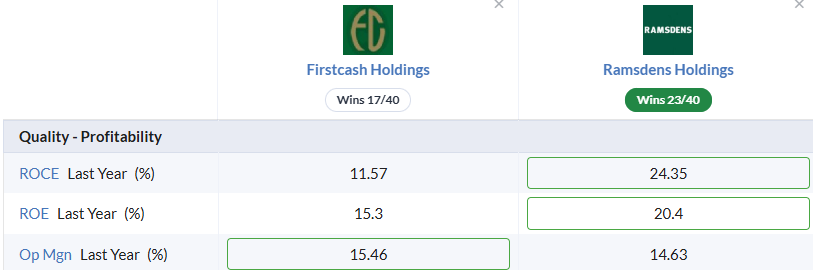
Adding lower-rated earnings to a higher-rated business produces an immediate win, as the market will usually value the new earnings at the higher rating. This tends to provide a boost to the acquirer's share price.
In another example, FTSE 100 warehouse REIT Segro was trading at less than 1x book value when US peer Prologis (NYQ:PLD) made an initial all-share offer that was swiftly rejected. Prologis currently trades at 2.6x book value, so using its stock to buy Segro at book value would again provide an instant ‘profit’ for Prologis shareholders.
I can’t help wondering if there’s another element to this, though. While some of the companies being acquired are clearly quite cheap, is there a risk that some of the acquirers are either overspending or are expensively-rated themselves? Are pawnbrokers’ earnings from gold approaching a peak, for example?
Said differently, I wonder if the current level of activity could be a side effect of the exuberance of the AI-led market boom. This chart from the Institute for Mergers, Acquisitions & Alliances shows that historically, UK M&A activity has tended to peak prior to major market crashes:
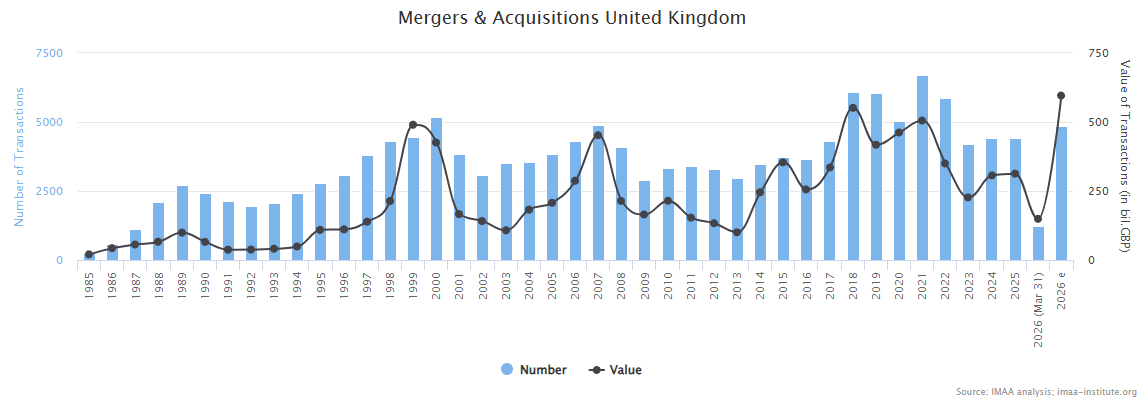
Source: IMAA
Elsewhere, I was also struck this week by the news that Terry Smith, who I see as one of the UK’s most principled and disciplined investors, is abandoning the third leg of his company’s Fundsmith’s investment mantra:
Buy good companies
Don’t overpay
Do nothing
Smith’s track record since the fund’s inception in 2010 has been excellent – his main fund has delivered an annualised total return of 13.1% over the last 16 years.
The only problem is that index trackers have now caught up. The equivalent performance figure for the MSCI World Index since 2010 is now 12.5%.
The Fundsmith Equity Fund underperformed this passive equity benchmark by a painful 14.1% in H1 and has now lagged the index every year since 2021:
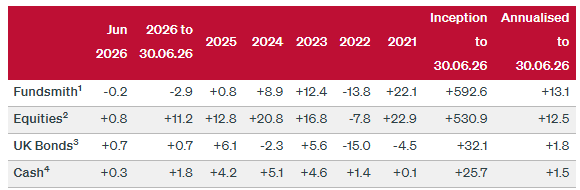
Source: Fundsmith factsheet 16 July 2026
In his half-year letter to shareholders, Smith says that continuing outflows from his fund (presumably into passive funds) have led him to conclude that “the third leg of our strategy … probably needs the most change”.
Remarkably, Fundsmith’s portfolio turnover hit a high of 51% in the first half of this year as he made significant changes to put this new strategy into action.
While this level of turnover isn’t expected to continue, Smith says that Fundsmith “will take more account of momentum” and “be more active in the future”.
Smith has been sounding the alarm about what he sees as the dangers of passive investing for some time. But he now admits that there will be little point in being proved right in the future if his fund has closed in the meantime.
This sounds a bit like the Keynes quote that “markets can remain irrational longer than you can remain solvent.”. It also reminds me of those fund managers who were forced to abandon underperforming value and quality strategies in the late stages of the 1999 and 2007 market booms.
I don’t want to sound too much like a prophet of doom. For what (little) it’s worth, I don’t think a market crash is likely in the near future. But I can’t help feeling that the current shape of markets won’t hold indefinitely.
Capital expenditure at the big hyperscalers is expected to approach 50% of revenue over the next year, in some cases. This is both unprecedented and – potentially – unsustainable.
As some of you have probably experienced in your workplaces, the cost of AI tokens is rising rapidly and organisations are starting to apply a critical eye to the value being generated by such usage. Some spend is also being diverted to cheaper models, including those from Chinese firms.
While it’s certainly possible that rapid adoption of AI will drive demand growth for many years, it’s not yet clear what level of returns providers will be able to generate on these services.
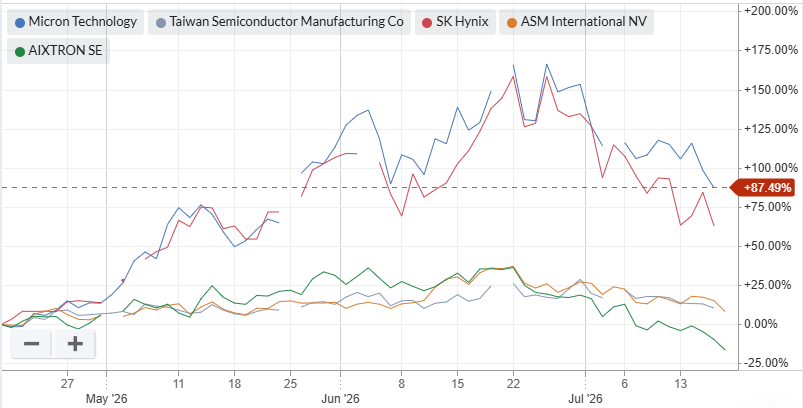
The recent reversal in chip stocks (despite near-exponential profit growth) is one example of investors questioning whether spending can be maintained at this level:
Economic news
Whatever happens, the economic news scheduled for next week doesn’t seem likely to trigger any dramatic reactions.
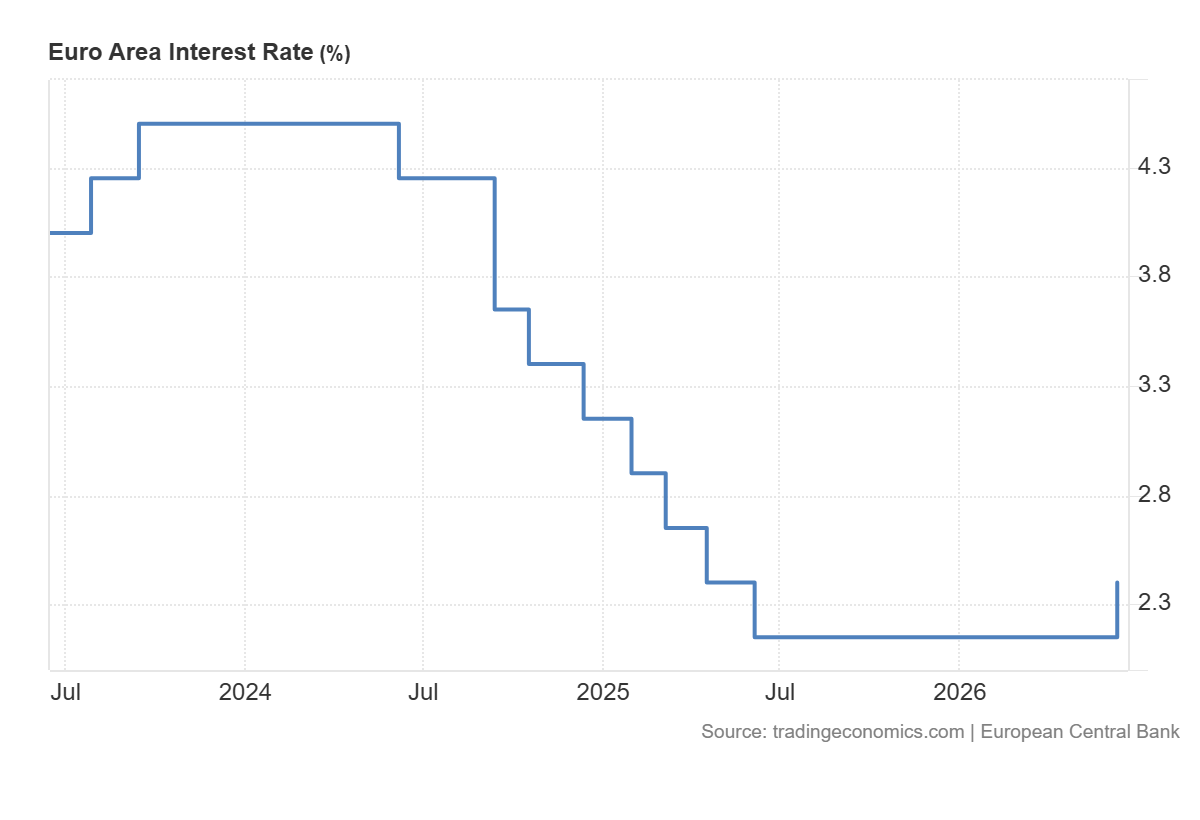
The most significant item on the calendar is probably the European Central Bank’s interest rate decision on Thursday. Current consensus is for the ECB to leave rates on hold, following June’s increase to 2.4%.
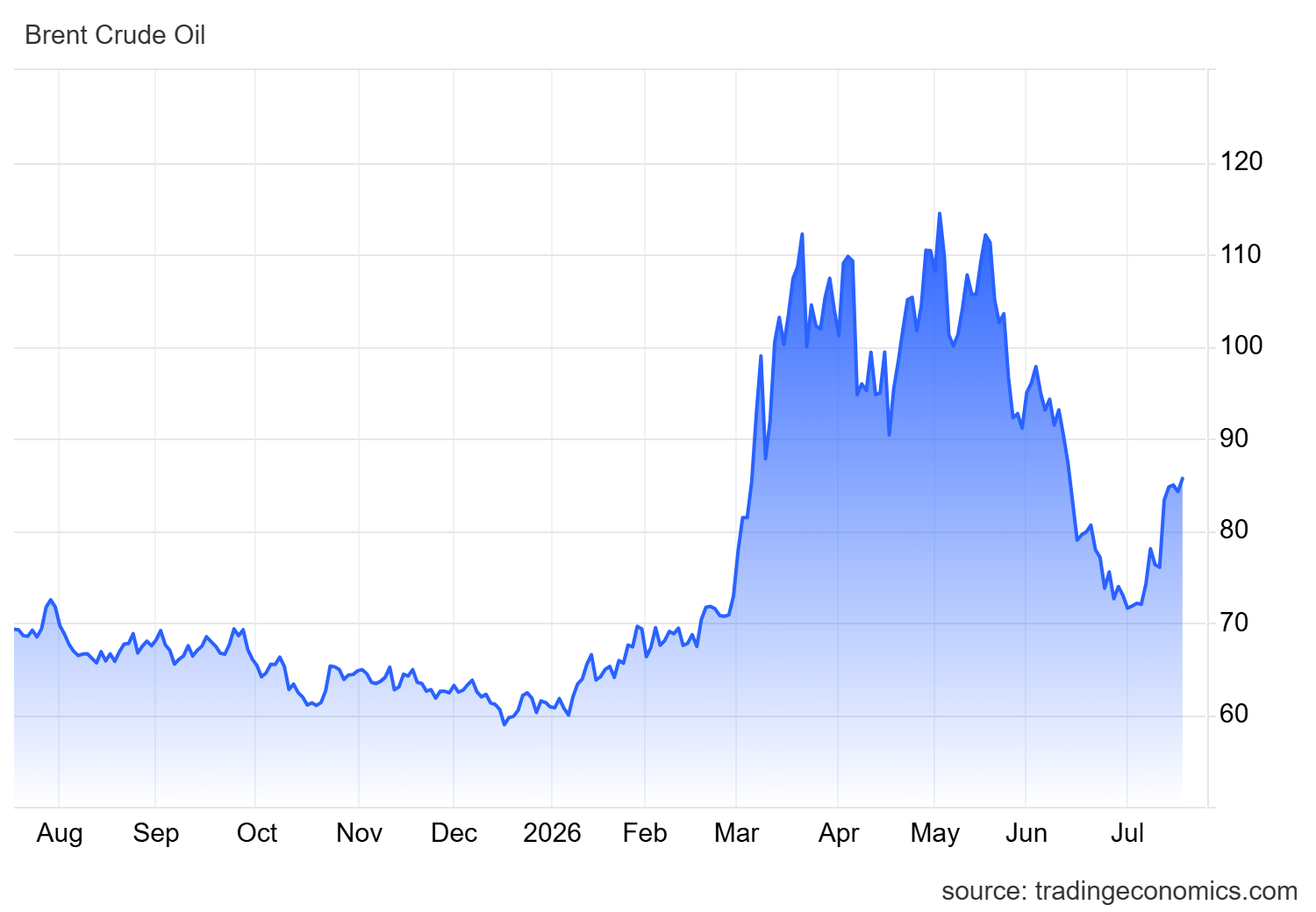
Oil has the potential to deliver further surprises, although so far the resumption of hostilities in the Middle East has only prompted a relatively modest reaction:
Company news
Turning back to UK markets, company news is limited next week, but there are a few stories I think could be of interest.
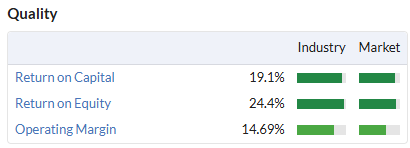
Here in the UK, I am looking forward to seeing the latest results from Howden Joinery (LON:HWDN). Shares in this FTSE 250 kitchen specialist are trading at levels first seen five years ago, but earnings have held up well through a difficult period and are expected to return to growth next year.
A forward P/E of 15 and a 5% free cash flow yield don't seem expensive to me for a business with strong quality metrics and a good track record:
While Howden clearly has some cyclical and macro exposure, I am starting to wonder if a buying opportunity could be emerging. Heavy institutional buying over the last couple of months suggests I’m not the only one holding this view.
Other UK mid-caps of note with results due next week include MONY (LON:MONY), Morgan Sindall (LON:MGNS) and Jupiter Fund Management (LON:JUP). Small-cap watchers may also be interested in the latest from turnaround retailer Works co uk (LON:WRKS).
Outside the UK, the latest numbers from Alphabet, Tesla, Intel and a raft of financial stocks are likely to be of interest to the wider mark. So too, perhaps, will Volkswagen's half-year earnings – one of the world’s largest car makers is reported to be planning to cut up to 100,000 jobs as it struggles to compete with a tidal wave of cheap Chinese cars.
Enjoy the weekend!
Here’s a summary of what’s expected next week.
Economic Calendar
Date / Time (BST) | Country | Event |
20 July | ||
00:01 | UK | Rightmove House Price Index |
07:00 | Germany | Producer Price Index |
21 July | ||
07:00 | UK | Unemployment Rate |
10:00 | Germany | ZEW Economic Sentiment Index |
13:15 | US | ADP Weekly Employment Change |
21:30 | US | API Weekly Crude Oil Stock |
22 July | ||
07:00 | UK | Inflation |
15:30 | US | EIA Crude Oil Inventories |
15:30 | US | EIA Gasoline Inventories |
23 July | ||
11:00 | UK | CBI Business Optimism Index |
13:15 | EU | ECB Interest Rate Decision |
13:30 | US | Initial Jobless Claims |
24 July | ||
00:01 | UK | GfK Consumer Confidence |
00:30 | Japan | Inflation |
07:00 | UK | Retail Sales |
08:30 | Germany | S&P Global Manufacturing PMI Flash |
09:30 | UK | S&P Global Manufacturing PMI Flash |
14:45 | US | S&P Global Manufacturing PMI Flash |
15:00 | US | New Home Sales |
18:00 | US | Baker Hughes Rig Count |
Companies Reporting
Date | UK Trading Updates and AGMS | UK Financial Results | International Financial Results |
Monday 20 July | Big Yellow (LON:BYG) | Dominos Pizza (NSQ:DPZ) | |
Tuesday 21 July | Audioboom (LON:BOOM) Compass (LON:CPG) GB (LON:GBG) JD Sports Fashion (LON:JD.). Kier (LON:KIE) MITIE (LON:MTO) | Gateley (Holdings) (LON:GTLY) MHA (LON:MHA) MONY (LON:MONY) | Charles Schwab (NYQ:SCHW) Chubb (NYQ:CB) Danaher (NYQ:DHR) DHI (NYQ:DHX) General Motors Co (NYQ:GM) Halliburton Co (NYQ:HAL) Interactive Brokers (NSQ:IBKR) MM Conferences SA (WAR:MMC) 3M Co (NYQ:MMM) Northrop Grumman (NYQ:NOC) |
Wednesday 22 July | Experian (LON:EXPN) Frp Advisory (LON:FRP) Molten Ventures (LON:GROW) HICL Infrastructure (LON:HICL) JD Sports Fashion (LON:JD.)W Norcros (LON:NXR) Pensionbee (LON:PBEE) Rome Resources (LON:RMR) Tate & Lyle (LON:TATE) | Reach (LON:RCH) | AT&T (NYQ:T) Alphabet (NSQ:GOOGL) CME (NSQ:CME) GE Vernova (NYQ:GEV) Las Vegas Sands (NYQ:LVS) Philip Morris International (NYQ:PM) Roche Holding AG (SWX:RO) Tesla (NSQ:TSLA) Texas Instruments (NSQ:TXN) |
Thursday 23 July | AJ Bell (LON:AJB) Halma (LON:HLMA) Inspiration Healthcare (LON:IHC) Kistos Holdings (LON:KIST) Maintel Holdings (LON:MAI) Motorpoint (LON:MOTR) Orchard Funding (LON:ORCH) Oxford Instruments (LON:OXIG) Touchstone Exploration (LON:TXP) VP (LON:VP.). Workspace (LON:WKP) | Howden Joinery (LON:HWDN) Jupiter Fund Management (LON:JUP) Morgan Sindall (LON:MGNS) Naked Wines (LON:WINE) Works co uk (LON:WRKS) | Blackstone (NYQ:BX) Comcast (NSQ:CMCSA) Honeywell International Inc (LON:HON) Intel (NSQ:INTC) Lockheed Martin (NYQ:LMT) Newmont (NYQ:NEM) Norfolk Southern (NYQ:NSC) PG&E (NYQ:PCG) Rtx (NYQ:RTX) SAP SE (ETR:SAP) T-Mobile Us (NSQ:TMUS) Thales SA (EPA:HO) TotalEnergies SE (EPA:TTE) ) Thermo Fisher Scientific (NYQ:TMO) Union Pacific (NYQ:UNP) |
Friday 24 July | Cadence Minerals (LON:KDNC) CMC Markets (LON:CMCX) Fiinu (LON:BANK) | American Express Co (NYQ:AXP) Exxonmobil Holdings (NYQ:XOM) Nestle SA (SWX:NESN) Slb NV (NYQ:SLB) Verizon Communications (NYQ:VZ) Volkswagen AG (ETR:VOW3) |
Disclosure: at the time of publication, Roland owns shares in DCC.
Disclaimer
This is not financial advice. Our content is intended to be used and must be used for information and education purposes only. Please read our disclaimer and terms and conditions to understand our obligations.

7 comments
It will always amaze me on how many posters on Stockopedia still think fast-growing US stocks are more expensive than the stagnant UK companies.
SP500 earnings are projected to grow 24% in 2026, with FTSE100 only growing 12%…..
Same posters have never even had to courage to analyse/explain the investment case on any UK company!
I have in the past explained (early before they were even discussed by anyone) in detail the excellent investment opportunities on McBride (LON:MCB) Made Tech (LON:MTEC) Kier (LON:KIE) Centrica (LON:CNA) Costain (LON:COST) Gulf Keystone Petroleum (LON:GKP) and many others.
UK will never be cheaper than the US due to its growth, liquidity concerns, and lack of talent and leadership. Plenty of talented people but moving to the US for a much better salary!
All the best
Arbuthnot Banking (LON:ARBB) results Tuesday also boring bank 7% yield oversold?
Excellent round up Roland.
Yes U.S. is too expensive and U.K. too cheap.
Yes we are in a bubble.
When will it pop?
Who knows!
What are people’s thoughts on what Andy Burnham will announce / bring in when he starts next week? I suspect he will announce big new house building plans (we have heard that before) re nationalizing of some utility / rail / infrastructure companies, possible business rates relief and VAT reform for hospitality businesses and increased taxation on online businesses like Amazon etc
I think there is really only one big question: how the hell is devolution going to work?
I assume that as he wants to build lots of council houses, but also wants to devolve power regionally, we'll hear some detail around how the authorities will receive powers to make this happen: how will they raise money, how will they be empowered to actually deliver the projects, how will they be held to account for the investments they're making being good investments or not (and not using devolved power as a means to enrich their mates)? How will he get it all done quickly?
I wonder also if his big news on North Sea could be to devolve decision making on the transition from being a fossil fuel orientated place to a long term plan when it all runs out to Aberdeen, so that they have to make the decisions on approving fields, handling decommissioning, and reinvesting the money appropriately to wind farms and whatever else they can invest in to make the area prosperous over the long term? Perhaps that's a complicated minefield but I wonder if this is the kind of big thing he wants to get out of devolvement of power?
Good point re devolution and the North Sea oil decision. Think it’s time to put the tin hats on for those who invest in UK shares. I’m betting on pubs, hospitality and house builders will see a bit of a bounce - utility / infrastructure companies will get a bit of a hit and the tech and oil companies are too big and global to see an impact.
Spend N Tax N Borrow
will be what happens.
What Andy says will likely be something else entirely.