The Week Ahead (31 Aug - 4 Sept): waiting on Warsh, energy costs + Ashtead Technology & Michelmersh Brick

Investors worried about an AI investment bubble will have been reassured (or perhaps concerned?) by Nvidia’s Q2 results this week.
The company’s headline results came in ahead of expectations and management said it expected to see revenue growth of around 70% next year.
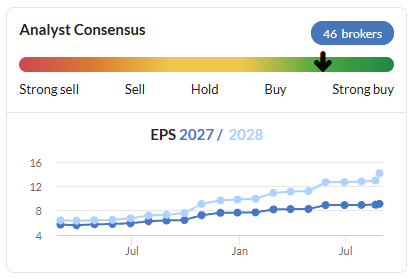
I don’t follow Nvidia closely, but apparently this guidance broke the company’s normal trend of only providing quarterly projections. Analysts have followed suit by nudging up FY28 forecasts:
Bumper results from Nvidia triggered widespread gains for tech stocks, but the general sentiment elsewhere was more cautious.
A number of sectors recorded losses, perhaps reflecting uncertainty ahead of Federal Reserve Chair Kevin Warsh’s inaugural speech at the Economic Policy Symposium in Jackson Hole later today (Friday pm).
Economic news
By the time you read this we may have learned what Mr Warsh has to say about the US economy, inflation and interest rates.
What is already clear is the growing concern in financial markets about persistent inflation, stubborn government deficits and high borrowing levels.
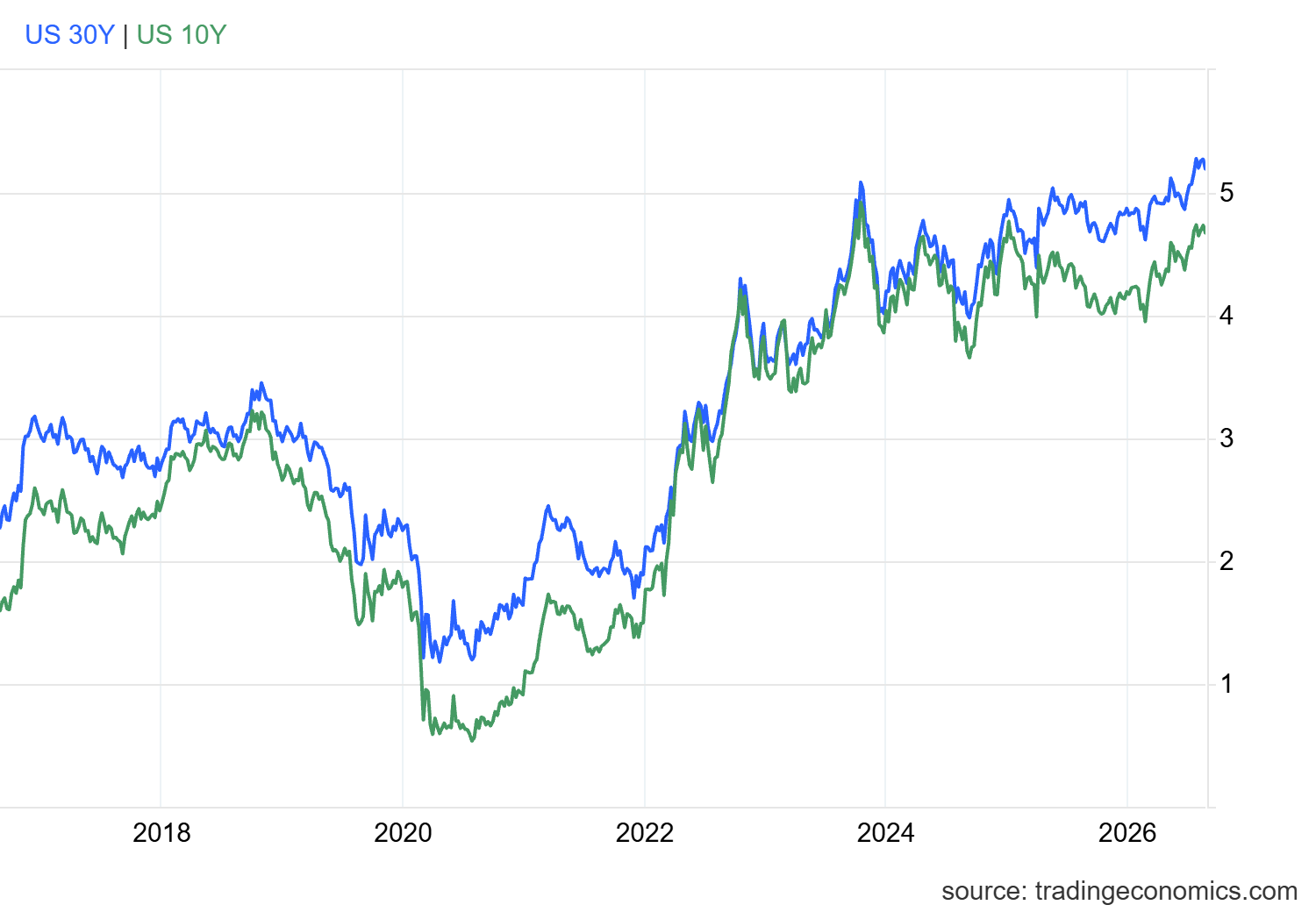
US national debt is now over $40tn and the budget deficit shows no sign of shrinking. The Treasury is now trying to find ways of bringing down the cost of long-term borrowing, which now exceeds 5%:
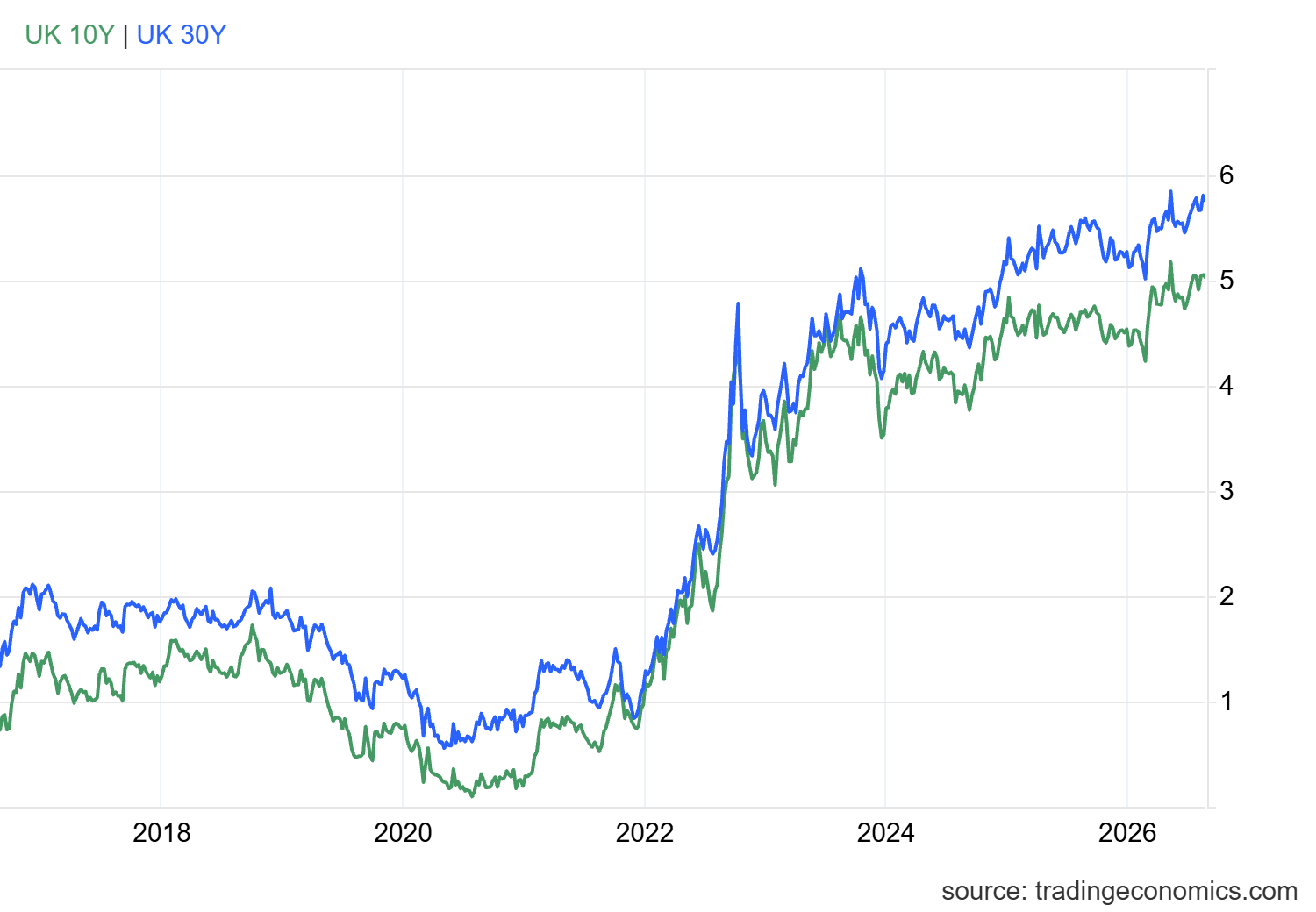
In the UK, government borrowing costs are even higher, with 30-year gilts now yielding nearly 6%:
Conflicts roil energy markets
Twin conflicts in the Middle East and Ukraine are continuing to influence global energy markets. Neither Putin nor Trump can be seen to exit these conflicts as obvious losers. As a result, the stalemate in Ukraine seems likely to continue – with worrying reports that Putin is considering escalating Russia’s offensive.
In the Middle East, I can’t help feeling signs are emerging that the situation could also evolve into a murky stalemate, with mixed messaging on Hormuz transits and escalating US economic sanctions against Iran.
One example of how the situation is evolving is that a number of Gulf nations are using tankers they own or control to carry out shuttle runs through the Strait of Hormuz, before transhipping loads to more risk-averse tankers on the other side of the Strait. A number of these shuttle tankers have been attacked by Iranian missiles – it seems that these national governments are prepared to accept this risk in order to maintain trade.
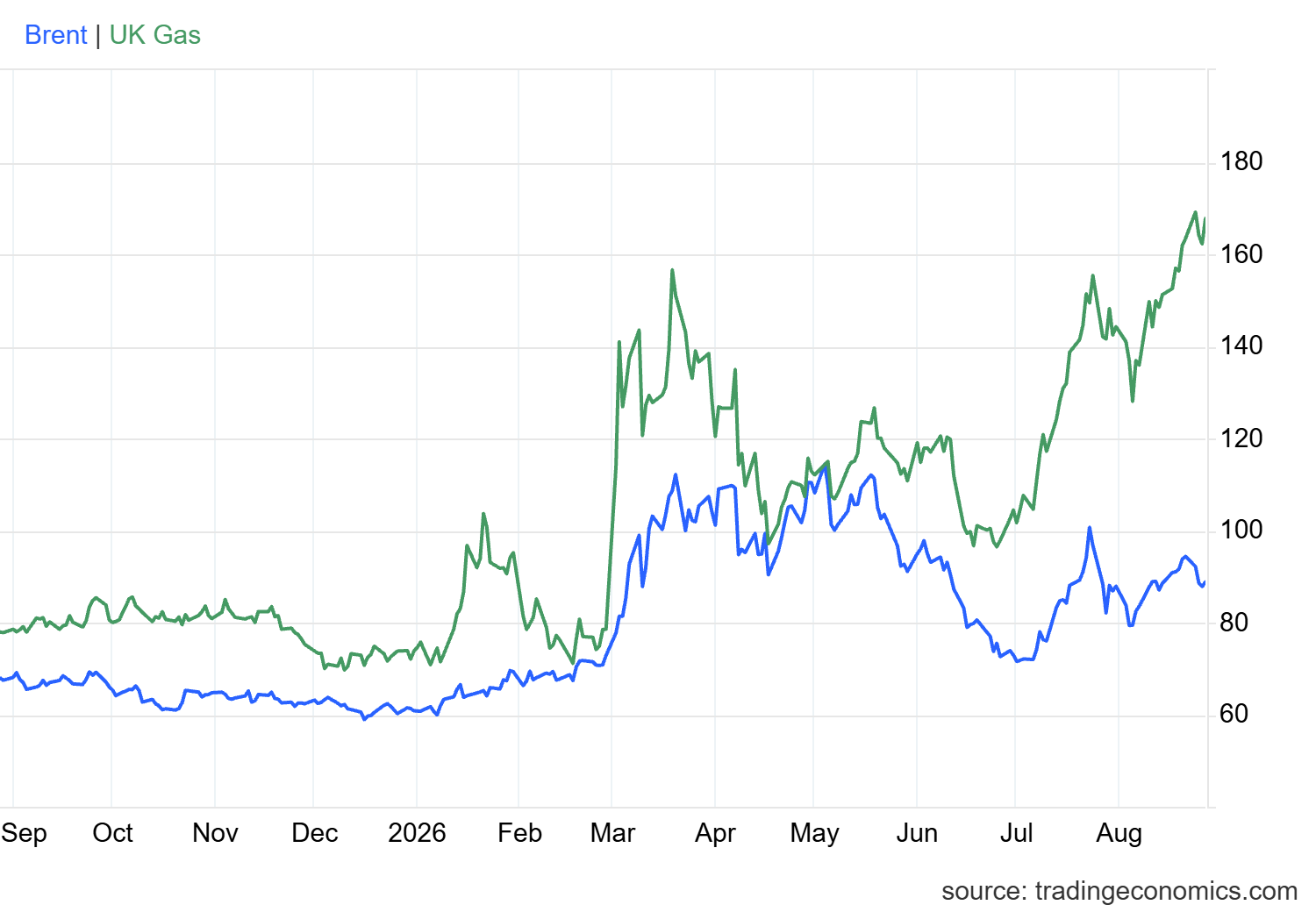
In terms of the impact on the UK and Europe, I think it’s worth looking beyond headline oil prices. While the price of crude has risen, it’s the price and availability of natural gas and refined products such as diesel that are causing the most pain and concern:
Average EU diesel prices are now higher than they were at the start of the Ukraine war:

For UK consumers, the impact of higher gas prices is about to get worse. With winter approaching, we learned this week that the energy price cap on domestic gas and electricity bills will rise by 4% in October. This increase follows a 13% rise in July.
One factor underlying this uncomfortable trend is the UK’s low level of gas storage. According to the latest data, UK gas storage currently sits at around 9,400 GWh, around 30% below the 13,635 GWh held at the same time last year.
That equates to around 30% of storage capacity filled, down from 46% at the same time last year.
Even if it was full, UK storage capacity is said to only provide enough for around 12 days’ consumption in winter. As things stand, it looks like we currently only have 3-4 days of gas in storage.
This situation seems likely to leave the UK increasingly dependent on high-priced LNG shipments from the US and elsewhere. Not an ideal scenario.
Company news
Company reporting remains limited next week, as the UK enjoys a shortened week to mark the end of the summer holidays.
Two updates that have caught my eye are interim results from Ashtead Technology Holdings (LON:AT.). and Michelmersh Brick Holdings (LON:MBH), both of which are expected on Tuesday.
Ashtead Technology Holdings (LON:AT.).
I downgraded our view on this subsea equipment hire business on 20 August after the company issued a profit warning, citing delays to projects in the Middle East (unsurprisingly) and also to projects in Europe and The Americas (which did surprise me).
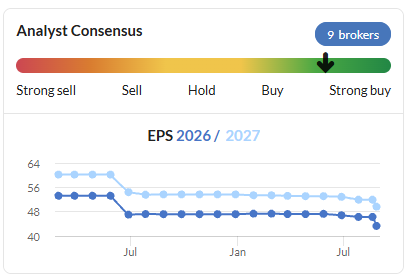
Ashtead supplies rental equipment to offshore oil and gas producers. Given the buoyant state of oil and gas prices, I’m intrigued by the apparent suggestion that macro factors might be crimping investment in markets outside the Gulf. I’m hoping the company provides a little more detail on the issues it’s seeing with its half-year results.
I’ll also be keen to see how margins and cash flow are holding up. While this business has strong quality metrics, the latest broker forecasts suggest year-end debt levels will be higher than previously expected.
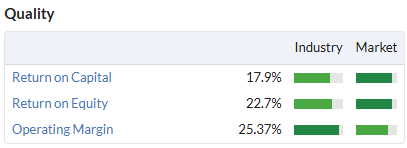
Ashtead’s share price has now fallen by c.60% from the highs seen two years ago. However, the stock has still doubled from its 2021 IPO levels and I continue to think this is an interesting – if cyclical – business.
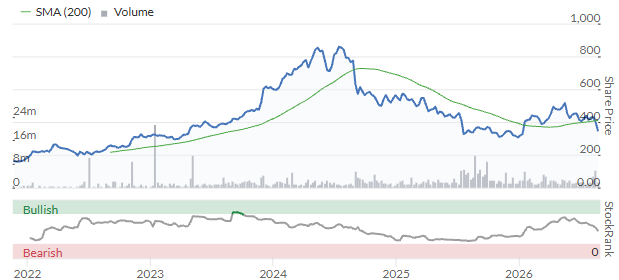
Although the forward P/E of 7.2 may seem tempting, the StockRanks take a more cautious view, styling the shares as Contrarian:

Roland’s view: My main concern is that the cycle of downgrades could have further to run before bottoming out. One to watch, I think.
Michelmersh Brick Holdings (LON:MBH)
I am more optimistic about the situation at premium brickmaker Michelmersh. This stock is also styled as Contrarian, but has a rather more positive StockRank profile:

To my eye, this stock increasingly fits the “long-term reversal” momentum pattern described by Ed in this piece.
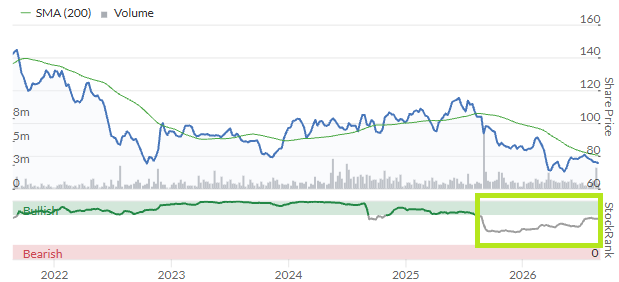
Michelmersh shares are trading close to five-year lows, but the company’s StockRank has been trending steadily higher since late 2025 (when I moved our view to neutral):
Even though multiple profit warnings have cut near-term earnings estimates by nearly 30%, Michelmersh now trades on less than 10x forecast earnings and at a discount to book value:
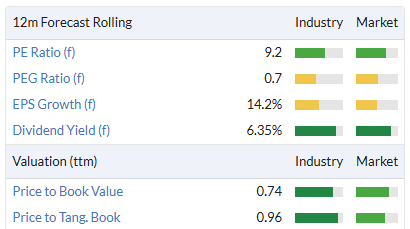
The company’s last trading update in May described a “balanced forward order book” and said that order intake was continuing to run ahead of manufacturing capacity, despite a 10% decline in UK brick industry volumes in Q1.
Management also reported the closure of one site following capacity expansion at another location. It looks like there could be potential for a freehold property sale at some point.
While Michelmersh’s balance sheet already looks fairly healthy, a cash inflow could underpin support for the 6% dividend yield ahead of a return to more positive trading conditions.
The elephant in the room, of course, is the outlook for UK housing. This remains uncertain, especially at the mid-upper end of the market that’s most relevant to Michelmersh’s premium brands. While the company serves a variety of construction sectors and isn’t wholly dependent on housing, this remains a key market.
Roland’s view: my feeling is that Michelmersh’s valuation has reached a level where the market cap should be underpinned by existing performance. I think we could see a re-rating when trading improves. I’ll be interested to see Tuesday’s results.
Enjoy the long weekend!
Here’s a summary of what’s expected next week.
Economic Calendar
Date / Time (BST) | Country | Event |
31 August | (UK Bank Holiday) | |
02:30 | China | Manufacturing PMI |
13:00 | Germany | Inflation |
15:30 | US | Dallas Fed Manufacturing Index |
1 Sept | ||
07:00 | UK | Nationwide House Price Index |
09:30 | UK | Mortgage Approvals |
09:30 | UK | BoE Consumer Credit |
09:30 | UK | Manufacturing PMI |
10:00 | EU | Inflation |
10:00 | EU | Unemployment |
15:00 | US | JOLTs Job Openings |
15:00 | US | Manufacturing PMI |
21:30 | US | API Crude Oil Stocks |
2 Sept | ||
12:00 | US | 30-year Mortgage Rate |
13:15 | US | ADP Employment Change |
15:30 | US | EIA Crude Oil and Gasoline Stocks |
3 Sept | ||
09:30 | UK | Composite & Services PMIs |
13:30 | US | July Imports & Exports |
13:30 | US | Initial Jobless Claims |
15:00 | US | ISM Services PMI |
4 Sept | ||
09:30 | UK | Construction PMI |
10:00 | EU | Retail Sales |
13:30 | US | Unemployment Rate |
Companies Reporting
Date | UK Trading Updates and AGMS | UK Financial Results | International Financial Results |
Monday 31 Aug | Bank Holiday | Bank Holiday | Nothing of note. |
Tuesday 1 Sept | Dialight (LON:DIA) | Ashtead Technology Holdings (LON:AT.). Bunzl (LON:BNZL) Michelmersh Brick Holdings (LON:MBH) | Nothing of note. |
Wednesday 2 Sept | Cake Box Holdings (LON:CBOX) Software Circle (LON:SFT) | AEP Plantations (LON:AEP) Cairn Homes (LON:CRN) | Broadcom (NSQ:AVGO) Hewlett Packard Enterprise (NYQ:HPE) NetApp (NSQ:NTAP) Five Below,. (NSQ:FIVE) PVH (NYQ:PVH) |
Thursday 3 Sept | Jet2 (LON:JET2) Naked Wines (LON:WINE) Powerhouse Energy (LON:PHE) Safestore Holdings (LON:SAFE) Watches of Switzerland (LON:WOSG) | Grafton (LON:GFTU) Tribal (LON:TRB) | Dell Technologies (NYQ:DELL) Ciena (NYQ:CIEN) Dollarama. (TSE:DOL) Guidewire Software,. (NYQ:GWRE) Docusign (NSQ:DOCU) |
Friday 4 Sept | NextEnergy Solar Fund (LON:NESF) Victoria (LON:VCP) | ABM Industries (NYQ:ABM) |
Disclaimer
This is not financial advice. Our content is intended to be used and must be used for information and education purposes only. Please read our disclaimer and terms and conditions to understand our obligations.

8 comments
RE : Housebuilding/ Michelmersh
For those looking for a change in housebuilding confidence the S&P Global UK Construction PMI August report should be available in the next 5/6 days. The July report indicated slightly greater confidence so it will be interesting to see if this has carried over into August.
The current affordable homes program has allocated £39 billion over 10 years so you would assume that there is enough in the pot to attract housebuilders. The strange situation is that quoted builders have often lobbied to reduce the percentage of affordable homes within projects. It would seem that affordable funding is not achieving its aim of building more affordable homes.
Builders that have embraced affordable builds seem to have problems. You only have to follow the issues involving Vistry to see that affordable homes is not a licence to print money and have arguably helped put the company into a difficult situation.
It is worth looking back to the original announcement by Rachel Reeves (June 2025) when the 39 billion figure was confirmed and reading some of the industry comments at the end of the article. They offer some indications as to why a huge amount of money might not be that useful
https://www.theplanner.co.uk/2...
Perhaps subscribers with AI capability might want to check and see how many affordable homes £39 billion is projected to fund. The answer might surprise. In which case, the next question for AI might be - how is the 39 billion to be spent and by whom?
I don't see much of a pick up in the housing market and am quite happy to miss the bounce. Other headwinds are likely to arrive with mortgage rates etc which could once again derail what is a fragile sector.
Not an easy sector to call.
The issue here is that ( as ample demonstrated by Vistry etc) there is no momentum in new house sales due to a long list of issues which have been well rehearsed and unless or until there is better affordability or incentives from the UK Government ( TA mentions Cairn which is benefiting from the Irish Government's inititatives) hard to see how the volumes required by brick manufacturers are going to generate a re rating when new houses at the higher pricing levels are sticking through lack of buyers or builders 'incentives'. Yes in theory MM is cheap but there a good reasons why and my dusty and cracked crystal ball does not help with timing. I live in West Midlands and it is reported that smaller housebuilders are struggling to sell 1 new home a month. This area is new build city with lots of plots on offer but not many takers from housebuilders when these areas require huge infrastructure spends to support new housing stock. Hey ho who ever said Rayner was competent and had the benefit of joined up thinking in her make up
Housing policy with a blunderbuss will come back to haunt this administration
So you think previous administrations got it right? Selling off council houses, good. Failure to use the cash to build new ones, disaster. No one did anything for decades except subsidise the affluent via help to buy.
Yes. It seems to me that there is s slight possibility that this new government might be pitching its housing policy from a different angle; that of increasing homes as places to live with some degree of security of tenure. Previous administrations appear to see the housing business from a house builders/bankers/investors/social engineering standpoint. It may be that an attempt to prise money and power away from the southeast, a tilt in profitability away from building fewer, expensive houses towards the cheaper end of the market, social housing, first time, younger buyers, could benefit some housebuilders over others. Watching the brick industry like a hawk for signs may well pay off. I've set up two dummy portfolios, one general builders and associated trades and one specifically of suppliers to the trade and, while they are rising, compared to the rise of, say, the All Share, they have yet to shift enough for me. We shall see. Just maybe, Burnham is different.
Hi TD
I think you are entirely correct. I would prefer any intervention by this Government to focus entirely on building social housing and hence the cost expense ratio for local authorities who pick up up the bill for housing those who cannot find a place to live. I live in Shrewsbury and here the bankrupt local authority ( in hock to the Government for £50m) has a redundant council building that would convert to a big volume of social housing but they continue to muddle over this. It costs ( council tax payers) £700K a year to maintain this empty building you ask yourself why not do something about it Sadly nobody sensible or proactive seems to be in charge........ Meanwhile Shropshire council under pressure from Rayner contionues to grant planning permission for new house nobody wants to or can afford to buy using farm land. You could not make this up... Rant over...
To me you create a basic home ( like the one I lived in as a kid ) and not ask for solar panels and heat pumps etc. I await the budget on the matter of affordability for new homes. Do not see how Healey can afford to do anything given attracting the Bond market ire should be well down his agenda
Probably too nuanced to suggest that house builders depend on Government help to prosper. The sector is what it has always been one to buy into when things look so bad it cannot get much worse........
Hi Snowdrop
No i think the housing policy of successive Governments hopelessly wrong. They created the housing bubble by successive subsidising through stamp duty holidays and first time buyer backing. The point is housebuilders and in terms those who supply materials to the industry benefited from this trend. The country needs a mass social housing boom and not more 3 and 4 bedroom homes that buyers cannot afford because simply ' affordability' is not in place. Too many of these are now unsold so why are we looking to build more and tack on a few affordable homes which the developer weasels out of building by paying a cash strapped local authority a fine.......
The point at issue for these companies is that the margin on social and affordable homes is much lower so profits and margins are pressurised. Many developers here are not buying more land since they cannot see where profits are coming from. They are not altrusitic on this matter
Well, in the London area you see precious few houses being built these days but plenty of flats. Meanwhile the the number of new build bungalows is down to 1% to 1.5% of total new builds.
Roland I'm thinking CRN will be a much better read than MBH ,UNTIL this govt really gets actual house building moving ,rather than all the hype about what they are going to do . If they should achieve building growth ,then this will be a good buy. Tony