Should investors back 4Imprint’s next chapter?

Shares in market-leading promotional goods business 4imprint (LON:FOUR) have fallen by around 50% from their 2024 peak. Despite recent gains, I estimate they may now be trading more cheaply than at any time since 2012.
Admittedly, earnings expectations have fallen and 4Imprint remains under pressure from tariff headwinds and softer demand in its core US market. However, I believe the underlying quality of this business remains very high and would argue that the valuation most likely already reflects any near-term weakness.
The current share price is also underpinned by a strong balance sheet and a 4.5% dividend yield, providing an attractive income for shareholders ahead of a possible turnaround.
I believe a return to top-line growth could drive rapid profit gains and a potential share price re-rating.
Summary
Pros:
Super quality metrics; net cash and 80%+ return on equity;
Market leader with attractive market share;
Current valuation is unusually cheap for this business; well-supported dividend provides an above-average income.
Cons
98% of sales from North America; heavy US exposure and uncertain outlook;
It could be too soon to buy; profits are expected to fall further in 2026 as 4Imprint gradually absorbs higher input costs;
Large market share means further gains may struggle to move the needle.
Profile
About the stock
4Imprint sells promotional products using a direct marketing model. The group’s operations are in North America, the UK and Ireland. The majority of sales are in the US and Canada.
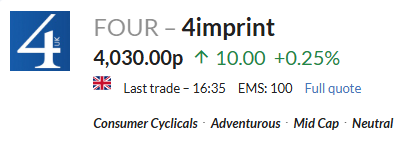
4Imprint is a member of the FTSE 250 index, with a market cap of £1.1bn and a recent share price of around 4,030p.
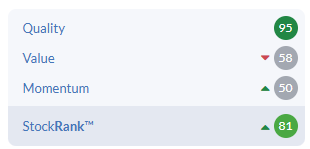
The StockRanks highlight the company’s strong QualityRank, but value and momentum scores are more middling – this mix is reflected in the stock’s Neutral styling:
About the opportunity
4Imprint is suffering from twin headwinds that are holding back profits. In its core US market, orders from existing customers have been broadly stable this year, but softer demand has limited new customer recruitment.
At the same time, cost inflation and the impact of tariffs mean that product costs are rising. 4Imprint is expected to absorb some of these cost increases in order to protect its market share. As a result, profits are expected to fall in 2025 and again in 2026, as these price rises work through the business.
The opportunity for investors is to capture the recovery that could take place when the company starts to exit this difficult period. If the business returns to growth, I think there’s potential for the stock to re-rate to a higher level more in keeping with its past performance and high quality metrics. In this scenario, I can see the potential for double-digit percentage share price gains, even after this week’s rise.
Business & Model
What is the company’s history and what does it do?
4Imprint uses direct marketing to sell promotional products such as clothing and branded stationery to customers.

The group’s heritage can be traced back to 1976, when Ken Nelson and his son Dick founded Nelson Marketing, in Logansport Indiana. The company took a step closer to its current form when it began mailing catalogues to potential customers in 1987 – an innovative idea at the time – and moved to its current location in Oshkosh Wisconsin to be closer to a major investor in 1989.
In 1996, Nelson accepted a takeover offer from UK-listed conglomerate Bemrose Corporation. Bemrose renamed itself 4Imprint in 2000 and adopted a slimmed-down form, selling printing operations and other unrelated businesses and adopting a more capital-light model.
Today, the company is the largest company by revenue in this sector in North America and perhaps the only player in this market that’s large enough to advertise on national television. 4Imprint is led by CEO Kevin Lyons-Tarr, who joined the business in 1991 and was appointed CEO in 2015.
How does the business model work?
This business is a marketing and distribution specialist. Customers are recruited and retained through direct marketing, typically online but also through upselling and front-of-mind techniques such as the Blue Box.
Products are sourced from trusted third-party suppliers, where 4Imprint’s scale provides pricing power and often allows for dropshipping. This is where products are sent directly from 4Imprint’s supplier to the end customer, without being handled directly by the company.
To provide an idea of scale and supplier concentration – and the quality of the company’s supplier partnerships – the 2024 annual report included these metrics:
124 suppliers accounted for 99% of the group’s North American product spend;
Within this, 22 suppliers represented 80% of the company’s spending;
90% of annual spend went to partners that 4Imprint has worked with for over 20 years;
Average payment terms to suppliers in 2024 were 30 days or less.
Products are produced under a wide range of brands. These include both 4Imprint’s own-brands and some well-known consumer brands:

Value and reliability are also core elements of the business model. Key selling points of the service include high-quality customer service and free samples and artwork. 4Imprint also offers a triple guarantee of on-time delivery, price matching and satisfaction – or your money back:

Markets & Competition
What is the size and state of the company’s market?
4Imprint operates in two markets, North America (US and Canada) and the UK & Ireland. On its website, the company includes the following information about each of these markets:
North America: estimated market size of $26.6bn in 2024. 4Imprint generated NAm sales of over $1.3bn last year, giving a 5% market share.
UK & Ireland: estimated market size of £1.2bn ($1.5bn) in 2024. 4Imprint generated UK&I sales of $25m last year, giving a sub-2% market share.
4Imprint is reported to be the largest promotional products supplier in North America by revenue, highlighting the fragmented and diverse nature of the market. According to industry body PPAI, 4Imprint’s 2024 sales were nearly 50% higher than the second-ranked competitor Halo.
The company works across the market, serving a broad mix of commercial and non-commercial organisations. However, 4Imprint has a particular focus on SMEs:
Our target customer will typically be working at an organisation with 25 or more employees and $1m or more in annual revenue.
In the UK, 4Imprint’s business is only marginally profitable and represents little more than a rounding error to revenue. Last year’s results suggested marketing spend is being increased in an effort to gain market share; without doing this there seems little point in competing here.
How does 4Imprint derive its competitive advantage – and are these advantages durable?
As the largest single player in this market in North America, the company enjoys a number of advantages relating to its size, supplier relationships and marketing reach. Anecdotally, 4Imprint is the only promotional products supplier that’s large enough to advertise on US national television.
The company also has a culture of value and customer service that it prizes heavily and appears to have a long-term culture. The CEO has been at the company for over 30 years and many staff have long tenure.
The emphasis is on quality, value and choice – a combination that’s not always easier for smaller suppliers to maintain across a broad range of products.
The company has always maintained been focused on consolidating a fragmented market and is willing to take a long-term view when operating in more difficult conditions:
We aim to deliver attractive organic revenue growth by increasing our share of the fragmented yet substantial markets that we serve. We take a long-term view of the business. This includes making necessary investments in the people, marketing resources and infrastructure required for success, regardless of the immediate market conditions. From experience, we know that maintaining investment in the business in more difficult times positions us to take advantage of market share opportunities when conditions improve.
Viewing 4Imprint through the lens of our economic moat framework, suggests to me that its competitive advantages are largely derived from this strategy:
Intangible assets: the company’s latest balance sheet shows goodwill and intangible assets totalling just £1.3m! In reality, what this reflects is the company’s historic focus on organic growth and lack of acquisitions.
4Imprint’s intangible assets are its brand, customer base, reputation and perhaps also its supplier relationships. While they are certainly not impregnable, my feeling is that this combination does provide a moderate level of durable advantage when paired with the company’s market-leading scale.
Switching costs: from a customer perspective, changing suppliers for promotional products probably comes with some level of friction and risk – what if the new supplier is unreliable or provides inferior products?
However, I think the reality is that there are a number of rivals offering similar products and artwork services at competitive prices. 4Imprint enjoys good customer retention because of its high service levels and clever marketing. But I don’t think switching costs are inherently all that high.
Network effects: I don’t think network effects are a particular factor here. Customers don’t gain any particular advantage from using the same supplier for their promotional products as other companies, except perhaps by virtue of 4Imprint’s competitive pricing and wide product choice.
Cost advantages: 4Imprint may benefit from some cost advantages due to the order volumes it can direct at its product supply and logistics partners. The group’s marketing may also be more cost effective by virtue of its large customer base and data pool.
However, I would say these competitive advantages are probably secondary in their significance – plenty of other companies in this market also deal in attractive volumes.
Greater scale: being able to scale its marketing and distribution expense over a large and diverse customer base probably does provide some level of competitive advantage for 4Imprint. I am not sure how decisive or durable this is likely to be, though, compared to a top-10 peers with annual revenues of c.$400m upwards.
Financials & Ownership
What is the record of growth & profitability?
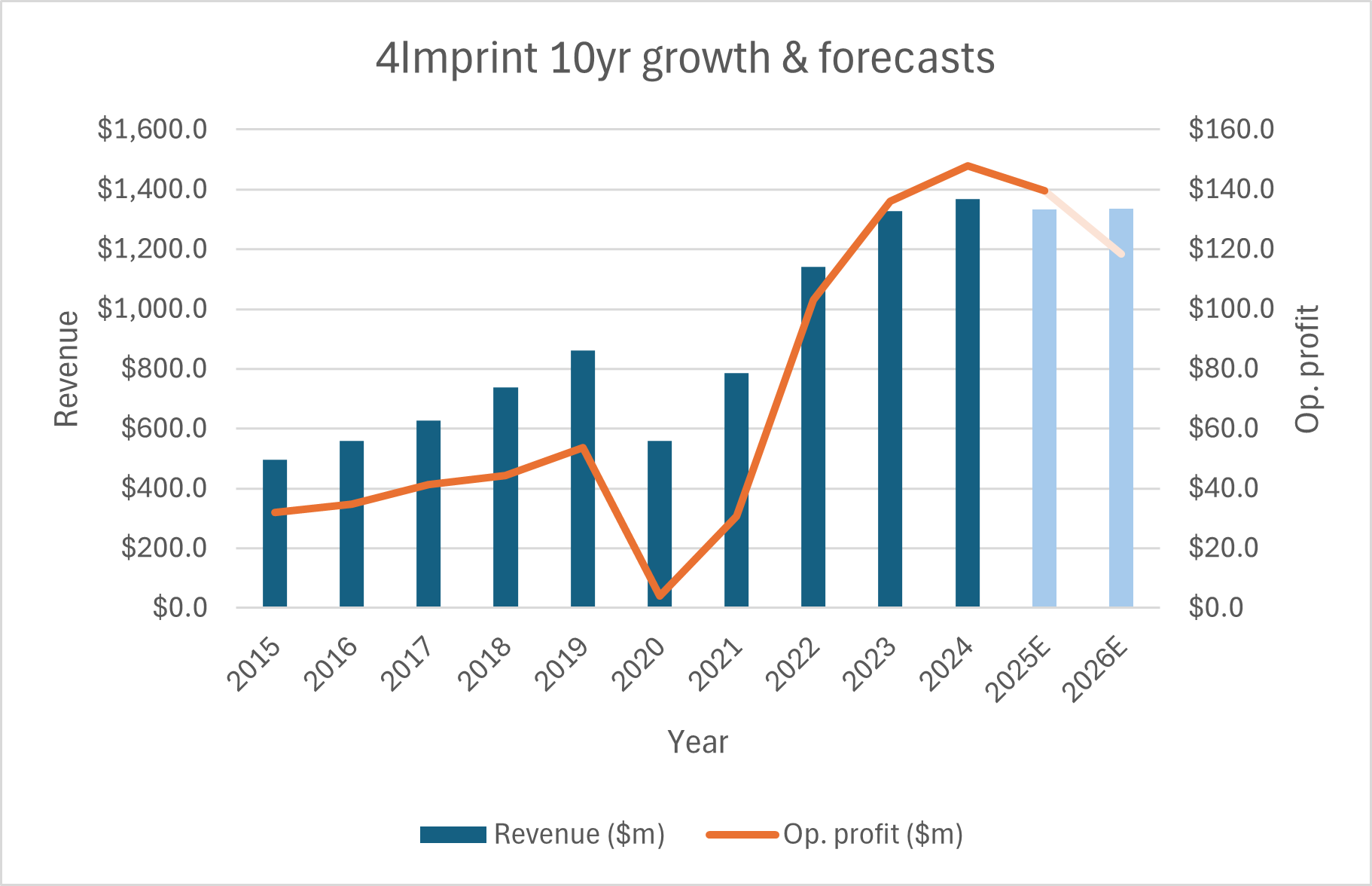
Growth accelerated from 2015 to 2022, with revenue doubling and reaching $1bn for the first time. Operating profit trebled over the same period on improved margins. However, the latest forecasts from commissioned research provider Edison suggests profits will dip in 2025 and 2026 as 4Imprint absorbs higher input costs:
Operating margins initially suffered during the pandemic, but rapidly recovered to settle at a new, improved level of c.10%. This change was seemingly achieved as a result of good cost control and a significant increase in revenue generated per marketing dollar spent – in effect, the company worked out how to market itself much more effectively than in the past.
The 2022 results showed a 45% rise in revenue but only a 1% increase in marketing costs. That’s an incredible result, albeit it was perhaps aided by the unusual circumstances at the time. I would guess that home-based working and increased levels of online-only activity probably favoured 4Imprint’s sophisticated online marketing efforts, relative to those of smaller rivals.
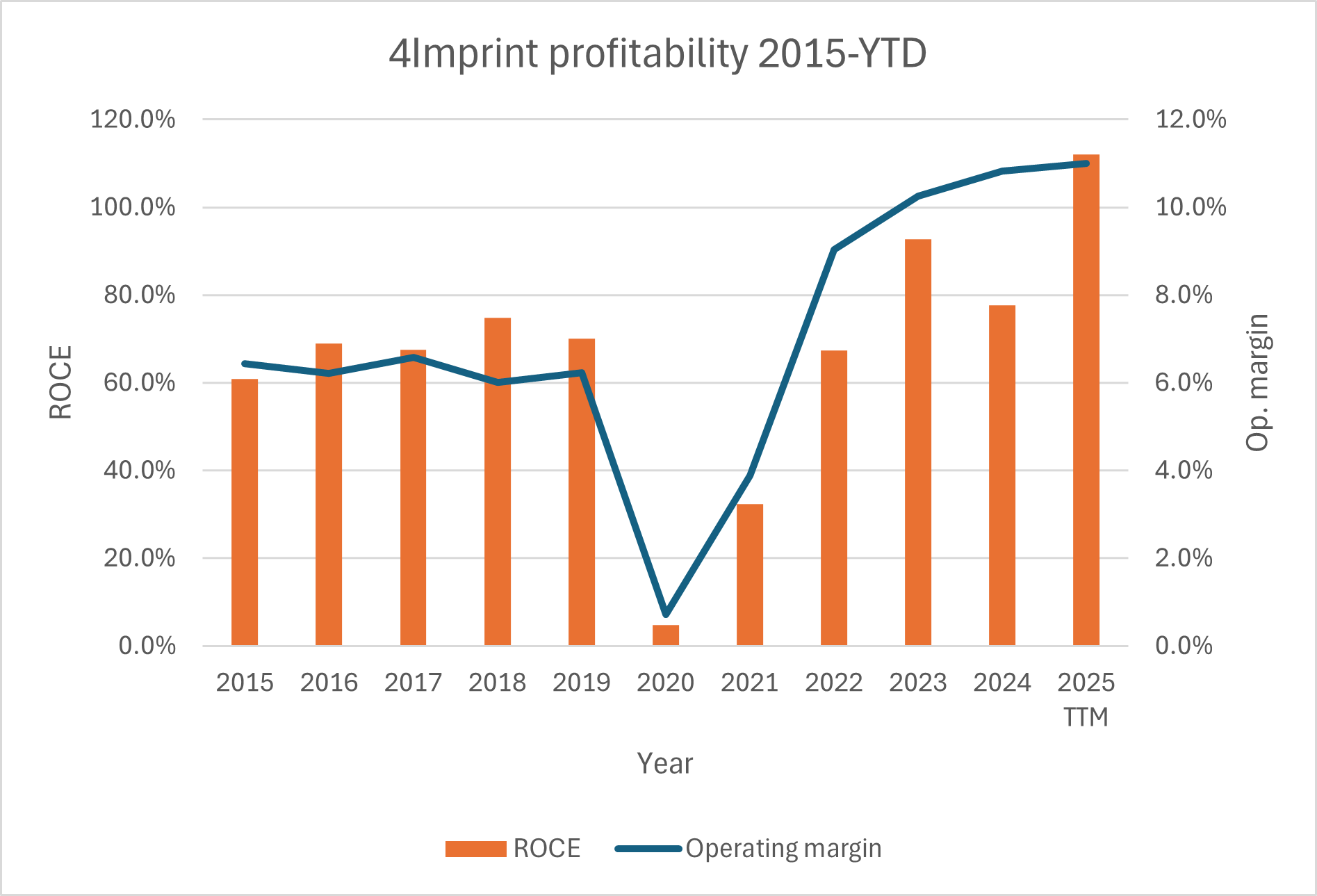
What stands out to me from these charts is that 4Imprint executed a successful market share land grab during the pandemic and has subsequently held onto this extra business – demonstrating its strong customer retention.
However, the growth outlook now seems less clear, at least for the next year or so. Margins are under pressure and new customer acquisition has fallen back sharply.
Balance sheet / cash flow
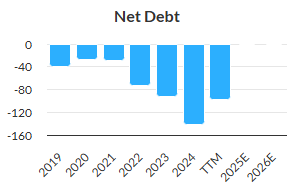
4Imprint has reported net cash for at least a decade and had net cash of $98m at the end of June 2025.
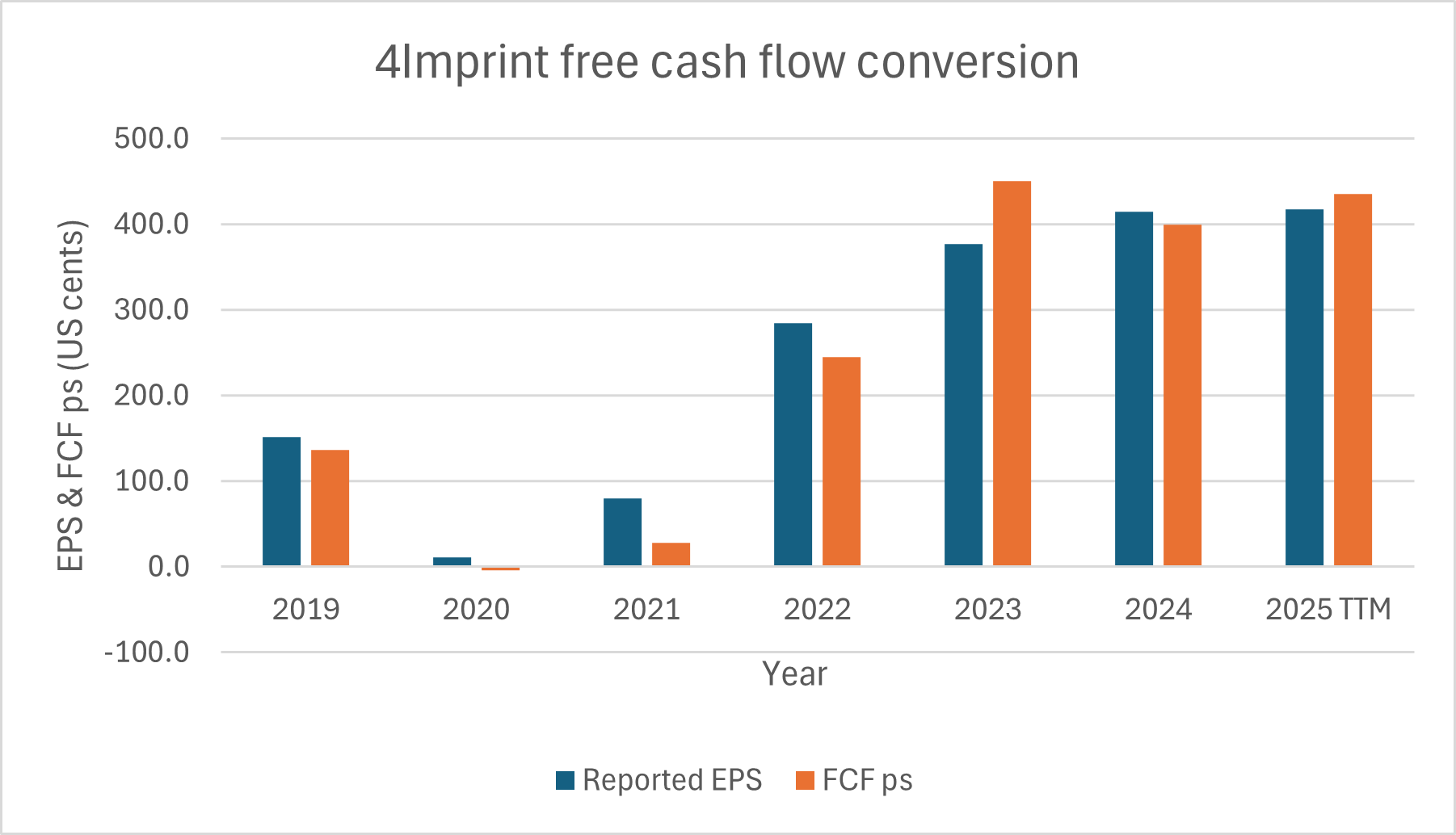
The company boasts excellent cash flow conversion, as we can see by comparing reported EPS from the StockReport with free cash flow per share:
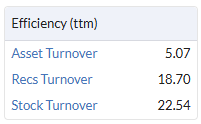
Cash generation is probably aided by an efficient working capital situation. According to the StockReport, customers typically settle their invoices in less than three weeks, while inventory held by the company is turned over every 16 days or so:
I don’t have any concerns about 4Imprint’s balance sheet or cash flow.
Is there evidence of historic share dilution?
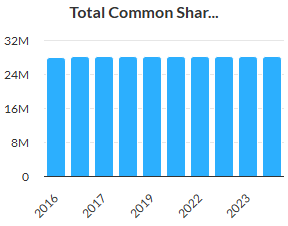
4Imprint’s share count has been unchanged for at least a decade. Given the group’s capital light business model and strong balance sheet, I don’t see any meaningful risk of dilution.
What is the ownership of the company? Does management have stakes?
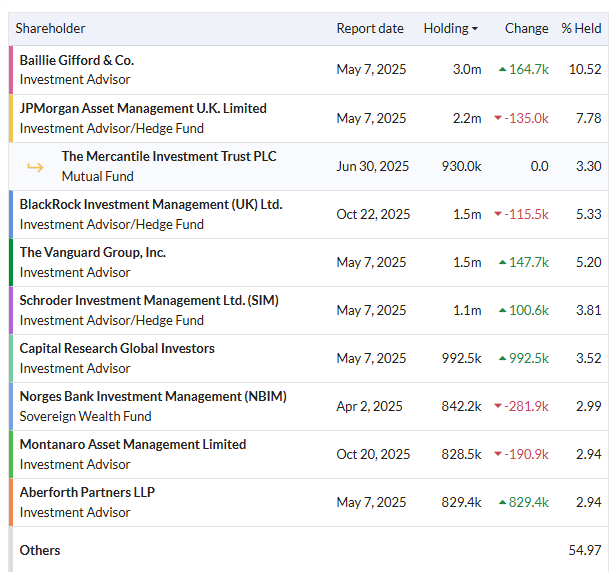
Ownership of the company is dominated by institutions, but there are one or two points of interest.
In the 2024 annual report, the company reported significant ownership by Aberdeen, Blackrock and Norges Bank.
Today, the top shareholder reported in our data and on 4Imprint’s website is Baillie Gifford at c.11%. As far as I can see, this well-known long-term stock picking asset manager must have acquired much of its stake over the last year, suggesting it sees a significant opportunity.
CEO shareholding: CEO Kevin Lyons-Tarr has been with the company since 1991 and took the top job in 2015. The 2024 annual report shows him owning 271,523 shares at the end of last year – worth just under £11m at the time of writing. I estimate this could provide a dividend income of c.$652k per year, comfortably exceeding his $565k base salary.
On this basis, I would say Mr Lyons-Tarr’s shareholding does broadly align his interests with those of shareholders.
Valuation
How does the relative valuation compare versus industry peers?
4Imprint scores indifferently for value, with a ValueRank of 58. The stock’s value metrics reflect this, more so after the recent share price rise.
When compared against the broader Consumer Cyclicals sector and Media & Publishing industry group peers, the stock looks relatively expensive:
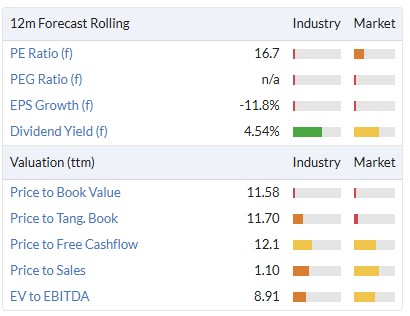
Arguably, the Media & Publishing industry group comparison is not very meaningful. It makes no sense to compare this business with the newspaper publishers, television groups and advertising/PR groups that dominate this segment in the UK.
A comparison with smaller LSE-listed firm Pebble, whose business includes promotional product distribution and related software, suggests 4Imprint is more expensive…
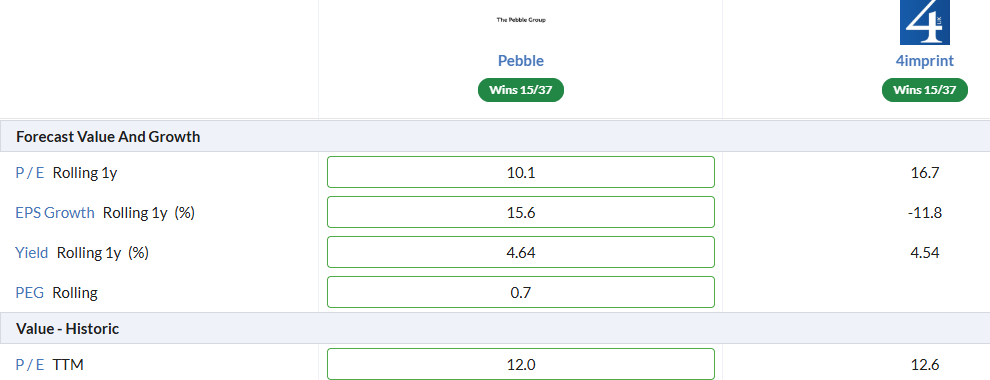
… albeit this premium may be deserved when the larger company’s superior quality metrics are considered:
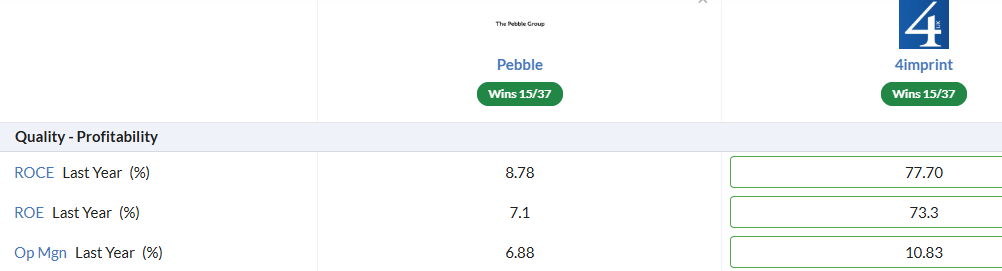
On balance, both stocks score equally in our comparison tool. I don’t think 4Imprint’s valuation is unreasonable – but any further gains will perhaps require evidence of a return to earnings growth.
What is the stock’s intrinsic valuation?
4Imprint shares traded at more than £60 as recently as last year. Even after recent gains, the stock still trades more than 30% below this level. Does this mean the shares are a bargain hiding in plain sight?
Not necessarily. Much will depend on whether the company can stabilise its margins and return to growth.
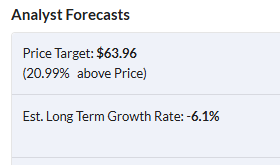
The average broker price target shown in the StockReport is $63.96, or around £49. That’s well below last year’s peak – and the reason for this is probably reflected in analysts’ estimated long-term growth rate of -6.1%:
My estimate: ultimately, the intrinsic value of this business depends on the extent to which it can return to growth and extend its market share, either in North America or elsewhere.
Right now, the near-term growth outlook is uncertain at best – potentially negative.
However, this remains a market-leading business and I don’t see any reason why it shouldn’t be able to return to growth.
In situations such as this I find it useful to establish a baseline valuation, using current (trailing 12-month) profits and assuming they will remain unchanged.
The method typically used for this is known as Earnings Power Value (EPV) – I’ve discussed EPV previously in more depth here.
Using a simple EPV valuation based on a required rate of return of 8%, my sums suggest a fair value for 4Imprint shares of around £40.
Adding a modest growth rate to this baseline suggests to me that £49 could indeed be a reasonable medium-term price target for the stock. It’s certainly consistent with my rough valuation estimate.
Trends & Catalysts
What underlying trends are affecting the business?
Macroeconomic uncertainty, cost inflation and the impact of US tariffs are also combining to soften demand and make the recruitment of new customers more difficult.
The impact of these trends is still working through 4Imprint’s accounts and is expected to result in another difficult year ahead.
Are there any catalysts that could drive a re-rating in the medium term?
It seems reasonable to assume that like most other cyclical conditions, the current headwinds will pass – or at least stabilise – over time. When this happens, the company’s historic strengths as the market leader may allow it to return to growth and gain further market share.
Evidence of an improvement in new customer acquisition or an increase in order volumes would likely be catalysts that could support a re-rating closer to the stock’s historic P/E levels.
A further catalyst would be signs that the current margin erosion has stabilised, either through price increases or as a result of falling inflation.
Risks
Being the largest player in a fragmented market often brings benefits. But there’s a potential downside, too. 4Imprint’s high-profile triple promise to its customers ties the business into offering the lowest prices, fast delivery and good quality. In an inflationary environment, that’s putting pressure on margins:

The breadth of 4Imprint’s product range and customer base could also become a mixed blessing.
Smaller and more flexible competitors, operating in targeted sectors where conditions are more favourable, could possibly find ways to take short-term pain on margins to win new business and gain market share.
From an investment perspective, it might also become harder for 4Imprint to move the needle on growth. For a company with a 1% market share, gaining an extra 0.2% share is equivalent to 20% sales growth.
For 4Imprint – with around 5% of the North American market – an extra 0.2% market share only equates to 4% sales growth.
One other possible risk relates to succession. Mr Lyons-Tarr has been in charge for a decade and at the company for 34 years. He seems to be the public face of the company:

The long-serving former CFO recently retired and has been replaced with an external hire, and there are no other board-level execs. The latest annual report emphasises succession planning, but this isn’t something we have much visibility on – and the departure of the current CEO would certainly be a big change for the business.
Recent trading & news
12 Mar 25 (Final Results): A 10% rise in pre-tax profit was marred by a profit warning and news of a decline in new customer acquisition. Graham downgraded our view to AMBER/GREEN, reflecting the mix of high quality and weaker near-term trading.
6 Aug 25 (Half-Year Report): the company reported a 14% decline in new customer acquisition and a 3% decline in overall orders. Average orders remained flat, highlighting the company’s decision not to raise prices.
Although pre-tax profit for the half year rose by 1%, revenue fell by 1%. This news was paired with updated guidance for full-year profits to be “within the current range of analysts’ forecasts”. These results prompted a significant cut to broker forecasts for both 2025 and 2026.
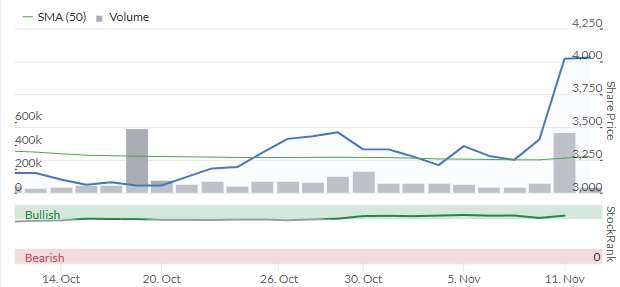
11 Nov 25 (Trading Statement): this trading statement upgraded profit guidance for the current year, despite a fall in order volumes and new customer numbers. The reason for the upgrade is that supplier price rises are feeding through more slowly than originally expected, resulting in profit margins above previous expectations.
It’s good news as far as it goes, but a note from research provider Edison on the day made it clear that its analysts (and presumably 4Imprint management) believe the reckoning has only been delayed, not avoided – there was no change to FY26 forecasts:
However, it is a case of when and not if these tariff-related increases are passed on, and the positive surprise for FY25 profit does not flow through to FY26 forecasts.
For more detail, see our DSMR report.
Sentiment & Outlook
What do brokers currently think and are they upgrading estimates?
Broker forecasts have been downgraded on multiple occasions this year. But the run of downgrades appears to have levelled out, albeit with 2026 forecasts around 10% below 2025 expectations:
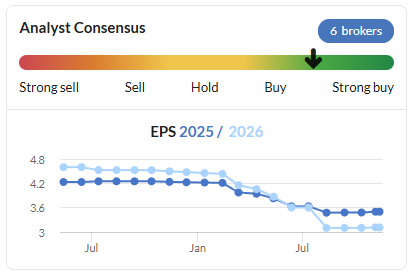
A broad buy consensus view is unchanged in recent months, presumably reflecting the apparent value on offer prior to this week’s near-20% share price gain.
What would the person selling to us be thinking and who are they?
Investors who’ve held the stock from higher levels may be wary of the risk 4Imprint’s future growth could be slower than in the past. They might decide to lock in a known outcome following the recent share price bounce.
Short-term traders who picked up the stock recently may consider locking in a quick c.25% gain, rather than risk the uncertain outlook.
On a medium-term view, forecasts for a further drop in profits in 2026 create an additional level of uncertainty. There’s a risk that it’s just too soon to buy into a recovery here.
After all, one of Jim Slater’s cardinal rules for investing turnarounds was that profits should be forecast to grow over the coming year.
Although consensus forecasts for 2027 do indeed suggest a return to growth, it’s probably a little early to have much confidence in these numbers.
Conclusions
I started preparing this Stock Pitch with a fairly strong conviction about the appeal of this stock. At the end of this review, my conviction about the quality of this business remains strong.
However, a 20% share price gain in one week has left me feeling like the margin of safety on offer has been sharply reduced.
On a long-term view, I think this business is still very likely to deliver solid returns and continue expanding. But on a near-term view, I’m a little less confident.
This is a business I’d still be interested in owning, but I am tempted to wait and see if the recent bounce reverses as sellers take advantage of the price strength.
Disclaimer
This is not financial advice. Our content is intended to be used and must be used for information and education purposes only. Please read our disclaimer and terms and conditions to understand our obligations.

4 comments
Very useful article. I hold and have been adding. But I think there will be more sellers and will wait to add more to see if the price drops again and then take advantage.
Thanks Roland for another superb in depth and balanced view on an interesting opportunity. The dividend provides a cushion while we wait for the bottom and hopefully the next up cycle but it’s a balanced call. Personally I halved my position on this week’s buoyant reaction to the update as I do want long term exposure but agree that we may yet be in the doldrums for some time. I may trim more and keep a watching brief for signs of recovery but the dividend does provide breathing room on any decision.
I hold. This is superb commentary. What is so good about the commentary is that for an amateur investor like me, it adds several aspects that I would not be able to spot. But all this is done in a clear and understandable way. I am reminded of the famous saying, which goes something like : " If you can't explain something to your aged grandfather, then you don't understand it yourself".
£1.3bn sales within a market of £26bn , huge scale advantages vs competitors and a proven business model gives me a lot of comfort that long term growth is highly likely. There is investor nervousness regarding the impact of tariffs as they have very high exposure to Chinese imports, but this will impact all players in the market.