SIF Folio: What can I learn from Wilmington? (+ International update)

I hope your portfolios have all benefited from the post-election bounce we’ve seen in the market. My main personal portfolio has done relatively well, thanks to exposure to unloved UK-focused sectors such as banking, insurance, commercial property and utilities.
Interesting, the Stock in Focus (SIF) fantasy fund I run here at Stockopedia did not enjoy quite such a strong bounce on Friday. But some of my small cap picks - such as Medica (NHS contractor) and Michelmersh Brick Holdings - enjoyed decent gains on Monday.
I guess this reflects the more limited liquidity and trading volumes of these stocks. As often happens, it looks as though savvy small-cap investors could have bought early on Friday, before institutional buying started to move prices.
What’s new: This week I’m going to be taking a closer look at Wilmington, an education and networking business. This stock has appeared in my screening results recently, but is otherwise unknown to me. However, I note that small cap specialist Premier Miton has recently taken a 9.4% stake. So I’m interested to learn more.
Before I do that, I want to complete an overdue task I promised to do in November.
International SIF portfolio update
If you’ve followed my efforts to extend the SIF screen-based stock selection model to international markets, you’ll know that it’s fared badly.
November marked the portfolio’s 2nd anniversary, so I promised to review the strategy and decide whether to continue, modify or scrap it.
Having thought things through, I’ve decided to discontinue this strategy and to stop updating this portfolio. There are two main reasons for this.
Dire performance: Over the two-year period in which the International SIF folio has been in existence, it’s fallen by 22% and massively underperformed the FTSE Eurofirst 300 index which I chose as a benchmark:
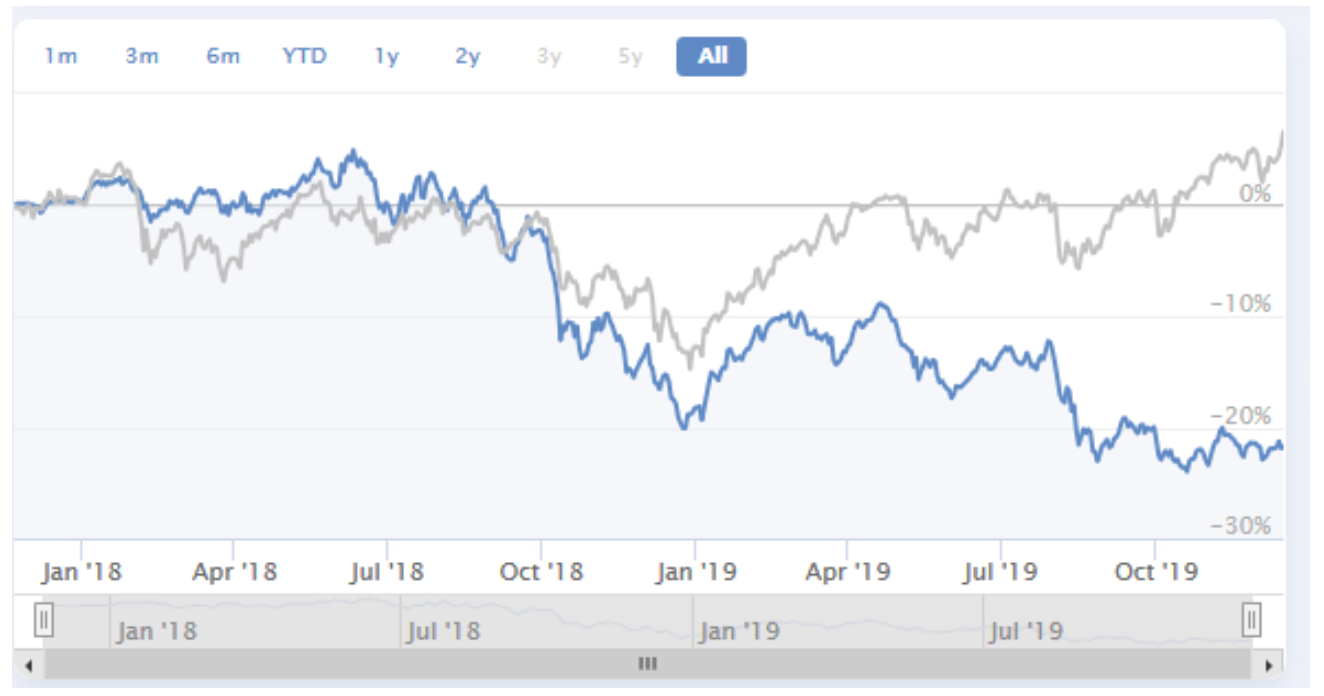
I appreciate that two years is a fairly short time in the stock market. But I’m just not convinced that I’m pursuing an effective strategy.
Too abstract: I like the quantitative process of using a screen to select stocks. And it’s worked relatively well for my main UK SIF folio. But in the UK, I’m familiar with the stock market, most of the companies and the wider domestic context in which they operate.
In contrast, my international picks were mostly ‘blind’. Aside from a quick look at the Stockopedia data, I really didn’t know anything much about them. I wasn’t familiar with the stock markets or domestic economies in which they operated.
I’ve come to the conclusion that this abstract approach isn’t an effective way for me to invest. Ultimately I don’t feel I’m getting much out of this process, nor am I providing much value to subscribers.
I’m going to cut my losses here and be thankful that this was only ever a virtual portfolio. Unlike with my UK SIF, I’ve never invested any cash in any of my international picks.
Final thoughts: What I’ve learned from this is that I prefer to know something about the companies in which I’m investing. It’s intellectually more satisfying and I believe it adds value, when applied within a quantitative framework.
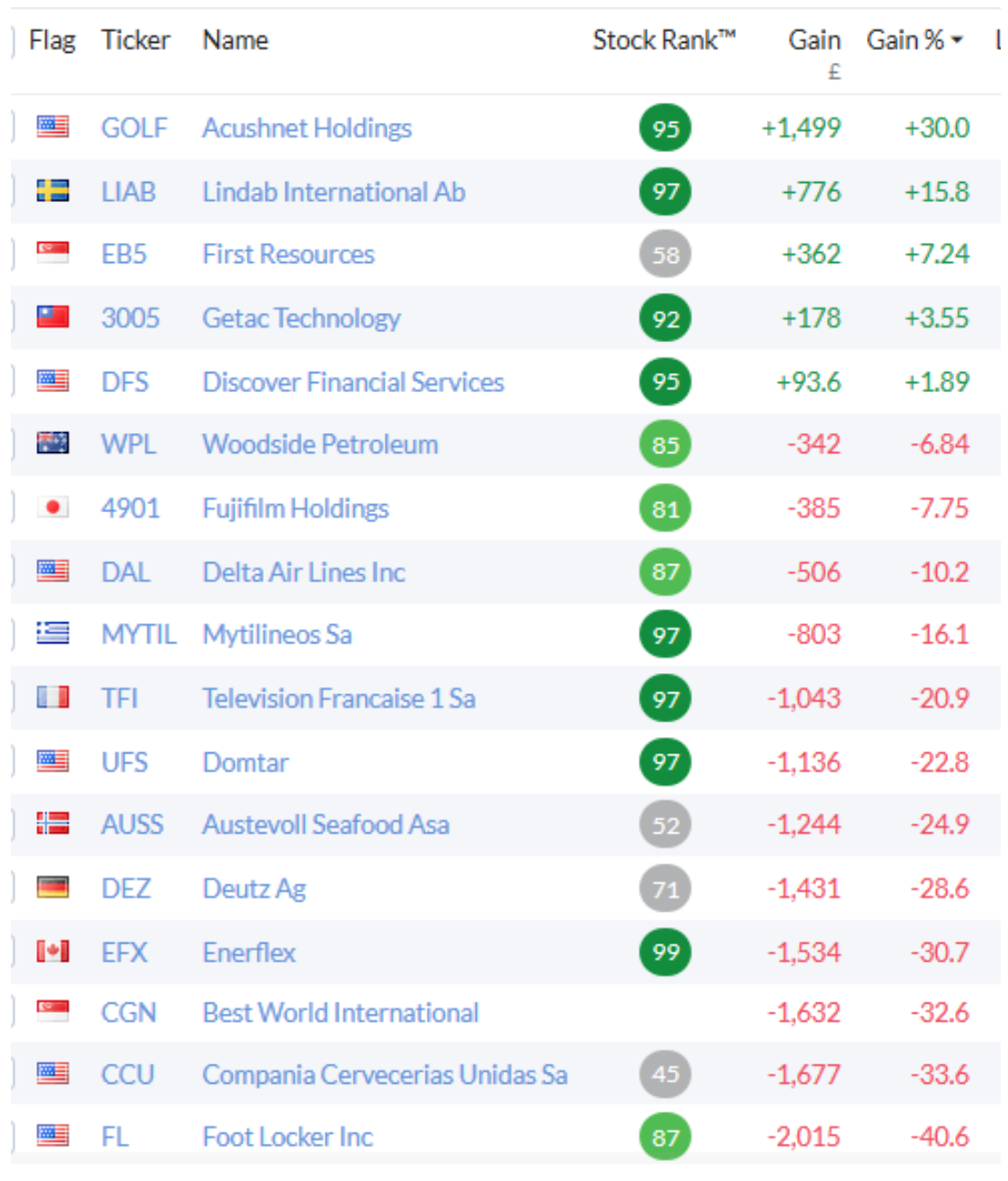
Here’s a closing snapshot of the International SIF, for anyone that’s interested:
Diversion over. Let’s get back to the UK market and look at a new stock.
Wilmington (LON: WIL)
This £212m educational and training services business has not featured in the SCVR since 2014. At the time, Paul commented that it looked fully priced and heavily indebted.
What’s changed since then? The Stockopedia stats suggest that net debt has remained broadly unchanged, but that profits have risen significantly, albeit inconsistently.
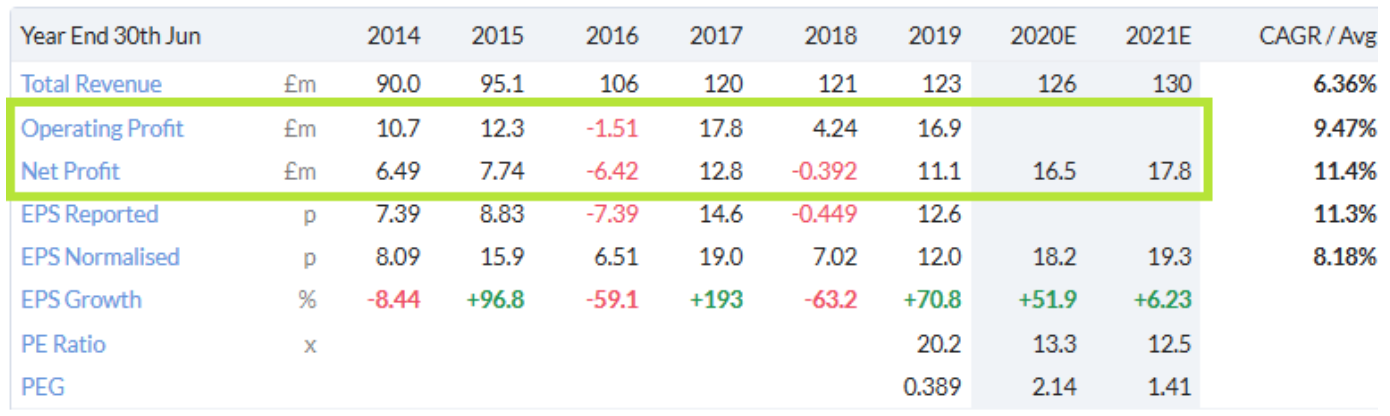
The group now appears to enjoy a mid-teens operating margin and ROCE, plus decent cash generation. A new CEO joined in July, so we may also expect a renewed focus on sustainable growth.
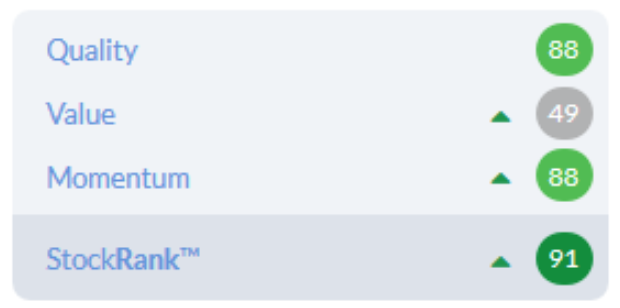
Stockopedia rates the shares highly, with a StockRank of 91 and High Flyer status.
I reckon it could be a good time to take a closer look at this business, which provides training and education services in the Healthcare, Risk & Compliance and ‘Professional’ sectors.
Potential value
Wilmington’s ValueRank of 49 suggests the stock is fully priced. But the component breakdown suggests to me that there could be some value here:
If we invert the price/free cash flow ratio of 13.2, we get a free cash flow yield of 7.6%. That’s enough to cover the dividend twice, which seems promising to me. I’m also tempted by the earnings yield (EBIT/EV) of 6.9%.
One of Paul’s criticisms in 2014 was that Wilmington’s earnings feature a lot of adjusting items. That’s still true today. The latest annual figures include £6.5m of adjusting items, versus statutory operating profit of £16.9m.
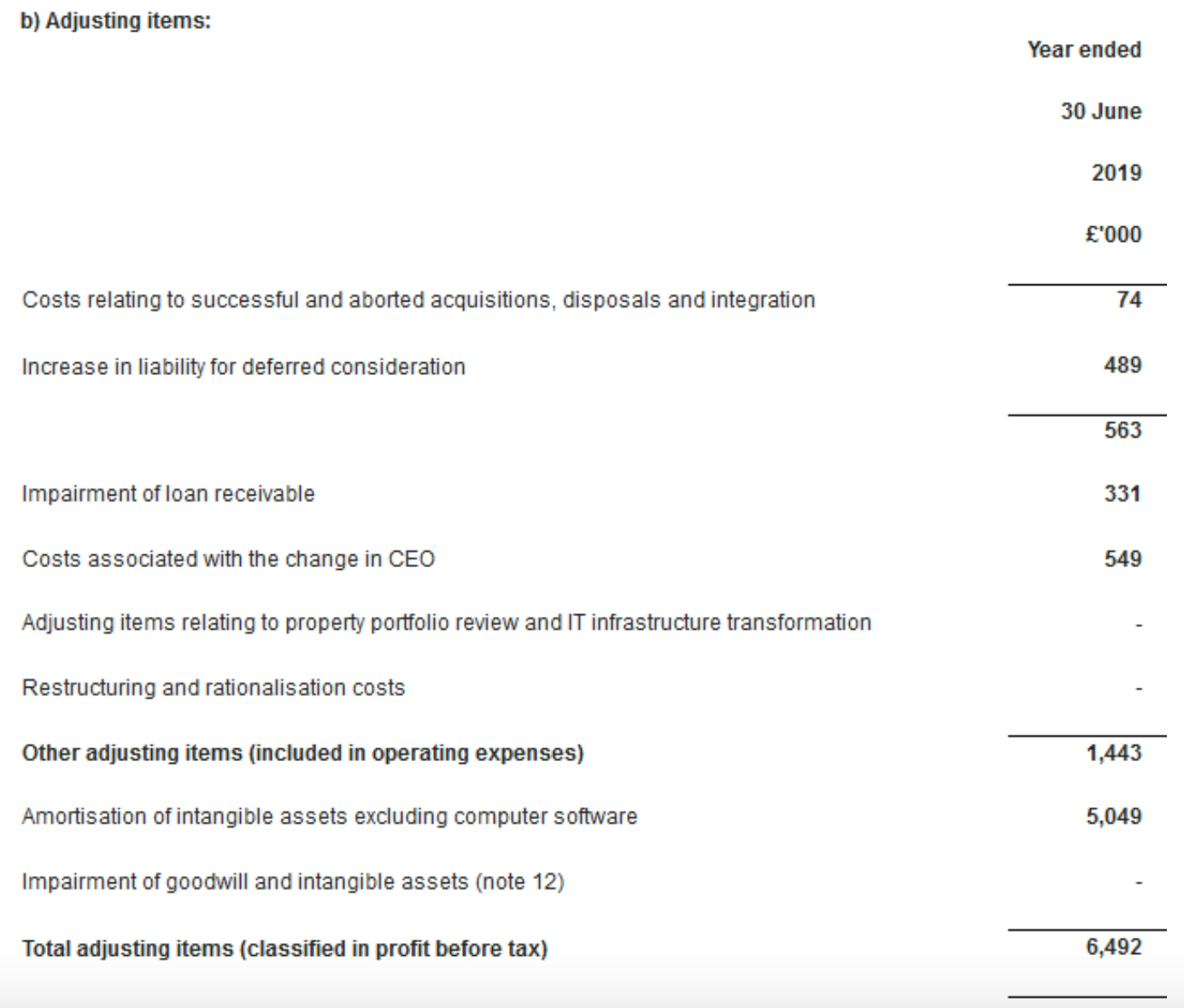
Personally, I don’t think any of these costs are truly exceptional for an acquisitive professional services/software group. I’d include them all in my calculation of profits. Fortunately, Stockopedia’s algorithms use statutory operating profit, which does include all costs. So I don’t need to recalculate my screening results.
One final note regarding value. Wilmingotn’s balance sheet has few tangible assets and lots of goodwill. It looks weak, but this is not unusual for a people/services business and is not necessarily a problem. I’ve no serious concerns on this count.
Quality - above average?
Wilmington scores much more highly in terms of quality. It’s not hard to see why. The group performs well in a number of key areas:
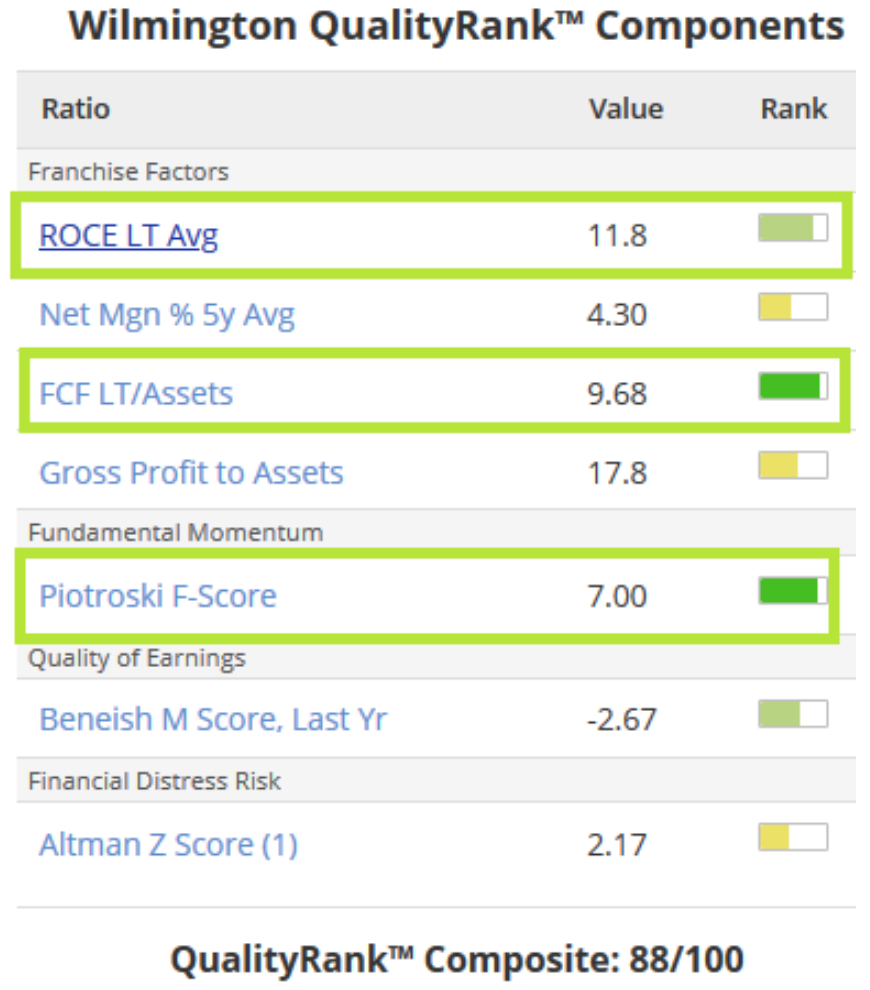
These factors suggest to me that this is a consistently profitable and cash generative business, with a stable or improving outlook.
The only thing that concerns me slightly is how inconsistent the firm’s profitability has been in recent years:

An attractive average can often mask a less appealing trend.
I’m willing to give management the benefit of the doubt here, seeing as debt levels have remained stable through this period and the overall profit trend appears to be improving.
Momentum - poised for gains?
The final ingredient I need to see for a profitable fixed-term investment (my SIF holdings are held for nine months before being reviewed).
Wilmington scores fairly highly in this regard:
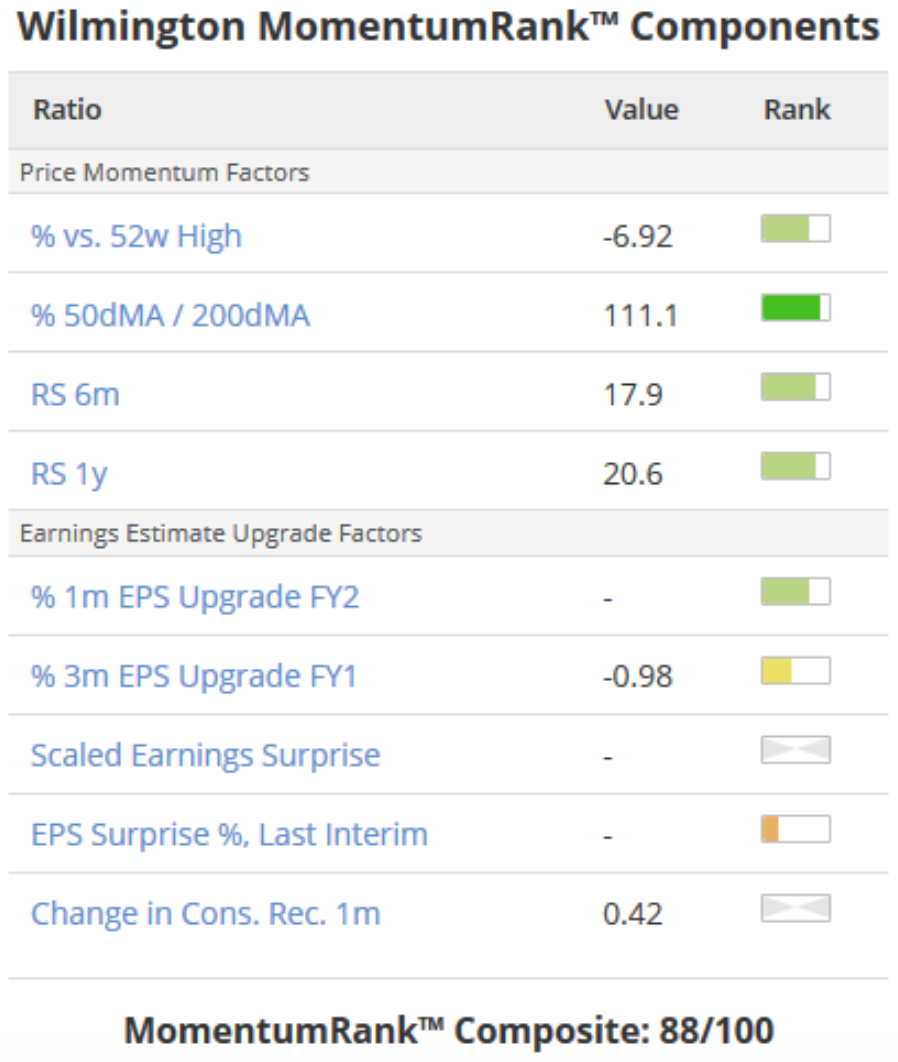
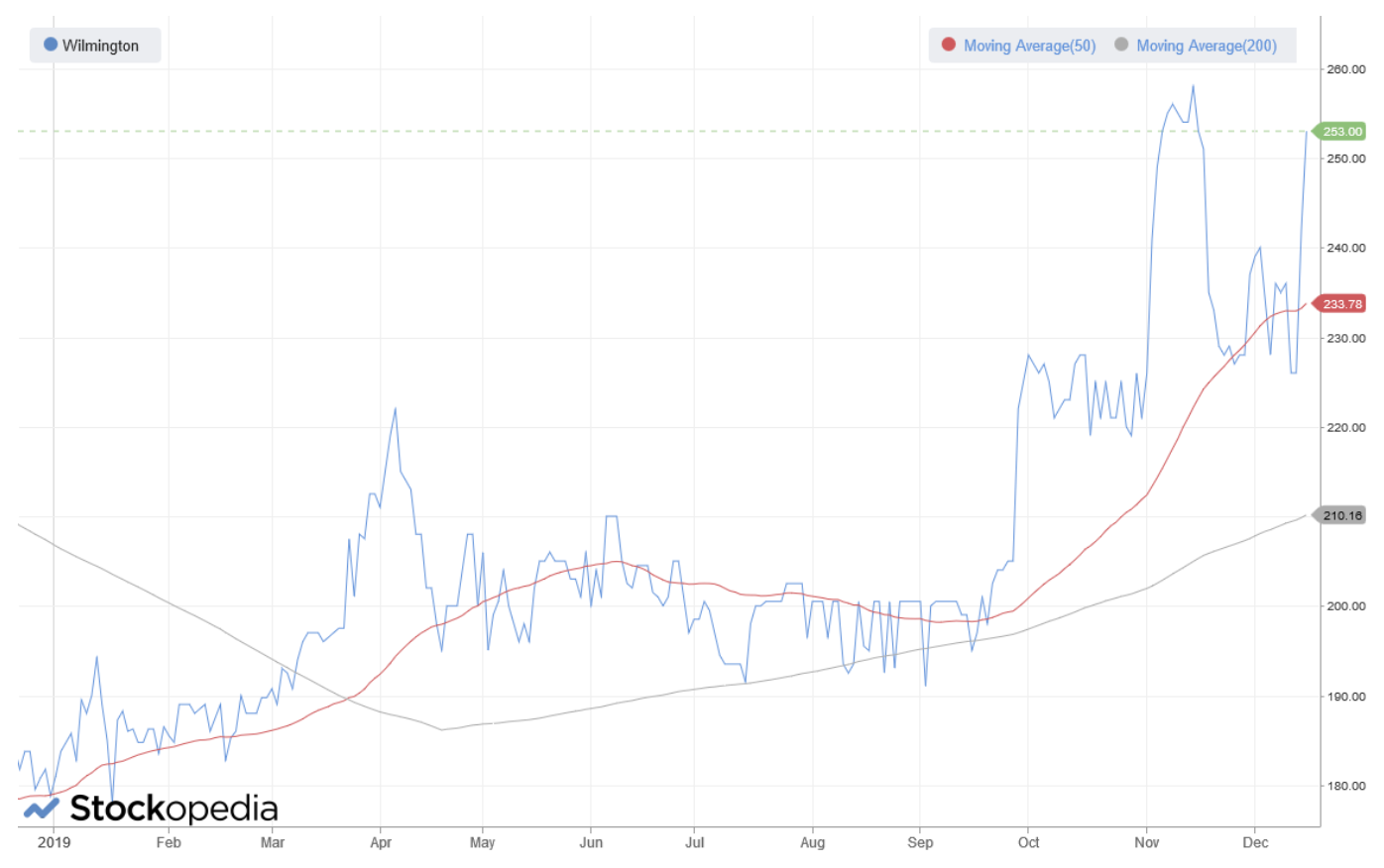
From price momentum factors, we can see that the share price performance has been strong, satisfying key technical analysis requirements. Here’s how this looks on the chart:
Broker consensus forecasts (earnings estimates) have been less consistent. A weak set of results last year appears to have triggered cuts to analysts’ forecasts:
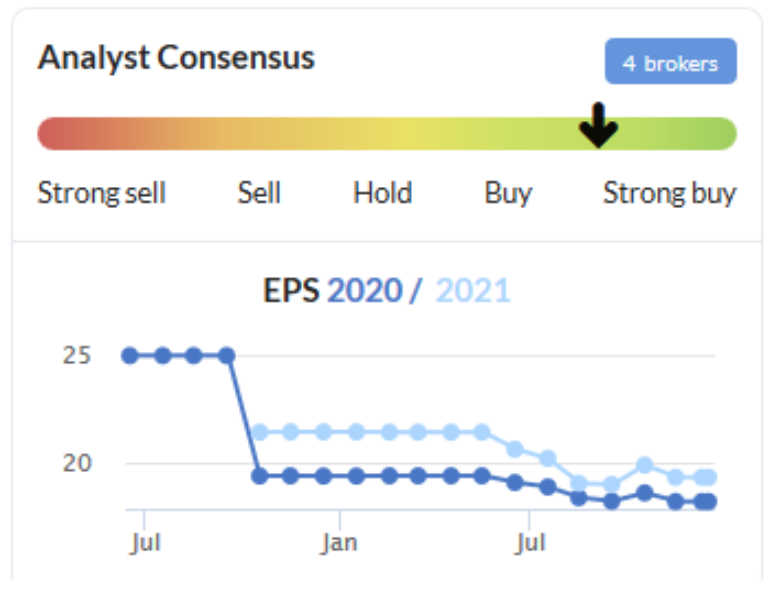
However, forecasts seem to have stabilised over the last few months. Analysts expect a substantial rise in earnings for the current year, followed my more modest growth in 2020/21. Based on this assumption, I think the shares look reasonably priced, on about 13 times forecast earnings.
Perhaps business confidence will improve now that the political situation has been resolved? I don’t know.
My verdict
Wilmington appears to have some attractive characteristics, such as double-digit margins and decent cash generation. As far as I can tell, performance seems to be improving at the moment.
The shares aren’t without risk, but they pass my screening tests, so I’m going to add the shares to the SIF folio this week. I’ll also add them to my own mirror portfolio, after this article has been published.
This is my last article in 2019. I’d like to thank you all for reading and commenting so generously this year and wish you all the best for Christmas and the New Year.
See you on the other side!
Disclosure: At the time of publication, Roland owned shares in Michelmersh Brick Holdings and Medica.
Disclaimer
This is not financial advice. Our content is intended to be used and must be used for information and education purposes only. Please read our disclaimer and terms and conditions to understand our obligations.

10 comments
I am, shamefully, lacking any foreign language skills and therefore confined myself to the US, Canadian and Australian markets, so that I can read the annual reports and follow up on such market analysis (and gossip) as I can find on the internet.
This has worked fairly well, particularly for Oz shares, but I find that the lack of a forum to ask about apparent anomalies or opportunities leaves me a bit adrift.
Stockopedia ( which I subscribe to for the countries concerned) is critical for data but while there could be discussion here, in practise there is very little.
The comment by the author as follows
“However, I note that small cap specialist Premier Miton has recently taken a 9.4% stake. So I’m interested to learn more.”
I think this will be the transfer of the holding from either Premier or Miton or a combination of both as a result of the merger of Premier and Miton
Hi WallerMa,
Thanks for your comment - you're right. The 9.4% stake held by Premier Miton (LON:PMI) is a result of the two firms' merger. Having checked the original RNS more carefully it seems that Miton held 1.1% previously while Premier Asset Management held 8.3%.
Regards,
Roland
Hi Roland
I for one will miss your investigation into foreign shares. I have learnt a lot even though I have been an investor for circa 50 years.
I had been looking at Continental shares for a while before you started your portfolio and like you had a poor 2018.
I thought that a lot of continental shares, if not quite on the floor, were at least on "weak knees" I looked for a long term chart sloping upwards which whilst, it is history, it still gives you a lot of information about the culture and management of a company past and present. Obviously you still need to do you research.
As 2018 progressed and it became likely that 2018 was going to be a bad year history tells us that 2019 should be a" good year"(David Schwartz- if you remember him).
Late 2018 and early 2019 I bought 4 continental shares which have given me a gain of circa 40%. Quite acceptable.
No strategy yours or mine works in every situation .
I will look forward eagerly to reading your further analysis of the shares that come up on you radar and to looking at the information that I have missed.
Benson
Hi Benson,
Thank you for your comments and feedback. Your continental picks seems to have done well, congratulations!
I may continue with some form of coverage of overseas stocks next year - no decisions have been made yet but I remain interested in the idea.
All the best,
Roland
I also tried investing in European stocks last year, with mixed success. Some of the stocks went down pretty rapidly and I disposed of them, several performed well for a while and then began to decline so I disposed of them, and two I still hold. The most frustrating was Eckert Ziegler which rose rapidly for a while and then declined below my 10% trailing stop loss. I found it frustratingly difficult to get information on the company and therefore sold, and now it is comfortably more than double the price at which I sold.
Hi Roland,
just a thought on the underperformance of you international fund that might have some implications for general approach to investing.
You hint that 'local knowledge' of the UK market and how it works may be the key differentiator at work here. If the strictly 'quant' approach has merit surely that local knowledge is irrelevant? Could it be perhaps that your UK SIF fund is actually a disguised 'gut feeling' fund and its out performance is more down to that than acual quantative processing of the information about the companies you are investing in.
Put bluntly investing based on pure Quant metrics doesnt actually work and what is acutally working is 'gut feeling' and 'hunch' investing, based on years of playing the local market. Granted the metrics bring you to the company but in the final account you are 'hunching' just like the rest of us poor souls!!?
I say all this as its pretty obvious something about the home market is giving you a big 'edge'
Hi ddinksdadd,
Thanks for your comment. I do agree that home knowledge provides some benefit. But I think the quant framework adds a lot of value by narrowing the field of companies down to a selection of stocks which exhibit the qualities I'm looking for.
This approach prevents me applying too much bias or gut feel to my decisions. It protects me from 'style drift' or taking more extreme/speculative positions.
Using a screen also ensures that I get a more accurate and complete view of the subsection of the market I'm interested in. Without a screen, I don't think this would be possible. There are simply too many stocks out there to filter them accurately without a formal, mechanised process.
I can truthfully say that in three years running the UK SIF portfolio, I've purchased many stocks I would never have considered unless they'd appeared in my screening results. Many of these have turned out well.
I think that one factor that may have worked against the international portfolio is simply timing -- the outperformance of the UK SIF folio was concentrated in its first two years or so (Apr 2016 - Jul 2018) The international fund wasn't running during this time, so missed out on these more bullish market conditions.
Ultimately, I'd say the jury is still out. Many systems perform well for a limited time in the right circumstances. Perhaps we should revisit this in another few years!
All the best,
Roland
Hi Roland,
I understand what your saying to be honest partly i'm playing devils advocate on this. You have been clear from the beginning that the screen is merely the beginning of the search, not its conclusion. I know Ed is a big advocate of Quant and that is rather the basis of what you might call the Stockopedia philosophy. I just thought the differential results from your experiment maybe points up that 'hunch' may play a much bigger part in investing success (or failure for that matter!) than perhaps people realise.
In light of what you said regards timing is it perhaps a bit too early to call time on the international fund?
Hi ddinksdadd,
I did think about whether it was too soon to give up on the international fund. I'd have been encouraged to continue if I'd broadly tracked the market.
But having lagged the market by more than 20%, a 25% gain would be needed just to catch up (assuming a flat market). Given that my strategy was meant to be relatively conservative, the scale of this underperformance suggested to me that my strategy was unlikely to deliver a market-beating result anytime soon.
By way of contrast, the UK fund has been through periods of outperformance and periods where it's broadly tracked the market. That's what I'm aiming for.
All the best,
Roland