Small Cap Value Report (Wed 17 July 2019) - Not taking profits, UPGS, KOOV, VLG, NICL, WOSG

Good morning! This is my last small-cap report before I jet off for summer holidays at the end of this week.
Some RNS announcements to see me off:
- UP Global Sourcing Holdings (LON:UPGS) - trading ahead of expectations
- Koovs (LON:KOOV) - preliminary results
- Venture Life (LON:VLG) - commercial update
- Nichols (LON:NICL) - interim results
- Watches of Switzerland (LON:WOSG) - preliminary results
At Versarien (LON:VRS), "revenues [from graphene] of any material amount have yet to be achieved". It has received its first graphene orders post-period end.
APH
Readers have been having an excellent discussion in the comments on Alliance Pharma (LON:APH).
For better or for worse, I stay away from all pharmaceutical stocks on the grounds that my time is better spent focusing on industries where I have a little bit of experience and/or expertise. Sorry about that! I strongly recommend the comments section for anyone who is interested in this share.
Not taking profits
I've had an interesting chat this morning with a friend on the subject of taking profits. We are both long-term shareholders in Burberry (LON:BRBY), and it's a significant percentage of both of our portfolios (currently 13% of mine).
Pricing of Burberry (LON:BRBY) leaves us with a problem of sorts - a pleasant problem. Do we take profits at c. 27x earnings (pre-upgrades) or do we ride it out?
Regular readers will know that as a general principle, I don't sell shares. There are many reasons for this:
- frictional costs - commissions, the spread.
- taxes - to avoid capital gains tax liabilities, I need to hold on to shares (your tax situation may be different).
- the reinvestment problem - it creates more work for me, to find something else to invest in. This might sound lazy, but I think that minimising work is very smart!
- wasted research - related to the above, it is a waste of the work done on my existing portfolio and the comfort that I've built up with my existing holdings, if I get rid of them too quickly. Comfort with portfolio holdings has a real value.
- cash drag - selling out of shares on a regular basis probably means that I would end up holding more cash throughout the year. The expected return on cash is (usually) lower than the expected return on overvalued shares! So holding cash is a drag on returns.
For these reasons, I think my returns would be worse if I was a regular seller of shares.
To show that I practise what I preach: over the last twelve months, I have only sold two companies out of my portfolio, and it was because I realised that my investment thesis in each case was wrecked. The shares in question were United Carpets (LON:UCG) and Distil (LON:DIS). (For what it's worth, both shares are currently trading below my exit prices.)
But if I still think that my original investment thesis is floating, then I'm happy to carry on holding through minor disappointments and through temporary overvaluation.
When I look at Burberry (LON:BRBY), I see a share that might be overvalued. The market is clearly delighted with prospects under new designer Riccardo Tisci, after a postive consumer response to his initial range.
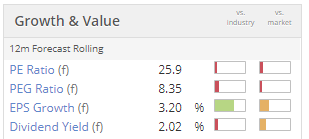
(Please note that the PER shown above does not take into account the further 3% gain today, or the EPS upgrades which will feed into the system.)
Upgraded EPS estimates for FY March 2021 and FY March 2022 from one particular investment bank are now 96p and 105p, respectively.
FY March 2022 starts quite soon: in eight months. So the PER for that year is now just over 22x.
For the patient investor, therefore, we can look forward a year or two and see that Burberry has the potential to grow into its current valuation quite quickly.
Since the company is performing well - indeed, especially because the company is performing well, and also because the valuation does not appear stretched to ludicrous levels, I don't see any need to trim my position.
Please note that this is not an argument in favour of buying Burberry at current levels. I have only ever bought Burberry shares when the market has been very scared of it - its shareholders are an extraordinarily nervous bunch, and tend to run away at the first sight of trouble. This provides plenty of trading opportunities for those who watch it closely and take a more active style.
The main investment thesis at Burberry has to do with the longevity of the brand, its exposure to attractive international growth opportunities, its strong quality metrics which flow from its luxury positioning, its very healthy cash generation, and its unlevered balance sheet. I've built up a lot of comfort with these characteristics, as I've been watching it, off and on, for the past seven years.
Now there is a good argument which takes a portfolio perspective and suggests taking profits to reinvest in similar companies. For example, Kering (KER) or LVMH (MC) are much larger and more diversified. I can't argue against the view that it would be much safer to own those two alongside Burberry, reducing the exposure to a single brand.
On the other hand, part of my investment thesis at Burberry has always been the potential for a takeover by LVMH. In that event, it will be the Burberry share price which enjoys a strong bid, not LVMH's.
American firms might take an interest, too: Tapestry (TPR) (formerly known as Coach) wanted to acquire Burberry back in 2016.
In summary, the investment thesis is intact and even if Burberry's share price is currently aggressive, it is not at levels which the company cannot grow into over the next two years.
Selling good companies is a move which successful investors often regret the most, and I'm determined to avoid replicating it.
As Jesse Livermore once said, in a completely different context:
It never was my thinking that made the big money for me. It always was my sitting. Got that? My sitting tight! It is no trick at all to be right on the market.
UP Global Sourcing Holdings (LON:UPGS)
- Share price: 85.8p (+19%)
- No. of shares: 82 million
- Market cap: £70.5 million
A pleasing update from this IPO recovery stock. Underlying PBT this year will be above the market's current expectations.
"The Group has continued to trade strongly since its interim results, announced on 29 April 2019, and there has been better than expected revenue growth across each of its four strategic pillars - i.e. discounters, UK supermarkets, online platforms, and international customers."
The chart tells the story: it floated on optimism, crashed shortly thereafter, and has been gradually recovering over the past year. See the archives for our previous comments - I last commented in April 2018, with the share price at 38p.
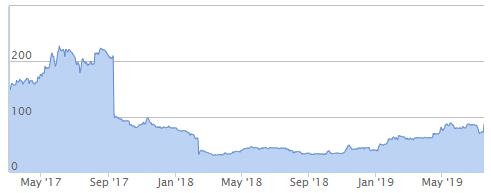
Commissioned research from Equity Development puts the latest EPS forecast for FY July 2020 at 8.3p.
As a reminder, UPGS is an importer of affordable consumer goods from the Far East. Based on its list of brands, I reckon that its products do enjoy some pricing power.
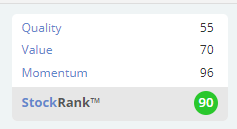
The StockRanks love it and the returns look excellent, however I would be surprised if this brand portfolio was able to support an above-average earnings multiple for the stock.
Koovs (LON:KOOV)
- Share price: 7.1p (-11%)
- No. of shares: 356 million
- Market cap: £25 million
This "Indian ASOS" says that current trading is in line with market expectations, and is very bullish about Q1 in the new financial year.
The results for FY 2018 are rubbish, so it's important that it has something to shout about.
In FY 2018, on sales of £6.4 million, it produced an adjusted EBITDA loss of £12.9 million. This is about as bad as it gets in terms of the companies that I cover.
The company has successfully raised lots of new money and is in partnership with Future Lifestyle Fashions, so you would think that there is no serious threat of insolvency. However, there is a rather lengthy going concern note.
Apologies for the extended excerpt, but I think this stuff is important:
"...the success of the business remains reliant on the Group achieving an adequate level of sales, driven by an appropriate level of marketing spend. During the next 12 months the forecast level of costs will be unlikely to be covered by the gross profit generated from sales. As such there is a risk that the Group's working capital may prove insufficient to cover such operating activities. In such circumstances, the Group could be obliged to seek additional funding through a placement of shares or source other funding. In the absence of additional funding the Group has the ability to reduce costs to ensure that existing cash resources together with the funding described below are sufficient to enable the Group to meet its liabilities for a minimum of 12 months from the date of this report....
The directors have concluded that the circumstances set forth above represent a material uncertainty, which may cast significant doubt about the Company's ability to continue as going concern. However, they believe that taken as a whole, the factors described above enable the Company to continue as a going concern for the foreseeable future."
It doesn't really matter to me how good Q1 at Koovs was. The risk of investing in an Indian business combined with the company's terrible financial record and the going concern note above make it uninvestable for me. Bargepole treatment.
Venture Life (LON:VLG)
- Share price: 50p (-1%)
- No. of shares: 84 million
- Market cap: £42 million
Venture Life Group plc (AIM: VLG), a leader in developing, manufacturing and commercialising products for the UK and international self-care market, announces a commercial update on business developments in H1 2019.
This is a detailed H1 update.
Noises sound positive re: Dentyl mouthwash but the UltraDEX brand strikes me as more differentiated versus the competition, so I find it a little bit more interesting. It's making progress with distribution arrangements with a variety of major retailers.
There is also some progress in VLG's manufacturing division, though there is a lack of financial detail given in this update.
The update includes no reference to market expectations, which are for EPS of 2.1p in the current financial year, rising to 2.8p next year.
I find this stock interesting but am in no particular rush to buy at current levels.
Nichols (LON:NICL)
- Share price: 1700p (+4%)
- No. of shares: 37 million
- Market cap: £629 million
2019 Interim Result & Board Changes
Running out of time now but I just want to mention this in the context of our analysis of Barr yesterday.
Nichols has seen UK revenue growth of >6% in H1, "against very strong prior year comparatives". It says UK soft drink sales in general are up by 4.1% year-to-date, using Nielsen data.
Outlook
While UK trading conditions are expected to remain challenging, as a result of the Group's diversified business model and sales momentum, the Board is confident that full year earnings will be delivered in line with its expectations.
My view
Firstly, I think this puts the horror show at Barr yesterday in an even worse light, since Nichols is having none of the same problems.
As for Nichols itself, it continues to look a very nice buy-and-hold candidate, as it always does. I am price-sensitive and leave it on my watchlist.
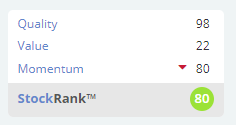
Stocko recognises the quality, calling it a High Flyer.
Watches of Switzerland (LON:WOSG)
- Share price: 293p (+1%)
- No. of shares: 240 million
- Market cap: £702 million
Slightly too big for a small-cap report. Possibly of interest to you, this is a new flotation (IPO in May) which has issued its maiden results.
There don't seem to be any nasty surprises. UK like-for-like sales are +10%, and PBT increases at a healthy rate to £20 million. Guidance for the current financial year is unchanged.
The likes of Rolex and Patek Philippe are picky about who gets to sell their watches. So in that sense, WOSG is not an ordinary retailer - it has valuable relationships with top-tier luxury brands.
So I'm interested to follow this story, watching out for the usual post-IPO wobble.
Addio! I will be somewhere that looks like this next week, checking my emails as infrequently as possible. Thanks for all your terrific feedback and comments, as always.
Cheers
Graham

(Source: ThomasCookairlines.com)
Disclaimer
This is not financial advice. Our content is intended to be used and must be used for information and education purposes only. Please read our disclaimer and terms and conditions to understand our obligations.

32 comments
Well done Graham for another great report. Have a super holiday.
cheers
Francis
Vitec (LON:VTC) has an unusually high volume today, according to ADVFN. Almost 1.5m against a 3 month average of 43,000 according to Stockopedia, with an NMS of 300. The trades appear to be sales in the first hour today but the SP is up 40p. Has ADVFN got its data wrong?
Puzzled of Lambeth
Vitec (LON:VTC) - interesting. Volume and price move are confirmed on SharePad. It looks like almost all the volume (~1.4m) was early on around 8.15-8.30, however, the price didn't start to move until 10am. I can check in more detail tomorrow as there will be detailed trade quantities and times available and maybe an RNS. Vitec (LON:VTC) has been in a recent downtrend, so this may be a reversal coming up.
Alliance Pharma (LON:APH)
Main positives are the steadily increasing revenues, EPS and dividends over time. Cash flow generation is strong. Pharmaceuticals is a good long term industry to be in, people will spend on healthcare, especially with the ageing population here in the West.
Negatives are the treadmill of purchasing new brands with debt and equity issuance. E.g. last year they spent £60m on acquisitions. The shares on issuance is ever increasing. In their defence EPS still rising. Currently focused on generating cash to work down the debt pile.
I always worry about firms which need to buy more to grow, as opposed to underlying organic expansion for their products.
E.g. in 2014 shares on issuance 265m and today 510m (from Stocko) EPS was 3.35 now 4.45 so double the equity for 32% growth in EPS. Also net debt 74m or so.
Other problem is last year they lost a Chinese licence, which was a set back. Their international footprint is otherwise good.
Market cap at £348m with say £143m revenues for 2019, does make it a possible takeover candidate one day, particularly if the buyer already has a distribution model, so they can cut out APH’s 87m in costs! Easy to justify a takeover premium.
I suspect this might be the real play here long term.
Mello May 19: the last presentations are just coming through.
Today, Downing's James Lynch discusses cash generative business models, to enable income and growth. AdEPT Technology (LON:ADT) is presented by Ian Fishwick, also mentioned are Ramsdens Holdings (LON:RFX) and Discoverie (LON:DSCV).
Find this, and all the other Mello presentations here.
Thanks Graham for your insights on selling. I feel the same but it is with the proviso that one has to be invested in really good businesses that are also really good stocks. For me finding investments is the hardest part, so I tend to hold on once I have found them.
I like to think that many of the stocks I hold come under that category and I have not sold any stock in my best companies because I think they are great businesses that I understand (some better than others) Boohoo (LON:BOO) Bioventix (LON:BVXP) Fevertree Drinks (LON:FEVR) Games Workshop (LON:GAW) Somero Enterprises Inc (LON:SOM) Treatt (LON:TET) (great podcast with Lord Lee who has 40%! of his ISA IN Treatt (LON:TET) ) and XP Power (LON:XPP).
Thx.
Michael.
Great stuff Michael, I am working hard to do the same as you!
Graham
M
I too hold some of yours indeed have held Treatt for a while and up 470% probably my best performer - where is the podcast you mention love to listen
Somebody I have sadly given up most of my profits but still think it a good stock
Any comments on CAPD?
Why a 10% drop in price today?
wrt selling shares.
My observation is that I am currently standing at a substantial "profit" on ALL my share sales.
(some much higher than my buy price, others not)
I think that's trying to tell me that I should sell more.
What's your secret?? :-( I guess you're allergic to profit warnings
You are assuming it's a good thing - I'm assuming that I would have saved more value by selling other shares, if I'd only had my finger closer to the button.
And I have no idea why it has worked. I know I was absolutely certain it was the right decision at the time. No profit warnings involved (at least not until after I'd sold).
The only thing I can identify is looking actively for sales from the portfolio whereas - like most investors - I usually spend time looking for buys.
Graham,
In relation to whether, or not to sell Burberry (LON:BRBY) because it may be fully valued, as it is a significant holding why not sell half. You will only be 50% wrong, whatever the future company and/or market direction and you will have a cash pile to sit on awaiting future investment opportunities. There are plenty of successful investors - not least Buffett who are happy to bide their time in cash.
To quote another well used adage: It's never wrong to take profit, (I would amend to.. a significant profit).
After a less than perfect record at holding onto long term compounders, I have also tried the "top slicing" treatment with quality long term holdings. Sell 25% if it gets ahead of itself, maybe another 25% if it goes up a lot further.
If it comes back down & nothing else has changed, I might buy back the shares sold.
Of course, what I need to do is get smarter in identifying when the business has reached an inflection point.
I was currious about your methodology, you said
"wasted research - related to the above, it is a waste of the work done on my existing portfolio and the comfort that I've built up with my existing holdings, if I get rid of them too quickly. Comfort with portfolio holdings has a real value."
isnt that dangerously close to getting emotionallly attached to a company. Dont get me wrong its not a critism of your trading style, on the contrary I look up to you and am an avid reader of the small cap blog, i'm just trying to understand it.
I once got eaten up by the AA, and ever since make an effort to not concider any emotional effort and time spent studying a company when making a decision (also how much money I've made or lost previously)
Also if you never sell, what happens when you find a new company you want to invest in, assuming you are full invested most of the time
Is Telit Communications (LON:TCM) back to it's old bad habbits?
They finished last year with $34m of debt. Since then they have received $105m for the Automotive sale. So cash should be:-
$105m - $34m = $71m
Yet today we are told $27m of that $71m has vanished. No explanation given.
Ridiculously, a 'profit in cash' for the half is claimed in the narrative!
Morning Graham
Following on from Gostevie's comment, one has to admire the astuteness of Richard Bernstein and his team at Crystal Amber Fund (LON:CRS). i bought recently given the dip in the share price that that is at odds with the NAV performance. I appreciate that this is an investment company so no comments requested. I just thought that Crystal Amber Fund (LON:CRS) merited recognition.
Also talking of astute deals, CLS Holdings (LON:CLI) continues to fly under the radar. A competent and knowledgeable management team with plenty of skin in the game. Some savvy transactions of late, including today's announcement of the sale of Quayside Lodge at a 14% premium to the Dec 2018 valuation and Ateliers Victoires, Paris on 28 June at a 21.4% premium to the most recent valuation.
Morning Graham,
If you do get chance I would really welcome your take on Alliance Pharma (LON:APH)
I have taken the half year update very positively and added to my position at the open.
I had been concerned that the new CEO might make a mis-step and feel he needed a big acquisition. I spoke to him at length at the AGM about the need to demonstrate financial discipline as had grown frustrated at their leverage never reducing, despite them stating that it would. As a result, it is extremely pleasing to see net debt/EBITDA (their chosen measure) below 2x for the first time in a long time.
In addition, a solid growth in revenues, not just driven by acquisitions and continued good performance of their star brands along with a small but valuable increase in local brands sales points to a much improved Operating Margin (c25%) at the year end. So far, there is a demonstration that they can grow sales for their International Star Brands at an impressive rate. The problems in local brands seen last year, whilst not mentioned and increasingly looking like history as there is adequate growth there too. My fear for local brands was a complacency that wouldn't be addressed despite problems last year.
Renewed debt facilities do mean another acquisition will come, but for me that is now not so much of a worry as they have demonstrated to be good at debt reduction before embarking on another acquisition. The new CEO is proving to be 'so far so good' in my view. I had considerable concerns at the start of his tenure, but he is gradually starting to look like a credible CEO who may well prove to be a good steward of my capital.
Whilst it can't be described as a great company on quality metrics yet, the ongoing evolution and growth in scale means that it can move towards higher quality over time. However, I would welcome some good arguments against my current bullish view.
Regards
Paul
I have taken a TINY position in Alliance Pharma (LON:APH) this morning following this update. To me there are some great looking numbers. There is the ongoing CMA 'concern' about price fixing, but the company consistently maintains that they have not been involved in selling/distributing prochlorperazine since 2013.
I'm therefore also interested in input from Graham (or others) please...
Hi Paul
Thanks for sharing your thoughts on Alliance Pharma (LON:APH) .
As a fellow holder here are some further points:
+ve
There was actually an 8% year-on-year decrease in MacuShield revenues in H2 2018, which management said was down to European expansion delays, which would be resolved in 2019. it looks like they weren't lying and that things are back on track.
-ve
Year-on-year revenue figures reported over the last 18 months are as follows:
H1 2018: +76%
H2 2018 +63%
FY 2018: + 69%
H1 2019: +20%
I'm concerned that management appear to have sugar-coated the performance of their biggest brand.
Xonvea revenue in H2 2018 was £0.0m
Xonvea/Nizoral together in H1 2019 is £10.0m, so quite a drop (sorry, can't split them out from the information given today)
I was expecting much better growth from these brands.
Is Nizoral (medicated anti-dandruff shampoo) seasonal?
Conclusion
I remain cautiously optimistic. There are a few pale red flags, but overall the company generates wads of cash, has good margins, and 2 potential stars gearing up. I'm highly tempted to top up my relatively small holding, but might wait until the half year results are released. In any case, a safe holding, in my opinion, to hold in these turbulent times.
Cheers
A
Hi abtan / hawkipa
I've looked at Alliance Pharma (LON:APH) today. I don't have background in it. Snapshot it looks really cheap. Here's my guess as to why today didn't impress much and valuation seem undemanding give snapshot metrics:
1) They have been very acquisitive and a combination of heavy equity issuance and heavy use of debt (grown more rapidly than revenue over c 5 year period). For the negative this looks poor quality growth and for the more neutral it leaves open a question re proving out the acquisitions
2) Sept 2018 interim contained a writedown of two totalling £6.8m (offset by £1.5m gain from a disposal). Writedowns were non-cash in current sense but its the sort of thing that might feed concern in point 1. Note the SP fell a lot that day. Overall, the company carries a huge amount of goodwill relative to both revenue and profits.
3) Local stuff looks like its treading water to going backwards. Not sure how much tangible and intangible value is tied up in this £80m revenue diversified portfolio but this could be being viewed as a deadweight with very little potential to realise much value from selling a diversified portfolio like that. Perhaps today's muted response in price is a result of fear of repeat of point 2 coming in next results.
4) Presentation of their numbers is perhaps a little tricksy in that there's some headline really high growth shown for some things but then the growth ex acquisitions is much less impressive. This feeds into angst on points 1-3 above. For example, Nizoral APAC rights were acquired for £60m (with £34m coming from equity raise) from J&J however in this current trading statement there is only an inference it has done well rather than explicit comment it has. There acquisition statement back in 2018 said EBITDA would have been £7.1m on £18.5m revenue in APAC "if" done on Alliance's anticipated costs. Again this is not quite coming clean. Anticipated is okay as they are plugging into their network but an actual with anticipated uplift from doing it the Alliance way would have been more confidence forming.
5) As a non-expert outsider looking in I assume their relatively high margin results from distribution relationships and a practiced ability to get product necessary local regulatory approvals. Note, given that the $ is relatively small per product they cannot have overly burdensome regulatory processes to overcome
6) Why is Alliance more than a collection of moderate to weak brands vulnerable to competition and obsolescence?
Interested in your views.
PS I do have a v small opportunistic position in this as of today as the price reaction, valuation and known/foreseeable information do not seem to tie together sensibly. There's a chance this stock will drift down from here though into results if the fear is on the local portfolio value and future.
Re Alliance Pharma (LON:APH)
Excellent contrasting points. Some thoughts:
In fact, Alliance Pharma (LON:APH) is one of only a few exceptions in my portfolio where I have "broken" my own rules on this. My rationale comes down to 2 things:
With such high levels of cash generation it would not take many years to significantly pay down debt if it chose to.
You mentioned Nizoral (more on that below), but the big play in my mind (as I've done more research into it) is Xonvea, the licensed medicine for the treatment of nausea and vomiting of pregnancy.
If Xonvea utilisation rates within Alliance Pharma (LON:APH) 's territories get anywhere close to those achieved in Canada (56% of pregnant women used the product there in each year from 2014-2016 according to a Hardman Research note) then this product alone would be a significant cash cow. It's nice upside potential to have over the next few years.
H1 2017: £40.2m
H2 2017: £41.4m
H1 2018: £37.2m
H2 2018: £40.6m
H1 2019: £39.4m
The movements seem reasonable to me - some ups, some downs - with potentially a slight H2 weighting so maybe even higher sales to come in the latter half of this year?
Hi Mojomogoz,
Thanks for coming back. I think I have some clarity on those points that make sense to me but interesting to see whether they stand up to scrutiny:
1, The stated aim is growth both organically and acquisitively. Many dislike this model, but I have found them to be adept at it. The major purchase over recent years was a portfolio from Sinclair which was a game changer for them. That portfolio turned out in the main to be excellent and they have so far grown sales from that which was acquired. I have been cautious in the past that there isn't organic growth, but this is now being demonstrated. Kelo-Cote is a great example of a brand that was bought in and with focus the sales have literally exploded, with more to come. So in response, I think the growth is primarily driven by acquisition. However, they have proven that they can acquire a product and grow its sales markedly. Essentially, whilst the product might be tiny to a larger co. To them it can be significant so the increased focus results in greater sales post purchase.
Nizoral was funded by £30m equity and £30m debt as an eg of the financing of a purchase.
2, The write down was due to a local brand suffering competition which led to its production being ended. It was a mosquito local brand. The write down was the value on the balance sheet of it. I think sales for them was £0.7m. At the time I worried there was a complacency towards local brands as what is there to stop the same fate for other brands. However, the company believes the breadth of the product suite affords protection and in many ways they are right as they are termed local brands as a result of only being a product in a specific region eg Ashton & Palmers in the UK. I felt that this event should have acted as a wake up call to management that local brands aren't just an all weather cash cow. The 6% rise seems to demonstrate that they have not let the situation repeat.
I am comfortable with the level of intangibles as they are buying rights to make and distribute, so for me they seem like a reasonable 'tangible' intangible. For example the Niz acquisition led to intangibles increasing by £56.6m as a result of the Nizoral purchase for £60.3m (Fx movements also drove that number). But essentially, I can follow the intangibles trail and make sense of valuations. So that gives me a comfort that I understand the make up of the intangible part of the b/s.
3, Fair point. I do come back to my complacency fears here. They always point to the stability of sales and do state they are not really in growth markets and whilst they will fluctuate they will likely tread water. However, the other way of looking at is like an annuity stream with little variation. The number of products is broad so one collapse shouldn't hit too hard. Plus, all will be brands with very long heritage and proven l/t sales. The kind of thing you goto the doctor and he prescribes a cream you've never heard of before, but that will be an APH local brand. In addition, the potential of the star brands means that there is a definite tilt away from reliance here. I can envisage a time when they are just not that relevant anymore, but I don't want to get ahead of myself.
4, I'm pretty sure they have only just taken control of Nizoral. The deal was done last year but J&J only handed it over H2 19. Therefore, its not yet fair to judge them on this. This brand is a heritage brand and has lots of potential from its current position. They wanted more geography but lost out to a PE buyer. However, it is a strong brand in a good market and the other point here is doing a deal with J&J such as this gives them scope to do more in the future. This is the key in my mind as if they are as good as they are making out and see as many deals as they do, then we want them to open up deals with majors as this gives them scope to see better and better deals. My memory is hazy but one recent deal has opened up America in a small way and that is now an area of great interest.
5, The products they buy will usually already be approved. If you like they take a rounding error product from a major and then aim to re-invigorate it. Xoneva is the other end, it had approval in Canada for 40 years but not in the UK. They acquired and then sought approval. This took time, but now it is launched and is the only anti nausea product on the market. The potential for it is subtstantial. However, supply chain management is clearly a skill and they profess to be good at it and working hard to improve it. They have implemented some big cloud system that i can't remember but is apparently going to make vast IT improvements this year.
6, There is recent evidence of competition and subsequent obsolescence in local brands but it is not common. Adding balance, there is more evidence of growing sales of star brands. So it would be balanced to say that is a risk, but I'm not sure the majority could be described as weak brands. Rather the 'weaker' brands are specific geography local brands, which over time are becoming less relevant (but that is a slow process).
I was nervous at the beginning of this year as a result of a number of things, new ceo, lack of debt reduction, signs of weakness in local brands. Today, those questions have been answered for me. The other issue is the CMA. As it was described to me they had done nothing other than create and sell the drug and hadn't benefitted at all from price rises. Therefore, they believe their hands are clean. Time will tell.
The key for me at the moment is that they have reduced debt, which means when another deal comes along they will be able to rightly point out that they can reduce debt. I won't second guess M&A but I was vociferous in calling the new CEO out on when I met him. I pushed him hard on it and said the market would welcome a period of no M&A to see how the business can operate focussing on what it has rather than what it can buy and also pointed out that as a new CEO he had to prove himself. So far so good on that front for me.
Regards
Regards,
Paul
Hi Abtan,
Many thanks for your follow up. It's extremely valuable to me to see your views.
A few follow ups to your follow ups:
Local Brands - They fell last year (FY18) so 6% was just an element of recovery that they did guide for. My fear wrt local brands is a complacency that they do do zero marketing. When I challenged on this recently, I was told that the challenge here was that the issue here was more about supply chain management and managing that. I think they missed my point. What if they did do some marketing. Would sales move materially higher? Its a diverse range of products and last year the issue was in a Mosquito product that suffered competition. As a result manufacture was stopped and they wrote down the value of that product on the b/s.
Kelo Cote - I'll paste my comments from the recent AGM I attended where this was specifically discussed:
Much of the initial discussion was regarding Kelo-cote and its potential particularly in China. The market for scar products is big and growing and whilst publicly they don't comment on individual products margins, it was implied that Kelo-Cote along with having the biggest growth last year has the biggest margin of all their products. The growth since acquisition has been compelling and underlines the point that they can add significant value to bought in brands. This is evidenced by the c67% growth in Kelo-Cote sales last year. He was cautious enough to flag that growth cannot continue at that pace going forwards.
So to be fair to them, he heavily flagged that growth would reduce this year as it simply couldn't continue at that rate of growth. The growth historically has far exceeded their expectations I think.
Nizoral - I may be mistaken, but I don't recall seeing sales numbers for Niz/Xoneva in the RNS? Only Kelo-Cote seems to be broken down? I do recall that they use see through numbers as I don't think they actually take control of sales until H2 this year on Niz. So I think I would say, its difficult to judge it as yet as J&J still handle all sales and just make a payment to them. Xoneva has masses of potential if it can replicate what has been done in Canada.
The star brands market potential looks extremely compelling to me based on the performance so far. My calculation is that the star brands potential market in c5years is over £100m of sales.
Regards
Paul
Re Alliance Pharma (LON:APH)
Hi Paul
Sorry, in a bit of a rush, so resorting to bullet points:
Total H1 Revenue = £70.3m
Star Brands £30.9m, so Local Brands = £39.4m
From Star Brands £30.9m, £13.1m (A) relates to Kelo-Cote. Balance = £23.8m
LFL sales for Star Brands up 21%.
LFL Star Brands are Kelo-Cote + MacuShield + Vamousse, so by deduction Macushield and Vamousse = £7.8m (B)
Difference for Xonvea/Nizoral = A+B = £10.0m
My understanding was that Nizoral sales were recognised as of this financial year, so given Xonvea sales were only £0.2m from 2018 (albeit only a few months worth of sales), I figured the sales this year would still be low with the remainder attributed to Nizoral (where sales would have been £10.9m in H2 2018).
A few assumptions in that last paragraph, so will be interesting to see the split of the £10.0m when they're finally released.
Cheers
Re Alliance Pharma (LON:APH)
Sorry, just realised I missed some keys steps in my calcs owing to rushing earlier. So here is a snapshot from my notes for anyone interested.
All the figures are either published in, or calculated from, official releases from the company.
Thanks abtan and hawkipa for detailed response re Alliance Pharma (LON:APH)
Here's how I feel about your response and Alliance Pharma generally (with very small position from yesterday):
Snapshot value is clear. Growth seems highly probable too.
The reason to buy in size is if believe in the growth. With APH its perhaps relevant to differentiate thinking in terms of real (cash) and altered reality (accounting) growth.
On real (cash) growth it seems highly probable, barring a large surprise event, that they produce a high level of operating cash and have the choice to invest it or pay down debt. I'd like the latter as I think that makes for higher quality platform going forward but I fear they will go for the former as that is eye-catching to outsiders and can generate a growth narrative that leads to higher multiple etc. Its also hard to 'do nothing' rather than something sort of thing for senior managers in that acquisitive buy and build habit.
As a tangental aside for hawkipa I would point out a loose parallel with 1pm (LON:OPM) here (that we've discussed before). Without going into detail and what's better or worse the current SP on 1pm has been hammered as they are consolidating and not pushing hard on growth (acquisitive or organic). Like APH they'd probably need external financing for significant acquisitions. In my way of viewing things I see the balance of probabilities being upside expectational surprises for 1pm and downside ones for APH (its not tiny company so there is some reasonably formed growth expectations partly in the price...not fully as the valuation isn't so demanding given growth and margin).
Onto altered reality growth (income statement). With £332m of intangibles on balance sheet there is significant potential for writedowns to come through income statement and distort results. The money has been spent and, as long as the debt can be brought down, I agree it doesn't really matter much. I cannot attach probability to writedown events...but I'd hazard that APH senior management may struggle to see it coming too (which refers back to point above re tidying things up). On balance, any event even if non-cash will retard valuation unless there'e out the park growth distraction somewhere else.
I think I'm probably being too cautious above. The balance of probability is that they hit 100p based on star brand growth. I would like them to consolidate and financially strengthen before pushing on harder. As a relatively distant outsider my hunch is that they have done a lot and changed a lot over a short period of time and have a diverse and complex business that is probably a bit wild and untrimmed around the edges.
My crystal ball (ha ha) says that they do hit their 100p ish level on results that look good and then announce some form of major internal investment program to clean themselves up for, say, £4-500m pa revenue target with probably some element of change in how they manage the the diverse local portfolio (they probably can't get an upfront cash buyer for that so their path is complicated). I feel that I could be a big buyer once they announce some 'new' Alliance Pharma plan and tidy up, particularly if that deflates price a little. I realise that could be higher but right now I don't see the motor as clean enough for the price on EV basis.
Thanks for sharing Abtan.
Morning Graham and all,
I like it when companies in the same industry report in clusters, it makes it much easier to compare their narratives/excuses. Nichols (LON:NICL) reported its H1 results this morning up to 30 June 2019. It's results make a lot happier reading than A.G.Barr (LON:BAG) yesterday (not quite the same period, but a large overlap), and reports revenue up 10% overall, with growth seemingly across all its segments, even in the UK. They then go on to say:
"Year to date growth in the total soft drinks market was 4.1% (Nielsen to 15 June 2018) reducing from 5.7% in May (Nielsen to 18 May 2019) as the industry laps last year's record summer weather."
A.G.Barr (LON:BAG) says it suffered from poor weather this year in Scotland and Northern England, and said this was "compounded further as we approach the half year when the prior year comparative weather was at its peak".
A.G.Barr (LON:BAG) appears to be suffering worse than its competitors specifically because of it's limited geography, and through company specific problems, which isn't a great combination. I have no position in any drinks company, but it seems as though - at the moment - A.G.Barr (LON:BAG) is not the one to be in.
Thanks
Chris
Good morning Graham,
An interesting RNS from Crystal Amber Fund (LON:CRS) this morning:
https://www.investegate.co.uk/...
NAV up from 238.37p end of June to 249.12p end of June. Current share price 195p-200p. Also a bit of a hatchet job on De La Rue (LON:DLAR), calling for the Chairman to go and threatening an EGM if he doesn't.
(I hold.)
Gostevie
There has been some noise about Richard Bernstein's annual performance fee for running Crystal Amber Fund (LON:CRS) of, if memory serves me correctly, £12m. Is this a concern?
My morning smallcap tweet:
Vectura (LON:VEC), UP Global Sourcing Holdings (LON:UPGS), Crystal Amber Fund (LON:CRS)
Vectura Group (VEC) H1 trading. Flutiform sales ahead of f/c but maintains FY guidance. Plans £50m capital return, probably by a tender offer.
UP Global Sourcing (UPGS) guides FY rev ~£122m and underlying pretax above market expectations.
Crystal Amber (CRS) June NAV/sh 249.1p, up 8.8p on month. I hold.