Screening for opportunities in UK consumer stocks: why it could be a stockpicker’s market

One of the most persistent and obvious themes in UK politics and investing in recent times has been the combination of cost of living pressures (for consumers) and cost inflation (for businesses). I’ve read countless trading updates and results over the last year in which companies have commented on these factors.
Obviously many of these concerns were real. Some of them still are. But I’ve been struck recently by the number of relatively positive updates we’ve seen from companies in the Consumer Cyclicals sector.
Notable examples have included Halfords (LON:HFD), Works co uk (LON:WRKS) and Sosandar (LON:SOS) (which I covered in a Stock Pitch last week). But there have been plenty more – and they’ve often reported improved fundamentals, with margin recovery in addition to top line sales growth.
Is pressure easing?
Looking at a cross section of UK economic data suggests to me that the situation remains quite finely balanced.
Inflation has eased over the last year, despite the spike caused by the sharp increase in energy costs in March which followed the start of the Iran conflict.
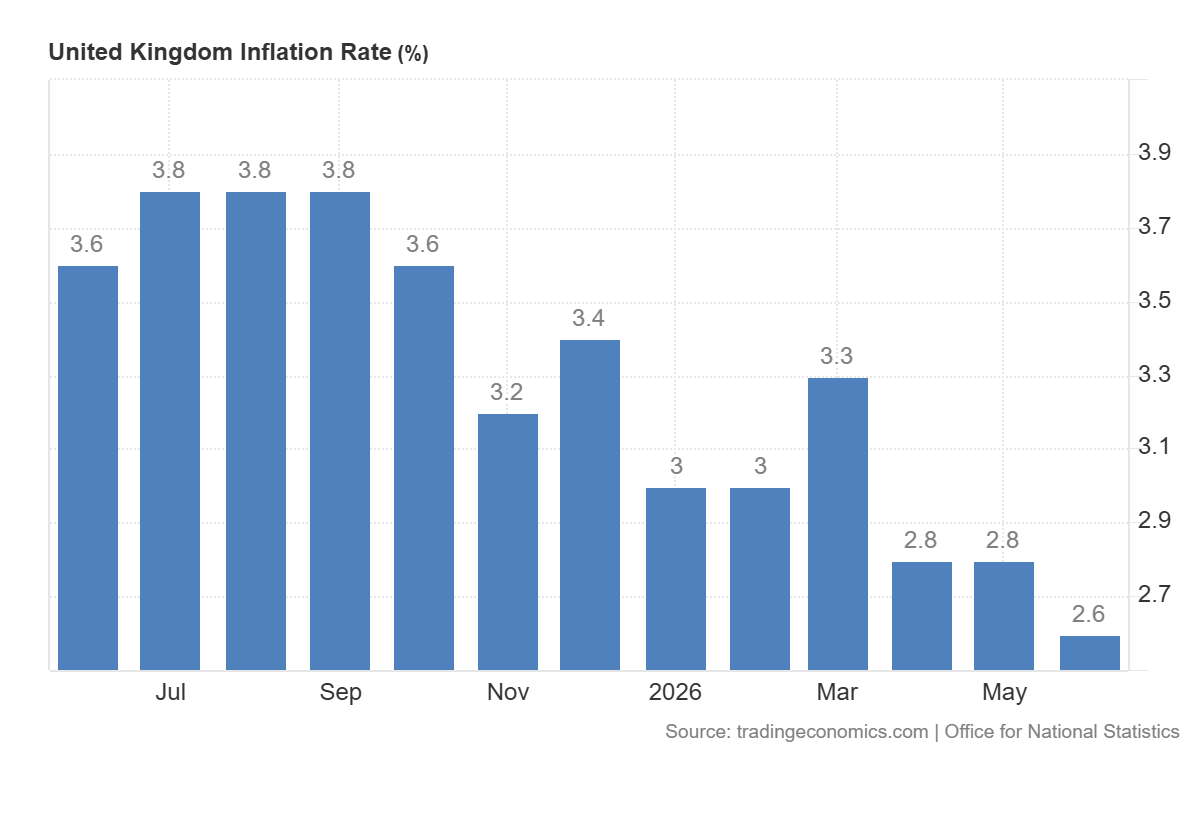
However, it looks like any decline in inflation could be offset by a corresponding decline in consumer spending power.
The latest ONS data on real household disposable income showed a drop of 0.8% during the first quarter of 2026, reversing a 1.2% gain in Q4 2025 when wage inflation briefly outpaced price rises.
What’s interesting is that this reduction in disposable income hasn’t necessarily held back consumer spending.
Household spending adjusted for inflation is estimated to have grown by 0.6% during the first quarter of 2026. According to the ONS, the main contributors to this growth were “miscellaneous goods and services, restaurants and hotels, and furnishings, household equipment and routine household maintenance.”
Consumers have also been buying more stuff, according to the ONS:
The quantity of goods bought (volume) in retail sales is estimated to have risen by 0.6% in Quarter 2 (Apr to June) 2026 compared with Quarter 1 (Jan to Mar) 2026.
This increase is attributed to “a combination of warm weather and sales promotions over May and June 2026”.
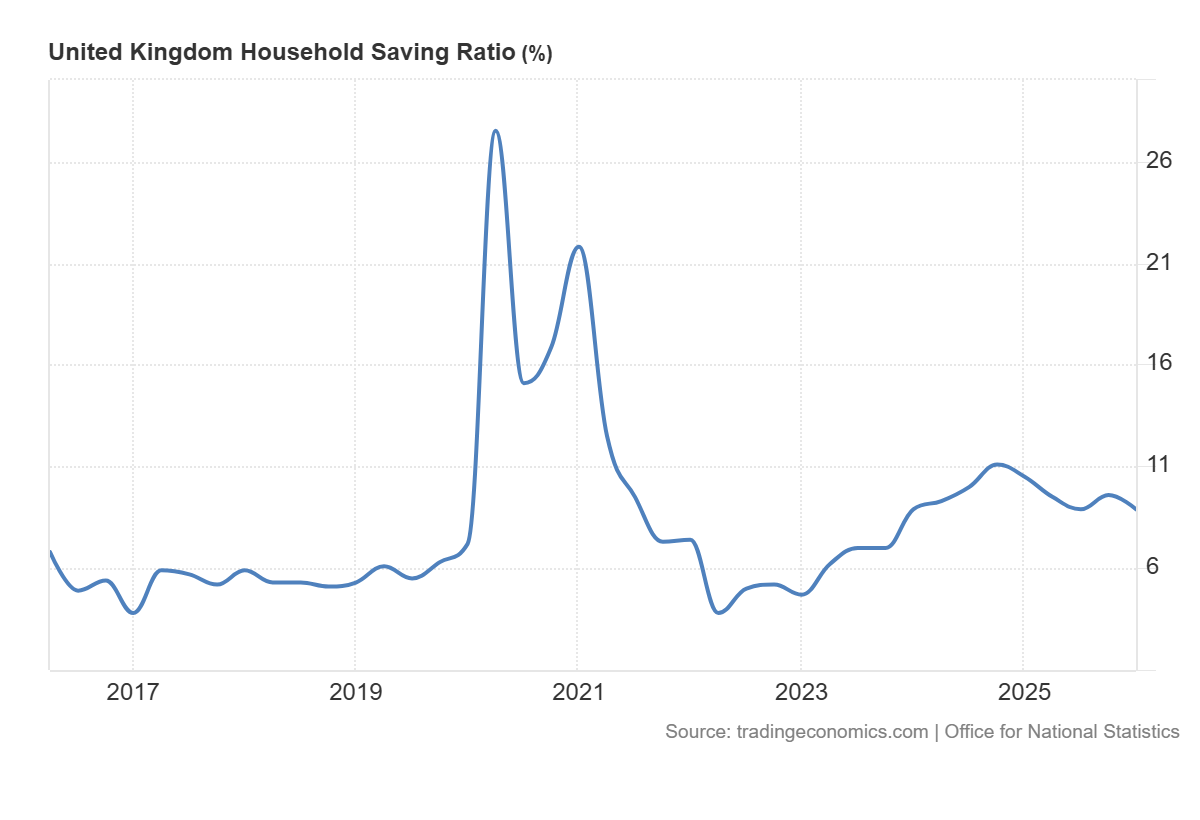
In the absence of above-inflation pay growth, consumer spending appears to have been funded by a reduction in the household savings rate. This fell to 8.9% in Q1 2026, from 9.9% in Q4 2025. This may not be as worrying as it seems – the savings ratio remains at the upper end of the range seen over the last decade, perhaps supported by higher interest rates:
Another factor that may have supported consumer spending is the gold price. Q1 GDP figures show a £4.6bn increase in “gross capital formation” from Q4 2025 to Q1 2026. According to the ONS, “this component is largely made up of non-monetary gold” (i.e. gold that is not held by a central bank).
Gold can only be sold once. With the gold price now easing, it remains to be seen whether savers’ will continue to liquidate their scrap gold and rainy day sovereigns.
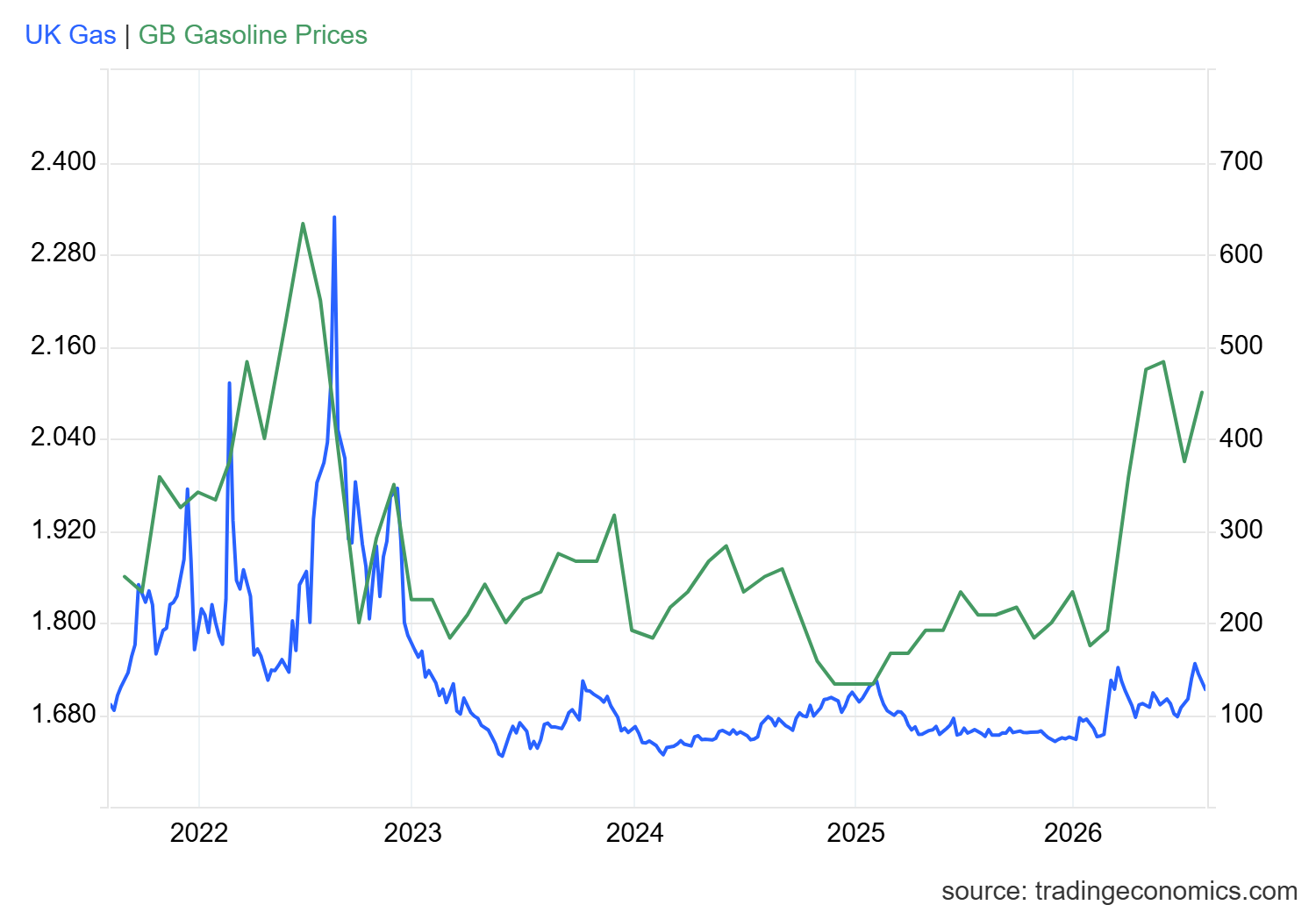
Energy prices may also influence consumer spending over the remainder of the year. The increases seen this year are far smaller than at the start of the Ukraine war. But if higher gas prices persist into the winter heating season then I’d imagine the burden of higher energy costs could have a broader impact on household spending.
Selective opportunity?
It’s clear that conditions are not exactly easy for consumer-facing businesses, even if they aren’t as bad as they might be.
This leaves me feeling that we could be in a stockpicker’s market for consumer businesses. Those with a durable strategy, strong fundamentals and good execution could do well. Others may not.
With this hypothesis in mind, I’ve been experimenting with some screening rules to highlight companies that could be of interest.
The stocks that follow are by no means recommendations – merely ideas that might be worth a closer look or some more in-depth research.
As usual, I have paired a few key fundamental metrics with the StockRanks to try and narrow down the field to more probable choices. After all, the consumer cyclicals sector is one of the largest on the UK market, with more than 158 stocks listed in it at the time of writing!
Screen construction
As we’ve discussed before, the perfect stock doesn’t exist. Everyone wants to buy shares in good, cheap, improving companies. But as the saying goes, you can have good, fast or cheap – but not all three at once.
Recognising this, what I’ve done is to build a set of screen rules that I can use as a multiple-choice menu – adding or removing rules in different combinations to see which stocks appear interesting.
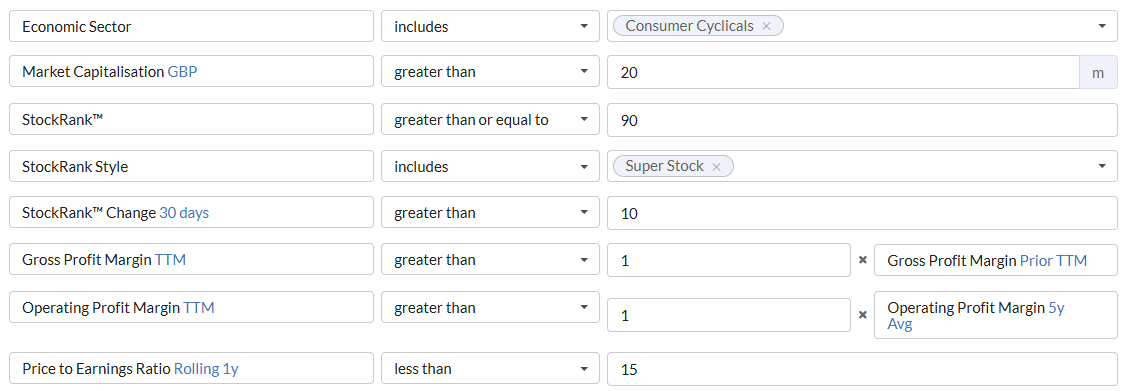
Here are the rules I’ve chosen, with some brief thoughts below:
You can view and duplicate this screen here.
Economic Sector & Market Cap: self-explanatory, really – I want Consumer Cyclicals and seek to avoid micro caps requiring more in-depth individual analysis.
StockRank & StockRank Style: this allows for a slightly different tilt to results, depending on preference. Personally, I’m looking for reasonably-priced all rounders, so my preference is to deselect StockRank and use the style rule to filter for Super Stocks. Looking for Turnarounds, Contrarians or High Flyers could also be valid approaches.
StockRank Change: Ed covered the data behind this rule in a recent webinar – you can find all the details here. Looking for companies whose StockRank has risen by at least 10 over the last month adds another level of granularity to my search for up-and-coming opportunities.
Gross Profit Margin: consumer spending pressures have made it difficult for companies to raise prices to offset higher input costs (e.g. raw materials or imported products). This headwind is reflected in a falling gross margin, so it seems logical to look for companies whose gross margin has improved over the last year. If these firms are able to control their gross margin, they may be above-average businesses.
Operating Profit Margin: the other headwind facing many consumer businesses is rising operating costs – in particular employment costs for low-paid staff, who predominate in this sector. Operating margin also encapsulates gross margin, so looking for companies with a rising operating margin may also be an effective way of identifying stronger businesses.
Price to Earnings Ratio: I find it difficult to pay high multiples of earnings for businesses, especially in this sector where cyclical pressures abound and growth and profitability is often fairly average. My choice of 15 is slightly arbitrary, but not entirely – the median P/E for this sector is currently 14, so choosing a number slightly above this will hopefully stop the screen being overly exclusive.
Screen results
Applying all of these rules at once presents us with a familiar problem. There are zero results:

Disabling the StockRank Change of >10 rule (which is quite proscriptive) provides a more interesting selection, with six results that pass all of my other rules:
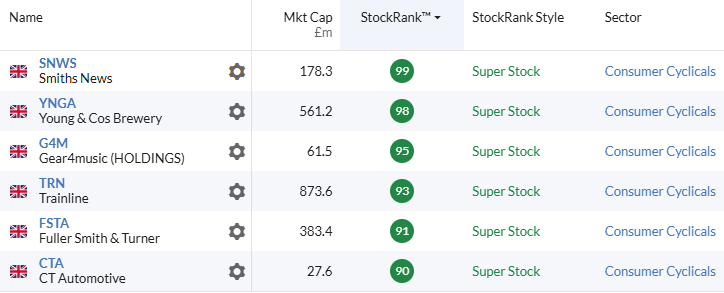
While I wouldn’t want to restrict my search to such a small selection, I do think some of these could be worth a closer look. All six have enjoyed fairly positive share price trends over the last six months:
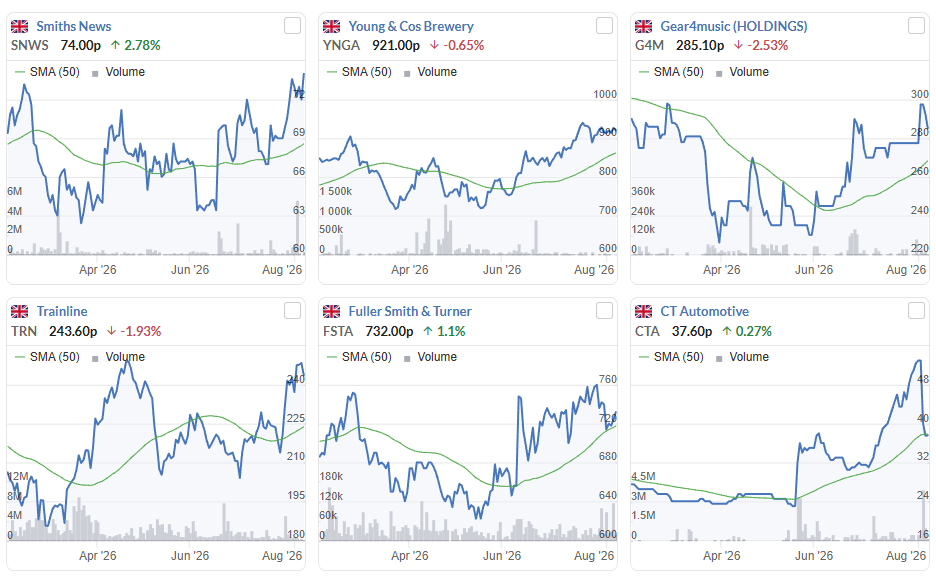
Several of these companies have also had positive coverage in the DSMR in recent months:
Smiths News (LON:SNWS) : Graham has been following the apparent renaissance of this newspaper distribution specialist. He last covered Smiths on 17 July, when he stayed GREEN.
Young & Cos Brewery (LON:YNGA) : not a stock we’ve covered regularly, but I think it’s notable that two pub groups feature in this selection. Young’s London/SE-based estate means it’s located in some of the most affluent areas of the country, which probably aids pricing power and consumer resilience.
Gear4music (HOLDINGS) (LON:G4M) : Graham recently looked at the latest results from this online retailer and concluded that he liked the story and was comfortable staying GREEN.
Trainline (LON:TRN) : I last covered this rail ticketing aggregator in November, when I left our AMBER/GREEN view unchanged. We didn’t manage to review May’s full-year results, but I see that consensus estimates have continued to edge higher while the shares still look quite reasonably valued on 10x forecast earnings. Trainline also qualifies for two of my favourite quality-value screens, Greenblatt’s Magic Formula and Richard Beddard’s Nifty Thrifty.
Fuller Smith & Turner (LON:FSTA) : like Young’s, this is a London-based pub chain that operates in affluent markets and appears to be trading well. Recent full-year results showed like-for-like sales up 4.9% and a 38% increase in adjusted earnings. I took an AMBER/GREEN view.
CT Automotive (LON:CTA) : it’s perhaps unfortunate timing for me to include this automotive parts manufacturer, as CTA stock fell by 25% earlier this week. Even so, Mark maintained his AMBER/GREEN view, noting that this week’s trading statement was seemingly in line. He concluded that while there was some risk of an H2 shortfall in profits or cash, the forward P/E of 4 means this could remain an interesting risk/reward situation.
Expanding the selection: as I mentioned earlier, if I was using this screen to source new investment ideas I would experiment with different combinations of rules, with a particular interest in seeing if similar stocks turned up in multiple places.
However, I’m going to wrap up this article by looping back to the StockRank Jump theme we’ve been exploring on the site in recent weeks. To do this, I’ve disabled most of my rules, leaving only the following in place:
Sector: Consumer Cyclicals
Market Cap: >£20m
StockRank: >90
StockRank Change (30 days): >10
Choosing this gives me five new stocks to consider, with no overlap to those above. I reckon these to could be worth a closer look:
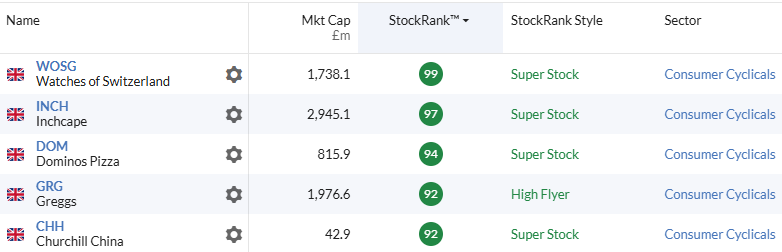
Here are links to our most recent coverage of each of these (where possible):
Watches of Switzerland (LON:WOSG) : 14 July 2026 (AMBER/GREEN =)
Inchcape (LON:INCH) : not covered
Dominos Pizza (LON:DOM) : 24 April 2026 (AMBER ↑)
Greggs (LON:GRG) : 29 July 2026 (AMBER/GREEN ↑)
Churchill China (LON:CHH) : 31 July 2026 (AMBER/GREEN =)
Disclosure: at the time of publication, Roland owned shares in Churchill China and Inchcape.
Disclaimer
This is not financial advice. Our content is intended to be used and must be used for information and education purposes only. Please read our disclaimer and terms and conditions to understand our obligations.

2 comments
I'm never certain about using operating margin as it excludes high quality companies with good capital turn. Youngs and Co is certainly an interesting share in my opinion.
To a man travelling on the Omnibus 0.6% in Q1 to something or other in another quarter with caveats and collection data of irrelevance - it's just 'noise'.
That consumers cashed in 4.6bn of spare gold (the grandkids legacy if you can keep it - heirlooms etc) or in our master terms "gold not held by Central Banks". When retail sells that is the time to buy everything you can get your hands on - and the spivs know it so you will pay top dollar.
Yesterday Oil, Hormuz, today Gold, this week and who would have thought, chips are on the plate again.
The Big Tech sell off was noise or and maybe the "dead cat bounce" (Warning Will Robinson) - in the game or in cash losing 10%pa (sorry depends on what you buy).
Gold up today, which is good news for mine and Mr Shings confidence, but maybe not for the world. What is coming our way.
Who said investing was easy but the best computer game in Town (well your son will disagree but he does'nt pay the bills - love him).
Hormuz seems an 'forever war' - until they join the world economy will always be some nut-job outlier.
It's hot in the UK.
Food, fertiliser and water seems a place to focus.
The results of Shoe Zone - sorry.